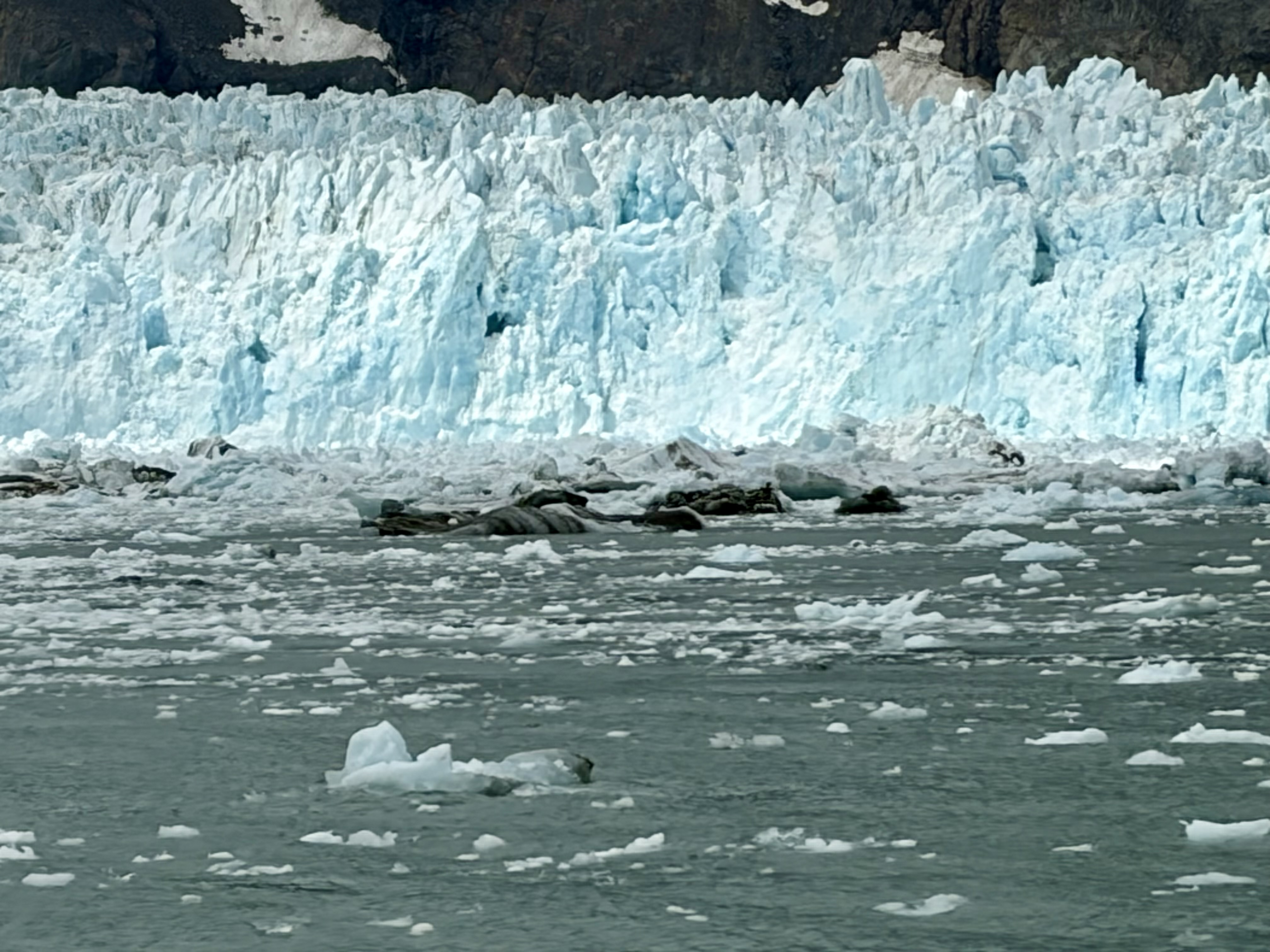
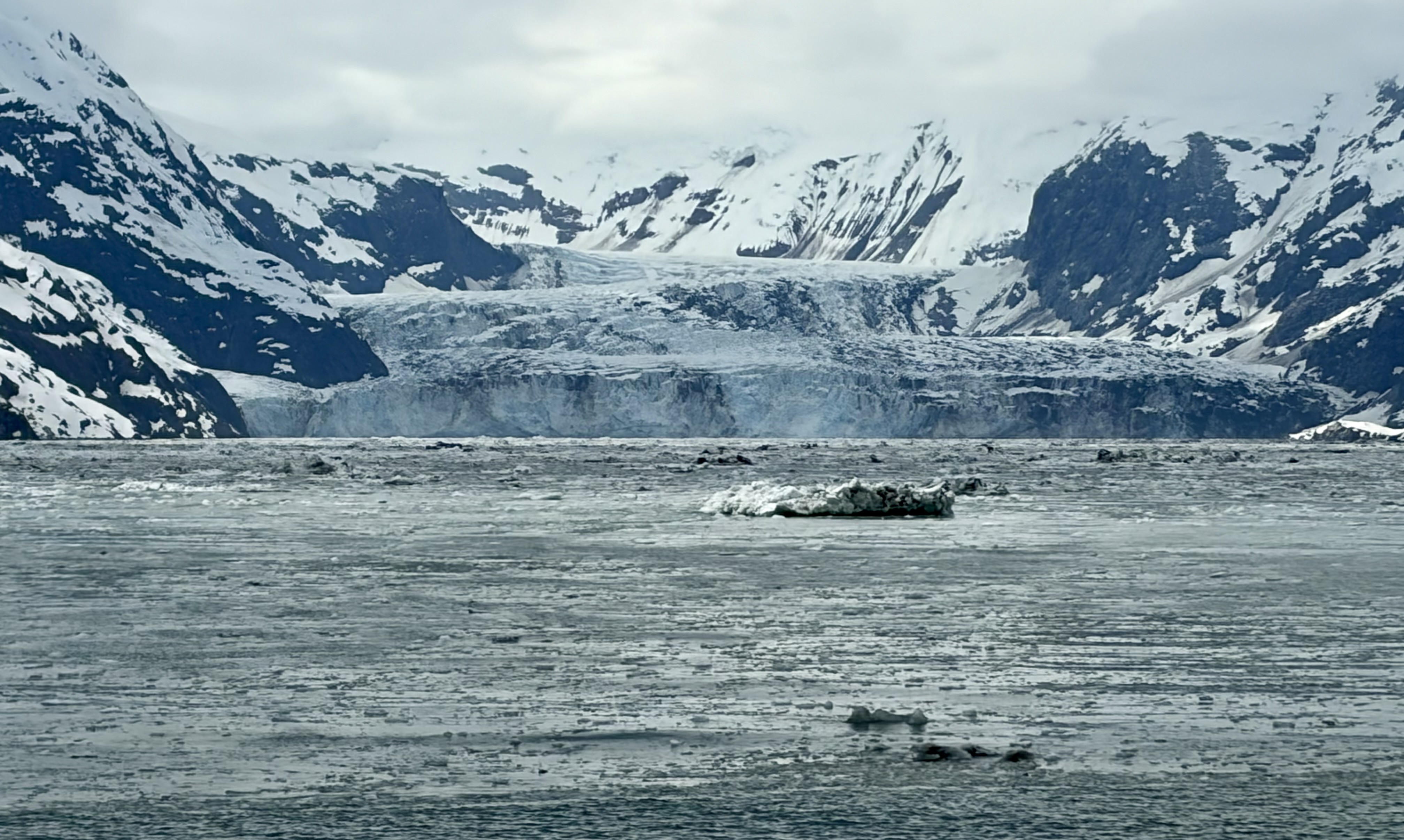
Glacier Bay is a great national park, a biosphere and part of a huge world heritage site with Canada. I arrived by Alaska Marine Highway ferry from Skagway via a night in Juneau, which took about 24 hours to the lodge. The ranger-narrated day boat tour out to see the last few tidewater glaciers was awesome. While I saw a humpback whale breeching, the highlight was definitely sliding through the icy waters to see glaciers like the Marjorie above and Johns Hopkins below.
While glaciers often cycle through advancing and retreating cycles, Glacier Bay makes it plainly clear how one way the retreat of ice has been since industrialization began. Tidewater glaciers are ones that normally advance into the water and then recede after the saltwater changes their freezing point. Once common below the arctic circle, now they’re rare, with the one above likely being one of the last. Although the huge bay was entirely full of ice when our country was founded, the bay—technically a fjord—is now virtually all open water. The many glaciers described by John Muir are still here, but most neither reach nor can be seen from the water. Over a hundred years of tourists have documented the dramatic retreat in millions of photographs from steamships to cruise ships.
Once, many people assumed that similar landscapes scraped clean around the world were evidence of a global Biblical flood, but they were caused by glaciers. Besides Muir, an ecologist named William Cooper conducted a historic and ongoing study of plant succession for decades here. While some might imagine that retreating ice will simply open up new fertile land in the north, the truth is that glaciers scrape the ground down to bedrock. It takes centuries to build up enough biological material to sustain even the short simple forest ecosystems found in the wintry northern latitudes. The Tlingit people have an oral tradition that describes how their productive valley was covered by an advancing glacier and was stripped bare when it finally retreated. But they’re still here, co-managing the park and conducting interpretive presentations on site. Be sure to visit their clan house next to the Glacier Bay Lodge.
Pingback: Wrangell – St Elias National Park & Preserve | Zero Carbon Travel