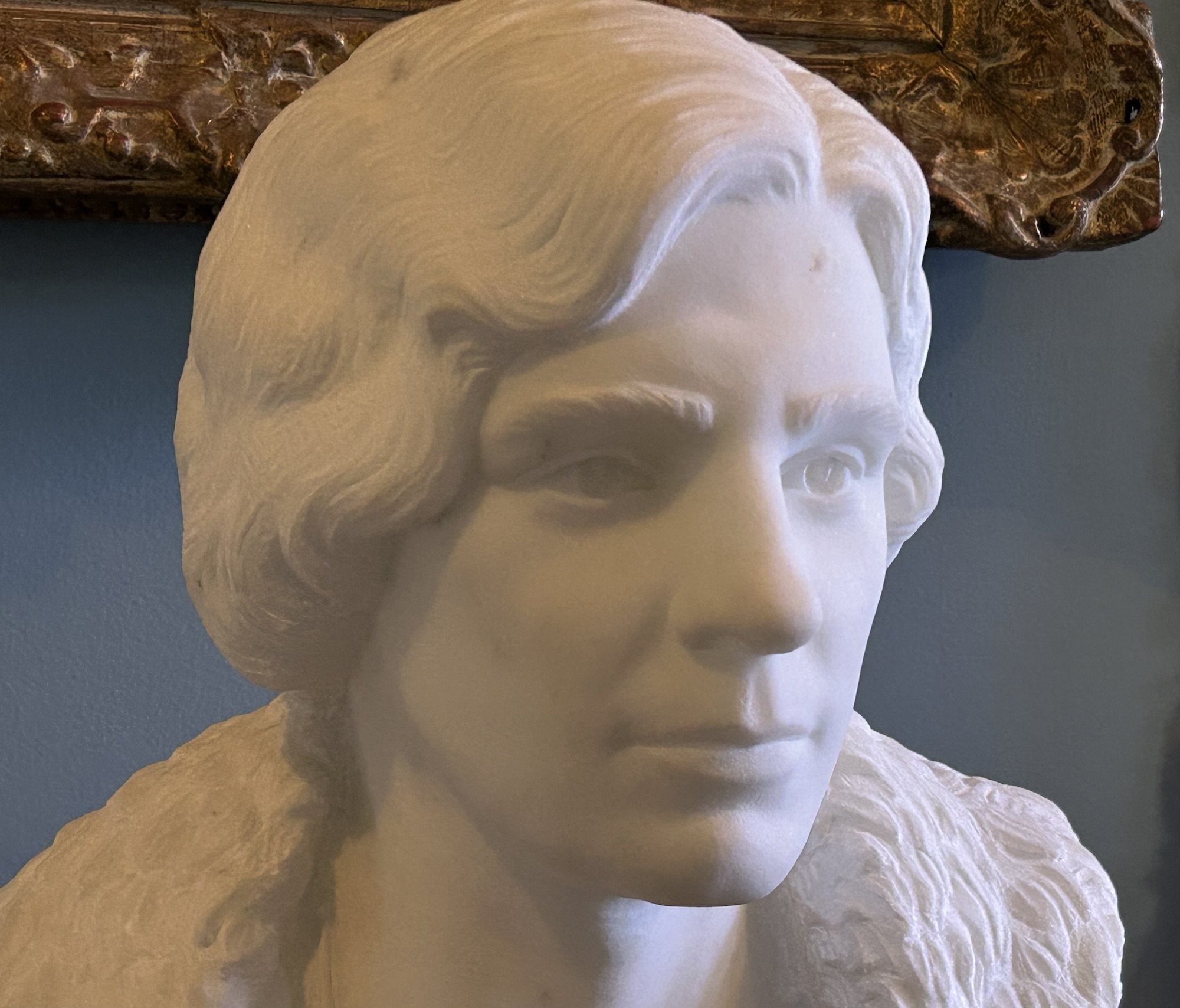
The house once belonged to the Treasury Secretary Gallatin, was burned by the British and was later named after Alva Belmont, a Vanderbilt divorcee, donor and leader of the women’s movement, who bought it to lobby Congress. The site today primarily recognizes the women’s movement leader Alice Paul (above), who founded the National Women’s Party before women had the right to vote. Finishing what began in Seneca Falls, Paul led the campaign in DC for women’s suffrage and for the Equal Rights Amendment. Here pressure was exerted for gender equality language in the UN Charter and the 1964 Civil Rights Act, among many similar efforts around the world.
The tour allows you to see the many portraits, sculptures and photos of the women’s movement and is very educational. I learned about Inez Milholland, an icon for the movement who inspired the superhero Wonder Woman, Marie Louise Bottineau Baldwin an indigenous woman who marched with the other leaders and later became a lawyer, and more about Ida B. Wells, who refused to march in the back of a parade and joined her state’s delegation from the side. Be sure to ask about segregation, as the topic is apparently only discussed upon request in our new political era.
I did not realize how many women were imprisoned or how many were badly beaten upon their arrest. The photo below shows Alice Paul and Lucy Burns, posing in a cell they once occupied. Over 200 suffragists were imprisoned for protesting in front of the White House, and Alice Paul led a hunger strike that was instrumental in pressuring President Wilson towards passing the 19th Amendment. I recommend the HBO film Iron Jawed Angels to learn about these events. Read more about Women’s History park units.

 Zero Carbon Travel
Pingback: All National Capital Parks, No Carbon Vehicles | Zero Carbon Travel
Pingback: Women’s History Month | Zero Carbon Travel
Pingback: Best of DC | Zero Carbon Travel