Before the 4th of July tomorrow, let me point out a few highlights from the 23 national park sites in our nation’s capital. Although this was my first region completed, I’ve returned several times for reopened exhibits and other sites. There’s lots to see and do in this compact city.
Best historic site: the Frederick Douglass home has much to teach us about the 19th century Civil Rights leader. (The recently refurbished Belmont-Paul house is also well worthwhile).
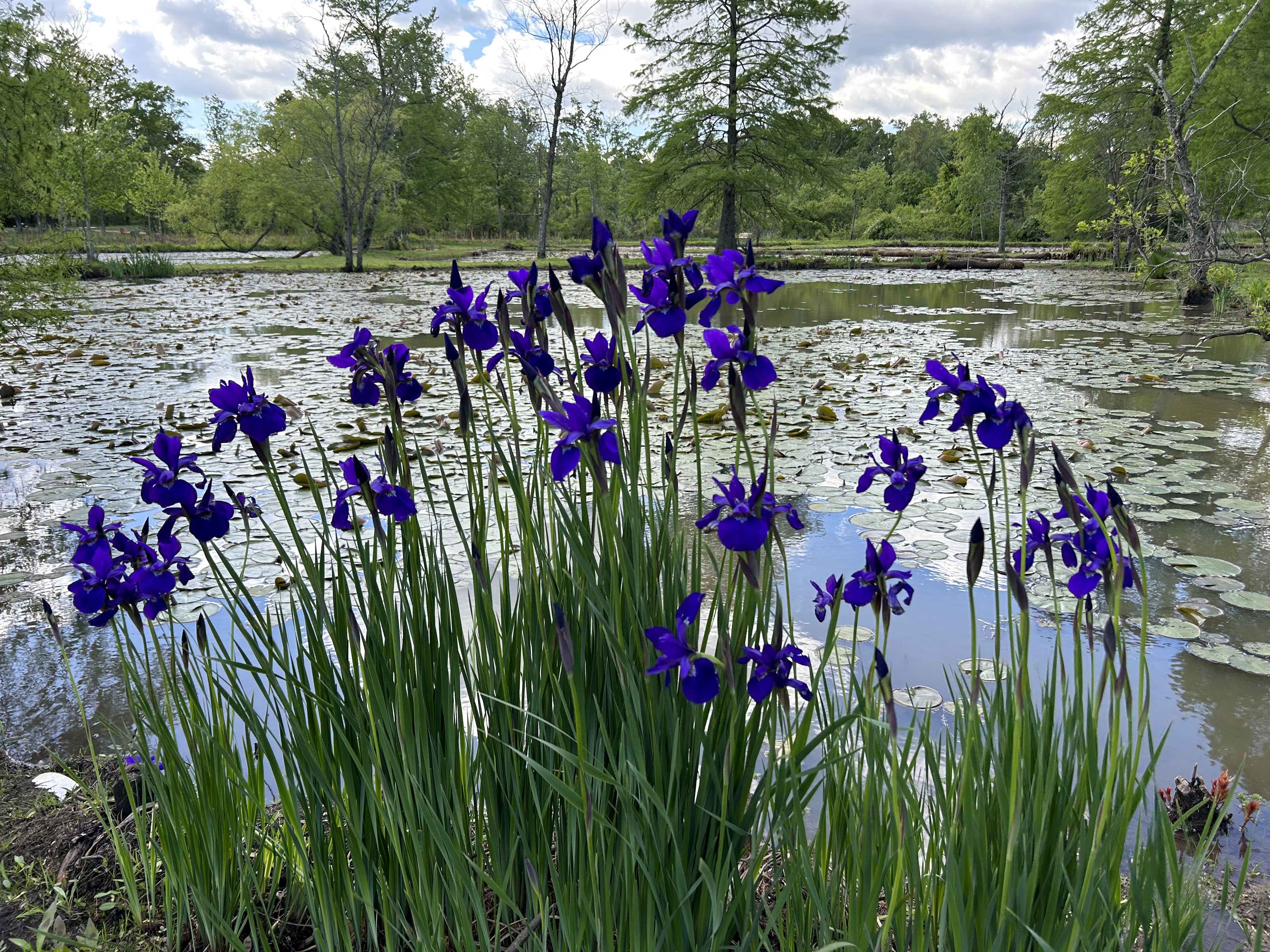
Best park: Kenilworth Park & Aquatic Gardens is beautiful, especially from lotus & lilies blooming in summer, with birds and reptiles and more to see all year.
Best presidential memorial: the Lincoln Memorial, with French’s statue inside, overlooking the reflecting pool outside.
Best tour: the White House. Contact your Congressperson and get a ticket.
Best view: top of Washington Monument. I know it’s a pain to get tickets, that it’s cramped and the windows are small. But Washington hired L’Enfant to design the city & mall, and from here it all makes sense.
Best war memorial: the Vietnam Veterans Memorial takes you beneath the green grass to grieve.
The highlight of my trip to Baja California last month was seeing Gray Whales (see videos below) in the Ojo de Liebre—hare’s eye—Lagoon, in the northeastern corner of the huge Vizcaíno biosphere and world heritage site in central Baja. I must thank the legendary Shari Bondi for organizing the experience, as there’s an element of magic required to bring people and whales together well. Unlike any whale watching experience I’ve ever had, the gray whales can be quite friendly. One female approached my boat, stuck her nose up and touched my hand.
The rock art mountains are also within the Vizcaíno preserve, along with several other lagoons popular among winter-breeding gray whales and turtles. Since the lagoons are closely regulated, the only way to see these whales is to join a tour. Since the winter season is short, the tour guides typically work with local hotels and add lagoon-side camps. You may find it difficult to book a room in Guerrero Negro around February, unless you book a package tour. Some visitors spend days on site, taking multiple whale watching trips. Enjoy!
Earlier this month I visited Sierra de San Francisco in central Baja Mexico to see the prehistoric rock paintings which are a world heritage site. They are spread out over a vast, mountainous area and just to see a few requires a 5 day group trek on burro to reach several different caves. One closer site, El Ratón—called ‘the rat’ but meant to be a cougar—, is a short hike off a long, well-paved road. Unfortunately, it’s not the best of the rock paintings, as the alcove is fairly open and the art has faded. The small free museum in San Ignacio is overseen by an official who provides required passes out of his office next door, when he’s there. Hiring a local guide is required along with paying various government fees. For a solo Baja driver, it’s best to visit El Ratón on the way back north, as the cave road is north of San Ignacio, where you must pay first. Group tours can be reserved from San Ignacio, Loreto, and Guerrero Negro. Frankly, I recommend just going to the museum and making a donation. There you can see some good photographs of several of the best examples, along with a large reproduction, above, to give you a sense of how they are displayed on alcoves and in caves. Traveling through Baja, you see reproductions in many public spaces, proudly reflecting the internationally renowned 2000 year old cave art, the cultural remnants of the Cochimí people.
My medium term goal is to visit all the parks in the lower 48 states in my electric car, and that necessarily includes taking an occasional car ferry. I would prefer never to take carbon burning transportation, but I’m neither going to risk my life nor break the law, nor encourage anyone else to do so. Some river roads, coastal highways and islands rely on ferries—such as in the Outer Banks or San Juan Islands above—, without practical alternatives. The only way to visit the Statue of Liberty or Alcatraz is to take the ferry.
My general rule is to arrive at each park by zero emission vehicle but to take park transport as needed to enjoy the park, like at Steamtown. Whenever I can, I encourage park employees to replace their old transport with solar powered electric boats, which would be perfect at Fort Matanzas. And the NPS is slowly converting its transportation to renewable, for example at Zion.
Superior is the biggest, deepest and cleanest of the Great Lakes, and our most scenic lakeshore park is on the north coast of the upper peninsula of Michigan. Within the park are ~10 miles of dramatic 200’ cliffs, painted by various minerals washed through the sandstone, and the best way to see is by boat. The pastels, turquoise shallow waters, green trees, blue skies and waterfalls (below) are spectacular.
Besides taking a popular commercial tour of the most scenic section of the cliffs in a couple hours, as I did, it’s possible to kayak or to hike along the edge. Lover’s Leap (above) has only 3’ of water below, so don’t take it literally. The lakeshore trail—part of North Country NST—is 40+ miles over dunes, creeks, and long beaches, with many side trails exploring forests, marshes, and lookouts. Short hikes can be done near the ends of the park, but the middle is roadless.
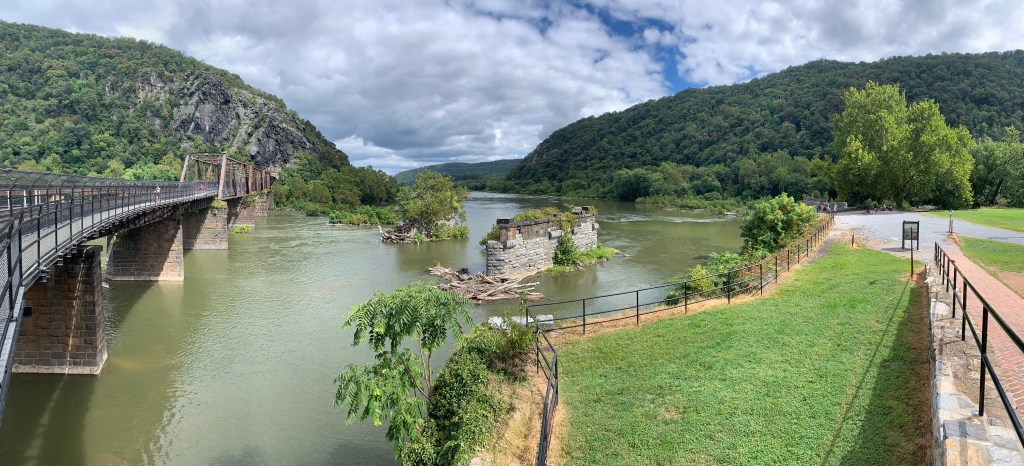
The precursor to the Civil War was John Brown’s raid on Harpers Ferry arsenal in 1859. Lee, Jackson & Jeb Stuart were all there in uniform, before they turned against our country. Douglass & Tubman were not in the raid, although they were involved. Booth arrived to witness Brown’s execution. The government may have quickly restored order in town, but across the country people divided into abolitionists or secessionists. Lincoln, arguing against slavery, was elected in 1860, and southern states began to secede to protect slavery.
The Confederacy raised an army and attacked Fort Sumter in April of 1861. That same month, Union soldiers were attacked by Confederate sympathizers in Baltimore, leading Clara Barton to begin her service as a nurse. In May three escaped slaves were granted protection as ‘contraband’ at Fort Monroe in northern Virginia. Lincoln sent troops south where they were incompetently led into battle at Manassas in Virginia in July. The Confederates also won at Wilson’s Creek but were unable to take Missouri. The Union won at Carnifex Ferry in September, causing West Virginia to split from Virginia and become a state in 1863. In November, the Union Navy took Port Royal South Carolina, liberating 10,000 slaves, many forming the first African American regiment there one year later.
In January 1862 the Union won at Mill Springs Kentucky, followed the next month by Grant taking Fort Donelson on the strategic Cumberland River in northwest Tennessee. In March the Union won again at Pea Ridge in Arkansas and at Glorietta Pass in New Mexico, supported by Fort Union cavalry. In Tennessee in April, Shiloh (above) was a costly victory, followed by naval victories at Fort Pulaski blockading Savannah Georgia and the capture of New Orleans in Louisiana, where three more African American regiments would form within a year. In May the Union took Yorktown in Virginia, but in June the Union failed in its approach to Richmond. Then in August another loss at Manassas again. The Confederates marched into Maryland, but lost at Antietam in September. In December, the Union failed again in Virginia at Fredricksburg.
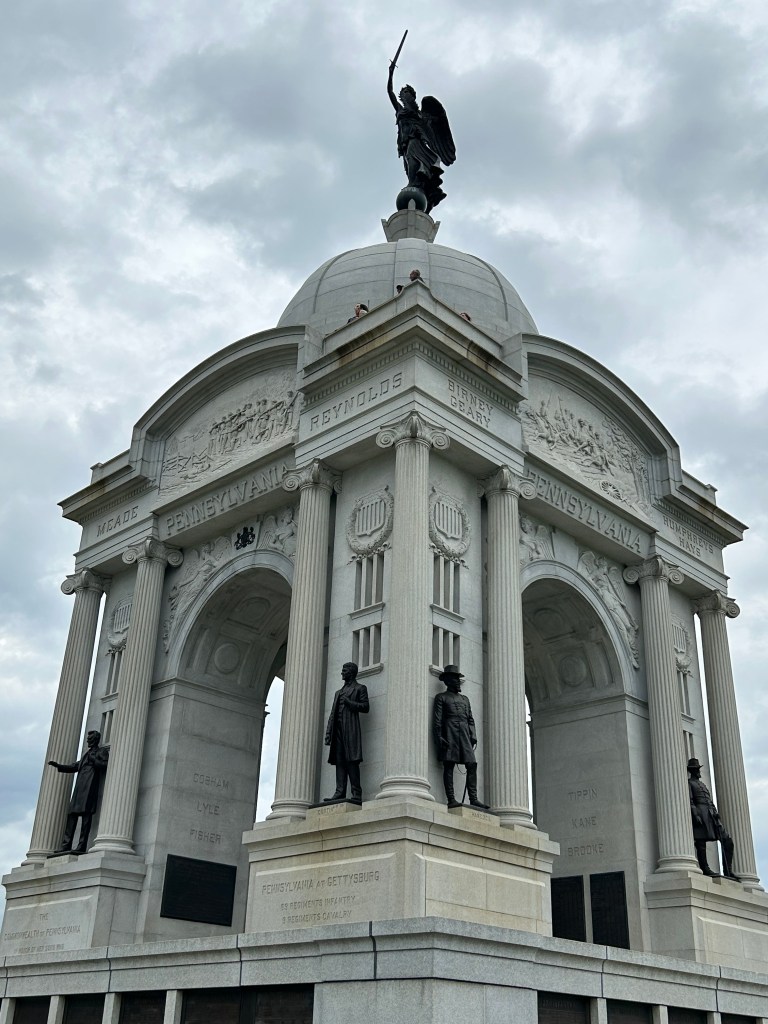
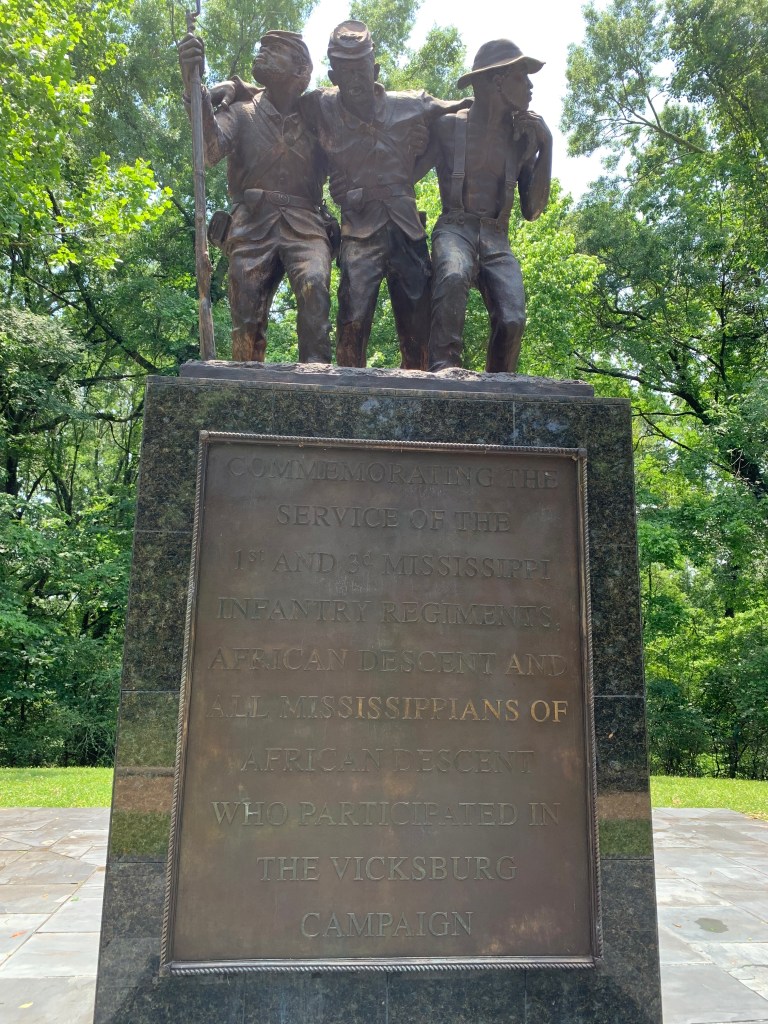
On the 1st of January 1863, the Emancipation Proclamation was read first with immediate effect to the SC 1st Volunteers, freeing them, their families and friends forever. Many more emancipated and free African American men would join the Union army at bases like Camp Nelson in Kentucky, Fort Scott in Kansas, and New Bedford and Boston in Massachusetts. That same winter the Union won at Stones River in Tennessee but lost at Chancellorsville in Virginia in spring. On June 2nd, Union spy Harriet Tubman led 150 African American soldiers to free 700 slaves at Combahee Ferry. Lee marched north again, losing decisively in July at Gettysburg in Pennsylvania. Grant concluded his siege of Vicksburg the next day, July 4th. In the fall the Union advanced to the border of Tennessee and Georgia at Chattanooga and Chickamauga.
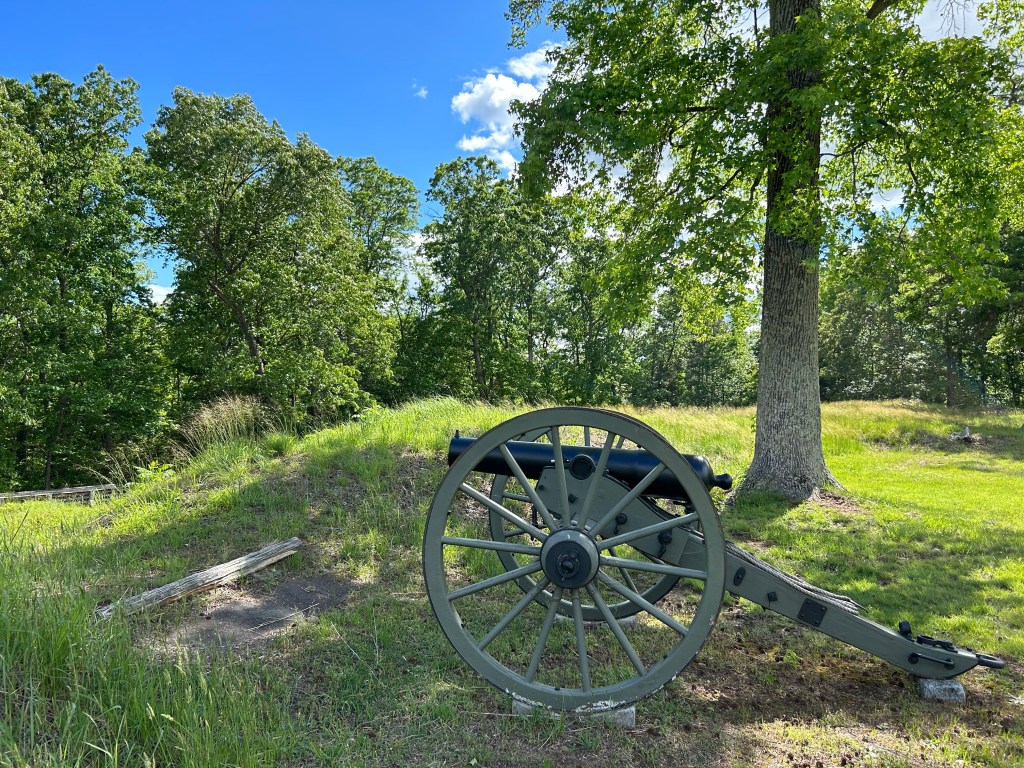
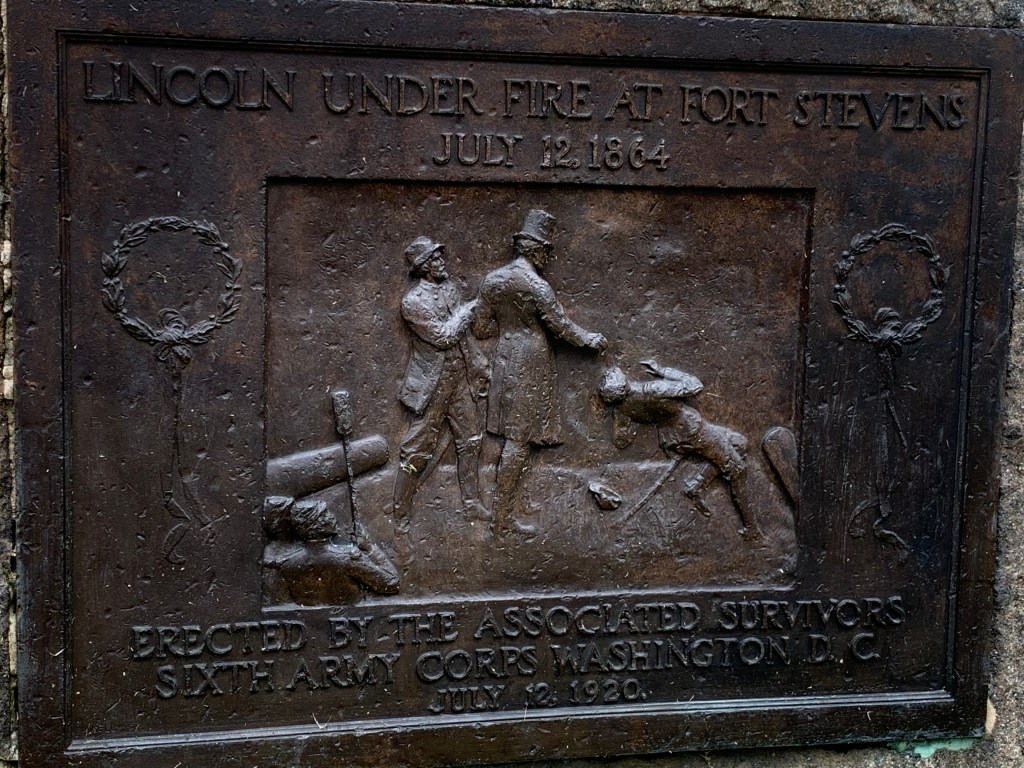
In 1864 the Union took northern Virginia with extensive fighting in Spotsylvania county. Slowly Grant was advancing towards Richmond, at one point outmaneuvering Lee at Petersburg and beginning a long siege of both cities. Meanwhile, Sherman was advancing in Mississippi, despite delays at Brices Cross Roads and Tupelo. In Georgia, Sherman was stopped at Kennesaw Mountain in July, before resuming his march to the sea. With the Confederate capital under siege, Lee ordered a sneak attack on the Union capital in July, crucially delayed at Monocacy in Maryland, after which snipers fired at Fort Stevens in DC. In August, Farragut took the last major southern port of Mobile Bay in Alabama. And in October, the Union defended the Shenandoah Valley at Cedar Creek in Virginia.
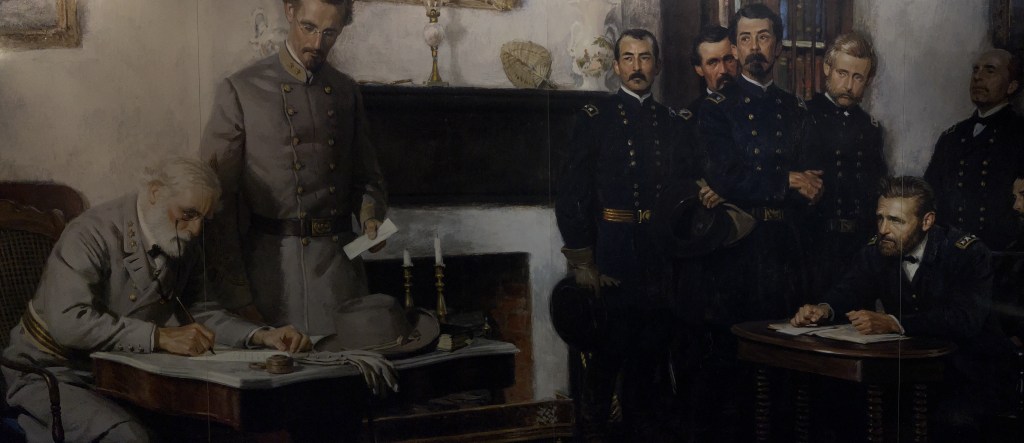
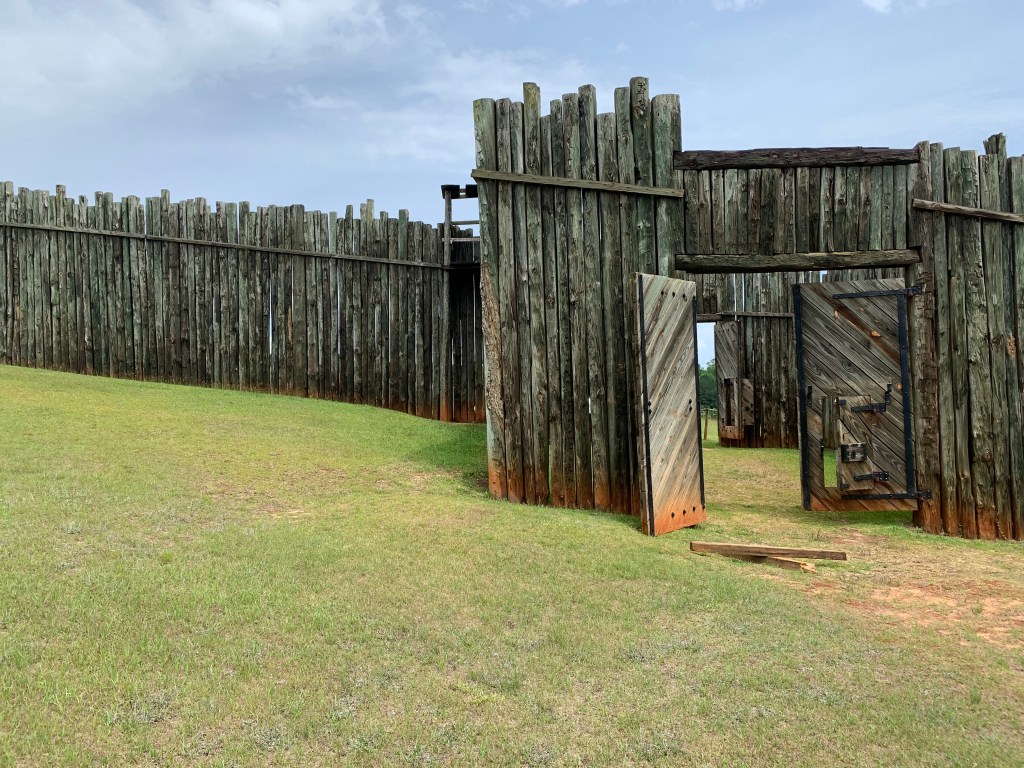
In the spring of 1865, after a months-long siege, Lee abandoned both Petersburg and Richmond, retreated and then surrendered in Appomattox in April. Andersonville was liberated in May. The CSS Shenandoah, which circumnavigated the globe during the war seizing African American crews from whaling ships, surrendered in Liverpool England in November, the last act of the war.
The precursor to the Civil War was John Brown’s raid on Harpers Ferry arsenal in 1859. Lee, Jackson & Jeb Stuart were all there in uniform, before they turned against our country. Douglass & Tubman were not in the raid, although they were involved. Booth arrived to witness Brown’s execution. The government may have quickly restored order in town, but across the country people divided into abolitionists or secessionists. Lincoln, arguing against slavery, was elected in 1860, and southern states began to secede to protect slavery.
The Confederacy raised an army and attacked Fort Sumter in April of 1861. That same month, Union soldiers were attacked by Confederate sympathizers in Baltimore, leading Clara Barton to begin her service as a nurse. In May three escaped slaves were granted protection as ‘contraband’ at Fort Monroe in northern Virginia. Lincoln sent troops south where they were incompetently led into battle at Manassas in Virginia in July. The Confederates also won at Wilson’s Creek but were unable to take Missouri. The Union won at Carnifex Ferry in September, causing West Virginia to split from Virginia and become a state in 1863. In November, the Union Navy took Port Royal South Carolina, liberating 10,000 slaves, many forming the first African American regiment there one year later.
In January 1862 the Union won at Mill Springs Kentucky, followed the next month by Grant taking Fort Donelson on the strategic Cumberland River in northwest Tennessee. In March the Union won again at Pea Ridge in Arkansas and at Glorietta Pass in New Mexico, supported by Fort Union cavalry. In Tennessee in April, Shiloh (above) was a costly victory, followed by naval victories at Fort Pulaski blockading Savannah Georgia and the capture of New Orleans in Louisiana, where three more African American regiments would form within a year. In May the Union took Yorktown in Virginia, but in June the Union failed in its approach to Richmond. Then in August another loss at Manassas again. The Confederates marched into Maryland, but lost at Antietam in September. In December, the Union failed again in Virginia at Fredricksburg.
On the 1st of January 1863, the Emancipation Proclamation was read first with immediate effect to the SC 1st Volunteers, freeing them, their families and friends forever. Many more emancipated and free African American men would join the Union army at bases like Camp Nelson in Kentucky, Fort Scott in Kansas, and New Bedford and Boston in Massachusetts. That same winter the Union won at Stones River in Tennessee but lost at Chancellorsville in Virginia in spring. On June 2nd, Union spy Harriet Tubman led 150 African American soldiers to free 700 slaves at Combahee Ferry. Lee marched north again, losing decisively in July at Gettysburg in Pennsylvania. Grant concluded his siege of Vicksburg the next day, July 4th. In the fall the Union advanced to the border of Tennessee and Georgia at Chattanooga and Chickamauga.
In 1864 the Union took northern Virginia with extensive fighting in Spotsylvania county. Slowly Grant was advancing towards Richmond, at one point outmaneuvering Lee at Petersburg and beginning a long siege of both cities. Meanwhile, Sherman was advancing in Mississippi, despite delays at Brices Cross Roads and Tupelo. In Georgia, Sherman was stopped at Kennesaw Mountain in July, before resuming his march to the sea. With the Confederate capital under siege, Lee ordered a sneak attack on the Union capital in July, crucially delayed at Monocacy in Maryland, after which snipers fired at Fort Stevens in DC. In August, Farragut took the last major southern port of Mobile Bay in Alabama. And in October, the Union defended the Shenandoah Valley at Cedar Creek in Virginia.
In the spring of 1865, after a months-long siege, Lee abandoned both Petersburg and Richmond, retreated and then surrendered in Appomattox in April. Andersonville was liberated in May. The CSS Shenandoah, which circumnavigated the globe during the war seizing African American crews from whaling ships, surrendered in Liverpool England in November, the last act of the war.
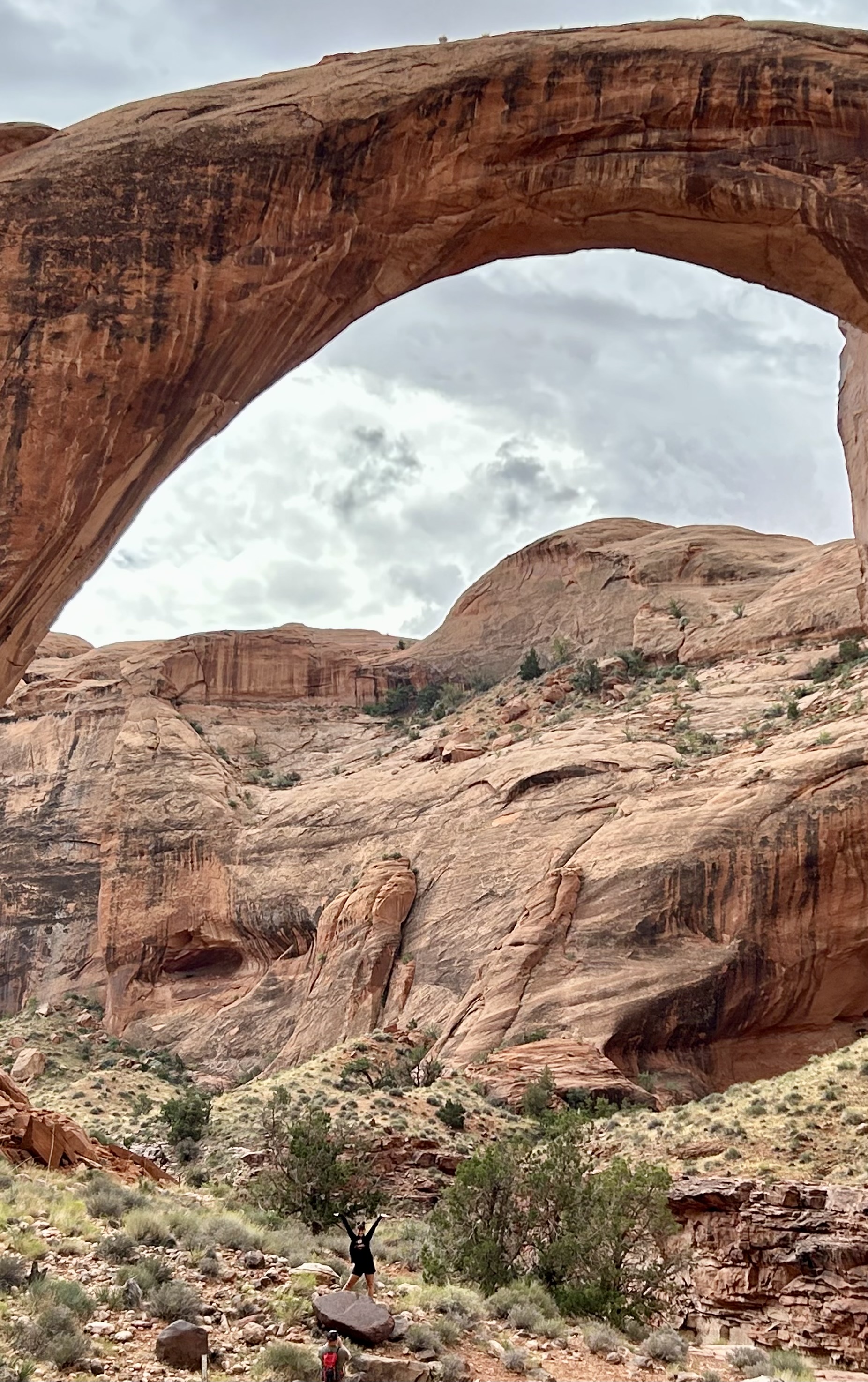
Luckily Lake Powell is high enough for the boat tour, which cost $145 and took 7 hours, including an hour hike, 30 minutes at the bridge above (see people bottom right for scale) and a beautiful song sung at the site by our Navajo guide. That’s far better than hiking overland for at least two days. At least Zane Grey (below left) had the sense to ride a horse. This is my favorite park to follow in his footsteps. The boat trip alone is marvelous, as Glen Canyon just gets more stunning the deeper you explore into Utah. But the canyon up to the monument is a delight too, with wildflowers, echoing cliffs & alcoves and a spring, allowing you a glimpse of a glen before the dam tragically flooded most of them. Before our Navajo captain navigated the twisting channel for the return trip, a brief shower brought at least half a dozen waterfalls down the towering rock walls. Spectacular!
Since the cave was discovered in 1874, explored and expanded early, humans caused very significant damage to geologic structures making it hard to find beautiful natural features. The ‘cave drapery’ above is at the top of two flights of metal steps up to the Paradise Lost high ceiling above the Ghost Room in the far back of the cave tour. The cave has a stream pouring out from the entrance, and there’s a pretty pool there in front of the Château, which is closed pending renovations. Cave Creek turns into the Wild & Scenic River Styx while underground, the shortest section of river so designated nationally. There are also several pretty hikes above ground, including one to a very large Douglas Fir. Easy to get tickets at rec.gov or at the visitor center in Cave Junction, before driving all the way up to the cave itself. Be sure to check in as soon as you arrive at the other visitor center next to the cave, as they often let folks take an earlier tour when space is available, especially in the morning.
[Update, due to the recent tragic demolition of the above Jackie Kennedy garden, the colonnade on the right and the East Wing, tours have been suspended until sometime in 2026 or later.]
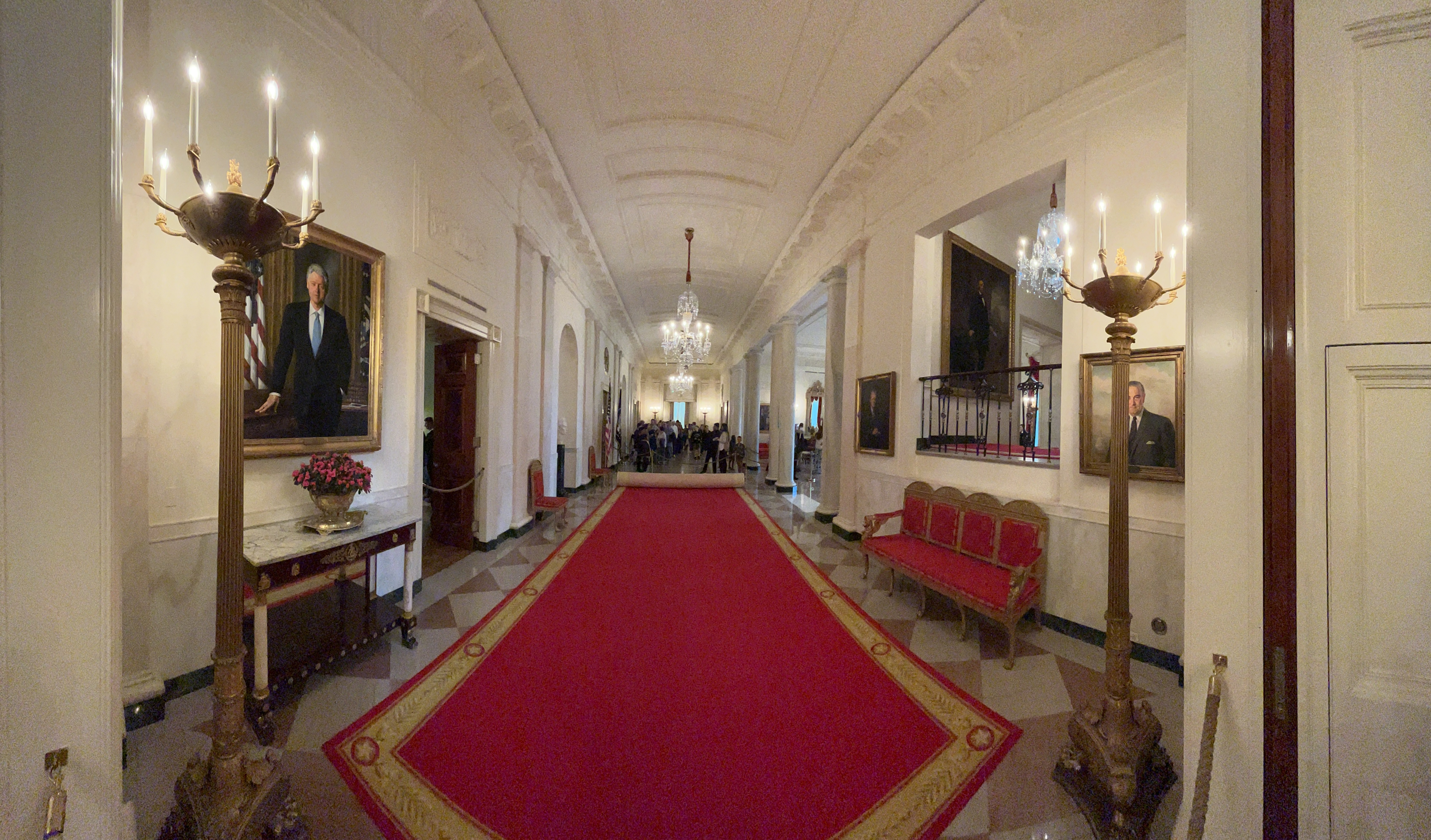
I took the tour! After standing outside the fence last year, I finally got organized and made a reservation. You need to make reservations through your Congressperson—even if you didn’t vote for them—to request a date within 3 weeks to 3 months in advance. Tours are currently given Tuesday through Saturday mornings, and they’re very popular. I requested any date in April, and they said no, the first available was in May. They confirm 2-3 weeks before. So, I changed my schedule, and a few months later, I’m walking through the East Portico, through the historic red, green, blue and other historic rooms. The best experience is to download the WHExperience App from the Historical Society and get all the details on your phone. The staff inside will answer questions and reveal a few fascinating stories, but they’re also there to make sure people behave. It’s difficult to imagine a more historic site, since the residents literally make history. I enjoyed both the recent photographs and the historic portraits.
If you can’t get a reservation, you can peer through the fence on either the north or south sides—pedestrians are once again allowed to walk up to the fence to take a decent photo. There is also a visitor center (no reservations needed) near the East Gate with a movie, detailed model and exhibits. Oh, and my sister reminded me to always put the park site location in my posts—she’s in Real Estate and location is very important—, so, the White House is located at 1600 Pennsylvania Ave, NW, in Washington DC. Thanks!





















 Zero Carbon Travel