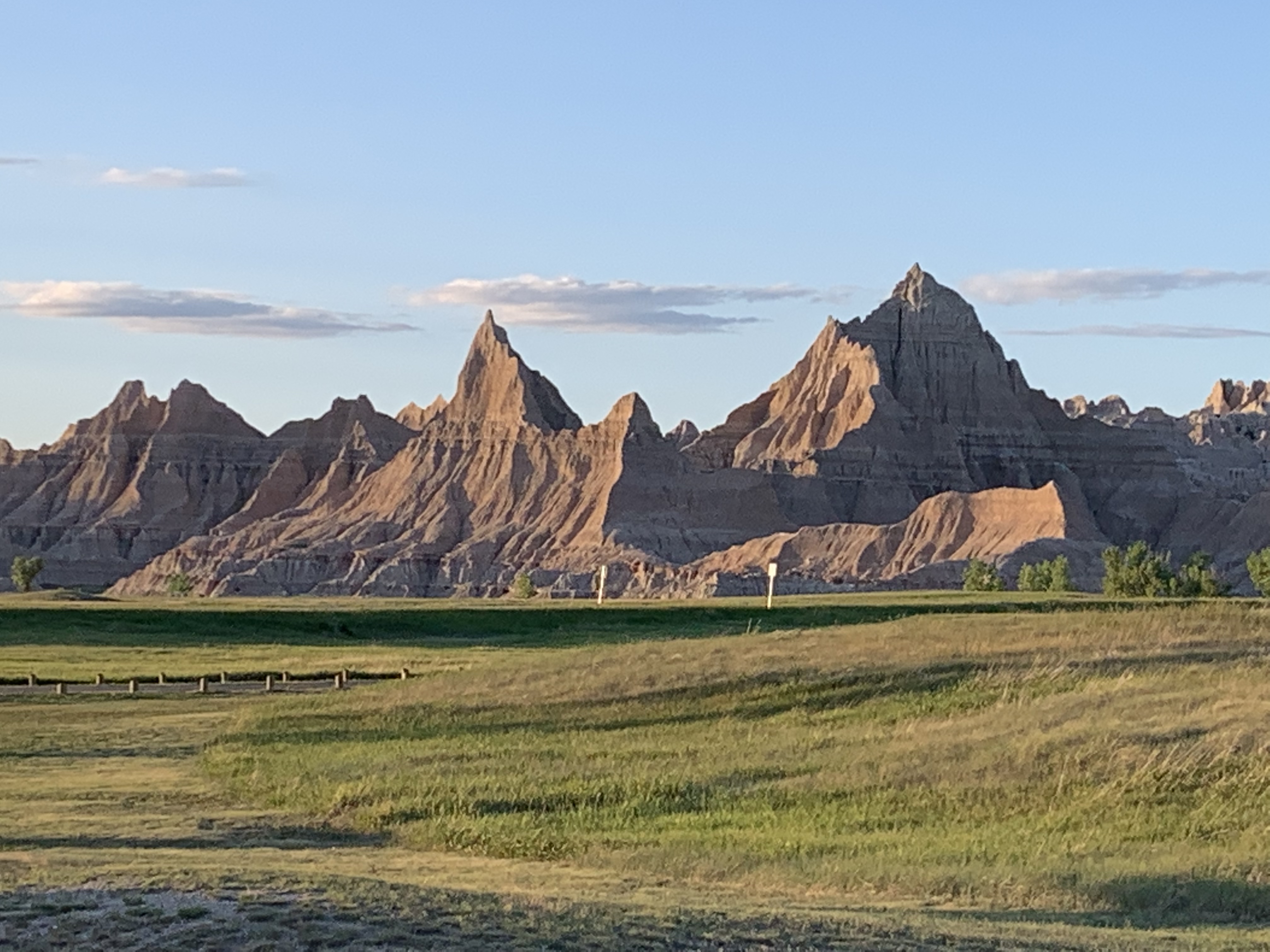
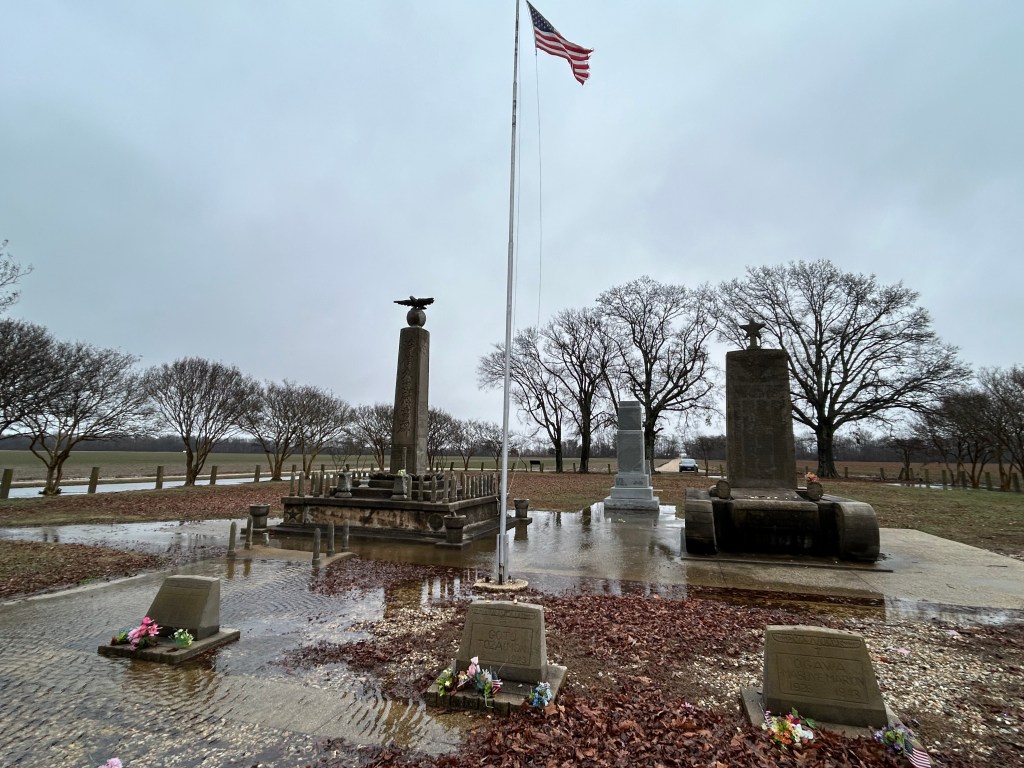
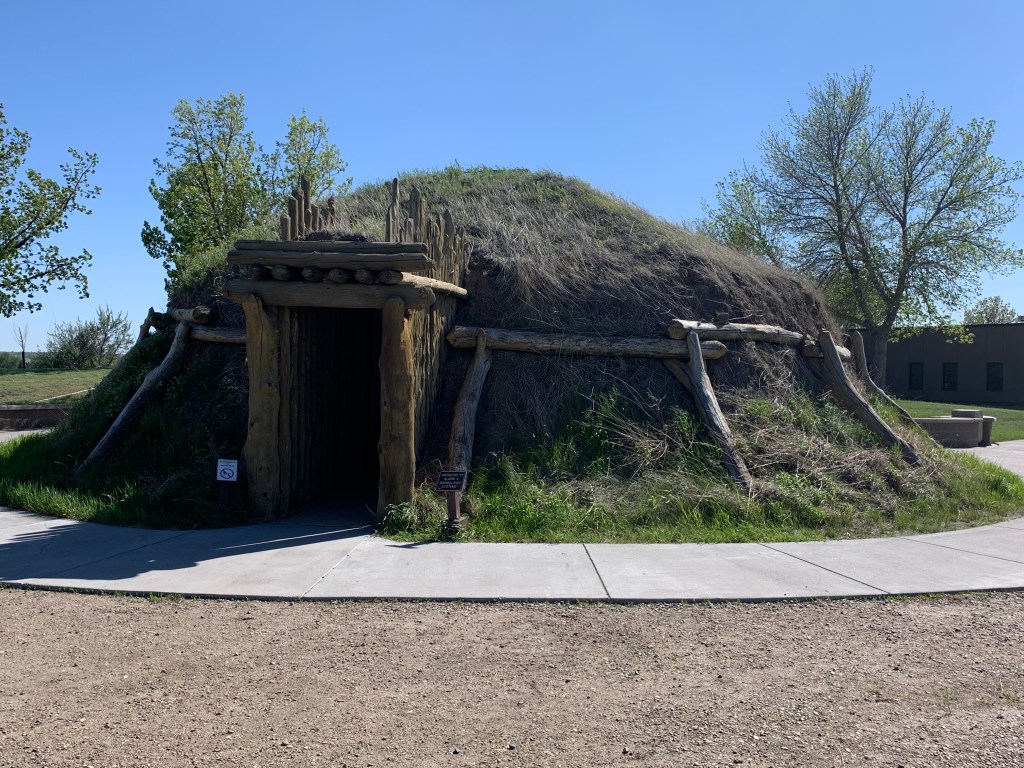
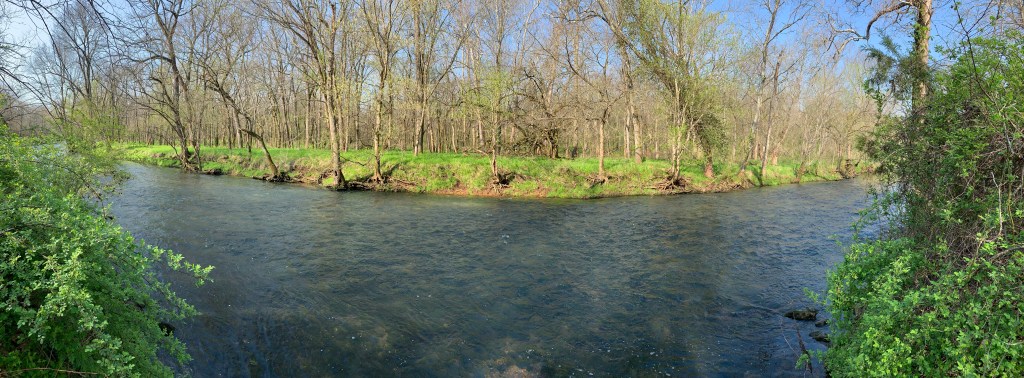
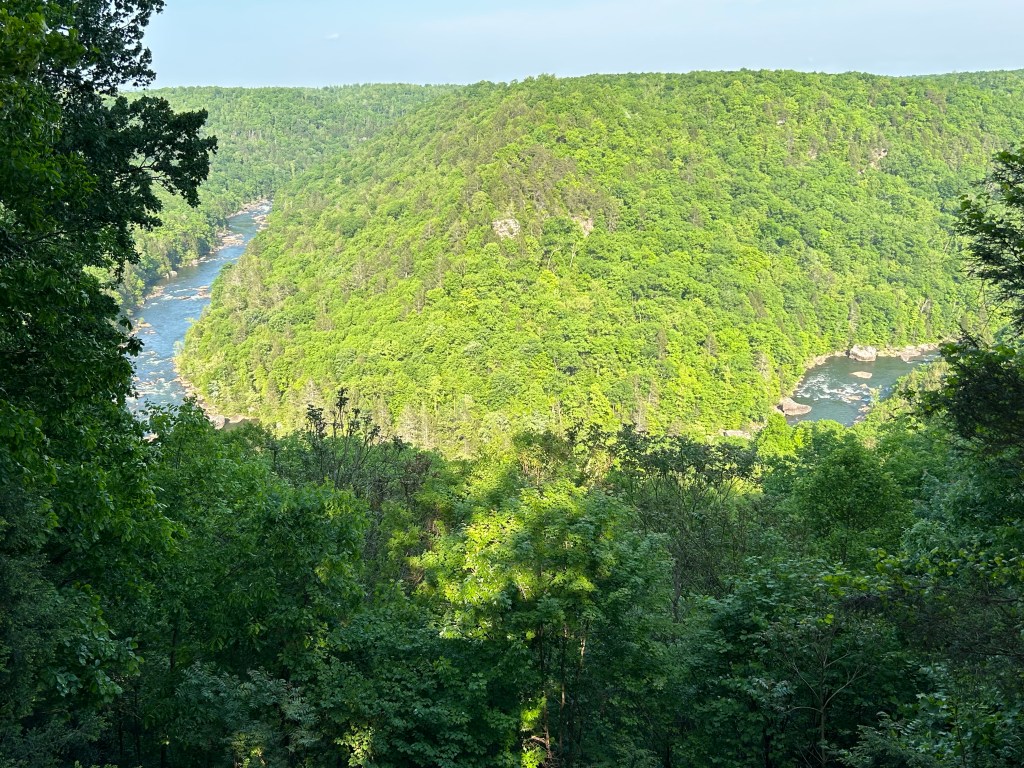
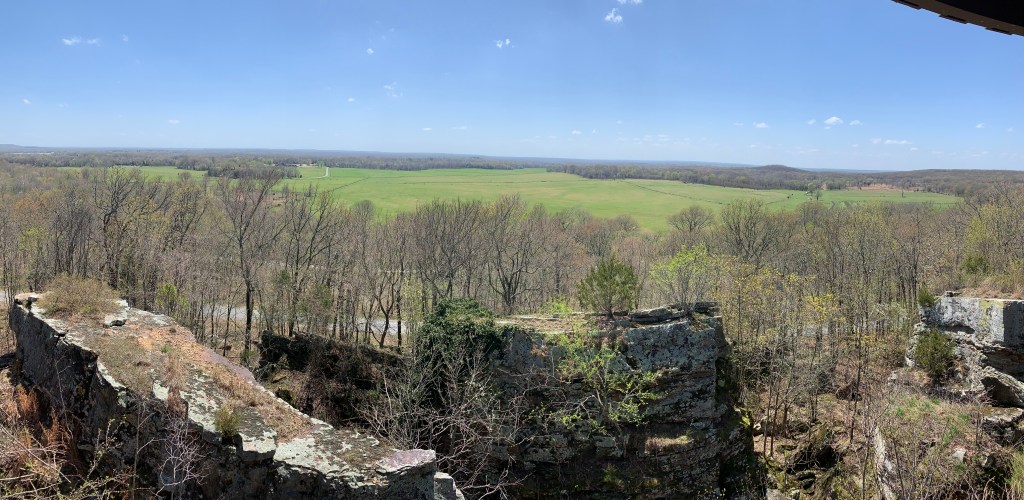
Quick bonus post to celebrate completing all the parks, trails, et cetera in South Dakota. The photos above are from the Badlands, Jewel & Wind Caves, Minuteman Missile and Mount Rushmore. The Missouri NRR borders the state and includes Yankton’s Meridian Bridge, which is nice for walking or biking and has a good kayak launch nearby. Lewis & Clark stopped here too, and there are several sites on their trail where the Yankton tribe showed them around South Dakota.
Quick logistical update: until summer, Mondays are Mexican World Heritage Sites, Thursdays are eclectic, and Saturdays are bonus park photos. I took the photos above yesterday in New Mexico and Colorado.
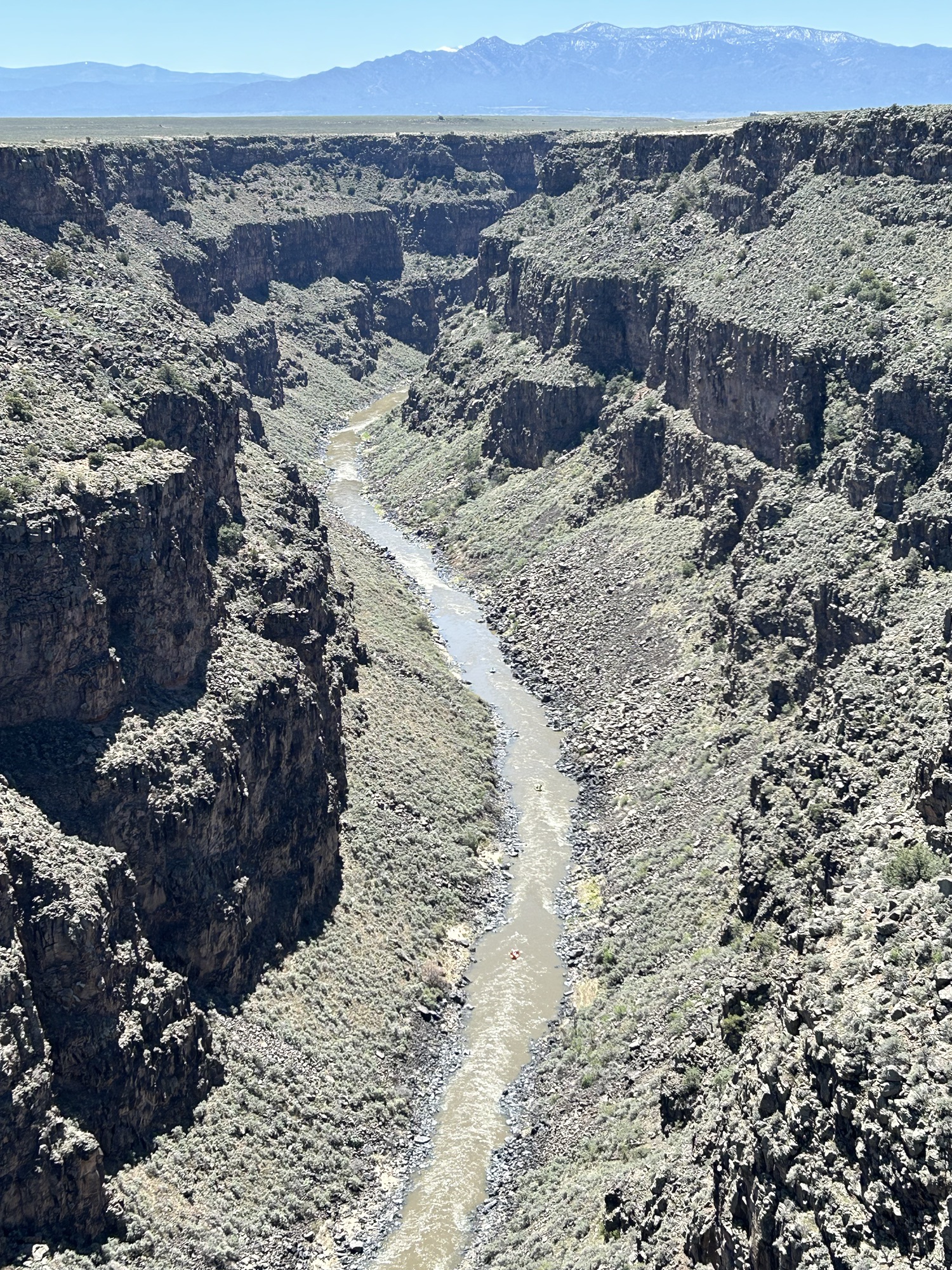
While technically in different regions, both National Heritage Areas are linked by the river, the mountains and our cultural heritage. The Rio Grande begins in the San Juan Mountains in south central Colorado and flows east through the San Luis Valley where it turns south into New Mexico. The scenic north section is called the Río Grande del Norte to distinguish it from the southern section that defines the Texas-Mexico border. The river flows through the Rio Grande Gorge and is now popular for whitewater rafting (see three rafts above left). In the distance are the Sangre de Cristo Mountains (both photos).
Native Americans and Spanish explorers traveled up and down the river, settling on the fertile valleys. The native land was claimed by the Spanish, Mexicans, and Texans, and for a dozen years, the Río Grande del Norte defined the US-Mexico border in Colorado, before the US claimed the land all the way to California by treaty in 1848. In the Civil War, Texas secessionists battled Colorado volunteers at Glorietta Pass in New Mexico to decide the war in the southwest.
The Northern Río Grande National Heritage Area in New Mexico celebrates this magnificent natural scenery and the cultural heritage it guided. It also includes Taos Pueblo, wild & scenic rivers, historic trails, scenic byways, and several cliff dwellings. Much of the land is also a BLM managed National Monument. The area is both beautiful and fascinating, and I was not going to miss another chance to drive through on my way northeast.
The Sangre de Cristo Mountains tower over the east side of the Río Grande del Norte from east of Santa Fe NM up into Colorado past the Great Sand Dunes. Meaning ‘blood of Christ’ in Spanish, the name likely refers to the scarlet colors of the mountains at sunset. The helpful illustration (my favorite photo above right) is on the Stations of the Cross trail up to a church that overlooks the historic San Luis Valley.
The Sangre de Cristo National Heritage Area in New Mexico borders the Northern Rio Grande National Heritage Area in Colorado, and includes the Cumbres and Toltec Scenic Railroad featured in Indiana Jones and the Last Crusade, the Monte Vista National Wildlife Refuge famed for Sandhill Cranes in March, and Fort Garland, a fine restored Kit Carson fort with an interesting museum on Buffalo Soldiers—one turned out to have been a woman who served for years as a man undetected. The area is lovely and pastoral amid snow-capped mountains, with many other worthy attractions, but I’m on the road again.
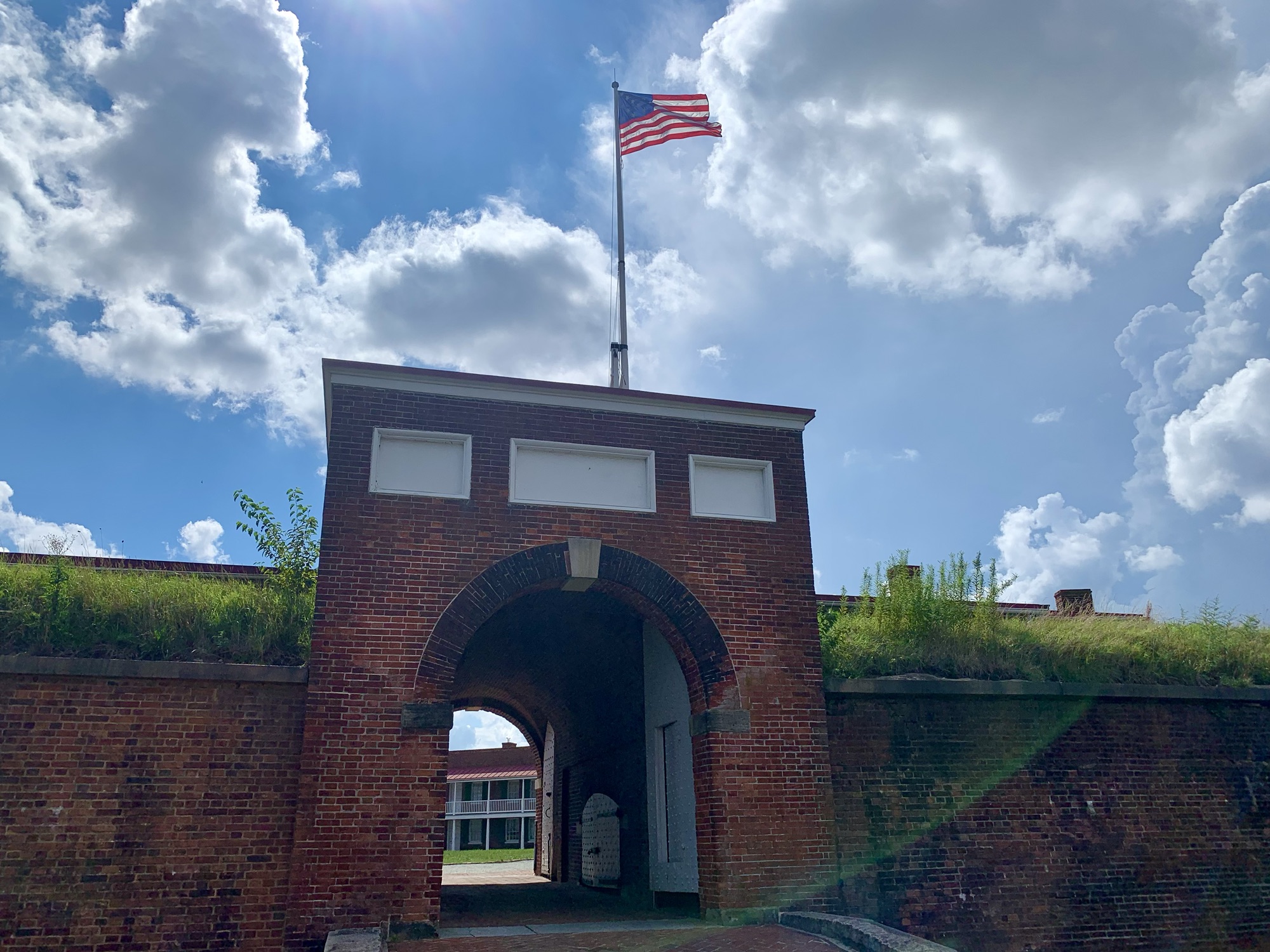
Although his namesake bridge collapsed in Baltimore, Francis Scott Key is best remembered for capturing the spirit of renewed patriotism that grew out of the War or 1812, as he penned his description of the defense of Fort McHenry (above) that became our National Anthem. The War of 1812 was a national low point in many ways, as Congress had ended Alexander Hamilton’s National Bank, and Albert Gallatin’s budget cuts had eviscerated the military. The trail traces the British advances on land and sea, leading up to the siege of Baltimore. Many of the DC area sites are part of this trail, including Fort Washington, Greenbelt Park, Kenilworth Aquatic Gardens, the National Mall, Pennsylvania Avenue, the White House, the George Washington Parkway, and the Potomac Heritage Trail, but there are lesser known battlefields, forts, museums, plantations, gardens, parks, the Pride of Baltimore II, the house of Mary Pickersgill, who made the flag, and more throughout Maryland.
Dolley Madison may have been our greatest First Lady—especially compared to the feckless Congress and Cabinet, often only barely loyal to the US and open to surrender—, but Dolley did everything she could to support her husband and her country. She invented the Inaugural Ball, hosted Native American Chiefs, smoothed quarrels between European and African envoys, and, in our hour of need, stood fast in the White House, even as the marauding British Troops approached in 1814 and as her husband tried to rally the local militia to defend the Capitol. At the last possible moment, she evacuated, with the President’s papers, the curtains, china, an original copy of the Declaration of Independence, and a famous portrait of George Washington, torn from its immovable frame. The British burned the White House to the ground. Dolley’s famous diplomacy helped convince Congress not to abandon Washington DC and to rebuild the White House and the Capitol. And through the news reports of her defense of our country, the nation rallied, shocked that the British would burn down DC’s public buildings.
However, in the war’s aftermath came a new sense of national identity, including our national flag and national anthem, setting the foundation for a more aggressive and stronger nation. That nationalism was fatal to many Native Americans, as the British had tried to enlist them and as the USA became more assertive and expansionist. And today, there are self-proclaimed ‘nationalists’ who support the second attack on the Capitol.
The day after Pearl Harbor, an angry FDR called it ‘a date which will live in infamy’, and he began to restrict the rights of Japanese Americans. First there was a curfew, then bank accounts were seized overnight, businesses shuttered, homes were searched, guns were collected, cameras and radios were taken, Japanese language schools were closed, and travel was restricted. US citizens of German and Italian descent were free to live their lives, but US citizens of Japanese descent were not.
In February of 1942, first generation adult male immigrants in the Japanese American fishing community on Terminal Island—between the Ports of LA and Long Beach—were incarcerated by the FBI, followed by a 48 hour notice for all remaining inhabitants to evacuate. The whole community was the first to be incarcerated after FDR signed Executive Order 9066, and their entire neighborhood was razed. Then, at noon, on 30 March 1942: any person of Japanese descent found on Bainbridge Island—opposite Seattle—would be arrested and charged as a criminal. Families were given short notice, allowed two small bags—or one and a baby—, and were sent to the state fairground at Puyallup—near Tacoma. Barbed wire fences and armed soldiers surrounded the ‘assembly centers’. There, they were lined up by family, with their family number tags tied to their clothes, oldest in front, youngest in back.
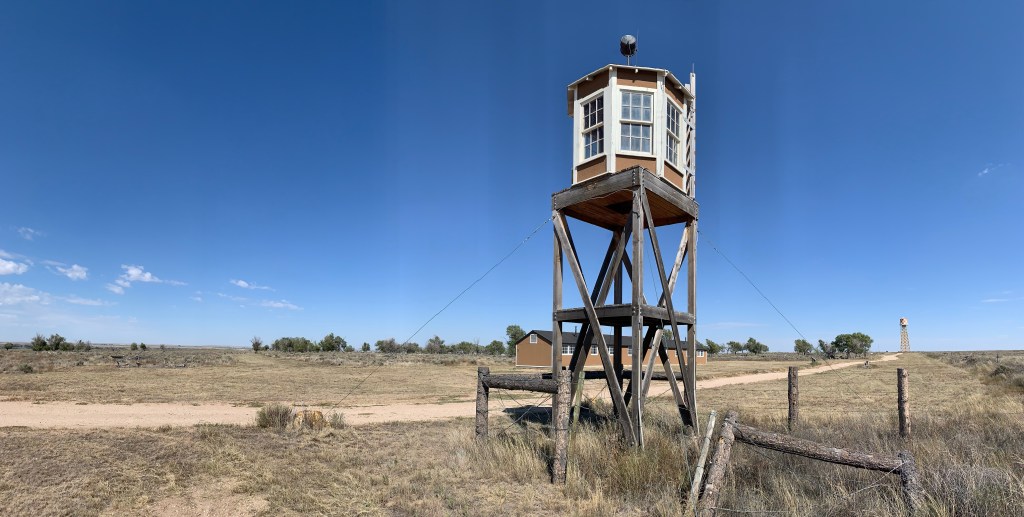
San Francisco residents went to Tanforan—now a shopping mall on the peninsula. Los Angeles residents were sent to Santa Anita or Pomona. Some were housed in racetrack horse stalls, which they needed to clean out themselves. California and half of Washington, Oregon and Arizona were declared ‘exclusion zones’ by the military, and no person of Japanese descent was allowed to remain there. Instead, they were transported from the assembly centers to one of ten camps. The American woman and her baby above were sent to Manzanar in California and then to Minidoka in Idaho. Others went to Amache in Colorado, Rohwer & Jerome in Arkansas, Topaz in Utah, Heart Mountain in Wyoming, Poston & Gila River in Arizona, and some were sent to the ‘segregation camp’ at Tule Lake in California near Oregon. Some male inmates were ordered to build their own barracks, latrines and other buildings. Women prepared meals for thousands. Guard towers were raised along barbed wire fences with searchlights and machine guns pointed inward. There was no privacy, not among family, not at meals, not in the group latrines and not in the group showers. The camps were in remote, desolate, dusty, unpopulated areas away from towns, many were deserts, some mountains and all were sabishii—lonely and forsaken.
Many Americans, including those incarcerated, were lied to about the program by our government: “temporary”, “for your own safety”, “normal” and “happy”. Even today, the program is referred to as “Japanese Internment Camps”, but the vast majority of those incarcerated were not Japanese, they were US citizens, mainly by birth, many never having been to Japan. Propaganda films lied and stated that “household belongings” were shipped to “pioneer villages”, that only those “within a stone’s throw” of military bases were forced to move, that people were “given jobs and more space in which to live” and “managed their own security”. The program was sold as being exemplarily generous, that the military provided for all needs and that the Japanese Americans “approved whole-heartedly”. Journalists and others were periodically given limited access only to the barracks of the most cooperative inmates.
In fact, there were water shortages, food shortages, food poisoning, unsafe living and working conditions, military brutality, unfair punishments, false charges, and inmates fatally shot, including a dog walker at Topaz, a truck driver at Tule Lake, and two protesters at Manzanar where guards fired into a crowd. Some elderly patients had been taken to the camps from their hospital beds, and over 1,850 died of disease and medical problems, including many infants. Complaints were discouraged or mocked. Pressure campaigns were used to enlist men into active combat in Europe. And always, anyone suspected of being disloyal was encouraged to renounce their citizenship and leave the country. In this system, particularly at Tule Lake, some reacted to their treatment by trying to be more Japanese, organizing protests and yelling Banzai—‘long live the Emperor’—at the guards.
They were Americans, and their Constitutional Rights of speech, to be secure in their homes and to due process were all violated for years. The root of this program was racism. Americans of Japanese descent were assumed to have loyalty to a foreign power, and even when they were natural born American citizens, they couldn’t be trusted and would have to prove their loyalty again and again. The Issei—1st generation—chose this country rather than the one of their birth. The Nissei—second generation—were born here, but some parents sent their children back for schooling Japan to preserve their language and culture. These children were called Kibei—returnees to America—, indicating that their parents wanted them to live here. All were Americans, either by their own choice or by their parents’. Only their fellow citizens refused to see them as truly Americans.
Although I quote Eleanor Roosevelt below, FDR and many other Americans believed in the ‘melting pot’—meaning melting metal to forge steel—, that Americans had a duty to assimilate and that their cultures would be purified into one culture. But the price of citizenship does not include giving up one’s culture, whether your name is Ohara or O’Hara. Imagine something happens in the future, and people of your family background are herded up and sent to Guantanamo. Even though you did nothing wrong, your guilt is suspected based on your family cultural background. Your communications are censored, and you are treated the same as foreigners or prisoners of war. And when you finally are freed, all your property has been taken, and nobody will help.
Visit national park sites for camps like Manzanar, Minidoka, Amache and Tule Lake, and interpretive sites in Seattle like the Klondike visitor center which partners with Bainbridge Island and the Wing Luke Museum. Topaz has a museum in Delta Utah (off I-15 towards Great Basin). Poston (off I-10) has a historic marker placed by internees & the Colorado River Indian Tribes near Parker on the Arizona border with California. Heart Mountain has an interpretive center between Cody and Powell in Wyoming (on the road between Yellowstone and Bighorn Canyon). Gila River is on restricted reservation land near Hohokam Pima—neither are open to the public—but the Huhugam Heritage Center has a small free exhibit, not far from Phoenix. There’s a museum in McGehee Arkansas for Rohwer and a monument for Jerome; both are just south of Arkansas Post. The Hawaiian experience was very different, but Honouliuli will eventually open as a historic site. Please encourage your elected representatives to preserve the history at all the camps.
I encourage you to read more about the experiences of the Americans who were sent to American Concentration Camps during WWII: Farewell to Manzanar, Only What We Could Carry, Journey to Topaz, Snow Falling on Cedars, and They Called Us Enemy, among many others. And take a moment to think about how you would feel, if it happened to your family.
“We have no common race in this country, but we have an ideal to which all of us are loyal: we cannot progress if we look down upon any group of people amongst us because of race or religion. Every citizen in this country has a right to our basic freedoms, to justice and to equality of opportunity. We retain the right to lead our individual lives as we please, but we can only do so if we grant to others the freedoms that we wish for ourselves.”
Eleanor Roosevelt, after visiting Gila River during WWII
Women’s contributions to our history have too often been ignored or downplayed. Several of the official national park sites primarily focus on telling women’s history, but the park service maintains a far longer list of women who deserve more recognition. The park service says that ‘women’s history can be found in all parks’, but that’s another way of saying that women’s history is secondary in most parks.
First listed are official park sites that focus on telling important women’s history well, and it includes suffragettes, abolitionists, business women, laborers, and political leaders.
Adams (MA) has much more on Abigail than I mentioned
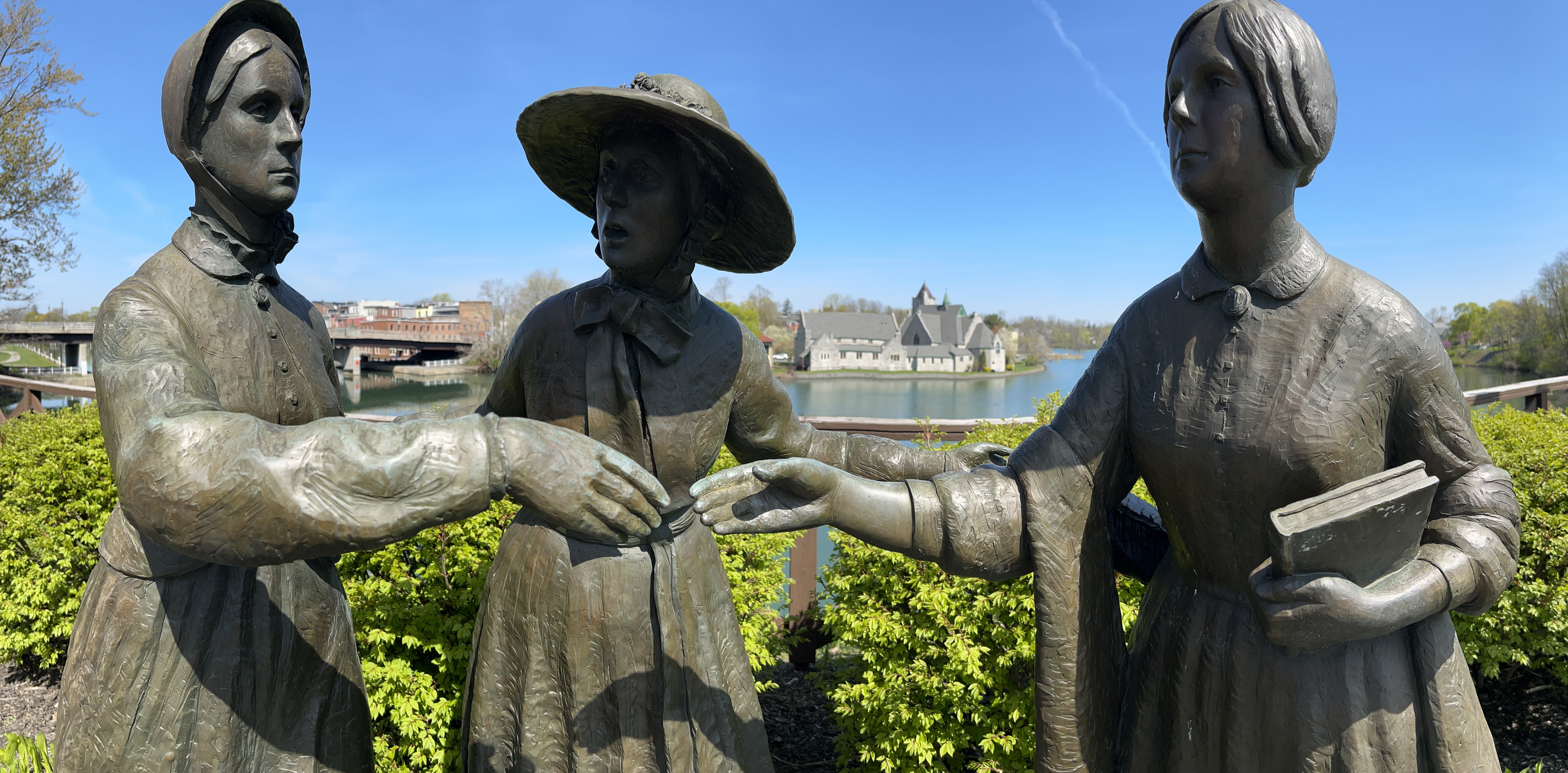
Women’s Rights (NY)—photo shows Bloomer introducing Stanton to Anthony in Seneca Falls.
Second is a very incomplete list of historically important women often mentioned at national park sites (links go to NPS articles), but without the recognition of their own official park sites. The list below has suffragettes, scientists, and women who fought for the rights of others, and all who must be remembered. A few of these are currently being considered for park recognition, along with a Votes for Women History Trail. My apologies for those I know I’m leaving off the list below.
Who was the first American woman to win the Nobel Peace Prize? The only woman to win the Medal of Honor? Our first Congresswoman, elected before women could vote? If there’s a woman on this list you haven’t heard about, please do yourself a favor and click her link below.
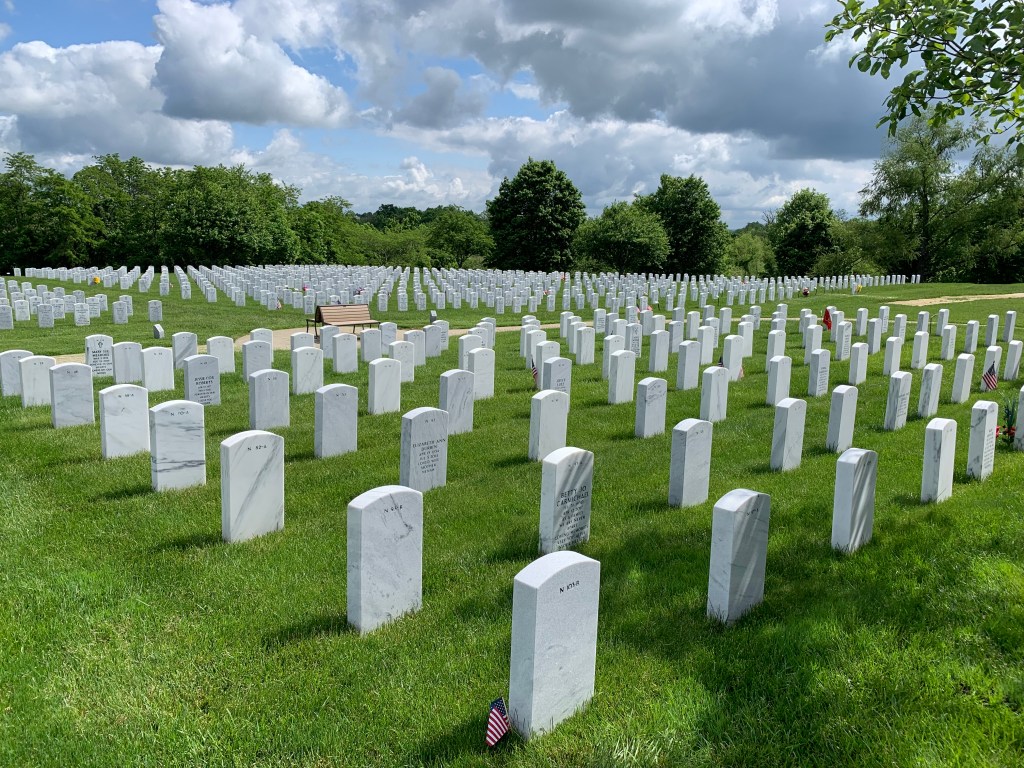
Many famous women also are at rest in Arlington National Cemetery, including astronauts, code-breakers, a Pulitzer-winning journalist and a Supreme Court Justice. But there’s just one memorial—Military Women’s Memorial—for all the women who served in war, despite the diverse stories of women in the Revolution, War of 1812, US-Mexican War, Civil War, WWI, WWII, WASPs, and the rest. We all need to do a better job of remembering and telling Women’s History, with more official, public recognition.
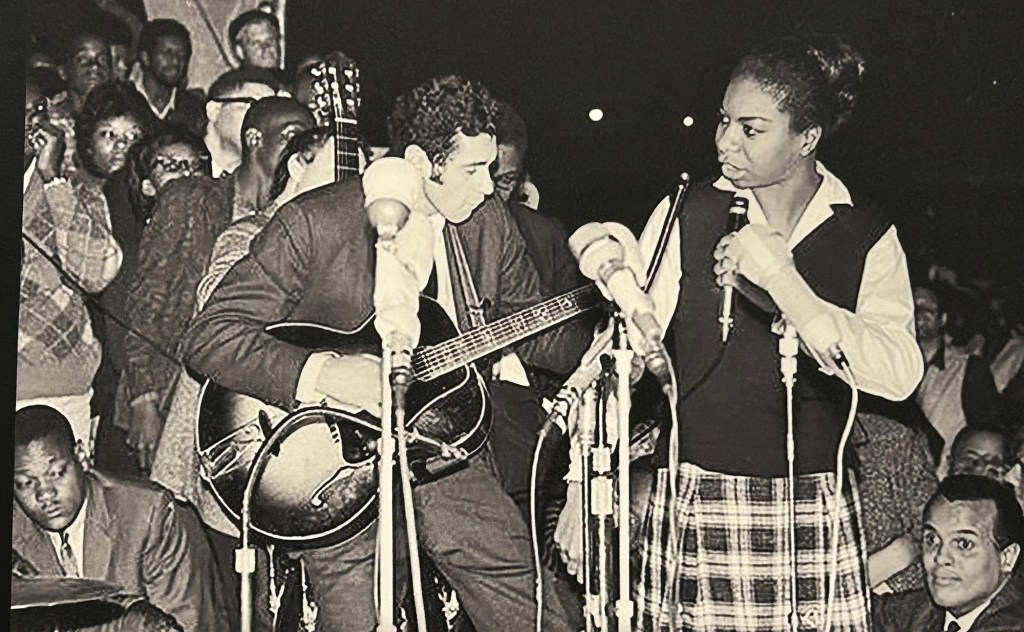
Nina Simone on the march from Selma to Montgomery, with Harry Belafonte lower right.
Black History is about much more than emancipation and education. Beyond the basic rights to liberty and literacy, Americans have a right to pursue happiness. All year long, the national park service celebrates those who broke the barriers that denied black people their full rights as citizens.
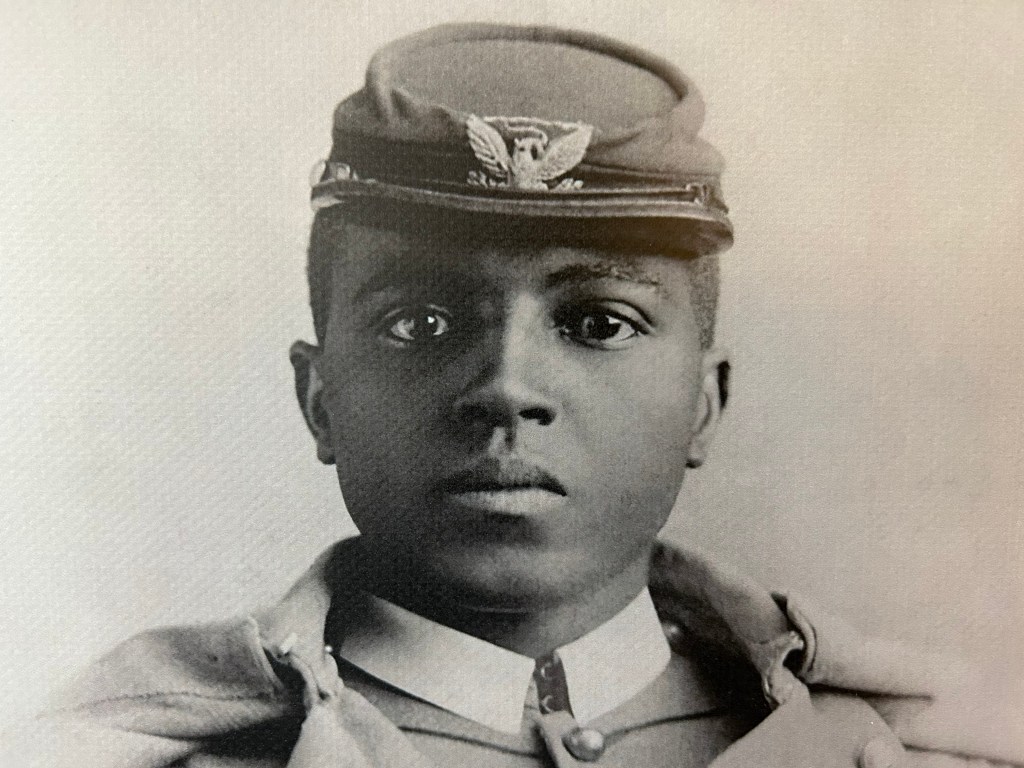
The African Burial Ground predates our country, includes both free and slave, and is today a powerful symbol of the right to belong, be recognized and be remembered. New Philadelphia, Illinois, was the first town in American officially founded by an ex-slave in 1836. Camp Nelson became a focal point for escaped slaves during the Civil War, both as refugees deserving help and as soldiers with a right to fight in uniform. Nicodemus, Kansas, 1877, is the oldest black settlement west of the Mississippi, and it still lives. Jazz began before the turn of the century in New Orleans. In 1903, Charles Young, born a slave, became the first black national park superintendent, and in 1917 became the first black Army Colonel (surpassing Dr Alexander Augusta, Bvt. Lt. Col. during the Civil War).
The Springfield Race Riot of 1908 sparked the creation of the NAACP, illustrating both the danger of race hatred and the need for African American advancement. In 1911, Maggie Walker, daughter of a slave, became the first African American woman to found and run a bank, among her many civic accomplishments in Richmond, Virginia, and nationally. In April 1939 after being refused the right to sing elsewhere, Marion Anderson made national news singing at the Lincoln Memorial.
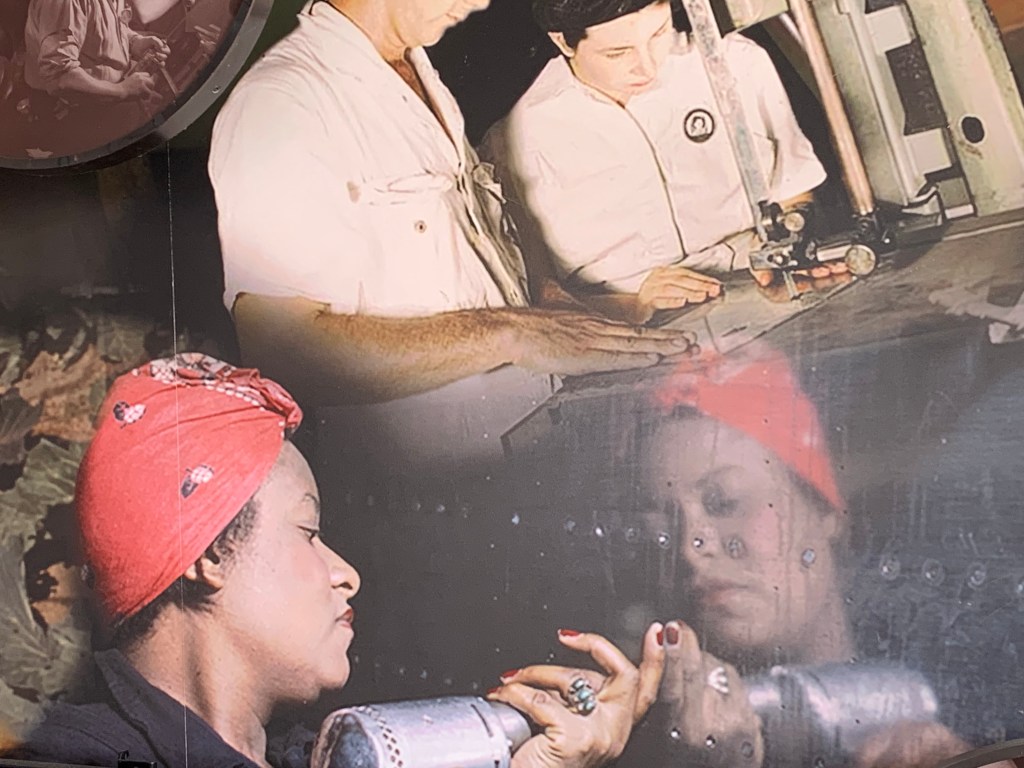
WWII brought new opportunities, including employment for African American women among the Rosie the Riveters who built our fleets and the Tuskegee Airmen who helped turn around the war by defending our bombers over Germany. Tragically, segregation in the military led to the Port Chicago disaster in 1944, which in turn led to desegregation in the military.
Eisenhower was President in 1955, and America was a very conservative, 88% white, 95% Christian country. Still, when Mamie Till-Mobley’s boy was brutally murdered in Mississippi, she shocked the conscience of the nation with his open casket, sparking the Civil Rights Movement. In 1961, black and white Freedom Riders rode buses to integrate interstate travel, lunch counters and restrooms, but were attacked by “Citizens Councils for Racial Integrity”: the KKK. Despite school desegregation, Normandy Veteran Medgar Evers was denied law school admittance due to his race, so he worked with the NAACP on desegregation, civil rights protests and an investigation into Till’s murder. Returning home the morning after listening to JFK (below) promising to desegregate “hotels, restaurants, theaters, retail stores, and similar establishments”, Evers found his FBI protection detail had been suddenly withdrawn, and he was shot in his driveway, unintentionally desegregating the white hospitals of Mississippi shortly before dying.
That September, the KKK killed four young black girls by bombing a church in Birmingham. In November, JFK was assassinated. But the movement did not stop; it grew. In 1965, in Selma, Alabama, three times residents marched towards Montgomery to try to register to vote and to protest. First, they were beaten bloody and unconscious on the street by police on horseback. Second, they were stopped by legal action. And Third, they marched 54 miles to the capitol in Montgomery, joined by people from across the country, 25,000 strong, ultimately securing the Voting Rights Act a few months later.
The Reverend Dr Martin Luther King, Jr, who led that march and many others, gave his life for Civil Rights, along with many others. On 28 August 1963 in front of the Lincoln Memorial, he said, “I have a dream that my four little children will one day live in a nation where they will not be judged by the color of their skin but by the content of their character.” Well, two of his children are now dead, and his youngest is 60. I believe we failed to achieve his dream in his timeframe. But we must not stop trying.
”One hundred years of delay have passed since President Lincoln freed the slaves, yet their heirs, their grandsons, are not fully free. They are not yet freed from the bonds of injustice. They are not yet freed from social and economic oppression. And this Nation, for all its hopes and all its boasts, will not be fully free until all its citizens are free.”
President John F. Kennedy, Televised Address to the Nation on Civil Rights, 11 June 1963
The first school for African Americans began in Boston in 1798, was named Abiel Smith in 1815 and joined the Boston Public School System in 1816. In 1847, Sarah Roberts was denied admission to a closer, better funded white school, and her father sued, hiring Robert Morris, an African American attorney. The case ended up being forcefully argued by Abolitionist Charles Sumner—who was later beaten with a cane in the US Senate—, but lost. However, five years after the verdict, Massachusetts voted to outlaw public school segregation in 1855, 100 years before the US Supreme Court. And black education advanced elsewhere, such as Wilberforce College, begun by the African Methodist Episcopal (AME) Church in 1856 in Ohio, the first college owned and run by African Americans.
That school desegregation law might not have come to pass if not for the extraordinary Frederick Douglass. Taught the alphabet as a 12 year old Maryland house slave, then denied further education and fiercely beaten, Frederick secretly taught himself to read and write. With the encouragement of Anna Murray, a free black woman from Baltimore, he escaped, married her and settled in Massachusetts. He joined the AME Zion Church (following Harriet Tubman and Sojourner Truth) and became a preacher in 1839. From then until his death 56 years later, Douglass was a paid speaker for Civil Rights. He befriended William Lloyd Garrison and began speaking to Abolitionists about his escape from slavery. He toured the northern states with the Anti-Slavery Society, and he toured Ireland and Great Britain, lecturing in churches. In England he befriended the Abolitionist Thomas Clarkson who got Parliament to end slavery in its colonies, and his English supporters bought Douglass’ freedom from his owner in Maryland. He returned to fight for abolition, desegregation and suffrage. Douglass wrote three best-selling autobiographies, and many readers were astonished that his speeches and books were the work of a former slave. He worked on the Underground Railroad with Tubman and with John Brown. During and after the Civil War he worked with Presidents. He fought for women’s suffrage. While not a traditional educator, Douglass changed many people’s minds, the most influential force for advancing Civil Rights in American History. In fact many of his works have not since been surpassed, such as his 1852 speech “What to the Slave is the Fourth of July?”
Emancipation brought an immediate need for schools, and northern churchgoing Abolitionist ladies, both white and black, went south to teach, even as the Civil War was just beginning. The Penn School was founded in South Carolina in 1862. Hampton University began as a ‘contraband school’, and attracted one ex-slave named Booker T. Washington to walk across Virginia to go to school. He founded the Tuskegee Institute in Georgia and hired another ex-slave named George Washington Carver, who would bring early bookmobiles or wagons loaded with techniques to improve agriculture into the fields to educate thousands of ex-slaves. Freedman Bureau schools were built along the border, including at Harpers Ferry, where Douglass and WEB DuBois lectured the children of slaves at Storer College. Booker T. Washington met Sears philanthropist Julius Rosenwald, whose parents lived next to self-educatedAbe Lincoln, and in 1911 they began building 5,000 Rosenwald Schools across the south.
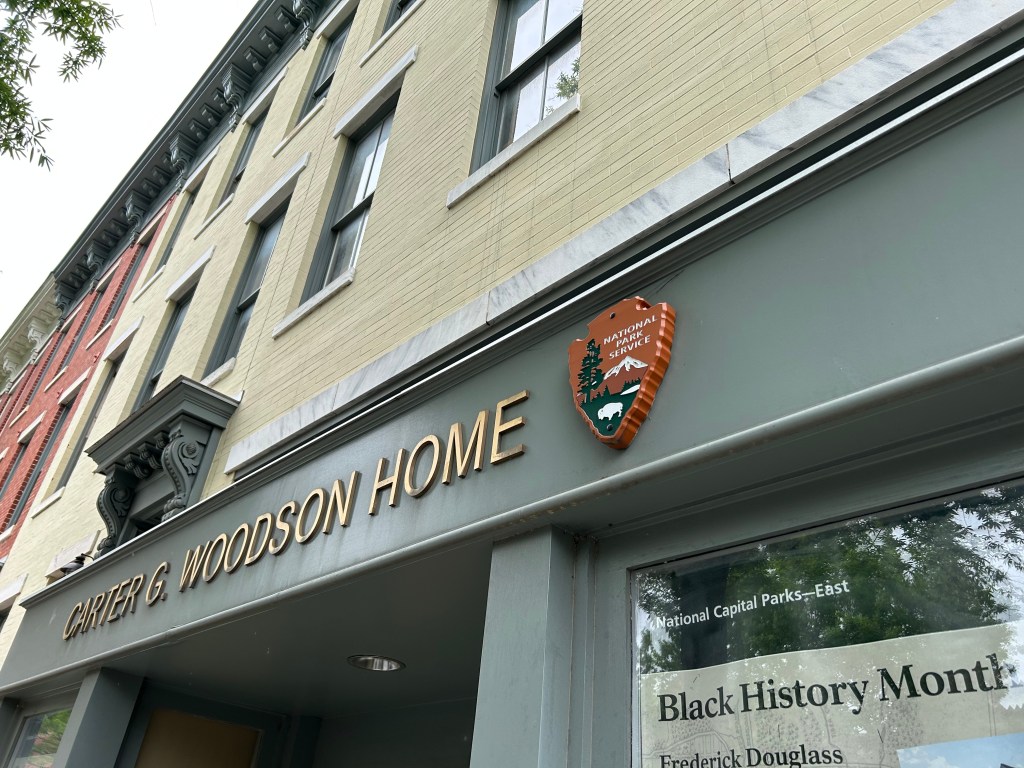
While desperately needed, education was starkly unequal, and white teachers often had different expectations and goals for African American children. In Native American schools, education meant cultural obliteration, as native languages, songs, oral histories, traditions and cultural connections were severed, punished and often lost. Education needs people who respect, support and celebrate their students, culture and communities. Carter G. Woodson—the only Harvard History PhD whose parents had been enslaved—understood that, and he went on to lead the national education movement for African Americans in Washington DC, nationally raising standards, publishing, and mentoring future leaders, like educator and presidential advisor Mary McLeod Bethune. Dr Woodson believed that African American History needed to be studied and understood, and it is largely due to his efforts that we have Black History Month.
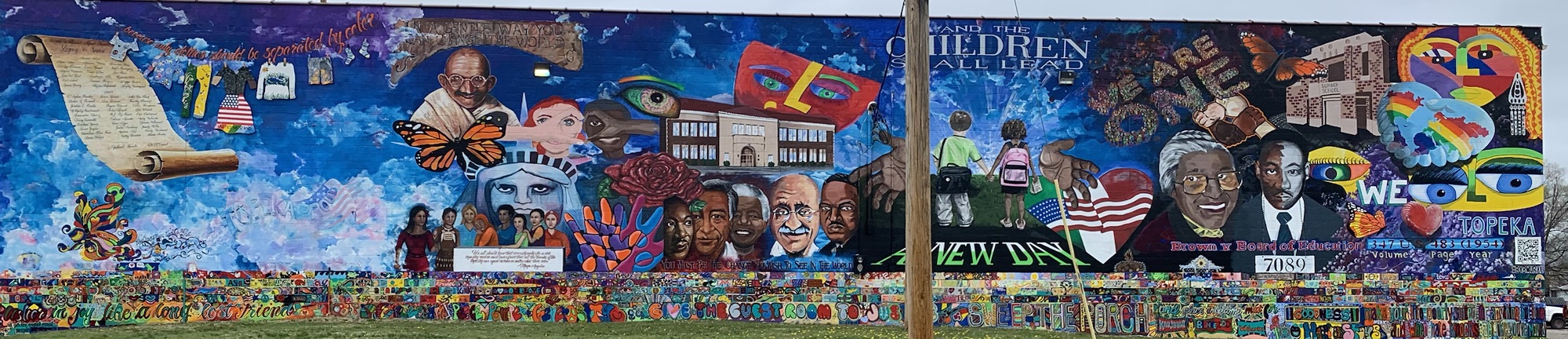
Ultimately, the Supreme Court had to decide that segregated schools were unfair, damaging to black children and unconstitutional, in Brown v Board (see community mural above). In Texas there’s a segregated school for Mexican American children, shut down after Brown, that shows an unequal school. Desegregation led to race riots at Little Rock Central High School, and Eisenhower sent in the 101st Airborne to walk black children to school. Some districts shut schools down for years rather than integrate.
Education is still too segregated in the US, and recent studies suggest racial disparities in education are now getting worse, especially as the Supreme Court no longer enforces Civil Rights laws effectively. For hundreds of years it was illegal for slaves to learn. No reading, no math, no writing, just the darkest ignorance, enforced by the whip. The men and women who struggled to lift themselves and others out of that darkness, knew the value of education for themselves and their children. Our teachers perform this heroic task every day, with little recognition, fighting against the cruelty of ignorance. Anne Sullivan brought Helen Keller out of darkness by teaching, becoming the first woman interred at the Olmsted designed National Cathedral, followed by her most famous student. We have traveled a great distance on the road to educational equality, but we must not turn back. We must keep teaching and learning and not stop until we get there.
“Thus the thoughtless drift backward toward slavery.”
Carter G. Woodson, from The Mis-Education of the Negro
The precursor to the Civil War was John Brown’s raid on Harpers Ferry arsenal in 1859. Lee, Jackson & Jeb Stuart were all there in uniform, before they turned against our country. Douglass & Tubman were not in the raid, although they were involved. Booth arrived to witness Brown’s execution. The government may have quickly restored order in town, but across the country people divided into abolitionists or secessionists. Lincoln, arguing against slavery, was elected in 1860, and southern states began to secede to protect slavery.
The Confederacy raised an army and attacked Fort Sumter in April of 1861. That same month, Union soldiers were attacked by Confederate sympathizers in Baltimore, leading Clara Barton to begin her service as a nurse. In May three escaped slaves were granted protection as ‘contraband’ at Fort Monroe in northern Virginia. Lincoln sent troops south where they were incompetently led into battle at Manassas in Virginia in July. The Confederates also won at Wilson’s Creek but were unable to take Missouri. The Union won at Carnifex Ferry in September, causing West Virginia to split from Virginia and become a state in 1863. In November, the Union Navy took Port Royal South Carolina, liberating 10,000 slaves, many forming the first African American regiment there one year later.
In January 1862 the Union won at Mill Springs Kentucky, followed the next month by Grant taking Fort Donelson on the strategic Cumberland River in northwest Tennessee. In March the Union won again at Pea Ridge in Arkansas and at Glorietta Pass in New Mexico, supported by Fort Union cavalry. In Tennessee in April, Shiloh (above) was a costly victory, followed by naval victories at Fort Pulaski blockading Savannah Georgia and the capture of New Orleans in Louisiana, where three more African American regiments would form within a year. In May the Union took Yorktown in Virginia, but in June the Union failed in its approach to Richmond. Then in August another loss at Manassas again. The Confederates marched into Maryland, but lost at Antietam in September. In December, the Union failed again in Virginia at Fredricksburg.
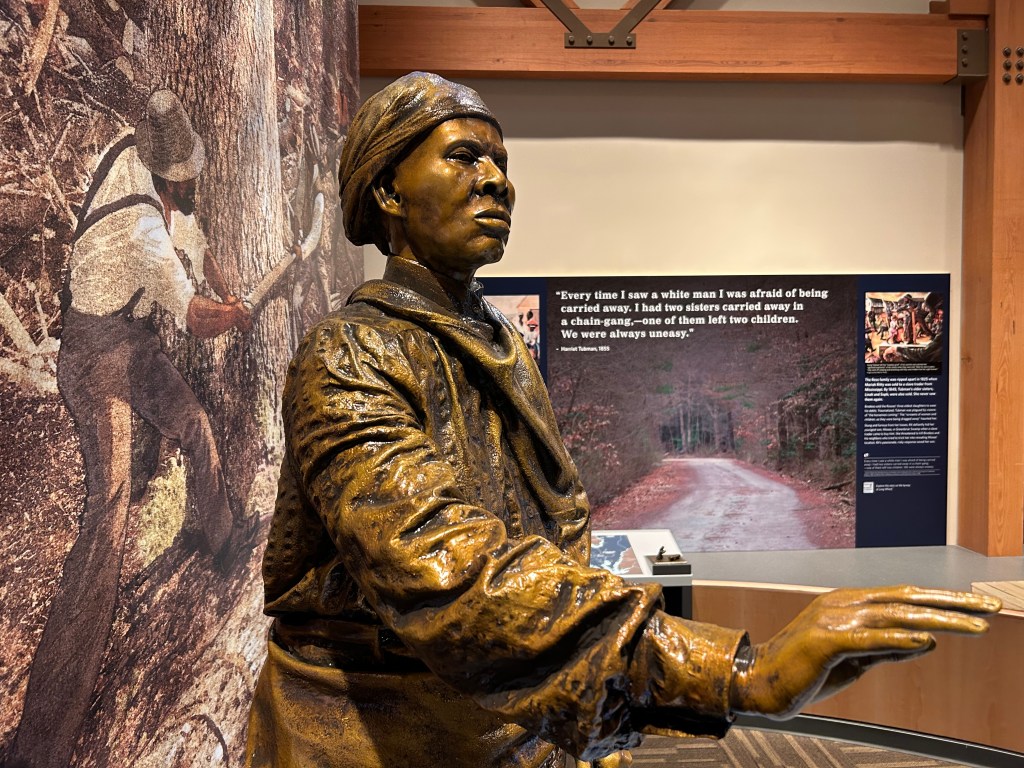
On the 1st of January 1863, the Emancipation Proclamation was read first with immediate effect to the SC 1st Volunteers, freeing them, their families and friends forever. Many more emancipated and free African American men would join the Union army at bases like Camp Nelson in Kentucky, Fort Scott in Kansas, and New Bedford and Boston in Massachusetts. That same winter the Union won at Stones River in Tennessee but lost at Chancellorsville in Virginia in spring. On June 2nd, Union spy Harriet Tubman led 150 African American soldiers to free 700 slaves at Combahee Ferry. Lee marched north again, losing decisively in July at Gettysburg in Pennsylvania. Grant concluded his siege of Vicksburg the next day, July 4th. In the fall the Union advanced to the border of Tennessee and Georgia at Chattanooga and Chickamauga.
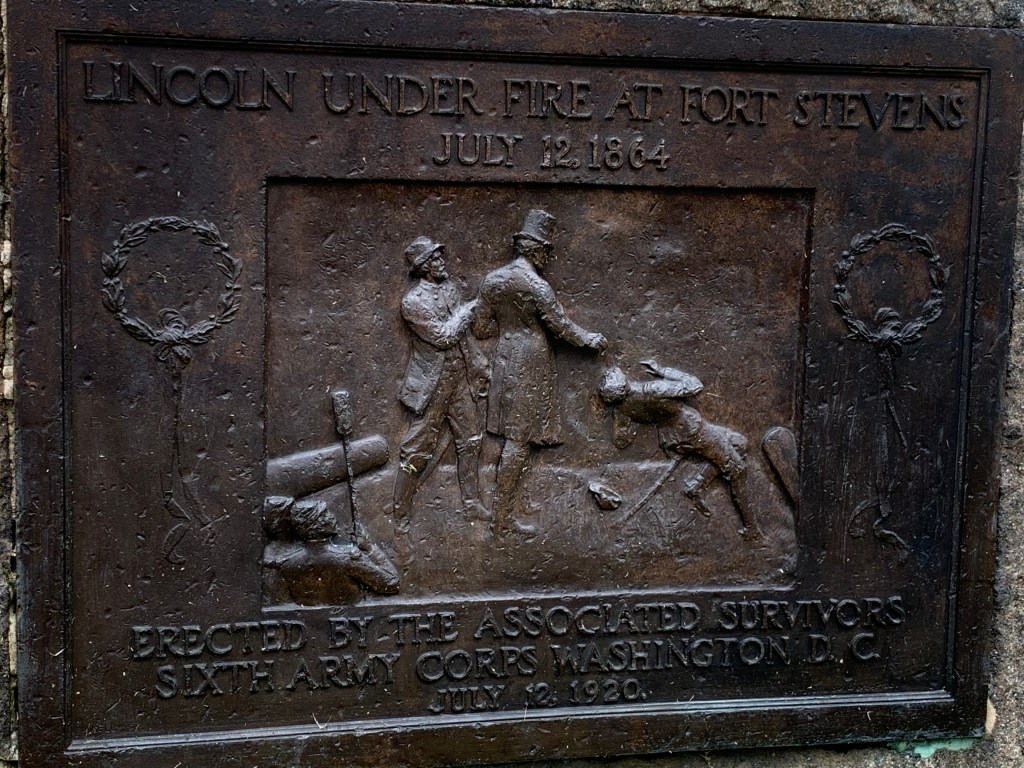
In 1864 the Union took northern Virginia with extensive fighting in Spotsylvania county. Slowly Grant was advancing towards Richmond, at one point outmaneuvering Lee at Petersburg and beginning a long siege of both cities. Meanwhile, Sherman was advancing in Mississippi, despite delays at Brices Cross Roads and Tupelo. In Georgia, Sherman was stopped at Kennesaw Mountain in July, before resuming his march to the sea. With the Confederate capital under siege, Lee ordered a sneak attack on the Union capital in July, crucially delayed at Monocacy in Maryland, after which snipers fired at Fort Stevens in DC. In August, Farragut took the last major southern port of Mobile Bay in Alabama. And in October, the Union defended the Shenandoah Valley at Cedar Creek in Virginia.
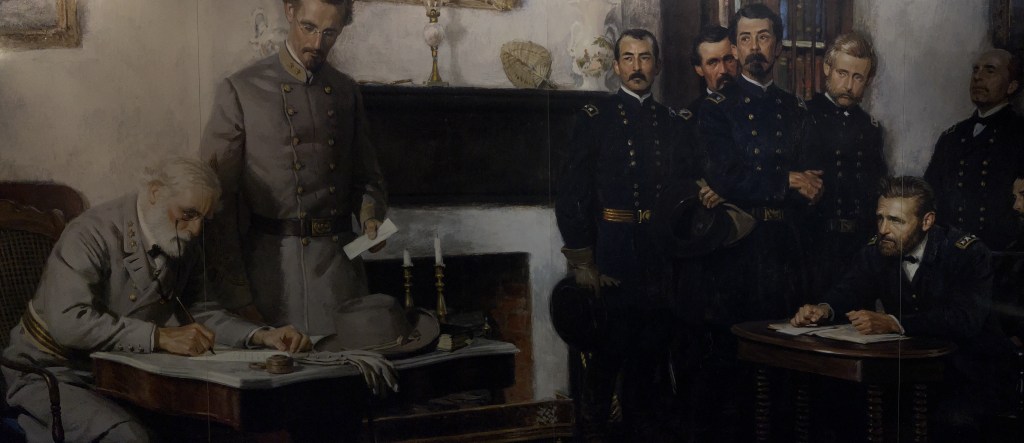
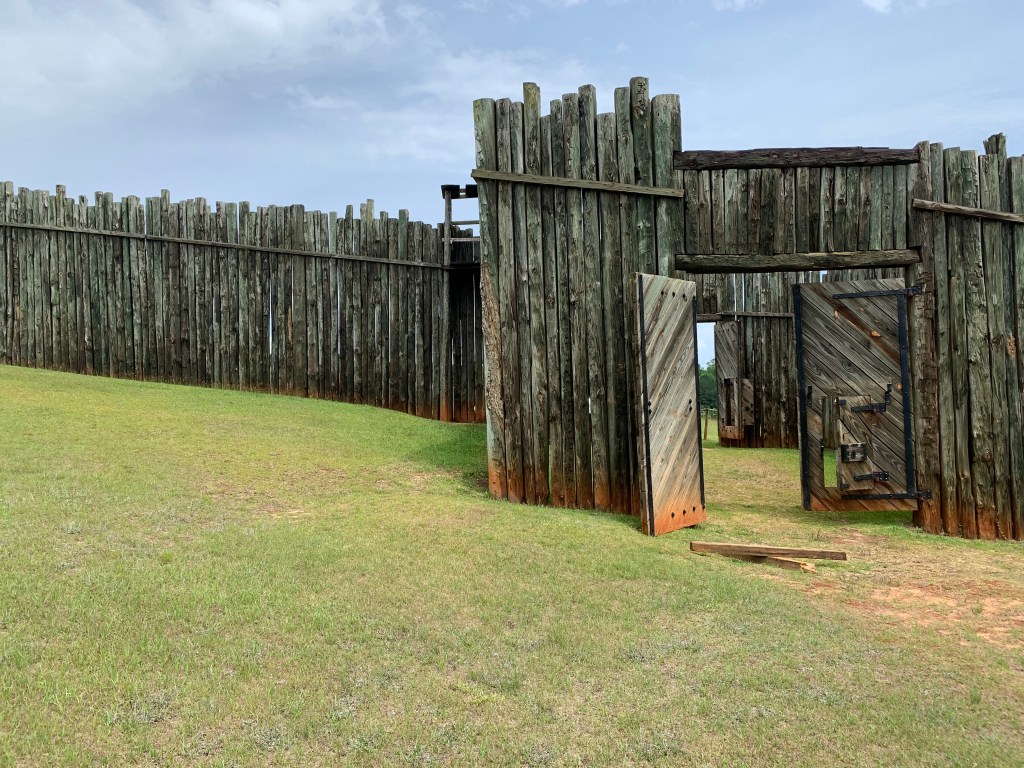
In the spring of 1865, after a months-long siege, Lee abandoned both Petersburg and Richmond, retreated and then surrendered in Appomattox in April. Andersonville was liberated in May. The CSS Shenandoah, which circumnavigated the globe during the war seizing African American crews from whaling ships, surrendered in Liverpool England in November, the last act of the war.
The precursor to the Civil War was John Brown’s raid on Harpers Ferry arsenal in 1859. Lee, Jackson & Jeb Stuart were all there in uniform, before they turned against our country. Douglass & Tubman were not in the raid, although they were involved. Booth arrived to witness Brown’s execution. The government may have quickly restored order in town, but across the country people divided into abolitionists or secessionists. Lincoln, arguing against slavery, was elected in 1860, and southern states began to secede to protect slavery.
The Confederacy raised an army and attacked Fort Sumter in April of 1861. That same month, Union soldiers were attacked by Confederate sympathizers in Baltimore, leading Clara Barton to begin her service as a nurse. In May three escaped slaves were granted protection as ‘contraband’ at Fort Monroe in northern Virginia. Lincoln sent troops south where they were incompetently led into battle at Manassas in Virginia in July. The Confederates also won at Wilson’s Creek but were unable to take Missouri. The Union won at Carnifex Ferry in September, causing West Virginia to split from Virginia and become a state in 1863. In November, the Union Navy took Port Royal South Carolina, liberating 10,000 slaves, many forming the first African American regiment there one year later.
In January 1862 the Union won at Mill Springs Kentucky, followed the next month by Grant taking Fort Donelson on the strategic Cumberland River in northwest Tennessee. In March the Union won again at Pea Ridge in Arkansas and at Glorietta Pass in New Mexico, supported by Fort Union cavalry. In Tennessee in April, Shiloh (above) was a costly victory, followed by naval victories at Fort Pulaski blockading Savannah Georgia and the capture of New Orleans in Louisiana, where three more African American regiments would form within a year. In May the Union took Yorktown in Virginia, but in June the Union failed in its approach to Richmond. Then in August another loss at Manassas again. The Confederates marched into Maryland, but lost at Antietam in September. In December, the Union failed again in Virginia at Fredricksburg.
On the 1st of January 1863, the Emancipation Proclamation was read first with immediate effect to the SC 1st Volunteers, freeing them, their families and friends forever. Many more emancipated and free African American men would join the Union army at bases like Camp Nelson in Kentucky, Fort Scott in Kansas, and New Bedford and Boston in Massachusetts. That same winter the Union won at Stones River in Tennessee but lost at Chancellorsville in Virginia in spring. On June 2nd, Union spy Harriet Tubman led 150 African American soldiers to free 700 slaves at Combahee Ferry. Lee marched north again, losing decisively in July at Gettysburg in Pennsylvania. Grant concluded his siege of Vicksburg the next day, July 4th. In the fall the Union advanced to the border of Tennessee and Georgia at Chattanooga and Chickamauga.
In 1864 the Union took northern Virginia with extensive fighting in Spotsylvania county. Slowly Grant was advancing towards Richmond, at one point outmaneuvering Lee at Petersburg and beginning a long siege of both cities. Meanwhile, Sherman was advancing in Mississippi, despite delays at Brices Cross Roads and Tupelo. In Georgia, Sherman was stopped at Kennesaw Mountain in July, before resuming his march to the sea. With the Confederate capital under siege, Lee ordered a sneak attack on the Union capital in July, crucially delayed at Monocacy in Maryland, after which snipers fired at Fort Stevens in DC. In August, Farragut took the last major southern port of Mobile Bay in Alabama. And in October, the Union defended the Shenandoah Valley at Cedar Creek in Virginia.
In the spring of 1865, after a months-long siege, Lee abandoned both Petersburg and Richmond, retreated and then surrendered in Appomattox in April. Andersonville was liberated in May. The CSS Shenandoah, which circumnavigated the globe during the war seizing African American crews from whaling ships, surrendered in Liverpool England in November, the last act of the war.
Dallas County Alabama systematically denied its 15,000 African American residents from registering to vote, using poll taxes, literacy tests, white-only primaries, and grandfather clauses, which made registration easier for those whose ancestors voted when only whites could vote. In 1963, with older people intimidated by murderous KKK raids or being fired for speaking out, organizers asked local high school students to protest. They did, meeting in churches—the only places they could safely assemble—and they were trained in non-violent protesting. Students marched by the thousands, staged lunch counter sit-ins, were beaten and arrested. All civil rights meetings were then banned by a local judge in 1964. Then, the Reverend Dr Martin Luther King, Jr came to Selma to speak in defiance of that ban, bringing national media attention. The contrast between black citizens, old and young, assembling peacefully to try to register to vote, and the police who denied their rights violently—criminals with badges—was to play out on TV.
The teachers marched with their students. The police filled the jails with hundreds of students. Beatings outside churches turned uglier, and on 18 February 1965, while protecting his family, Jimmy Lee Jackson was shot to death by a police officer who was not punished. In response, the people decided to march 54 miles to the state capital in Montgomery. The police responded at the Edmund Pettus Bridge—the first step in the march—with billy clubs, horses and tear gas. Bloody Sunday, 7 March 1965. The TV coverage made the protest national overnight. Dr King organized a second march, but stopped on the bridge to avoid violence and due to a federal injunction. Rev James Reeb was killed on 11 March. LBJ called out the national guard, saying “we shall overcome” in a major speech 15 March. On 17 March, a judge cleared the injunction. Then Dr King led a third march, all the way from Selma to Montgomery from 21 to 25 March. Singers like Sammy Davis Jr, Nina Simone, and Harry Belafonte encouraged 25,000 marchers along the route. Upon arrival at the statehouse, Dr King gave his “How Long, Not Long” speech, including the phrase, “the arc of the moral universe is long, but it bends toward justice”. LBJ signed the Voting Rights Act on 6 August 1965.
Selma may have been the turning point that enfranchised millions of African Americans, but the city and surrounding ‘black belt’ in central Alabama has suffered economic exclusion. Burned out buildings are common there today. The national park service is currently renovating several historic buildings in Selma including an interpretive center, and there’s also a Voting Rights Museum just across the Edmund Pettus Bridge which has an excellent, detailed display. Selma’s sights include the churches, lodgings and offices used by the organizers, and the jail where they were incarcerated. Halfway on the trail, near where Viola Liuzzo was murdered by the KKK, the park service has another interpretive center with an excellent multimedia film. Along US 80 are the four campsites used by the marchers. And on the campus of Alabama State University in Montgomery, there’s another interpretive center with a different, also excellent film. And Montgomery sights include the state Capitol, a memorial designed by Maya Lin, and the Rosa Parks Museum, along with various archives and gathering areas. The drive is easy, and I recommend all three stops for the complete experience.
The King Center in Atlanta gives a broad and deep view into the life and works of Dr King, as well as the ongoing non-violent international justice movement. The Birmingham Civil Rights Institute explores how deeply segregation divided society, how violent the oppression became both across the street in the park and at the 16th Street Baptist Church where four young girls were killed by the KKK in a bombing, and how strong the Civil Rights Movement became. But the Selma to Montgomery trail, with its searing photos and video testimony of foot soldiers, brings history to life. The open racism (see photo) is shocking and revealing. In one of the films, a white woman argues that since Jefferson Davis was their president, Lincoln’s Emancipation Proclamation has no effect, that slavery is still the law. Such vile hatred does not dissipate overnight. Indeed, in both subtle and ugly ways, racism still divides our society. So we must feel this history again to continue fighting more effectively.

































 Zero Carbon Travel