This Blog

This blog is a creative exercise. The whole idea of trying to visit parks and world heritage sites by electric vehicle wasn’t suggested to me by anyone. Deciding what to write about and how to present it takes imagination, from what stories I decide to tell and which photos I choose to take and use.

Travel requires imagination. My itinerary has been anything but straight, as I often feel myself driven by curiosity, picking my spots by theme or asking ‘what if I try this way’. Even within parks, visitors must choose how to spend their time, so I often let my imagination take the lead. Should I bike, hike or kayak?

History requires imagination. How are places connected? More than once, I’ve asked whether or how one historic figure knew another and learned to piece together disparate parts of our American story. What was it like for natives, patriots, pioneers, and slaves? What were people thinking for history to unfold the way it did? What can we learn that informs our decisions today?

When I drive, I find my time full of thinking. The whole idea of dividing how we think into four distinct ways of thinking, each with different motives, techniques and goals, came to me while driving. New ideas require imagination, time, and a curious mix of concentration and inspiration, that I find on the road.

Most people, I fear, lack imagination. When in their comfort zone, they take in new information easily. But outside of that, they lack interest, and they resist new ideas, particularly challenging new perspectives or uncomfortable facts they never want to consider. Some are simply busy, preferring to delegate thinking to others who make it their business to tell people what to think.

But life requires imagination. Living well, especially in a diverse and rapidly changing world, requires curiosity, an open mind, empathy, and persistently trying to find your own way. Imagination can prepare you both to avoid problems and to take advantage of opportunities. Every day is a new kaleidoscopic puzzle we need to navigate through as best we can, and for that, imagination is our best friend.

Tennessee in Photos

Celebrating completing the Volunteer State!

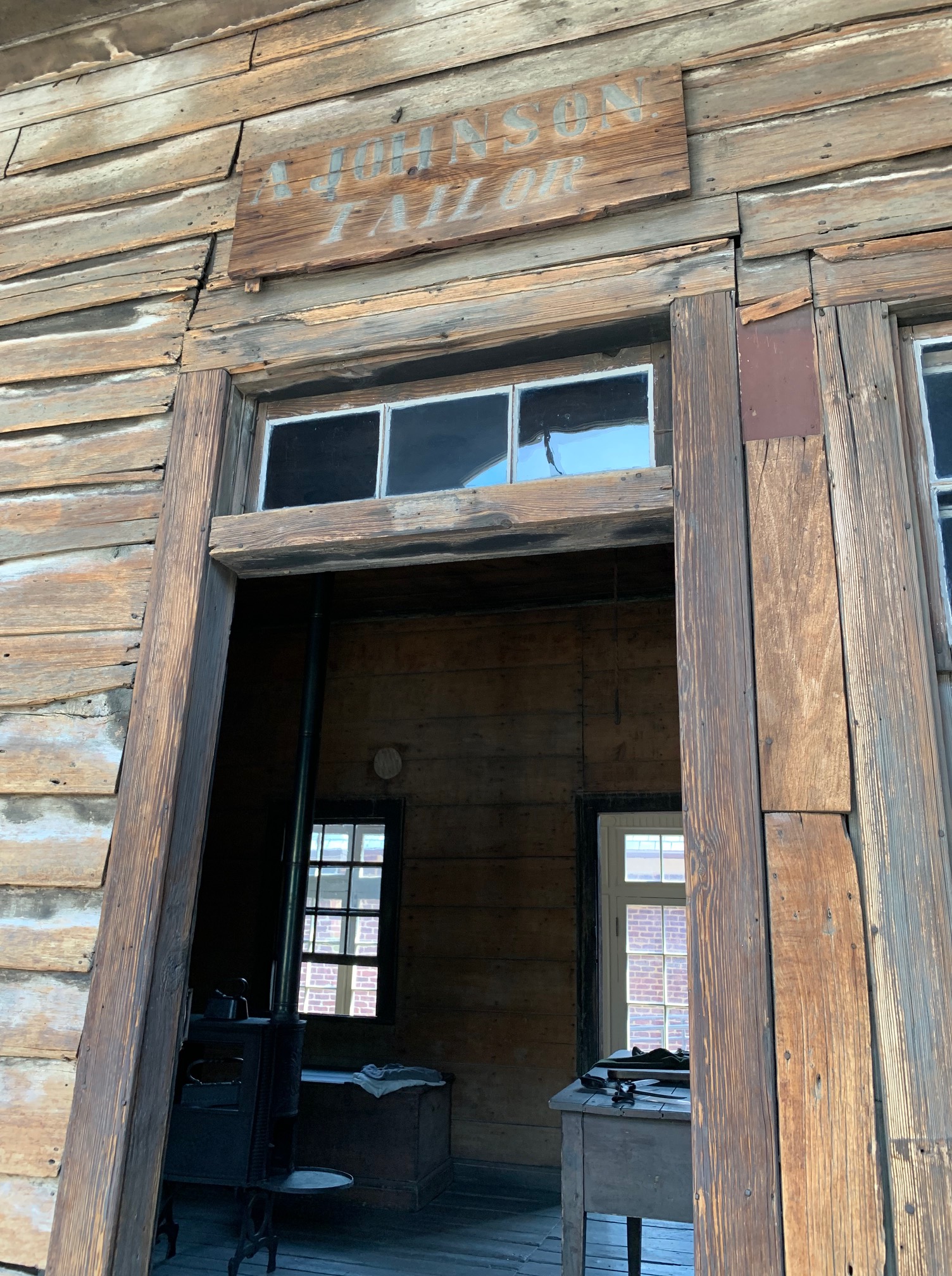
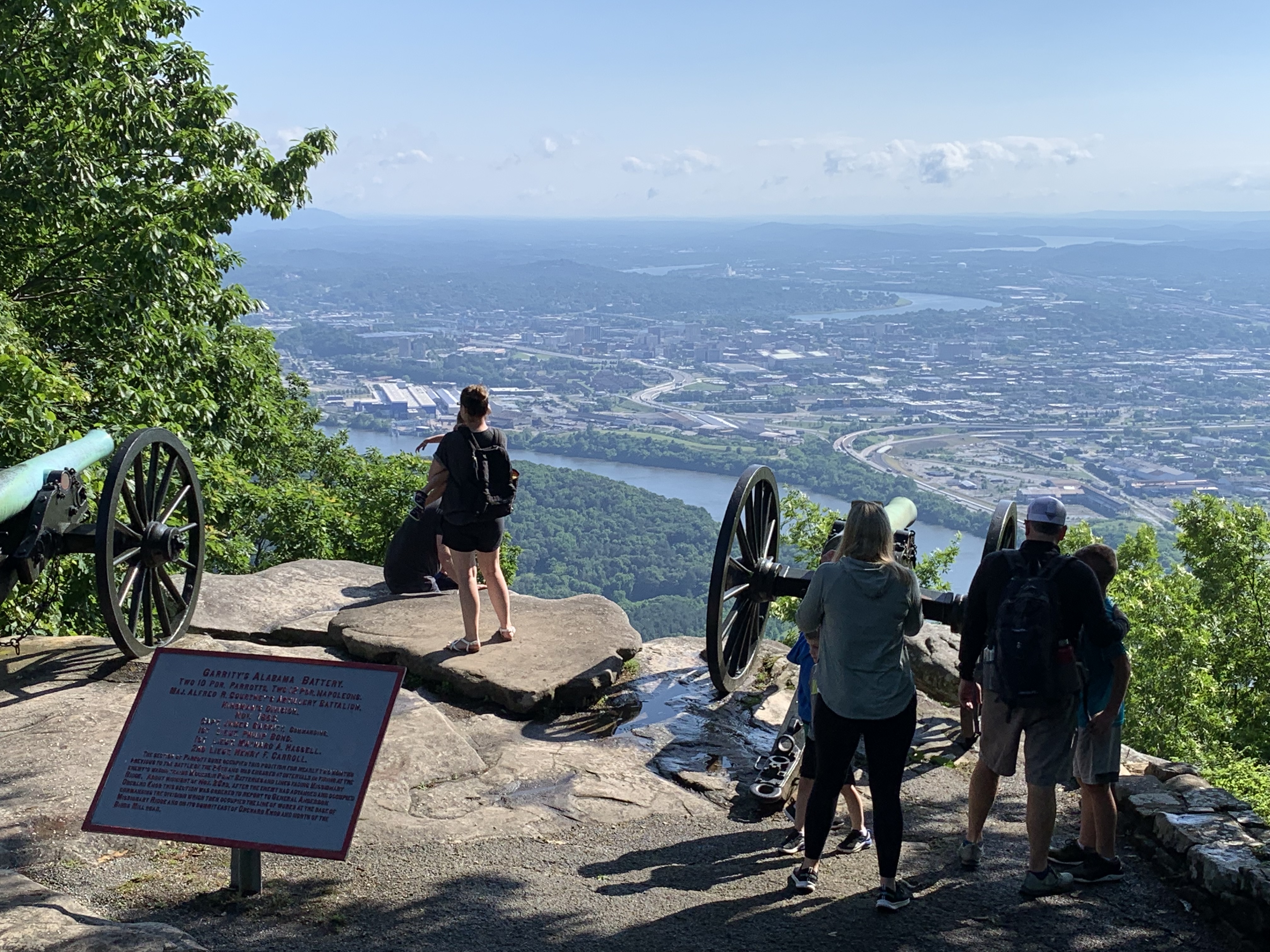
Andrew Johnson NHS, Chickamauga & Chattanooga NMP (partly in Georgia), Fort Donelson NB (partly in Kentucky), Great Smoky Mountains NP & WHS (partly in North Carolina), Obed WSR, Shiloh NMP (partly in Mississippi), and Stones River NB are above. Big South Fork NRRA, Cumberland Gap NHP, Natchez Trace Parkway & National Scenic Trail, Overmountain Victory NHT, and Trail of Tears NHT are also partly in the state. Tennessee is an NHA dedicated to the Civil War, which includes the affiliate site, Parkers Cross Roads.

Best of the Midwest

Best Park: Isle Royale. Wildlife, wilderness, multi-day hiking, boating, camping, forests, mountains, waters. Isle Royale, above, is the best Midwest park in many categories, despite being the least visited national park in the lower 48.

Best State: Missouri. Under-appreciated Missouri has Ozark Scenic Riverways, a karst-cavern, spring-fed paddling, sparkling gem, and Ste. Geneviève, a cultural midwestern marvel, not to mention Gateway Arch and more.

The Midwest specializes in history, exemplified by these best-in-class parks.

Best Bicycling: Cuyahoga Valley.

Best Heritage Area: Freedom’s Frontier.

Best Museum(s): Dayton Aviation.

Best Native American Site: Pipestone.

Best Place to Lose Yourself in Nature: Voyageurs. (Get a boat-in campsite.)

Best Ranger: Nicodemus. She’s part of the living heritage.

Best Scenery: Pictured Rocks.

Best Trail: Learn About all the Pioneer Trails at Scotts Bluff.

Best World Heritage Site: Taliesin.

Most Tragic Folk Song: Keweenaw.

Read more about all parks in the Midwest region.

Tennessee Civil War National Heritage Area

Tennessee is the only state that is also a national heritage area, focused on the Civil War, with four national park units, three other battlefield parks, three Civil War oriented museums, and Andrew Johnson NHS. The nationally established parks cover the history best, but state parks—especially Fort Pillow—are also historically important.

  • 1862 Fort Donelson NB Grant gained access to the Cumberland River in the northwest.
  • 1862 Shiloh NMP Grant won a costly battle, despite a Confederate surprise attack.
  • 1862 Parker’s Cross Roads a failed attempt to block a Confederate retreat.
  • 1862-3 Stones River NB, with slaughter pen & hell’s half acre, a bloody victory.
  • 1863 Chattanooga NMP another Union victory, securing railroads in the southeast.
  • 1864 Fort Pillow a massacre of surrendering black soldiers by Nathan Bedford Forrest.
  • 1864 Battle of Franklin a disaster for the Confederates, especially a dozen or so generals.

Fort Pillow is on a bluff then overlooking a sharp bend in the Mississippi River north of Memphis. It is well sited for firing down at passing ships, but there are several higher hills around the fort, making it defensively weak against a land attack. Nathan Bedford Forrest brought superior troops in number and experience, and attained the element of surprise. The Union leader was shot dead early on by sharpshooters, and his replacement refused to surrender. The battle was soon over, as the Confederates surrounded the fort, moved in and overran the ditch defenses.

Except that the slaughter continued, long after the battle was won.

The state park visitor center at Fort Pillow has a disappointing exhibit that repeatedly describes the 1864 congressionally designated “massacre” as only a “controversy”, displays grandiose portraits of General Forrest, and provides numerous excuses for the one-sided outcome (see below list of dead). Over the years, many apologists—the same who describe the Civil War as a heroic cause for states rights—have tried to defend the actions of the Confederates at Fort Pillow, but there’s nothing honorable about a 20 to 1 slaughter.

The facts—excluded in the museum exhibit—tell the true story. Most of the Union white soldiers were taken prisoner, while almost all of the black soldiers were killed. One of Forrest’s own sergeants described many black soldiers trying to surrender and wrote, “General Forrest ordered them shot down like dogs”. Black soldiers were denied prisoner of war status throughout the war, and the Union stopped prisoner transfers due to this official Confederate policy, clearly stated after Fort Pillow. Forrest became the first Grand Wizard of the Ku Klux Klan after the war. The site should be a national battlefield, and the history of Forrest’s massacre of black soldiers told accurately.

Parker’s Cross Roads Battlefield

This is an affiliate site in Tennessee focused on Nathan Bedford Forrest, who fought most of his Civil War battles in the Volunteer State. At the end of 1862, Forrest was in the midst of his guerrilla warfare destroying railroads, bridges, raiding supplies, recruiting rebels, taking prisoners and attacking the Union. Union troops moved near a key railroad and roadway crossing in the middle of western Tennessee to cut off Forrest’s escape south across the Tennessee River. Forrest attacked, was repelled, and tried to flank the Union troops. But more troops arrived behind him, so he ordered his men to ‘charge both ways’ and withdrew in the confusion. Forrest lost more men in the battle, but he escaped as the Union failed to cut him off.

If you visit the site, you might get the mistaken impression that this was a great victory for Forrest, who is compared with Napoleon in the park film. This is ironic, since ‘Napoleon’ is synonymous with having delusions of grandeur. The grounds are well kept, but there’s not really much to see. The cabin below was moved to the site later, as were examples of cannon and a caisson. There are reenactments held here. There are also many romanticized images of Forrest in the museum. As he later became the first Grand Wizard of the Ku Klux Klan, this hagiography of Forrest is both tragic and an embarrassment for the great state of Tennessee, which was divided during the war. Forrest was a brutal leader responsible for perhaps the worst atrocity of the Civil War, which I will summarize next week. History must endeavor to tell the truth.

Natchez Trace National Scenic Trail

This year I revisited the Natchez Trace Parkway, determined to get out of my car and hike more on the “old trace” which is a National Scenic Trail that runs along the same ridge from Natchez Mississippi to Nashville Tennessee. Potkopinu near the southern terminus has 20’ deep sunken sections of trail carved into the soft soil. There are other maintained sections near Jackson and Tupelo Mississippi. And there are many small remnants of the trace next to the parkway. I visited a couple small waterfalls on the trace in Tennessee and stopped at the memorial to and burial spot of Meriwether Lewis.

After completing his expedition with Clark, Jefferson appointed Lewis territorial governor in St Louis. Lewis worked hard to maintain peace with natives in the area, using his own funds and then applying for reimbursement from the US. An unscrupulous rival began a smear campaign against Lewis, using common delays in mail to paint Lewis as a poor administrator. Lewis set out to clear his name in DC personally, taking a trusted Native American friend with him for security. He wrote to his friends about his anguish at being maligned and misjudged.

One night in a cabin on the old Natchez trace in Tennessee, Lewis’ native aide was off looking for some missing horses, when shots were heard and Lewis was found shot in both the head and the stomach. He died later that morning. Witness testimony was inconsistent, but at one point someone in his party claimed to have heard both sounds of a scuffle and a cry for help, although they feared to enter his room during the night.

Bizarrely, the official report was suicide. Not sure how or why someone shoots themselves in both the head and the stomach. Years later, the body was exhumed and examined by a doctor who said it was likely the work of an assassin. Nevertheless, many historians are idiots, so the suicide theory did not die. They argue that Lewis was agitated, talking to himself, depressed and may have taken alcohol or medicine.

Obviously, Lewis had reason to be agitated, depressed and was practicing the speech he would give upon arrival in DC. The old trace was dangerous, the political situation was unstable and Lewis had dangerous rivals. At that moment, Lewis was basically unguarded. And more obviously, why would a suicidal man embark on a long journey and plan for his security, if he was preparing to kill himself? Lewis went on a personal mission to clear his name, and it’s extremely difficult to reconcile that fact with his giving up mid journey. If Lewis is known for anything in our history, it is completing the journey, even when times are tough. Meriwether Lewis was murdered on the Old Natchez Trace.

Blue Ridge National Heritage Area & Gullah Geechee Cultural Heritage Corridor

Some Cherokee still live in the Blue Ridge Mountains, although the western North Carolina heritage area is more focused on waterfalls, sights along the Blue Ridge Parkway, bluegrass music, the Great Smoky Mountains, and more. The Cherokee, angry about their stolen lands, sided with the British during the Revolutionary War, while their Piedmont—central NC—neighbors, the Catawba, sided with the Patriots.

A particularly beautiful area in the US, the Blue Ridge includes the headwaters of the New River and the eastern states highest mountain (Mitchell), gorge (Linville) and waterfall (Whitewater Falls), plus the homes of interesting people, including the poet Carl Sandburg. There’s also rich diversity of species and frequent wildlife sightings. I love driving through, and I have to admit to bending my itinerary a few times to see something new here.

The Gullah Geechee area is much larger, stretching from North Carolina to Florida, including some great national park units, like Reconstruction Era, Cumberland Island and Timucuan Preserve. I heard Gullah spoken several times in the Carolinas, and there are numerous spots along the coast in four states to stop and learn about quilts, baskets, and other crafts. I love the food, always wanting to stop for boiled peanuts, country captain, perloo or other dishes. Gullah Geechee is a living culture, a unique community, an integral part of our history, and this distinct heritage is woven deep into our collective roots.

I understand that Gullah developed as a common dialect among slaves who had lived or passed through Angola, hence the name. A great public TV program on the English language taught me a bit about Gullah years ago. You already know some of the words that come from Gullah, like gumbo, jitters, and tote. The settlement on Cumberland and the plantation at Timucuan have clues about the Caribbean crops of indigo and sea cotton brought to grow in the barrier islands and about the enslaved people who worked the plantations. Not only did the communities survive, but they retained some of their African and Caribbean connections, linking us with living communities in other countries today.

Midwest Trails

10 trails cross the Midwest region, including 8 National Historic Trails linking multiple sites, plus the Ice Age and North Country National Scenic Trails which are individual park units. Only the Ice Age NST is unique to the Midwest, while the other trails continue on into other regions. Here’s a quick summary in case you are interested in exploring the trails in the region.

  • Ice Age NST formed when 100,000 year old ice melted 11,000 years ago, lovely winding trails over hills and dells in Wisconsin.
  • Santa Fe NHT used from prehistory to present by natives, Spanish, cavalry, settlers, BNSF, Route 66 and now I-55, 44, 40, 15 and 10. I like the Mahaffie stop in Kansas above.
    • “Well it winds from Chicago to L.A,
      More than 2000 miles all the way”
      —Bobby Troup
  • Lewis & Clark NHT 1804-1806, Seaman joined Lewis in Ohio, Clark & York joined in Indiana, they entered the Purchase from Illinois, see replicas at the boat museum in Missouri, a Kanza earth-lodge in Kansas, many sites along the Missouri River in Nebraska, and memorials of the only expedition fatality, Sgt. Floyd, in Iowa.
  • Trail of Tears NHT ~1830 to ~1850, part passed through southern Illinois and Missouri, where the Trail of Tears State Park overlooks the Mississippi.
  • The Pioneer Trails, Independence Missouri has a Frontier Trails Museum, Scotts Bluff and Chimney Rock in Nebraska are scenic.
    • Oregon NHT 1836-1869, from western Missouri, through Kansas & Nebraska.
    • California NHT 1841 to 1869, same midwestern route as above.
    • Mormon Pioneer NHT 1846-1847, from western Illinois, through Iowa & Nebraska.
  • Stage & Mail Trails, follow the link for some recommended stops.
    • Butterfield Overland NHT 1857-1861, only a small portion is in Missouri.
    • Pony Express NHT 1860-1861, follows the pioneer trails through Kansas & Nebraska.
  • North Country NST, established in 1980 and designated a unit in 2023, is still a bit disjointed, but in the region, it runs from Fort Miamis in Ohio, up through Michigan, along the cliffs through Pictured Rocks NL below, across Wisconsin, and from Grand Portage NM through Minnesota.

Cumberland Island National Seashore

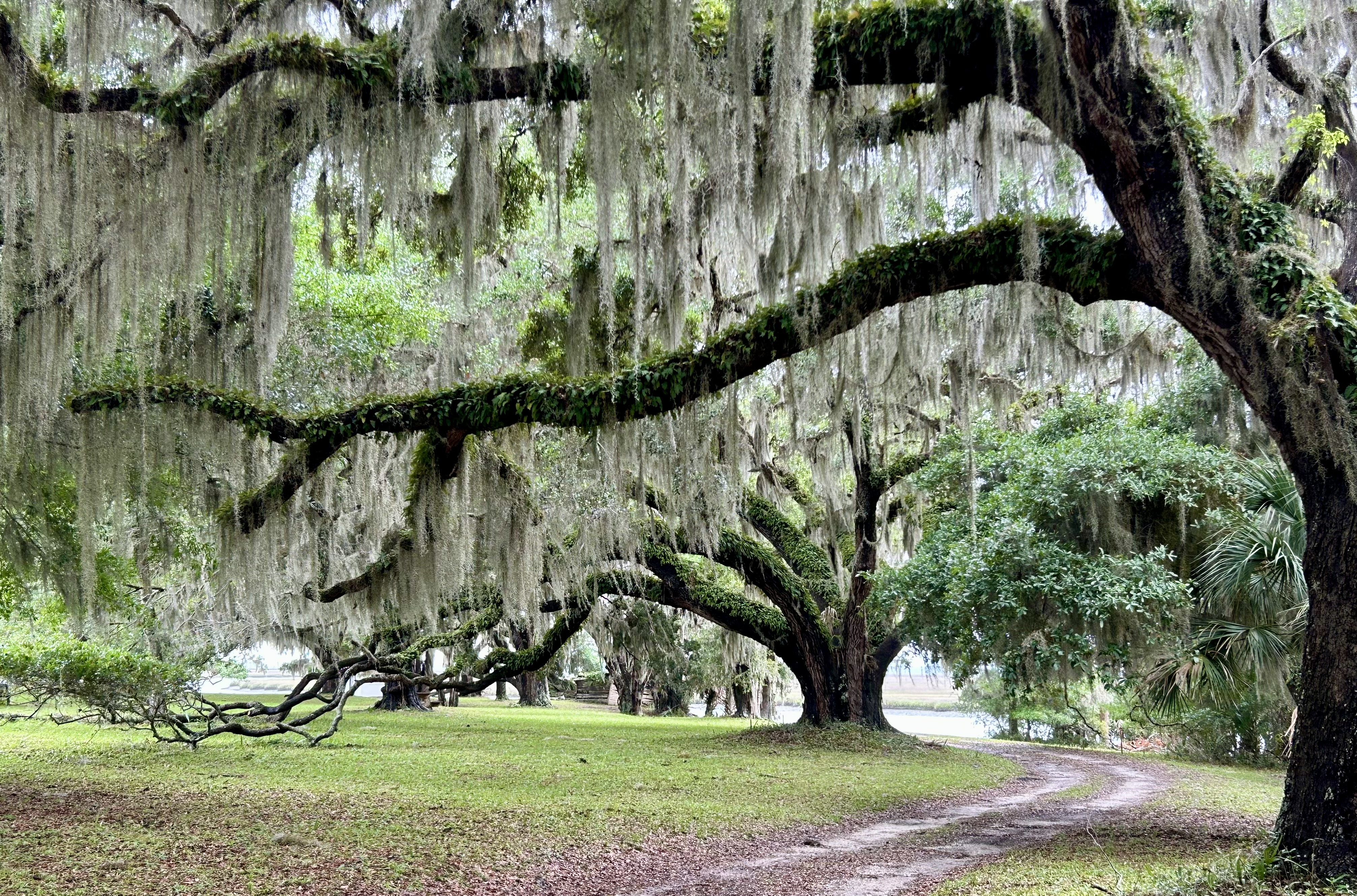
Decades later, I returned to see the southern live oaks that have haunted my dreams. Now I know the ferns that grow on the tops of their branches are called resurrection ferns, since they revive to a bright green after it rains. As a teen, I was told that humans could eat the Spanish Moss that hangs down from their branches, but returning as a tourist I was told that no humans ever did, only horses. I was too ashamed to admit I ate some long ago and thought it tasted OK.

Since I had been to the island before, I knew the only way to get to the north end on a day trip was to take a tour, so I joined the NPS recommended van tour and got to see everything from the settlements at the north to the Dungeness ruins in the south. The photo above is behind the Plum Orchard mansion, one of a few Carnegie family homes built on the island. The Carnegies were excluded by the other billionaires on neighboring Jekyll Island, so many of them settled here. Plum Orchard is beautiful and has interesting innovations, but plantation style troubles me. The center of the island is protected wilderness, and it feels like an ancient forest or overgrown jungle. Along the way we saw wild boar, wild horses, an alligator, several armadillos, and many beautiful birds.

I don’t always try to draw historic connections between parks, but bear with me this once. The natives here were related to the Timucuan. The Gullah Geechee (next week’s post) descendants of slaves are related to those all along the coast up to Reconstruction Era and down into Florida. The southern live oaks from this island were used to build the “iron sides” of the USS Constitution in Boston. Nathaniel Greene, commanding general of the Southern Campaign of the Revolutionary War, died shortly after retiring near Savannah Georgia, and his wife remarried and moved to Cumberland Island. There, Greene’s daughter Louisa cared for one of his cavalry officers, Henry Lee—veteran of Eutaw Springs—, before his death and burial at Dungeness mansion. Lee’s son was Robert E. Lee of Arlington House. And, if you want one more parks connection, the Carnegie’s innovative household DC power was likely overseen by Thomas Edison.

When I first arrived on the island several decades ago, I was invited as a guest of someone who knew the owners into a grand old home under the oaks for a meal, stories on the porch and an after dinner cognac, my first. As I recall, there was some discussion about whether the home would have to become an inn to survive, and we all agreed that it was important for beautiful old historic places to be preserved. (It later became the exclusive Greyfield Inn of Kennedy wedding fame). Folks need to come to places like Cumberland Island to try to imagine what it was like all those years ago, to walk along the barrier island beaches, to see the wild horses, to learn about dugout canoes, see photos of Primus and Amanda Mitchell who went from slaves to church and settlement founders, to learn about sea island cotton, and especially to feel the special old grandeur under those southern live oak trees.

South Carolina & Southern Campaign of the Revolution National Heritage Corridors

These are two obscure heritage areas in the Carolinas, but none of the state or national park employees I spoke with had heard of either. While the South Carolina NHC has historic sites, plantations and gardens, the parks included—like Pinckney, Sumter, and Overmountain Victory—are unrelated. And while the Revolution NHC includes Moores Creek, it excludes many other important battles in the Carolinas and neighboring states. Don’t waste time following these confusing corridors, but instead start with an overview at historic Camden.

Here’s the story of the Revolutionary Campaign in the southeast, focusing on national sites and affiliates. Virginians Henry, Jefferson and Washington led their colony into rebellion, in concert with the north. Virginia colonial governor Lord Dunmore called in troops, organized loyalists and even formed a regiment of liberated slaves. Echoing Bunker Hill, Patriot militia fought well at Great Bridge in 1775, prompting Dunmore to order the shelling of Norfolk Virginia. Echoing Concord, the Patriots cut down a broadsword charge at Moores Creek North Carolina in 1776. And at the end of 1778, the Patriots took Savannah, followed up with a victory at Kettle Creek Georgia in early 1779.

But in May of 1779, the British sacked Portsmouth in Virginia, kicking off their southern campaign in earnest. In late 1779, the British returned to Savannah, capturing it after a siege. In early 1780, they took Charleston SC after another siege. Next, they turned their attention inland, hoping to sway more loyalists, keep their large southern colonies, and then take the fight back to the northeast. In 1780 the British fought over a dozen battles around Charleston and Camden (see Cornwallis’ HQ below) in South Carolina, consolidating their control over the colony.

But the British were ruthless in the south, revoking pardons, burning homes & farms, and imprisoning or hanging those who wouldn’t sign loyalty oaths. The most infamous example happened in May 1780 at Waxhaws—named after a local tribe—, when Banistre Tarleton massacred Patriots, inspiring further rebellion. Popular resentment against the tyrannical British grew, especially among the Scots-Irish settlers. After Gates lost his leadership position after failing at Camden, Nathaniel Greene began a much more effective guerrilla campaign in the back country.

The Patriots didn’t win all their battles, but many of the British victories were Pyrrhic, causing them to cede territory even after eking out technical victories. The back country belonged to the Patriots, especially when reinforcements crossed the Appalachian Mountains on the Overmountain Victory Trail. The Patriots won at Kings Mountain in late 1780, then again at Cowpens in January 1781.

Even though the British subsequently won at Petersburg VA, Ninety-Six in SC, and at Guilford Courthouse NC, clearly, they were not winning the broader campaign. Cornwallis brought his troops north to Virginia. After a close battle near Camden, the remainder of the British forces retreated for Charleston, with the last battle in the southeast fought at Eutaw Springs in September 1781. The denouement was set for Yorktown.