All Southeast Sites *

The southeast region has more park units (70) than any other region, and I have visited all the units—*except 6 in US Caribbean territories—including all the affiliates, heritage areas and trails in Alabama, Florida, Georgia, Kentucky, Mississippi, North Carolina, South Carolina and Tennessee. Given the large number of states and parks involved, the summary below is organized by theme.

Natural Areas

All of the National Parks in the southeast preserve natural areas, including the reef area of the Florida Keys from Biscayne to the Dry Tortugas, the lowlands of Congaree and the Everglades, the Great Smoky Mountains, and even underground at Mammoth Cave. Other park units, Canaveral, Cape Hatteras, Cape Lookout, Cumberland Island and the Gulf Islands, protect barrier islands. Big Cypress, Big South Fork, Chattahoochee River, Little River Canyon and Obed River all protect diverse riparian areas.

Pre Civil War

Ocmulgee Mounds, Russell Cave and Timucuan stretch back before history, but Horseshoe Bend covers a tragic event in Native American history. Several sites cover early colonial history, including Castillo de San Marcos, De Soto, and Forts Caroline, Frederica, Matanzas and Raleigh. Cowpens, Guilford Courthouse, Kings Mountain, Moores Creek and Ninety-Six cover the Revolution. Blue Ridge, Cumberland Gap, Lincoln Birthplace, Natchez HistoricParkwayTrace, and Pinckney, trace the path of history in the southeast, culminating in the war to abolish slavery.

Civil War and beyond

Andersonville, Brices Cross Roads, Camp Nelson, Chattanooga, Forts Donelson, Pulaski and Sumter, Kennesaw Mountain, Mill Springs, Shiloh, Stones River, Tupelo and Vicksburg are Civil War sites. Johnson, Reconstruction, and Tuskegee Institute cover post war struggles. Carter, Sandburg & Wright Brothers are historic highlights. Birmingham Civil Rights & Freedom Riders, Emmett Till, MLK, Medgar Evers, and Tuskegee Airmen reveal the continuing struggle for Civil Rights.

I learned more traveling in the southeast than any other region, as the area is so rich in history and culture. And the preserved natural areas include some of my favorite park experiences, from underwater and underground, to rivers and shores, and to wildlife experiences in mountain forests. And they can all be explored without traveling in a carbon-burning vehicle.
Tennessee in Photos

Celebrating completing the Volunteer State!

Andrew Johnson NHS, Chickamauga & Chattanooga NMP (partly in Georgia), Fort Donelson NB (partly in Kentucky), Great Smoky Mountains NP & WHS (partly in North Carolina), Obed WSR, Shiloh NMP (partly in Mississippi), and Stones River NB are above. Big South Fork NRRA, Cumberland Gap NHP, Natchez Trace Parkway & National Scenic Trail, Overmountain Victory NHT, and Trail of Tears NHT are also partly in the state. Tennessee is an NHA dedicated to the Civil War, which includes the affiliate site, Parkers Cross Roads.

Tennessee Civil War National Heritage Area

Tennessee is the only state that is also a national heritage area, focused on the Civil War, with four national park units, three other battlefield parks, three Civil War oriented museums, and Andrew Johnson NHS. The nationally established parks cover the history best, but state parks—especially Fort Pillow—are also historically important.

  • 1862 Fort Donelson NB Grant gained access to the Cumberland River in the northwest.
  • 1862 Shiloh NMP Grant won a costly battle, despite a Confederate surprise attack.
  • 1862 Parker’s Cross Roads a failed attempt to block a Confederate retreat.
  • 1862-3 Stones River NB, with slaughter pen & hell’s half acre, a bloody victory.
  • 1863 Chattanooga NMP another Union victory, securing railroads in the southeast.
  • 1864 Fort Pillow a massacre of surrendering black soldiers by Nathan Bedford Forrest.
  • 1864 Battle of Franklin a disaster for the Confederates, especially a dozen or so generals.

Fort Pillow is on a bluff then overlooking a sharp bend in the Mississippi River north of Memphis. It is well sited for firing down at passing ships, but there are several higher hills around the fort, making it defensively weak against a land attack. Nathan Bedford Forrest brought superior troops in number and experience, and attained the element of surprise. The Union leader was shot dead early on by sharpshooters, and his replacement refused to surrender. The battle was soon over, as the Confederates surrounded the fort, moved in and overran the ditch defenses.

Except that the slaughter continued, long after the battle was won.

The state park visitor center at Fort Pillow has a disappointing exhibit that repeatedly describes the 1864 congressionally designated “massacre” as only a “controversy”, displays grandiose portraits of General Forrest, and provides numerous excuses for the one-sided outcome (see below list of dead). Over the years, many apologists—the same who describe the Civil War as a heroic cause for states rights—have tried to defend the actions of the Confederates at Fort Pillow, but there’s nothing honorable about a 20 to 1 slaughter.

The facts—excluded in the museum exhibit—tell the true story. Most of the Union white soldiers were taken prisoner, while almost all of the black soldiers were killed. One of Forrest’s own sergeants described many black soldiers trying to surrender and wrote, “General Forrest ordered them shot down like dogs”. Black soldiers were denied prisoner of war status throughout the war, and the Union stopped prisoner transfers due to this official Confederate policy, clearly stated after Fort Pillow. Forrest became the first Grand Wizard of the Ku Klux Klan after the war. The site should be a national battlefield, and the history of Forrest’s massacre of black soldiers told accurately.

Parker’s Cross Roads Battlefield

This is an affiliate site in Tennessee focused on Nathan Bedford Forrest, who fought most of his Civil War battles in the Volunteer State. At the end of 1862, Forrest was in the midst of his guerrilla warfare destroying railroads, bridges, raiding supplies, recruiting rebels, taking prisoners and attacking the Union. Union troops moved near a key railroad and roadway crossing in the middle of western Tennessee to cut off Forrest’s escape south across the Tennessee River. Forrest attacked, was repelled, and tried to flank the Union troops. But more troops arrived behind him, so he ordered his men to ‘charge both ways’ and withdrew in the confusion. Forrest lost more men in the battle, but he escaped as the Union failed to cut him off.

If you visit the site, you might get the mistaken impression that this was a great victory for Forrest, who is compared with Napoleon in the park film. This is ironic, since ‘Napoleon’ is synonymous with having delusions of grandeur. The grounds are well kept, but there’s not really much to see. The cabin below was moved to the site later, as were examples of cannon and a caisson. There are reenactments held here. There are also many romanticized images of Forrest in the museum. As he later became the first Grand Wizard of the Ku Klux Klan, this hagiography of Forrest is both tragic and an embarrassment for the great state of Tennessee, which was divided during the war. Forrest was a brutal leader responsible for perhaps the worst atrocity of the Civil War, which I will summarize next week. History must endeavor to tell the truth.

Natchez Trace National Scenic Trail

This year I revisited the Natchez Trace Parkway, determined to get out of my car and hike more on the “old trace” which is a National Scenic Trail that runs along the same ridge from Natchez Mississippi to Nashville Tennessee. Potkopinu near the southern terminus has 20’ deep sunken sections of trail carved into the soft soil. There are other maintained sections near Jackson and Tupelo Mississippi. And there are many small remnants of the trace next to the parkway. I visited a couple small waterfalls on the trace in Tennessee and stopped at the memorial to and burial spot of Meriwether Lewis.

After completing his expedition with Clark, Jefferson appointed Lewis territorial governor in St Louis. Lewis worked hard to maintain peace with natives in the area, using his own funds and then applying for reimbursement from the US. An unscrupulous rival began a smear campaign against Lewis, using common delays in mail to paint Lewis as a poor administrator. Lewis set out to clear his name in DC personally, taking a trusted Native American friend with him for security. He wrote to his friends about his anguish at being maligned and misjudged.

One night in a cabin on the old Natchez trace in Tennessee, Lewis’ native aide was off looking for some missing horses, when shots were heard and Lewis was found shot in both the head and the stomach. He died later that morning. Witness testimony was inconsistent, but at one point someone in his party claimed to have heard both sounds of a scuffle and a cry for help, although they feared to enter his room during the night.

Bizarrely, the official report was suicide. Not sure how or why someone shoots themselves in both the head and the stomach. Years later, the body was exhumed and examined by a doctor who said it was likely the work of an assassin. Nevertheless, many historians are idiots, so the suicide theory did not die. They argue that Lewis was agitated, talking to himself, depressed and may have taken alcohol or medicine.

Obviously, Lewis had reason to be agitated, depressed and was practicing the speech he would give upon arrival in DC. The old trace was dangerous, the political situation was unstable and Lewis had dangerous rivals. At that moment, Lewis was basically unguarded. And more obviously, why would a suicidal man embark on a long journey and plan for his security, if he was preparing to kill himself? Lewis went on a personal mission to clear his name, and it’s extremely difficult to reconcile that fact with his giving up mid journey. If Lewis is known for anything in our history, it is completing the journey, even when times are tough. Meriwether Lewis was murdered on the Old Natchez Trace.

Overmountain Victory National Historic Trail

The trail stretches from Virginia, through a corner of Tennessee, south through North Carolina and into South Carolina at Cowpens and Kings Mountain (below). Revolutionary War re-enactors and enthusiasts follow parts of the trail on foot and by car annually, ever since some Boy Scouts walked the whole length in 1975. I’ve crisscrossed the area, and it’s beautiful country with whitewater rivers and some steep mountain slopes. Both the Appalachian Trail and the Blue Ridge Parkway cross and run along near the trail, and the Biltmore Estate is near the middle.

Many of the colonial settlers in the highlands here were descendants of Scots-Irish lowlanders, and their families still held grudges against the British, especially those who fought to extend the Empire by force. The British sent officers to the Carolinas to bribe and intimidate their subjects to remain loyal to the crown. They sent mercenaries, regular soldiers, and raised local militias to threaten settlers, particularly in the foothills. Their heavy-handed tactics provoked the Appalachian settlers. One particularly offensive leader was Major Patrick “Bulldog” Ferguson, who had ordered the bayonet slaughter of sleeping Patriot troops at Little Egg Harbor, NJ. He also designed the Ferguson rifle, a breach-loading rifle, and was wounded in the right arm in the Battle of Brandywine against General Washington, after which the British took Philadelphia.

The trail commemorates the pursuit of Ferguson’s army from north to south, by the citizen militias that rose up from Georgia, Tennessee, Virginia and the Carolinas against the overbearing British threat, culminating at Kings Mountain. Immediately before and after the events of the Overmountain Victory, the Patriots also won decisively at Musgrove Mill and Cowpens, respectively. These Appalachian Patriots turned the course of the Revolutionary War.

Normally, high ground is superior during fighting, but the ridge at Kings Mountain is steep, fairly straight and narrow. Once the patriots managed to get on both sides, the British became easy targets on top. Ferguson was shot off his horse, shot a young soldier asking him to surrender, and was finally shot multiple times and urinated upon before being buried in an unmarked grave where he lay. A headstone was later placed in the woods not far from the large monument at Kings Mountain below.

Big South Fork National River & Recreation Area

The Big South Fork is a 76 mile tributary from the Cumberland Plateau in Tennessee that joins the Cumberland River between Cumberland Falls and Lake Cumberland in Kentucky. The Falls are the second largest east of the Rockies and are the best place to see a moonbow on this side of the planet. Unfortunately, Kentucky has a littering problem, so Cumberland Falls State Park is also a place you will see trash in and along the river.

The Big South Fork looked better when I kayaked from Blue Heron to Yamacraw above (Sheltowee Trace Adventure Resort has a shuttle). Non-native insects killed many pine trees years ago, so the forest has more hardwoods now. Pollution upstream still degrades the water, but Appalachia is recovering from the damage done by coal mining. Blue Heron campground made a good base to charge my car and explore the old mine exhibit there, even though the tourist rail line to town is under repair.

The gorges and remote roads make it difficult to get around, so I recommend paddling if there’s enough water. I saw a young deer and a bald eagle on the river and enjoyed looking up at the cliffs. The hiking is excellent too, and my favorite was hiking under the huge rock shelter behind 113’ Yahoo Falls. There’s also a large natural bridge called Twin Arches. The area is thick with trees, which makes it difficult to see all the geological features of the gorges, but the lush dense foliage gives the river a primordial feel, especially since I saw not a single person while kayaking.

Obed Wild and Scenic River

Lilly Bridge is down to the left from the Lilly Bluff Overlook above. There’s a short trail from the small parking lot, a medium trail down to the bridge and longer trails too. The timing didn’t work out for me, but in theory on weekends you can ask at the Lilly Pad Hopyard near the bridge to help shuttle you to a kayak launch or pick you up. There’s a 2 mile class II trip on Daddy’s Creek and several longer and more challenging trips on the Obed & Emory Rivers and on Clear Creek, all depending on river flow levels, of course, and understanding the limited put in/ take outs available in these protected waters.

The park film showcases the paddling, climbing, hiking and wildlife, with a Tennessee ‘mountain dew’ vibe, and the area feels remote, with hog hunting permitted in the area. Moonshine distilleries must have operated around here for centuries (which may explain why I prefer Tennessee moonshine to their rye whiskey). The US also secretly enriched uranium nearby in Oak Ridge for the Manhattan Project. It’s a lovely area, and I should have budgeted more time to visit.

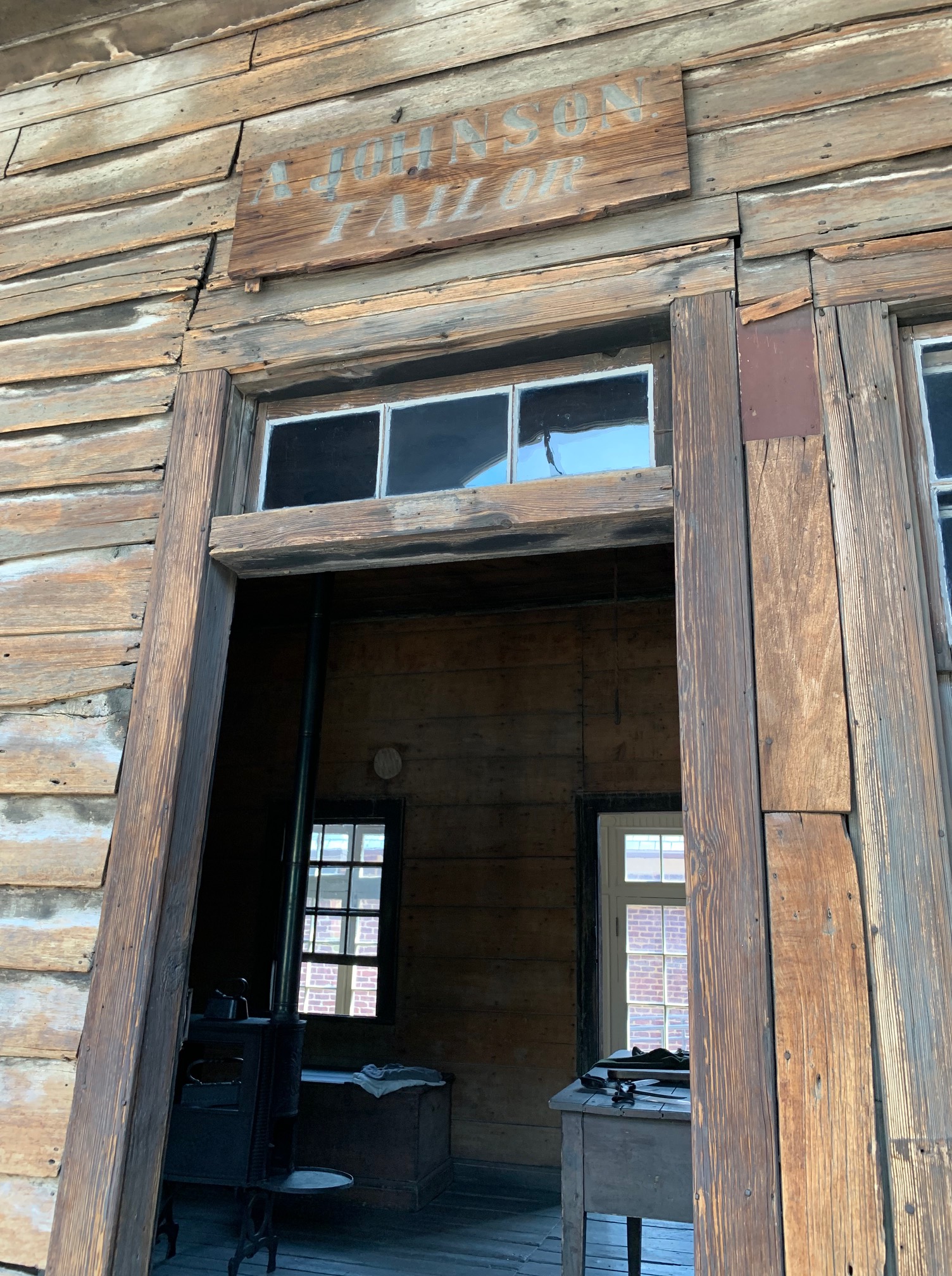
Andrew Johnson National Historic Site

Somebody has gone to a great deal of effort to rehabilitate disgraced President Andrew Johnson. The hagiographic film is narrated by the late Tennessee Senator (and actor) Fred Thompson. The exhibits extol Johnson’s fidelity to the Constitution against the “radical” views in Congress that African Americans should be granted full citizenship rights. This may be the worst site for informing people about history in the park service.

In fact, Johnson was an inveterate racist, a slave-owner who got a special exemption from Lincoln’s Emancipation Proclamation to extend slavery in Tennessee. After Lincoln’s demise, Johnson reversed Reconstruction and vetoed the Civil Rights Act, paving the way for a campaign of terror by the KKK (also from Tennessee in 1865) and the collapse of all efforts to let freed slaves participate fully in elections. He was impeached (148-27), but escaped conviction by one vote. Johnson’s presidency was such a threat to the nation that Grant was pressured to run “in order to save the Union again”. A long-time historical favorite of racists, modern historians generally rank Johnson among the worst presidents. Nowhere at this historic site could I find any acknowledgement that it was morally wrong and anti-democratic to deny freed slaves the right to vote.

Johnson was a poorly-educated tailor who had the good fortune to be married by a relative of Abraham Lincoln.

Chickamauga and Chattanooga National Military Park

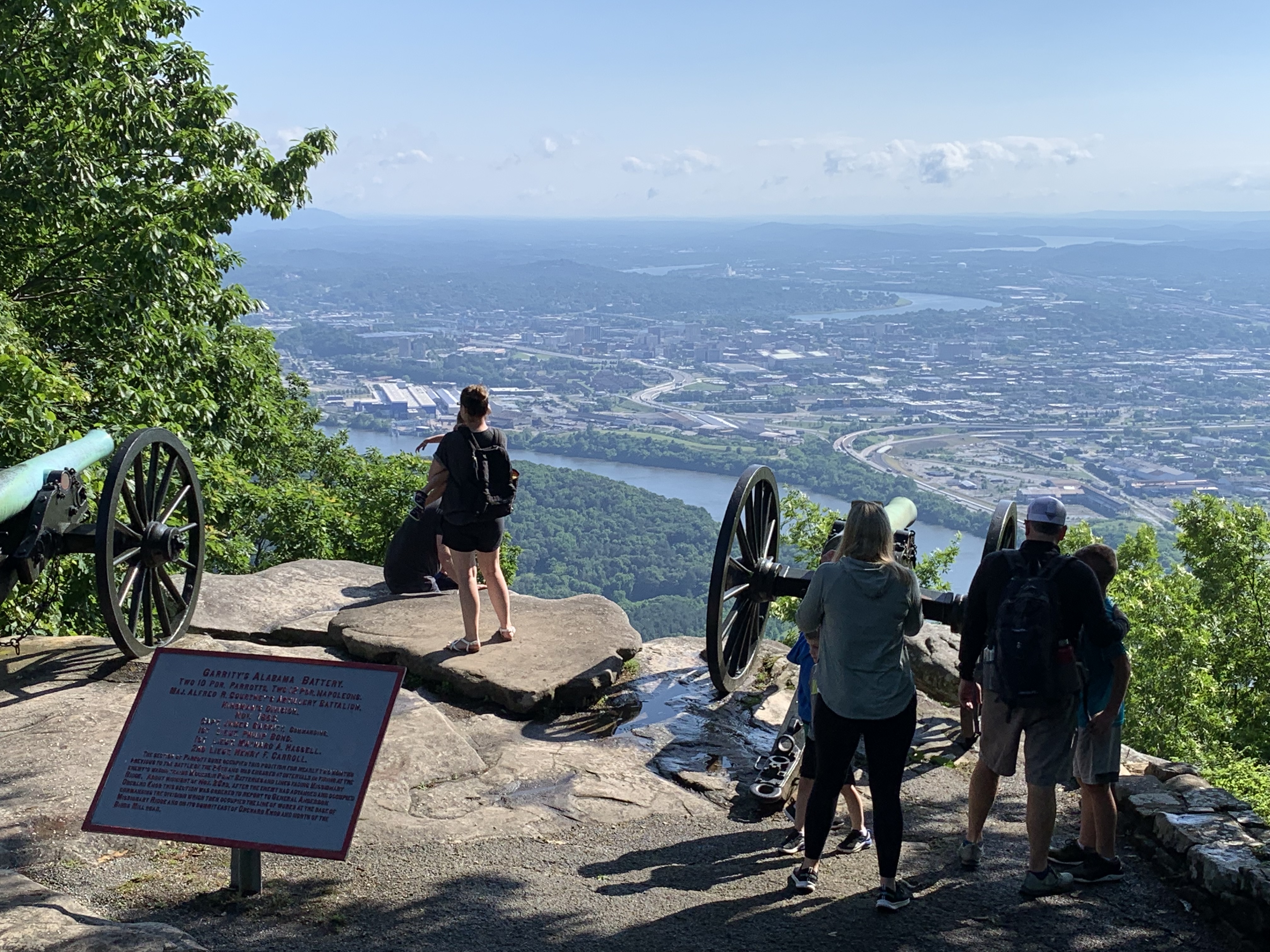
Before I rant again, let me just acknowledge that there’s a dramatically beautiful view on Lookout Mountain. Chattanooga below is in a strategic location at the bend of the river below. Long before the Civil War battles, the last overland battle of the Revolution was fought here. There’s even a steep funicular line to enjoy the view.

Militarily, controlling the high ground has always been the key. Grant used it to capture Chattanooga, and the confederates used it to try to recapture the city, unsuccessfully. Chickamauga nearby in Georgia is much flatter and covered with monuments to both sides. Which brings me to my brief rant. If even a fraction of the money and effort spent on monuments for both sides were used to explain the cause of the war, slavery, then maybe we wouldn’t have some politicians today still trying to claim that there are “very fine people on both sides” of racial prejudice. No. Racism was wrong both then and now, and the longer that we evade the obvious moral judgements here, the harder it will be to remove the poison.