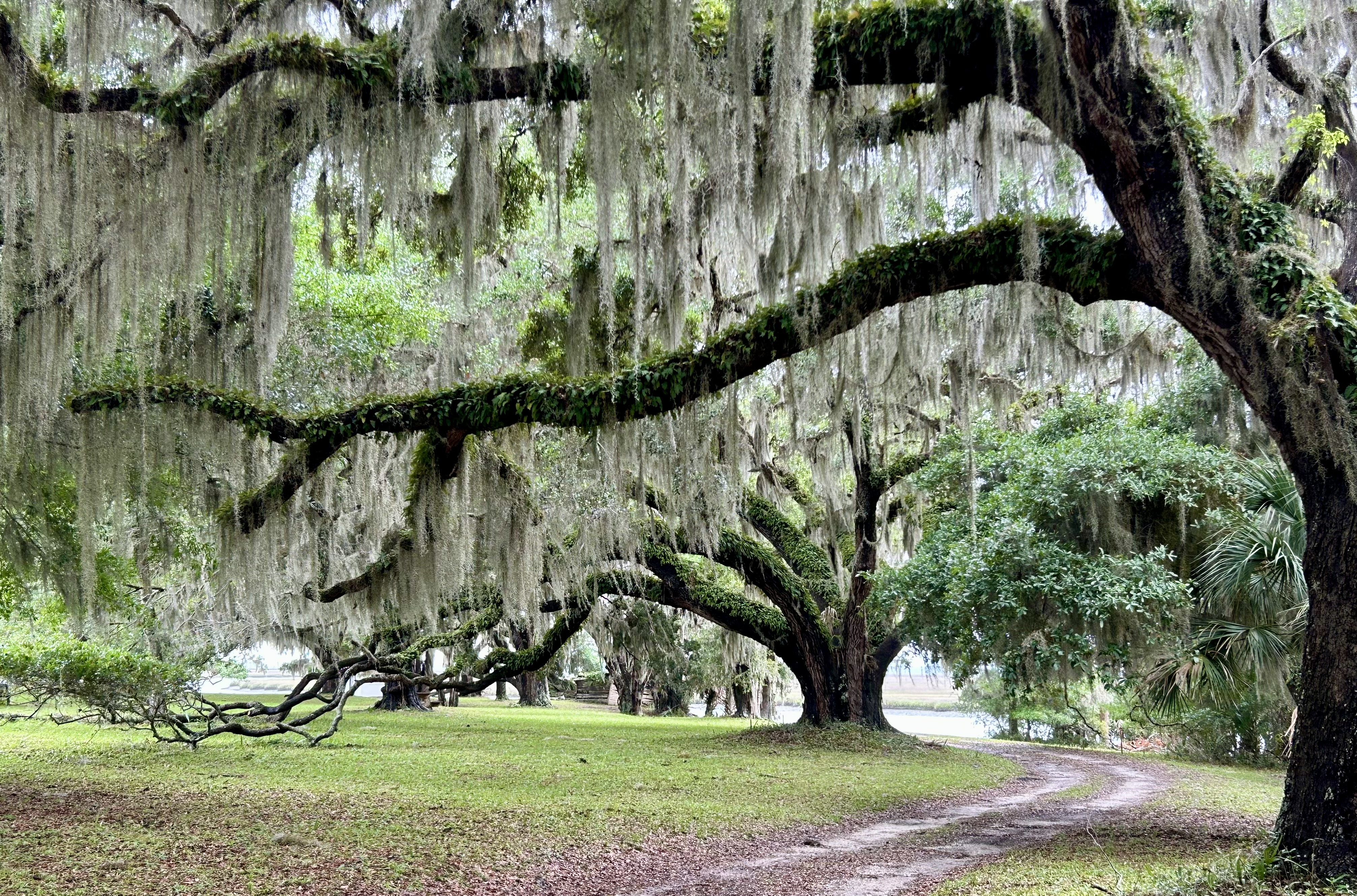
All Southeast Sites *

The southeast region has more park units (70) than any other region, and I have visited all the units—*except 6 in US Caribbean territories—including all the affiliates, heritage areas and trails in Alabama, Florida, Georgia, Kentucky, Mississippi, North Carolina, South Carolina and Tennessee. Given the large number of states and parks involved, the summary below is organized by theme.

Natural Areas

All of the National Parks in the southeast preserve natural areas, including the reef area of the Florida Keys from Biscayne to the Dry Tortugas, the lowlands of Congaree and the Everglades, the Great Smoky Mountains, and even underground at Mammoth Cave. Other park units, Canaveral, Cape Hatteras, Cape Lookout, Cumberland Island and the Gulf Islands, protect barrier islands. Big Cypress, Big South Fork, Chattahoochee River, Little River Canyon and Obed River all protect diverse riparian areas.

Pre Civil War

Ocmulgee Mounds, Russell Cave and Timucuan stretch back before history, but Horseshoe Bend covers a tragic event in Native American history. Several sites cover early colonial history, including Castillo de San Marcos, De Soto, and Forts Caroline, Frederica, Matanzas and Raleigh. Cowpens, Guilford Courthouse, Kings Mountain, Moores Creek and Ninety-Six cover the Revolution. Blue Ridge, Cumberland Gap, Lincoln Birthplace, Natchez HistoricParkwayTrace, and Pinckney, trace the path of history in the southeast, culminating in the war to abolish slavery.

Civil War and beyond

Andersonville, Brices Cross Roads, Camp Nelson, Chattanooga, Forts Donelson, Pulaski and Sumter, Kennesaw Mountain, Mill Springs, Shiloh, Stones River, Tupelo and Vicksburg are Civil War sites. Johnson, Reconstruction, and Tuskegee Institute cover post war struggles. Carter, Sandburg & Wright Brothers are historic highlights. Birmingham Civil Rights & Freedom Riders, Emmett Till, MLK, Medgar Evers, and Tuskegee Airmen reveal the continuing struggle for Civil Rights.

I learned more traveling in the southeast than any other region, as the area is so rich in history and culture. And the preserved natural areas include some of my favorite park experiences, from underwater and underground, to rivers and shores, and to wildlife experiences in mountain forests. And they can all be explored without traveling in a carbon-burning vehicle.

National Heritage Areas of Mississippi

Mississippi has three national heritage areas: Delta, Gulf Coast and Hills. Culturally, Mississippi is one of the best states in the country.

The Delta area is fascinating, and I recommend the Delta Blues Museum when you’re in the area listening to live blues music, like Terry ‘Harmonica’ Bean pictured in Clarksdale. Vicksburg and Emmett Till are both in the area too.

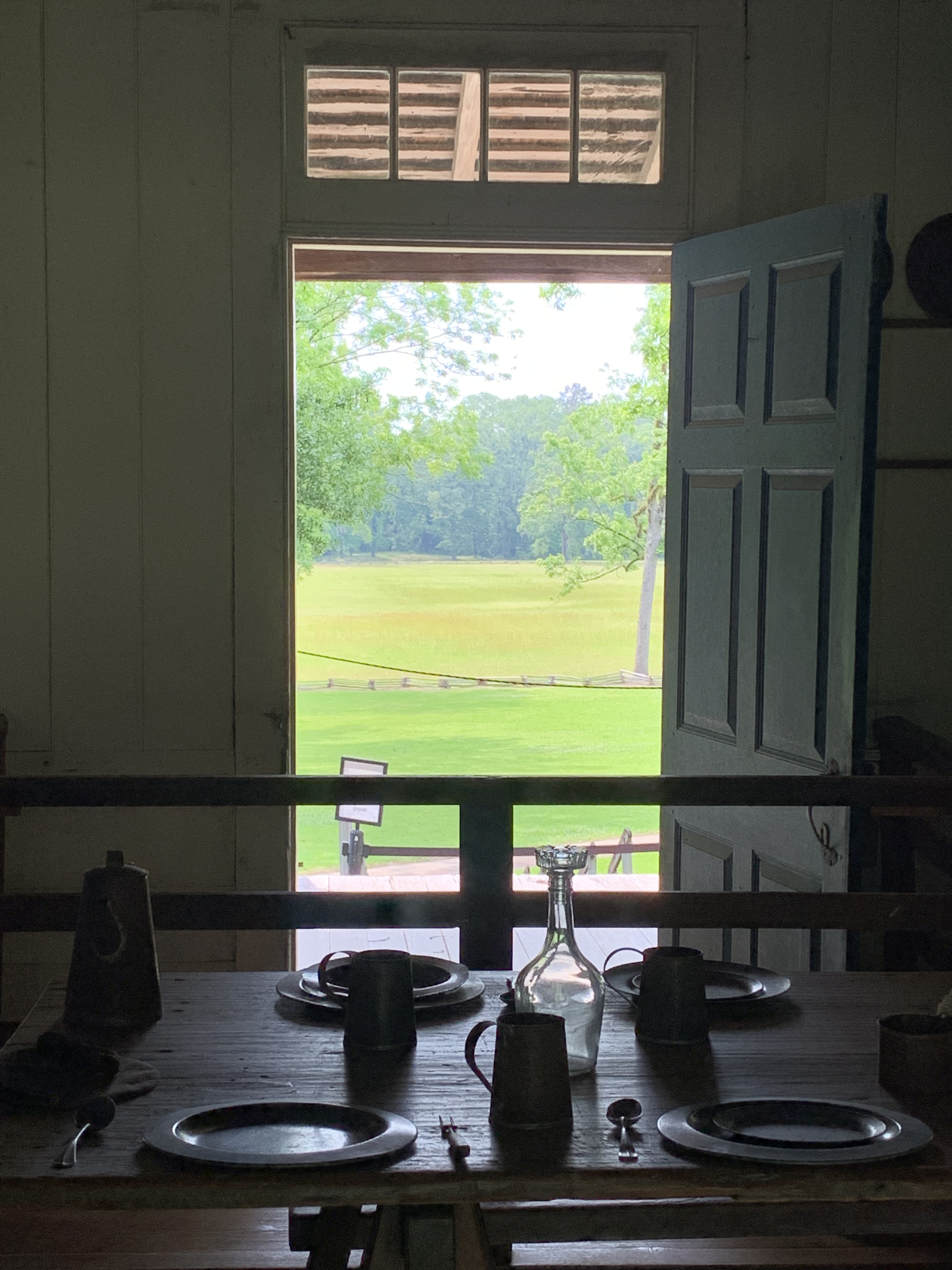
I drove the Gulf Coast area while visiting the Gulf Islands National Seashore, and it is beautiful. (I skipped Beauvoir, the Jefferson Davis “Presidential” Library, since he was never president of our country.) You will see signs marking the Mississippi Blueways, which are mostly paddling river routes near the coast and unrelated to the popular Mississippi Blues Trail.

This year, I visited William Faulkner’s home in Oxford, which is part of the Hills area, along with Elvis’ home in Tupelo, Tennessee Williams’ home and Eudora Welty’s too. Brices Cross Roads, Natchez NHP and Medgar and Myrlie Evers Home are in this area too. I enjoyed visiting Faulkner’s home, ‘Rowan Oak’, and walking in the pretty woods nearby, but Faulkner would much rather be remembered for his screenplays, stories and books, including The Sound and The Fury, As I Lay Dying, and Absolom, Absolom!.

Natchez Trace National Scenic Trail

This year I revisited the Natchez Trace Parkway, determined to get out of my car and hike more on the “old trace” which is a National Scenic Trail that runs along the same ridge from Natchez Mississippi to Nashville Tennessee. Potkopinu near the southern terminus has 20’ deep sunken sections of trail carved into the soft soil. There are other maintained sections near Jackson and Tupelo Mississippi. And there are many small remnants of the trace next to the parkway. I visited a couple small waterfalls on the trace in Tennessee and stopped at the memorial to and burial spot of Meriwether Lewis.

After completing his expedition with Clark, Jefferson appointed Lewis territorial governor in St Louis. Lewis worked hard to maintain peace with natives in the area, using his own funds and then applying for reimbursement from the US. An unscrupulous rival began a smear campaign against Lewis, using common delays in mail to paint Lewis as a poor administrator. Lewis set out to clear his name in DC personally, taking a trusted Native American friend with him for security. He wrote to his friends about his anguish at being maligned and misjudged.

One night in a cabin on the old Natchez trace in Tennessee, Lewis’ native aide was off looking for some missing horses, when shots were heard and Lewis was found shot in both the head and the stomach. He died later that morning. Witness testimony was inconsistent, but at one point someone in his party claimed to have heard both sounds of a scuffle and a cry for help, although they feared to enter his room during the night.

Bizarrely, the official report was suicide. Not sure how or why someone shoots themselves in both the head and the stomach. Years later, the body was exhumed and examined by a doctor who said it was likely the work of an assassin. Nevertheless, many historians are idiots, so the suicide theory did not die. They argue that Lewis was agitated, talking to himself, depressed and may have taken alcohol or medicine.

Obviously, Lewis had reason to be agitated, depressed and was practicing the speech he would give upon arrival in DC. The old trace was dangerous, the political situation was unstable and Lewis had dangerous rivals. At that moment, Lewis was basically unguarded. And more obviously, why would a suicidal man embark on a long journey and plan for his security, if he was preparing to kill himself? Lewis went on a personal mission to clear his name, and it’s extremely difficult to reconcile that fact with his giving up mid journey. If Lewis is known for anything in our history, it is completing the journey, even when times are tough. Meriwether Lewis was murdered on the Old Natchez Trace.

Emmett Till and Mamie Till-Mobley National Monument

”Let the people see what they did to my boy.”

Mamie Till-Mobley

The animosity against African Americans, especially in the Deep South, is hard to comprehend, but it is deep, real, persistent and extremely dangerous. Emmett Till’s mother warned him, but even she underestimated the risk. In late August of 1955, Emmett Till was kidnapped from his great uncle’s home by a shopkeeper’s husband and his half-brother, who accused Emmett of whistling at the shopkeeper, a white woman. From past midnight to pre-dawn, the two men, along with several others, held Emmett, aged 14, in the back of a pickup truck, drove around the county, terrorized him, tortured him, shot him and dumped his body in the river. Witnesses reported hearing Emmett’s screams all over town for hours. His great uncle reported the kidnapping, the men were arrested, and the body was found a few days later. His mother, saying “let the world see what I see”, insisted on an open casket at the funeral in Chicago. Jet magazine published photos of his brutalized body. His mother became a lifetime activist, author and motivational speaker on education, poverty and Civil Rights with the NAACP. Many consider Emmett Till’s killing to be the beginning of the Civil Rights Movement, not least because Rosa Parks cited Emmett as the reason she kept her seat on the bus in Montgomery on 1 December 1955. 

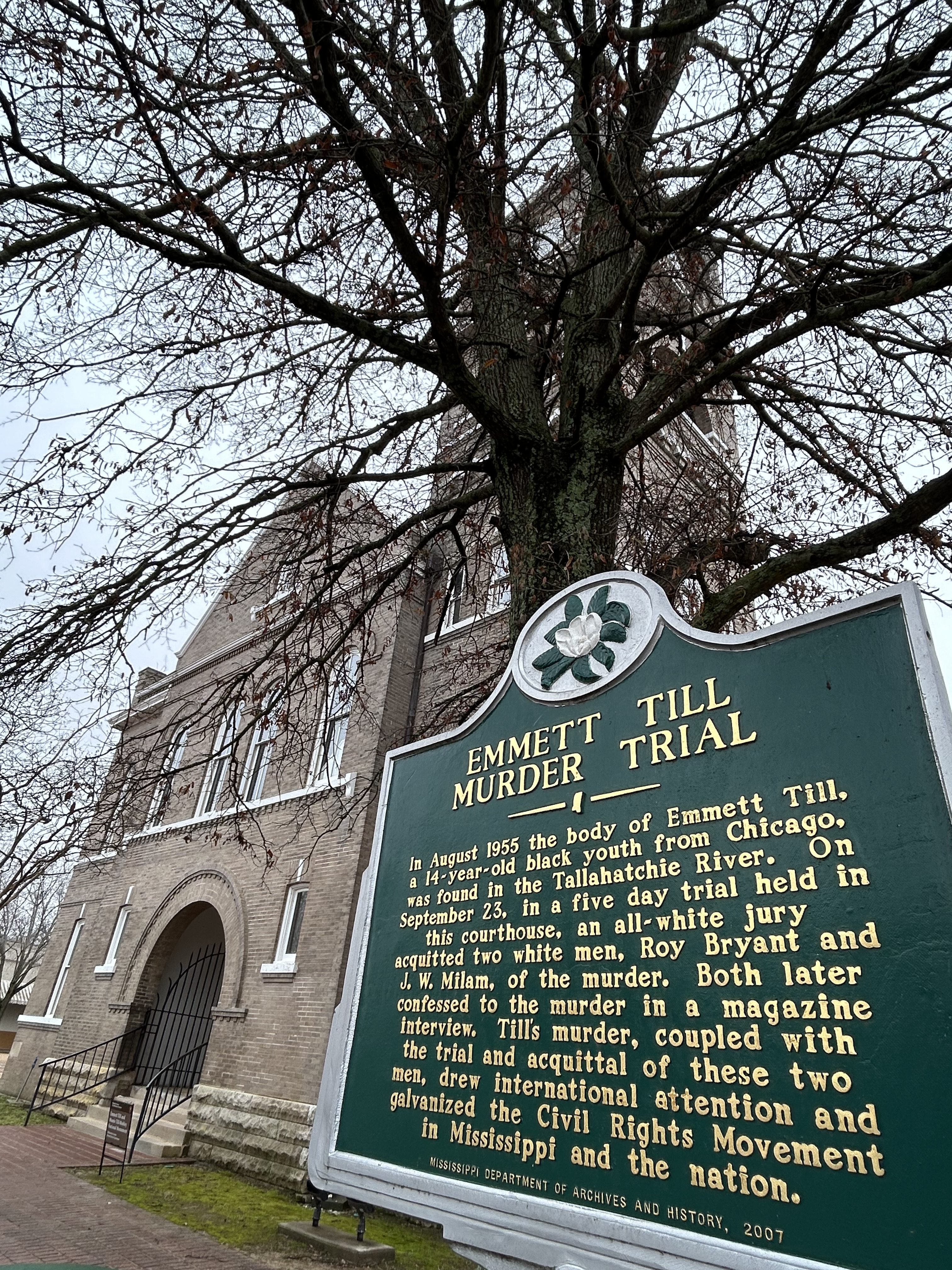
The trial was a foregone conclusion. Outside the courthouse (below) stood a statue dedicated to the “Heroes” of the Confederacy. Inside there was no justice. Instead of jurors, police, court officers and elected officials defending the Law, the courthouse became the focal point of a deep criminal conspiracy, based on racism. Witnesses were intimidated, hidden, immunized and silenced. Emmett’s great uncle testified at the trial, pointing out the kidnappers and murderers, and then he left town immediately and went into hiding under a false name. And for many years afterwards, there has been a concerted effort to conceal the truth. Evidence lost. Signs have been repeatedly shot and torn down. Historic artifacts and structures intentionally left to ruin or demolished. One witness, in hiding for decades under another name, still received death threats demanding silence. The confederate statue still stands in front of the courthouse, just left of the photo. 

But despite the legacy of lies, terror and violence, people still work to tell the truth about Emmett Till. Especially if you’re exploring the new monument’s sites in Illinois and Mississippi, I recommend reading the darkly fascinating stories in the Emmett Till Memory Project app, after being introduced to it by one of the contributors at the Emmett Till Interpretive Center across from the courthouse in Sumner, MS. Emmett Till’s coffin is on display at the National Museum of African American History and Culture in Washington DC. His name was given to the Anti-Lynching Act of 2022. And this new national monument was established by President Biden on 25 July 2023, on what would have been Emmett Till’s 82nd birthday. 

Gulf Islands National Seashore (& Admiral Farragut)

While I like the park and plan to visit it again in warmer weather, the seashore skips over the most important section in the middle. In Mississippi, the park includes the Davis Bayou (photo below) with a nice visitor center and park film, and from mid-March to October you can take a ferry out to Ship Island, look for bottlenose dolphins, explore the beaches and visit a Civil War fort. In the Florida section of the park, there are also birds, long stretches of storm-swept and once segregated beaches, old forts first built by the Spanish and later used by the Confederacy, and another visitor center (closed when I tried to visit) to explore near Pensacola. But the Gulf Islands of Alabama are not part of the national park unit. Forts Gaines and Morgan, the guardians of Mobile Bay, are Alabama State Parks. But that’s where the action was. 

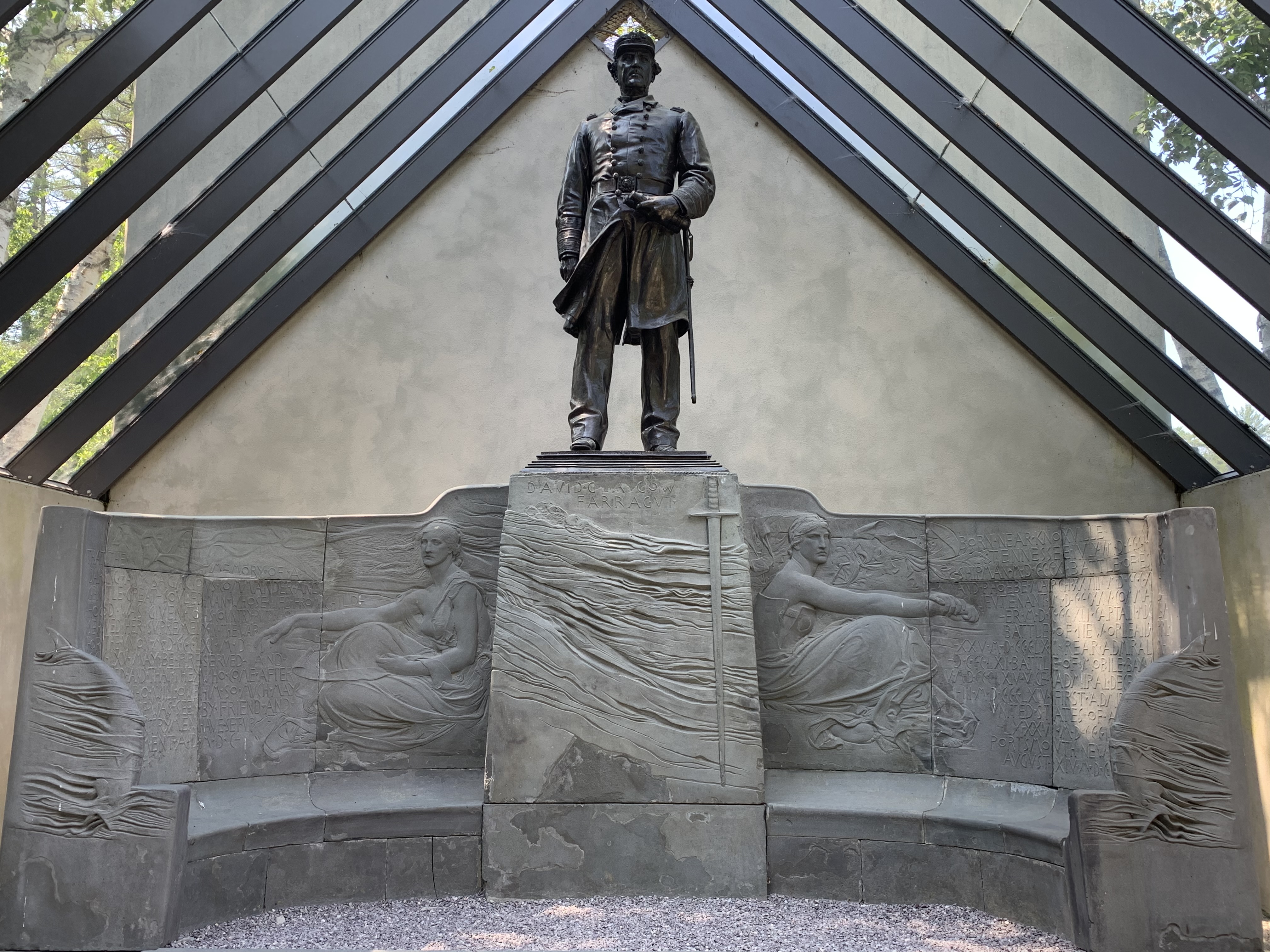
General Grant relied on combined naval and land forces to take Fort Donelson in February 1862, which cut off the Cumberland River from the Mississippi. In April, Flag-Officer David Farragut (depicted by Gaudens above) began his gulf coast campaign by sailing up past the forts guarding the Mississippi and taking New Orleans. After the Union freed the city, three regiments of African American troops were quickly organized, and many of those men first served on the Gulf Islands, helping retake the forts along the gulf coast. In June, Farragut was wounded near Vicksburg. 

The Confederacy’s last large port was Mobile Bay. In 1863 the Union took Vicksburg, but to speed the end the war, now Rear Admiral Farragut needed to sail past the forts guarding Mobile Bay. In 1864, the Confederacy, having learned from their mistakes in New Orleans, had heavily reinforced Mobile Bay’s naval defenses among the many fortifications along the Gulf Coast. Fort Gaines guarded the shallower west side of the bay, and Fort Morgan guarded the deep water ship channel from the east side. The gaps were filled with floating sea-mines, called ‘torpedoes’ at the time. And the port was guarded by the massive ironclad CSS Tennessee, the most powerful warship in the world. 

Farragut had four small new ironclad ‘monitors’ leading his fleet: the Chickasaw, Manhattan, Tecumseh, and Winnebago. He decided to run the gauntlet up the main channel into the large bay, boldly trying to move fast and far enough to get out of range of Fort Morgan’s guns. Under fire from the fort, the Union navy advanced with its ships lashed in pairs with the monitors on the side taking the heaviest fire. Farragut climbed into the rigging to get a view above the thick smoke. The Tecumseh crossed a mine field to engage the Tennessee, exploded one and sank immediately with 93 lost. 

Seeing his fleet hesitating and the Tennessee closing in, Farragut yelled down something to the effect of “damn the torpedoes, full speed ahead!” The remaining monitors surrounded the Tennessee, disabled her and eventually blasted a hole, injuring the Confederate Admiral. The rest of the fleet entered the bay, got behind the forts, and shelled them. The Army, including African American regiments from New Orleans, approached the forts, which surrendered, first Gaines without much of a fight, and then Morgan after a heavy siege. 

Mobile Bay was closed, cutting off supplies to the Confederacy. And the Confederate Army was tied down defending the city, helping open up Sherman’s march to Atlanta. While Alabama’s Gulf Islands are not part of the national park service site, they are in the middle of the line of hurricane barrier islands and sandy peninsulas where this major Civil War battle was fought on land and sea. Admiral Farragut and the Union Navy’s contributions to ending the Civil War must not be forgotten. 

Brices Cross Roads National Battlefield Site

North of Tupelo, there’s another memorial to another Civil War battle where the goal was to protect railroads and also included US Colored Troops. While the Union was forced to retreat, the confederates were drawn away from the Union’s other advance. There’s a self-guided car tour through the fields where the battle was fought. And here’s another photo.

Tupelo National Battlefield

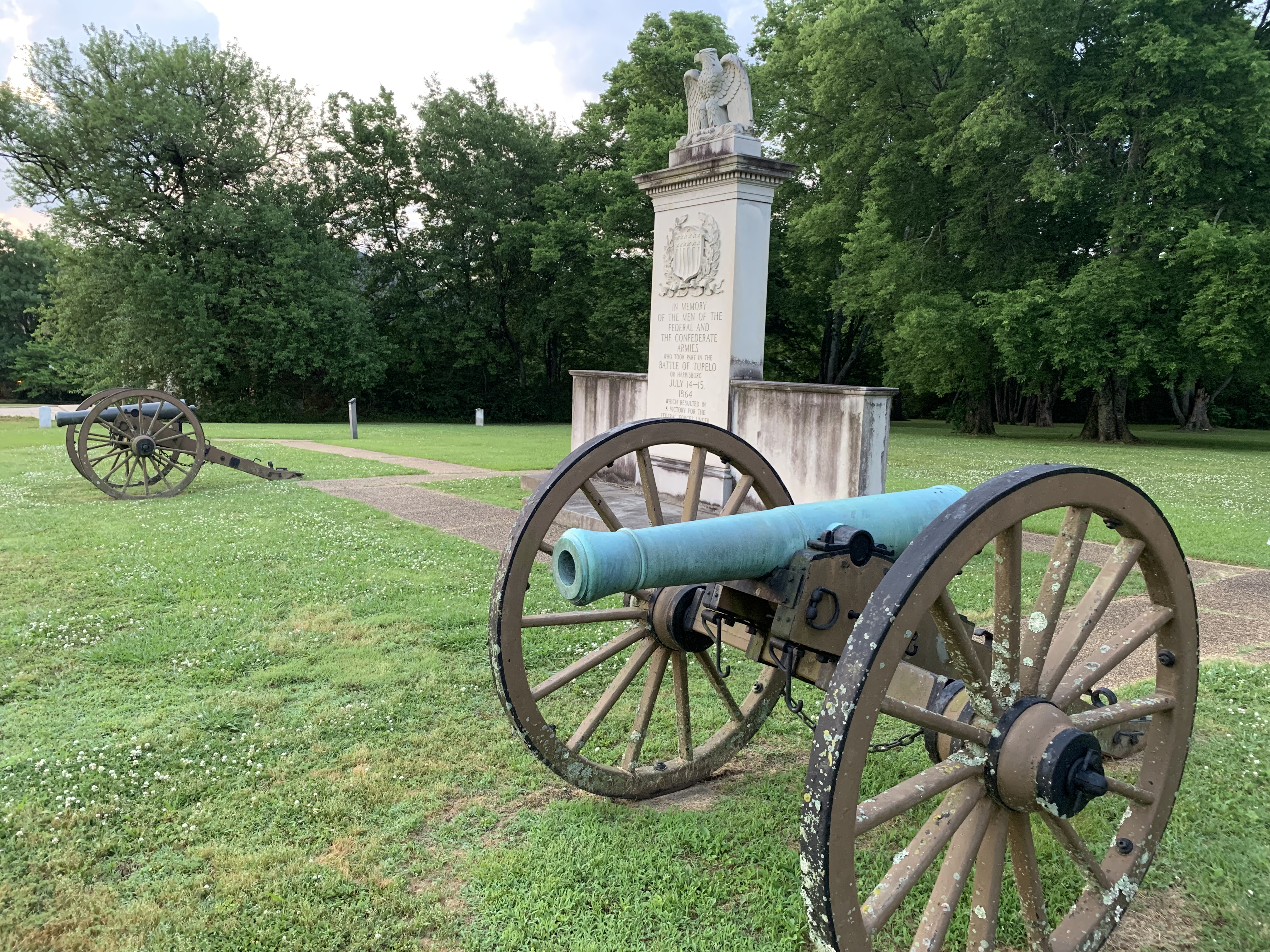
While obviously, Tupelo is most famous for being the birthplace of Elvis, where his family home now has a museum next to it, a late Civil War battle was fought here too. The Union troops defended the railway, but you have to use your imagination to follow the battle. There’s a small memorial on an acre in town. Here’s a photo.

Medgar and Myrlie Evers Home National Monument

Their home is currently closed to the public. It’s in a residential neighborhood, and the park service is figuring out how to reopen it. The normal setting underscores the shocking assassination of civil rights leader Medgar Evers in June of 1963. They had prepared for a drive by attack (note the door is on the side), but not for a waiting sniper. Two all white juries failed to convict his assassin who sat on the local ”White Citizens Council”, but in 1994 a conviction was won. Myrlie continues to fight for civil rights, and Medgar, a Normandy veteran, is buried at Arlington National Cemetery.

Vicksburg National Military Park

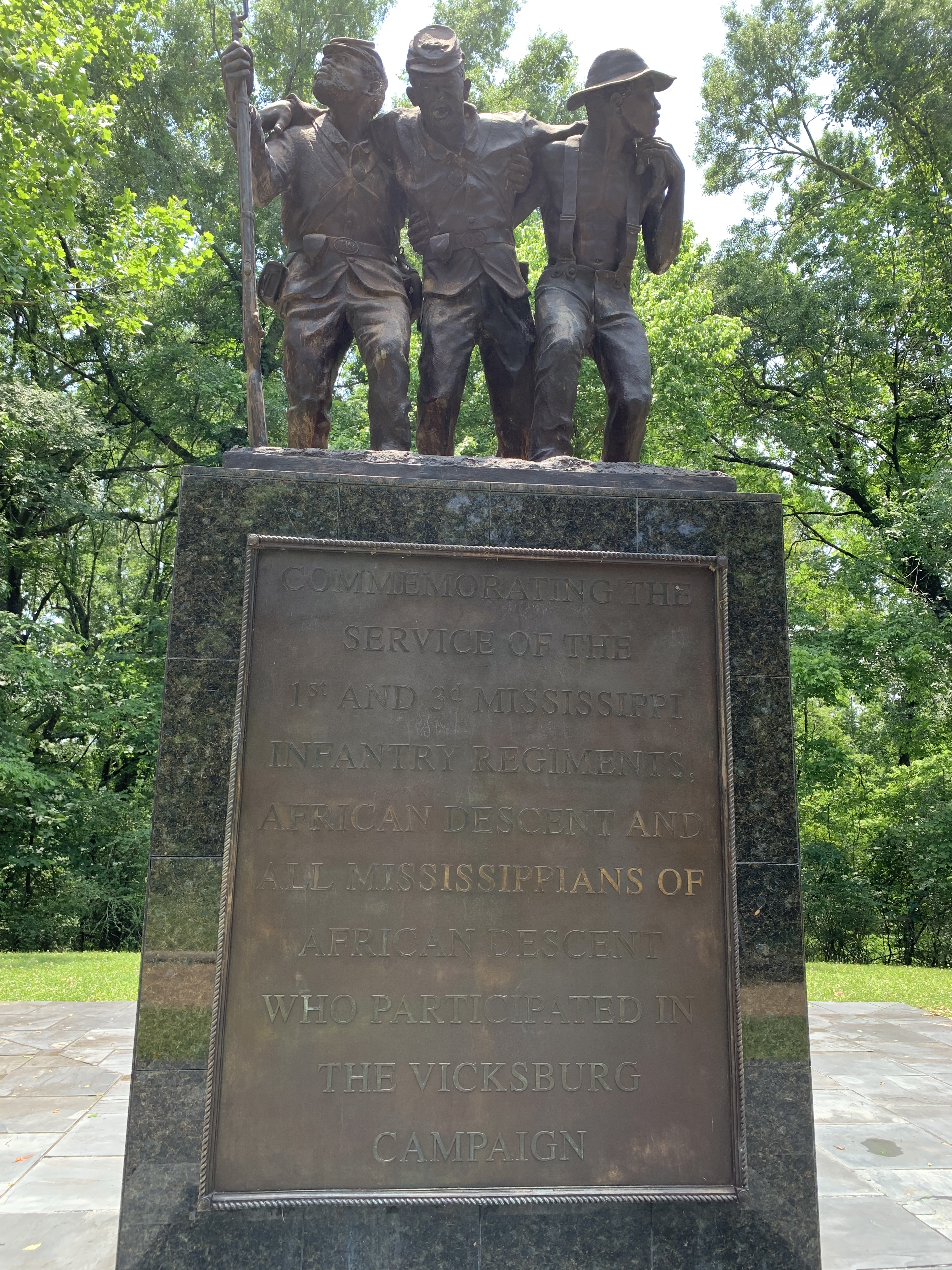
The fighting here lasted the last six months of the Civil War, and the steep hilly terrain is now covered with placards, cannon, graves, memorials, and statues. The road out to my home state’s memorial was under construction, so I turned around near the statue above.

I was momentarily confused, since the plaque says “1st and 3rd Mississippi Infantry Regiments, African American Descent”. I knew that the confederates had no African American soldiers, at least not at this point of the war, when the Union offered full freedom to enslaved people who joined. Then I realized that these were escaped slaves from Mississippi who formed regiments in liberated Louisiana and returned as soldiers to fight slavery. Their units represented a future, free Mississippi, not the old, slavery Mississippi. Later I read about the statue and learned that the man on the right is looking back at slavery, while the man on the left is looking forward to freedom.