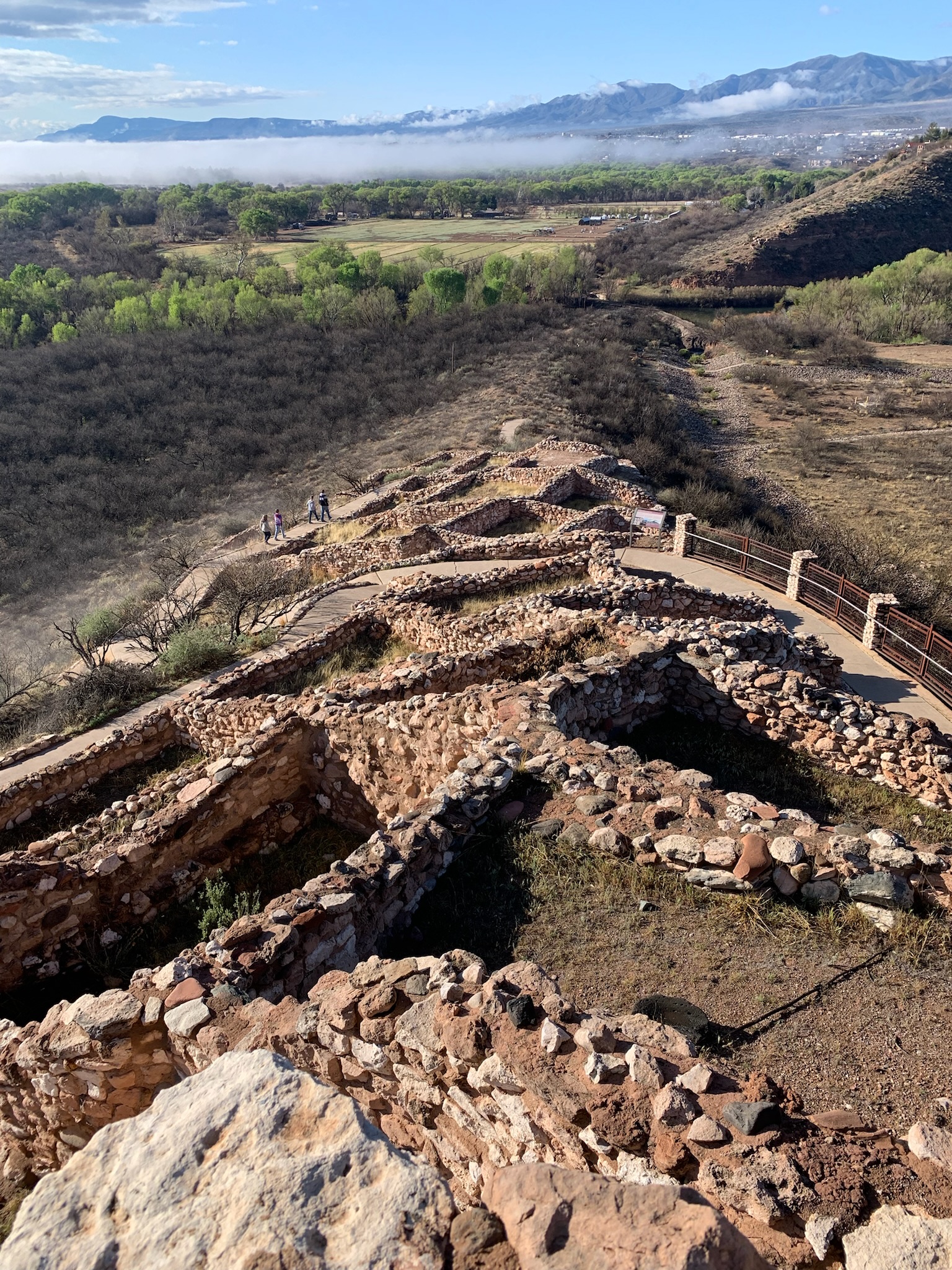
The lower part of the Wupatki Pueblo including ball court.
I have mad respect for the ancient people who built these pueblos and traversed this land for centuries. Their descendants are still here, and often they remind the rest of us to protect the land and the wildlife that lives here. Climate change is already creating environmental refugees, more each year. Fossil fuel firm executives continue to make millions, despite the incredible hardships they foist upon our futures. And yet most of us still refuse to take action.
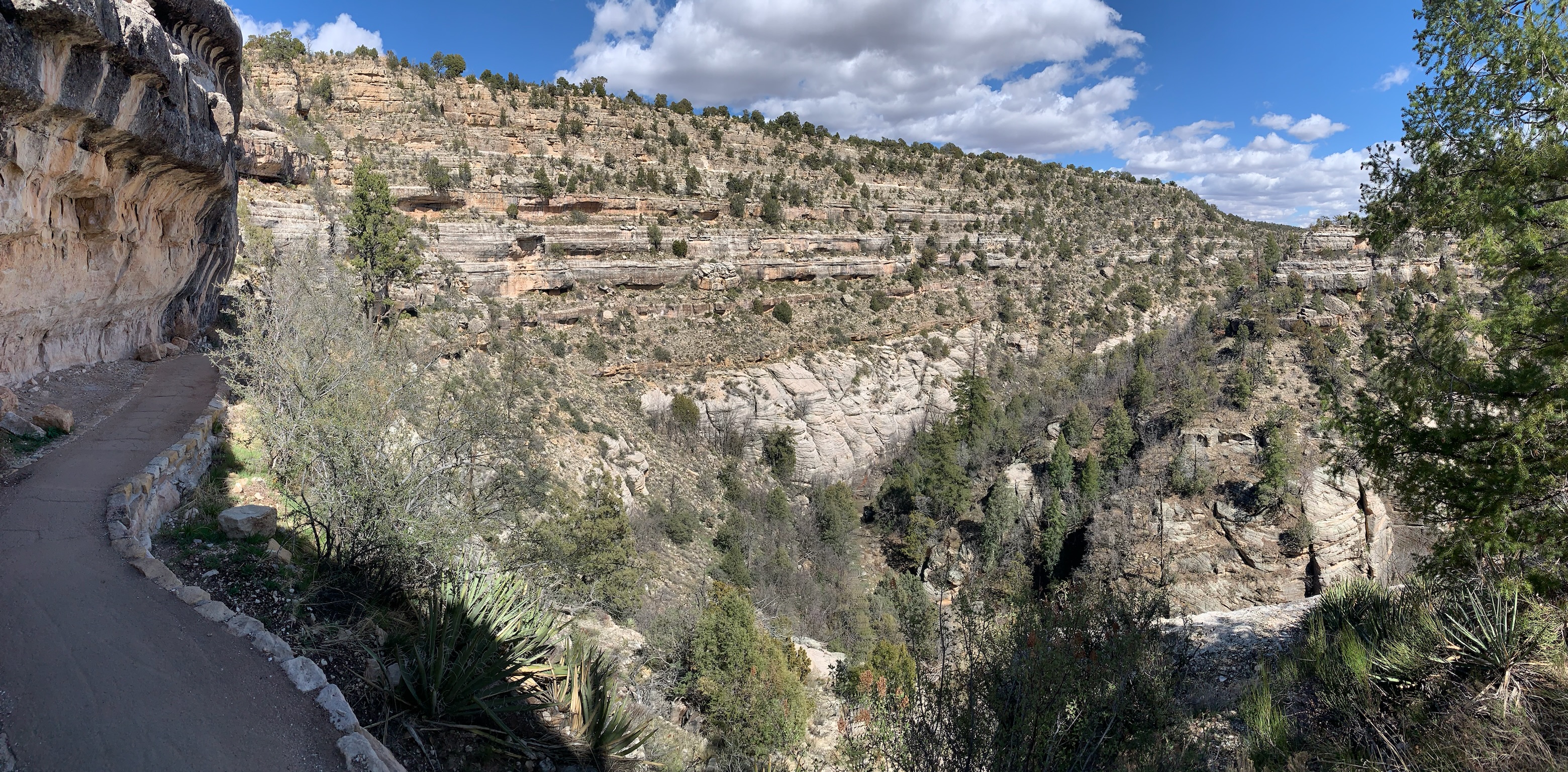
With a bit of hiking down into the canyon, you can walk right alongside many cliff dwellings and look across the canyon at more. The steps bring on a bit of vertigo and require extra breathing at around 6,500′, but the views are extraordinary. Plan ahead, since the Island Trail closes at 3:30 pm.
Both the alcoves along the trail and in the distance contain many cliff dwellings.
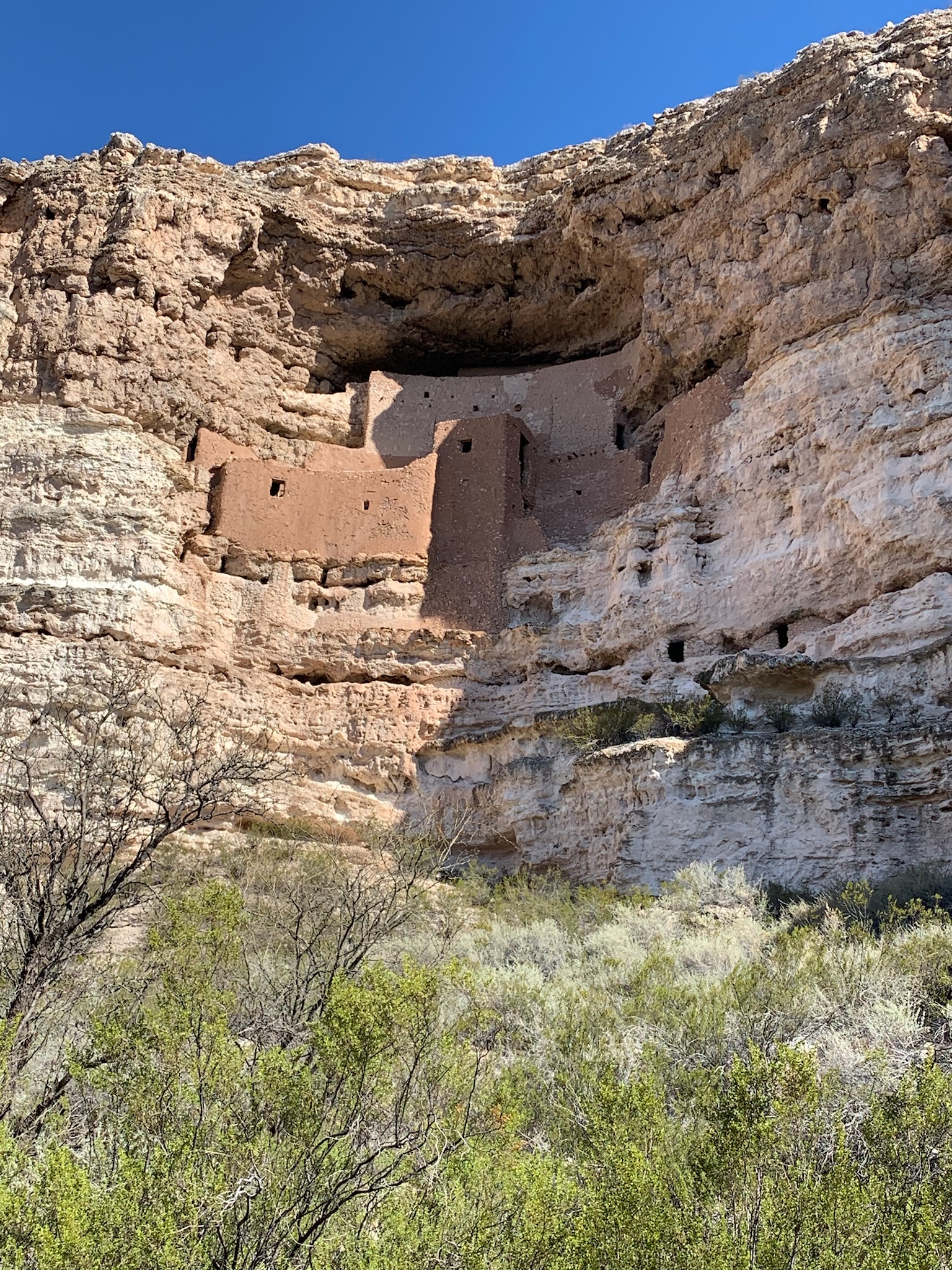
Montezuma was an Aztec who fought the Conquistadors in what is now Mexico. He had absolutely nothing to do with this place, which was built hundreds of years before he was born. Also, it was likely built for comfort and convenience, rather than war. Early tourists destroyed many cliff dwellings by taking home “souvenirs”, and many of the intact cliff dwellings show no signs of having ever been attacked by other tribes. The natural alcoves across the Southwest provided warmth in the winter, shelter from rain, coolness during summer, convenient places to cache items for trade and great hunting overlooks. I have to laugh at the so-called “mystery” of why early people built these cliff dwellings, especially considering the fancy modern hotels built into the canyons in Sedona. Why wouldn’t people want to stop when passing through, make themselves comfortable and move on when they wished?
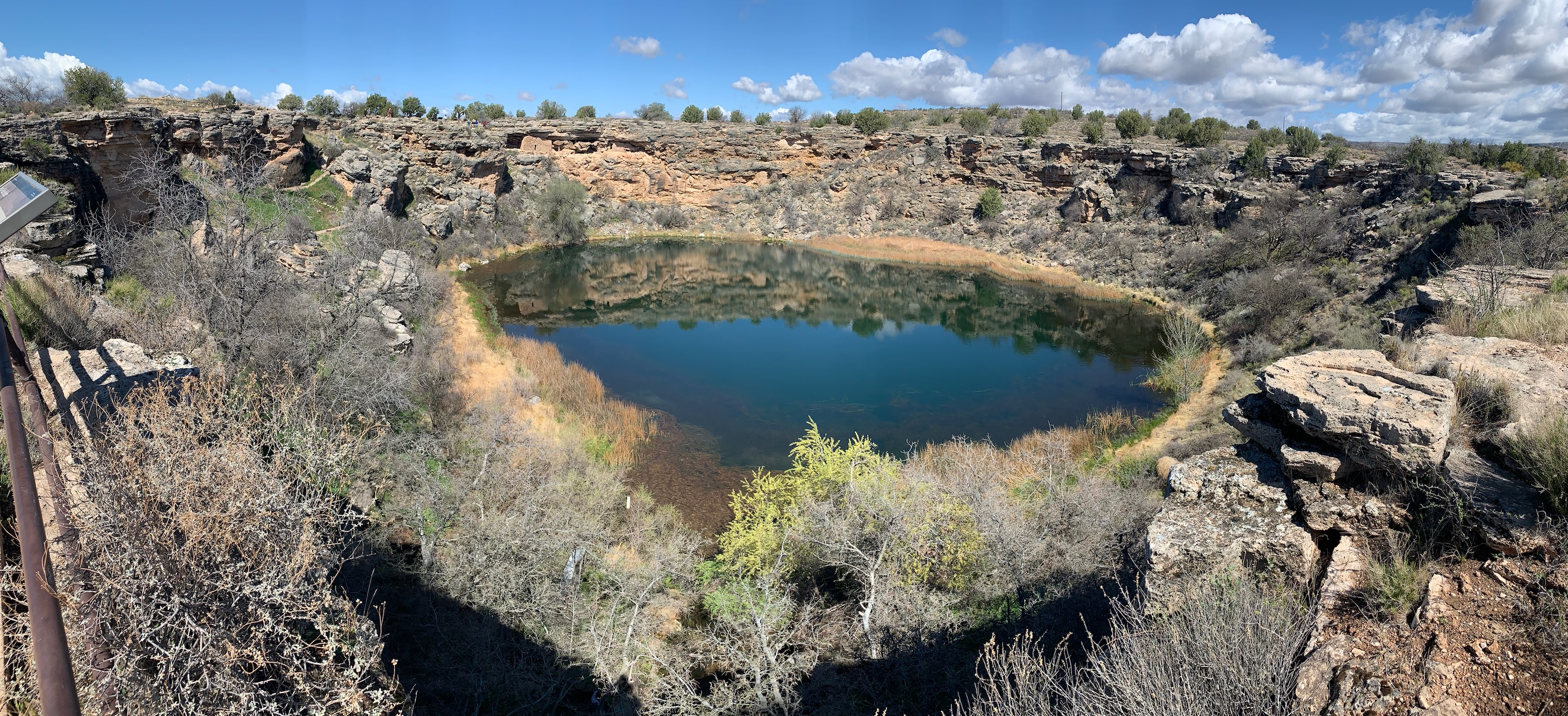
Montezuma’s Well is part of the same park unit and well worth a visit. There’s a closer view of the cliff dwellings, especially at the lower part of the well, ducks, and a still functioning irrigation channel.
Fed from underground, the well maintains a constant water level. Unfortunately, there are trace amounts of naturally occurring arsenic in the water, a reminder that nature never makes it too easy.
My recent trip started at this impressive hilltop pueblo overlooking the Verde River valley in Arizona. The ancestors of several different Native American tribes migrated through the Southwest over centuries. Each site provides another glimpse into this fascinating history.
While it looks like my photos never include people, they often do, if only for scale.
We’re fortunate that Padre Kino wrote about the ‘Great House’ here in 1694, and that almost 200 years later President Harrison preserved the ruins. The O’Odham or desert people built the Hohokam or earthen buildings at some point over the two thousand years (at least) they flourished here, experts in canals and trade.
Today’s Gila River is tiny and dry, since most of its water has been diverted for Phoenix & Tuscon. With the climate crisis exacerbating drought, whole river valley ecosystems are turned to dust as we maintain golf courses and landscaping. Too busy and thoughtless to notice our destruction of the natural world, people drive air-conditioned SUVs to buy iced coffee, oblivious to the oblivion we cause.
No photo. Closed. Buried. Gone. No national park site. Just an article about Hohokam Pima National Monument. The archeologists covered their dig sites to protect the cultural heritage and have left nothing to see. And frankly, the public isn’t welcome here. The Gila River Indian Reservation doesn’t want tourists traipsing over the burial grounds of their ancestors. If you’re interested in their culture and artifacts, visit their nearby museum. And if you’re on some kind of quest to visit all of the national park units in the lower 48 states, then just be content with driving through the monument under the Goodyear Road overpass on I-10 between Phoenix and Tucson. Don’t stop. There’s literally nothing to see here.


 Zero Carbon Travel