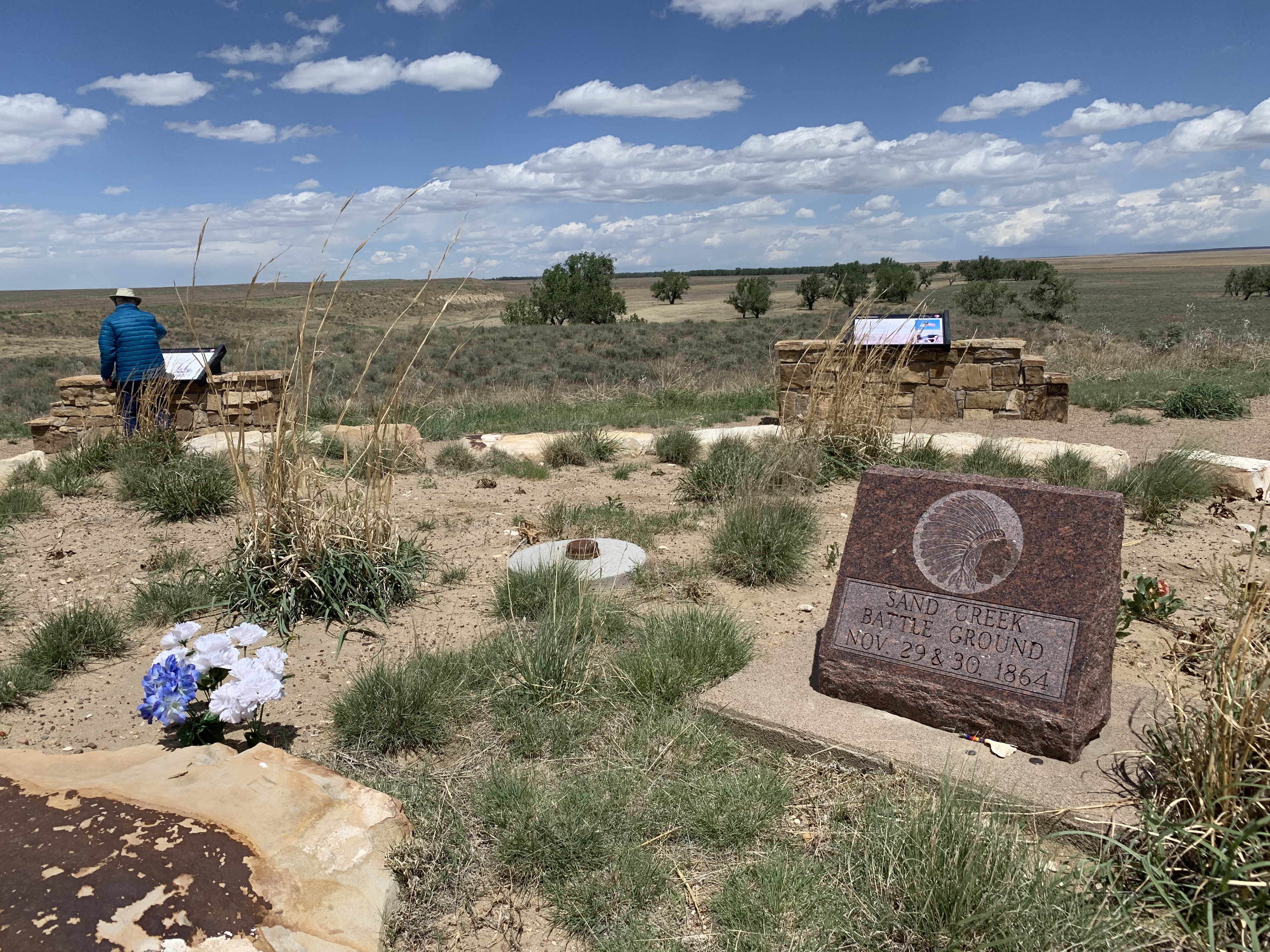
Thanksgiving celebrates when Native American generosity saved the first settlers in New England. Natives taught settlers about native crops and game, they traded peacefully with the British, Spanish, French, Russians, mountain men, and pioneers, and they guided Lewis & Clark across the country. Many early Americans married natives and lived happily.
Somewhere along the line, these same natives were portrayed as bloodthirsty savages, and that racist portrait continues today. I have not yet had time to fix it, but Wikipedia’s entry on this site has extensive quotes from a 19th century book in an apparent effort to justify the massacre here, pointing to another ”massacre” by natives that provoked this military action. But that was a family of four killed ”supposedly” by natives, and other events described as native ”attacks” were actually thefts, robberies and destruction of property.
The natives were the victims, both here and elsewhere. They lost their bison, their land, their freedom and their way of life. Many of their sacred lands were stolen by illegal acts of the US government, and many lost their lives to settlers and soldiers. Yes, some Native Americans fought back, following repeated provocations. I read of one chief who, after working his whole life for peace, returned home to find his family slaughtered, and he turned to war. But it is dishonest to confuse the aggressor with the victim. Most Americans live in states or places originally named by natives, but there continues to be a desire to honor those ancestors who participated in the land theft, forced removals and slaughters of Native Americans. Only some Utes remain on tribal lands in Colorado. The town immediately south of the park is named Chivington, but when you learn what he did, you will find that honor to be a disgrace.
According to witness accounts of soldiers under his command, Colonel Chivington, who helped win the Battle of Glorietta Pass, was a politically ambitious man who wanted to add more victories to his resume. Peaceful native chiefs gathered here to continue peace negotiations under the protection of the local US military fort. Chivington knew that, and two days after the local commander transferred east, he attacked the village with 675 cavalry and 4 mountain howitzers. Two of his officers refused to follow orders, reported the massacre, and testified to investigators. They saw women and children bludgeoned to death while begging for their lives. Over 230 natives were massacred, including around 150 women, children and elderly. The details are horrific. Many bodies were mutilated post-mortem, and soldiers took ”trophies” including scalps, fingers, etc. to display in public. Fueled by greed and paranoid racist hatred, the townspeople treated the soldiers as heroes. But the government investigated and determined that it was an unjust, brutal “massacre”, ordering reparations (unpaid) and the removal of the governor for his involvement. Chivington, once a minister, escaped justice by resigning (loophole later closed) and the two men from a related military unit who murdered one of the witnesses also escaped justice. The other witness became a local sheriff.
As tragic as this story is, there was another similar massacre by US soldiers with a higher death toll at Bear River in Idaho. It also is tragic that many people even today, such as the Wiki liar, refuse to acknowledge the massacre as criminal and morally indefensible. At least the National Park Service is doing its job and preserving the site and the truth.
 Zero Carbon Travel
Pingback: Fort Laramie National Historic Site | Zero Carbon Travel
Pingback: Amache National Historic Site | Zero Carbon Travel
Pingback: Washita Battlefield National Historic Site | Zero Carbon Travel
Pingback: Castillo de San Marco National Monument | Zero Carbon Travel
Pingback: All Rocky Mountain Parks, Zero Carbon | Zero Carbon Travel
Pingback: Colorado in Photos | Zero Carbon Travel
Pingback: Best of the Rockies | Zero Carbon Travel
Pingback: Speaking Out | Zero Carbon Travel