Isle Royale National Park

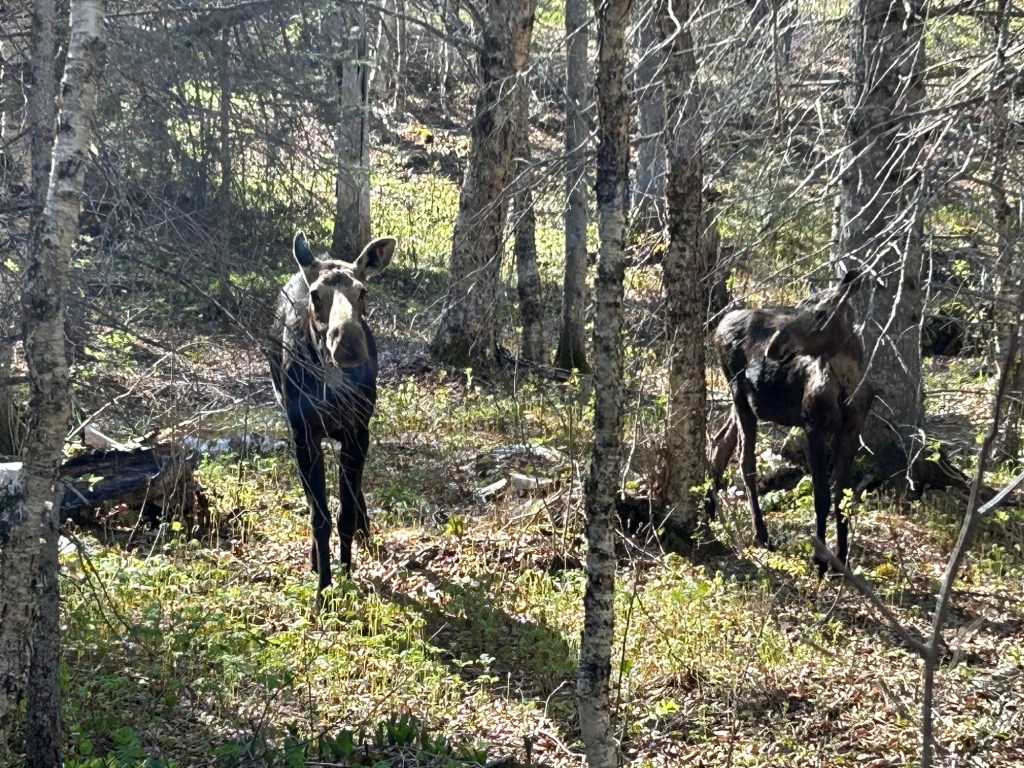
This is now my favorite park for wildlife. I was lucky to get a photo of this moose and her calf on the 1 mile Nature Trail in Windigo just before my boat left. Despite seeing loons, mergansers, swans, geese, and even a bushy tailed fox parading near my shelter on Washington Creek, I had neglected to take any decent wildlife photos, so until these two approached me, all I had was one photo of two ducks: a paradox.

I hiked a dozen miles and enjoyed the pitcher plants and boardwalks through the swampy areas and the mossy boulders on the north shore. The island is larger than I imagined, so be sure to download the park map in advance and charge your phone. This Biosphere is one of the least visited National Parks but most re-visited. Many folks hike the length over several days, and early in the season there were many volunteers hiking off-trail doing scientific research on wolf-moose predator-prey. A few were carrying a canoe for inland lakes. It’s an idyllic place, with hours of silence and solitude, a wonderful trip into the wilderness.

Isle Royale is in Lake Superior, and the shortest ferry ride is a couple hours from Minnesota to Windigo. The island is part of Michigan, and there are also ferries from the Keweenaw Peninsula in Upper Michigan to Rock Harbor. Most visitors are experienced hikers who backpack to their campgrounds, and it’s 40 miles between Windigo and Rock Harbor. Some arrive by private boat, and several campgrounds have docks. Lodgings are limited to Rock Harbor and a couple cabins in Windigo, and rooms are both very expensive and typically sold out many months in advance. The season roughly runs from early June to early September, so it’s a good idea to plan your trip a year in advance.

South Park and Cache la Poudre National Heritage Areas

South Park City, an old western summertime tourist trap in Fairplay Colorado, is only an hour and a half drive southwest from Denver, and yes, the cartoon is based on this tiny town surrounded by mountains. The mining and ranching town is at ~10,000 feet, and there’s an old railway roundhouse nearby. Some of the ranches organize riding tours, and there are plenty of scenic mountains, canyons, creeks and old mining sites to explore. The trout fishing is renowned. The South Park National Heritage Area is building a good track record of saving old buildings, protecting natural areas and boosting tourism.

About an hour drive north of Denver in Fort Collins is the Cache la Poudre River (French for Gunpowder Stash). Below is the Poudre River Whitewater Park, perhaps the best example of a how planning can turn an urban river into a recreational star. Due to a long-term cooperative water district that balances various stakeholder interests, the river is surprisingly well managed. The wild and scenic section up in the mountains preserves nature, protects wildlife and is enjoyed by whitewater rafters and kayakers. But I saw a kayaker preparing to raft the short stretch of whitewater in town, after changing out of work clothes. The Cache la Poudre River National Heritage Area also includes museums, historic sites and open natural areas in and around Fort Collins.

Northern Rio Grande and Sangre de Cristo National Heritage Areas

Quick logistical update: until summer, Mondays are Mexican World Heritage Sites, Thursdays are eclectic, and Saturdays are bonus park photos. I took the photos above yesterday in New Mexico and Colorado.

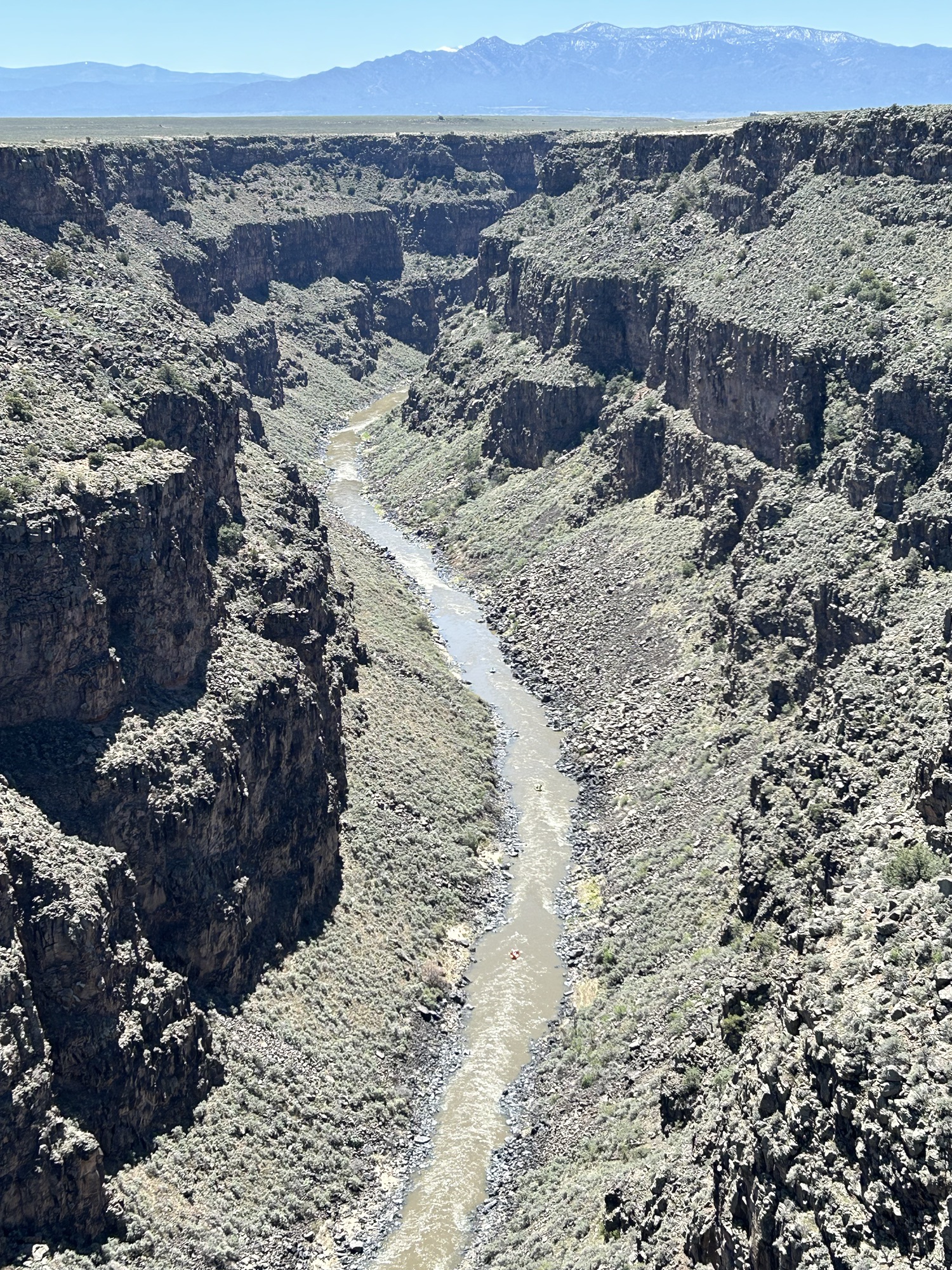
While technically in different regions, both National Heritage Areas are linked by the river, the mountains and our cultural heritage. The Rio Grande begins in the San Juan Mountains in south central Colorado and flows east through the San Luis Valley where it turns south into New Mexico. The scenic north section is called the Río Grande del Norte to distinguish it from the southern section that defines the Texas-Mexico border. The river flows through the Rio Grande Gorge and is now popular for whitewater rafting (see three rafts above left). In the distance are the Sangre de Cristo Mountains (both photos).

Native Americans and Spanish explorers traveled up and down the river, settling on the fertile valleys. The native land was claimed by the Spanish, Mexicans, and Texans, and for a dozen years, the Río Grande del Norte defined the US-Mexico border in Colorado, before the US claimed the land all the way to California by treaty in 1848. In the Civil War, Texas secessionists battled Colorado volunteers at Glorietta Pass in New Mexico to decide the war in the southwest.

The Northern Río Grande National Heritage Area in New Mexico celebrates this magnificent natural scenery and the cultural heritage it guided. It also includes Taos Pueblo, wild & scenic rivers, historic trails, scenic byways, and several cliff dwellings. The area is both beautiful and fascinating, and I was not going to miss another chance to drive through on my way northeast.

The Sangre de Cristo Mountains tower over the east side of the Río Grande del Norte from east of Santa Fe NM up into Colorado past the Great Sand Dunes. Meaning ‘blood of Christ’ in Spanish, the name likely refers to the scarlet colors of the mountains at sunset. The helpful illustration (my favorite photo above right) is on the Stations of the Cross trail up to a church that overlooks the historic San Luis Valley.

The Sangre de Cristo National Heritage Area in New Mexico borders the Northern Rio Grande National Heritage Area in Colorado, and includes the Cumbres and Toltec Scenic Railroad featured in Indiana Jones and the Last Crusade, the Monte Vista National Wildlife Refuge famed for Sandhill Cranes in March, and Fort Garland, a fine restored Kit Carson fort with an interesting museum on Buffalo Soldiers—one turned out to have been a woman who served for years as a man undetected. The area is lovely and pastoral amid snow-capped mountains, with many other worthy attractions, but I’m on the road again.

Yellowstone National Park

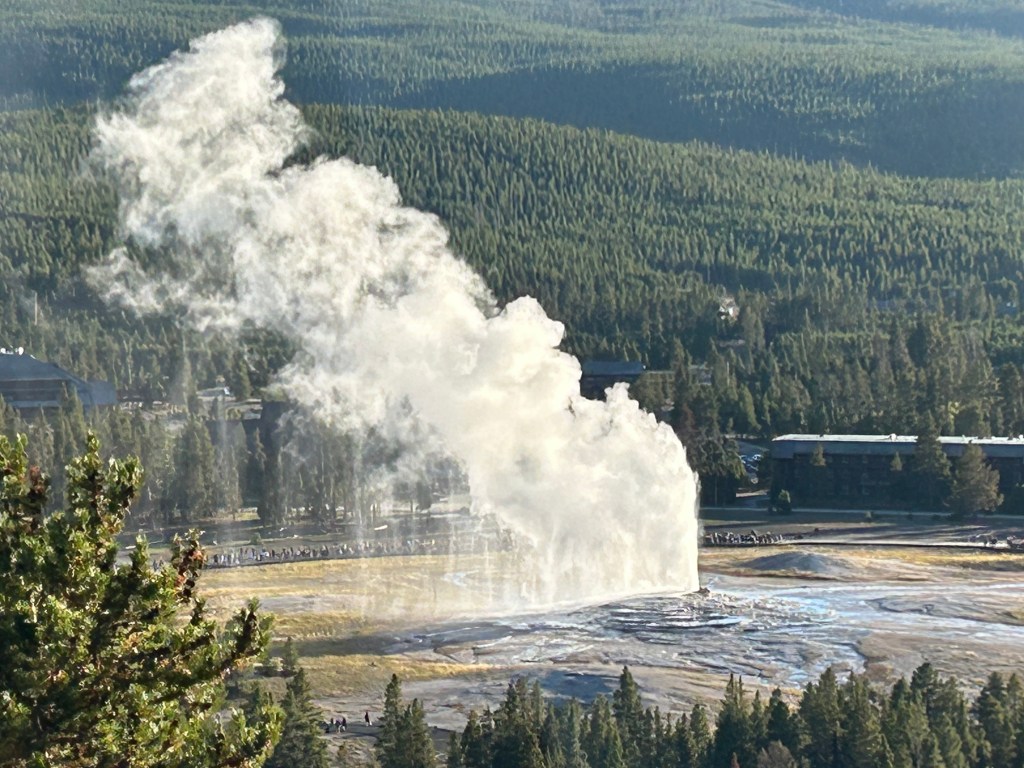
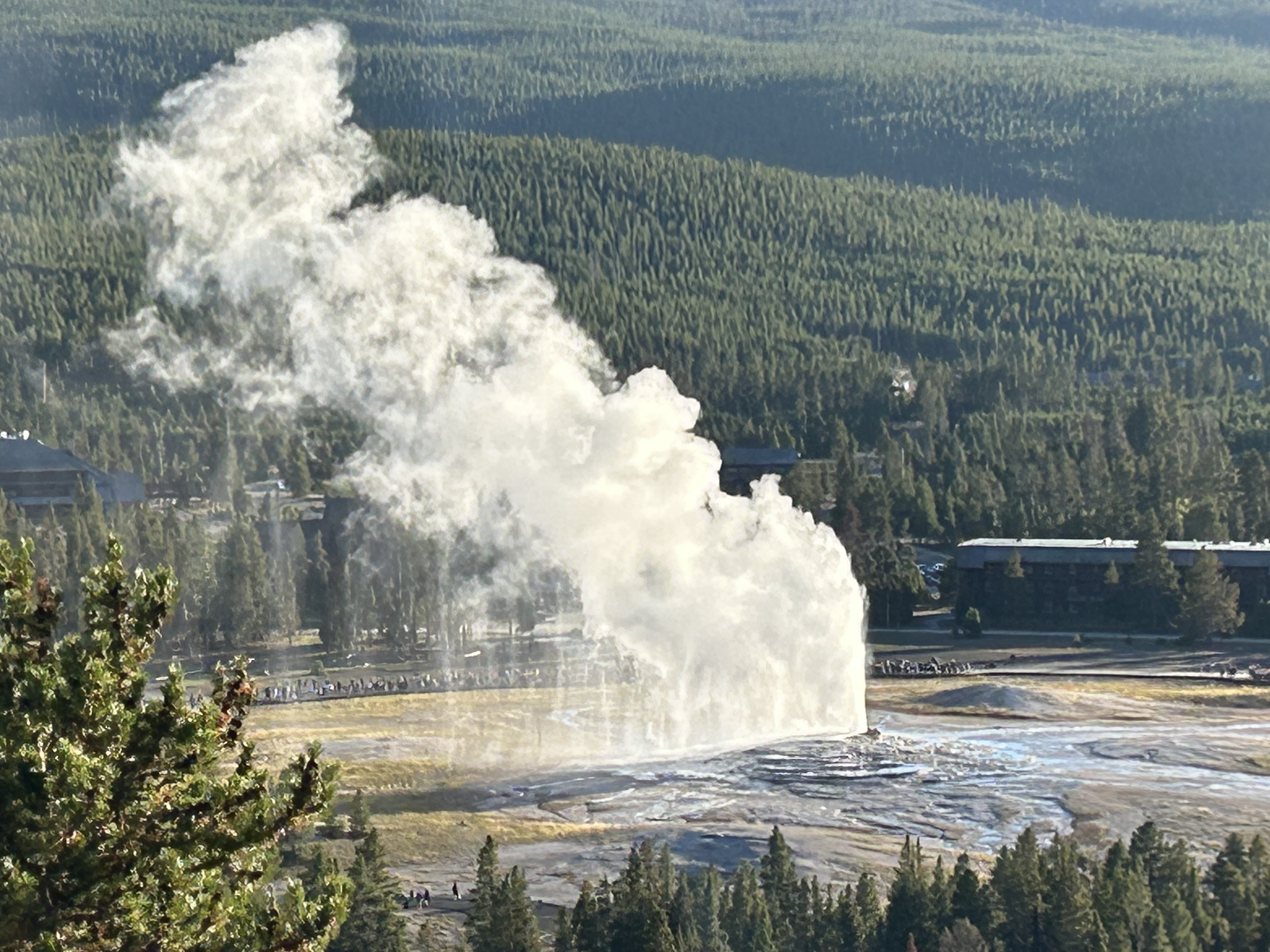
Clockwise from top: Morning Glory pool, Daisy, Grand and Old Faithful geysers.

Most of the world’s geysers are here, near the country’s largest high elevation lake and the headwaters of the longest free-flowing river in the lower 48, in a park bigger than some states. For wildlife alone, this is my favorite national park, plus the geysers are my favorite geologic feature in a park. There’s a lot to see and do, but I’m not going to write more about it. Come see for yourself.

John D. Rockefeller, Jr. Memorial Parkway

The parkway runs along the Snake River (above) connecting Grand Teton and Yellowstone, but the park includes a 24,000 acre land & river corridor for wildlife, without which we couldn’t enjoy seeing as many migratory animals in the two famous parks. The Rockefellers were instrumental in a number of national parks, including Acadia, Smoky and Marsh-Billings. Despite opposition from local ranchers, they purchased huge tracts of ranch lands and donated them to us. Laurance Rockefeller later donated his family’s 1,000 acre ranch to become part of Grand Teton, and his Preserve Center there near Phelps Lake is the best place to get in tune with their legacy. Considering the damage being done every day by burning the oil that created their fortune, it’s really the least they could have done.

”How we treat our land, how we build upon it,
how we act toward our air and water,
will in the long run tell what kind of people we really are.”

Laurance Rockefeller

Grand Teton National Park

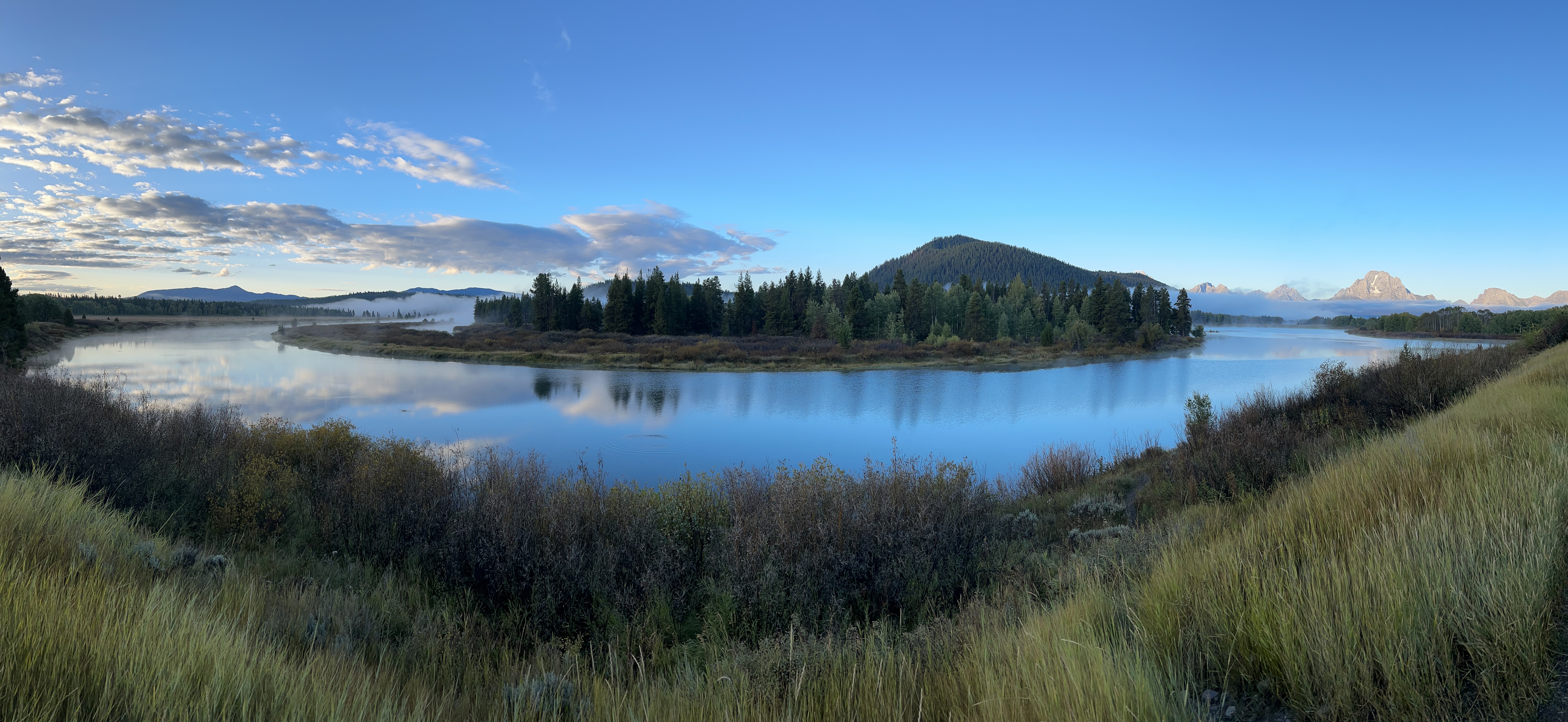
Oxbow Bend (above) is popular at sunrise as wildlife gathers in the coils of the Snake River and the light hits the Teton Range high on the right. Owls, a bald eagle, beaver and bugling elk all appeared out of the mist. Elsewhere in the park, pelicans, geese, ducks, osprey and many different small birds, then foxes and a large herd of bison wandered into view. Black bears foraging for hawthorn berries forced a trail detour, but I only saw scat.

Pronghorn migrate from here in Wyoming as far as New Mexico, and the headwaters from the nearby Continental Divide eventually reach the Pacific. This is an important park, ecologically, more than just a great photo stop. Still, the many lakes provide lots of flat hikes with steep mountain backgrounds, and lots of mountain hikes with water vistas. Or you could take the Jenny Lake boat across for even more views. Kayaking is a hassle with the permit & inspection process, and the views are wonderful on scenic drives and trails. Jackson Hole is crowded and expensive now, so look elsewhere for a place to stay.

Niobrara National Scenic River

Smith Falls above is the largest waterfall in Nebraska, and it makes a good picnic stop when floating down river. I got a ride with Little Outlaw from Brewer Bridge up to Fort Niobrara and kayaked back. Most people start at Berry Bridge and just float down on giant tubes ‘lazy river’ style, but they miss the pretty part at the beginning. I suppose the nature reserve doesn’t allow alcohol, so that may explain it. Either way, it’s very pleasant, with thick grassy banks, high bluffs, a couple of Great Blue Heron, several smaller waterfalls and no boat engines.

The interesting little town of Valentine is a decent base, with the small visitor center and places to stay. It’s in a well known Dark Sky county, which makes sense since the area is remote & peaceful. There’s a large nature reserve to the south, where I spotted a bald eagle but no bison. With all the space, they should have even more wildlife areas. Somewhere downriver were likely hideouts of bank robbers Frank & Jesse James. There are a number of reservations in the area, especially in South Dakota. There are not many places to charge, so I had to plan and drive a little slower than usual. Be sure to try a Runza—meat pie/ sandwich—if you see the local chain restaurant in one of the larger towns. I recommend mushroom Swiss.

Ozark National Scenic Riverways

Nature requires pristine conditions to sustain diverse species, and here they exist undiminished. Cave Spring above is fed from Devils Well, a huge underground lake in a Karst cavern 100’ below the surface. The water is so clean and cold that bright green watercress grows in thick clumps underwater. I saw baby swallows above the cave mouth, baby ducks following their mother down the rapids, a river otter, great blue heron and bald eagles. The air was thick with mayflies over the water and butterflies on the wildflowers. Lovely.

Carr’s, aka Current River, offered to provide their equipment for the same price as a shuttle, so I paddled from Akers Ferry to my campground at Pulltite. There’s tubing downstream, but when the water is high enough, upstream is more scenic. There’s an excellent cave tour at Round Spring where I saw cave salamanders, but tickets are limited. The other river in the park is the Jack’s Fork, and there’s a scenic mill at Alley Spring where I saw baby skunks. The largest spring is unimaginatively called Big Spring, and it’s strikingly beautiful with hundreds of millions of gallons of aquamarine water pouring out of the rock daily. Blue Spring is one of the deepest in the world, but I didn’t have time to explore everywhere. This Missouri park is my favorite for kayaking, so I’m planning on returning to paddle another stretch soon.

Shenandoah National Park

The park is in Virginia and connects to Great Smoky via the Blue Ridge Parkway: hundreds of miles of winding wild beauty. The skyline drive is wondrous and many of the outlooks are magnificent, but you really should stop and go for a hike. The ultimate hike would be the Appalachian Trail, but there are many shorter ones of varying difficulty. I saw folks biking, but most looked unhappy. The park ranges from 1400’ to over 4000’ with lots of ups and downs for over 100 miles in between.

Many folks stop in the middle at Big Meadows (milepost 50) which has a Visitor Center, big campground and lodge with restaurant and taproom. I was less interested in the meadow than the forest, so I stopped at Skyland (milepost 40 from the north). They don’t have a visitor center or campground, but they have a lodge, similar dining, horseback riding and free EV charging (J1772 & Tesla Destination).

From there I hiked west past the old Massanutten Lodge and out to Miller’s Head, where a family told me about the Whiteoak Canyon trail on the east side. So I added another 5 round trip miles to get to the waterfall above, where another nice family helpfully provide scale by standing near the top. It’s easy to spot a dozen types of wildflowers, birds, and larger wildlife. About a dozen deer crossed the road ahead of me, so drive carefully!

Everyone may already know this, but neither the Shenandoah River, Valley nor Mountains are within the park. Those are all to the west, and the best place to see the river is from the Shenandoah Valley Overlook near the north entrance.

Indiana Dunes National Park

100 years ago, Alice Gray chose to live in the dunes above for ten years, camping out, swimming nude, and eschewing the working life in Chicago, visible across the lake. She became known as ‘Diana of the Dunes’, and more than anyone else is responsible for the park. She protested the removal of the huge sand dunes for glass, industry and fill. She urged that the dunes be preserved in media interviews and at a speech to the Prairie Club.

“Besides its nearness to Chicago and its beauty, its spiritual power,
there is between the Dune Country and the city a more than sentimental bond—a family tie.
To see the Dunes destroyed would be for Chicago the sacrilegious sin which is not forgiven.”

Alice Mabel Gray, aka Diana of the Dunes, in 1917

The park comprises several sections, including a Heron Rookery, an Ice Age Bog, seven named beaches and a lake, besides the dunes themselves. There’s an eponymous state park within the bounds of the site. The ranger suggested that the 1 mile Dune Succession Trail which includes Diana’s Dunes above is the best in the park, but the attached 1 mile West Beach Loop Trail to Long Lake is worth taking too to see more birds. I saw well over a dozen species of birds, including the American Bittern, and there were turtles and evidence of beavers as well.

Unfortunately, sections of shoreline within the park are also taken by steel mills, power plants, train stations, and development. The hum of cars is constant and passing trains drown out the birdsong. A local dog-walker explained how many nests have been destroyed and how developers always seem to evade environmental restrictions. Once gone, these homes for wildlife will never return, given the fragile ecosystems and manmade pollution. Saving species means reserving more wetlands and restricting development, but everywhere I go, most folks seem more concerned with their lawns than the Climate Crisis.