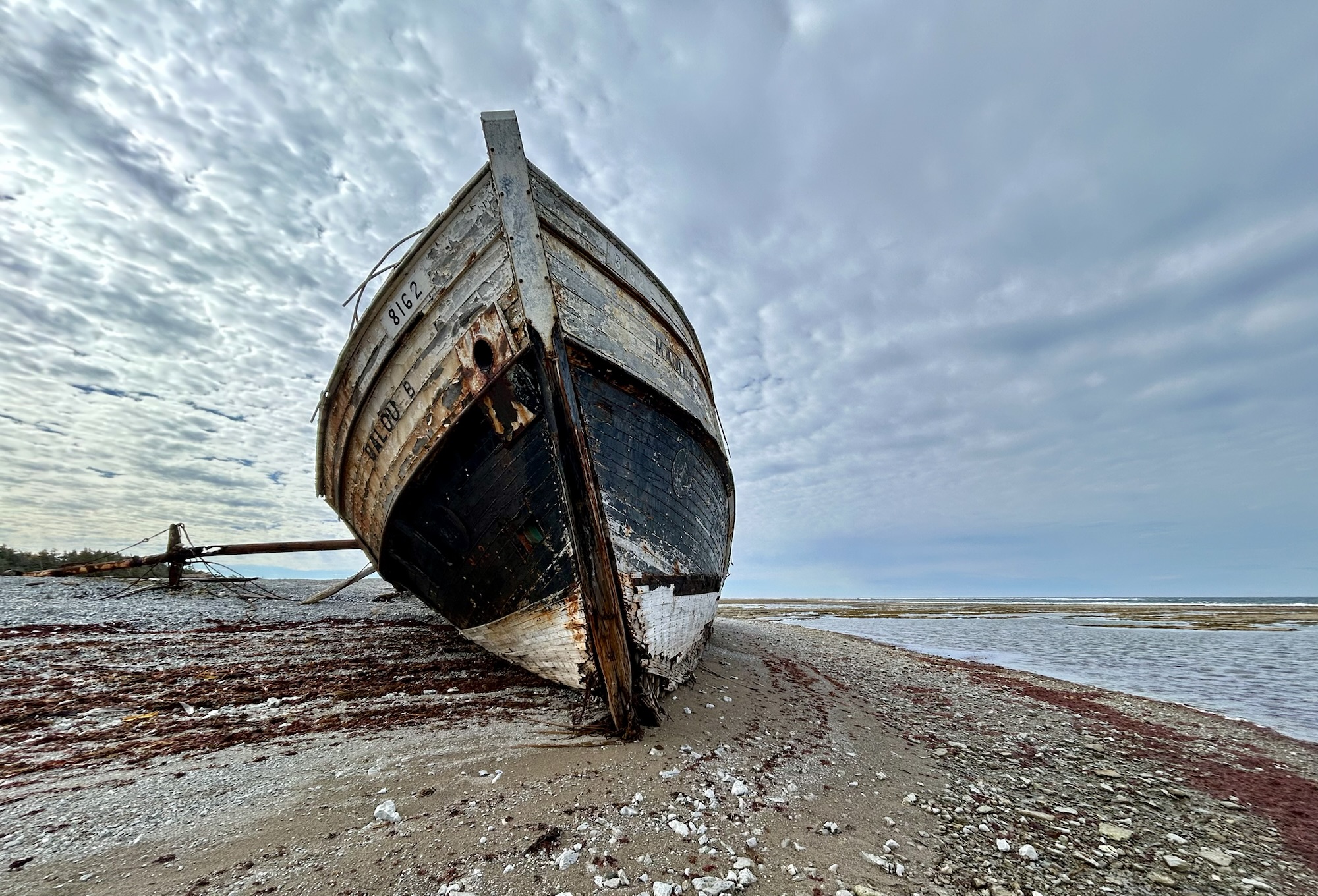
This windswept island in the Gulf of St Lawrence is larger than the state of Delaware and is now a UNESCO World Heritage Site, rich in early fossils from the Ordovician-Silurian extinction era when mollusks and arthropods thrived and land plants first emerged. With shallow shoals and terraced ledges, the island was known for shipwrecks, contributing to its isolation. In 1895, a French chocolate magnate, Henri Menier, bought the whole island as a private hunting and fishing game preserve. In 1974, Canada bought the island from loggers and set aside about 1/3 of the island for hunters, fishers and tourists. In 2023 the coastline and several deep river canyons were preserved for fossils as a WHS, with the north coast being the oldest. With 24 salmon rivers, canyons, waterfalls, fossils, shipwrecks, cliffs, an undeveloped coastline known for lobsters, and forests stocked with deer, the island is unique.
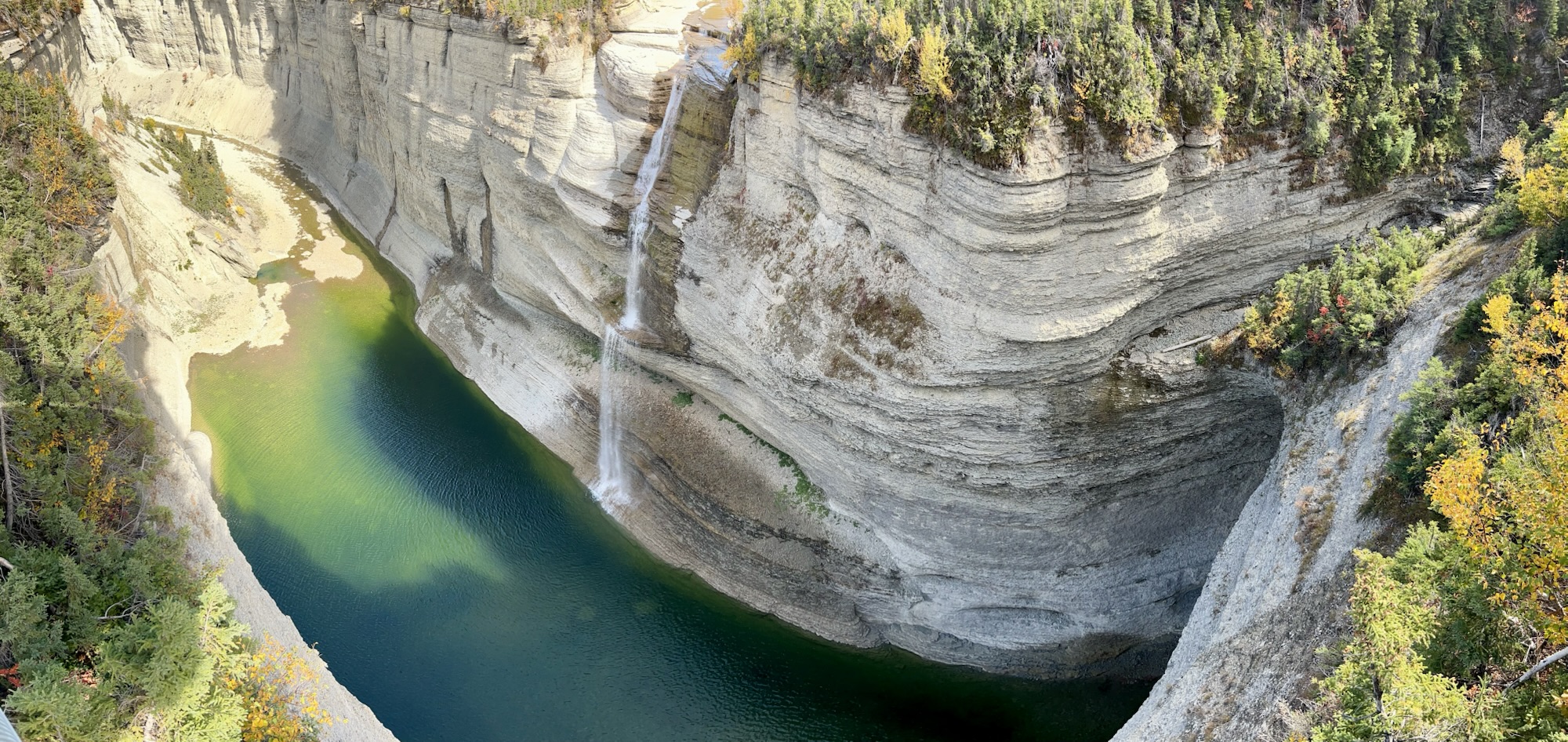
Now with a long wharf and an airport, the island is more accessible, although the most famous site, Chute Vauréal—the 250’ waterfall below—, is over 100 miles away from town over an unpaved but decent road. Most summer tourists take cruise ships or fly in on upscale package tours. Deer hunting is big business with off grid lodges; one offers a week with a personal guide, ATV driver, 3 meals per day, including a 5 course dinner of ‘renowned cuisine’, and all your game and fish packed up for you to take home. With about 1,000 deer per winter resident, it’s easy to find deer, who often show up at your door looking for handouts. And there are large, mixed-color foxes roaming around town too.
Yet Anticosti Island is so off-grid, off-radar and ‘off the beaten path’ that I couldn’t figure out how to visit, especially due to my lack of French and preferring DIY EV travel over hotel + flight package tours. But there is a boat on the north coast where roads are scarce with regularly scheduled stops at seaway ports up to Labrador. On the way upstream, the M/V Bella Descagnés goes from Havre Saint Pierre to Port-Menier on Anticosti, and it reverses the trip downstream a couple days later.
Though cabins are often booked months in advance, it occurred to me that they must take walk-on passengers between the closest two ports. Without a Canadian address, I couldn’t book my ticket online, and the hold times were depressing. So I just drove up the coast and arrived barely 10 minutes before they left. (The boat had gained almost an hour on its schedule overnight.) I parked on the wharf, walked on, paid my fare at the desk, and they welcomed me aboard! Some folks thought I was crazy and others thought I was a worker commuting cheaply to the mainland, but I had a pleasant time relaxing in the lounge and eating in both the cafeteria and the dining room. Optimistically, I had booked a B&B with an island day tour, and the everything worked out well. While the waterfall is less impressive in the autumn, it’s still taller than Niagara Falls, and the weather and foliage were lovely. On the way back, I even got a bunk for the overnight trip.

 Zero Carbon Travel