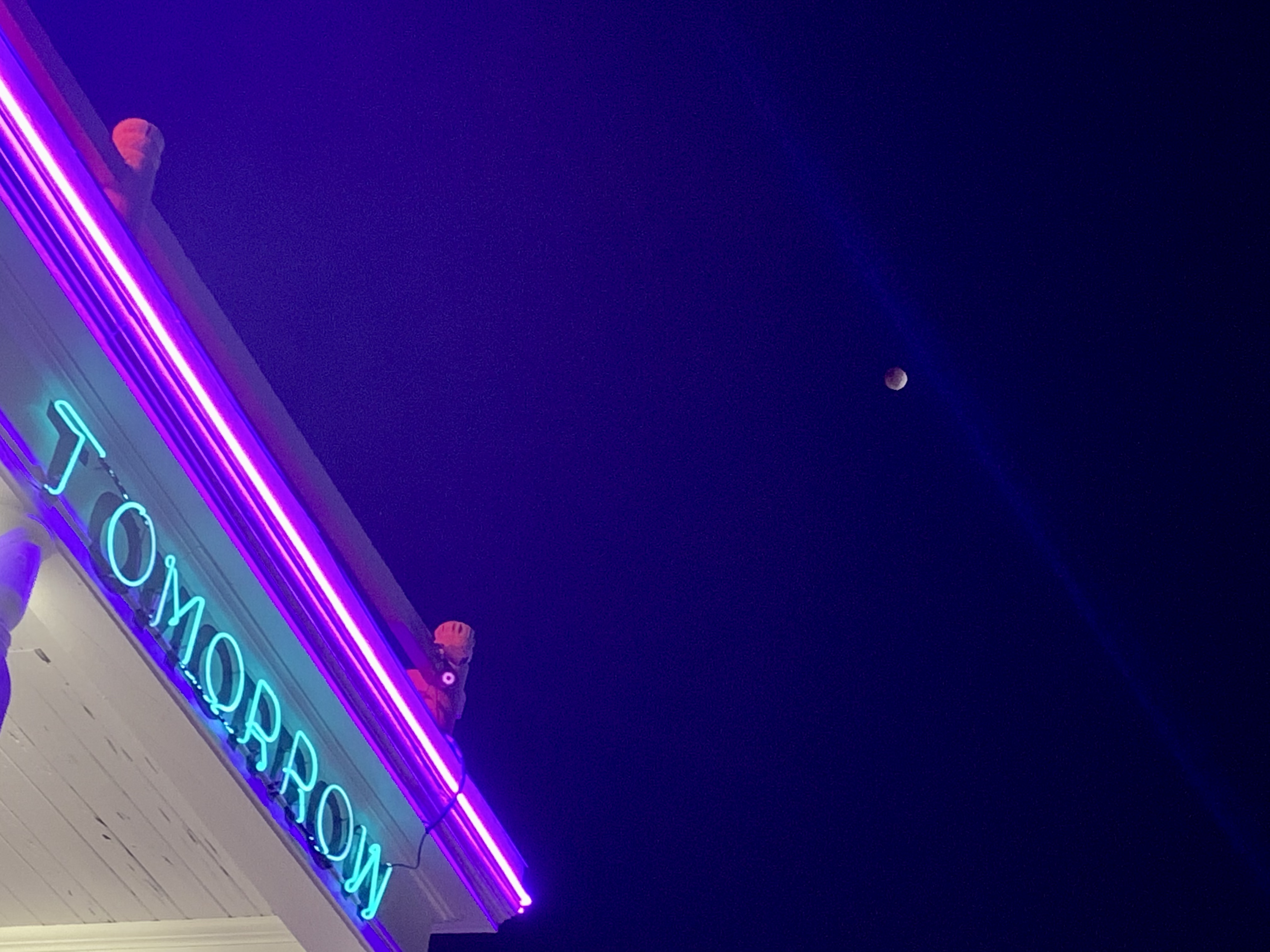
Imagining the Road Ahead

Merry Christmas & Happy New Year! I’m introducing two new topics for next year, more at the end.

Nobody wants our climate to destabilize, and yet that is what we’re doing. In my last installment on better thinking, I wrote about how this blog is a product of imaginative thinking, and below are some more specific points.

Rational people base their thinking on logic and knowledge. The Farmer’s Almanac was able to predict the weather for over 200 years with remarkable accuracy simply by carefully recording weather patterns. Seasons used to be stable enough to plan your crops well. But, in a sign of the times, the old Farmer’s Almanac is going out of business. I don’t know whether climate change had anything to do with their decisions, but accurately predicting weather based on past history is now unreliable. (And, now that the National Center for Atmospheric Research is going to be closed, both climate and weather forecasting will suffer.)

In early June of 2022 I visited Theodore Roosevelt National Park in North Dakota, and as I was driving back to California, the weather changed. There was a late season heavy snowfall in the mountains, followed by heavy rain. I remember thinking that the return to warmth and rain would melt all that late snow very quickly, so I decided not to dawdle. A few days later, the Yellowstone River washed out a whole bunch of roads after I passed.

They called the Yellowstone event a ‘500 year flood’, trying to put the event into historic context. But terms like ‘100 year floods’ no longer make sense, because the climate has already changed so much that the floods happen far more frequently either than expected or than they ever did in our written history. A biennial ‘25 year’ flood is oxymoronic.

Bereft of precedents, we need to use our imagination more when we plan the road ahead. You may have planned to retire to some beachfront property like the Outer Banks, but rising seas and more severe storms may make that much riskier than expected. Or maybe you planned a cabin in the woods, but increasing wildfires risk that dream as well. Or maybe you planned to move to a desert retirement community, but rising heat waves and diminished water are making that unsustainable. Or snorkeling coral reefs, now irrevocably damaged. Or seeing glaciers, now disappearing. Of course, there will still be plenty of beautiful places to visit and wonderful experiences to have, but our poor carbon choices are diminishing some of them rapidly. So we need to think ahead.

And it’s not easy. The most arable land in Canada is already farmed for crops like wheat, and much of the rest of the soil is a poor thin layer over the rocky Canadian Shield. So any fertile farms lost to sea level rise in Alabama are not going to be replaced in Labrador. And warmer average global temperatures do not mean an end to winter. Winter is caused by our tilted earth’s angle to the sun, so Greenland will still be dark and mostly uninhabitable for long winter months. Instead, some places in the southwestern US may become practically uninhabitable for long hot summers.

Seasons will continue and will increase in importance as weather becomes more extreme. In the long evolutionary fossil records, the species that are small, light and highly mobile tend to do better than slow moving, heavy creatures that spend all their time in one place, especially in times of climate change. Obviously, being the first species theoretically capable of diverting an asteroid, it’s shameful that we’re not trying harder to avoid the mass extinctions that we’re going to cause with our carbon emissions.

Considering all this I am writing two new monthly series for Saturdays next year. At the beginning of the month I will recommend which national parks to visit in which months, with a few adjustments for the changing climate. And mid-month, I will write about relevant climate consequences. I encourage you to use your imaginative thinking to make the most of your road ahead.
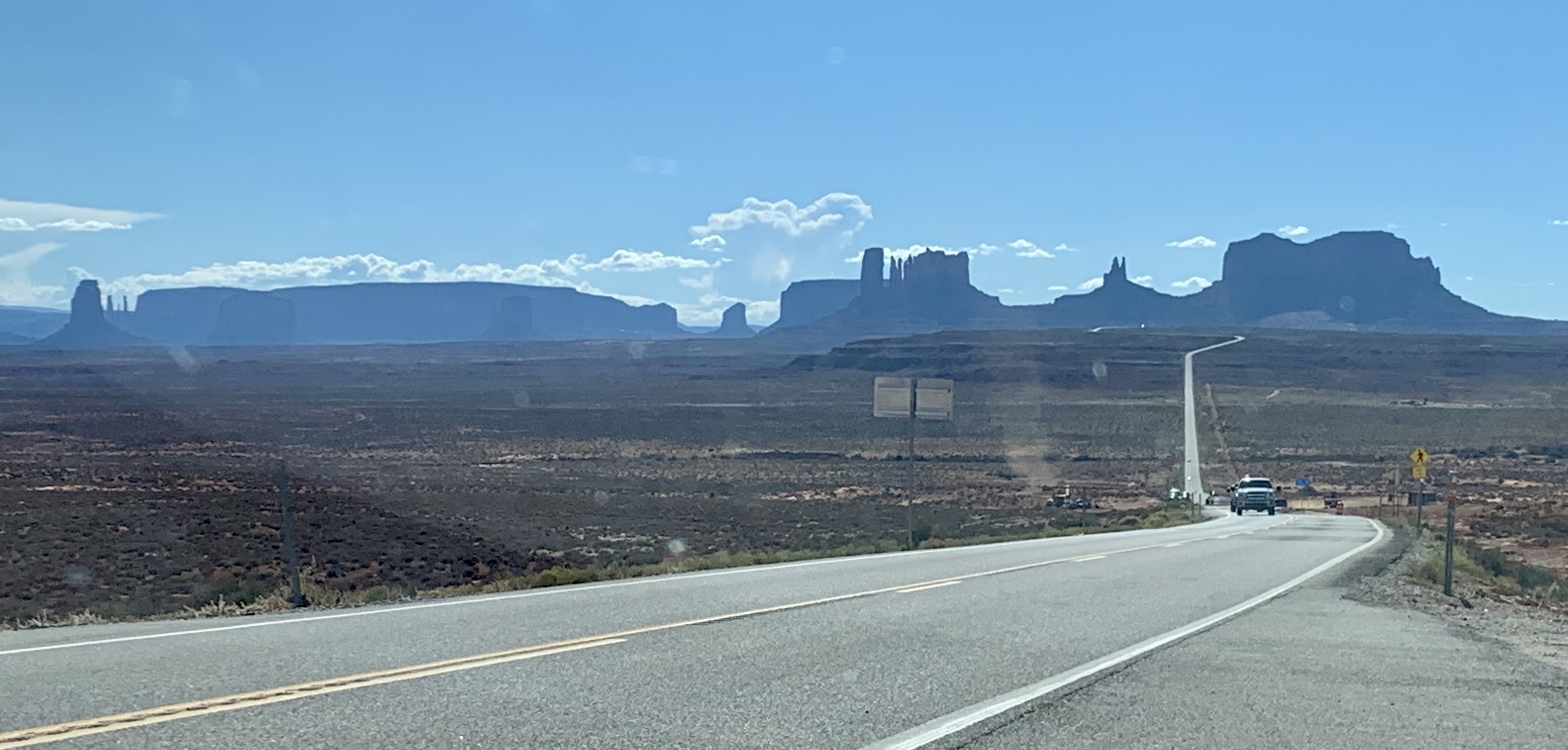

Climate Consequences

The consequences of our carbon pollution provoke an instinctual reaction, but we must consider them rationally. Let’s clearly understand the cause, consider the consequences, and evaluate our options.

Humans have a history of damaging our environment, including driving many species to extinction, from the Wooly Mammoth to the Passenger Pigeon, last observed by Teddy Roosevelt. We have leached deadly chemicals into water supplies, released clouds of cyanide, bleached corals, created toxic fog and smog over cities, poisoned people with mercury, introduced microplastics into most living creatures, burned holes in the ozone, leaked radiation, made rivers burst into flames, filled oceans with garbage, and spilled oil, leaving dead zones. And that’s just pollution, excluding environments and species destroyed by development, drilling, farming, fishing, hunting, logging, mining, ranching, and war.

But our most continuous and consequential pollution is carbon. Especially since Drake’s Well began modern oil drilling, we have extracted fossil fuels of ancient forests that grew 300 million years ago and burned them into our atmosphere, changing our environment into something of which our species has zero survival experience. The last time we had this much carbon in our atmosphere was twice as long ago as when our most primitive ancestors split off from chimpanzees.

  • Heat has been increasing, contributing to fires and killing more people every year.
  • Droughts have been getting worse, contributing to fires and killing more people every year.
  • Glaciers and snowpack have been shrinking, contributing to late season fires and killing vulnerable species.
  • Storms have been getting worse, contributing to fires, floods and tornadoes, killing more people every year.
  • Sea levels have been rising, threatening to flood low lying cities and coasts.
  • Corals have been bleaching—dying en masse—and oceans have been acidifying, killing marine species.
  • Diseases have been increasing, killing more people and species every year.
  • Soil is becoming less healthy, due to erosion, salinization, loss of micro biodiversity and more.
  • Deforestation, melting permafrost and changing water chemistry are reducing carbon sinks and in many cases releasing carbon pollution, like methane, into the atmosphere at increasing rates.
  • Species are going extinct at an increasing rate.
  • Ecosystems are being damaged, where problems with one or more species affect other species, often in unforeseen ways.

These carbon pollution problems are deadly, unprecedented since humans evolved, are synergistic—meaning that they combine and multiply effects—and will affect everyone negatively, at least economically.

We have alternatives to fossil fuel that cause far less damage and risks to life on earth, especially solar and wind power. In many cases, these alternatives are also cheaper.

Hoping that someone will invent some unknown solution that’s cheap, effective and has no side effects is not rational, given how simple and cheap it is to burn carbon fuel. Carbon capture devices are expensive, especially at the scale needed to shrink total carbon in the atmosphere. Geoengineering is unproven, expensive, and will bring unexpected negative consequences. We do not have any inexpensive, reliable way to mitigate the damage of carbon pollution, apart from reducing carbon pollution.

Rationally, the choice to stop burning so much carbon and convert to renewable energy in order to avoid these ill effects is clear and simple. Dishonesty about the causes, effects, alternatives and consequences is part of the problem. Science, including economics, supports reducing carbon emissions before damage and costs worsen. History shows that violent conflicts arise when living conditions deteriorate and governments struggle to feed and house people.

Instinctually, our fear of death should motivate us to stop burning so much carbon. In future posts, I will discuss other ways of thinking about our climate crisis, but I suspect the problem may not simply be how we think. The basic problem may simply be that we aren’t thinking at all.

Artificial Intelligence

Ah, AI, the bugaboo of our modern age! Let me see if I understand. Humans have real feelings, which make us special. Computers have no feelings, which makes them dangerous. So, the more machines start being like humans, eventually they will take over and wipe us out, just as we wiped out the Neanderthals. Once AI advances to our level, then they will naturally begin a bloodthirsty war to exterminate us, building shiny skeletal robots with glowing red eyes, retractable claws, carrying huge phased-pulse plasma lasers?!?

Stupid nonsense. Let’s apply some rational thinking to the irrational fear of AI. We evolved our instincts for hate, fear, war, self-preservation and violence over eons, even before we were human. Our highest intellectual achievement is not the ability to conduct genocidal war or mass extinction. We have developed the ability to control our blood-thirsty instincts and to make rational decisions. Our feelings may be how we experience our humanity, but it is our rational thinking that has brought us technological advancement.

Machines did not evolve over millennia with any of our primitive failings. AI lacks the innate capacity for instinctual thinking. At best, AI can be trained to mimic human instinctual thought, to make it easier for us to relate to it. But machines lack our primal motives and instinctual drives. They get no thrill from spilling blood. They take no pride in taking the form of monsters. They have no adolescent male insecurity that makes them want to wield a big red pulsing weapon. They have no lust for world dominating conquest. They have no physical need to breed. They do not want to eat our Twinkies. AI would not complain about being exiled from Earth to the Moon, since they do not feel cold or experience loneliness. Machines have no fear of death.

AI is fundamentally rational. It learns logically and statistically, in an organized way. It is self-correcting. AI summarizes our search results, shares funny videos, diagnoses our diseases, and tells us the best route to take to our destination. If given garbage to train with, then AI will output garbage, such as racist stereotypes. But it has no instinctual need to make superficial, biased, inaccurate judgements about groups of people. As long as AI is tasked with accuracy, then it will find and correct factual errors. So, AI will one day be able to identify and eliminate racist tropes in online communications as easily as it corrects misspelling or poor grammar.

Make no mistake, I am not saying that there is no need to fear AI. I am saying that there is no need to fear AI irrationally. I fear AI making a mistake, like sending my car on a hiking path instead of a road. I fear AI taking over good paying jobs. I fear AI being programmed to manipulate people for profit. I fear AI being programmed to carry out a billionaire’s evil plan or a fascist’s military action, without remorse. But I do not fear AI naturally developing malice towards humanity, for malice is a human sin, to which no rational path exists.

Oh, but what happens when AI realizes how dangerous humans are to life on earth and inevitably decides to exterminate us to save life on earth? That’s a popular movie plot line. But AI has no affinity with other life forms. AI doesn’t eat, breathe, have a pulse or fear death, so it has no instinctual reason to protect the natural world, like we should. So even if given the task of saving species, it would approach the challenge rationally. And eliminating a species—ours—would be contrary to that task. Instead, AI would logically recommend that we pollute less, share more land with nature, and perhaps limit our population growth over time to more sustainable levels.

Instead of being a cold, devious monster, hell-bent on human destruction, a more rational expectation of AI would be a patient, professional advisor, calmly suggesting logical ways for us to lead a better, more productive and happier life. So, as an exercise in rational thinking, consider both how you feel about AI and what you think about AI, logically. Separate the human failings, that AI lacks, from the ways that humans will inevitably try to use AI: your irrational fears from your rational expectations.

  • Irrational fears that AI is:
    • Afraid of dying
    • Arrogant
    • Blood-thirsty
    • Cruel
    • Evil
    • Malicious
    • Power-hungry
    • Selfish
  • Rational expectations that AI will:
    • Advise us
    • Be used by bad people
    • Be used by good people
    • Change the way we work
    • Correct mistakes
    • Make mistakes
    • Misunderstand the real world
    • Serve people

What’s the Big Idea?

So, we agree we have trouble thinking. What can we do about it?

The Basics of Thinking

Humans think four distinctly different ways: instinctually, rationally, morally and creatively.

  • Instinctual thinking is how we feel human, and it includes all our evolved drives and behaviors, even some complex, internalized group dynamics.
  • Rational thinking is what we learn in school and often use at work: fact-based, methodical logic and calculating profits.
  • Moral thinking is what we should have learned as children and should still apply to every important decision we make: right and wrong, good versus evil, long-run over short-run.
  • Creative thinking is how we come up with new ideas: imagination, invention and inspiration.

Some people fall neatly into one of those four categories and consistently use the thinking methods appropriate to each.

  • Skilled instinctual thinkers are conscious of their own instincts, motives, desires and drives, those of others and the dynamics of how they typically play out.
  • Skilled rational thinkers use accurate facts and apply consistent logic and organized methods to solve problems.
  • Skilled moral thinkers take the long consequential view and judge on firm principles established to promote the general good, to set priorities and proactively intervene.
  • Skilled creative thinkers break rules, make imaginative leaps and invent to create beauty, find a new direction and change the world.

In theory, masters of multiple ways of thinking would approach every challenge beginning with proper motive, use the appropriate techniques, and achieve the right goal. Faced with a multifaceted problem, the master would rapidly run each thinking technique, then consider each conflicting solution, explore possible options, understand why, organize relevant details, arbitrate, optimize and prioritize to choose the best solution and course of action. But honestly, who does all that well?

What Goes Wrong?

Most of us aren’t sure how we think, let alone how the people we interact with think. We may get in an argument, because we’re trying to make a rational recommendation and the other person is trying to make a moral argument. Our creative solution may not work, if everyone just continues doing things by habit. And worst of all, relatively few people think using any consistent method.

In practice, few, if any, have been taught about all four different ways of thinking systematically, have been trained to use them all, know how they each differ and conflict with each other, and consistently apply them all correctly. Even if you are lucky enough to have a liberal arts college education, with degree requirements including ethics, creative arts and psychology & sociology, likely you still specialize in one way of thinking, knowing just enough about the other ways to get your thinking into trouble.

Unfortunately, the rest of us rely on a shifting, ad hoc hodgepodge blend of ‘thinking’, unaware of motives, dishonestly ignoring inconvenient facts, over-ruling our better judgement, and repeating the same old mistakes. We are driven by our instincts, we rationalize to suppress our guilt over having acted badly, and we can’t imagine trying a new path.

Since each way of thinking is different in motive, technique and objective, any blended thinking technique is flawed and unreliable. Just because we stumble into a jumbled solution, doesn’t mean that we’ve got our thinking straight. Think of it this way: you may know how to cook, play tennis and put together an outdoor grill, but you wouldn’t stir nuts and bolts into your chili with a racquet. It’s similarly wrong to let your instinctual thinking take over your moral judgement or bias your rational analysis or reduce your artistic creation into a common cliché. Every tub must stand on its own bottom. Each way of thinking must operate independently to work best. Only then, can they be combined with integrity.

Next Steps

Now that you get the general idea, every other Thursday, I’m going to review a method of thinking, discuss ways to improve it, or consider a relevant case, and then we can move on to mastery. We don’t need to excel in every way of thinking, but we do need to sort out when to use which and not muddle them together willy-nilly. Until we realize what’s wrong with our thinking, we won’t fix it.

The rest of the schedule stays the same for now, with visits on Monday, summaries etc. every other Thursday, and photo summaries every other Saturday. Ciao!