Small ZCT Boats

Once I get to a park, I like to explore, preferably without burning carbon. I have a folding e-bike (Gocycle G4) and a folding kayak (Oru Bay) that fit in my car (Tesla 3LR). I also bring an old packraft (Kokopelli) for remote camping trips. [To be clear, I receive zero compensation related to any products or services, neither referral bonuses nor discounts.] Despite some wonderful experiences, I would not recommend anyone buy any of these products, which all have drawbacks. Instead, pick what works best for you.

In many parks—especially for normal folk who don’t visit a hundred a year—the smart paddling choice is to rent. Often the only way to get a pickup / drop off is free with a rental. If you don’t paddle frequently, this ends up being relatively cheap, with less hassle and without maintenance. Many places are very concerned about invasive species, so careful cleaning and drying of your own equipment is time consuming too, not to mention fees for licenses and mussel stickers.

My folding kayak works well for shallow, flat water. I have a spray skirt for whitewater, but it’s best in swamps like Congaree and Big Thicket or in long relatively flat rivers like the Delaware or Big South Fork. Because it tracks straighter than my packraft would go, I can cover a lot of ground, frequently passing younger, fitter raft paddlers. It’s a bit expensive, tippy, and it doesn’t carry a lot of gear, so I use it for day trips. But folks renting $90 a day gear often say ‘good idea’ when they see me pull my kayak out of my car trunk, not realizing this is possible. Their guides look much less pleased with the idea.

I wish I had a lighter packraft, as mine is almost as heavy as my 25 pound folding kayak. But it packs up small and carries much more gear, so that’s the only option when the campsites are far from the car. The Kokopelli is also more appropriate for whitewater than my Oru.

Which brings me to my new inflatable boat (Takacat 260) with electric outboard (E-propulsion Spirit Plus). Charging my new outboard battery with a solar panel (above) is easy, and the battery floats. While heavier than I would like, this is the lightest combo I could find. With a solar panel, I can run this at low speed all day, even charging underway. I find it works best when carrying gear across open bays or trying to cover longer distances when time is short. One surprising benefit is that I can approach birds very quietly and closely both in the water and on rocks or shore, with a more stable platform for photos. If everyone switched to electric, the shores would be much quieter and cleaner.

Driving the Baja Peninsula

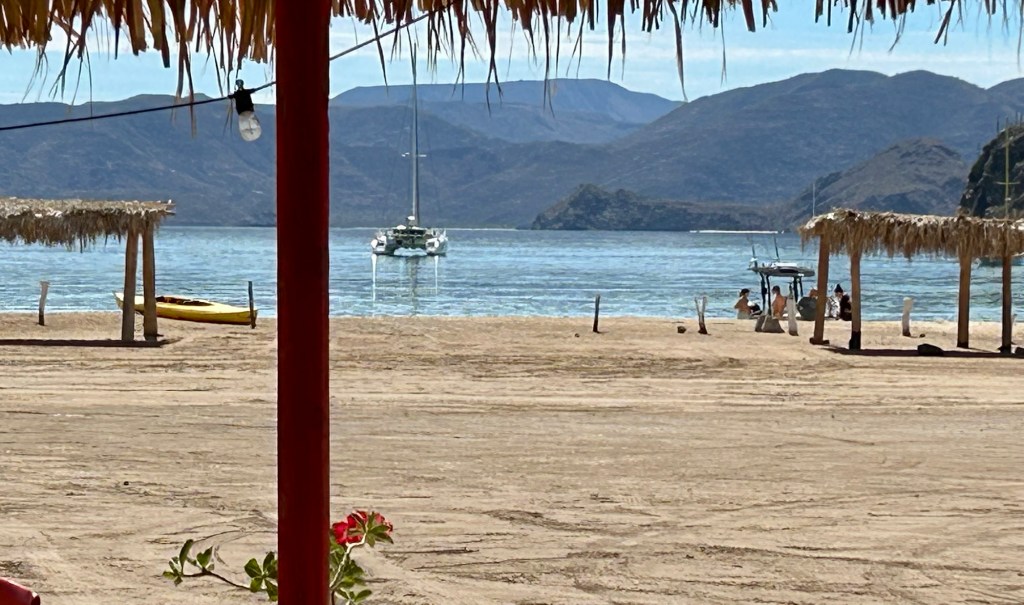
My favorite place in Baja is Loreto, above. It’s a magical town, both Mexican and touristy, with good restaurants, not too big nor crowded, near beautiful beaches and with quality tours to explore the bay. The bay and islands are part of a national park, where I saw blue whales. Simple restaurants on nearby beaches have the freshest seafood: try Vista al Mar.

Winter is the time to see the gray whales in their favorite lagoons, mating and raising their calves. And some of the tour operators offer rock painting and other tours, if it’s too cold or windy for watching whales. Ensenada has vineyards with wine tasting in the surrounding valleys. And folks enjoy biking, fishing, hiking, horseback riding, kayaking and more along the whole peninsula. More folks should make the drive from the US state of Alta—‘upper’—California to the Mexican state of Baja—‘lower’—California and Baja California Sur—‘south’.

Everyone who has driven to Baja has stories, but there’s a lot of BS from people who want to make it sound more rugged and dangerous than it is. Americans often drive big expensive campers with all sorts of extra gear, imagining they’re on some challenging off-road expedition, like one of the Baja races. They talk about camping at some perfect remote cove only accessible with a specialized vehicle and extreme skills, even though many beautiful beaches are on easily driven roads. I saw a van roll over after swerving to avoid a pothole on the highway, so I think the last thing you need is some top-heavy monstrosity. (Driver said he was fine, but I asked the police nearby to check on him).

While I saw several large motorcycle packs of ‘rugged individuals’ staying at comfortable hotels, I drove my Tesla 3, with a low center of gravity that steers well, and I visited some of the most wonderful places in Mexico, without drama. As on my drive to Mexico City, I was neither asked for bribes nor witnessed any crimes. There’s much less traffic in Baja, and there’s no need for a car permit in Baja or neighboring Rocky Point. I crossed the border at Tecate, where I simply drove through without a wait. There are a few checkpoints, but—besides asking questions about my car—they typically just wanted to know my destination, to be sure I wasn’t trying to drive at night. (Due to politics, returning to the US is far more time-consuming than it was last year, as inspections have increased significantly).

50 years ago maybe, you needed a small private plane to stay at Hotel Serenidad, one of John Wayne’s old favorites, but I just drove there. The restaurant still has delicious food, and the atmosphere is tranquil. The road was a little bumpy, but I charged my Tesla 3 at a nearby hotel, while playing with their dogs. Then, down the coast, I had one of my favorite meals, aquachiles mixto, at Ana’s restaurant on Playa Santispac, while mesmerized by the view from my table below.

The plain truth is that Baja is drivable by electric vehicle, and I was surprised to see only two Teslas south of Ensenada. Even the US CBP officer was surprised that I had driven my Tesla 3 all the way to La Paz and asked about road conditions and charging. There are two routes from the last Supercharger in Ensenada, either via Hotel Cataviña and the pacific highway or via San Felipe on the more recently paved ’faster’ route. I took the pacific route, since it’s a few miles shorter. Sure, my car lost signal for the whole round trip between Ensenada and LaPaz, so it missed the time zone change between north and south Baja. But I used my iPhone to navigate, entering my next destination whenever I was in a town large enough to have cell service or at a place with WiFi.

The destination chargers I found on PlugShare are much slower than superchargers: +42 miles/hour, but some are free with lunch or $20 to charge. La Paz to Loreto can be done in one drive, and both ends have hotels with free charging for guests. (Here’s a tip. If you’re charging overnight, don’t set a full charge as ‘one time only’. When I woke up, a power outage during the night had reset my charge level from full back to daily 80%.) I drove Bahía de Los Angeles to Ensenada in one long day, charging in San Quintín. The trick is to obey the speed limits and take your time. Since charging is so slow, there’s no point in saving 40 minutes speeding, only to have to charge for an extra hour when you arrive. Besides, you need time to avoid potholes.

Although too many people have thrown trash along the roads and too many developments and small buildings have been abandoned, Baja is still very scenic, with beautiful beaches, craggy peaks, canyons, deserts, dunes, farms, salt flats, volcanoes, date palms, countless cacti, osprey, and more. OK, it can be dusty and dirty, but not everywhere. Mexico is an informal country, and Baja is even more so, where folks just do things their own way. (Every margarita I drank, tasted different than the last). But if you put a smile on your face, be patient, thoughtful and keep your eyes open, then Baja is a beautiful place to visit, especially in a small electric car!

What About Charging?

It’s easier than you may think. Does your car tell you when you’re about to drive too far from the nearest gas station? Does it include fuel stops in your itinerary automatically, or let you know the prices before you decide where to fuel up? When was the last time you filled up for free? Can you fuel up overnight while staying at Mesa Verde, in a campground, while eating a burger, drinking a white mocha or watching the base jumpers fly off the bridge into the Snake River Gorge in Twin Falls, Idaho, above?

I have only had a few tricky charging situations so far. One was at the Dairy Queen in Needles, California, where every time the owner updates his seasonal specials, his sign truck blocks 3 of the 4 chargers for much of the day. I asked him why he didn’t tell Tesla in advance, so that the cars would route drivers to a different charger, but that never occurred to him. I also suggested that he could park the truck on the other side of the sign and only block 2 of 12 gas pumps, and he looked at me like I was crazy. I decided not to buy any ice cream while waiting.

Recently, I was unable to contact the owner of a JuiceBox charger in Terlingua, Texas, so I just charged up a little for free. One more tricky situation was at the supercharger in Lamar, Colorado, where the town was celebrating some event and the street was temporarily blocked off. But while I was waiting, a town councilwoman came up to offer me BBQ and asked if I was enjoying the live band. I had a beer to help me survive the wait.

Like any vehicle, you can go further if you slow down or turn off heating/cooling and open the windows. To extend my range while traveling in remote areas, I use the free PlugShare App to scout out my charging options and use my adapters (standard J1772, RV 50v, RV 30v, and rarely CCS). The trick is to remember that you need to sleep somewhere on a long road trip, so just find a campground with electricity or a hotel near a slow charger and plug in over night. Tesla destination chargers can be found in some spectacular areas, and they’re often free to hotel guests. [No, I’m not compensated by Tesla in any way].

A few folks quibble that this is not entirely “zero carbon” travel, but it’s not my fault if the grid isn’t fully renewable yet. The sooner we all switch to electric vehicles, the sooner fossil fuel goes extinct. My vehicle doesn’t burn carbon, and I can’t help exhaling carbon dioxide. And to clarify my rules, I have two different goals: 1) to travel to as many places as I can without burning carbon and 2) to enjoy those places, which sometimes involves burning a little bit of carbon to get around the parks.

Most folks seem to understand that driving EV’s save money compared to gas, but I don’t think people fully appreciate the difference. While I was on my way to the restroom, a guy asked me how much it cost to fill up, so I told him usually less than $20. He said, “just like my truck”, but I know his truck costs $200 to fill up at those gas prices. And both vehicles have comparable range. Math isn’t that hard.

I tried to convince the rangers at Death Valley to do more to encourage visitors to switch to EV’s, but they said that they don’t want to force people to buy “expensive vehicles”. A $100,000 5th Wheel or $200,000 Class A rig only goes a mile or two per dollar of fuel. I go at least ten times that, over 15 miles per dollar. It’s very easy to save $10,000 in fuel costs per year switching to an EV, and even more if you go on long road trips, find free charging or use solar to recharge at home.

But the real reason to switch to EV’s is to save life on Earth. Why wait?

Congaree National Park

Congaree is one of my favorite parks, so I saved it for my last entry of the year. Once, every river in the southeast was filled with hardwood forests like this, supporting many species of birds, fish and wildlife, and keeping our air and water clean. Now, this may be the last great one left. Around late May, the fireflies blink in synch, so you’ll need to plan months ahead if you want a campsite then. The 2.5 mile boardwalk hike from the main Harry Hampton visitors center takes you past a few of the tall trees that fill the swamp: beech, bald cypress, water tupelos and loblolly pines. The latter are the largest, most massive pines in the eastern half of the US. Congaree may have been saved much more recently than some of the more famous parks in the west, but for biodiversity, it is exceptional.

Of course, being basically a swamp or flood plain forest in the middle of a giant watershed stretching from the Blue Ridge Mountains to the Atlantic, the best way to see the park is by paddling. I dragged out my trusty OruKayak and spent several glorious hours exploring Cedar Creek by myself. There were folks on tour at the boat launch, but once on the water, I didn’t see anyone. Longer trips can be arranged on the Congaree River. Several people asked about my kayak, including a couple that happened to be from my old hometown, and I explained that it is lightweight, a bit tippy, and fits easily in the trunk of my Tesla Model 3. (I know everyone is hating on Elon right now, but he made a good car, as long as you don’t use the autopilot).

Apologies for botching another photo, but I should point out that the knobby things sticking up from the bank on the left are the knees of the bald cypress. They say it’s a mystery why the tree has knees, but obviously, the knees help dry out the roots, preventing rot. Above them, you can see some dwarf palmetto illuminated by the sun, and further upstream, the creek was blocked by falling trees, which are becoming more frequent with climate-crisis fueled storms. I also heard a variety of birds, although most of them flew away as I approached. Definitely worth bringing a map & GPS, since there are many side routes and obstacles that may require changing plans on the water. Beautiful.

Map of Regions

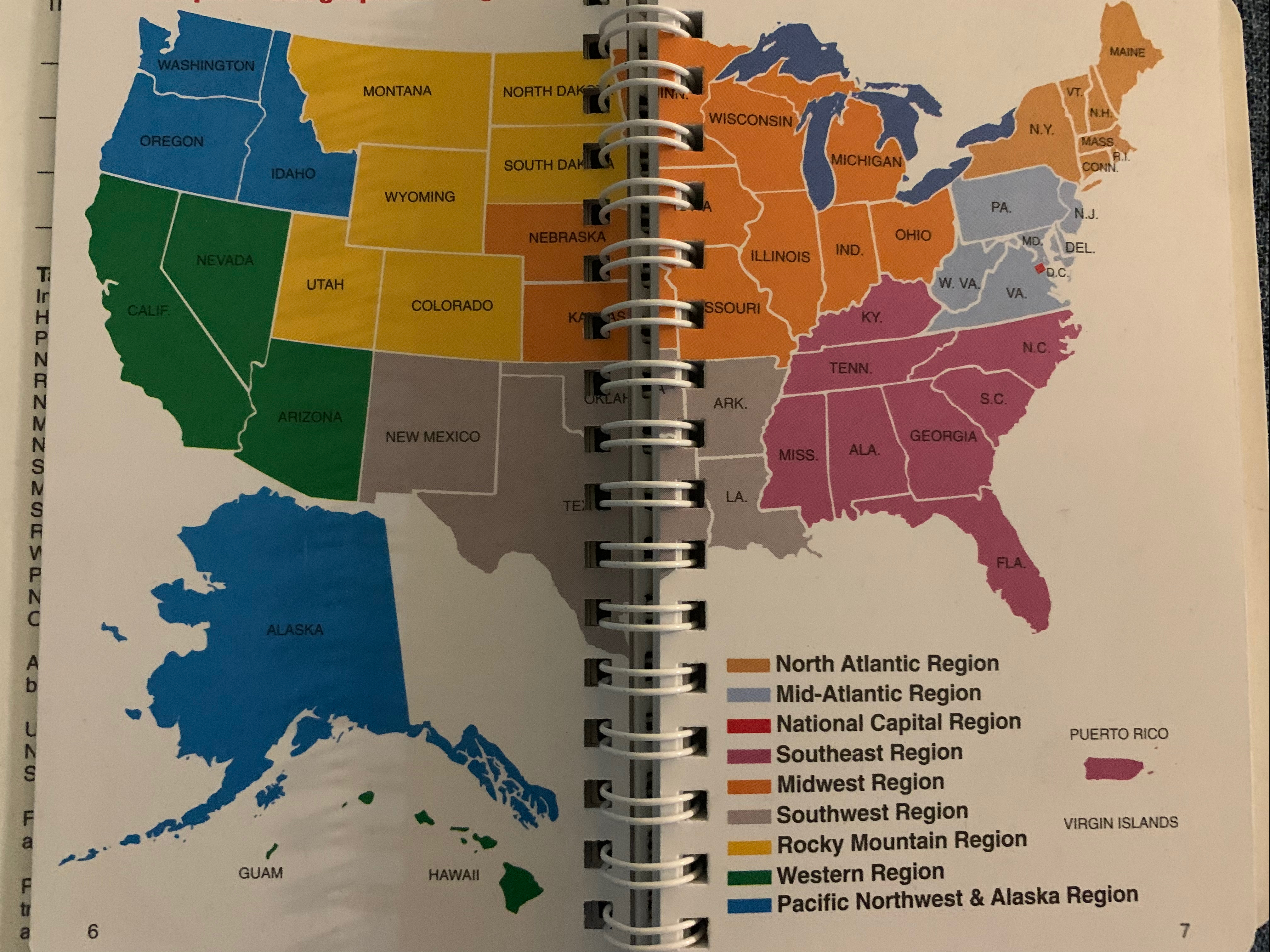
The National Parks Passport (which National Park Travelers Club members use to save visit stamps) divides the units into nine self-explanatory regions. The club has useful information for trip planning, and I log my park visits there too. The US Department of the Interior has reorganized their park unit regions a few times into something less useful for me, so I still use the map above to organize the site geographically. And the NPTC often does a better job keeping their park unit information completely up to date, compared with the NPS.

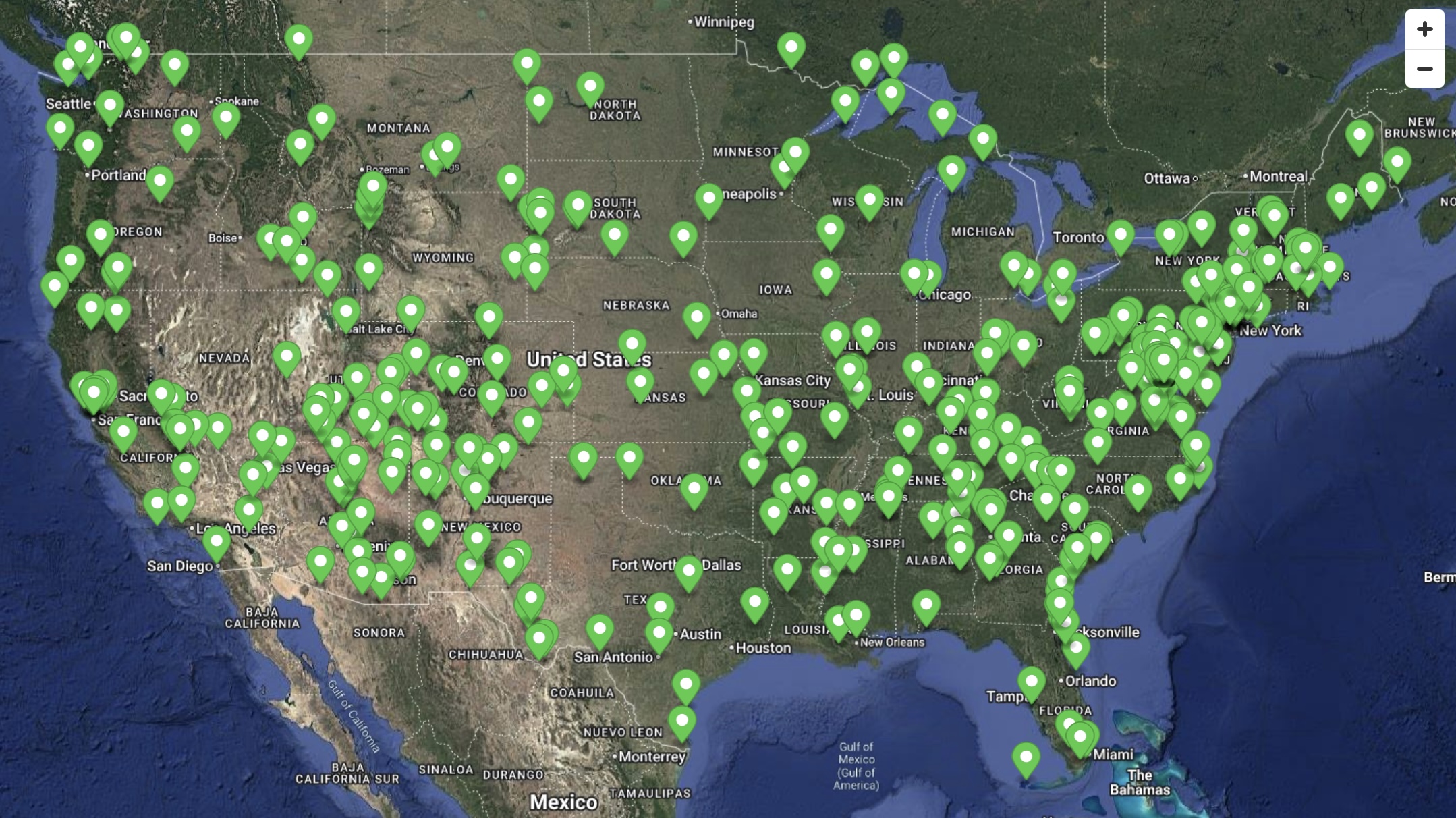
I visited all of the lower 48 states in my electric car in the last two years and completed all units in 35 states. Every state has at least one national park unit. If you want to see my visits in your state, click the ‘Regions’ menu above and explore the sub-menus for each state.

My first region completed was National Capital with 23 units, then Southwest with 42, Mid-Atlantic with 56, Rocky Mountain with 41, Midwest with 47 and North Atlantic with 44. Each of those links takes you to a summary of my park visits there.

That leaves three extremely challenging regions to complete. The Western region includes Hawaii. The Pacific Northwest has Alaska. And the Southeast includes US territories in the Caribbean.

As I mentioned in my post on Cumberland Gap, this blog is partly an object lesson to show that traveling in an EV is a great way to visit our national parks. I can travel hundreds of miles per day, stopping briefly to charge, use the restroom and eat, and filling up costs me a fraction of my Prius. I use a CCS and a few RV plug adapters on rare occasions when they’re more convenient than a Supercharger, and I find charging locations with the PlugShare app. When I stay in state park campgrounds, I charge my car overnight without paying extra. Even if I were more concerned with my money than our climate, I would travel this way. And I love driving my Tesla.

I’ve only had range or charging trouble twice. Once in Kansas, I could not reach a park before closing due to poor planning on where to charge, but when I returned, Tesla had opened a new Supercharger nearby. (The car tells me whenever I’m heading out of range from the nearest Supercharger). Another time, the owner of the Dairy Queen in Needles California was blocking 3 out of 4 chargers all day with a truck, because he wanted to change the seasonal advertising on his sign. I called Tesla to let them know, which is what he should have done in advance. I’m not going to say traveling cross-country by EV is idiot proof, but I can do it, so it kinda is.

Delay due to fire

Yes, I’ve temporarily moved back in with my Mom.

Why? Well, when I went in early to pick up my Tesla from the shop, there were emergency vehicles on site due to a battery fire.

The good news is that I’ve had a wonderful time here, swimming, eating seafood and relaxing. I’m restricted to the area until Tesla releases my car (not damaged). Fortunately, New Bedford (above) has the best scallops in the world.

Hope to be heading back to California shortly, with a few more posts along the way.

Great Sand Dunes National Park

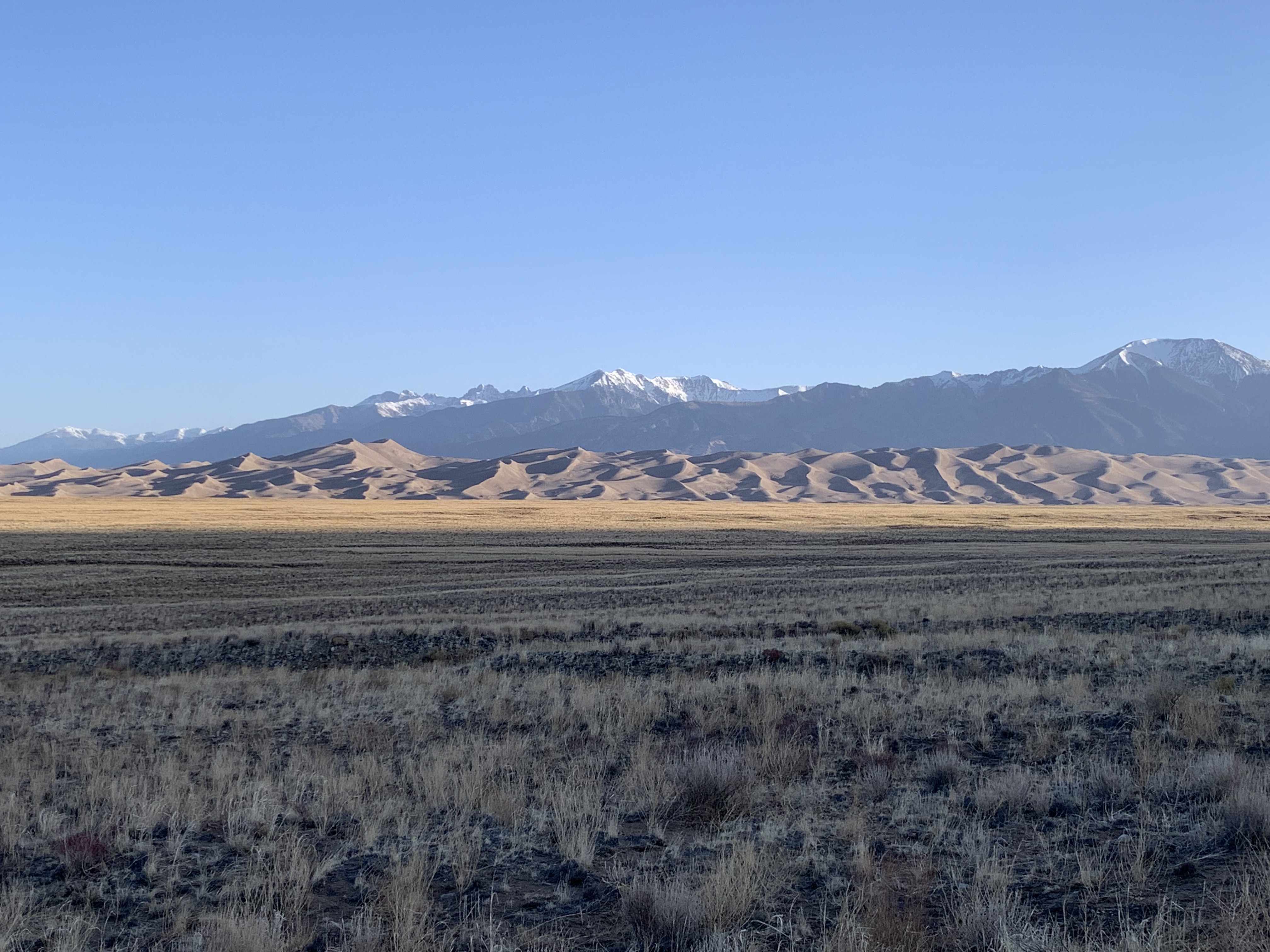
I’m obviously not much of a photographer, but I like this one. The tallest dunes here are over 700 feet, but they’re dwarfed by the surrounding mountains. Since I camped at Piñon Flats in the park, I was able to take this just as the sun came over the mountains, which added shadows for contrast. I hiked into the dunes before dawn and along the creek, but it’s not easy to take an interesting picture of so much brown sand, even in such a beautiful, surreal landscape in the moonlight. The dunes and the neighboring preserve are basically all wilderness, easily hiked into, and our footprints quickly disappear.

Whenever I wander into any wilderness, I always wonder about what we value. I have both a BS & MBA in business, and I worked in HQ at a Fortune 100 financial firm for a couple decades. And it seems to me that capitalism is terrible at valuation. One problem is that the first business to claim a resource is often just the first idea that comes along. There may be a better and more profitable use for a resource, but the quickest way to make money is typically the one that’s chosen. Another problem is that business people aren’t very innovative. If they see one business is successful in an area, then they will often just copy that idea. Economically, we’re far better off with a diverse set of competitive products and services than with a small number, because then we’re more resilient to market changes. But short term thinking dominates, which leads to over-investment in a few businesses, rather than a broad, diverse range of businesses.

It doesn’t take any special training to see this. Drive through most towns and see the same chain restaurants everywhere. Look at how similar most vehicles are or how all the fields in an area grow the exact same crop or raise the same cattle. Business is mainly herd behavior, and few want to risk money to develop a completely new business. Capitalists need tax incentives to change. Traditional car companies killed the electric car, then ignored Tesla, and now are demanding that the government build a charging network for them to compete. Who knew America’s largest and oldest corporations were such whiny cowards who need taxpayer handouts before they will adapt?

Why do I think about valuation in the wilderness? Because if the first guy to find this place had owned a cement company, he would have started carting off these dunes to make concrete. And then other concrete material suppliers would have copied him, lowering profits to nearly zero. And the wilderness would have been gone before anyone bothered to think whether there were any other better uses. The same is true of forests, wetlands, prairies, rivers, valleys, mountains and oceans. Capitalism rewards the first, fastest, cheapest exploiter for destroying wilderness, and penalizes long term thinking. Because time is money.

El Morro National Monument

This rock is interesting. Rock climbers would enjoy the many tall vertical crevices. There’s a spring with a pool in an alcove at the base. At the top, there’s a ruin with a good view of the surrounding valley. And all along the base there are carvings made centuries ago by travelers, from those who didn’t have a formal written language, to Spanish speakers who named this place ‘El Morro’ meaning ‘the hill’, to other pioneers.

This park unit has nine free campsites in a pleasant loop with toilets, tables and water (except during the winter). Since New Mexico offers many electric sites at their reasonably priced state campgrounds where I can charge my EV overnight, I generally try to stay there. Sometimes I stay at a private RV campground, and sometimes I stay at a hotel, especially when I really need a shower. The Tesla easily powers my 12v camping fridge. The least common denominator everywhere is a toilet and a trashcan. The model 3 is small, but I manage to sleep in it. Without a big rig to pull, I can easily park anywhere, and I don’t have to burn a gallon of fossil fuel every 10 miles.

White Sands National Park

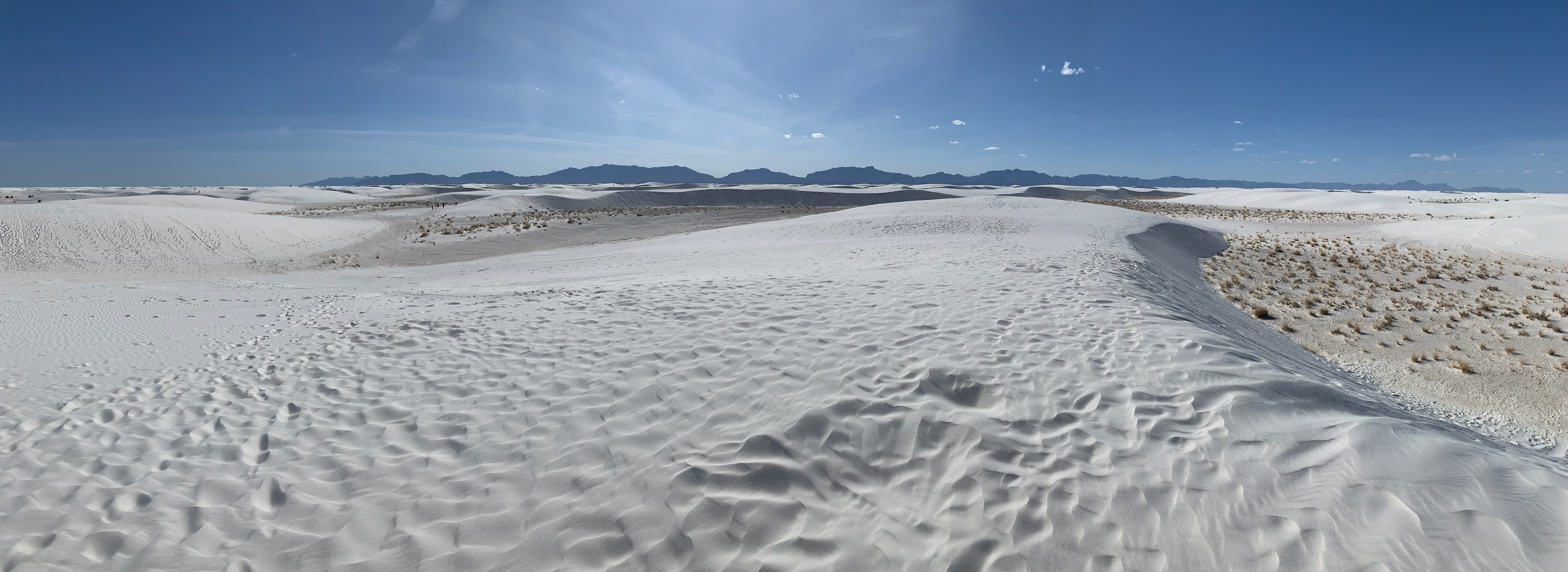
One of only three large gypsum sand dunes on earth, the others being nearby in Guadalupe Mountains NP and in Coahuila Mexico. If I had more time, I would have enjoyed camping overnight in the “back country” away from the road or a ranger lead evening program. But I enjoyed the nature hike and the otherworldly views. I was glad to have the long-range version of the Tesla Model 3, since the round trip distances to charging stations cross the vast missile range and mountains you can see in the distance.

Click to see my photos of all national park units in New Mexico.

Mojave National Preserve

I wrongly assumed that this preserve was just a flat sandy desert, but it is a varied terrain of mountains, mesas, canyons, and volcanic landscapes, in addition to sand dunes.

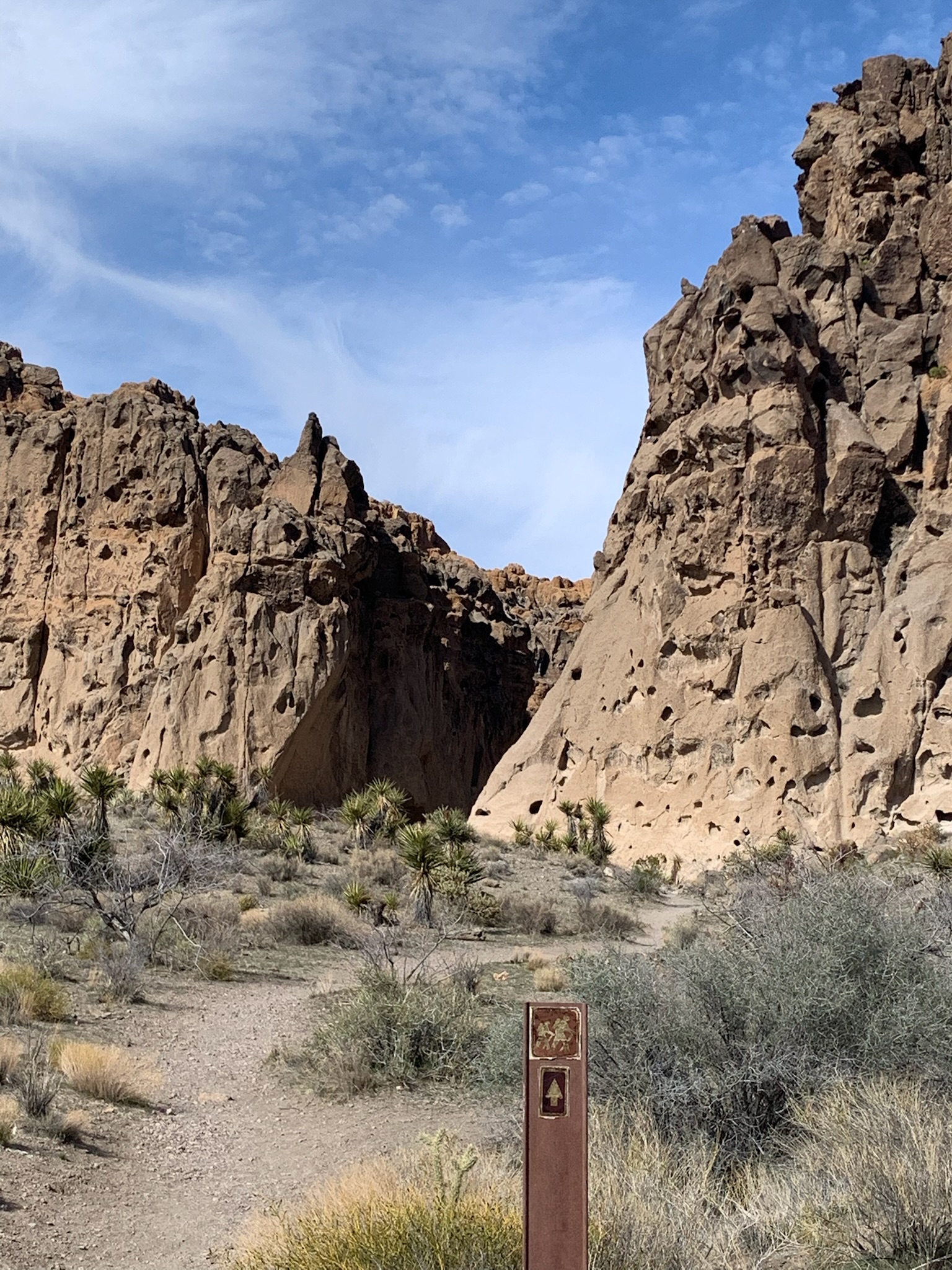
The Rings Loop Trail pictured, near the Hole-in-the-Wall visitor center, goes right through a canyon with Swiss-cheese holes in the walls. There are petroglyphs to see, fascinating views, and short ladders of iron rings to climb.

A couple of retired campers asked me about my long range Tesla 3. The recent spike in gas prices ($7 in California) interests people who regularly spend over $100 to fill their tanks. Of course it’s also a very fun car to drive with a low center of gravity and instant acceleration. But too many folks resist change, even when their carbon travel habits contribute to devastating change.

Click to see my photos of all national park units in California.