National Parks to Visit in January

In case you want to visit all the National Parks in the contiguous US, this year I’m sharing my recommendations for 3-5 National Parks to visit each month. By the end of the year, you’ll have a full list of all 51 parks, evenly spread out over the different seasons with as few compromises as possible.

Since January is typically the coldest month, it makes sense to visit southern Florida, the only tropical climate in the continental US. That means Biscayne, the Dry Tortugas and the Everglades. These are beautiful parks for enjoying snorkeling, beaches and nature outdoors, so January is a great month for avoiding the hot, humid weather with afternoon thunderstorms that would bother you much of the rest of the year.

Hurricane season is lengthening, and now some tropical storms form in May before the official season of June through November. I visited the Dry Tortugas in May with an eye on the weather, and I was lucky. Some see sea turtles up close, but I was not lucky. Nesting beaches are often off-limits, and the water visibility wasn’t as clear for snorkeling as it would be in January. If you want to see the turtles, take the short, low altitude seaplane out to the Dry Tortugas, and you will see them swimming all year long.

Sometimes a winter storm will bring winds down to the keys with cold snaps in the 50s, but they don’t last. Many places that rent snorkel gear will have various wetsuits to keep you comfortable, if needed, but the water temperature usually stays above 70° F. Day highs are around 75° F, and most evenings are very mild.

Since the Everglades are dry in January, wildlife tends to concentrate around reliable water sources, making them easier to spot. Birding is best in January, as many migratory birds are in the park, and large charismatic birds like roseate spoonbills and wood storks are laying eggs. And there are few mosquitoes in January.

Weather makes a big difference in how much we enjoy our park visits, so—despite the high season costs—, I recommend visiting these three tropical parks in January, when most other parks are cold, closed and difficult to access. Plan ahead, be flexible on where to stay, and be efficient with your time to save money. But enjoy your time on a tropical beach or amongst the mangroves while others are home shoveling snow.

Dry Tortugas National Park

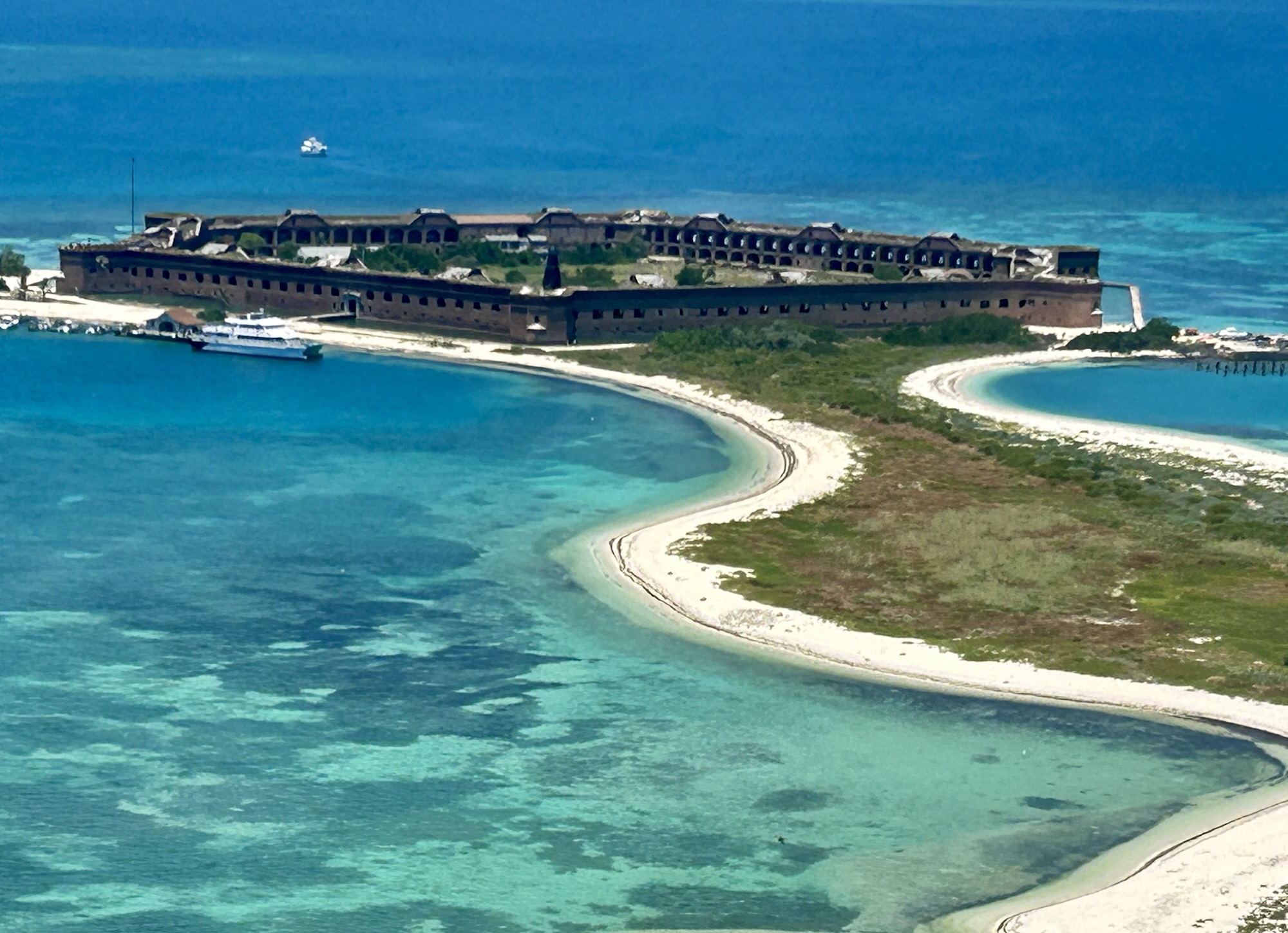
Fort Jefferson is an impressive 19th century structure, used to police ship traffic between Florida and Cuba. The island was named for the sea turtles that still nest here, and there are many seabirds too. There are lovely views of the courtyard above and all around the small island from the top of the walls. I was pleased to see a goliath grouper near the ferry dock, and despite the poor coral condition, the snorkeling was very good among the old dock pilings near the south beach. Together with the Everglades, Dry Tortugas is a large UNESCO Biosphere. I saw hundreds of fish and birds. This is one of my favorite national parks.

The flight is much more expensive than the ferry, but there are some benefits. I was kicking myself for not reserving ferry tickets enough months in advance, but when I realized that the seaplane only flies a hundred and fifty feet or so over the shallow waters, I decided the short flight was worthwhile for the views. From the air, we saw two shipwrecks, one a navy boat used for target practice and the other a famous treasure hunter’s floating guard shack, plus many sea turtles, some sharks, maybe a stingray, a pod of dolphin, and flying fish scattering over the surface. First time for me to see all that from the air. Also, the flight saved me a lot of time. If you’re just visiting Key West—I took the Conch Tour decades ago—to get to the Dry Tortugas, then you can drive in, catch a 10 am flight, and be on your way, saving two very expensive hotel nights on Key West. Plus, it’s less crowded when you first arrive, they include snorkel gear—definitely snorkel—, and you get the view of the fort below.

Biscayne National Park

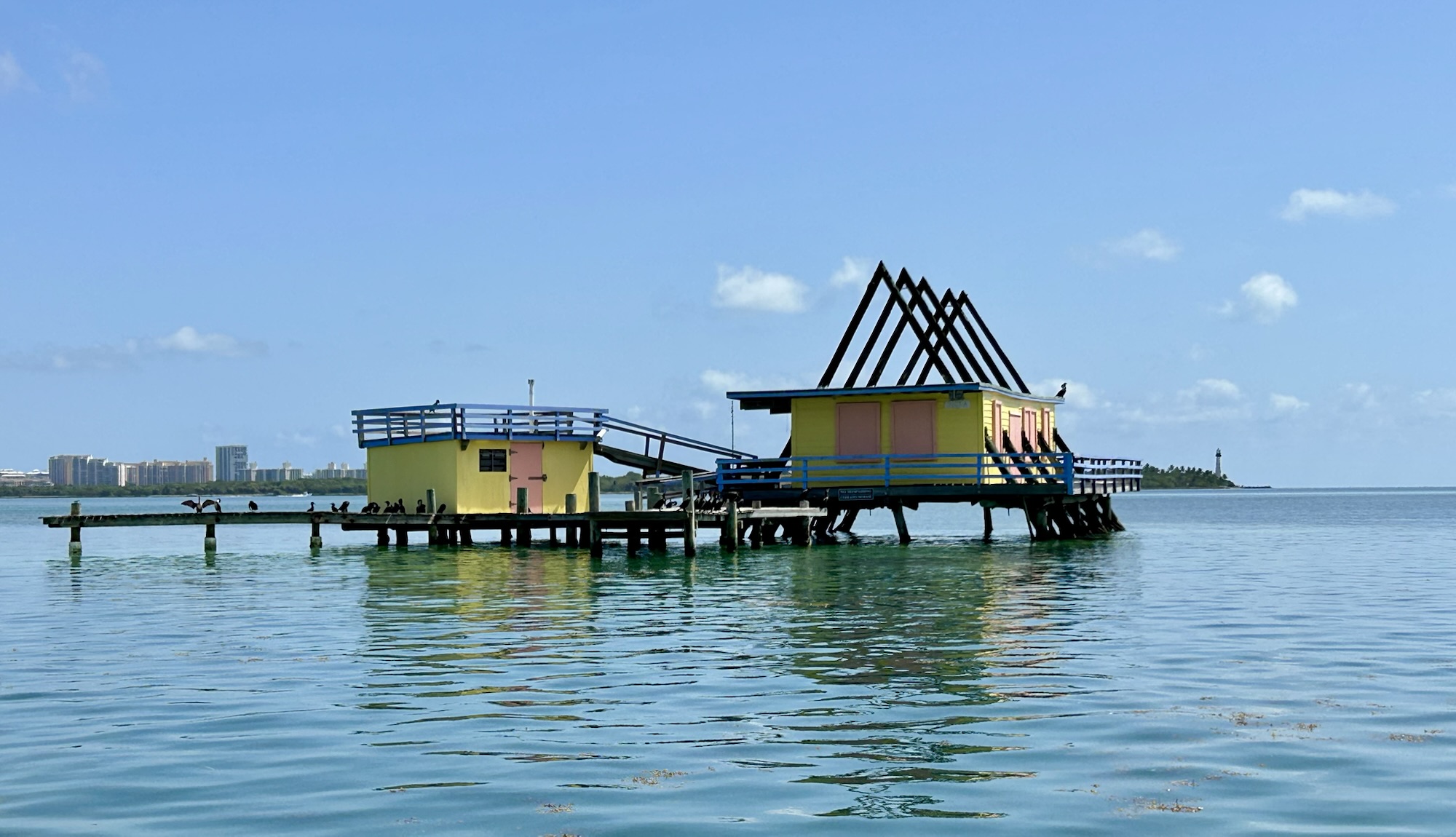
A few stilt houses have survived hurricanes and are allowed to remain in this huge marine park just outside Miami. The lighthouse in the background was once part of the Underground Railroad, as boats would risk the reefs to come here at night to pick up escaped slaves and fleeing Native Americans to live in the Bahamas, which ended slavery in 1834. While the Key Biscayne in the background above is a barrier island, the Florida Keys are part of an ancient reef that begins here, includes Key West and runs to the Dry Tortugas.

The best way to see the park is by boat. I took a very small tour from Coconut Grove out to the flats, to snorkel on both ocean and bay sides of Elliot Key, and had lunch on Boca Chica. The reef I remember from the 1980s has been devastated by carbon pollution from fossil fuels—elkhorn & staghorn corals are functionally extinct here now—with widespread coral bleaching and only a fraction of the marine life. But it still has life. I counted dozens of species including a beautiful French angelfish, various colorful parrotfish, spiny urchin and a lobster. From the surface we saw mating loggerheads, a manatee, and many birds, but the vast majority of wildlife is just below the surface. Let me show you what I mean.