Andrew Johnson National Historic Site

Somebody has gone to a great deal of effort to rehabilitate disgraced President Andrew Johnson. The hagiographic film is narrated by the late Tennessee Senator (and actor) Fred Thompson. The exhibits extol Johnson’s fidelity to the Constitution against the “radical” views in Congress that African Americans should be granted full citizenship rights. This may be the worst site for informing people about history in the park service.

In fact, Johnson was an inveterate racist, a slave-owner who got a special exemption from Lincoln’s Emancipation Proclamation to extend slavery in Tennessee. After Lincoln’s demise, Johnson reversed Reconstruction and vetoed the Civil Rights Act, paving the way for a campaign of terror by the KKK (also from Tennessee in 1865) and the collapse of all efforts to let freed slaves participate fully in elections. He was impeached (148-27), but escaped conviction by one vote. Johnson’s presidency was such a threat to the nation that Grant was pressured to run “in order to save the Union again”. A long-time historical favorite of racists, modern historians generally rank Johnson among the worst presidents. Nowhere at this historic site could I find any acknowledgement that it was morally wrong and anti-democratic to deny freed slaves the right to vote.
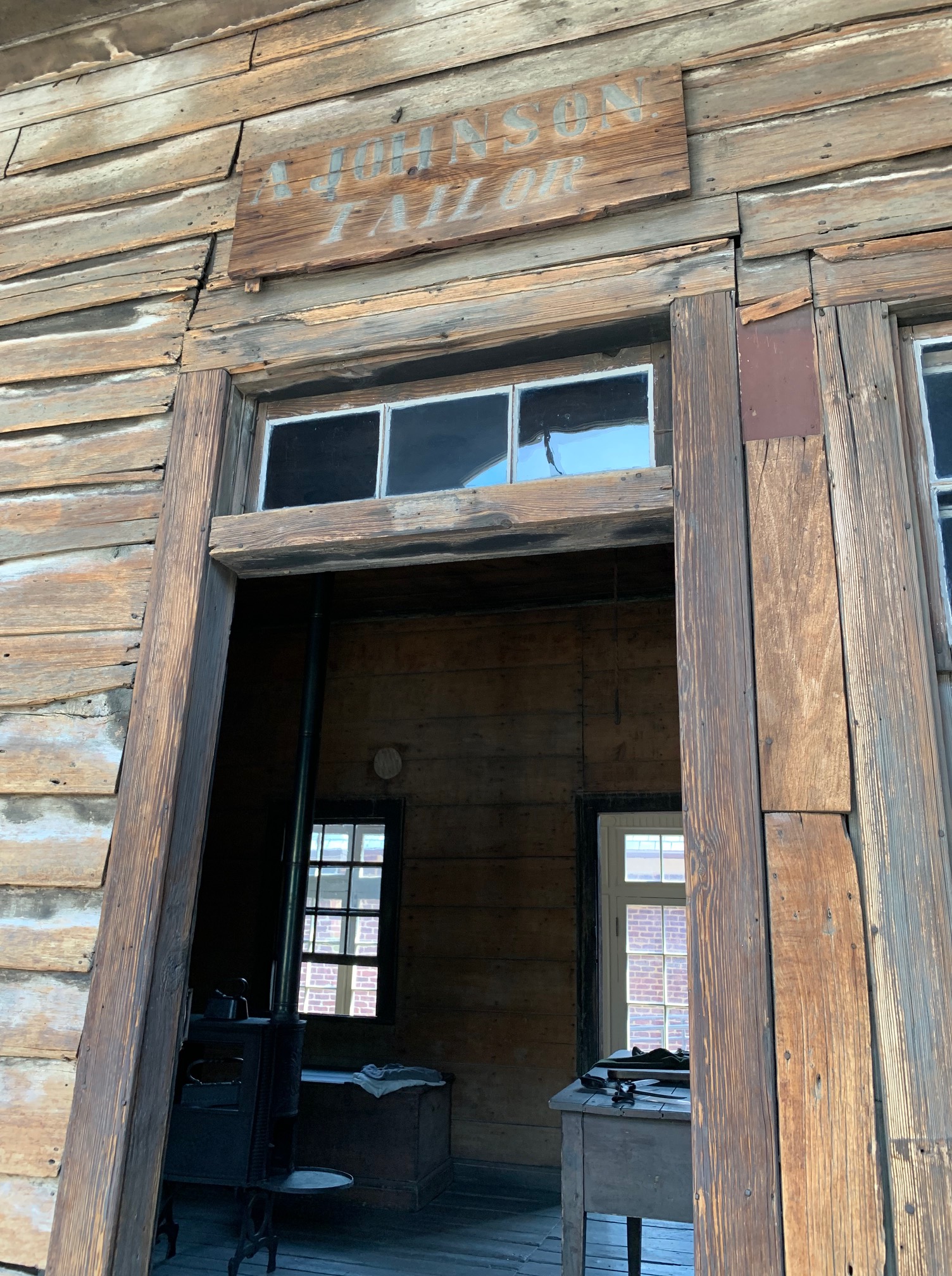
Johnson was a poorly-educated tailor who had the good fortune to be married by a relative of Abraham Lincoln.

Camp Nelson National Monument

While obviously fortified, the camp is best remembered as a refugee and training site for escaped and liberated slaves to join the Union. A heartless commander here burned shelters before winter to try to dissuade refugees from staying, leading to over 100 deaths from exposure, national outrage and new legislation to build more permanent refugee shelters at many Union bases, including food, clothing & education. There’s a community nearby that persists since that time. Many of the US Colored Troops that served, especially in the second half of the war, were trained here.

Mammoth Cave National Park

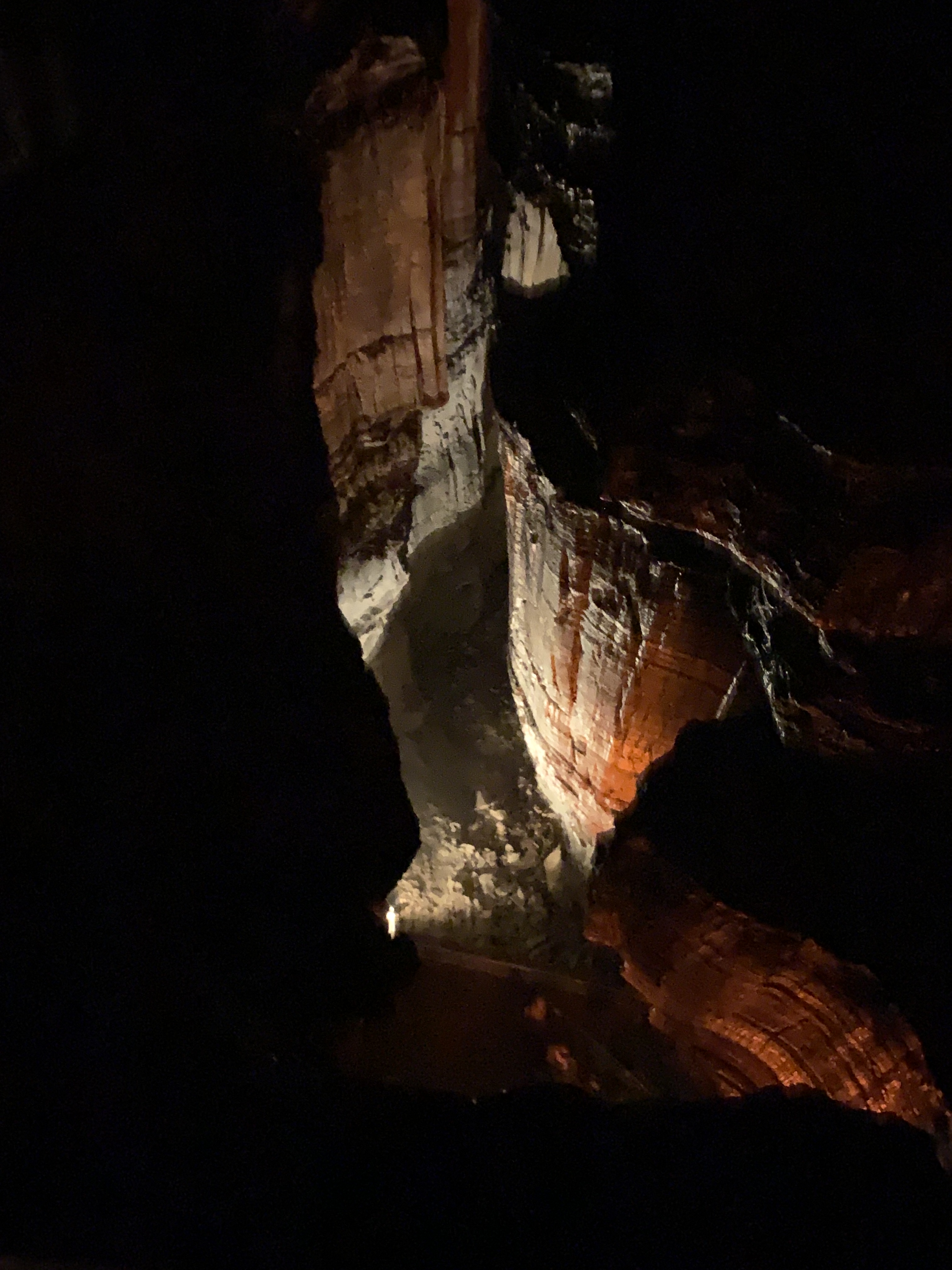
Where Carlsbad is like the Mines of Moria where you’re expecting goblins to stream out of the crevices into the magnificent cathedral-sized chambers, Mammoth is definitely hollow-earth lizard people. The walls are fairly smooth and plain and the ”cave” is actually an incredibly long maze of tunnels with underground rivers. I figure since the ceilings vary in height that only lizard people who are equally comfortable either upright or on all fours would feel at home roaming the endless passageways. The ranger herding us from the back concurred and told scary stories which kept us moving right along.

The cave is a World Heritage Site. Above ground is a huge forest with miles of trails, several nice campgrounds, and the Green River which runs deep enough to require a small car ferry at one point. The clean ecosystem above helps keep rare blind cave fish and other species alive below.

The ranger leading the historic tour explained that a slave named Stephen Bishop first crossed the ’bottomless pit’ and discovered the fish while guiding tourists. His tours gained widespread fame and included luminaries like Emerson. Bishop was evidently fearless, had an unusual amount of freedom as a guide and educated himself in geology and other subjects to converse with visitors. Emerson’s tour lasted all day, and they must have had interesting discussions. Emerson and his literary friends were conductors on the Underground Railway at the time, and many slaves escaped through Kentucky in the area near the cave. Bishop must have been motivated to use his unique access into the hundreds of miles of tunnels under Kentucky, since his own children were sold away into slavery. He died shortly after gaining his freedom in unknown circumstances.

Speaking of railroads, I charged my Tesla at the Casey Jones Museum in Jackson Tennessee on the way, and got a kick out of how modes of transportation change. I also ate at the Old Country Store there, which was reasonably priced and delicious, and it surprised me. Outside it celebrated the confederate General Nathan Bedford Forrest of KKK infamy, but inside it had a thoughtful and beautifully done exhibit on the Woolworth lunch-counter protests. Much like Mammoth Cave, you sometimes can’t judge what’s happening beneath the surface. Similarly, this post has been too long and meandering, but I hope somehow it’s all connected.

Abraham Lincoln Birthplace National Historical Park

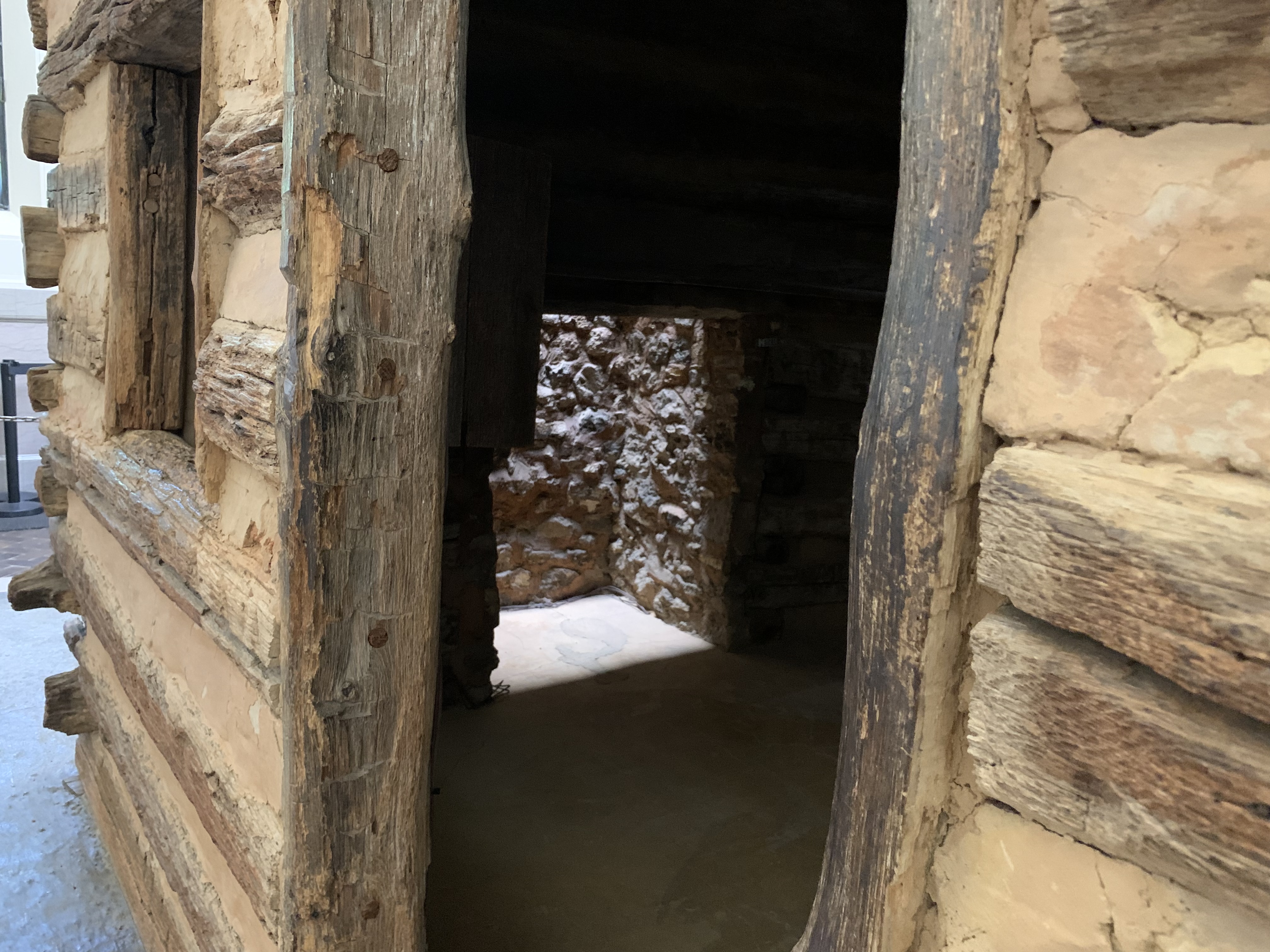
I think this is the first park, alphabetically. The cabin is ”symbolic”, meaning a replica, and it’s inside a grand monumental building. Lincoln’s family moved up the creek due to a property dispute which they lost, and he must have grown up listening to his parents complain about it. I suspect that childhood experience helped him choose law and government as his vocation.

The other memory he had from here would have been seeing slaves in chains, marching in vocal cadence to market. His parents and minister definitely complained about that. That formative experience helped him change the course of our nation.

Vicksburg National Military Park

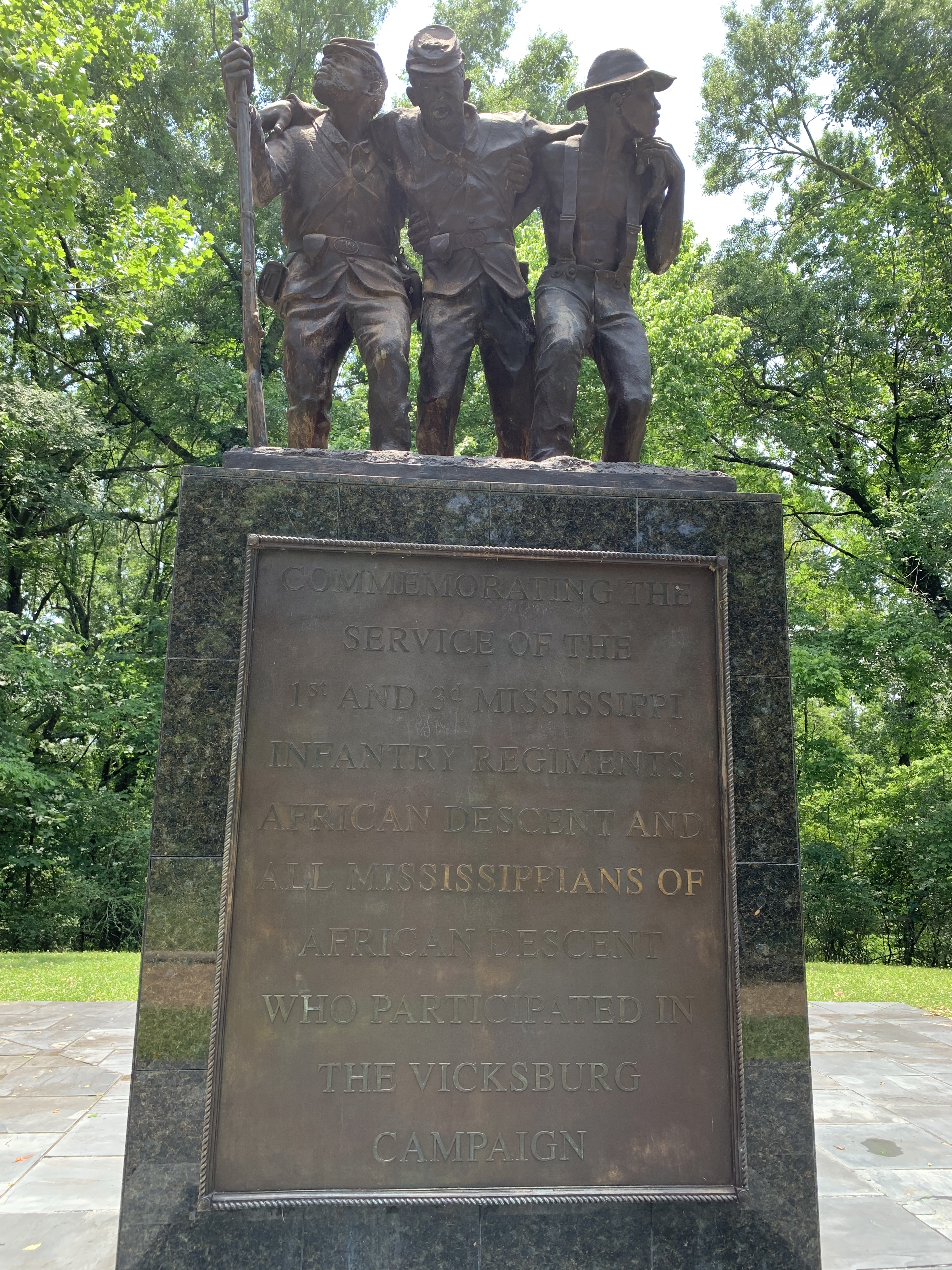
The fighting here lasted the last six months of the Civil War, and the steep hilly terrain is now covered with placards, cannon, graves, memorials, and statues. The road out to my home state’s memorial was under construction, so I turned around near the statue above.

I was momentarily confused, since the plaque says “1st and 3rd Mississippi Infantry Regiments, African American Descent”. I knew that the confederates had no African American soldiers, at least not at this point of the war, when the Union offered full freedom to enslaved people who joined. Then I realized that these were escaped slaves from Mississippi who formed regiments in liberated Louisiana and returned as soldiers to fight slavery. Their units represented a future, free Mississippi, not the old, slavery Mississippi. Later I read about the statue and learned that the man on the right is looking back at slavery, while the man on the left is looking forward to freedom.

Natchez Trace Parkway

The “trace” or trail from Natchez to Nashville is now a parkway, under strict protection of the park service which limits development. The National Scenic Trail, also a park unit, has miles of hiking & equestrian trails along the way. I’ve more or less driven the length now, with lots of side trips to nearby sights, and the dense spring foliage is beautiful, soothing and seems endless.
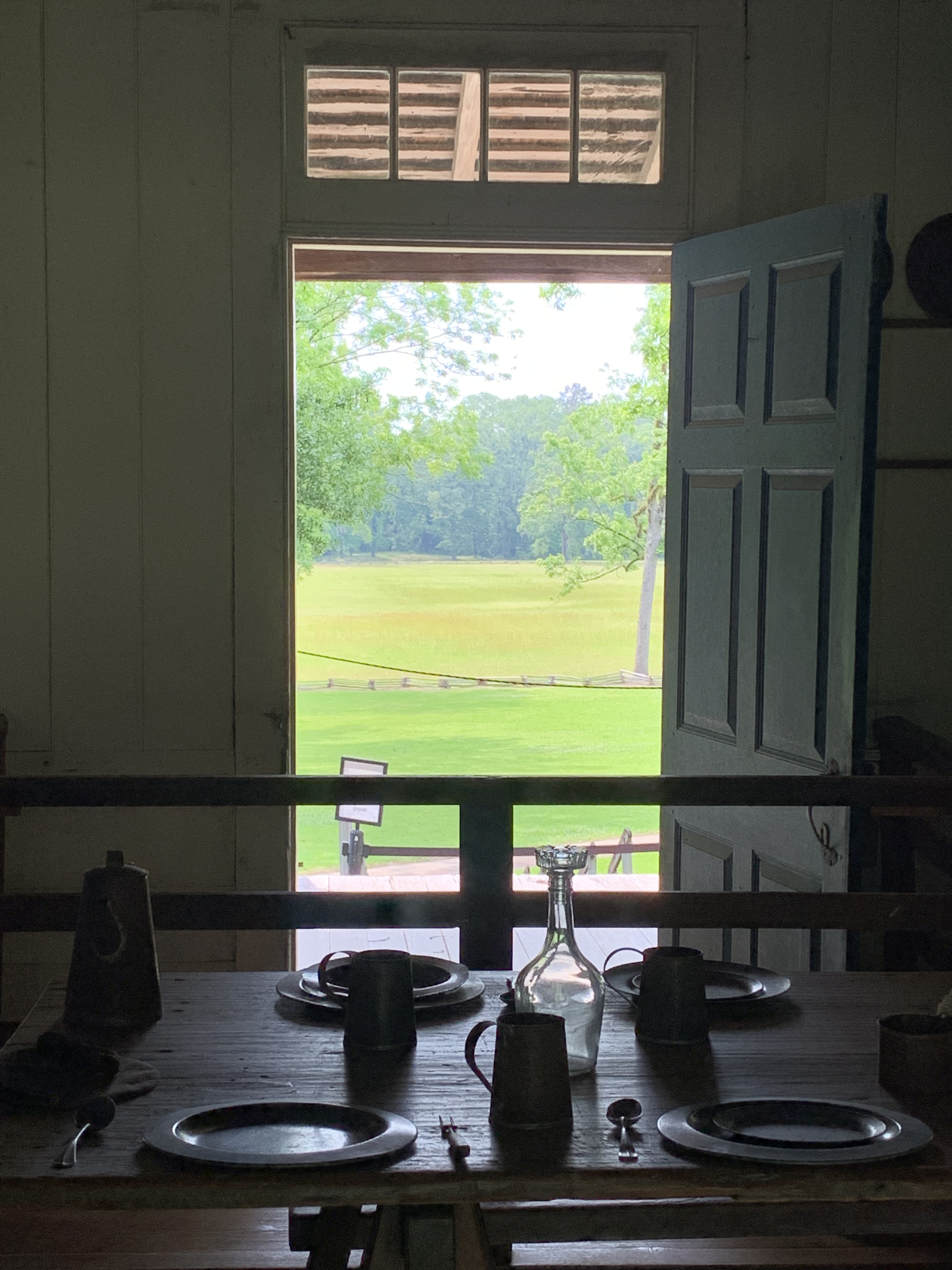
The first stop traditionally is at Mount Locust pictured above, and the route was typically used northbound, returning by boat. The trail is far older than our country, as French fur traders followed Native American trading routes that had been used for thousands of years. After the steamship was invented, most people stopped walking, which put an end to the proprietor’s lucrative business of selling whiskey, food and basic shelter at the ”stand” or simple roadside inn.

We tend to see history as inevitable, and don’t often think about what might or should have been different. But the people back then were constantly trying to learn, make changes and adapt. The land in the photo belonged to Native Americans, then was claimed by England, then by America, then worked by slaves who turned sharecroppers, and is now run by the park service. At each transition there was loss and opportunity. Only fortunate and adaptable people made it through turbulent changes. Injustice was resolved by war. No success or failure was inevitable. In hindsight, better choices could and should have been made.

I need to believe that we’re capable of learning, making changes and adapting. Dramatic change is inevitable, common behaviors suddenly become unthinkable, and those who can’t change usually suffer most. The extent of damage from the climate crisis has not yet been determined. Not all the coming extinctions are inevitable. The actions we take today make a difference to our future. We must stop burning carbon now, no matter how inconvenient, and we must prepare for the coming challenges.

Natchez National Historical Park

Natchez was the second largest slave market in the US (after New Orleans), but almost nothing remains. From here, many were walked to plantations up the Natchez Trace. The park service recently acquired part of the ”Forks of the Road” slave market for an interpretive site, which includes the actual slave chains pictured above. The hand in the photo is of a woman who is planting flowers to beautify the site. She explained to me that she feels compelled to do something due to the profoundly disturbing history of tens of thousands of humans sold into bondage for generations. When she first arrived here, she had trouble sleeping, and she imagines the voices of the enslaved calling out for help.
She asked me if I thought that strange, and I said it was by far the best perspective I had heard today.

I had just finished touring the Melrose mansion in the park, and all the glamour of the place left me feeling quite ill. The home of a Pennsylvanian lawyer turned plantation owner, it has all the ostentatious luxury that money could buy, with slaves next to the barn, above the laundry and dairy, and in the basement, all trained to come running at the sound of a bell. And 350 slaves working on plantations out of sight. I had to ask about those 350 slaves who actually brought in the cotton, since the placards only described a few house slaves, “laughing” and enjoying their “leisure”. The other visitors had seen the TV shows and movies filmed in the well-preserved mansion, and they seemed impressed by the lifestyles of the rich and morally reprehensible.

I could only hear the bells ringing years ago, and later, I too heard the voices.

San Antonio Missions National Historical Park

The first and most famous mission on the San Antonio River was San Antonio de Valero, better known as the Alamo, which is owned by Texas and managed by a non-profit. I grew up thinking of the Alamo as a fort, but it was a Franciscan mission, first of a chain built along the river with irrigation aqueducts, ranches, orchards, farms and homes. The riverwalk that connects the World Heritage missions is a pleasant place to explore the architecture, history, and culture of the area that’s known as the heart of Texas. Alamo actually means ‘poplar’ and refers to the Cottonwood trees along the banks.

Unlike their experience with the Pueblo Revolt at Pecos and across what’s now New Mexico and Arizona, here the Spanish missionaries largely completed their religious conversion and integration of most local Native Americans, aided by intermarriage over time. In return for Catholicism, disease and obedience to the crown, Native Americans built these missions, worked in the fields and defended their new communities. In the early 1800’s Napoleon invaded Spain and put his brother on the throne, opening the door to the independence of Mexico. By 1824, Mexico was a federal Republic and the missions were secularized.

General Santa Anna had trouble maintaining control of Mexico’s northern states. American merchants sold guns to the Comanche, and then the American settlers blamed the Mexican government for not defending against Comanche raids. The Mexican government insisted that settlers convert to Catholicism and tried to ban slavery, but American colonizers like Stephen Austin promised 80 acres of land for each slave new settlers brought. Slavery was an underlying reason for the Texas Revolution, as the settlers could use them to grow cotton and didn’t want the Mexican government to halt the immoral practice. Texas statehood legalized slavery, which subsequently boomed, and then they seceded and joined the confederacy.

While I grew up hearing heroic stories of Davy Crockett, it’s impossible to ignore the legacy of both Native American and slave exploitation represented by the Alamo, first as a Spanish mission and then as a rallying cry for Texas and for slavery. The Alamo website portrays pro-slavery Texan founders Stephen Austin and Sam Houston as freedom fighters for liberty and ignores the people they enslaved. Lying to our children about the dark truth of the founding of Texas is deeply wrong, perpetuates the injustice of racism, and prevents atonement and reparations. I did not visit the Alamo.

Cane River Creole National Historical Park

There was a storm coming when I took this photo of the Overseer’s House on Oakland Plantation which may help convey the dark, menacing sense of the place. I visited Magnolia Plantation years ago with my kids, and I remember the slave huts. This plantation illustrates a later period when most farms employed day laborers, but here they still had tenant farmers. The ranger euphemistically explained that they were technically “day laborers who just happened to live on the plantation”. The sign on the iron gate dates Oakland to 1821, but that’s just when the cotton plantation was renamed. The French first used slaves to plant cotton here in the 1790’s.

This tragically moving site has poor signage, marking several places you can’t park but no entry sign for the actual parking lot around back. So I ended up driving around more than expected, and I noticed some African Americans living in run-down shacks right down the street from large new plantation-style homes complete with landscaped grounds, wrap-around porches and white colonnades. I think it shows an abysmal lack of sensitivity to or remorse over the centuries of mistreatment of slaves and laborers to intentionally choose to live in a plantation style house here, especially before investing in decent housing for the descendants of the victims.

George Washington Carver National Monument

I love this statue. Carver was born at the end of the Civil War and was kidnapped and orphaned by the Klan. His mother’s owners retrieved him and raised him here, where he studied the plants near the creek as a child. He was educated mainly in Kansas, despite racial barriers, and eventually became the first African American to graduate from his school. His manner was mild, but he demonstrated great determination in the face of poverty, adversity and prejudice.

Recognized for his extensive scientific knowledge of botany and for being a groundbreaking African American scientist, he was hired to teach at Booker T. Washington’s Tuskegee University. His goal was to help the least in society, so he worked on modernizing agricultural techniques used by African American farmers, even bringing a cart from the university out to the fields to teach, a technique copied by the US Department of Agriculture. He published many books and pamphlets, developed patented techniques and is best remembered for developing the lowly peanut into a highly profitable series of products. He testified to Congress about the peanut and scientific agricultural techniques and was widely recognized for his many accomplishments.

I know Carver is an inspirational figure admired for overcoming obstacles, but I can’t help but wonder how many others were denied even the limited opportunities he had. Slavery existed here for 244 years, with 10 million sent across the Atlantic and maybe another 10 million born into slavery here. None of them were properly educated. None had the freedom to pursue their dreams. And all died without being able to fully contribute their talents and ideas to improve the world. How many young, inquisitive minds were destroyed by slavery? How much human enlightenment was snuffed out to pick cotton? Carver was one of the first born after the Emancipation Proclamation was signed, and he spent his life making the world a better place for all of us. But I can’t help but mourn the incalculable loss of all the other people during those 244 years and after who could have contributed as well or even more.