North Atlantic Trails

The New England and New York region has 2 historic trails and 3 scenic park unit trails. Here’s a quick summary in case you are interested in exploring them.

Historic trails

Scenic trails

  • Appalachian the trail cuts the southeast corner of New York, the northwest corner of Connecticut, north across the western edge of Massachusetts, up along the Green Mountains of Vermont, where it turns east, passes by Marsh-Billings-Rockefeller, hikes over the White Mountains of New Hampshire, and ends at Mount Katahdin in Maine.
  • New England above crosses Connecticut and Massachusetts north to the edge of New Hampshire.
  • North Country cuts through New York near Fort Stanwix, crosses through the Champlain Valley and ends at the Appalachian Trail in Vermont.

Pictured Rocks National Lakeshore

Superior is the biggest, deepest and cleanest of the Great Lakes, and our most scenic lakeshore park is on the north coast of the upper peninsula of Michigan. Within the park are ~10 miles of dramatic 200’ cliffs, painted by various minerals washed through the sandstone, and the best way to see is by boat. The pastels, turquoise shallow waters, green trees, blue skies and waterfalls (below) are spectacular.

Besides taking a popular commercial tour of the most scenic section of the cliffs in a couple hours, as I did, it’s possible to kayak or to hike along the edge. Lover’s Leap (above) has only 3’ of water below, so don’t take it literally. The lakeshore trail—part of North Country NST—is 40+ miles over dunes, creeks, and long beaches, with many side trails exploring forests, marshes, and lookouts. Short hikes can be done near the ends of the park, but the middle is roadless.

Sleeping Bear Dunes National Lakeshore

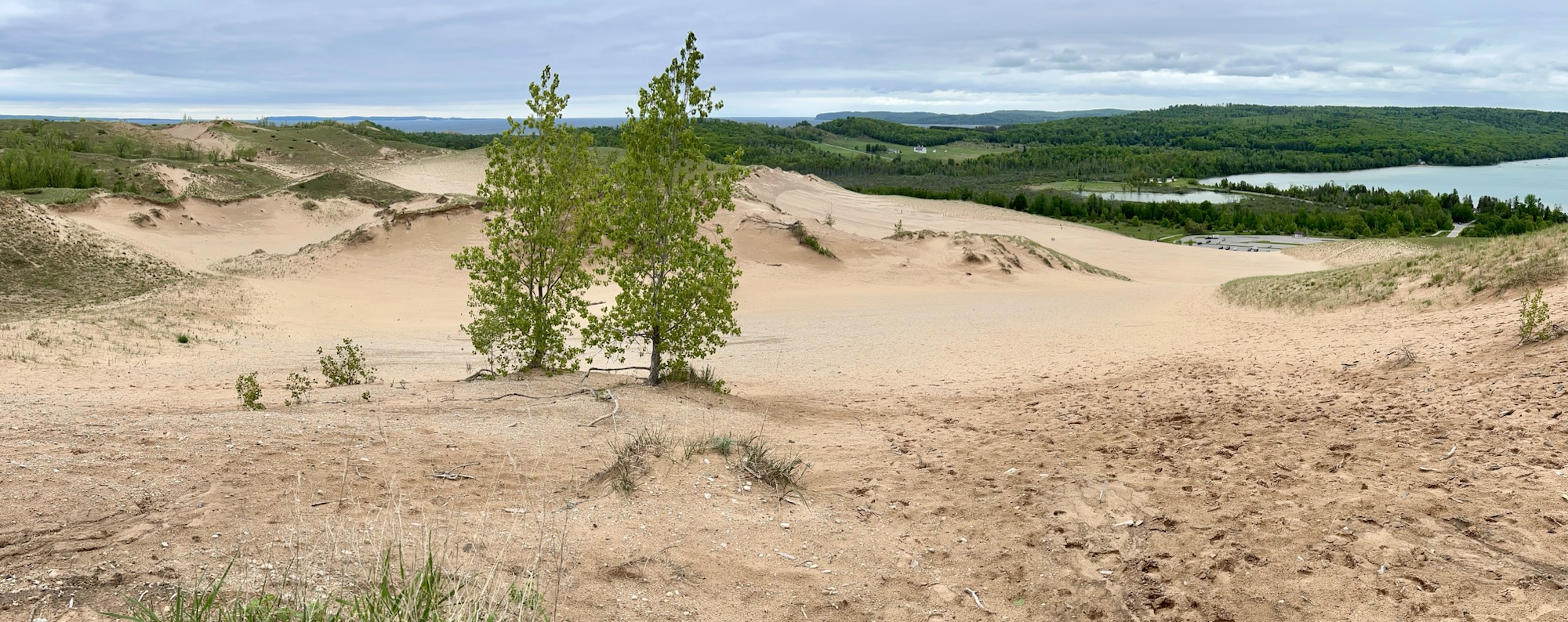
The small lake on the right is Glen Lake, and Lake Michigan is at the top left. If you zoom in to the right, you might see tiny people climbing the middle dune from the parking lot. I got up to this vast view on the pleasant Cottonwood Trail (less than 2 miles round trip) from the Pierce Stocking Scenic Drive, which also takes you to the breathtaking Lake Michigan Overlook and the splendid Sleeping Bear Overlook. Many folks seem to want to do things the hard way, but I definitely recommend hiking from the scenic drive. The impressive Sleeping Bear Dune itself is over 1000 feet high, and folks frequently need rescuing ($3,000) after climbing down to the lake and not being able to climb back up. A few extreme winter folk ski down the steep dune to the lake. Not sure how they get back up. Please stay on the trails, as past humans caused much erosion damage to the fragile ecosystem here. This is a beautiful park with wildlife, deep Native American roots, and it is part of a new UNESCO Biosphere across northern lower Michigan.

Montana in Photos

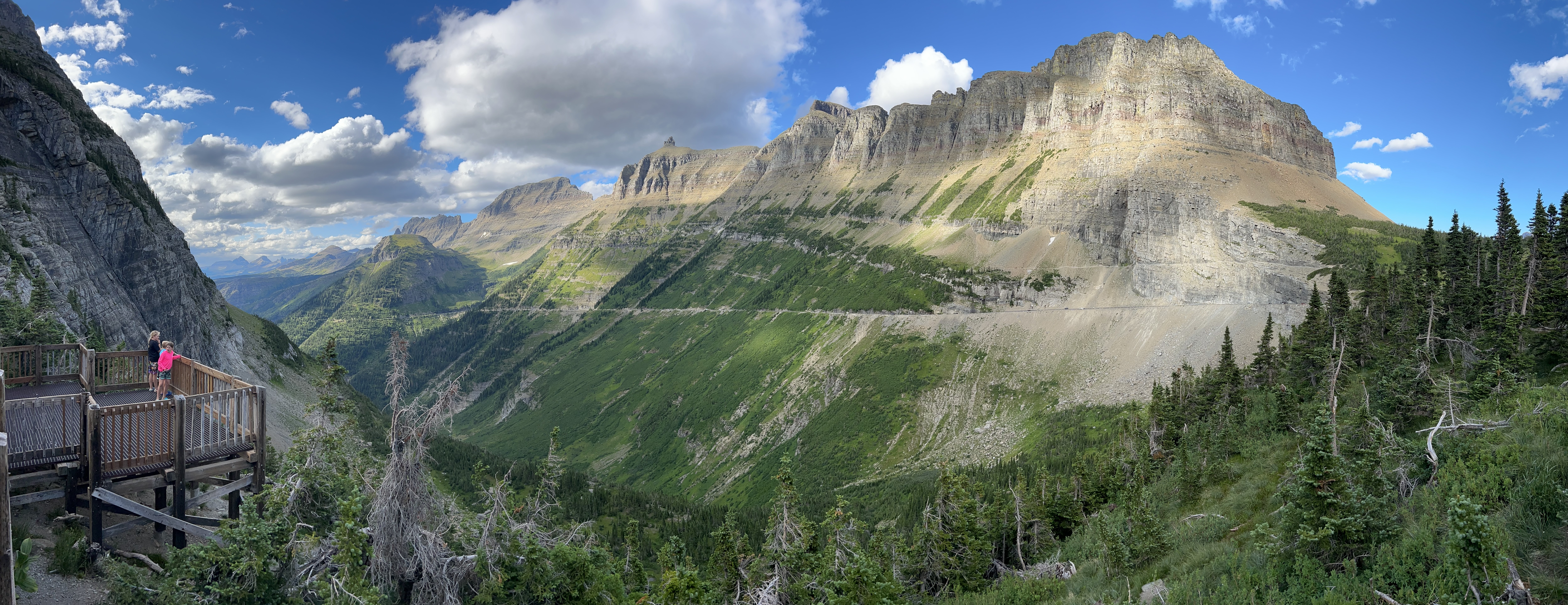
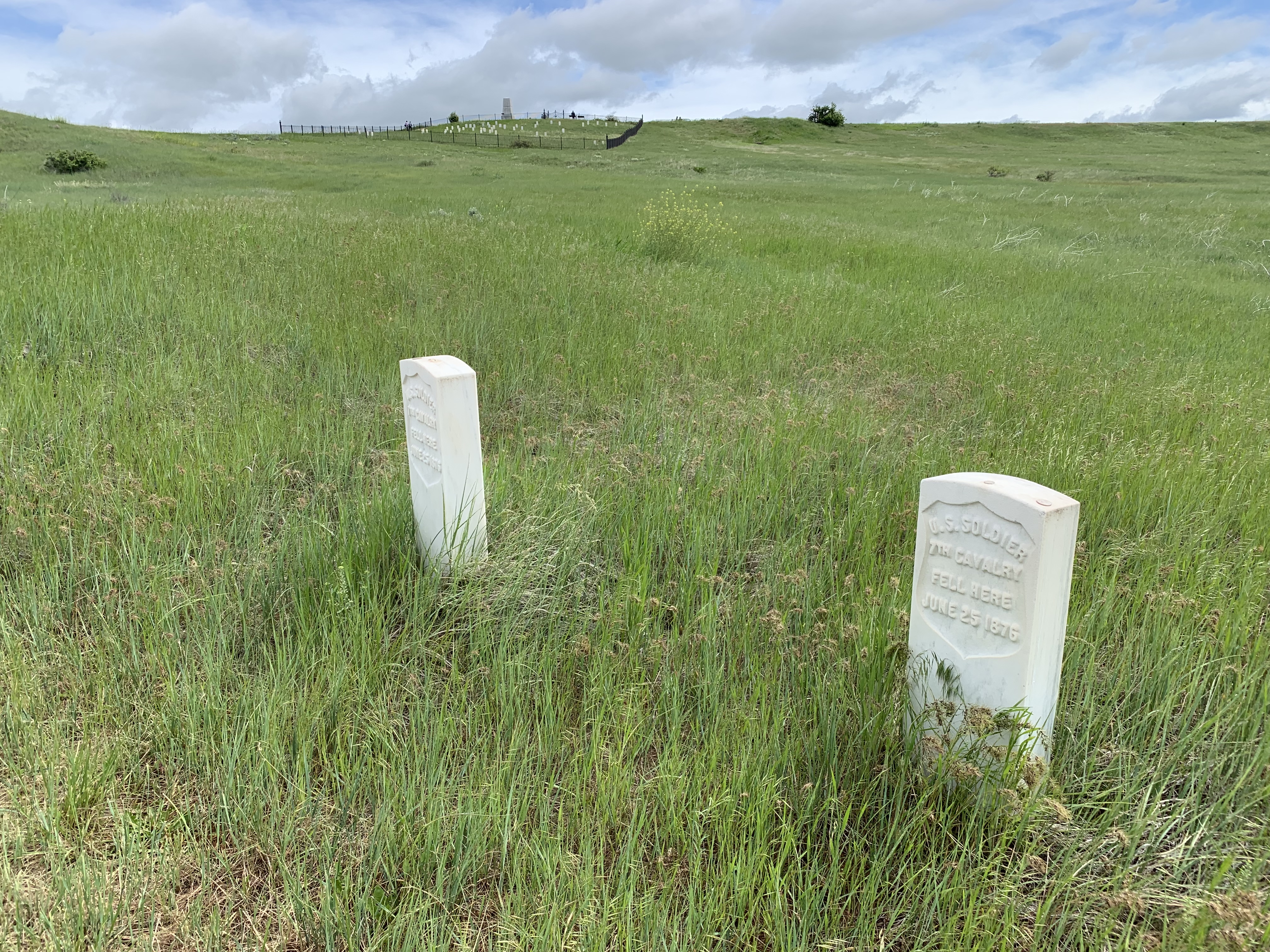
Bonus post to celebrate completing Montana—meaning ‘mountainous’—, with photos from Glacier, Little Bighorn, Grant-Kohrs, Bighorn Canyon and Big Hole. Lewis & Clark traversed this rough glacially carved country with the help of the Nez Perce. The parking lot of the Fort Union Trading Post is in Montana (and in a different time zone than the fort), as is a relatively small part of Yellowstone.

If you’re visiting Montana, you may want to camp at Bannack, briefly the territorial capital, and now a ghost town. The sheriff and his deputies allegedly conspired with ‘road agents’ (highway robbers) to rob and murder gold miners and travelers, before being discovered and lynched by vigilantes. The truth is murky, but the town is well preserved as a state park. See the jail below.

Northern Rio Grande and Sangre de Cristo National Heritage Areas

Quick logistical update: until summer, Mondays are Mexican World Heritage Sites, Thursdays are eclectic, and Saturdays are bonus park photos. I took the photos above yesterday in New Mexico and Colorado.

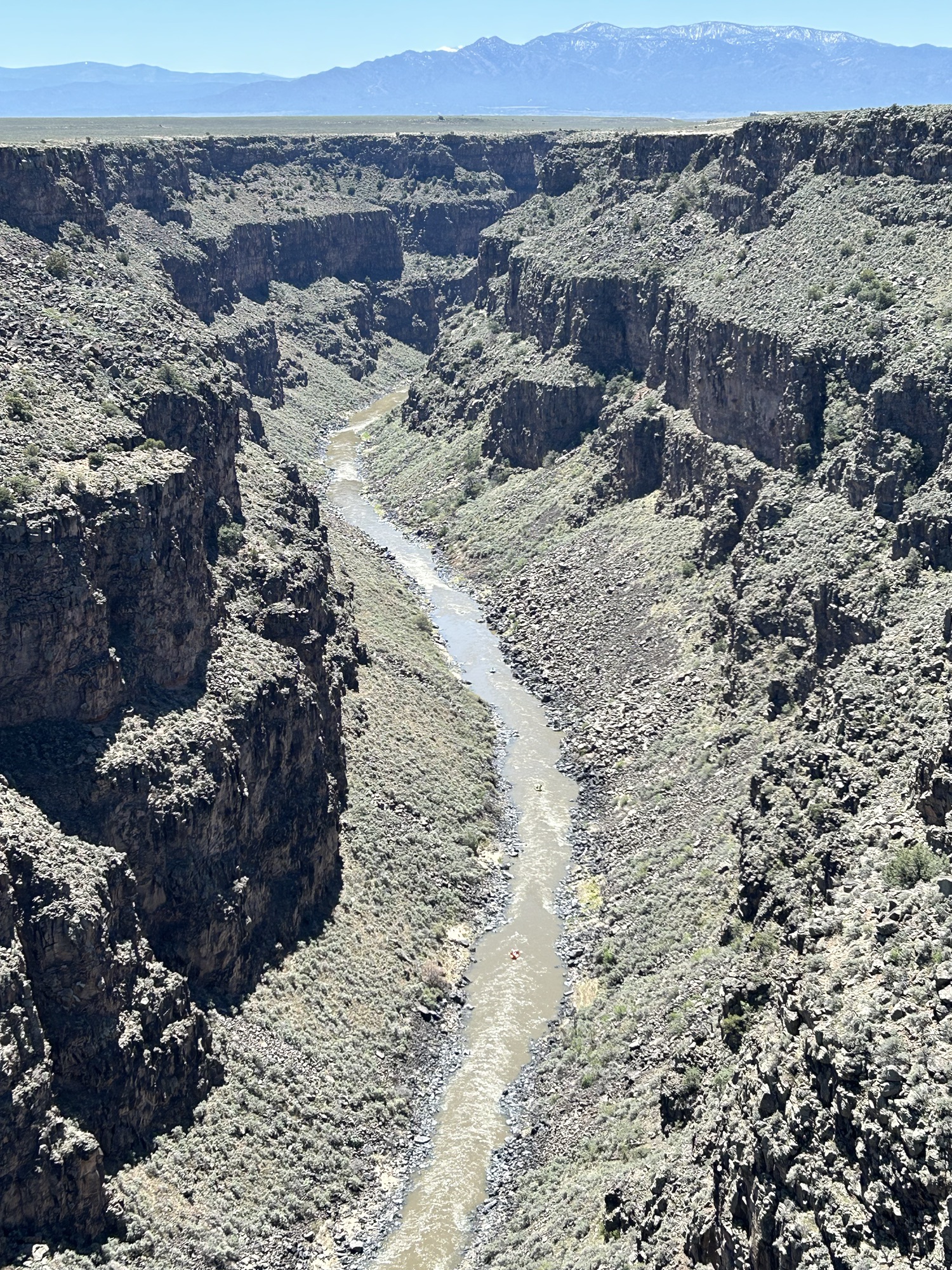
While technically in different regions, both National Heritage Areas are linked by the river, the mountains and our cultural heritage. The Rio Grande begins in the San Juan Mountains in south central Colorado and flows east through the San Luis Valley where it turns south into New Mexico. The scenic north section is called the Río Grande del Norte to distinguish it from the southern section that defines the Texas-Mexico border. The river flows through the Rio Grande Gorge and is now popular for whitewater rafting (see three rafts above left). In the distance are the Sangre de Cristo Mountains (both photos).

Native Americans and Spanish explorers traveled up and down the river, settling on the fertile valleys. The native land was claimed by the Spanish, Mexicans, and Texans, and for a dozen years, the Río Grande del Norte defined the US-Mexico border in Colorado, before the US claimed the land all the way to California by treaty in 1848. In the Civil War, Texas secessionists battled Colorado volunteers at Glorietta Pass in New Mexico to decide the war in the southwest.

The Northern Río Grande National Heritage Area in New Mexico celebrates this magnificent natural scenery and the cultural heritage it guided. It also includes Taos Pueblo, wild & scenic rivers, historic trails, scenic byways, and several cliff dwellings. The area is both beautiful and fascinating, and I was not going to miss another chance to drive through on my way northeast.

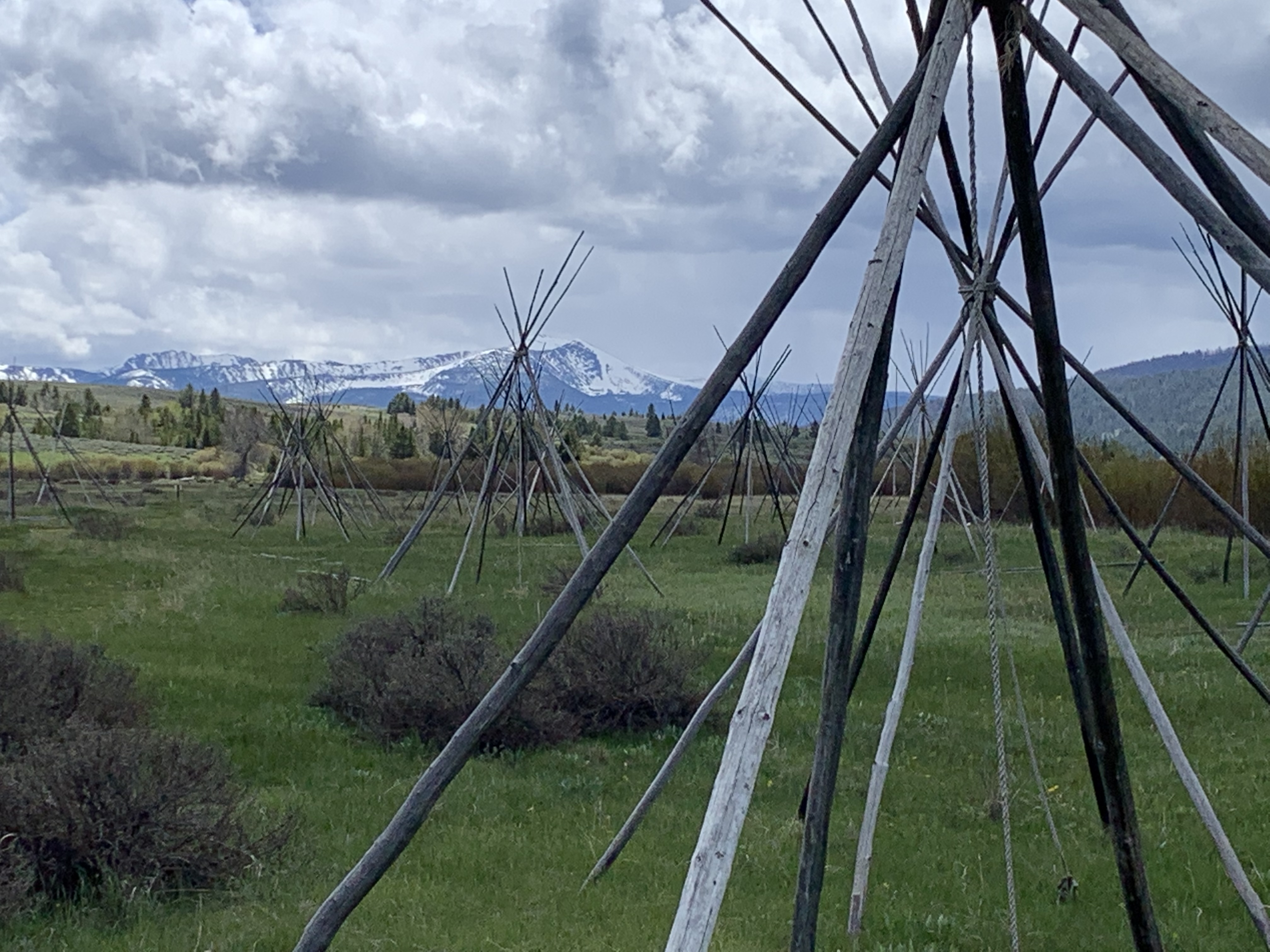
The Sangre de Cristo Mountains tower over the east side of the Río Grande del Norte from east of Santa Fe NM up into Colorado past the Great Sand Dunes. Meaning ‘blood of Christ’ in Spanish, the name likely refers to the scarlet colors of the mountains at sunset. The helpful illustration (my favorite photo above right) is on the Stations of the Cross trail up to a church that overlooks the historic San Luis Valley.

The Sangre de Cristo National Heritage Area in New Mexico borders the Northern Rio Grande National Heritage Area in Colorado, and includes the Cumbres and Toltec Scenic Railroad featured in Indiana Jones and the Last Crusade, the Monte Vista National Wildlife Refuge famed for Sandhill Cranes in March, and Fort Garland, a fine restored Kit Carson fort with an interesting museum on Buffalo Soldiers—one turned out to have been a woman who served for years as a man undetected. The area is lovely and pastoral amid snow-capped mountains, with many other worthy attractions, but I’m on the road again.

Butterfield Overland & Pony Express National Historic Trails

From 1858 to 1861 John Butterfield operated the fastest and most reliable stagecoach route west via the Oxbow Route that bent from the central Mississippi River deep along the Mexican border and up California to San Francisco, before the Civil War put him out of business. The trip took 25 days (or less) and carried mail, passengers and freight. The current parks along that route are below.

From 1860-1861, express mail was carried by young riders—including a young ‘Buffalo’ Bill Cody—who would stop only briefly to switch ponies along the way. That trip took 10 days along the pioneer trail, but the completion of the transcontinental telegraph line later in 1861 put them out of business. Due to the simple nature of the operation, almost all of the original trail and stations are gone, but a few remain. I’ve visited stops and roughly driven the length of the trail by EV, and I recommend the following sites to enthusiasts.

  • Stable & Museum in St Joseph Missouri
  • Hollenberg Station in Hanover Kansas
  • Fort Kearney in Nebraska
  • Scotts Bluff in Nebraska
  • Fort Laramie in Wyoming
  • Heritage Park in Salt Lake City Utah
  • Wells Fargo Bank in Old Town Sacramento California

Colorado National Monument

Have you ever wished that someone would build a road up along the canyon rim with cool tunnels and overlooks, so you could see the features up close and hike out on the points? Well, then this is the park for you! A man named John Otto began building that road over 100 years ago, including his trail out to view the point above.

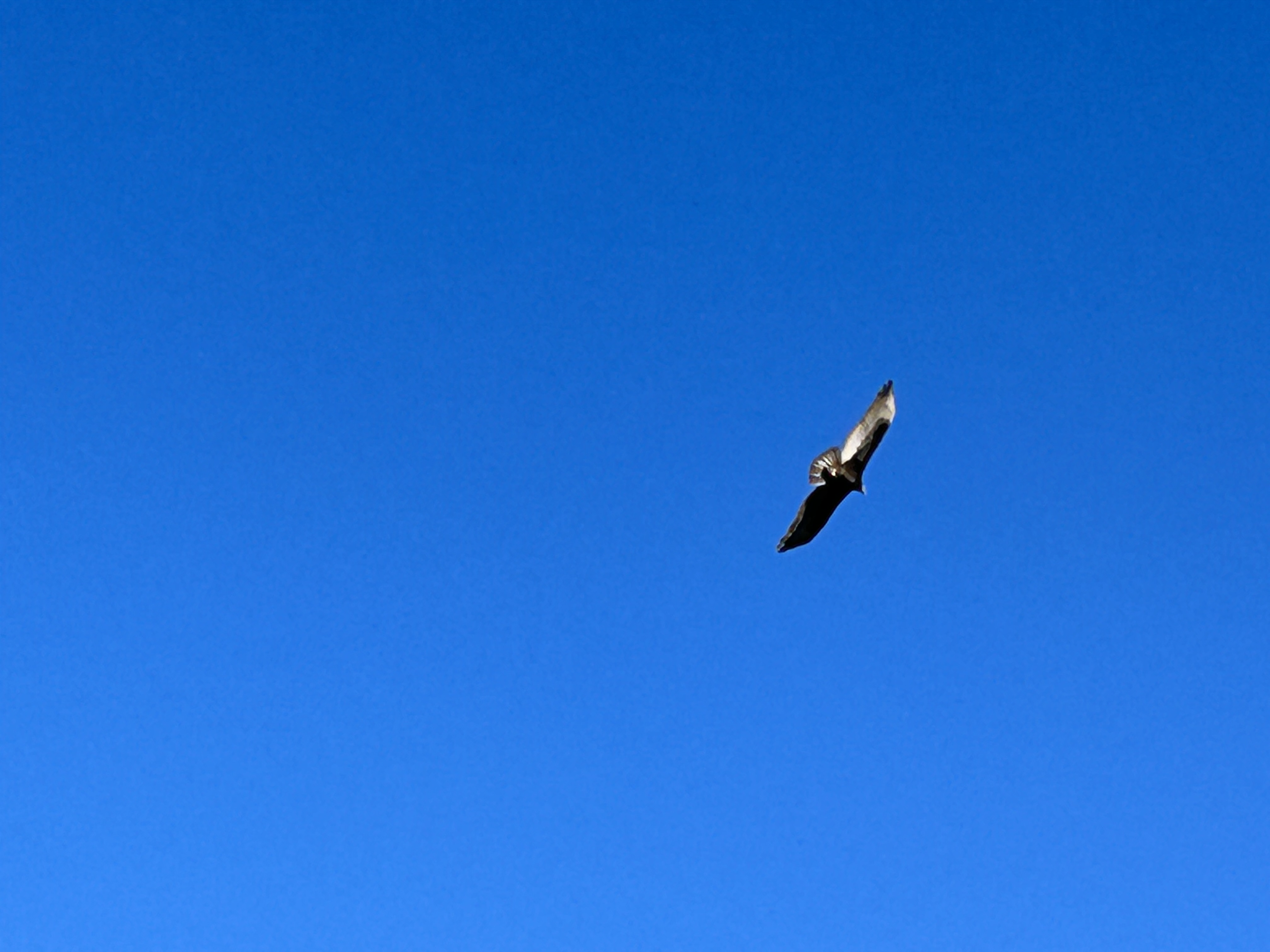
The winding, tunneled scenic canyon rim road now has bicyclists and antique cannonball rally motorcycles. Besides the enviable promontory pictured, there are several 500’ deep steep canyons to explore along Rim Rock Drive: Ute, Red, Monument and more. Watch out for Bighorn Sheep—I saw one—and raptors—second time this week that one whooshed past my head as I stood on a cliff. I saw a flash of bright yellow, so I think this was a peregrine falcon. Watch your step along the cliff edge!

Little River Canyon National Preserve

One popular question is itinerary planning, which is essential, although my plans never survive contact with the road. The same trails must be picked up again in different seasons, and inevitably, they retrace the steps of early Americans. The old hunting grounds, early trade routes, forts and battlegrounds often overlap in places like this, and, especially when they’re preserved in a more natural state, it’s easier to imagine those who came this way before us.

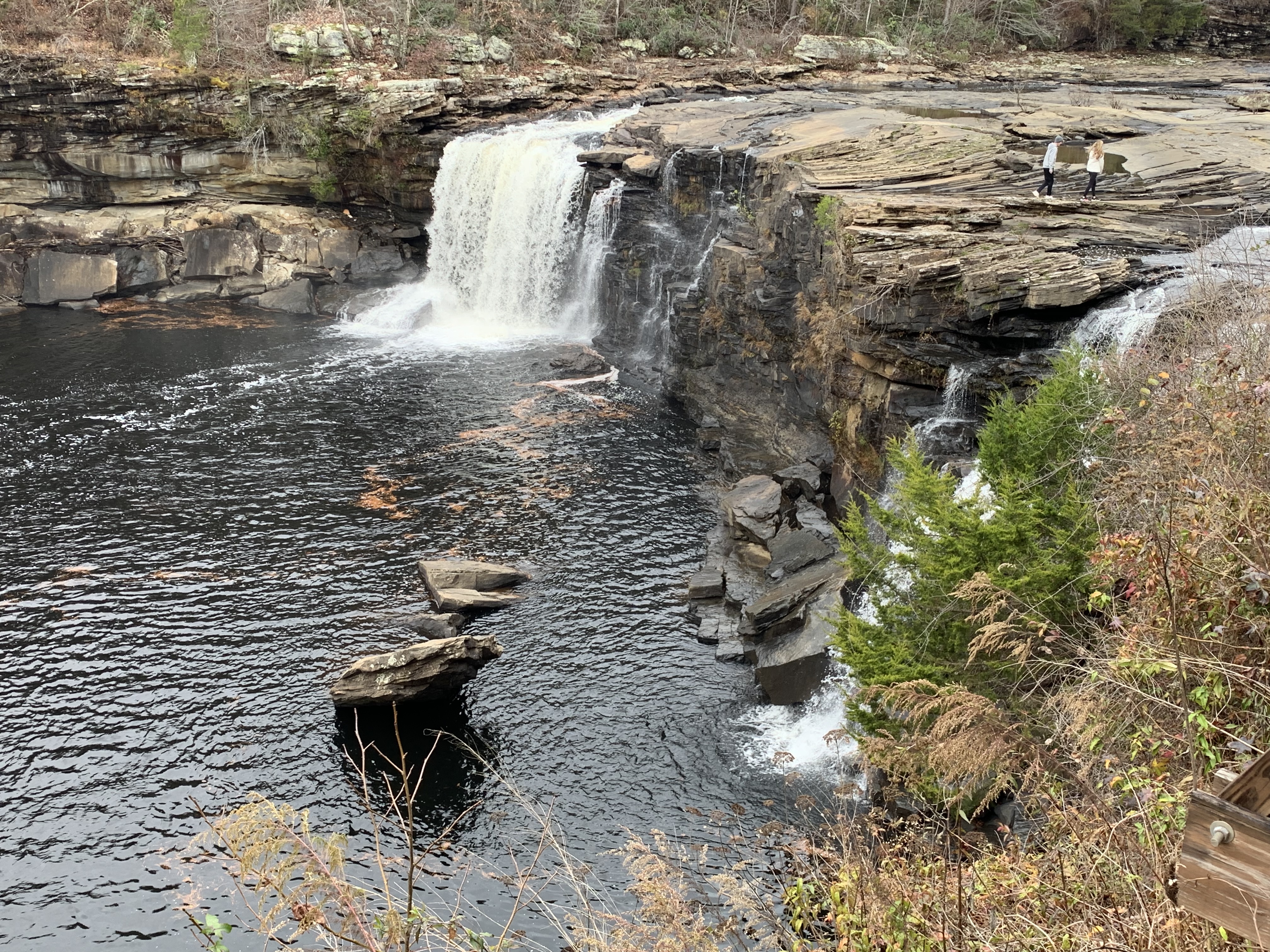
After their long history of interacting with the Spanish, French and British in the southeast, five tribes had become accustomed to European ways enough to be called “civilized”: the Choctaw, Chickasaw, Creek, Seminole and Cherokee. But the US government forcibly removed them to Oklahoma anyway. Most crossed the Mississippi near Memphis, as I did. The Cherokee were split into three groups: the old settlers who moved west before the removal, those forced to walk the Trail of Tears, and those who escaped removal and still live east of Great Smoky. Here, at a natural crossing point through the canyon palisades, the couple in the photo above walk on the Trail of Tears, near where Cherokee families were rounded up into a wooden palisade known as Fort Payne.

The park helps preserve that history, although the primary mission is to protect the many species that live in this important nature sanctuary. The canyon is known among rock climbers for the challenging cliffs, and if you hike downstream there’s a swimming hole near Martha’s Falls. The river isn’t runnable by amateurs, so stick to the scenic drive along the rim, admire the views from a half dozen overlooks and try not to miss the peak foliage like I did. The road isn’t wide enough for both bikes and cars, and, as usual, the former lose out. There’s a park film at the friendly visitor center and an Ol’ Tymer’s BBQ nearby.

Time for me to get back on the road. I passed through Muscle Shoals on my way here, but now I have Georgia on my mind. Places like this are bittersweet, when you reflect on the past or consider the future, but that’s what enriches travel. And our choices make a difference too. Supporting Native American businesses, for example, seems the least we should do to recognize past wrongs. And unless we stop our carbon pollution, these small sanctuaries will prove insufficient to preserve diverse species for any who may follow us.

Saguaro National Park

When I visited this park with my kids, we went to the east unit. Both units are in the greater Tucson area, but both are a decent drive away from the center of town in different directions. So, I was glad to have a chance to see the other side. Although the visitor center is a bit nicer in the west, the east unit has a scenic cactus forest drive where you can easily get out and take a closer look. Both have plenty of saguaro (suh-Wah-ro) to see.