Resolutions

In 2022, I posted my first park visit (now updated), and by year end had visited over 250 parks across the country by EV. ✓

In 2023, I completed all NPS units in the Mid-Atlantic, National Capital, Rocky Mountain, and Southwest regions. ✓

In 2024, I resolved to visit all 10 American Concentration Camps, go to world heritage sites in Canada and Mexico, and complete the Midwest and North Atlantic regions. ✓

In 2025, I resolved to complete all 51 national parks, 344 park units, and 113 related sites in the contiguous 48 states with 6 regional bests and 48 photo summaries, plus see more world heritage sites and biospheres in Canada and Mexico. ✓

For 2026, I resolve to complete all UNESCO sites in half of Canada’s provinces, make a third road trip to Mexico, find even more national monuments and recreation areas in the US, and drive to southeast Alaska. Logistical challenges and new site designations may thwart my plans, but I will do my best.

Weekly Monday posts will continue to be a new visit. Thursdays will still be sporadic summaries and viewpoints. The first Saturday of each month will be park recommendations. And mid-month on Saturdays I will highlight a climate issue. Hope you have a happy New Year!

This Blog

This blog is a creative exercise. The whole idea of trying to visit parks and world heritage sites by electric vehicle wasn’t suggested to me by anyone. Deciding what to write about and how to present it takes imagination, from what stories I decide to tell and which photos I choose to take and use.

Travel requires imagination. My itinerary has been anything but straight, as I often feel myself driven by curiosity, picking my spots by theme or asking ‘what if I try this way’. Even within parks, visitors must choose how to spend their time, so I often let my imagination take the lead. Should I bike, hike or kayak?

History requires imagination. How are places connected? More than once, I’ve asked whether or how one historic figure knew another and learned to piece together disparate parts of our American story. What was it like for natives, patriots, pioneers, and slaves? What were people thinking for history to unfold the way it did? What can we learn that informs our decisions today?

When I drive, I find my time full of thinking. The whole idea of dividing how we think into four distinct ways of thinking, each with different motives, techniques and goals, came to me while driving. New ideas require imagination, time, and a curious mix of concentration and inspiration, that I find on the road.

Most people, I fear, lack imagination. When in their comfort zone, they take in new information easily. But outside of that, they lack interest, and they resist new ideas, particularly challenging new perspectives or uncomfortable facts they never want to consider. Some are simply busy, preferring to delegate thinking to others who make it their business to tell people what to think.

But life requires imagination. Living well, especially in a diverse and rapidly changing world, requires curiosity, an open mind, empathy, and persistently trying to find your own way. Imagination can prepare you both to avoid problems and to take advantage of opportunities. Every day is a new kaleidoscopic puzzle we need to navigate through as best we can, and for that, imagination is our best friend.

National Heritage Areas of Mississippi

Mississippi has three national heritage areas: Delta, Gulf Coast and Hills. Culturally, Mississippi is one of the best states in the country.

The Delta area is fascinating, and I recommend the Delta Blues Museum when you’re in the area listening to live blues music, like Terry ‘Harmonica’ Bean pictured in Clarksdale. Vicksburg and Emmett Till are both in the area too.

I drove the Gulf Coast area while visiting the Gulf Islands National Seashore, and it is beautiful. (I skipped Beauvoir, the Jefferson Davis “Presidential” Library, since he was never president of our country.) You will see signs marking the Mississippi Blueways, which are mostly paddling river routes near the coast and unrelated to the popular Mississippi Blues Trail.

This year, I visited William Faulkner’s home in Oxford, which is part of the Hills area, along with Elvis’ home in Tupelo, Tennessee Williams’ home and Eudora Welty’s too. Brices Cross Roads, Natchez NHP and Medgar and Myrlie Evers Home are in this area too. I enjoyed visiting Faulkner’s home, ‘Rowan Oak’, and walking in the pretty woods nearby, but Faulkner would much rather be remembered for his screenplays, stories and books, including The Sound and The Fury, As I Lay Dying, and Absolom, Absolom!.

Best of the Midwest

Best Park: Isle Royale. Wildlife, wilderness, multi-day hiking, boating, camping, forests, mountains, waters. Isle Royale, above, is the best Midwest park in many categories, despite being the least visited national park in the lower 48.

Best State: Missouri. Under-appreciated Missouri has Ozark Scenic Riverways, a karst-cavern, spring-fed paddling, sparkling gem, and Ste. Geneviève, a cultural midwestern marvel, not to mention Gateway Arch and more.

The Midwest specializes in history, exemplified by these best-in-class parks.

Best Bicycling: Cuyahoga Valley.

Best Heritage Area: Freedom’s Frontier.

Best Museum(s): Dayton Aviation.

Best Native American Site: Pipestone.

Best Place to Lose Yourself in Nature: Voyageurs. (Get a boat-in campsite.)

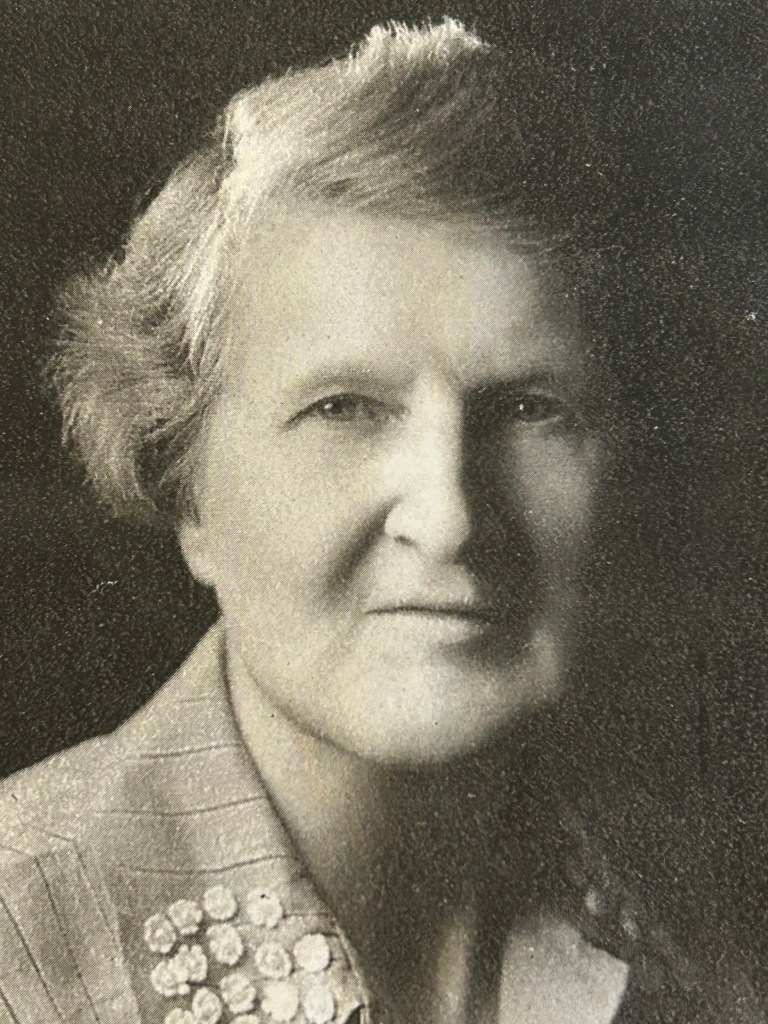
Best Ranger: Nicodemus. She’s part of the living heritage.

Best Scenery: Pictured Rocks.

Best Trail: Learn About all the Pioneer Trails at Scotts Bluff.

Best World Heritage Site: Taliesin.

Most Tragic Folk Song: Keweenaw.

Read more about all parks in the Midwest region.

Mid-Atlantic Trails

5 historic trails link multiple sites in the region, and 3 scenic trails are park units. Here’s a quick summary in case you are interested in exploring the trails in the region.

Historic trails

Scenic trails

National Capital Trails

There are 3 National Historic Trails in the beautiful District of Columbia below. Enjoy!

There are also 3 park units in the region that are different types of trails: sections of the Chesapeake & Ohio Canal NHP, George Washington Memorial Parkway, and the Potomac Heritage NST.

Trails are a great way to explore multiple parks in a region, especially when linked thematically.

Driving the Baja Peninsula

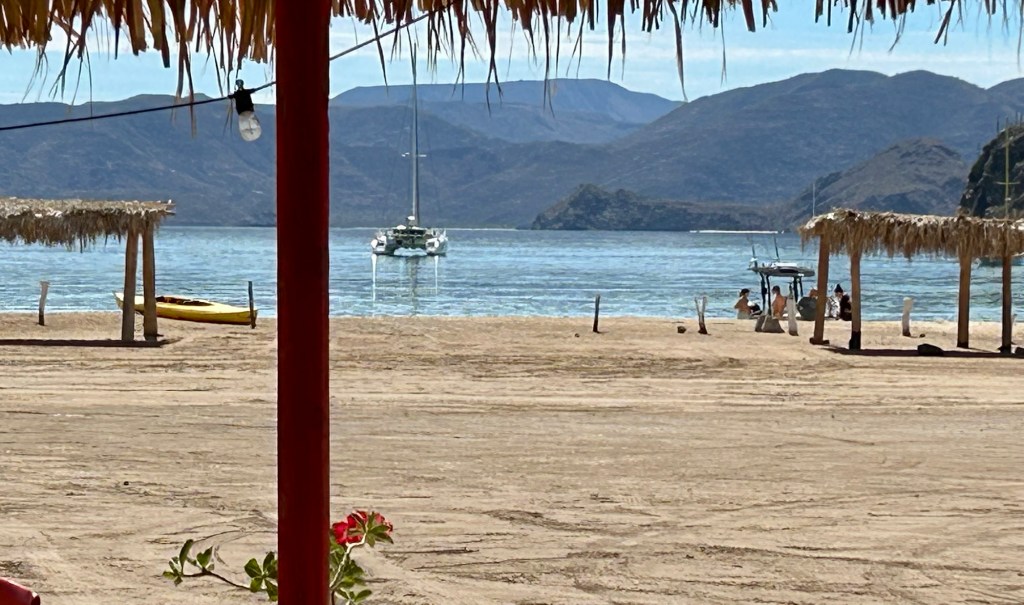
My favorite place in Baja is Loreto, above. It’s a magical town, both Mexican and touristy, with good restaurants, not too big nor crowded, near beautiful beaches and with quality tours to explore the bay. The bay and islands are part of a national park, where I saw blue whales. Simple restaurants on nearby beaches have the freshest seafood: try Vista al Mar.

Winter is the time to see the gray whales in their favorite lagoons, mating and raising their calves. And some of the tour operators offer rock painting and other tours, if it’s too cold or windy for watching whales. Ensenada has vineyards with wine tasting in the surrounding valleys. And folks enjoy biking, fishing, hiking, horseback riding, kayaking and more along the whole peninsula. More folks should make the drive from the US state of Alta—‘upper’—California to the Mexican state of Baja—‘lower’—California and Baja California Sur—‘south’.

Everyone who has driven to Baja has stories, but there’s a lot of BS from people who want to make it sound more rugged and dangerous than it is. Americans often drive big expensive campers with all sorts of extra gear, imagining they’re on some challenging off-road expedition, like one of the Baja races. They talk about camping at some perfect remote cove only accessible with a specialized vehicle and extreme skills, even though many beautiful beaches are on easily driven roads. I saw a van roll over after swerving to avoid a pothole on the highway, so I think the last thing you need is some top-heavy monstrosity. (Driver said he was fine, but I asked the police nearby to check on him).

While I saw several large motorcycle packs of ‘rugged individuals’ staying at comfortable hotels, I drove my Tesla 3, with a low center of gravity that steers well, and I visited some of the most wonderful places in Mexico, without drama. As on my drive to Mexico City, I was neither asked for bribes nor witnessed any crimes. There’s much less traffic in Baja, and there’s no need for a car permit in Baja or neighboring Rocky Point. I crossed the border at Tecate, where I simply drove through without a wait. There are a few checkpoints, but—besides asking questions about my car—they typically just wanted to know my destination, to be sure I wasn’t trying to drive at night. (Due to politics, returning to the US is far more time-consuming than it was last year, as inspections have increased significantly).

50 years ago maybe, you needed a small private plane to stay at Hotel Serenidad, one of John Wayne’s old favorites, but I just drove there. The restaurant still has delicious food, and the atmosphere is tranquil. The road was a little bumpy, but I charged my Tesla 3 at a nearby hotel, while playing with their dogs. Then, down the coast, I had one of my favorite meals, aquachiles mixto, at Ana’s restaurant on Playa Santispac, while mesmerized by the view from my table below.

The plain truth is that Baja is drivable by electric vehicle, and I was surprised to see only two Teslas south of Ensenada. Even the US CBP officer was surprised that I had driven my Tesla 3 all the way to La Paz and asked about road conditions and charging. There are two routes from the last Supercharger in Ensenada, either via Hotel Cataviña and the pacific highway or via San Felipe on the more recently paved ’faster’ route. I took the pacific route, since it’s a few miles shorter. Sure, my car lost signal for the whole round trip between Ensenada and LaPaz, so it missed the time zone change between north and south Baja. But I used my iPhone to navigate, entering my next destination whenever I was in a town large enough to have cell service or at a place with WiFi.

The destination chargers I found on PlugShare are much slower than superchargers: +42 miles/hour, but some are free with lunch or $20 to charge. La Paz to Loreto can be done in one drive, and both ends have hotels with free charging for guests. (Here’s a tip. If you’re charging overnight, don’t set a full charge as ‘one time only’. When I woke up, a power outage during the night had reset my charge level from full back to daily 80%.) I drove Bahía de Los Angeles to Ensenada in one long day, charging in San Quintín. The trick is to obey the speed limits and take your time. Since charging is so slow, there’s no point in saving 40 minutes speeding, only to have to charge for an extra hour when you arrive. Besides, you need time to avoid potholes.

Although too many people have thrown trash along the roads and too many developments and small buildings have been abandoned, Baja is still very scenic, with beautiful beaches, craggy peaks, canyons, deserts, dunes, farms, salt flats, volcanoes, date palms, countless cacti, osprey, and more. OK, it can be dusty and dirty, but not everywhere. Mexico is an informal country, and Baja is even more so, where folks just do things their own way. (Every margarita I drank, tasted different than the last). But if you put a smile on your face, be patient, thoughtful and keep your eyes open, then Baja is a beautiful place to visit, especially in a small electric car!

Niagara Escarpment Biosphere Reserve

Ignore the famed waterfalls and focus on Goat Island cliff in the middle. That wall is the Niagara Escarpment, caused by relatively hard rocks at the top holding the land underneath together, until it erodes away from the side. This two level land break—all erosion and not earthquake fault—is the key geologic feature to understanding the Great Lakes.

Much of the escarpment is in Canada, and even where it crosses the border to form Niagara Falls, it’s easier to see from the Canadian side as above. It runs along the south shore of Lake Ontario, across Niagara Falls (above) where it sets the level of Lake Erie, northwest through Ontario where it guides the Bruce Trail, up along the north shore of Lake Huron where it splits off Georgian Bay and shapes Lakes Huron and Michigan, along Michigan’s Upper Peninsula where it separates Lake Superior, and down the Door Peninsula past Green Bay in Wisconsin. After driving around the Great Lakes, it’s apparent how the water levels depend on the escarpment: Superior is the highest above both ends, Michigan and Huron are the same level in the middle, and shallow Erie is a little lower, held back at Niagara Falls, before that river drains into the lowest lake, Ontario.

UNESCO defines the Biosphere as the mostly forested area of Ontario between Niagara Falls and Tobermory on the tip of the Bruce Peninsula next to Georgian Bay, roughly 500 miles along the escarpment. The geologically interesting landscape holds great biodiversity in wetlands, coastline, deciduous & conifer forests, and rocky bluffs, perhaps the most in Canada. And there are many opportunities to explore, photograph wildlife, hike, drive or boat nearby. I hiked on the Cup & Saucer Trail on Manitoulin Island, the world’s largest freshwater island, when traveling around the Great Lakes. There, the escarpment is eroded on both sides, providing many views along its edge, including Lake Manitou below.

North Country National Scenic Trail

The trail runs from the Appalachian Trail in the Green Mountains of Vermont, through the Adirondacks in New York, past the old portage trail at Fort Stanwix (above), through the Allegheny Forest in Pennsylvania, south into Ohio near Fort Miamis, north through Michigan, west in the upper peninsula past Pictured Rocks, down to the upper St Croix River in Wisconsin, through Minnesota from near Grand Portage to Knife River in North Dakota.

President Biden elevated the trail to an official park unit last November, and the trail is not yet continuous. But having explored various sections at different times in all 8 states across 4 regions, it is undeniably scenic, especially along Lake Superior, in the Adirondacks and other lesser known areas. There are many quirky old rural towns along the way, atmospheric local restaurants and adventures to be found, along with thousands of miles of hiking, of course.