Overmountain Victory National Historic Trail

The trail stretches from Virginia, through a corner of Tennessee, south through North Carolina and into South Carolina at Cowpens and Kings Mountain (below). Revolutionary War re-enactors and enthusiasts follow parts of the trail on foot and by car annually, ever since some Boy Scouts walked the whole length in 1975. I’ve crisscrossed the area, and it’s beautiful country with whitewater rivers and some steep mountain slopes. Both the Appalachian Trail and the Blue Ridge Parkway cross and run along near the trail, and the Biltmore Estate is near the middle.

Many of the colonial settlers in the highlands here were descendants of Scots-Irish lowlanders, and their families still held grudges against the British, especially those who fought to extend the Empire by force. The British sent officers to the Carolinas to bribe and intimidate their subjects to remain loyal to the crown. They sent mercenaries, regular soldiers, and raised local militias to threaten settlers, particularly in the foothills. Their heavy-handed tactics provoked the Appalachian settlers. One particularly offensive leader was Major Patrick “Bulldog” Ferguson, who had ordered the bayonet slaughter of sleeping Patriot troops at Little Egg Harbor, NJ. He also designed the Ferguson rifle, a breach-loading rifle, and was wounded in the right arm in the Battle of Brandywine against General Washington, after which the British took Philadelphia.

The trail commemorates the pursuit of Ferguson’s army from north to south, by the citizen militias that rose up from Georgia, Tennessee, Virginia and the Carolinas against the overbearing British threat, culminating at Kings Mountain. Immediately before and after the events of the Overmountain Victory, the Patriots also won decisively at Musgrove Mill and Cowpens, respectively. These Appalachian Patriots turned the course of the Revolutionary War.

Normally, high ground is superior during fighting, but the ridge at Kings Mountain is steep, fairly straight and narrow. Once the patriots managed to get on both sides, the British became easy targets on top. Ferguson was shot off his horse, shot a young soldier asking him to surrender, and was finally shot multiple times and urinated upon before being buried in an unmarked grave where he lay. A headstone was later placed in the woods not far from the large monument at Kings Mountain below.

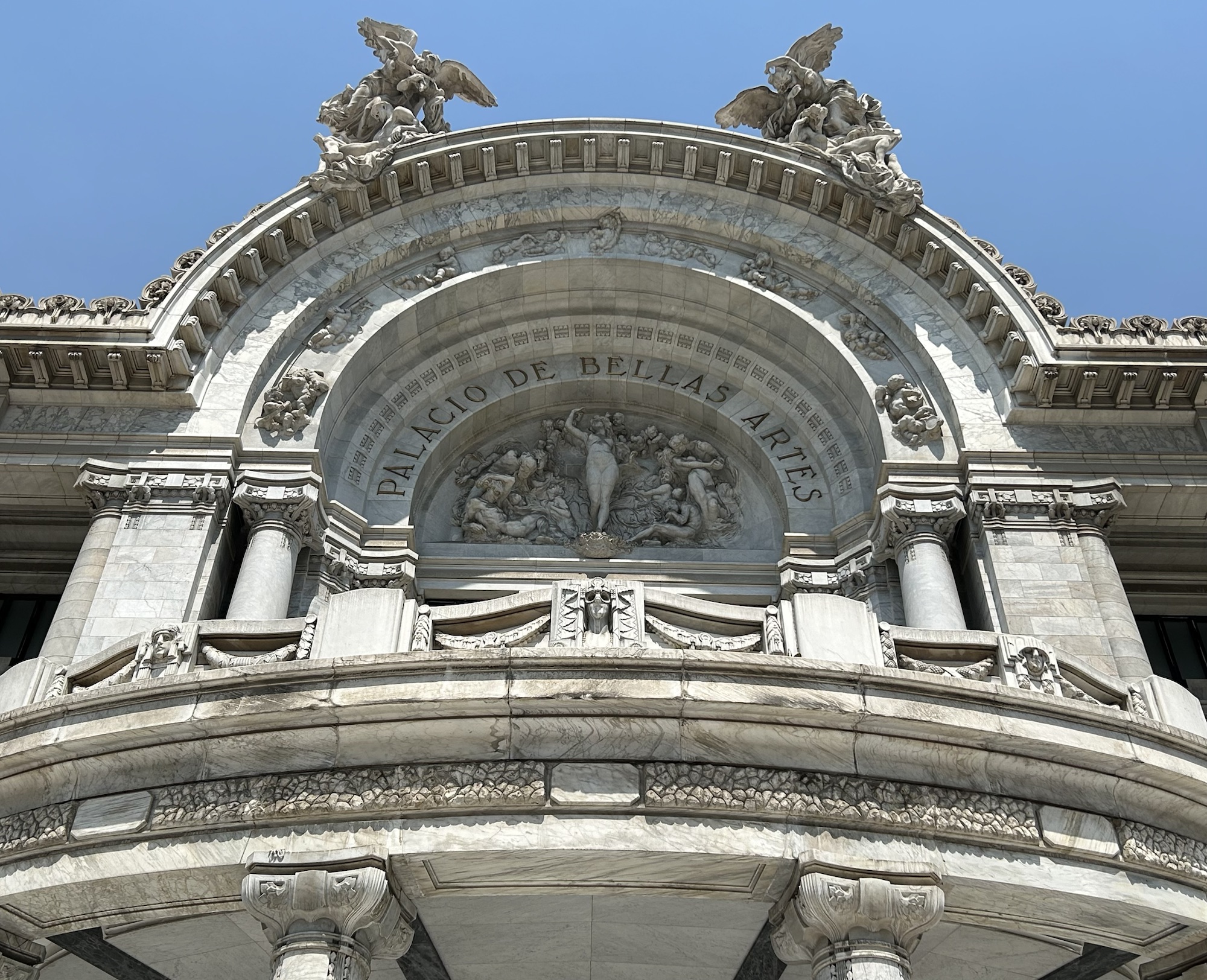
Historic Center of Mexico City

In the US, the Independence War means the same as the Revolutionary War, but in Mexico, they are two different wars. 100 years after Hidalgo cried out for Independence from Spain in 1810, the country was under the control of the dictator Porfirio Díaz, who ruled for 35 years over a growing gap between the elites and the masses. He commissioned the ostentatious building above to celebrate his rule, but it ended up celebrating the end of his rule after the Revolution of 1910-1920. Since the common people were uneducated, the new era of called for artists to paint huge public murals to tell the story of Mexico. The three great muralists were Diego Rivera, David Alfaro Siqueiros and Jose Clemente Orozco. All three have murals on permanent exhibit on the oversized second floor inside. Siqueiros uses stunning, clear images to depict the drama of human suffering and bondage. Orozco contrasts vivid lives with cold modern weapons. And Diego Rivera presents his profound understanding of social struggle, using historic figures, ancient images and modern allegories, to awaken people.

The historic center includes far more than one museum, but to appreciate it, you need to understand what’s buried beneath the metropolitan cathedral, grand government buildings and the huge public square. Once there was a lake ringed by volcanoes, and the Aztecs built an empire around an island, using landfill and bridges to create a moated city. Thousands of captured warriors were sacrificed publicly and walls of skulls have been uncovered. From this easily defended base, rich with food grown on floating gardens such as at Xochimilco, over 200,000 lived here, with a sophisticated canal system and extensive trading network. When Hernán Cortés arrived here in 1519, it was one of the largest cities in the world. After building boats and bringing in cannon, the besieged city fell, and the Spanish drained the lake, tore down the temples to make a cathedral, and paved the ruins of the temples and markets to make the huge, empty square Zócalo public space, where over 100,000 now gather to hear the President speak from the balcony of the National Palace or to listen to pop music stars perform. Begin in the Zócalo and take the walking tour to learn about the excavated Aztec ruins and much more in this fascinating, important and historic city center.

Querétaro

UNESCO recognizes this colorful, artistic city for its historic zone reflecting its native and colonial combined roots. Otomi musicians and doll vendors walked in the narrow alleyways winding around grand churches, much as they have for hundreds of years. Beautiful public plazas with historic groves of trees, Baroque churches, vibrant architecture, and galleries fill the spaces. And art flows into the streets, with public displays of famous paintings, both local and international exhibited outside. While I intended to focus on the history of revolutionary conspirators, the trial of Maximillian and the drafting of the Mexican constitution, the fascinating streets pulled me away from the Teatro de la República and had me wandering around in circles taking in the atmosphere amazed. This is a cultural feast!