Hell or High Water

Flooding has always been a problem, but climate change means it will get worse. Since the Industrial Revolution, the oceans have risen at least a foot already and are on track for another three feet sometime this century. The atmospheric changes that we’re causing with our carbon pollution are unprecedented, making it difficult to predict. Heat makes water expand. Maybe the oceans will rise six feet, more or maybe less, maybe sooner or maybe later. Since the US has currently decided not to be part of the solution, then flooding will become worse than any human has ever experienced.

This means most of our current beaches will disappear in several decades, along with many lowland areas and even whole island countries. Oceanfront property—stable for centuries—will be inundated. Productive farms and ranches will be ruined by salt water intrusion. Some large populated areas, including several cities, will become uninhabitable. Bird habitats and coastal ecosystems will be devastated. Since the process has been slow and gradual so far, many folks assume that we will adapt easily. But since we’re not solving the problem, the flooding will continue to accelerate.

Even inland, flooding is becoming increasingly more deadly, a trend that will also accelerate. Our hotter atmosphere is evaporating more water more quickly, resulting in destructive downpours, flash floods and broken levees. Flooding events are increasing globally, killing people, making them homeless, and spreading diseases. Again, having put more carbon into the air than any other country, we’re the biggest part of the problem. We’re unwilling to try to fix it, and we are unprepared for how bad it will get.

March is American Red Cross month. Clara Barton, who founded the Red Cross after providing battlefield and prisoner aid during the Civil War, began their flood relief efforts at Johnstown. That terrible flood killed 2,200 people, and it was entirely preventable. Future floods will be even more deadly, and many of those deaths are also entirely preventable by reducing our carbon emissions today. We just need to make better choices.
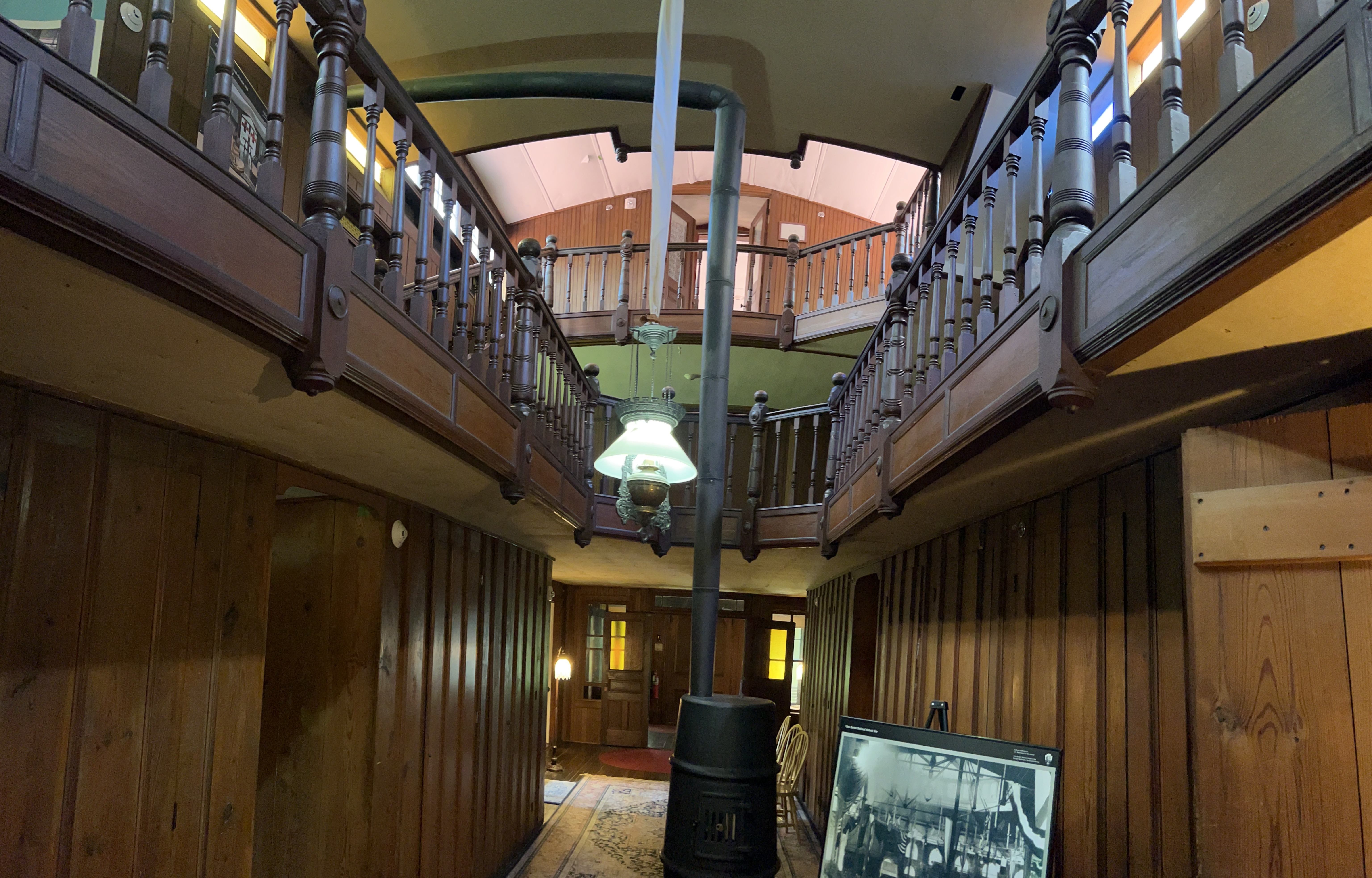
Clara Barton National Historic Site

The Maryland home was donated by wealthy business partners who wanted to attract people to their lands along the Potomac, and it was built to meet Clara’s specifications. She was all business. The lamp is hung by bandage cloth, and the walls are all supply closets with blankets, food and emergency items. The design is similar to the early Red Cross disaster buildings first used at Johnstown. The top floor windows have Red Cross images so that travelers can see it from the road at night. And the staff had both offices and rooms to live and work. The home is currently empty in preparation for a major restoration, but there are large photos to see what each room looked like furnished.

A week after the Civil War broke out, a contingent of the 6th Massachusetts was attacked in Baltimore while on their way to defend the Capital. Clara Barton tended them in the Senate Chamber with her household materials, and she recognized many as her former students. She asked them to tell their parents to send relief supplies to her, so that she could support the Union’s war effort and care for the wounded. She followed the sounds of battle and pre-positioned wagons of supplies as close to the fighting as possible.

There’s a monument to her in the middle of the bloodiest site at Antietam, where she extracted a bullet from a soldier’s face. She became known as the ‘Angel of the Battlefield’. She followed the fighting for years from Manassas to Spotsylvania, she petitioned Lincoln to help prisoners of war, and she went to Andersonville to walk the thousands of graves identifying ‘missing’ soldiers. Sent to Europe to recuperate, she went to Switzerland to work on getting the US to sign the Geneva Convention and join the International Red Cross. Her tactic was to reframe the Red Cross as also providing disaster relief, and not solely as a war organization, and she prevailed on both. She started First Aid kits and training programs. Her missing soldiers department grew into an important bureau of the Defense Department.

Clara Barton was directly responsible for saving many thousands of lives, and her initiatives save millions. She devoted her life to making this country and the world better and safer. But she never had the right to vote.

Andersonville National Historic Site

Roughly the same number of Union soldiers died in this prisoner of war camp as died in battle at Shiloh: over 13,000. The conditions were horrifying. Disease, vermin, starvation, dehydration, exposure and brutality killed hundreds by the day. Only a small portion of the stockade has been reconstructed, including the north entry gate pictured above, through which about one in three did not come out alive. There is an illustration drawn from the memory of Thomas O’Dea that is absolutely haunting in both its scale and detail. The Union refused a prisoner swap out of concern the confederates would return to battle. One 19 year old prisoner had the job of numbering the dead, and he secretly kept a list of names, regiments and causes of death. Eventually he brought it to the attention of the “angel of the battlefield”, nurse Clara Barton who had petitioned Lincoln to track down missing soldiers. They toured the site and marked over 12,000 graves. Barton went on to found the American Red Cross, and the US ratified the Geneva Conventions the next year. The man in charge of the camp was hung for war crimes. Flags were flying over the National Cemetery before Memorial Day, and burials are still occurring frequently. The visitor center also serves as a memorial and museum to all prisoners of war.