Port Chicago Naval Magazine National Memorial

At 10:15 pm on 17 July 1944, 320 people were vaporized in a munitions explosion while loading two ships simultaneously. The blast registered 3.4 on the Richter scale, disintegrated the docks above, blew one ship into small pieces, threw other ships hundreds of yards away, and injured people on the other side of Suisun Bay above. Most of the victims were young African Americans, and the Navy blamed the poorly trained black workers rather than the white officers in charge. When 50 survivors refused to return to work, they were sentenced to 8 to 15 years in prison and others were threatened with firing squad for mutiny. Despite the efforts of Thurgood Marshall to defend them and focus the blame on the Navy’s negligence, the ‘mutineers’ spent the rest of the war in prison, and the story was lost to history until a Cal professor named Robert Allen found a pamphlet, interviewed a dozen survivors and wrote a book in 1989.

The story is powerful, and the ranger and volunteer did an excellent job of painting a detailed picture of racism, dereliction of duty (among the officers who bet on load rates), the lies that the enlisted workers were told (that the bombs were inert), and the trial. Photographs, oral accounts and actually visiting the spot where it happened, including touring the revetments where munitions were transferred from boxcars and out to the docks, bring the impact home. The volunteer, Diana, noted that the Navy suffered an even more deadly munitions loading accident less than 4 months later, when the USS Mt Hood exploded in New Guinea on 10 November 1944, obviously not learning the lessons of Port Chicago. The ranger, Eric, made a persuasive case that the negligence and racism uncovered and protested, while officially unpunished, likely prompted the Navy to be the first branch of the military to desegregate completely in February 1946, two years before the other branches.

This park unit is dedicated to preventing this unjust tragedy from being forgotten. Tours must be reserved at least two weeks in advance for Thursday through Saturday when the Army, who took over the base, allows visitors. Although the tour met at the Muir home, I was able to drive my EV to the site above. Fortunately, the park service is working on improving access by building a visitor center nearby.

Rosie the Riveter / World War II Home Front National Historical Park

FDR said, “we can’t afford to indulge in prejudice now”, and with that, the “Rosie” in the lower part of the collage above suddenly was able to qualify for a job that previously hired neither blacks nor women nor LGBTQ+ nor any other minority. Note that she is riveting aircraft grade aluminum while wearing lipstick, nail polish, a large wedding ring and a classic “Rosie” red bandana. Many women were surprised how easy riveting was and didn’t understand why men said they couldn’t do it. By 1944, women were about 1/3 of the workforce, and 10,000 African Americans worked here in Richmond during the war along with all other minorities (except Japanese Americans). Leadership is required to change society’s prejudices and discriminatory practices, and once the door was opened, many women decided to continue working after the war.

The visitor center is next to the Ford Assembly Plant, which is still full of industrial activity. Check in at the gate on Harbor, then drive around back and all the way down to the right. There are ChargePoint stations in the lot, and a good restaurant next to the visitor center. The factory used to make tanks, and across Marina Bay was Shipyard #2 which produced a new ship every 4 days, loaded with tanks and sent off immediately. Walk a bit of the SF Bay Trail along the waterfront to a fine memorial to the Rosies in Marina Bay Park, next to the yachts and fancy condos. Shipyards #1 and #4 were up the channel on the other side, along with the Prefab Yard. And Shipyard #3 still has the SS Red Oak Victory Ship, launched in November 1944, with worthwhile tours. This was the beating heart of America’s “Arsenal of Democracy”, and it was a unified effort of all hands on deck which changed the course of labor and civil rights overnight.

Amache National Historic Site

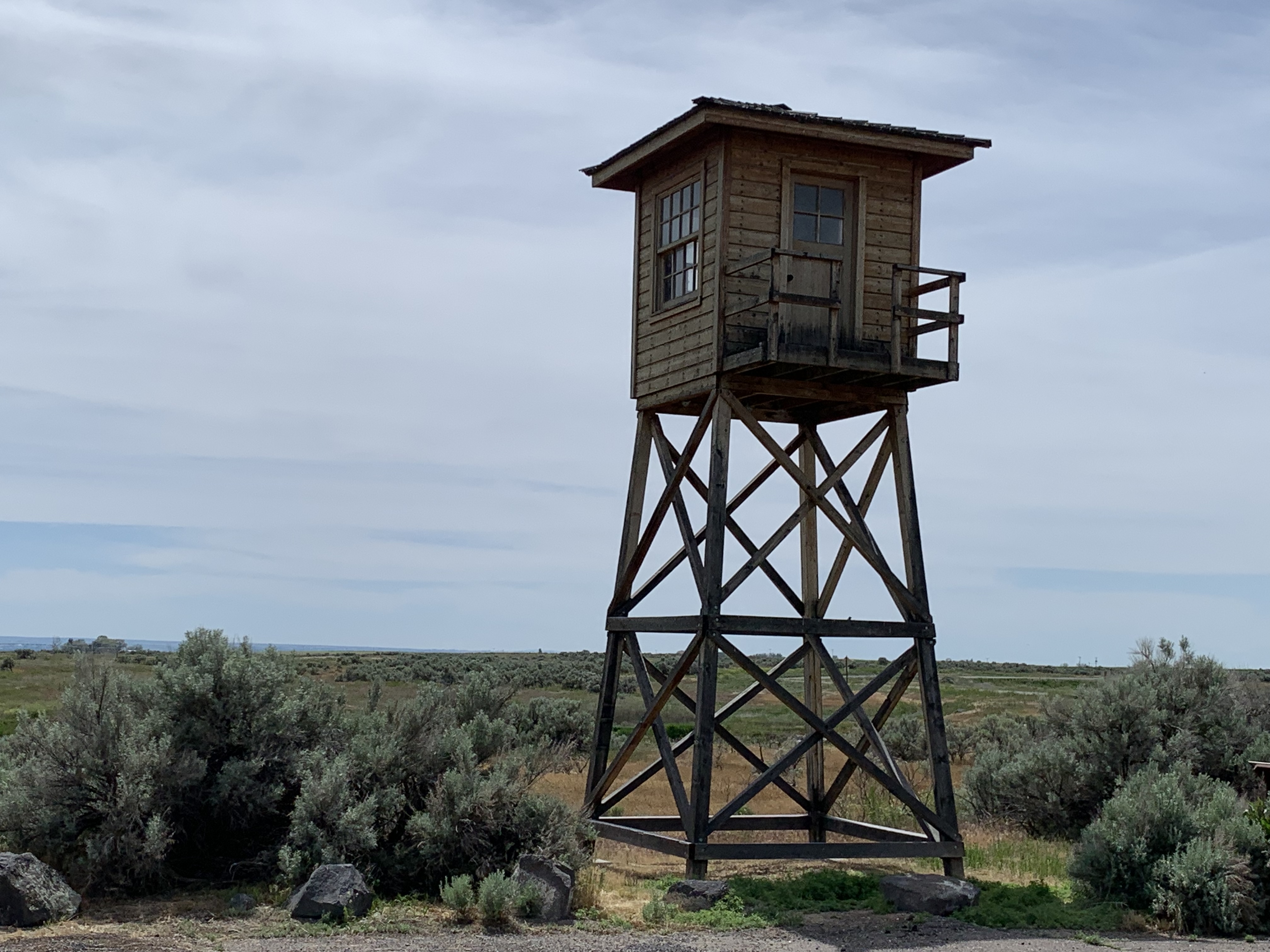
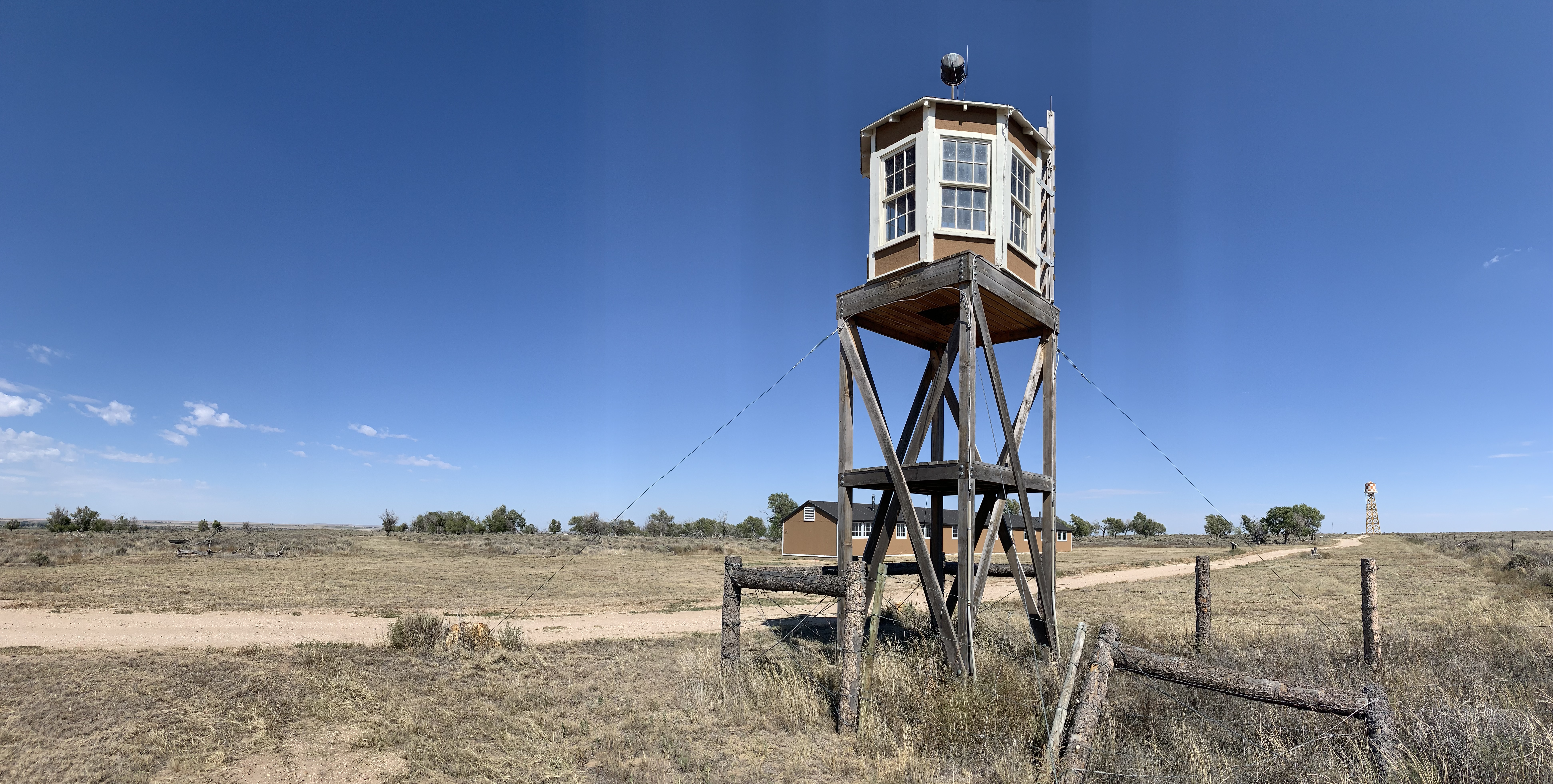
President Biden authorized this new park in March, but it will take time to become fully established. The local community is important in determining whether a park is created, how it will happen and when. In this case, the local Granada High School has been working on preserving the history here for many years and is largely responsible for the reconstruction of the guard tower above.

As with Manzanar and Minidoka, the image of a guard tower evokes the reality of the imprisonment of Japanese-American citizens during WWII. Each of the towers surrounding Amache was manned with a machine gun and a spotlight. But inside the camps, it is often the Japanese cultural touches that strike me, the rock gardens in Manzanar and the silk screen shop here. The silk screen shop was so good, that the incarcerated citizens made posters for the US Navy. Despite their incarceration and wrongful denial of their Constitutional rights, these citizens were proud of their country and many of the children joined the Boy Scouts and Girl Scouts here.

There are various monuments and markers remembering the 31 killed in action fighting for our country in Europe while their relatives were imprisoned, for the over 1,000 US military veterans from this camp including many interpreters, and for the over 100 inmates who died here, some before their time. While many were later reinterred elsewhere, a few graves remain in a Japanese styled cemetery, along with a memorial stone and a photo of the original epitaph, written in Japanese.

Interestingly, Colorado citizens of Japanese ancestry were not incarcerated, because the governor, Ralph Carr, correctly believed the program to be unconstitutional, arguing that once a majority violates the rights of a minority, “then you as a minority may be subjected to the same ill-will of the majority tomorrow.” His principles likely cost him his next election. (If the nearby town of Chivington wants to replace its shameful name, they could rename their town Carr).

But the Japanese [Americans] are protected by the same Constitution that protects us.
An American citizen of Japanese descent has the same rights as any other citizen. …
If you harm them, you must first harm me.
I was brought up in small towns where I knew the shame and dishonor of race hatred.
I grew to despise it, because it threatened the happiness of you and you and you.

Colorado Governor Ralph Carr to a hostile audience in 1942

Andrew Johnson National Historic Site

Somebody has gone to a great deal of effort to rehabilitate disgraced President Andrew Johnson. The hagiographic film is narrated by the late Tennessee Senator (and actor) Fred Thompson. The exhibits extol Johnson’s fidelity to the Constitution against the “radical” views in Congress that African Americans should be granted full citizenship rights. This may be the worst site for informing people about history in the park service.

In fact, Johnson was an inveterate racist, a slave-owner who got a special exemption from Lincoln’s Emancipation Proclamation to extend slavery in Tennessee. After Lincoln’s demise, Johnson reversed Reconstruction and vetoed the Civil Rights Act, paving the way for a campaign of terror by the KKK (also from Tennessee in 1865) and the collapse of all efforts to let freed slaves participate fully in elections. He was impeached (148-27), but escaped conviction by one vote. Johnson’s presidency was such a threat to the nation that Grant was pressured to run “in order to save the Union again”. A long-time historical favorite of racists, modern historians generally rank Johnson among the worst presidents. Nowhere at this historic site could I find any acknowledgement that it was morally wrong and anti-democratic to deny freed slaves the right to vote.

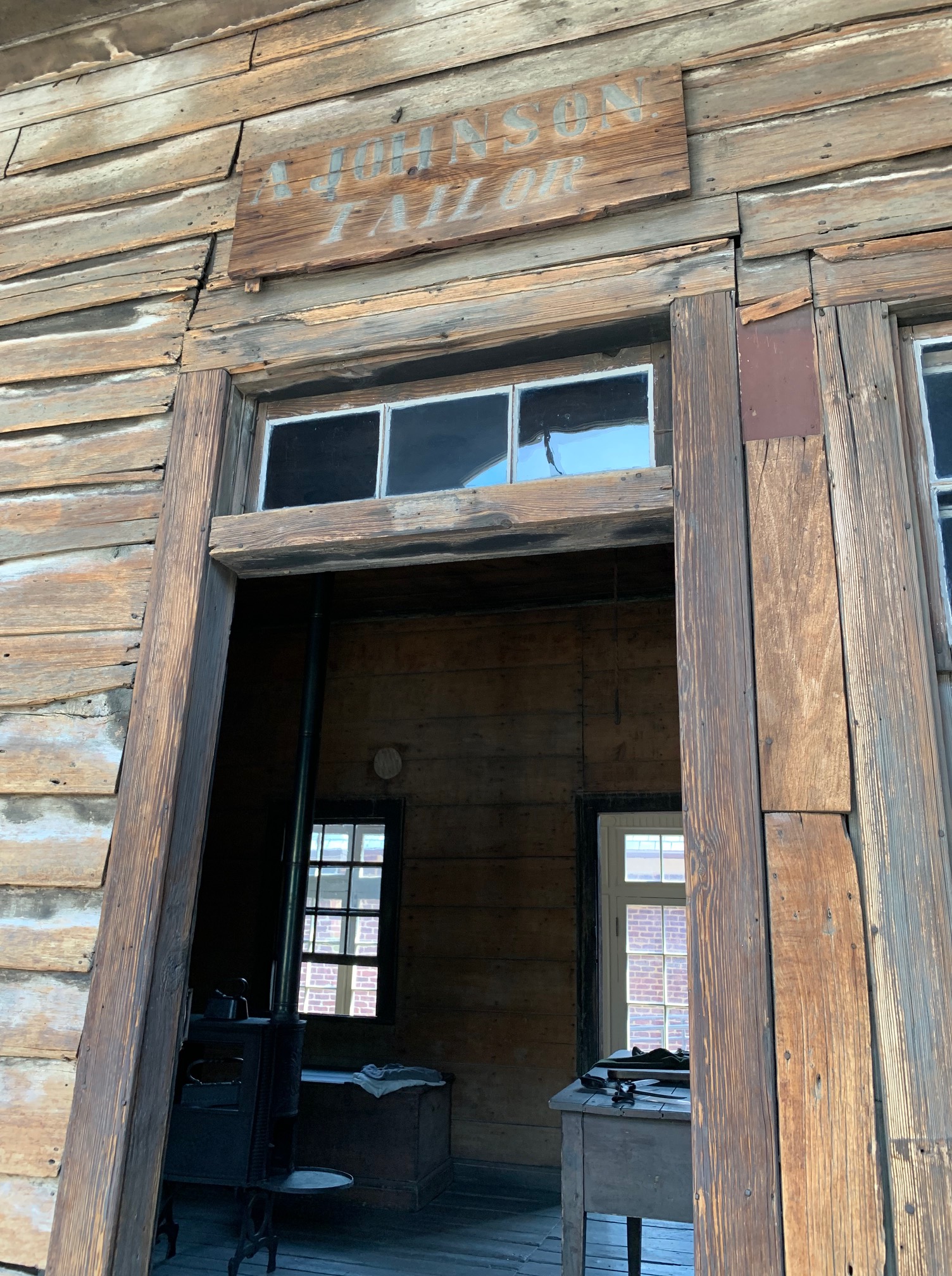
Johnson was a poorly-educated tailor who had the good fortune to be married by a relative of Abraham Lincoln.

Minidoka National Historic Site

Named for the Dakota Sioux word for a spring, this concentration camp is along an irrigation canal, where the Japanese-American prisoners built a swimming hole and tried to fish. The sincere efforts to try to improve their confinement somehow make the circumstances even sadder. Thousands of Americans were cut off from their homes, neighbors and country, due to their national origin and race. Most German and Italian Americans were not incarcerated during WWII. Neither were most Japanese-Americans in Hawaii. Most of those kept here were from the Pacific Northwest and had lived in the US for a generation or more. Many also found their property had been stolen when they tried to go home. Under Carter and Reagan the survivors were paid $20,000 compensation for “race prejudice, war hysteria and a failure of political leadership”.

Cane River Creole National Historical Park

There was a storm coming when I took this photo of the Overseer’s House on Oakland Plantation which may help convey the dark, menacing sense of the place. I visited Magnolia Plantation years ago with my kids, and I remember the slave huts. This plantation illustrates a later period when most farms employed day laborers, but here they still had tenant farmers. The ranger euphemistically explained that they were technically “day laborers who just happened to live on the plantation”. The sign on the iron gate dates Oakland to 1821, but that’s just when the cotton plantation was renamed. The French first used slaves to plant cotton here in the 1790’s.

This tragically moving site has poor signage, marking several places you can’t park but no entry sign for the actual parking lot around back. So I ended up driving around more than expected, and I noticed some African Americans living in run-down shacks right down the street from large new plantation-style homes complete with landscaped grounds, wrap-around porches and white colonnades. I think it shows an abysmal lack of sensitivity to or remorse over the centuries of mistreatment of slaves and laborers to intentionally choose to live in a plantation style house here, especially before investing in decent housing for the descendants of the victims.

Fort Smith National Historic Site

The Arkansas River connects the Mississippi River to the Santa Fe Trail in Kansas, so the fort facilitated Native American removals along the Trail of Tears. The courthouse here dealt with many cases of serially displaced tribes. This was the base for US Marshals to “control disputes” and arrest whiskey traders out in Indian Native American Territory. The jail here was known as “hell on earth”.

There weren’t any major Civil War conflicts here, as the Union abandoned it at the beginning and the confederacy did the same two years later. Native Americans regiments were formed on both sides during the war, and Cherokee engaged Union troops north of the fort at Pea Ridge. It was at this fort in 1865 when the US informed the tribes that they were all enemy combatants, regardless of which side they had been on or whether they were one of the five “civilized” tribes that had largely integrated, and that all the tribes lost the Civil War. The slaves were freed, but the Native Americans again lost their land and still had no rights.

Despite the lack of Civil War battles here, there are no lack of Civil War reenactments here. Although the park service does not allow battles to be reenacted on park property, the folks above demonstrated by firing the cannon, while women separately participated in gentler “living history” nearby. That anyone would want to reenact such a dark and tragic history, especially when it glorifies and perpetuates the immoral beliefs of the traitorous pro-slavery side, is living proof that the ugly racism of our past still continues today.

Little Rock Central High School National Historic Site

Okay, the photo is crooked. But in a way, that’s appropriate. As the ranger Randy explained, “there’s more than you know” here. Turns out, the school board took all the public school funds, gave them to the all white school, and told the African American community to build their own school on their own. So that’s why this is considered one of the finest looking schools in the country, because of racism and theft.

The Supreme Court may have ordered schools to desegregate, but many local school districts did everything they could to resist. As ranger Randy said, “you need to ask why there were only nine”, referring to the Little Rock Nine. In fact, there were many more than nine African American students in the district, but the school board put all kinds of restrictions on who could get in to the white school: you needed a 3.8 GPA, you weren’t allowed to participate in any extra-curricular activities, and you could neither report nor retaliate to bullying. They specifically designed the rules to reduce the number of black students to a small few who they could force into quitting.

The mob arrived first. The nine were told to arrive later and meet nearby. Well, all except for Elizabeth Eckford, who didn’t have a phone. She went right up to the door, surrounded by a hateful and threatening mob and was met by the National Guard. She expected the soldiers to protect her and let her pass, but they had been ordered by the governor to block any of the nine black students from entering. Confused and alone, she walked back to the bus stop and waited, enduring constant torment from the racist mob.

The case goes to Federal court, which disallows the Guard from blocking the students. The police try to defend the nine, but there’s a riot. Finally, Eisenhower nationalizes the Arkansas National Guard and sends in the 101st Airborne to escort the students inside more than three weeks after school began. The students endure physical and verbal abuse daily all year. The governor closes all the schools. The voters approve it. The Federal court declares that unconstitutional. And eventually, black students make it through to graduation.

Perhaps the racists thought that it would be easier to intimidate the smart kids, but they fully understood what was happening, why it was important that they didn’t give up and why they still shouldn’t give up.

George Washington Carver National Monument

I love this statue. Carver was born at the end of the Civil War and was kidnapped and orphaned by the Klan. His mother’s owners retrieved him and raised him here, where he studied the plants near the creek as a child. He was educated mainly in Kansas, despite racial barriers, and eventually became the first African American to graduate from his school. His manner was mild, but he demonstrated great determination in the face of poverty, adversity and prejudice.

Recognized for his extensive scientific knowledge of botany and for being a groundbreaking African American scientist, he was hired to teach at Booker T. Washington’s Tuskegee University. His goal was to help the least in society, so he worked on modernizing agricultural techniques used by African American farmers, even bringing a cart from the university out to the fields to teach, a technique copied by the US Department of Agriculture. He published many books and pamphlets, developed patented techniques and is best remembered for developing the lowly peanut into a highly profitable series of products. He testified to Congress about the peanut and scientific agricultural techniques and was widely recognized for his many accomplishments.

I know Carver is an inspirational figure admired for overcoming obstacles, but I can’t help but wonder how many others were denied even the limited opportunities he had. Slavery existed here for 244 years, with 10 million sent across the Atlantic and maybe another 10 million born into slavery here. None of them were properly educated. None had the freedom to pursue their dreams. And all died without being able to fully contribute their talents and ideas to improve the world. How many young, inquisitive minds were destroyed by slavery? How much human enlightenment was snuffed out to pick cotton? Carver was one of the first born after the Emancipation Proclamation was signed, and he spent his life making the world a better place for all of us. But I can’t help but mourn the incalculable loss of all the other people during those 244 years and after who could have contributed as well or even more.

Homestead National Historical Park

I grew up reading about the frontier spirit of rugged individual homesteaders who followed their manifest destiny, tamed the wilderness and settled the country by grit, determination and hard work. Most Americans can trace their roots back to folks like these, and this view traditionally defines what it means to be an American.

But I’ve learned a few things on my way here, so it’s time for some myth busting. First, the “untamed wilderness” was already occupied by Native Americans who built homes, farmed and lived off the land. Second, the settlers received serious government assistance in the form of the US military clearing the Native Americans off the land and giving it to them. Third, the homesteaders almost immediately ruined the environment by removing the topsoil, causing the dust bowl and mass migration to California. And finally, I only see little huge corporate agribusiness here now, not individual farms.

The park is impressive, with both a state of the art Heritage Center and an Education Center. The film and museum are “award-winning”, and much of the focus appears to be on teaching kids to be proud of their homesteading ancestry. Much of the money was donated by the local fossil fuel utility, so I’m not surprised that environmental issues such as the tallgrass prairie devastation, the dust bowl and the changing climate are not the focus. But what angered me was a slight-of-hand trick employed to tell the homesteading story.

The film & exhibits make it abundantly clear that the Native Americans once lived on the land before the homesteaders settled, and the unfair history is presented in a way that kids can’t leave without learning some basic facts. However, at the beginning of the film Native Americans are described as not believing in land ownership, in the middle they say all they want is for everyone to respect the land, and at the end one Native American speaks of how he loves his reservation. And the egalitarian aspects of the Homestead Act are used to justify it: blacks could homestead (although slavery held them back at the beginning), women also benefited, and European immigrants homesteaded.

I believe it’s wrong to lie to our kids, especially to make them feel better about something that was wrong to do. The Native Americans did own the land. And the homesteaders knew it, because the newspaper ads that urged them to go west clearly said “Indian Territory Open to Homesteaders” and “Grand Rush for the Indian Territory”. They knew it, because some moved into sod pit-dwellings built by Native Americans. They knew it when they copied Native American burn techniques to encourage new growth to feed cattle. And they knew it when they grew corn in the same fields as the Native Americans. What the Natives didn’t have were written real estate deeds or the ability to defeat the US military.

It’s simply dishonest to suggest that it was OK to take the land due to lack of ownership rights. It’s also wrong to imply that it was OK to take the land since it was under-utilized. Imagine someone comes into your home and tells you that they bought your land on the dark web using Bitcoin. Then they explain that it’s all legal in the new digital world and that you have to move out now since you don’t have a hexadecimal key to participate in the secret auction online. When you protest, they force you to leave with high tech weapons. Finally, to justify their actions, they say that they can house more people and grow more food on your lot. You would correctly say that you had been robbed, and you would correctly say that the explanation doesn’t justify the crime.

Frankly, in the 21st century, to be repeating old lies that the Native Americans wanted homesteaders to take their land because they would better use it is offensive. The US military forced the Native Americans off the land at gunpoint, by slaughtering bison, and by encouraging white settlers to move in. The homesteaders used the land in the same way as the Natives, farming, ranching, hunting and fishing. In some ways they were more advanced, and in other ways, such as topsoil removal, they were more destructive. It is also devious to try to defend the racist policy of Native American removal by saying that it benefited blacks, women and immigrants. Would you teach your son that it’s OK to beat up and steal another child’s lunch as long as he shared a little of it with other kids who were hungry?