Tennessee Civil War National Heritage Area

Tennessee is the only state that is also a national heritage area, focused on the Civil War, with four national park units, three other battlefield parks, three Civil War oriented museums, and Andrew Johnson NHS. The nationally established parks cover the history best, but state parks—especially Fort Pillow—are also historically important.

  • 1862 Fort Donelson NB Grant gained access to the Cumberland River in the northwest.
  • 1862 Shiloh NMP Grant won a costly battle, despite a Confederate surprise attack.
  • 1862 Parker’s Cross Roads a failed attempt to block a Confederate retreat.
  • 1862-3 Stones River NB, with slaughter pen & hell’s half acre, a bloody victory.
  • 1863 Chattanooga NMP another Union victory, securing railroads in the southeast.
  • 1864 Fort Pillow a massacre of surrendering black soldiers by Nathan Bedford Forrest.
  • 1864 Battle of Franklin a disaster for the Confederates, especially a dozen or so generals.

Fort Pillow is on a bluff then overlooking a sharp bend in the Mississippi River north of Memphis. It is well sited for firing down at passing ships, but there are several higher hills around the fort, making it defensively weak against a land attack. Nathan Bedford Forrest brought superior troops in number and experience, and attained the element of surprise. The Union leader was shot dead early on by sharpshooters, and his replacement refused to surrender. The battle was soon over, as the Confederates surrounded the fort, moved in and overran the ditch defenses.

Except that the slaughter continued, long after the battle was won.

The state park visitor center at Fort Pillow has a disappointing exhibit that repeatedly describes the 1864 congressionally designated “massacre” as only a “controversy”, displays grandiose portraits of General Forrest, and provides numerous excuses for the one-sided outcome (see below list of dead). Over the years, many apologists—the same who describe the Civil War as a heroic cause for states rights—have tried to defend the actions of the Confederates at Fort Pillow, but there’s nothing honorable about a 20 to 1 slaughter.

The facts—excluded in the museum exhibit—tell the true story. Most of the Union white soldiers were taken prisoner, while almost all of the black soldiers were killed. One of Forrest’s own sergeants described many black soldiers trying to surrender and wrote, “General Forrest ordered them shot down like dogs”. Black soldiers were denied prisoner of war status throughout the war, and the Union stopped prisoner transfers due to this official Confederate policy, clearly stated after Fort Pillow. Forrest became the first Grand Wizard of the Ku Klux Klan after the war. The site should be a national battlefield, and the history of Forrest’s massacre of black soldiers told accurately.

Robert Russa Moton High School

Equality is the ideal we have yet to achieve. Jefferson wrote of equality in our Declaration of Independence. Our Constitution did not recognize it. Lincoln guided the country through a Civil War for equality, but then the country slid backwards again. But we must try.

W.E.B. Du Bois had supported and tracked inequality, progress and hope for schooling in the African American community of Prince Edward County in 1898. The state of Virginia revised their post Civil War Constitution in 1902 to permit racial segregation. In 1951, the inequality had long been unconscionable. While white students had cafeterias, gymnasiums, school busses and laboratories, black students needed warm clothes and umbrellas inside tar paper shacks.

Frustrated by the systemic racism that prevented adults—who faced retribution for asking for change—from fixing the problem, the students decided to act by themselves. 16 year old Barbara Johns addressed her fellow students, banging her shoe on the podium, and called a strike, asking for cooperation and saying “don’t be afraid”. The students all went on strike, and their minister said they should contact the NAACP. Barbara Johns called Richmond lawyer Oliver Hill to help.

Their case, which lost, became part of the Brown v. Board of Education appeal, but the Prince Edward County school district refused to follow the Supreme Court ruling. A new school was built, but rather than comply with integration, even after Little Rock, the Governor of Virginia closed schools for five years. Martin Luther King visited in 1962. JFK and RFK publicly excoriated Prince Edward County in 1963. Finally, the Supreme Court ruled again, saying “time… has run out”.

Every student should know this story, which began with a student walkout to demand a new school building. I was moved to tears listening to Barbara Johns’ recreated speech in the school auditorium and thinking about their courage in the face of terrible injustice. If you can visit, go and listen for yourself. This affiliate site, a favorite of mine, in Virginia is a powerful part of our Civil Rights history.

John Philip Sousa Junior High School

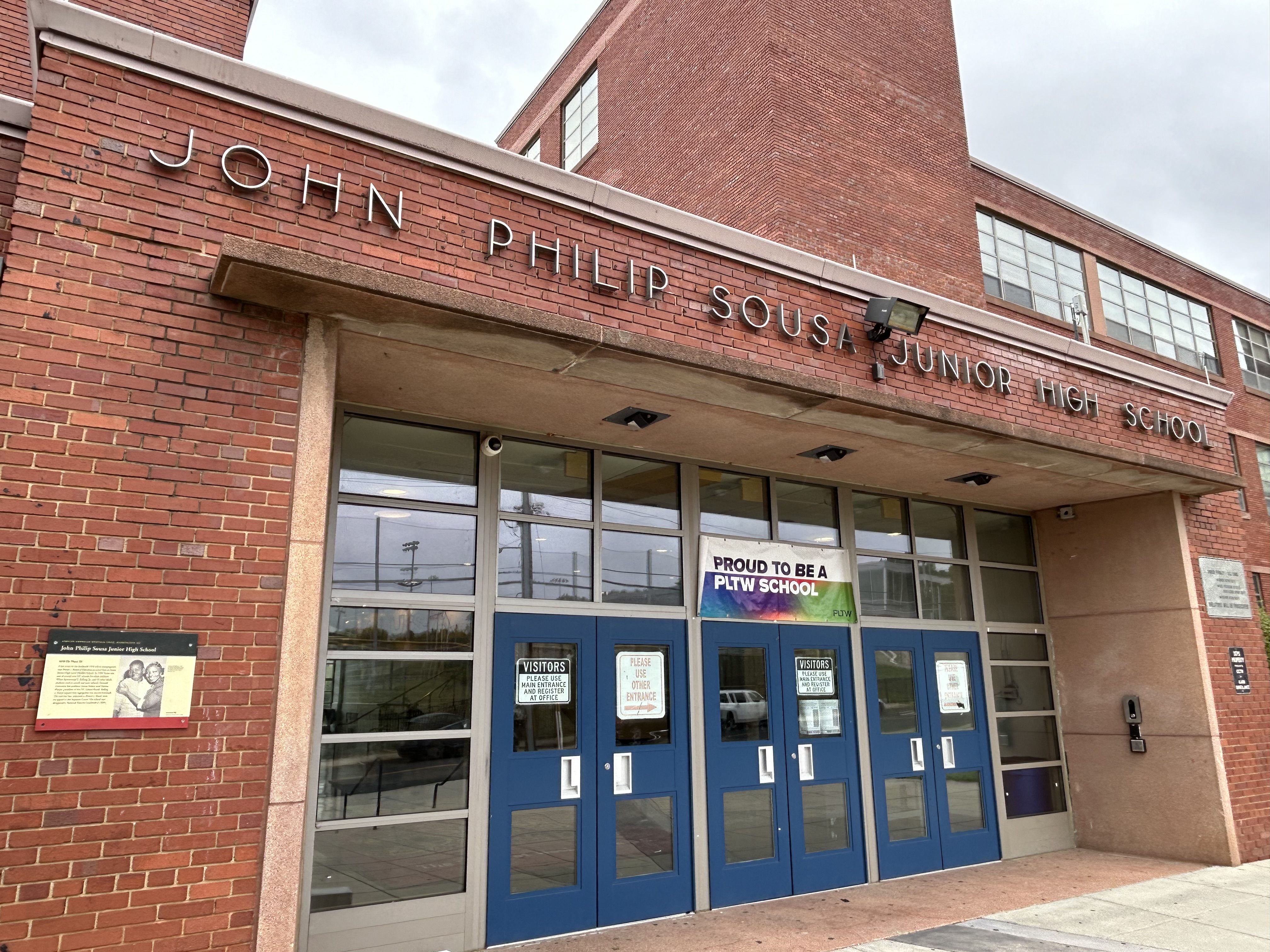
In 1950 a group of black students were denied admission to the then white school above (now a middle school in a predominantly African American neighborhood). At the time, black schools were severely overcrowded, while white schools had plenty of empty seats for students. Integration was proposed to make education more fair. A law professor at Howard University sued the DC school board president on behalf of one of the students, Spottswood Bolling, pictured to the left of the old entrance above. Bolling v Sharpe became part of the landmark Supreme Court case Brown v Board of Education. This park is affiliated with Brown v Board NHP in Kansas, and it is the only NPS affiliate site in DC.

Springfield 1908 Race Riot National Monument

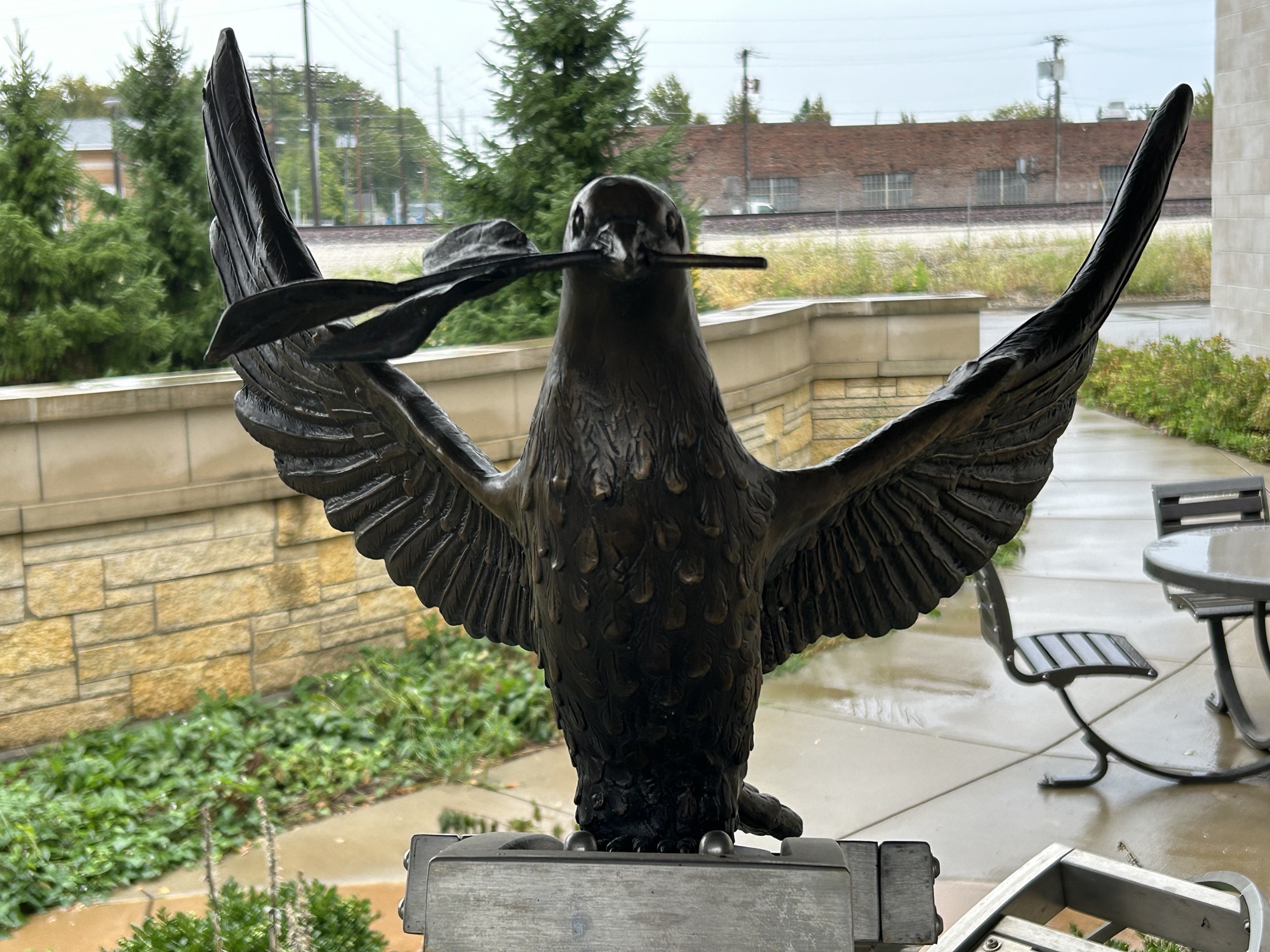
This new park established by President Biden this August is still a fenced off construction area next to the railroad tracks, but there are several art installations dedicated to the riot, including the dove above and a mural at the Children’s Hospital next door. 11th Avenue along the site is known as Reconciliation Way, to commemorate the terrible events here in 1908.

In mid August 1908, in Springfield Illinois, a white mob of five thousand lynched 2 black men, killed 7 others, burned out millions of dollars worth of black homes and businesses and also targeted Jews and whites deemed sympathetic to the black community. The police did nothing to stop the riot. The burning, looting, ransacking and violence lasted 3 days until put down by the state militia, which resulted in 6 dead rioters.

Church leaders blamed the victims for being “sinful”. Although everyone knew the perpetrators and many were arrested, only one 15 year old was convicted after he confessed to stealing revolvers, shooting at black people and starting 15 fires. The others denied any responsibility, the witnesses denied seeing them, and the charges were dismissed. The judge denied that there was racism in Springfield.

Many Americans were shocked by the scale of the violence in Abraham Lincoln’s home town, and civil rights advocates like W.E.B. Du Bois and Ida B. Wells helped form the NAACP in 1909 in response. In 1910 speaking before the NYC Republican Club (the party of Lincoln), Du Bois argued that if racial hierarchy were the natural order of the world, then there would be no need to use social and physical weapons to oppress a race.

“So soon as the prejudiced are forced into this inevitable dilemma, then the real bitterness and indefensibility of their attitude is revealed; they say bluntly that they don’t care what [slurs] may be capable of—they do not like them and they propose to keep such folk in a place of permanent inferiority to the white race—by peaceful policy if possible, but brute force if necessary.
And when a group, a nation or a world assumes this attitude, it is handling dynamite.
There is in this world no force as the force of a man determined to rise.
The human soul cannot be permanently chained.”

W.E.B. Du Bois

Black History Month

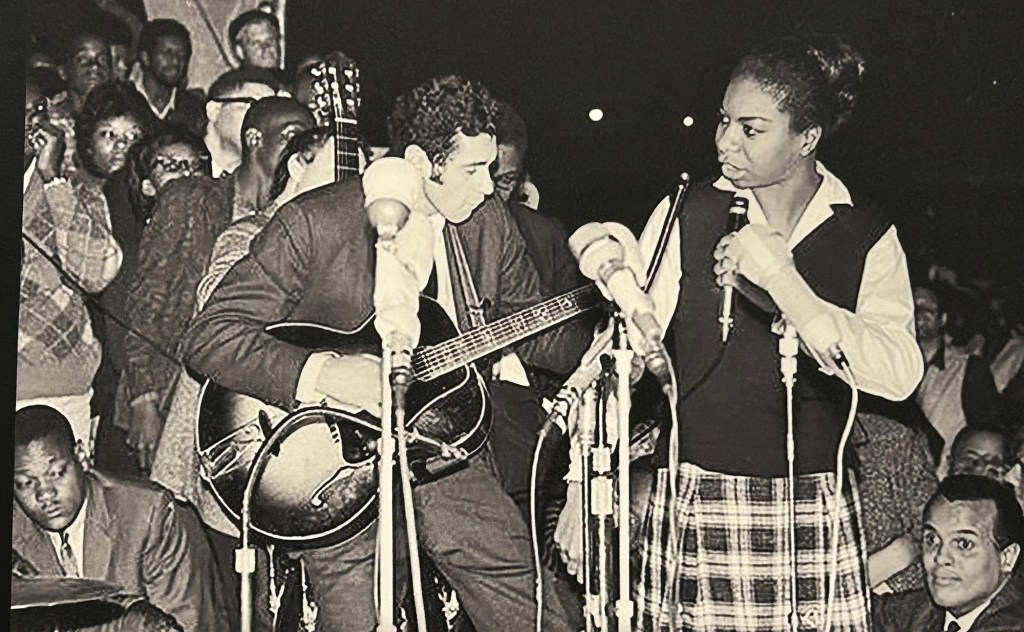
Nina Simone on the march from Selma to Montgomery, with Harry Belafonte lower right.

Black History is about much more than emancipation and education. Beyond the basic rights to liberty and literacy, Americans have a right to pursue happiness. All year long, the national park service celebrates those who broke the barriers that denied black people their full rights as citizens.

The African Burial Ground predates our country, includes both free and slave, and is today a powerful symbol of the right to belong, be recognized and be remembered. New Philadelphia, Illinois, was the first town in American officially founded by an ex-slave in 1836. Camp Nelson became a focal point for escaped slaves during the Civil War, both as refugees deserving help and as soldiers with a right to fight in uniform. Nicodemus, Kansas, 1877, is the oldest black settlement west of the Mississippi, and it still lives. Jazz began before the turn of the century in New Orleans. In 1903, Charles Young, born a slave, became the first black national park superintendent, and in 1917 became the first black Army Colonel (surpassing Dr Alexander Augusta, Bvt. Lt. Col. during the Civil War). 

The Springfield Race Riot of 1908 sparked the creation of the NAACP, illustrating both the danger of race hatred and the need for African American advancement. In 1911, Maggie Walker, daughter of a slave, became the first African American woman to found and run a bank, among her many civic accomplishments in Richmond, Virginia, and nationally. In April 1939 after being refused the right to sing elsewhere, Marion Anderson made national news singing at the Lincoln Memorial.

WWII brought new opportunities, including employment for African American women among the Rosie the Riveters who built our fleets and the Tuskegee Airmen who helped turn around the war by defending our bombers over Germany. Tragically, segregation in the military led to the Port Chicago disaster in 1944, which in turn led to desegregation in the military. 

Eisenhower was President in 1955, and America was a very conservative, 88% white, 95% Christian country. Still, when Mamie Till-Mobley’s boy was brutally murdered in Mississippi, she shocked the conscience of the nation with his open casket, sparking the Civil Rights Movement. In 1961, black and white Freedom Riders rode buses to integrate interstate travel, lunch counters and restrooms, but were attacked by “Citizens Councils for Racial Integrity”: the KKK. Despite school desegregation, Normandy Veteran Medgar Evers was denied law school admittance due to his race, so he worked with the NAACP on desegregation, civil rights protests and an investigation into Till’s murder. Returning home the morning after listening to JFK (below) promising to desegregate “hotels, restaurants, theaters, retail stores, and similar establishments”, Evers found his FBI protection detail had been suddenly withdrawn, and he was shot in his driveway, unintentionally desegregating the white hospitals of Mississippi shortly before dying.

That September, the KKK killed four young black girls by bombing a church in Birmingham. In November, JFK was assassinated. But the movement did not stop; it grew. In 1965, in Selma, Alabama, three times residents marched towards Montgomery to try to register to vote and to protest. First, they were beaten bloody and unconscious on the street by police on horseback. Second, they were stopped by legal action. And Third, they marched 54 miles to the capitol in Montgomery, joined by people from across the country, 25,000 strong, ultimately securing the Voting Rights Act a few months later.

The Reverend Dr Martin Luther King, Jr, who led that march and many others, gave his life for Civil Rights, along with many others. On 28 August 1963 in front of the Lincoln Memorial, he said, “I have a dream that my four little children will one day live in a nation where they will not be judged by the color of their skin but by the content of their character.” Well, two of his children are now dead, and his youngest is 60. I believe we failed to achieve his dream in his timeframe. But we must not stop trying.

”One hundred years of delay have passed since President Lincoln freed the slaves,
yet their heirs, their grandsons, are not fully free.
They are not yet freed from the bonds of injustice.
They are not yet freed from social and economic oppression.
And this Nation, for all its hopes and all its boasts,
will not be fully free until all its citizens are free.” 

President John F. Kennedy, Televised Address to the Nation on Civil Rights, 11 June 1963

Emmett Till and Mamie Till-Mobley National Monument

”Let the people see what they did to my boy.”

Mamie Till-Mobley

The animosity against African Americans, especially in the Deep South, is hard to comprehend, but it is deep, real, persistent and extremely dangerous. Emmett Till’s mother warned him, but even she underestimated the risk. In late August of 1955, Emmett Till was kidnapped from his great uncle’s home by a shopkeeper’s husband and his half-brother, who accused Emmett of whistling at the shopkeeper, a white woman. From past midnight to pre-dawn, the two men, along with several others, held Emmett, aged 14, in the back of a pickup truck, drove around the county, terrorized him, tortured him, shot him and dumped his body in the river. Witnesses reported hearing Emmett’s screams all over town for hours. His great uncle reported the kidnapping, the men were arrested, and the body was found a few days later. His mother, saying “let the world see what I see”, insisted on an open casket at the funeral in Chicago. Jet magazine published photos of his brutalized body. His mother became a lifetime activist, author and motivational speaker on education, poverty and Civil Rights with the NAACP. Many consider Emmett Till’s killing to be the beginning of the Civil Rights Movement, not least because Rosa Parks cited Emmett as the reason she kept her seat on the bus in Montgomery on 1 December 1955. 

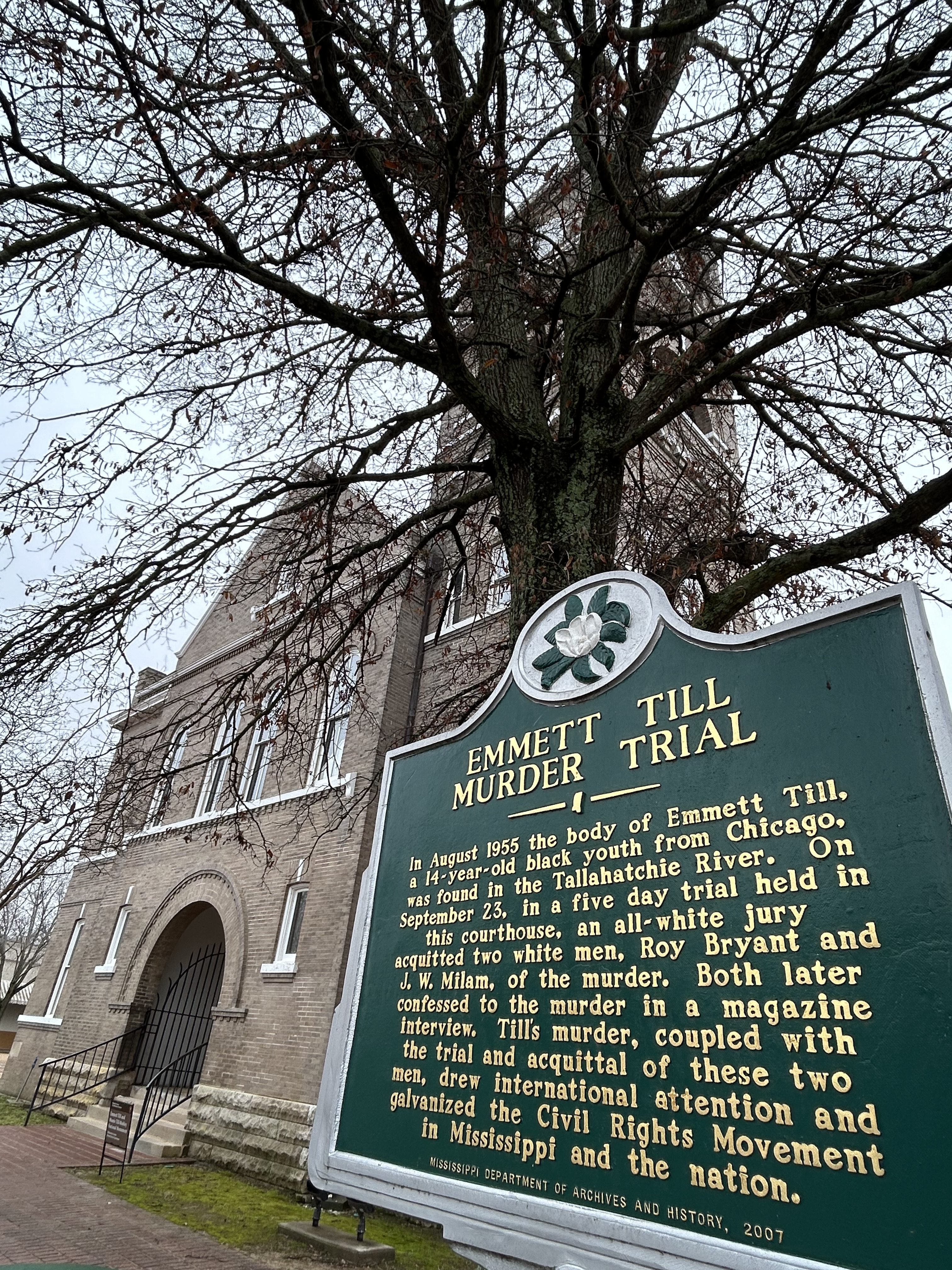
The trial was a foregone conclusion. Outside the courthouse (below) stood a statue dedicated to the “Heroes” of the Confederacy. Inside there was no justice. Instead of jurors, police, court officers and elected officials defending the Law, the courthouse became the focal point of a deep criminal conspiracy, based on racism. Witnesses were intimidated, hidden, immunized and silenced. Emmett’s great uncle testified at the trial, pointing out the kidnappers and murderers, and then he left town immediately and went into hiding under a false name. And for many years afterwards, there has been a concerted effort to conceal the truth. Evidence lost. Signs have been repeatedly shot and torn down. Historic artifacts and structures intentionally left to ruin or demolished. One witness, in hiding for decades under another name, still received death threats demanding silence. The confederate statue still stands in front of the courthouse, just left of the photo. 

But despite the legacy of lies, terror and violence, people still work to tell the truth about Emmett Till. Especially if you’re exploring the new monument’s sites in Illinois and Mississippi, I recommend reading the darkly fascinating stories in the Emmett Till Memory Project app, after being introduced to it by one of the contributors at the Emmett Till Interpretive Center across from the courthouse in Sumner, MS. Emmett Till’s coffin is on display at the National Museum of African American History and Culture in Washington DC. His name was given to the Anti-Lynching Act of 2022. And this new national monument was established by President Biden on 25 July 2023, on what would have been Emmett Till’s 82nd birthday. 

Gila River

Despite not being on the West Coast, the US military evicted all American citizens from the southern part of Arizona during WWII as potential ‘navy base saboteurs’, if they had Japanese ancestry. The military’s arbitrary exclusion zone ran through Phoenix, so if you lived on the south side of the city, you wound up incarcerated while your family on the north side kept their homes.

Like Poston, most Japanese-Americans were taken from their homes in Southern California. The barracks in the background of the photo above comprised a small part of camp 2 or Butte Camp at Gila. The Gila River Tribal Community protested, but the military appropriated over 17,000 acres of their land anyway and concentrated roughly 15,000 people here according to their ethnicity. 

The tribal community had been struggling since the Gila River was diverted by white settlers beginning in the 1880s. In 1934, archaeologists dug up their ancestral burial grounds, and after they dug again in 1964, the government also created a national park site. Now that site is closed and the tribes don’t allow visitors there. 

Survivors of internment built a monument on the ‘internment camp’ site, but someone shot it up with a machine gun a few years back, and unless you’re family, you can’t visit the site now. Given all the tragedies and harm done here under the American flag, seems like folks might benefit from a government funded educational center explaining the history and the importance of respecting Constitutional rights. 

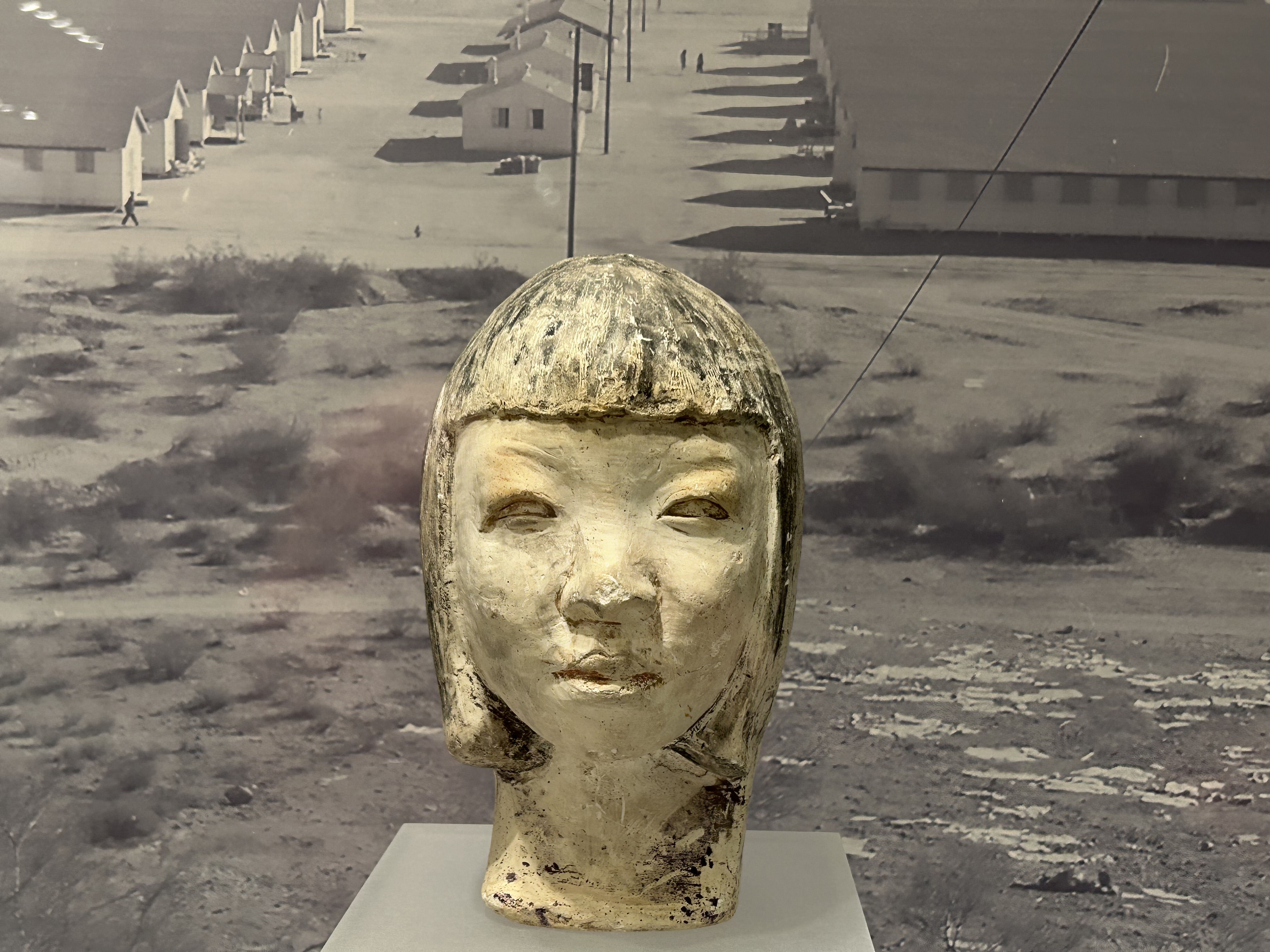
The Gila River Tribal Community runs the excellent nearby Huhugam Culture Center free museum, which contains a small display case of ‘relocation center’ artifacts, including two busts of young prisoners. The one pictured is Sayoko ‘Jean’ Kawamura, and the other has no name, forgotten to history. 

Heart Mountain

Heart Mountain (above) is the site of an American Concentration Camp in Wyoming. One of the incarcerees left a bequest for ‘something to be done’, and now much is being done here to teach people about the injustice sustained here from 1942 until 1945. There is an original barracks, a guard tower ‘built to spec’, memorials, artwork, and a remarkably personal and revealing museum. Renovations, expansion, acquisitions and outreach are ongoing.

While most sites choose not to use the term “concentration camp”, due to its association with the Holocaust, one of the incarcerees in the film uses that term plainly, the then Governor used the term in arguing in favor, and that was the term used most commonly at the time. Many of the Americans who were sent there had never seen so many people of Japanese descent in one place at the same time. What else are you going to call a facility that literally concentrates one group of citizens based on racial/ethnic identity in a prison camp?

What makes the exhibits here better than other sites is that they go one or two steps deeper in describing the experience. When the site started, “it was like pulling teeth” to get incarcerees to talk about it, but then gradually the stories started coming out: a dog left behind that refused to eat and died alone, a beautiful older lady describing how she was spat on and called a slur as a child, and a family recounting the suicide of their father after being robbed and rejected by their community upon release with $25.

The museum pulls no punches in their descriptions, making it plain that these innocent American civilians had their rights abrogated and in many cases lost everything, due to racism. Instead of recognizing that we were at war with an enemy nation, our government and most Americans also declared war on a racial/ ethnic group of their fellow citizens. While J Edgar Hoover and Eleanor Roosevelt counseled against the program as ‘unfounded’ and ‘unjust’ respectively, FDR approved the military’s ‘relocation program’ recommendation for ‘sensitive military areas’, which the military interpreted as the entire west coast.

“The Japanese race is an enemy race
and while many second and third generation Japanese born on United States soil,
possessed of United States citizenship, have become ‘Americanized’,
the racial strains are undiluted.”
“A Jap is a Jap.”

Lt. Gen. John DeWitt,
architect and overseer of the American Concentration Camps

Tule Lake National Monument

Sometimes the story is more important than the scenery, and Ranger Danny told it well. In April 1942, US citizens of Japanese descent on the west coast were given 2 days to pack 2 suitcases and check in to temporary relocation centers, losing their freedom and property in violation of the 4th Amendment. They were not given due process in violation of the 5th Amendment. FDR’s order was popular—especially among those who planned to take their property—, and the wartime Supreme Court partly upheld it, in the infamous Korematsu decision, while simultaneously partly dismantling it, in Endo. Reagan apologized and offered survivors small compensation.

Many Americans grew up either not knowing much about this or believing it justified by war. The Japanese military attacked Pearl Harbor without warning, after invading their neighbors, occupying Shanghai and committing atrocities in Nanjing. When FDR’s order went into effect, Japan had taken Hong Kong and Singapore, and they held several thousand American civilians as prisoners for the duration of the war, with insufficient food, forced labor and a high death rate. Americans did not want to prove themselves better; they wanted revenge.

And yet the Germans had acted similarly, with sneak attacks, invading neighbors and taking prisoners, but the US issued no similar order to imprison US citizens of German descent. Americans lost relatives in battle to both foes. Both aggressive countries employed spies. Japanese Americans do not appear different from other Asian Americans, so Japanese spies could still operate on the west coast. There is no justification for abrogating the rights of Japanese Americans, not expediency, not greed, and certainly not racism.

These ten American Concentration Camps were a failure of leadership, imagination, morality, of our government and of rational behavior. Having dispensed with our Constitution, the rules were arbitrarily made up on the fly. The US military defined a huge ‘exclusion zone’ from Washington state to New Mexico, fearing another naval assault in Arizona?!? Hawaii, despite being the location of Pearl Harbor, detained few Americans of Japanese descent. Japanese Americans who already lived in Idaho, Utah, Wyoming, Colorado or Arkansas witnessed their fellow citizens arriving in their states and being imprisoned for having the same cultural background as they did.

The US military still wanted to draft soldiers from the citizens they detained, so they created a loyalty questionnaire to invite them to fight in Europe. The government then started using the questionnaire to divide the incarcerated into loyal or not. The questions were convoluted, rewritten in some camps and many were misadvised on how to respond. Since Tule Lake only used the original version, they had a higher ‘failure’ rate, so they got a reputation for disloyalty. Inmates exercised their 1st Amendment right to protest, and the military sent in tanks. Then they had the inmates build a concrete jail inside the barbed wire, machine gun manned watchtower prison. One man was interrogated for 12 days because his mother accidentally played a borrowed radio. Many inmates here were pressured into renouncing their US citizenship.

One reason that most Americans don’t know much about this history, or have mistaken views, is that the US government intentionally misled the public about conditions here. The press was invited in to see the one barracks in Tule Lake where everyone was happy and would receive steak for dinner in return for cooperating, while the remainder of the massive camp was suffering from basic food & water shortages. The image of the ‘happy Japanese interns’ was amplified as propaganda, which some visitors still repeat today.

The highly recommended ranger tour is given on summer weekends out in the field (above) and in the jail, complete with jail cell bars saved by a local to preserve the real story. The camp is 10 miles outside town, per military requirement, and there are a few original buildings, the top of a watchtower and a stone monument, besides the small visitor center. The site is in the far northeast corner of California, in the reclaimed lake bed, quite close to Lava Beds. It’s remote, but important to visit.

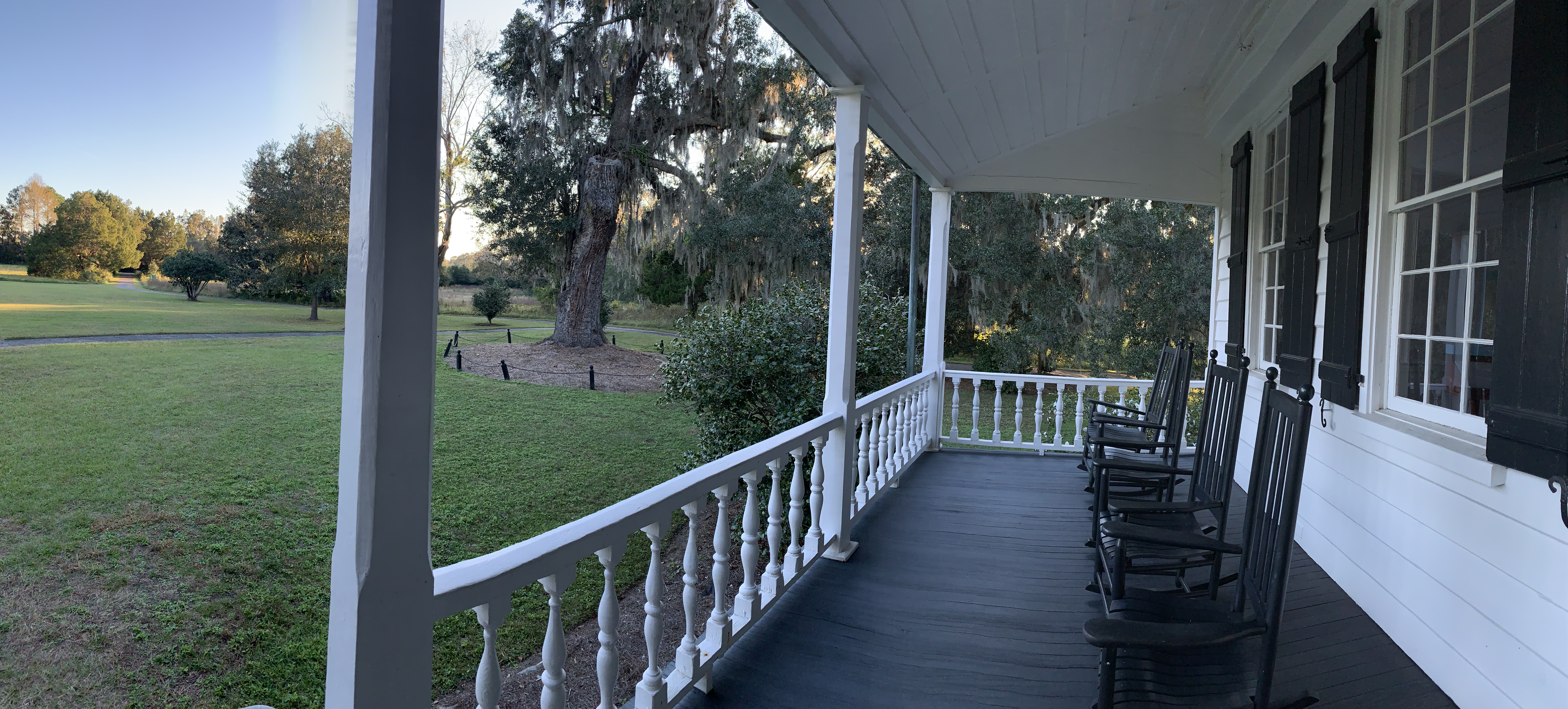
Charles Pinckney National Historic Site

Charles was a son of privilege. His father educated him in the law at the family firm, made him an officer in his town militia unit, and cooperated with the British during the Revolution to save the family plantation for his heirs. Charles, having participated in the failed attempt to keep Charleston out of British hands, was considered a patriot and became a young and successful politician. He participated in the Constitutional Convention in Philadelphia, made numerous significant contributions and signed the document, and he remained in public service as an elected representative for decades.

Today, he is best remembered for being an outspoken advocate of slavery, for insisting that the southern states would not ratify a Constitution that prohibited slavery or the slave trade, and for suggesting the 3/5ths compromise, which counted slaves as 3/5ths of a person to boost southern white representation in Congress, while counting not at all in terms of black citizenship or representation. At the end of his career, Charles voted against the Missouri Compromise, correctly predicting that it would overturn the original truce on slavery between the northern and southern states and lead to bloody civil war.

For many years, this site was financially sponsored mainly by Senator Strom Thurmond, who served 48 years in the US Senate as its most notorious modern segregationist. According to the ranger, the exhibits were a hagiography of Pinckney’s contributions to our Constitution and whitewashed his devotion to the institution of slavery. Today, the exhibits are new and improved in comparison with the hagiography still in place at Andrew Johnson’s site. But there’s still much work to be done.

According to a volunteer at Darrah Hall in a Reconstruction Era site, white visitors sometimes tell the African Americans who work there that “you people need to get over slavery”. And yet, to this day, white political pressure denies teaching the truth of racism and slavery to our children, censors books from libraries and creates lies to hide painful truth, as they have since the Civil War. On this ZCT adventure, I have seen the Confederate battle flag flown from Utah to Pennsylvania, while the presumptive Presidential nominee from Florida signed legislation preventing teachers from criticizing racism. So clearly, it is white people who “need to get over slavery”.