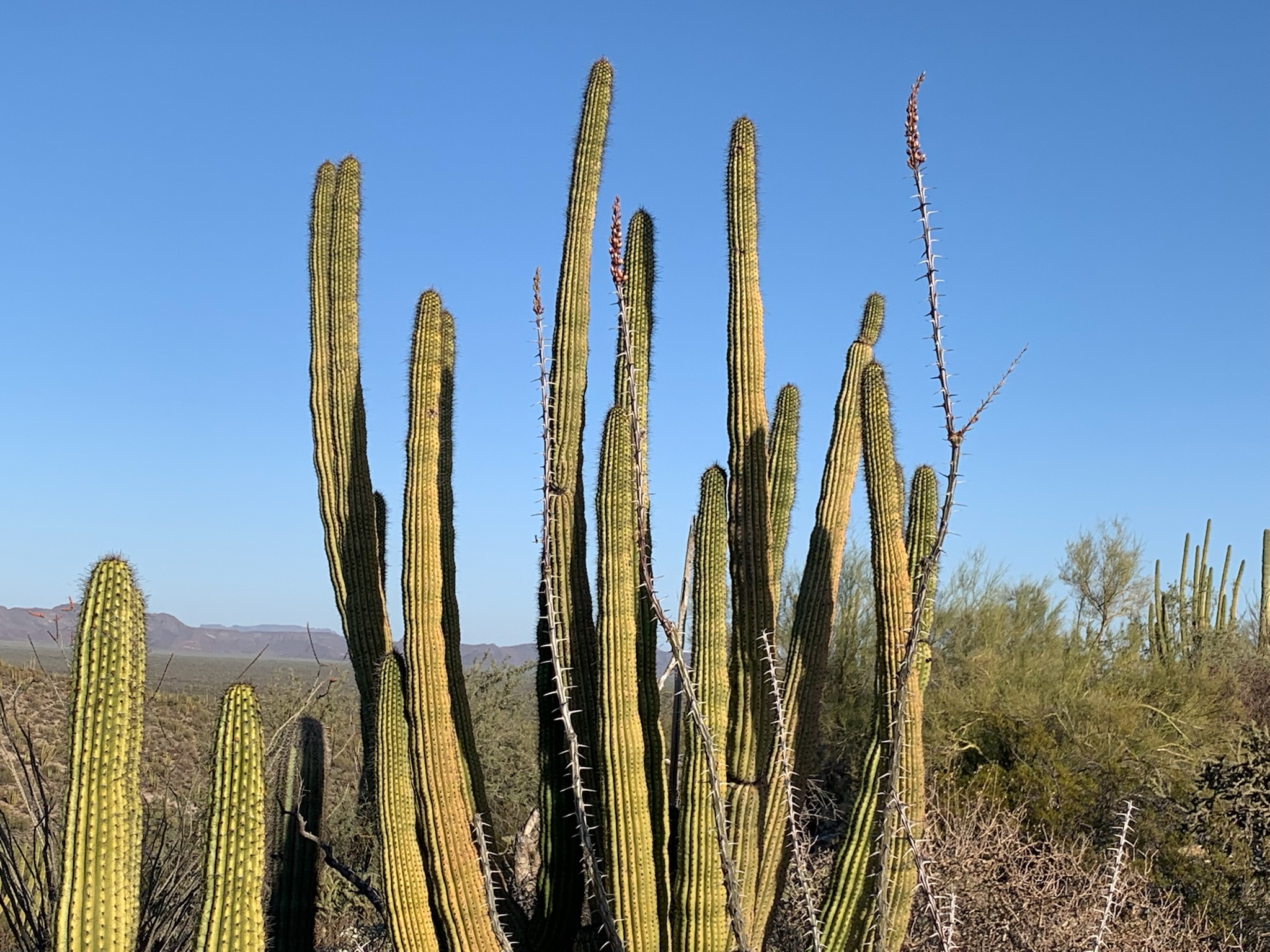
The ranger asked good questions. Given that we live in the Anthropocene or Human epoch, what exactly does wilderness mean to us now? This was one of my favorite ranger talks.
There’s a tiny endemic fish living in a corner of this park near the Mexican border. But because groundwater levels are now dropping sharply, the Quitobaquito pupfish’s natural habitat could disappear within a few years.
Some local school kids helped build a pond behind the visitor center to try to save the pupfish. The park service is re-lining the original Quitobaquito Springs to try to retain more water, but the springs are shrinking. People have been impacting the environment here for over 10,000 years, and, whether we like it or not, the little fish is now dependent on whether we choose to save it.
Ranger Kate asked the campers what we should do. The most common questions were about whether the Mexicans were at fault by siphoning off “our” water. They are actually on a different aquifer south of the Sonoyta River. And that jingoistic attitude really misses the point of being in an International Biosphere, next to the Pinacate y Gran Desierto de Altar Biosphere Reserve in Mexico. We’re supposed to be sister parks working together to save an internationally important natural area.
One suggestion was to “relocate the fish to a more viable habitat”. But if you take the pupfish out of Quitobaquito, are they still really Quitobaquito pupfish? Zoos don’t really prevent extinction in the wild.
I voted to add water to maintain the habitat. People think nothing of draining a river for a new golf course community and destroying ecosystems by burning fossil fuels. So why not reverse that destructive and short-sighted attitude and take this one chance to spend a few dollars to save a species?
Click to see my photos of all national park units in Arizona.
 Zero Carbon Travel