This year I completed loops around all the Great Lakes, crossing the Canadian border in Minnesota, upper & lower Michigan, and western & northern New York, visiting biospheres in both countries. In Canada, UNESCO Biospheres are tourist destinations, where you can hike and see and learn about wildlife, in addition to and separately from their wonderful national and provincial parks. In the US, while some national parks are also internationally recognized biospheres, the United Nations Educational, Scientific and Cultural Organization, UNESCO, is hardly mentioned.
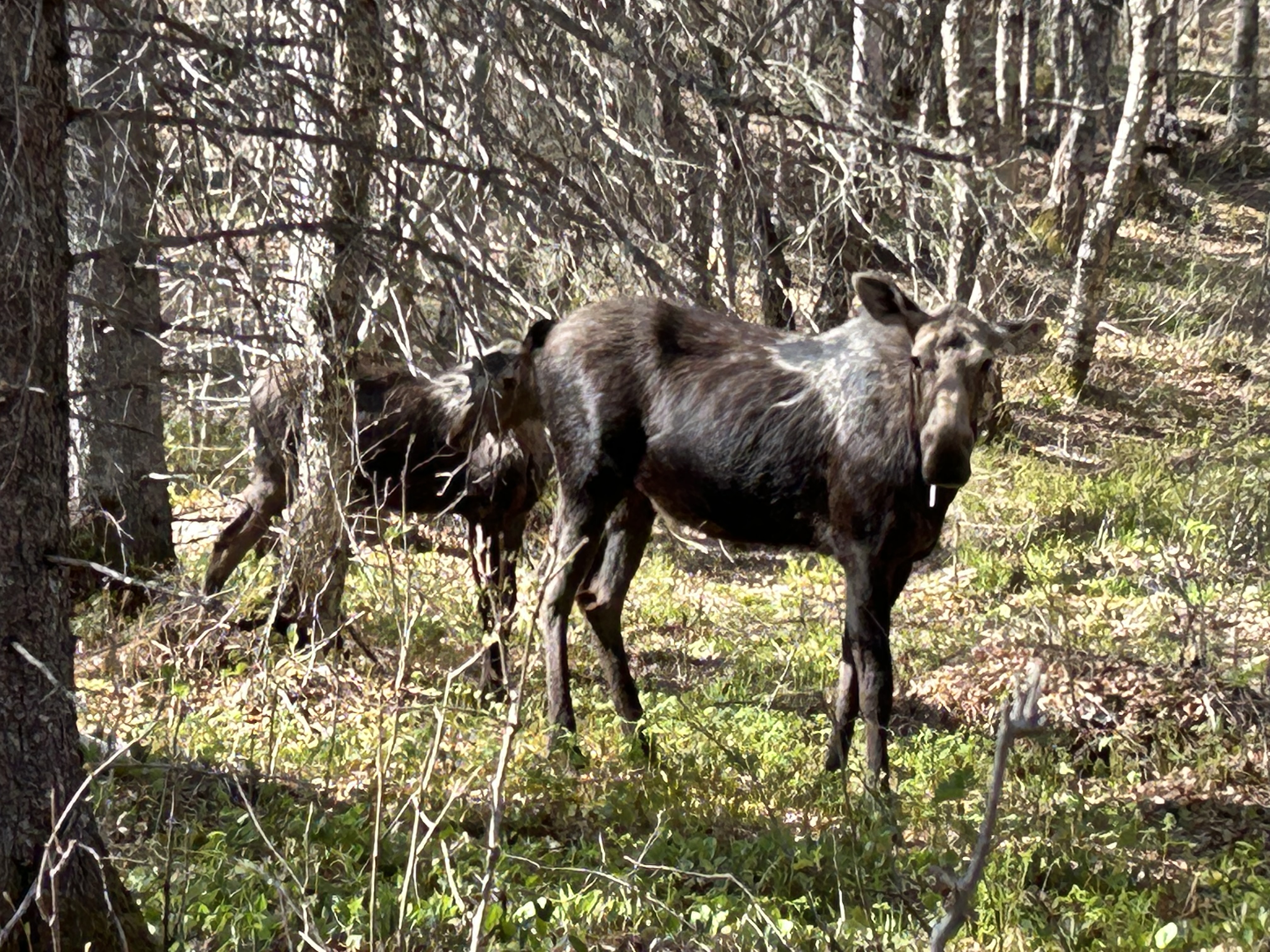
Obtawaing Biosphere is a university project, not well known despite its international scientific research cooperation. Isle Royale National Park attracts many midwestern volunteers for its prey-predator study (see tagged moose above), but even if you ask a ranger, you’re unlikely to learn much about the site being a UNESCO Biosphere. And it took some research for me to learn that Sleeping Bear Dunes is also part of the larger global biosphere network.
Many Americans view our parks as recreation areas for workers to take vacations and spend money as tourists. That nature thrives there is taken for granted. What’s important for most is that you can exercise by climbing a dune, hiking across an island, renting a kayak or biking on a trail. If science is considered at all, it should be presented to the kids in an entertaining, limited format, where kids can learn about ‘weird’ or ‘cool’ animals.
Canada has all of that too, but they also cooperate in international scientific efforts to protect nature. Adults are encouraged to increase their scientific understanding of species too. Their Great Lake biospheres have online visiting information, campgrounds, cooperative agreements with First Nations, birding resources, museums, and both areas that are closed to the public and where the public is welcome. UNESCO is on the signs and in the exhibits.
Sadly, a few Americans believe stupid conspiracies about UNESCO, and some leaders disparaged the science group over an unrelated Israel/ Palestine dispute. As President, Trump removed 17 US Biospheres from the UN program, including Konza Prairie in Kansas. Kansas may not be demographically diverse, but its Tallgrass Prairie is ecologically important to species diversity on earth. The research at Konza used to receive international funding and cooperate with UN scientific efforts, including climate and wildfire research.
There is no logic behind stopping us from receiving funding from the UN for many of our critically important research biospheres, when we need international cooperation to fix the climate crisis. Humans impact nature, and if we’re not careful, we will irrevocably destroy much of our natural environment. Americans should learn about and celebrate our UNESCO biospheres. Please support scientific research and the environment.
The bison surprised me as I walked along the creek. Fortunately, there’s a barbed wire fence between us, as they can be dangerous. Unfortunately, the ranger later told me that the bison can easily go over or through the fence. The building on the hill is a one-room schoolhouse.
That there is a preserved tallgrass prairie preserve here at all is a combination of luck and innovation. The Flint Hills here make it substandard farmland in Kansas, so it was purchased by a cattleman who wanted a last stop to fatten up cattle on the local grasses before going to market. He made good money and built a big house. When big agribusiness was buying up all the land, this property had too much house and too little grazing to be profitable enough to attract decent bids. So, the Nature Conservancy takes a look, sees that the land still has the original tallgrass growing here and decides to buy the land for that, despite not buying land with houses by their previous practice. Then, the park service does a deal with them to manage the buildings for visitors, jointly protect the land and also bring back bison. The result is a lovely, quiet, natural place to visit with stone walls, a wooded hill, flowering trees, authentic prairie, historic buildings, a creek, and the occasional one ton American bison.
I’ve been wondering about how the US might atone for the Native American removal policies, and when I see all the giant corporate agribusiness land owned by the 1% around here, I wonder if maybe a tiny portion of it might be given over to a large tallgrass prairie bison ranch managed by the descendants of the Native Americans who owned the land and had it stolen. I’ve eaten commercially raised bison, and it’s at least as good as regular steak. What’s more, recreating the original ecosystem also would support additional species, like the Prairie Chicken that used to live here abundantly. While it might appear to be a net economic loss in terms of land use, adding more product diversity is good for the economy overall. Maybe throwing in some housing would be fair too.


 Zero Carbon Travel