“We have faith that future generations will know here, in the middle of the twentieth century,
FDR in 1943
there came a time when men of good will found a way to unite, and produce,
and fight to destroy the forces of ignorance, and intolerance, and slavery, and war.”
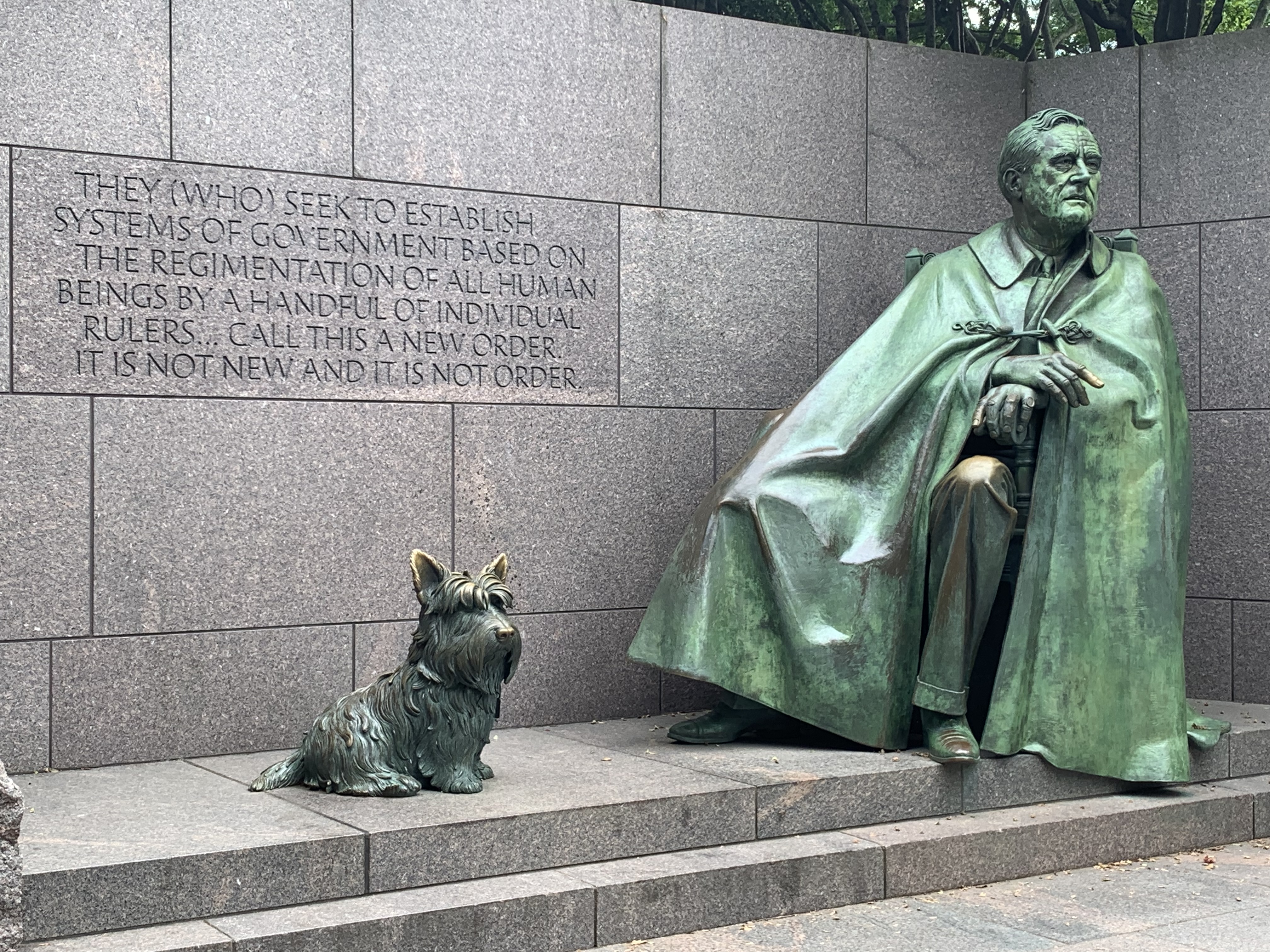
Wander through the FDR memorial amid the waterfalls and trees, reading his words and reflecting on his extraordinary life, and feel the impact his leadership had upon the world. He struggled against being defined by polio, against the Great Depression, to bring a new deal to Americans, through WWII and for peace, until his wife Eleanor took up his torch at the UN. In speaking plainly with people FDR became the lightning rod that harnessed the energy of everyone’s dashed dreams and fearful hopes to make the world better. The desperation of the times brought Americans “a rendezvous with destiny” and required more of FDR than any other President: putting 1/4 of the country back to work, creating a new social contract with a safety net, becoming “the great arsenal of Democracy”, and fighting for a dream of world peace.
“Unless the peace that follows recognizes that the whole world is one neighborhood
FDR in 1943
and does justice to the whole human race,
the germs of another world war will remain as a constant threat to mankind.”

 Zero Carbon Travel