Frances Perkins National Monument

Mainers are tough. While other Americans talk incessantly, wear flashy clothes, and spend every day seeking attention, folks here say little, dress simple and get stuff done. It’s a pleasant sail from Boston to coastal Maine in the summer, downwind and northeasterly or ‘down east’ as the area became known. But the coast is rugged and dramatic, with rocky beaches, serious storms, cold winters and endless forests. Not the place for overly dramatic flights of fancy.

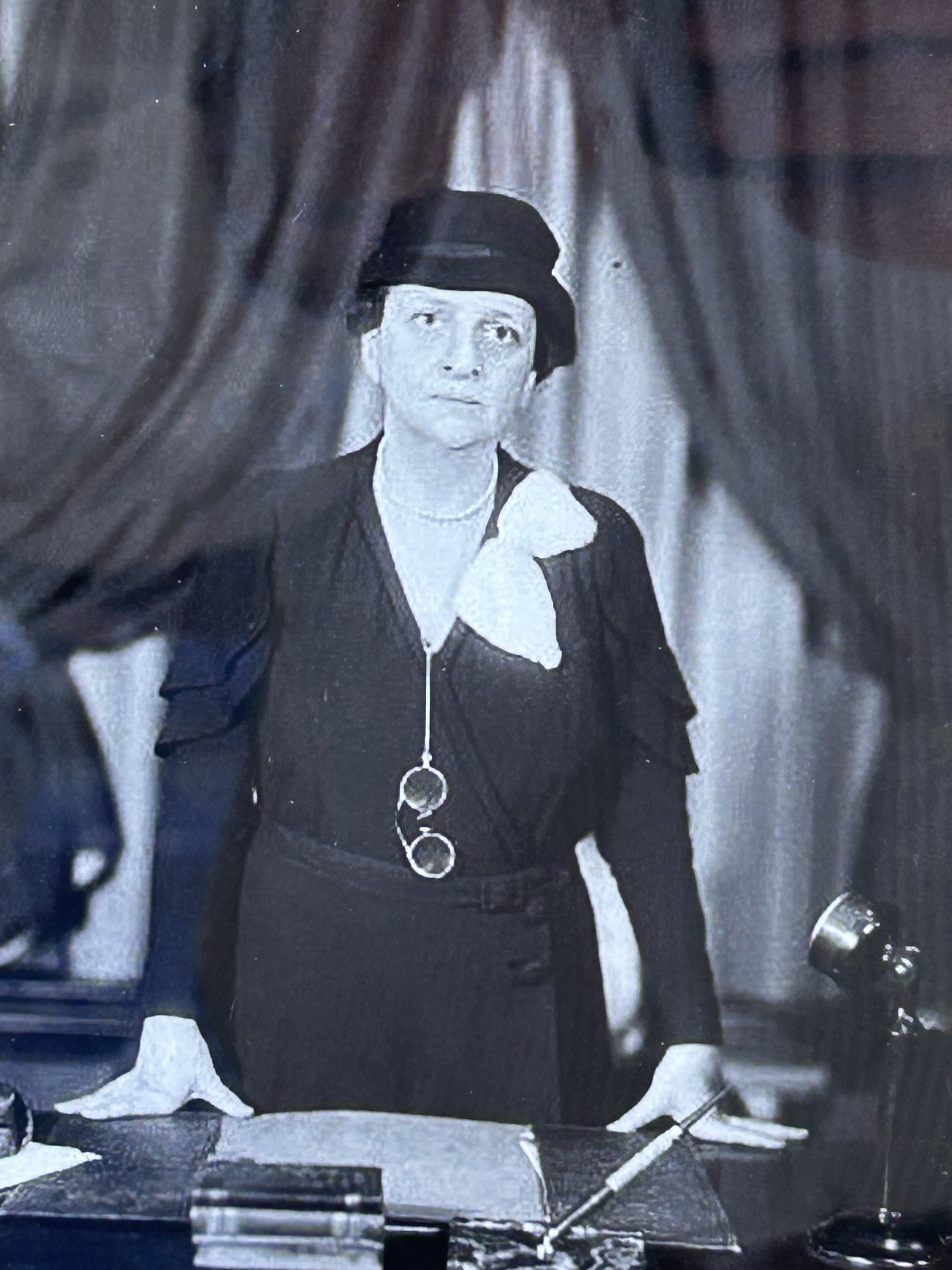
Perkins was tough too. Her family made bricks on their large piece of land overlooking the oyster farms on the Damariscotta River south of Newcastle—a “Slow Village” warns a road sign. An ancestor protested ‘taxation without representation’ and survived having his skull cracked by a ‘lobster back’ redcoat in return. Frances got an exceptional education, saw firsthand the social problems of her time, and buckled down to do the hard work of solving them.

She found social worker allies in alleys, witnessed the Triangle Shirtwaist Fire, learned the tough politics of Tammany Hall, reinvented herself to join the powerful and got stuff done. She worked on worker safety, health and poverty with two Governors of New York, and was singularly qualified when FDR asked her to be his Secretary of Labor. Frances Perkins was the architect and driving force behind his New Deal, including minimum wage and social security.

Perkins had practical training, the courage of her convictions and a moral authority to improve the lives of those in need, especially during the Great Depression. She did not seek the spotlight, but she wielded more power than any other woman in US history. Have you benefited from having drinking water & clean restrooms at work, a sprinkler system & fire escape, unemployment insurance, or not having to work weekends? Then you should remember and thank Frances Perkins.

Her Brick House family home isn’t open yet, but there are photos & exhibits in the barn. And the walk through the woods and meadow to the river is lovely. With this new park unit I re-complete the North Atlantic region and finish all park units the contiguous 48 states, until the next one is designated.
Everglades National Park

The southern end of Florida is home to Everglades National Park, which is also a UNESCO Biosphere and a World Heritage Site. Since 1900, the area has been both protected and threatened, with political battles needed to protect bird plumage, to create the park, and to protect the large, diverse ecosystem here. Marjory Stoneman Douglas wrote a book to explain how the Shark Valley River Slough runs as a “river of grass” through the Everglades. When summer rains fill Lake Okeechobee, a sheet of water overflows the low bank and floods the flat grasslands, revitalizing fish eggs and a whole ecosystem. A cross Florida road called the Tamiami Trail prevented that flow, and a political battle was fought to restore it partially. The fresh water eventually sinks through the limestone, filling the Biscayne Aquifer to provide drinking water for Miami. There are also canals crisscrossing lower Florida, including here, and that’s where these two young alligators were hanging out. Alligator Alcatraz, a temporary migrant detention center, is in the Everglades ecosystem, but it’s not in the national park. Alligator Alcatraz is north of the Tamiami trail in Big Cypress National Preserve.

The park is 1.5 million acres, including the mangrove islands that form the southern end of Florida, before the Keys. The best place to see the mangroves is by boat, either from Everglades City west of Big Cypress or by driving to Flamingo. I took my family to the latter, and we saw a large crocodile near the dock, plus much more wildlife on a quick cruise in the “submerged wilderness” of Florida Bay. Personally, I wouldn’t kayak these waters, but many people do, camping on the Chickees or raised bits of ground where natives camped seasonally and for different purposes for centuries at least. There’s even a paddling waterway to go between Everglades City and Flamingo. Before the highway was built out to Key West, visitors commonly took a similar route by boat.

The work of environmental protection is never done. Burmese pythons entered the park in the 1970s—likely as discarded pets—, and now they’ve wiped out most of the native animals, threatening the Florida panther with extinction. I was disappointed to see the dramatic decline in wildlife evident from the Shark Valley Tower, since I first visited decades ago and even since I visited again with my family not so many years ago. And since last year, the state government is not allowed to mention climate change, global warming or sea level rise, but that obviously won’t do anything to prevent rising sea levels from submerging much of southern Florida, including most of Miami and almost 1/2 the park in the coming decades. Especially if the government refuses to take action, climate science clearly shows that the environment will only continue to worsen more rapidly.

Protest at César E. Chávez NM

Daniel Romero marched with César Chávez back in the day, so when a nationwide protest against recent cuts to the national parks & US forest service popped up today at noon, of course, he came wearing his ‘¡Si, Se Puede!’ T-shirt. He knows from experience that predicting turnout is a fool’s game, but instead of the expected 3, there were around 20, even at a very small park in a rural area best known for a loop of track for trains to change elevation to traverse the Tehachapi pass. Another was Fernando Chávez, a grandson of César, who discussed the need for solidarity, coalition building, and activism at the base of the old oak tree next to Martyr’s Garden, where his grandparents lie at rest. “We’ve been protesting forever”, said Romero. “Even though we are sometimes excluded, we have always tried to support each others’ causes”, said Chávez, recounting how spontaneous protests recently broke out after a particularly brutal local raid by ICE. Romero listed the unions that marched with them, describing diverse families and even weddings during the boycott and strike.

This was an early park visit for me, as it’s local. Unlike my quiet visit 3 years ago, folks here today were sad, angry and surprised by the chaotic decisions to cut 1,000 NPS staff and 10% of the USFS. One employee here had just transferred from New Mexico when his job was axed by Elon Musk. Many of those affected were young, promising staffers, full of optimism. Supposedly he is scrambling to get the transfer reversed to stay employed. While there may be some cost savings, in the long run, the work these folks do protects and adds a lot of value to our country, so cutting when hiring is needed is counterproductive. I felt the need to apologize for still driving a Tesla, but folks understood, knowing others who are now trying to unload theirs. I’m keeping mine, as the climate crisis is going to get worse, despite efforts to delete the word climate from government documents.

I know Saturdays are supposed to alternate state photos, so I’ll add another and a video below. But I thought you might like this real time update from a very appropriate park for a protest, with people whose lives were defined by the proud history of protesting in America. Next week will return with another western state. Thanks for reading!

Biospheres of the Rocky Mountains

Biospheres are important ecological areas around the globe for protecting species diversity and for learning how to best sustain development ecologically, economically and socially. Science and solutions learned in each area are shared globally through the United Nations, and this is particularly important now that we face a global climate crisis. UNESCO currently recognizes three biospheres in the Rocky Mountain Region, and up to 2017, there were five more described below.

The Rocky Mountain Biosphere in Colorado roughly encompasses Rocky Mountain National Park and some of the Rocky Mountain Wilderness to the north. Some of the charismatic species in the biosphere are Bighorn Sheep, Elk, Mountain Lions, Pika and Snowshoe Hare. Scientists have studied species that have been wiped out of the area, like the Grizzly, Gray Wolf and Bison, as well as species that have moved in, like Moose. The exceptionally high altitudes define unique ecosystems of global importance.

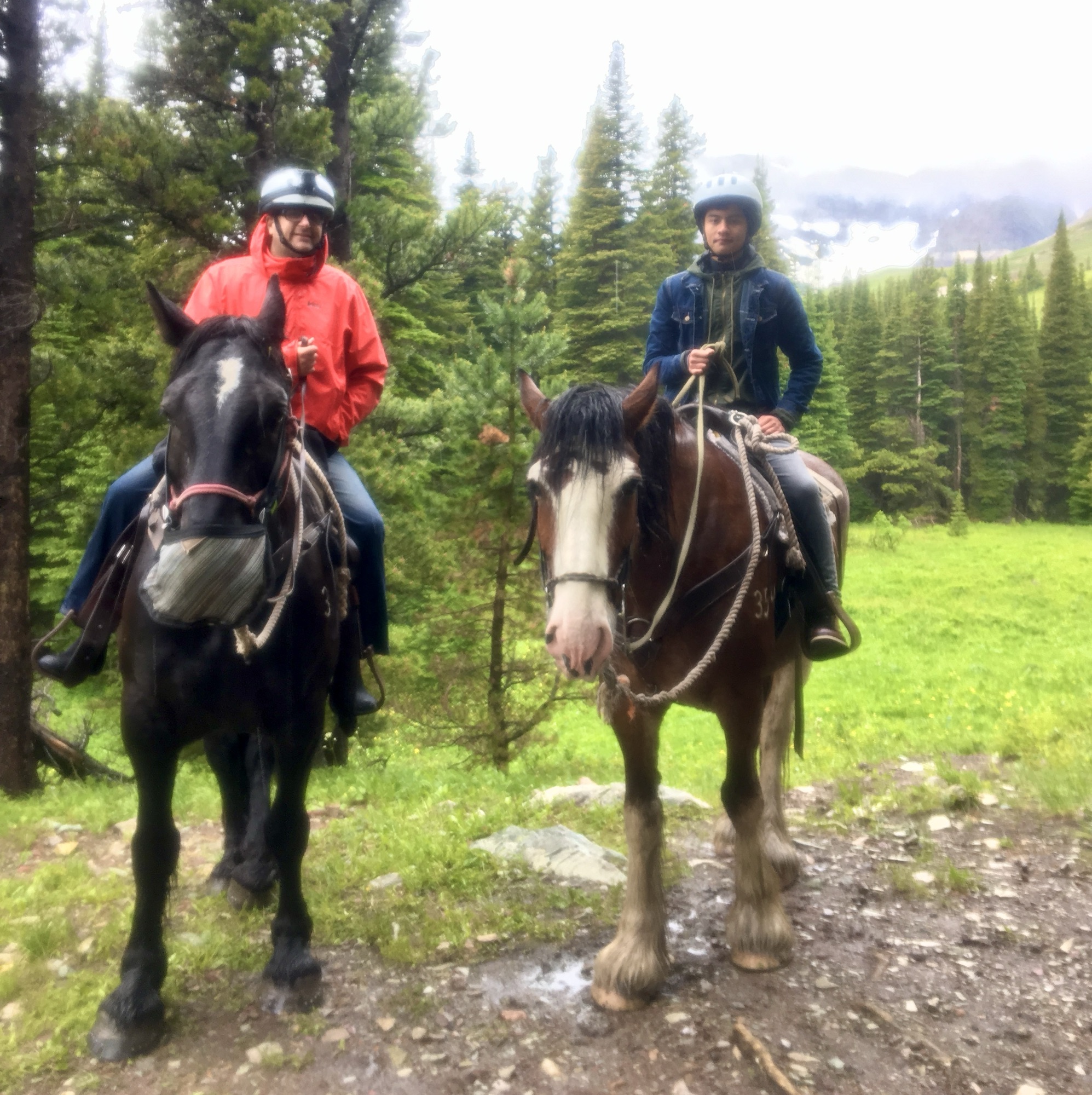
The Crown of the Continent Biosphere in Montana includes Glacier National Park (see photo of author & son above). (Perhaps to de-emphasize the shrinking glacier problem, the Biosphere dropped the name “Glacier” in 2017). The biosphere is home to rare charismatic species like Grizzly Bears, Lynx and Wolverines. Over 100 years of scientific data on wildfires, snowpack, species populations, and more have been collected and shared from this park and its sister park Waterton Glacier in Canada. Like Rocky Mountain, the biospheres here cover the Continental Divide, which defines the direction of rivers across the US to the Atlantic & Pacific, but from here rivers also flow north to the Arctic, making these biospheres of particularly important for studying migrating species.

Yellowstone-Grand Teton Biosphere in Wyoming obviously includes Yellowstone and Grand Teton National Parks. One of the most intact predator-prey-scavenger biospheres on earth, with large herds of Elk and Bison, Grizzly Bears, Cutthroat Trout and Bald Eagles, and unrestricted rivers, this is an exceptionally important global biosphere.

Unfortunately, in 2017 the Trump Administration canceled 5 other biospheres in the Rocky Mountain Region. Apparently, the Israelis were upset that Palestinians were allowed to participate in UNESCO and used the place name “Palestine” in the name of a joint heritage site, so the US ended over forty years of scientific cooperation and research sharing with the world and removed many US biospheres from the global program.

The programs canceled in 2017 included three in Colorado: Central Plains Biosphere in the northeast, Fraser Biosphere in central, and Niwot Ridge Biosphere in the north. The Central Plains was particularly valuable in the study of short grass prairie ecosystems. Fraser was important in studying the interaction of forests, rivers and climate. Niwot Ridge contributed important research into alpine tundra ecosystems, glaciers, high altitude plants and climate change.

In Montana, the Coram Biosphere, west of Glacier NP ended in 2017. Coram was important in the study of forest regeneration and forest management. And in Utah, the Desert Biosphere, near Great Basin also ended in 2017. Desert, begun by President Hoover, contributed to our understanding of scrublands and pasturelands in hot and dry areas.

I’ve traveled in, through or next to all five canceled Rocky Mountain biospheres in my electric car, and they’re also uniquely beautiful places. But biospheres aren’t primarily meant for tourists, they’re meant for nature and for scientists. While some research continues at many of these sites, the international scientific and policy management cooperation was cut off. Especially facing a global climate crisis, we need to be actively cooperating to find global solutions to our ecological threats. Also, it seems bizarre to remove our own natural scientific research areas from participation in international science, due to deep-rooted political feuds in the Mideast. I hope these irrational mistaken biosphere withdrawals can be reversed by the current or future administrations, so that the global learning can continue.

Lincoln Home National Historic Site

It’s not his hat, but the small desk is where Lincoln wrote his early speeches. In the parlor downstairs, he held the funeral service for his son, Edward, and years later was invited to be the Republican nominee for President. In this house, he refined his political views and his arguments against slavery. Lincoln drew from his early childhood and boyhood experiences to become the most powerful advocate for freedom.

“As I would not be a slave, so I would not be a master. This expresses my idea of democracy. Whatever differs from this, to the extent of the difference, is no democracy.”

Abraham Lincoln in 1858

Lincoln understood the fundamental flaw in our country, that the ideal of equality did not apply to all and that Democracy and slavery are absolutely incompatible. He knew that most voters held racist views and did not want war to bring about immediate equality. So he was careful, not always the loudest abolitionist, and he opposed John Brown’s raid. But Lincoln was determined to end slavery, crafted a greater variety of effective, convincing arguments against slavery, introduced legislation and used his arguments in debates against Douglas.

“That is the real issue. That is the issue that will continue in this country when these poor tongues of Judge Douglas and myself shall be silent. It is the eternal struggle between these two principles — right and wrong — throughout the world. They are the two principles that have stood face to face from the beginning of time; and will ever continue to struggle. The one is the common right of humanity and the other the divine right of kings. It is the same principle in whatever shape it develops itself. It is the same spirit that says, “You work and toil and earn bread, and I’ll eat it.” No matter in what shape it comes, whether from the mouth of a king who seeks to bestride the people of his own nation and live by the fruit of their labor, or from one race of men as an apology for enslaving another race, it is the same tyrannical principle.”

Final Lincoln-Douglas debate

Beyond the home tour, I found the neighborhood fascinating. One of the neighbors was a conductor on the Underground Railroad who gave the President-elect his inaugural ride to the depot. One was a Jewish family whose son helped build 5,000 Rosenwald schools to educate African Americans across the south. And one is currently being used as a local office for Senator Dick Durban. Springfield is all about Lincoln, and they have set aside 4 surrounding blocks of period houses, a short walk from the his Presidential Library and Museum. The museum there is modern, multi-media and includes an excellent map visualization of Civil War casualties over time. Explore the neighborhood, stay in an atmospheric B&B and eat at a fine restaurant. I did, at reasonable cost, and learned Springfield is on Route 66.

Lyndon B. Johnson National Historical Park

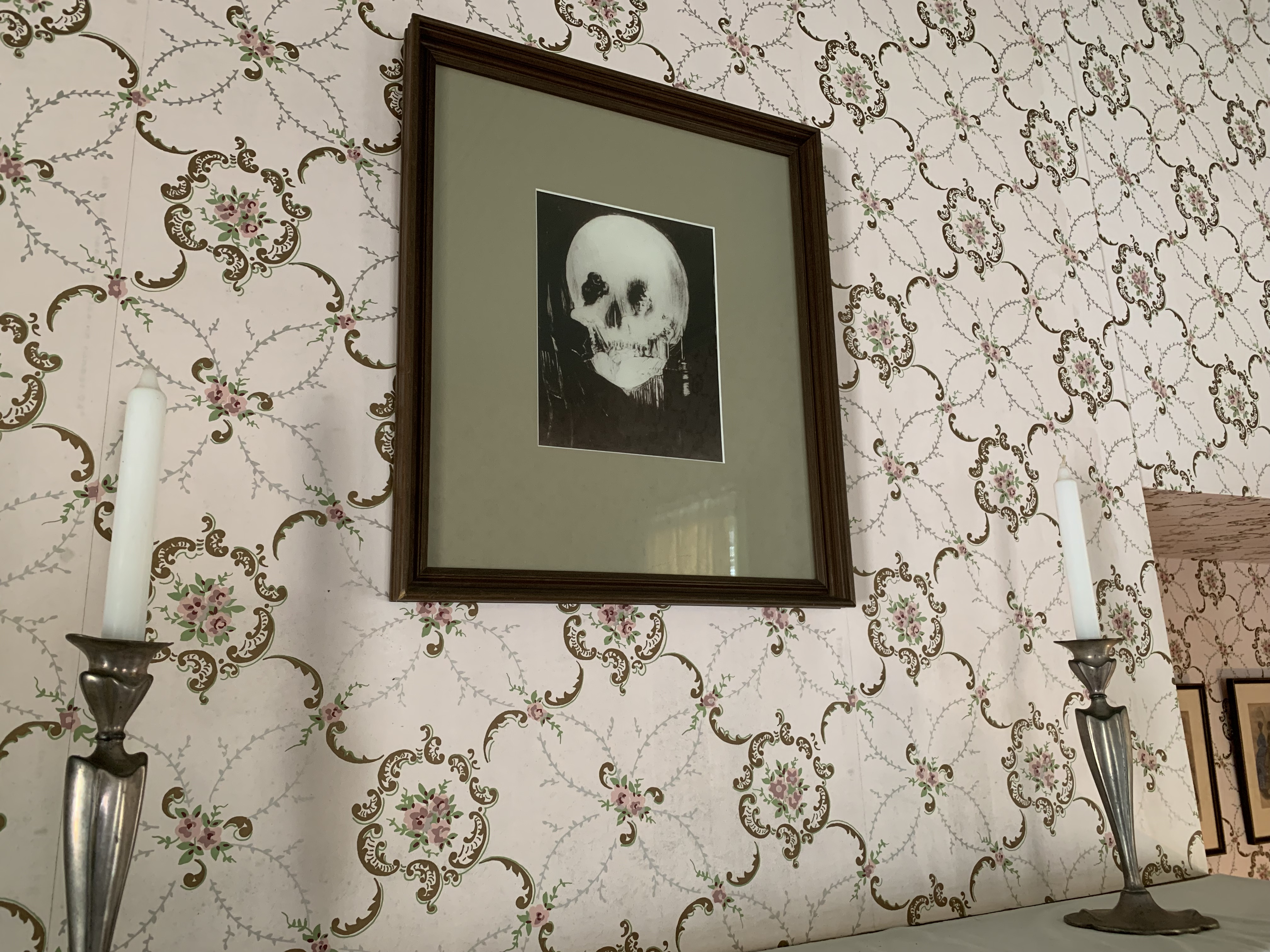
Above the fireplace mantle in the sitting room where LBJ’s mother used to entertain guests is this rather macabre image of a skull. Only after the ranger told me that it was an optical illusion, could I see the image of a young woman looking at her reflection in her dresser mirror. The lesson for Lyndon was to look deeper and try to see things differently. His father was a state representative and taught him the art of politics. His wife, Ladybird, financed his campaign, and under tragic circumstances he becomes President.

The park film on LBJ’s legacy is a bit old but excellent, with recordings from Ladybird Johnson, Vernon Jordan and others. It’s difficult to imagine a time when a Democratic President could win in a landslide on a campaign based on Civil Rights and government spending to alleviate poverty. It also seems strange now to think that his downfall would be being too hawkish militarily in Vietnam. How much the country has changed since then. I wonder what would have been his legacy if LBJ had looked at things differently and decided to abandon the war instead of escalate. Perhaps he would not have withdrawn his candidacy and could have continued his ‘great society’ initiatives.