Southeast Trails

The southeast includes some of our oldest and most scenic trails, and the Florida NST, Natchez Trace NST and the Selma to Montgomery NHT are unique to the Southeast. Both Appalachian and Natchez Trace scenic trails are individual park units. Here’s a quick summary in case you are interested in exploring the trails in the region.

National Historic Trails

  • Lewis & Clark 1804-1806, runs along northern Kentucky, and they did some fossil hunting for Jefferson at Big Bone Lick.
  • Overmountain Victory celebrates the trail crossed by Patriots in 1780 to turn the war.
  • Selma to Montgomery has several fine exhibits at both ends and at a few stops along the way. Highly recommended.
  • Trail of Tears ~1830 to ~1850, Native Americans from all across the region were forcibly removed on this trail that crosses through most states in the region. There are numerous sites along the trail, including Little River Canyon.

National Scenic Trails

Midwest Trails

10 trails cross the Midwest region, including 8 National Historic Trails linking multiple sites, plus the Ice Age and North Country National Scenic Trails which are individual park units. Only the Ice Age NST is unique to the Midwest, while the other trails continue on into other regions. Here’s a quick summary in case you are interested in exploring the trails in the region.

  • Ice Age NST formed when 100,000 year old ice melted 11,000 years ago, lovely winding trails over hills and dells in Wisconsin.
  • Santa Fe NHT used from prehistory to present by natives, Spanish, cavalry, settlers, BNSF, Route 66 and now I-55, 44, 40, 15 and 10. I like the Mahaffie stop in Kansas above.
    • “Well it winds from Chicago to L.A,
      More than 2000 miles all the way”
      —Bobby Troup
  • Lewis & Clark NHT 1804-1806, Seaman joined Lewis in Ohio, Clark & York joined in Indiana, they entered the Purchase from Illinois, see replicas at the boat museum in Missouri, a Kanza earth-lodge in Kansas, many sites along the Missouri River in Nebraska, and memorials of the only expedition fatality, Sgt. Floyd, in Iowa.
  • Trail of Tears NHT ~1830 to ~1850, part passed through southern Illinois and Missouri, where the Trail of Tears State Park overlooks the Mississippi.
  • The Pioneer Trails, Independence Missouri has a Frontier Trails Museum, Scotts Bluff and Chimney Rock in Nebraska are scenic.
    • Oregon NHT 1836-1869, from western Missouri, through Kansas & Nebraska.
    • California NHT 1841 to 1869, same midwestern route as above.
    • Mormon Pioneer NHT 1846-1847, from western Illinois, through Iowa & Nebraska.
  • Stage & Mail Trails, follow the link for some recommended stops.
    • Butterfield Overland NHT 1857-1861, only a small portion is in Missouri.
    • Pony Express NHT 1860-1861, follows the pioneer trails through Kansas & Nebraska.
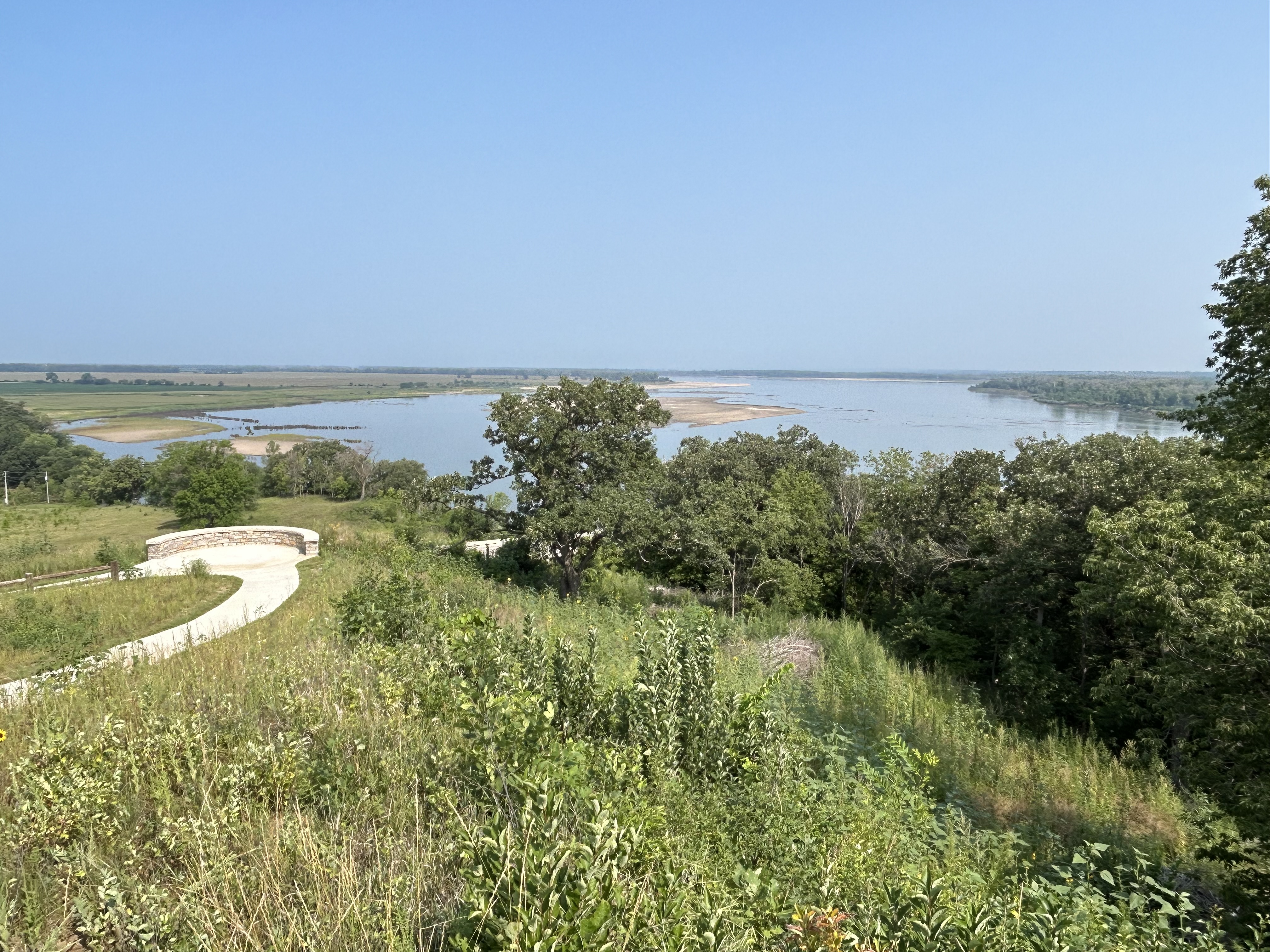
  • North Country NST, established in 1980 and designated a unit in 2023, is still a bit disjointed, but in the region, it runs from Fort Miamis in Ohio, up through Michigan, along the cliffs through Pictured Rocks NL below, across Wisconsin, and from Grand Portage NM through Minnesota.

Southwest Trails

7 trails cross the Southwest region, including 6 National Historic Trails linking multiple sites, plus a National Scenic Trail. Here’s a quick summary in case you are interested in exploring the trails in the region.

  • Butterfield Overland NHT passed through Arkansas, Oklahoma, Texas and New Mexico (although the photo below is near a stop across the Arizona border in Tombstone).
  • Continental Divide NST crosses through New Mexico from Taos past the Gila Cliff Dwellings.
  • Four Old Spanish trails cross through the region.
    • El Camino Real de Los Tejas from Laredo Texas to Louisiana.
    • El Camino Real de Tierra Adentro from El Paso to Santa Fe.
    • The Santa Fe NHT from Santa Fe (Fort Union above) through Oklahoma to St Louis.
    • And the Old Spanish Trail from Santa Fe to LA.
  • Trail of Tears NHT passes through Arkansas on the way to Oklahoma.

Chimney Rock National Historic Site

While not the largest rock formation in the west, Chimney Rock above, was the first exceptional one seen by the pioneers on their journey across the wide open prairie, so many pioneers elaborately described it in their journals. Judging by the old photos, it has lost some of its point, but it still towers over the landscape. Chimney Rock also made a clear landmark for the prairie schooners navigating on the Pioneer Trails from the Platte River to the nearby pass at Scotts Bluff. The site is affiliated with the NPS, but it is managed by the Nebraska State Historical Society.

Freedom’s Frontier National Heritage Area

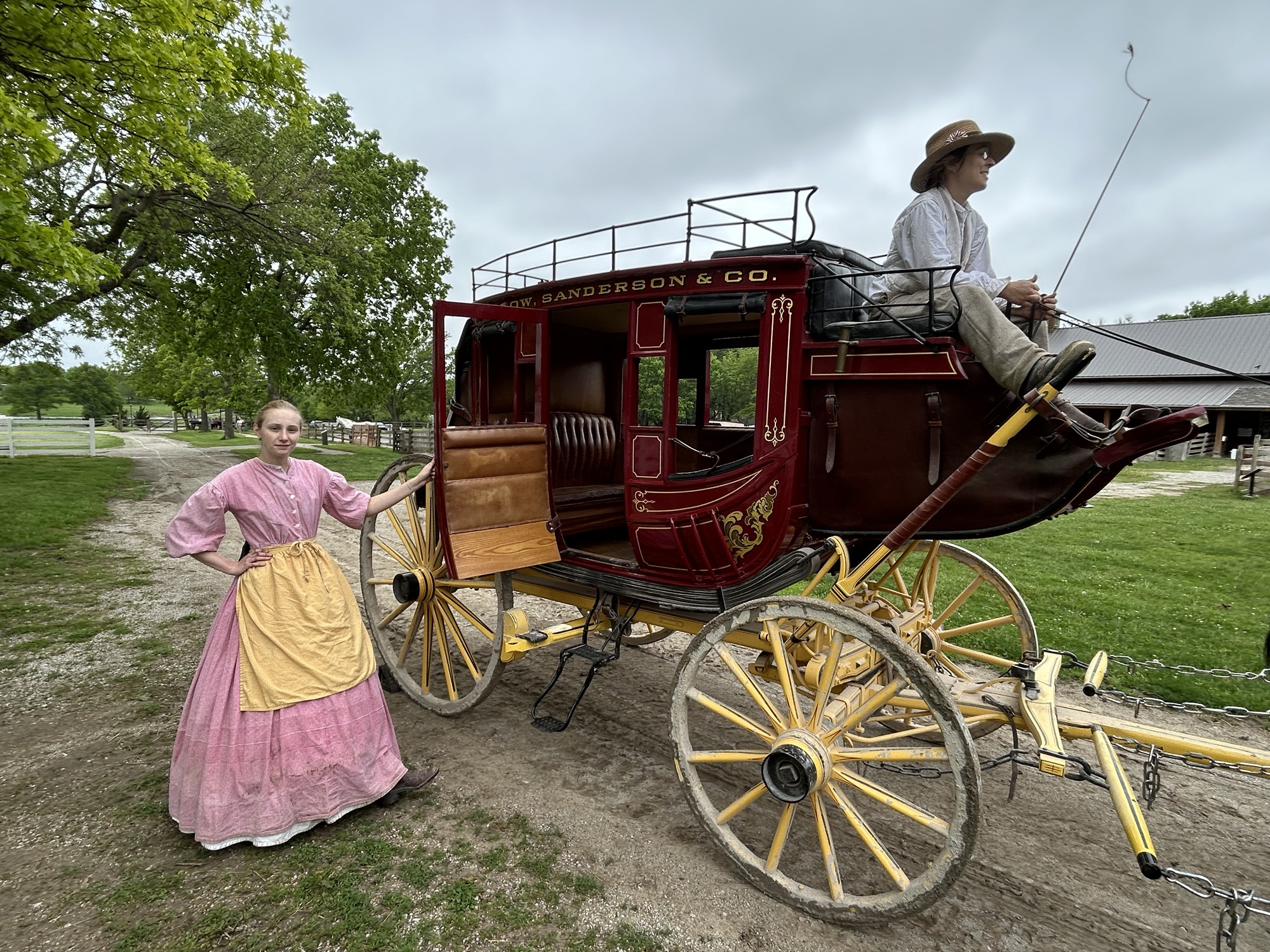
Kansas does not deserve the short shrift it often gets. At the state-managed Mahaffie Stagecoach Stop and Farm, for $7 I rode in the Santa Fe Trail stagecoach above, ate a quick bite as the passengers did in the original house, dodged heritage chickens in the yard, saw a ‘prairie schooner’ in the barn, carefully watched a blacksmith demonstration, and learned how differently vintage baseball was played in 1860. Living history is so much better than a regular museum, although they have one of those here too. The staff is bright and answered all my dumb questions quickly and cheerfully. This is my favorite trail stop.

Turns out that John Brown’s half sister lived here and insisted on strident ‘free state’ politics, doubtless supporting the Underground Railroad. John Brown freed slaves from Missouri, and one of his sons was killed fighting ‘border ruffians’ in front of his half-sister’s cabin nearby. Bushwhackers from Missouri frequently crossed the river to try to rig the election in favor of slavery, but they were fought by local Jayhawkers. Around 100 people were killed in the violent fighting known as Bleeding Kansas that is considered a prelude to the Civil War. Kansans’ staunch and courageous support for freedom was the hope of the nation, at a dark time in our history.

The greater area is also the starting point for basically all the trails going west, including Lewis & Clark, the Pioneer Trails and the Pony Express, all of which have museums nearby. And the first documented Civil War combat by African American Union soldiers—the 1st Kansas Colored Volunteers—occurred at Island Mound (YouTube) in Missouri, although not the first regiment. Oh, and Amelia Earhart’s birthplace, the Negro Baseball League and other interesting sites are also part of the NHA, along with official NPS sites like Fort Scott, Fort Larned and Brown v Board. So, let’s give Kansas some overdue credit.

Scotts Bluff National Monument

Like many folks, I grew up watching Westerns, so when I think of wagon trains of pioneers, I think of circling the wagons to defend against native attacks. But that’s another myth. More pioneers were killed by gun accidents than native raids. Pioneers traded peacefully with Native Americans as a rule. There was another school shooting recently, and the myth that guns make us safer is still being repeated today.

Of course, the main cause of death for the pioneers was cholera, so what actually protected them was coffee. Folks who drank “cowboy coffee” (strong enough to float a horseshoe) were saved by boiling water. I knew there was a reason I love espresso.

The park is beautiful, and many of our ancestors in the west walked (“prairie schooners” or wagons were for supplies) through the pass above. The rangers are both informative and engaging, and as always I learned more in a brief conversation than from any other source. Since I arrived early, I hiked up the Saddle Rock trail, but you can also drive up. The bluffs aren’t the highest or most brightly colored in the whole country, but they offer pleasant views of the historic trail.