South Carolina & Southern Campaign of the Revolution National Heritage Corridors

These are two obscure heritage areas in the Carolinas, but none of the state or national park employees I spoke with had heard of either. While the South Carolina NHC has historic sites, plantations and gardens, the parks included—like Pinckney, Sumter, and Overmountain Victory—are unrelated. And while the Revolution NHC includes Moores Creek, it excludes many other important battles in the Carolinas and neighboring states. Don’t waste time following these confusing corridors, but instead start with an overview at historic Camden.

Here’s the story of the Revolutionary Campaign in the southeast, focusing on national sites and affiliates. Virginians Henry, Jefferson and Washington led their colony into rebellion, in concert with the north. Virginia colonial governor Lord Dunmore called in troops, organized loyalists and even formed a regiment of liberated slaves. Echoing Bunker Hill, Patriot militia fought well at Great Bridge in 1775, prompting Dunmore to order the shelling of Norfolk Virginia. Echoing Concord, the Patriots cut down a broadsword charge at Moores Creek North Carolina in 1776. And at the end of 1778, the Patriots took Savannah, followed up with a victory at Kettle Creek Georgia in early 1779.

But in May of 1779, the British sacked Portsmouth in Virginia, kicking off their southern campaign in earnest. In late 1779, the British returned to Savannah, capturing it after a siege. In early 1780, they took Charleston SC after another siege. Next, they turned their attention inland, hoping to sway more loyalists, keep their large southern colonies, and then take the fight back to the northeast. In 1780 the British fought over a dozen battles around Charleston and Camden (see Cornwallis’ HQ below) in South Carolina, consolidating their control over the colony.

But the British were ruthless in the south, revoking pardons, burning homes & farms, and imprisoning or hanging those who wouldn’t sign loyalty oaths. The most infamous example happened in May 1780 at Waxhaws—named after a local tribe—, when Banistre Tarleton massacred Patriots, inspiring further rebellion. Popular resentment against the tyrannical British grew, especially among the Scots-Irish settlers. After Gates lost his leadership position after failing at Camden, Nathaniel Greene began a much more effective guerrilla campaign in the back country.

The Patriots didn’t win all their battles, but many of the British victories were Pyrrhic, causing them to cede territory even after eking out technical victories. The back country belonged to the Patriots, especially when reinforcements crossed the Appalachian Mountains on the Overmountain Victory Trail. The Patriots won at Kings Mountain in late 1780, then again at Cowpens in January 1781.

Even though the British subsequently won at Petersburg VA, Ninety-Six in SC, and at Guilford Courthouse NC, clearly, they were not winning the broader campaign. Cornwallis brought his troops north to Virginia. After a close battle near Camden, the remainder of the British forces retreated for Charleston, with the last battle in the southeast fought at Eutaw Springs in September 1781. The denouement was set for Yorktown.

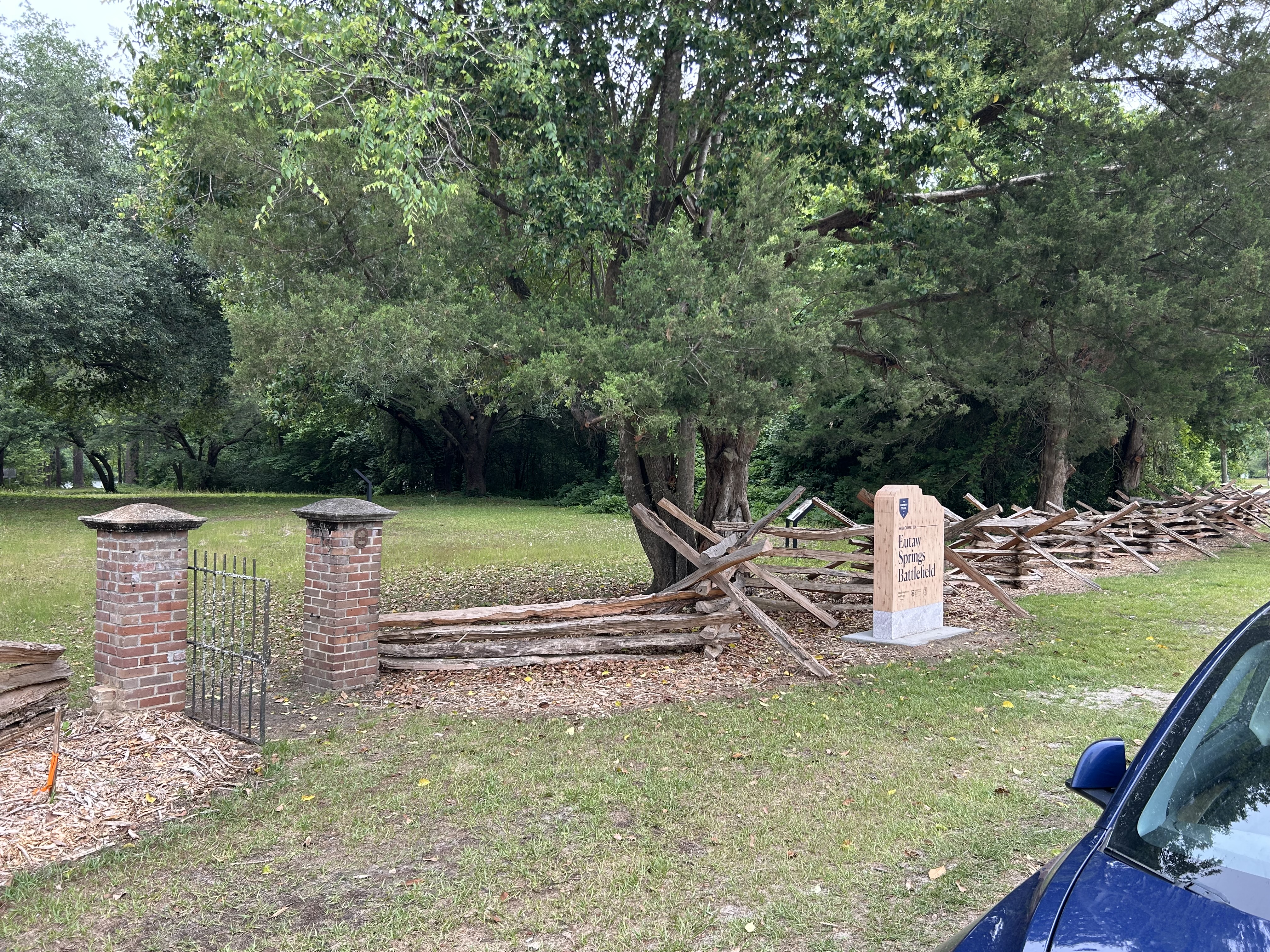
Eutaw Springs Battlefield

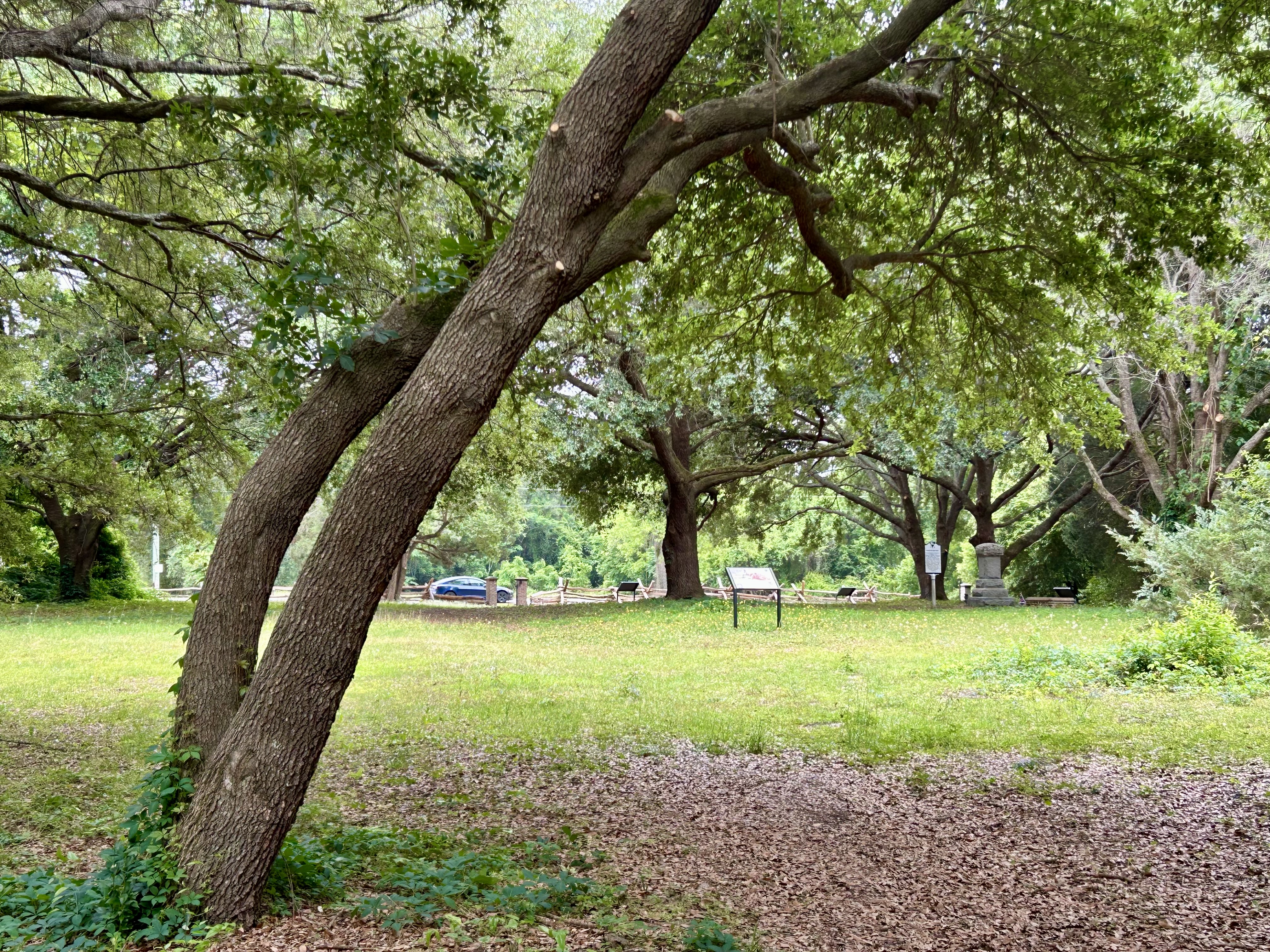
This was one of the final battles for inland South Carolina, in September 1781. Nathaniel Greene’s Patriots were battle hardened and his forces included Francis Marion, Andrew Pickens, and William Washington. The British were equally disciplined veterans. What unfolded was a brutal battle between evenly matched sides that descended into hand-to-hand combat. Finally, the British line broke, and the Patriots entered their encampment.

While it seemed that the day was won, the British formed a defensible position between a stout brick house still marked by a garden gate and the Santee River, now Lake Marion behind the trees below. Stymied, Greene was forced to back off and wait. Both sides claimed victory—technically the British held the field at the end—, but clearly it was a strategic loss for the British, who lost more troops, were forced to withdraw to Charleston and never again advanced in the back country.

Historic Camden

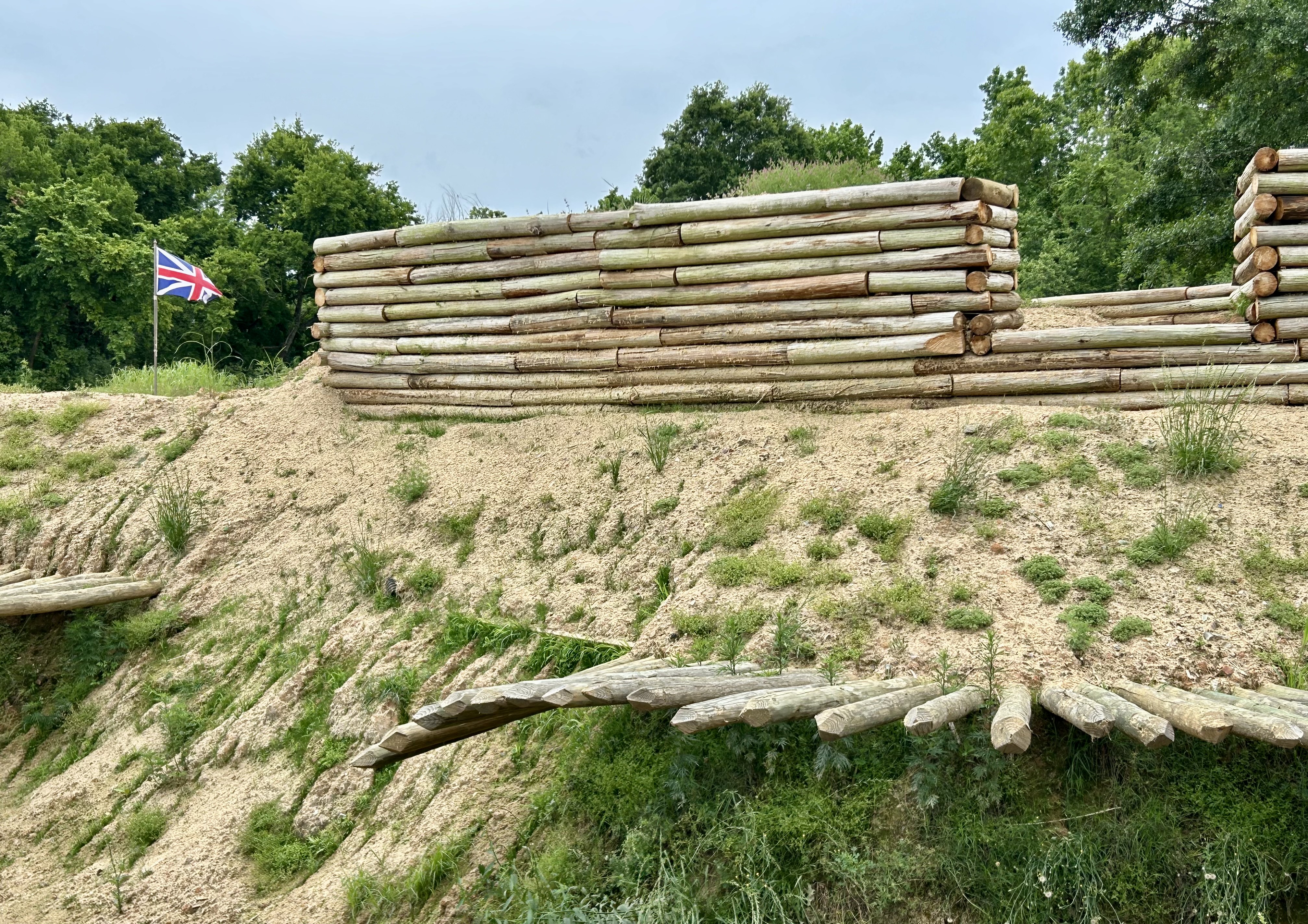
This privately managed affiliate site is one of the best revolutionary war sites in the Carolinas. On over 100 acres of battlefield and early townsite, they have reconstructed Cornwallis’ HQ, one of the redoubt forts (above), a historic tavern, and many other buildings that bring life to history. While separately managed, there’s also a visitor center next door that explains the whole course of the war in the Carolinas, which I will cover in a separate post next month.

Camden was on the Kings Road from Charleston across the low country into the back country. Here it joined with Native American trading routes and the Great Wagon Road from the northeast to Georgia. The British were determined to manage their colonies inland, and not just occupy coastal cities. They also wanted to control trade, tax the rich, hire Native Americans to fight for them, and raise militias of loyalists. Cornwallis fortified Camden as his supply hub.

General Gates, of Saratoga fame, was tasked with attacking Cornwallis. The Battle of Camden in August 1780 was a disaster for the Patriots. Gates put inexperienced troops on his left, who were wholly unprepared to meet the best British troops Cornwallis put on his right, as usual. The French General Baron de Kalb fought to his death at Camden. Gates withdrew to North Carolina. He was later replaced by Nathaniel Greene.

Many of the losses were due to diseases like dysentery, and there’s a detailed exhibit in Cornwallis’ HQ, where a docent answered my various questions. Captured prisoners from British victories in the area were often initially held in Camden and then marched to Charleston where they were imprisoned on ships in dangerously unsanitary conditions.

In 1781, Nathaniel Greene, having recruited Catawba warriors and run a cross country guerrilla campaign disrupting the British, returned to Hobkirk’s Hill near Cambden in April for a rematch. While the British won the day, they decided they could no longer defend Cambden and retreated to Charleston. Cornwallis had already moved north on his way to establish a new base at Yorktown.

Overmountain Victory National Historic Trail

The trail stretches from Virginia, through a corner of Tennessee, south through North Carolina and into South Carolina at Cowpens and Kings Mountain (below). Revolutionary War re-enactors and enthusiasts follow parts of the trail on foot and by car annually, ever since some Boy Scouts walked the whole length in 1975. I’ve crisscrossed the area, and it’s beautiful country with whitewater rivers and some steep mountain slopes. Both the Appalachian Trail and the Blue Ridge Parkway cross and run along near the trail, and the Biltmore Estate is near the middle.

Many of the colonial settlers in the highlands here were descendants of Scots-Irish lowlanders, and their families still held grudges against the British, especially those who fought to extend the Empire by force. The British sent officers to the Carolinas to bribe and intimidate their subjects to remain loyal to the crown. They sent mercenaries, regular soldiers, and raised local militias to threaten settlers, particularly in the foothills. Their heavy-handed tactics provoked the Appalachian settlers. One particularly offensive leader was Major Patrick “Bulldog” Ferguson, who had ordered the bayonet slaughter of sleeping Patriot troops at Little Egg Harbor, NJ. He also designed the Ferguson rifle, a breach-loading rifle, and was wounded in the right arm in the Battle of Brandywine against General Washington, after which the British took Philadelphia.

The trail commemorates the pursuit of Ferguson’s army from north to south, by the citizen militias that rose up from Georgia, Tennessee, Virginia and the Carolinas against the overbearing British threat, culminating at Kings Mountain. Immediately before and after the events of the Overmountain Victory, the Patriots also won decisively at Musgrove Mill and Cowpens, respectively. These Appalachian Patriots turned the course of the Revolutionary War.

Normally, high ground is superior during fighting, but the ridge at Kings Mountain is steep, fairly straight and narrow. Once the patriots managed to get on both sides, the British became easy targets on top. Ferguson was shot off his horse, shot a young soldier asking him to surrender, and was finally shot multiple times and urinated upon before being buried in an unmarked grave where he lay. A headstone was later placed in the woods not far from the large monument at Kings Mountain below.