Most of our border with Canada is a straight line from Minnesota to the Pacific, except for Canada’s Vancouver Island, which dips below the line. When the border was negotiated, the treaty put the border through the “middle of the channel”, i.e. the Straits of Georgia and Juan de Fuca. Except where the San Juan Islands are in the middle, and then which is the main channel becomes a matter of interpretation. San Juan Island is much closer to Victoria Canada than to the mainland, so the British claimed it. But the Haro Strait is larger than the rest of the channel, so the Americans claimed San Juan Island too. Nobody really cared much about the sparsely populated islands, until an American squatter killed a British pig for rooting in his garden. Then, both sides prepared for war.
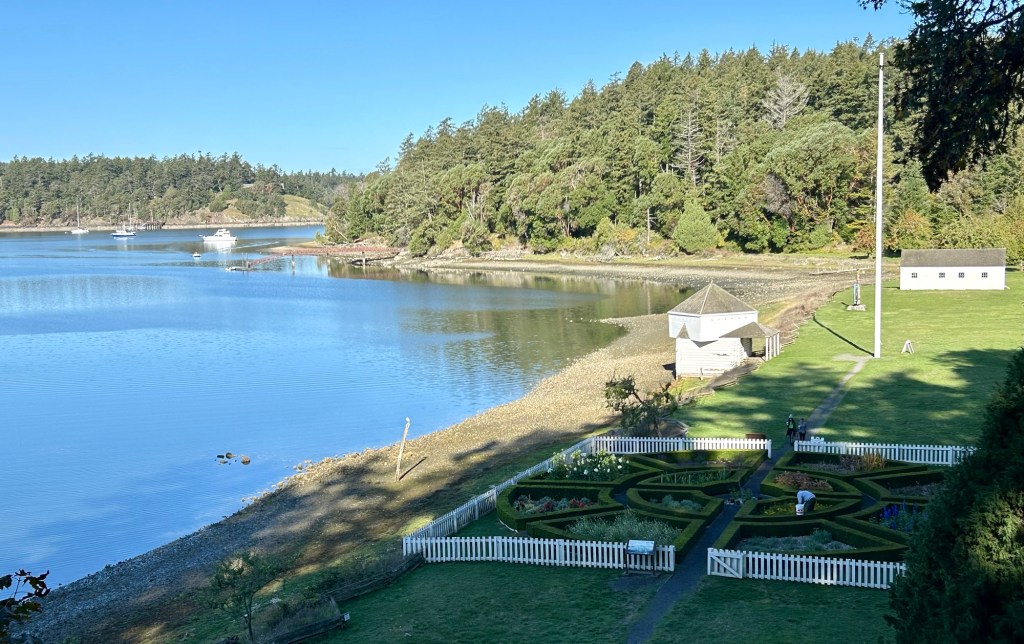
English Camp in the northwest is lovely, set on a well protected bay amidst large oaks, hemlock, and madrona trees. Well supplied from Victoria, the British created a formal garden above, kept calm and carried on. The Americans—actually the Robert’s Rules of Order writer—built a fort on the exposed southeastern point, conducted rigorous drills and maintained strict discipline. Large flag poles were erected at both camps. At the time, the US was entering the Civil War, so the government sent General Scott to negotiate peace. Fortunately, the border dispute was settled diplomatically.
There is an interpretive center at the American camp, while the English camp visitor center was closed when I visited late last September. Regular car ferries run to San Juan Island, with pleasant views along the way. Friday Harbor is between the English and American camps, 9 and 6 miles respectively, and has nice restaurants and more.
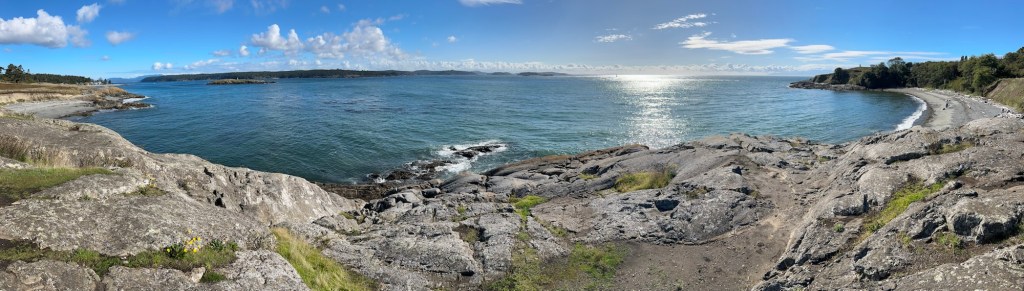
I also stopped at Cattle Point below on the southern tip which is part of a BLM National Monument protecting points, small islands and rocks in the San Juan Islands.
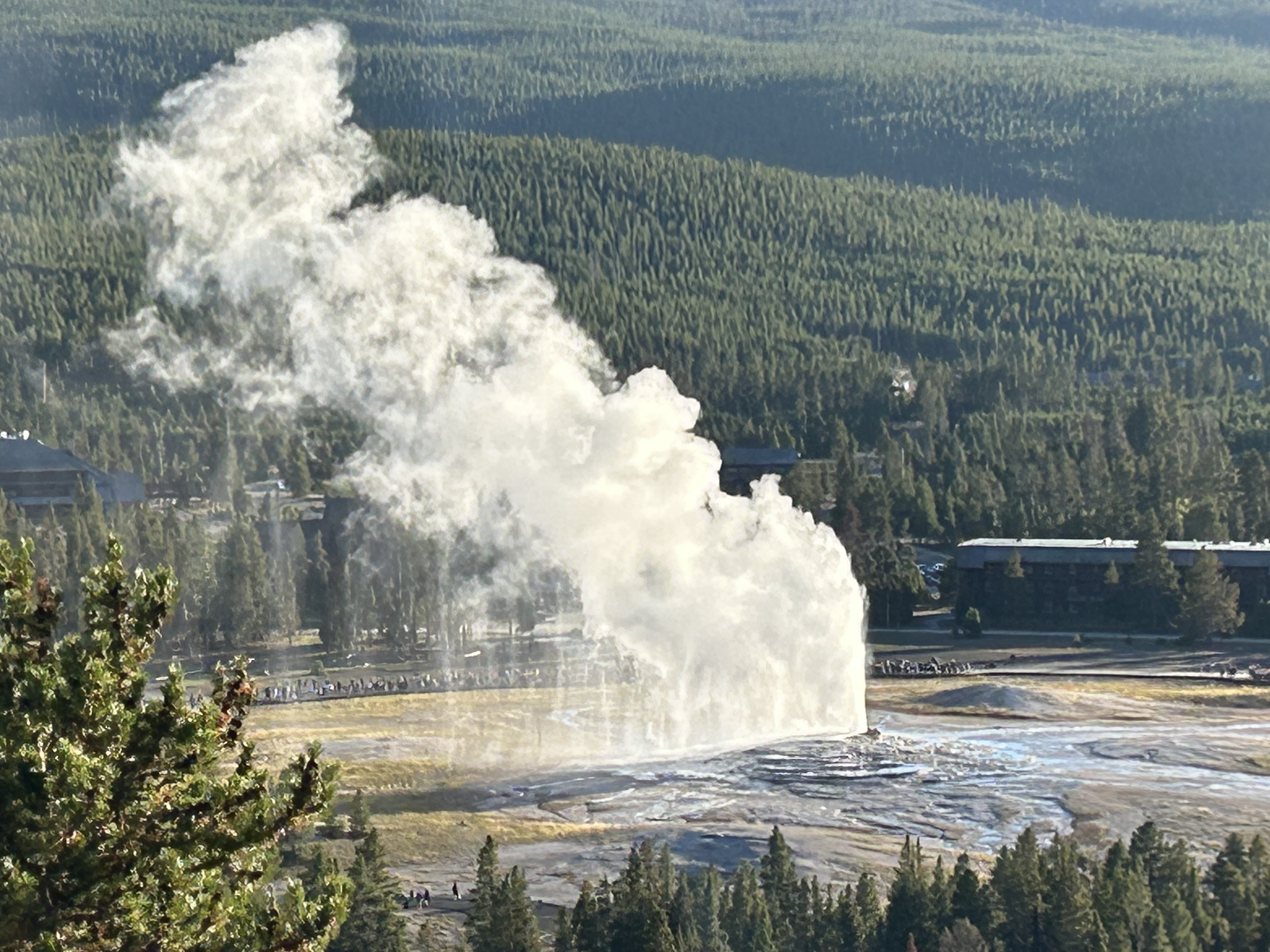
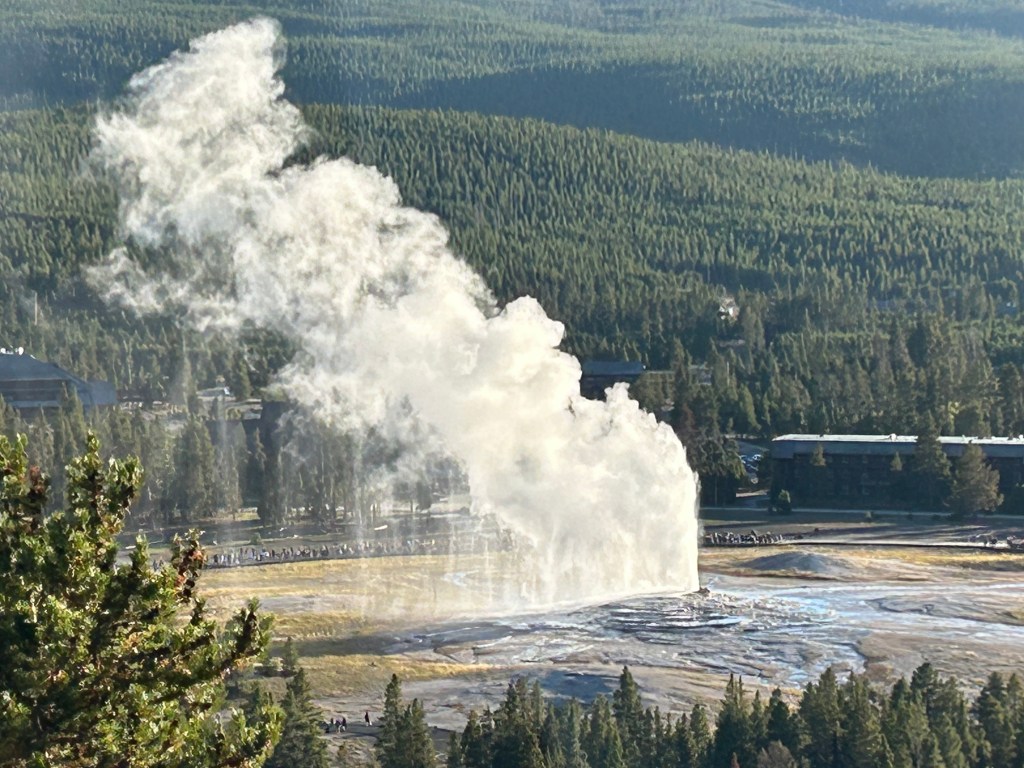
Best Park: Yellowstone. Geysers, wildlife, recreation, lodges, forests, mountains, waters. Yellowstone is spectacular and the best park in many categories.
8 trails cross the Rocky Mountain region, including 6 National Historic Trails and a National Geologic Trail that link multiple sites, plus the North Country National Scenic Trail that is an individual park unit. Here’s a quick summary in case you are interested in exploring the trails in the region.
In South Dakota the expedition traveled north along the Missouri River from Yankton Sioux to Lakota territory.
In North Dakota they hired Sacagawea and her husband at Knife River.
In Montana they split near the Yellowstone confluence where Fort Union Trading Post was later built and rejoined near the Snake confluence where the Nez Perce NHP is now. Grant-Kohrs and Big Hole are both on their trail too.
California NHT 1841 to 1869 also crosses Colorado and Utah.
Mormon Pioneer NHT 1846-1847 continues to Utah.
The Pony Express NHT 1860-1861 followed the pioneer trail through Colorado, Utah & Wyoming, but the young riders rode from Missouri to California in only 10 days.
One terminus of the North Country NST is in North Dakota while the other is in New York.
In 2024, my total reached 400 *including 3 extra types*—affiliates, heritage areas and trails—even though they aren’t official national park units. My official total is 385 (out of 433).
My earlier favorites mostly hold, with several important changes.
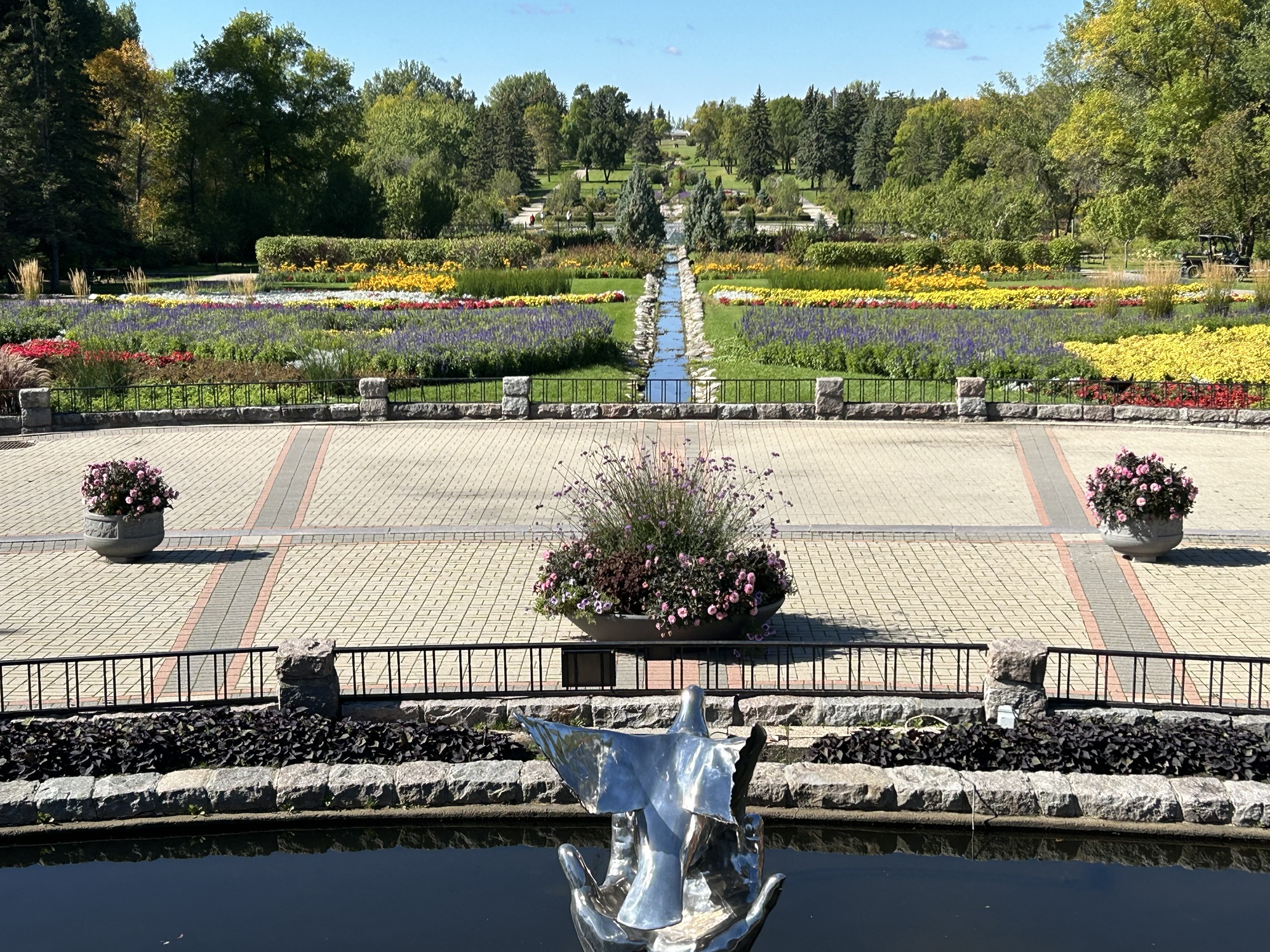
What a beautiful place! A Canadian horticulturalist, Dr Henry Moore, deserves credit for the idea creating a peace garden—built during the Great Depression—on the Manitoba / North Dakota border. America has far more war memorials than parks devoted to peace. Chamizal on the Mexican border is dedicated to diplomacy, and Perry’s is both a war and peace memorial. As we begin a new year, we should not take peace and diplomacy for granted, given all we sacrificed in wars.
This affiliated park, a favorite of mine, is a neutral zone with the entrance between each country’s border security. You will need proper id either to continue on or to return to your home country after your visit here. The park is not far from the small town of Rugby North Dakota, which is the geographic center of North America. It’s a bit of a trek from the nearest US supercharger in Grand Forks, but there are a couple car dealers on the way that offer CCS charging if you have the adapter. Also, the park itself has a free electric 1772 car charger at the drop off entrance to the Conservatory, which has a massive collection of succulents donated by local enthusiasts.
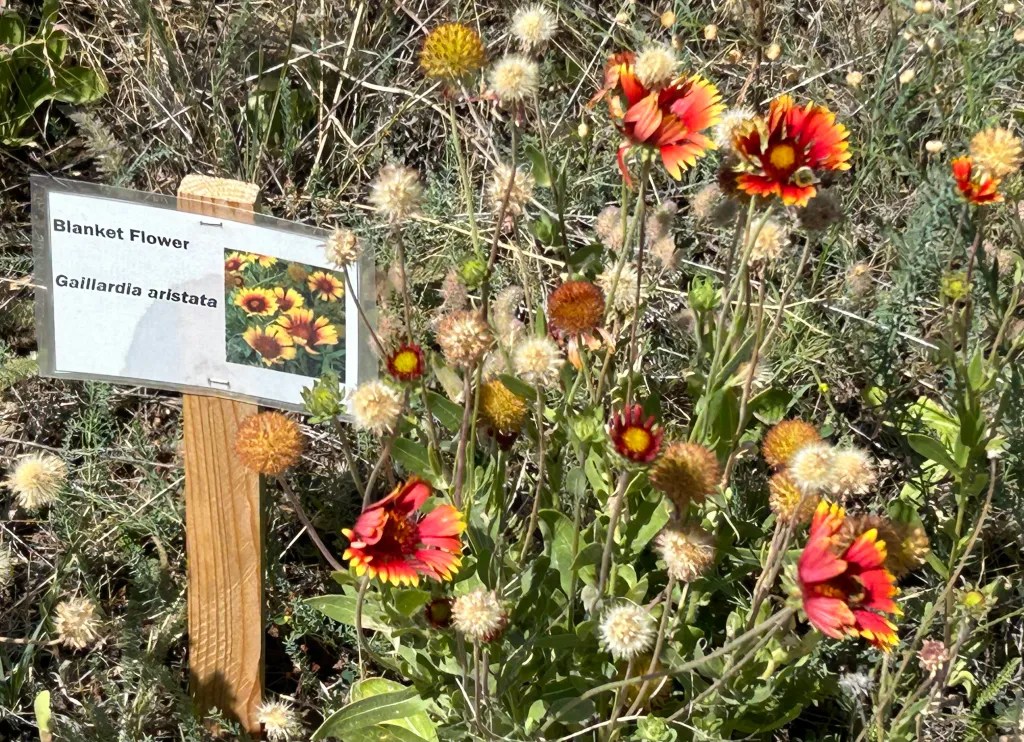
Technically I missed the peak season, but as you can see above, there were plenty of flowers still in bloom at the end of September. There’s a long winding drive through the woods with lakeside picnic grounds below, a campground and a few cabins and more around the central border gardens. And if you walk the length of the formal garden above, the building at the end is the Peace Chapel, which is the perfect place to find inspiration and hope for peace in the quotes from famous leaders and philosophers carved inside its walls.
[Sorry for not following the alternate Saturdays posting schedule this week, but Rhode Island is such a small state that it slipped through my rigorous editing process. Enjoy the bonus state photo summary!]
I recently completed visits to all national park units in New York and New England. Connecticut, New Hampshire, Rhode Island and Vermont each count only 1 unique park. Maine has 4, including the only National Park in the region. Massachusetts has 14, and New York has 21 unique park units, plus 2 shared with the Mid Atlantic region and 2 world heritage sites. The multi-region Appalachian and North Country scenic trails start/end in the region, and the New England scenic trail crosses Connecticut and Massachusetts. Follow the links for more, including affiliates, heritage areas and the Washington-Rochambeau Revolutionary Route.
Maine has Acadia National Park, France Perkins, Katahdin Woods & Waters, and Saint Croix Island. All four parks showcase the state’s pine woods, clear waters and scenic views, while Perkins celebrates the woman in charge of the New Deal and Saint Croix tells the story of the first French settlers. If you want to hear French spoken, you can visit the Acadian Culture partner village area in the far north, where I hiked as a boy. Mt Katahdin is also the northern terminus of the Appalachian Trail. The coastal area from Acadia to Saint Croix Island is part of the Downeast Maine heritage area, including the bridge to Campobello in New Brunswick Canada.
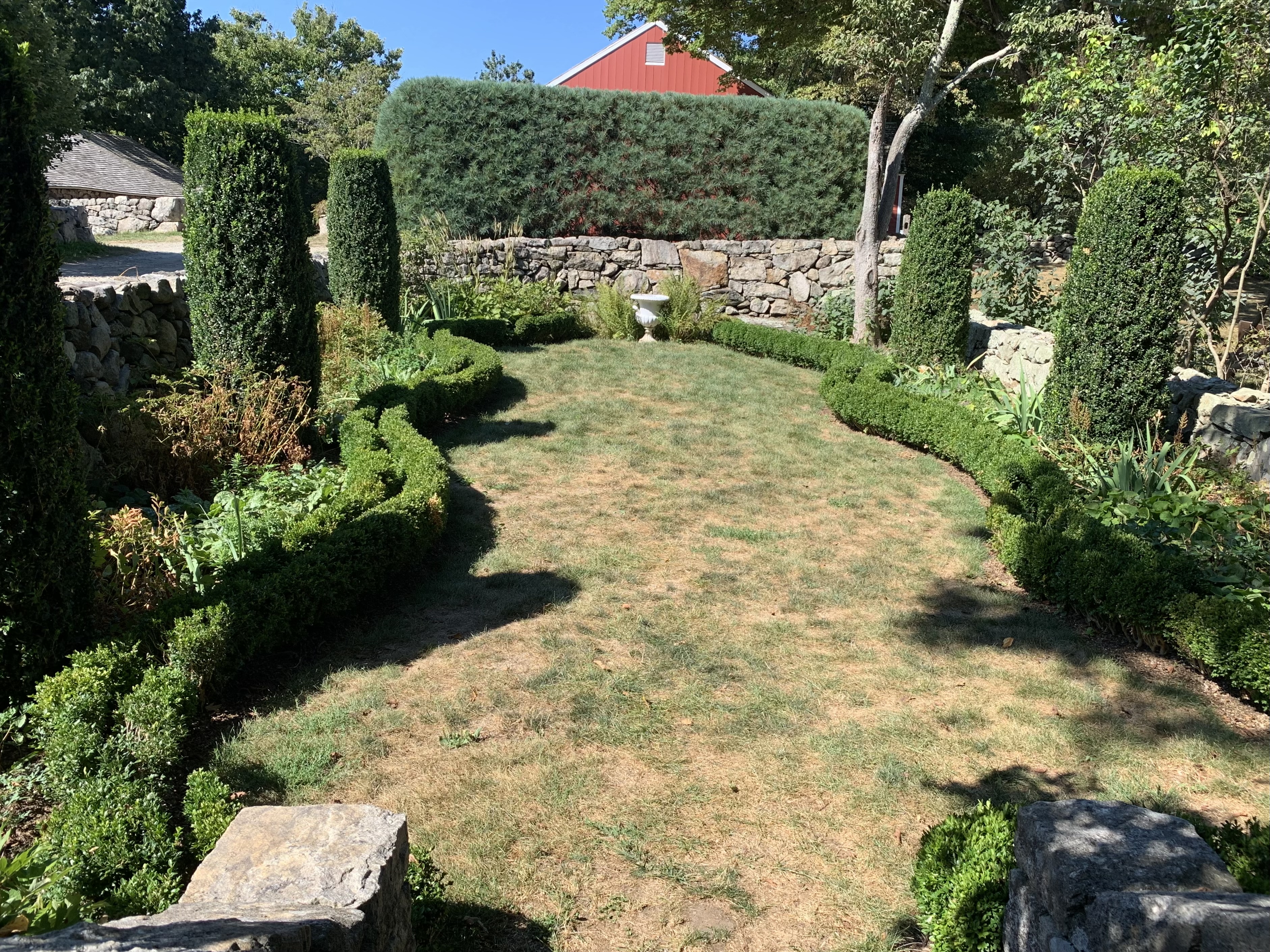
New Hampshire is home to the sculptor Augustus Saint-Gaudens’ studio and marvelous sculpture garden. Freedoms Way heritage area is shared with Massachusetts, and the Appalachian Trail crosses the state.
Rhode Island protects our religious liberty at Roger Williams and affiliated Touro Synagogue, and the state preserves our mill town history at Blackstone, which extends into Massachusetts within a broader eponymous heritage area. The Rochambeau Route begins here.












 Zero Carbon Travel