Natchez National Historical Park

Natchez was the second largest slave market in the US (after New Orleans), but almost nothing remains. From here, many were walked to plantations up the Natchez Trace. The park service recently acquired part of the ”Forks of the Road” slave market for an interpretive site, which includes the actual slave chains pictured above. The hand in the photo is of a woman who is planting flowers to beautify the site. She explained to me that she feels compelled to do something due to the profoundly disturbing history of tens of thousands of humans sold into bondage for generations. When she first arrived here, she had trouble sleeping, and she imagines the voices of the enslaved calling out for help.
She asked me if I thought that strange, and I said it was by far the best perspective I had heard today.

I had just finished touring the Melrose mansion in the park, and all the glamour of the place left me feeling quite ill. The home of a Pennsylvanian lawyer turned plantation owner, it has all the ostentatious luxury that money could buy, with slaves next to the barn, above the laundry and dairy, and in the basement, all trained to come running at the sound of a bell. And 350 slaves working on plantations out of sight. I had to ask about those 350 slaves who actually brought in the cotton, since the placards only described a few house slaves, “laughing” and enjoying their “leisure”. The other visitors had seen the TV shows and movies filmed in the well-preserved mansion, and they seemed impressed by the lifestyles of the rich and morally reprehensible.

I could only hear the bells ringing years ago, and later, I too heard the voices.

Jean Lafitte National Historical Park and Preserve

This is a large, multi-purpose, multi-unit park. On a previous visit I visited one of the Acadian (Cajun) cultural centers and the 1815 Chalmette Battlefield (read the pirate Lafitte’s story here), so this time I figured I should see the swamp at the Barataria Preserve. I didn’t see any alligators, but the ranger said they were probably under the boardwalk. He also said I might find one if I went on a more remote trail, explaining logically that no tourists had returned from that section today.

Folks around here are under a lot fewer illusions about the Climate Crisis than other places, out of direct experiences. The signs were more blunt than in other parks, explaining that the beautiful ecosystem above is being killed by rising oceans. If we had time to adapt, then we could learn techniques for dealing with storm surge, flooding, etc. But it doesn’t seem like enough people care.

New Orleans Jazz National Historical Park

On a New Years dare, a young Louis Armstrong fired a pistol in the air here and changed both his own fate and the world. He was taken from his home here with the Karovskys (recently reduced by hurricane to a brick pile above) and sent to reform school, where he joined the band. The Karovskys lent him money for a trumpet, and he joined King Oliver’s band playing the Eagle Saloon in the foreground and the Iroquois Theater next door. Remembered by many for the “Wonderful World” end of his career, it was his astounding trumpet skills that made him a breakthrough star. He recorded both the first Jazz solo (multi-bar & improvisational) and the first use of scatting. Despite racial barriers, he played all over and converted many into Jazz lovers. Of all his accolades, he was proudest of being Mardi Gras Zulu King in his hometown.

The block is eventually going to be restored. Sorry for not giving NOLA a longer entry, but I’m posting sporadically from the road. Lessez les bons temps rouler.

Saguaro National Park

When I visited this park with my kids, we went to the east unit. Both units are in the greater Tucson area, but both are a decent drive away from the center of town in different directions. So, I was glad to have a chance to see the other side. Although the visitor center is a bit nicer in the west, the east unit has a scenic cactus forest drive where you can easily get out and take a closer look. Both have plenty of saguaro (suh-Wah-ro) to see.

Tumacacori National Historical Park

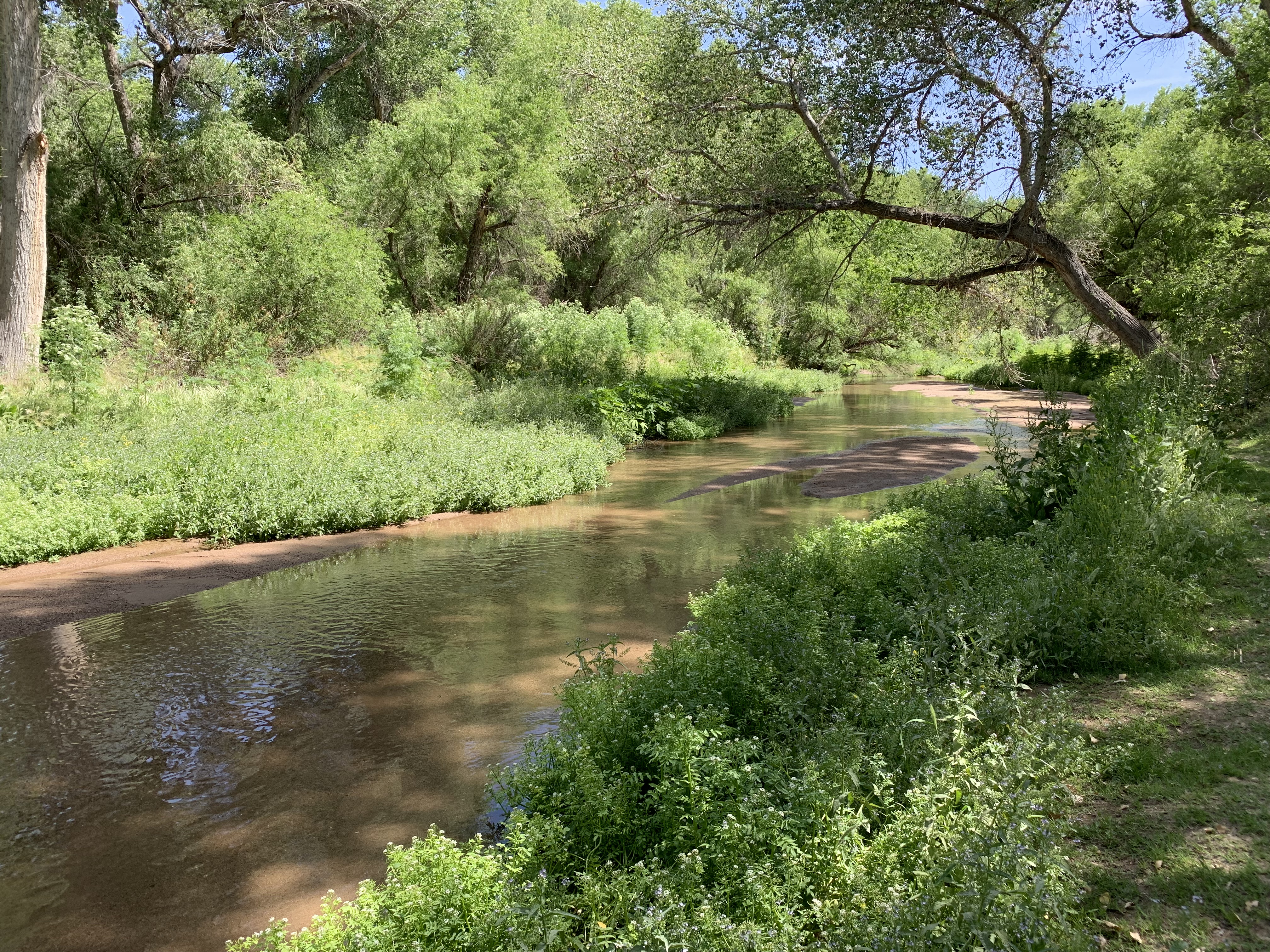
The Spanish Mission is not far from the banks of the Santa Cruz River, where I came upon this beautiful spot. The trail near here has more hoof prints than footprints and is supported by the active local equestrians. A lovely broad-billed hummingbird swooped down to see what I was doing, but I almost never have time to take decent wildlife photos.

The church grounds are impressive, with a large orchard cultivated with help from a local university, a courtyard garden, a small museum with a long pair of moccasins, and the old church in an evocative state of decay. But, in a sign of our ecologically vulnerable times, the most rare part of the park is the lush riparian area pictured.

Coronado National Memorial

They’re not exactly sure which river valley Coronado walked up with his plumed helmet, shining cuirass, retinue, soldiers and slaves on his way to find the seven cities of gold, but from the bluff here, you can see both. Apparently, a couple natives convinced him to walk as far as Kansas, before he realized it was a ruse and executed them.

The park is near the Mexican border, and someday there’s hope that there will be a sister park on the other side. Of course these days, some people are paranoid about migrants crossing illegally, so there were plenty of warnings and border patrol operations nearby. I can’t see anybody climbing all the way up here without a vehicle. The road up is unpaved and there’s parking a short hike from where I took the photo. Although the road is rough, it presented a scenic shortcut to my next destination.

Chamizal National Memorial

Unlike any other park, Chamizal memorializes diplomacy. When the Rio Grande shifted course at the end of the 1800’s, it created an island and a seven decade long border dispute with Mexico. President Kennedy went to Mexico to finalize an agreement, and LBJ later participated in the joint ceremony at the border here. There’s a beautiful mural on the visitor’s center, and I remember from a previous visit that there’s a film that explains the importance inside.

Guadalupe Mountains National Park

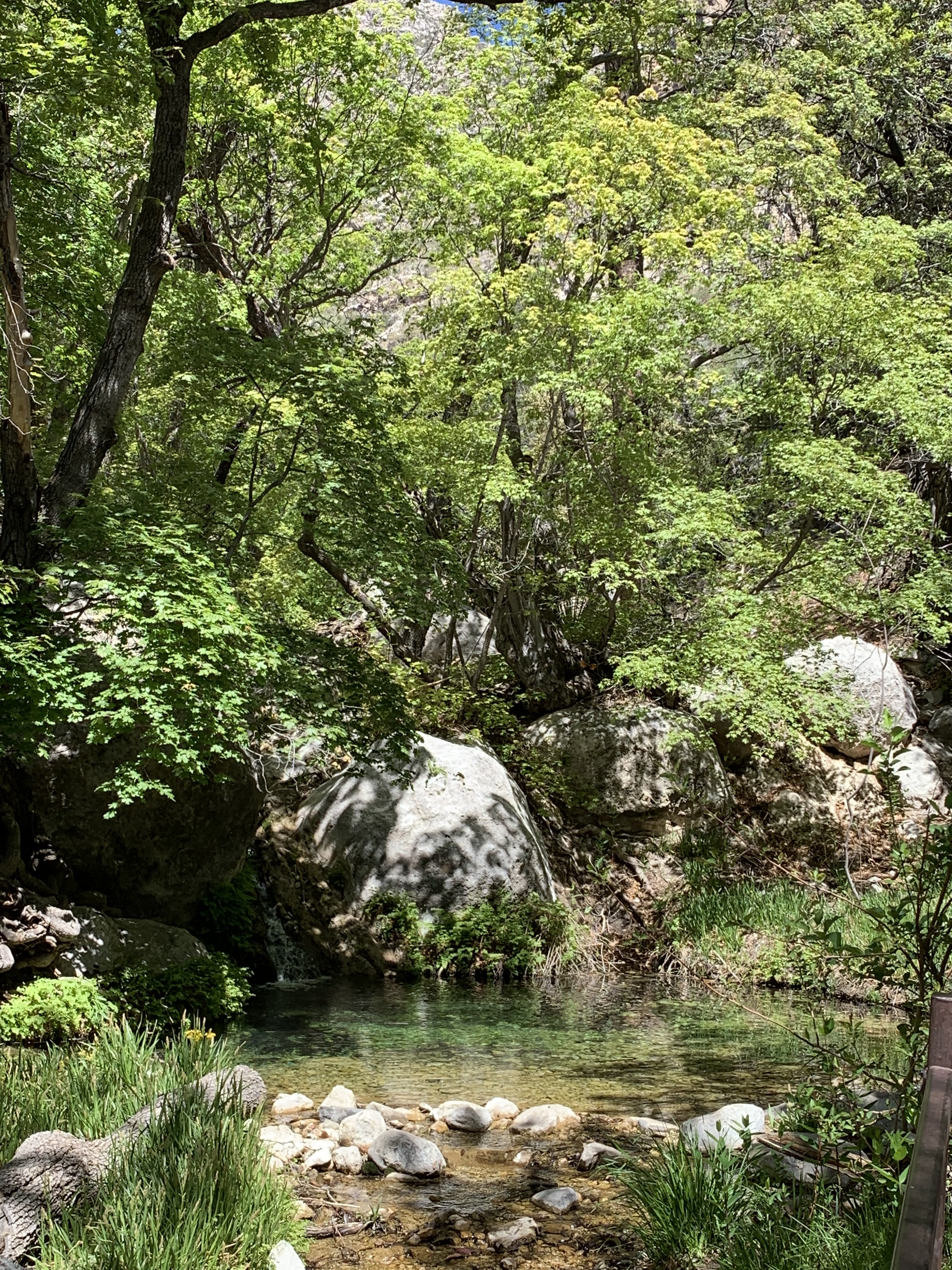
Even after planning, I still check with the rangers for suggestions on good hikes and photo ops. I originally planned to hike McKittrick Canyon, but the ranger suggested the trail at Frijoles Ranch instead, as its shorter and quite similar this time of year. The trail passes two different springs, including the mountainside one pictured.

Guadalupe is large, mountainous and mostly dry, which makes it both difficult to explore and also more barren than many other parks. But that’s what makes the occasional oasis above especially sweet.

Carlsbad Caverns National Park

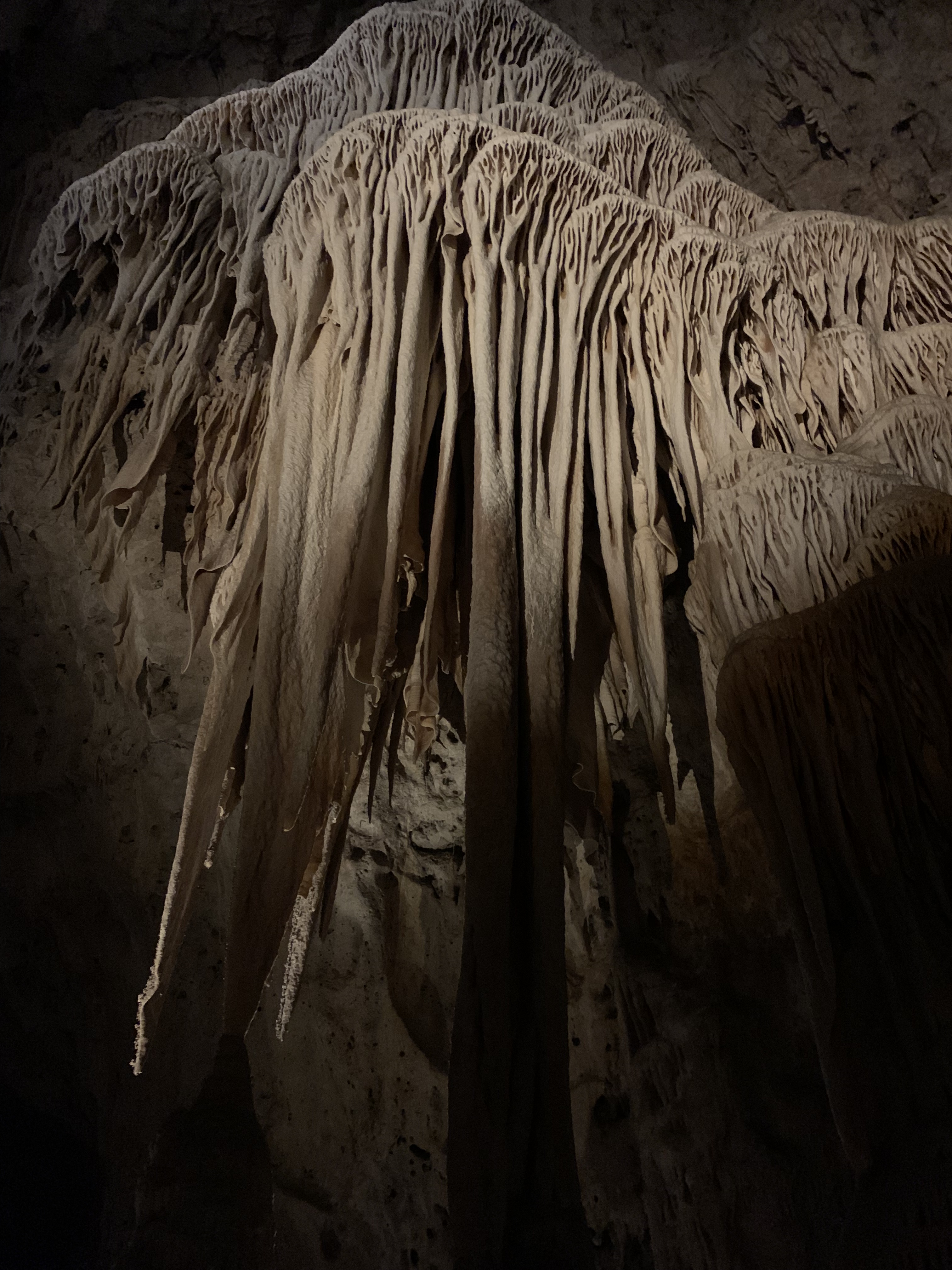
While not as long as Mammoth Cave, Carlsbad is larger in terms of volume, and both are World Heritage Sites. The ceilings are often over a hundred feet high, and the Big Room spans over 8 acres, with a mile-long loop to see it. Even after descending 750 feet down the natural entrance, there are still deeper “bottomless” pits below. I was fairly sure I heard faint drumbeats coming up from the darkness, so I asked the rangers. They explained that there were only a few goblins, and that they try to catch them as they’re considered “invasive species”. I finished the hike as quickly as possible and took the elevator up.

Fort Davis National Historic Site

This is an Indian Native American War era fort. Soldiers from here, including African American Buffalo Soldiers, fought Geronimo and the Apaches in Arizona, the Kiowas and the Comanche, patrolling the San Antonio-El Paso road against raids. President Andrew Jackson predicted it would take a thousand years for white settlers to replace the Native Americans in the west. In reality, the process only took a few decades.

I believe the goal of history should not be a recitation of events. I believe the point of history should be to learn from the past in order to make better decisions in the future. The people are dead. They don’t care whether we praise them or criticize them; that’s not the point. We need to evaluate past actions in the context of the times.

Columbus was an innovative navigator, whose initial voyage went against common sense at the time and changed people’s understanding of the world. He was also wrong about who the Natives were, and he treated them viciously. But he didn’t create racism or slavery. Those were taught in European universities, supported by the church and were the official policy of European governments. Those institutions, which still exist today, bear the responsibility for atoning for the evils of racism and slavery of colonialism.

Kit Carson was an accomplished explorer, who developed strong relationships with the Native Americans he met and traded with. He did what others did not dare and changed people’s understanding of the west. He also carried out a brutal scorched-earth campaign against the Navajo and marched them into internment camps. He neither created racism nor invented the policy of removing Native Americans from their land.

Andrew Jackson was an American hero for defeating the British in the Battle of New Orleans in 1815. He also fought many wars against the Native Americans, broke treaties and even defied Supreme Court orders to remove Native Americans along the Trail of Tears, leading to a legacy of depressed, poverty-stricken reservations. He should have chosen a different path, leading to greater education, cultural exchange, technology transfer, integration and cooperation. The US Presidency, Congress and the military, which still exist today, bear the responsibility for atoning for the evils of the wars and forced removal of Native Americans.

History must be studied to make these judgements and to recommend corrective actions whenever possible, otherwise we doom ourselves to carry the burden and even repeat our past mistakes.