Little Bighorn Battlefield National Monument

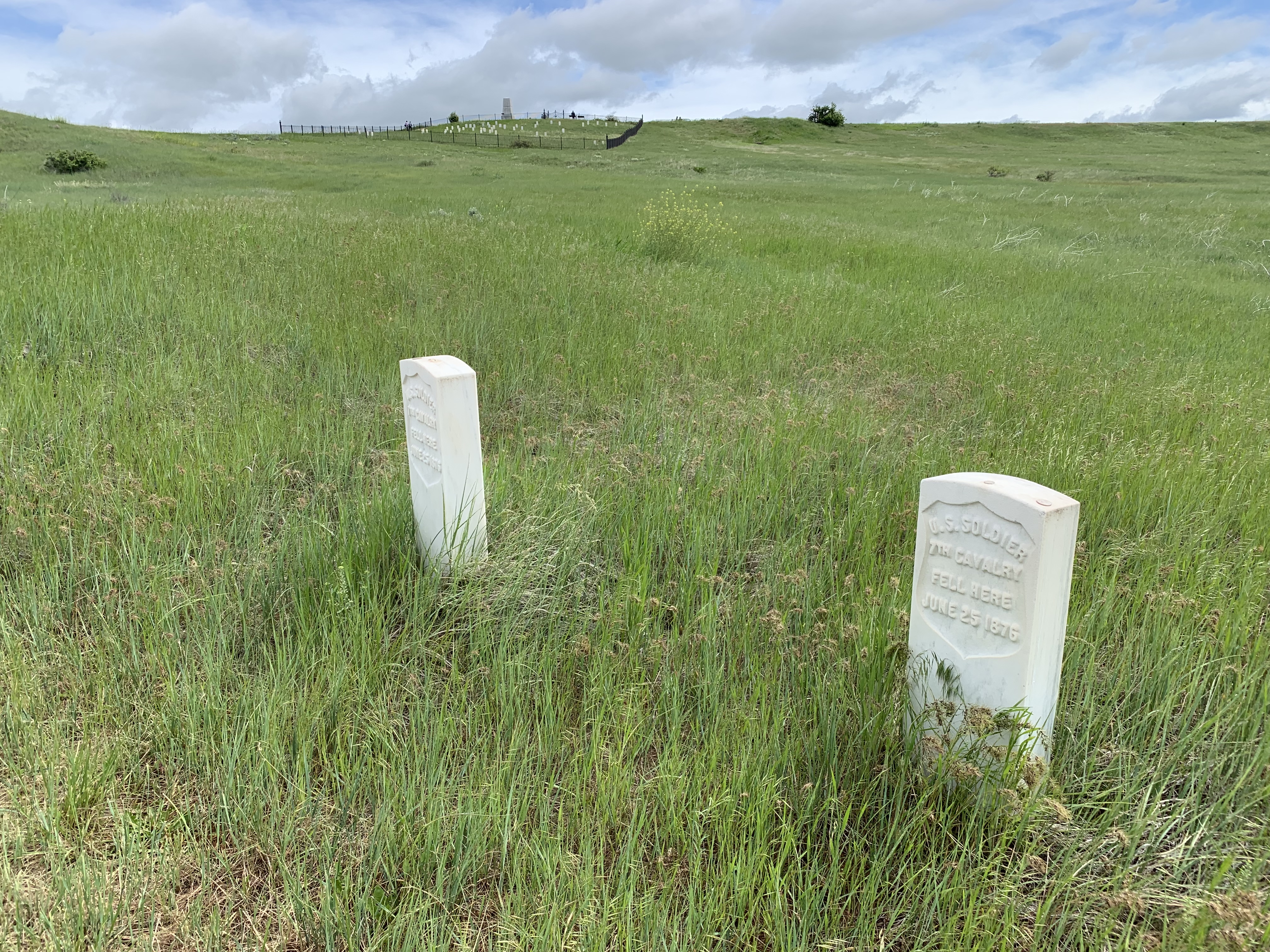
Two unnamed cavalrymen are memorialized here, below the hill where Custer made his last stand. Until fairly recently, there were no similar monuments to the Native Americans who won the battle. Now there are several, naming the heroes who defended their village, wives and children here from the cavalry attack. Custer intended on burning the village and likely was trying to take women and children hostage when he overextended his forces to this hill. The natives were surprised by the attack, and while this was their greatest and last victory over better armed US troops, it must be recognized as essentially a defensive act in response to US military aggression. The native ranger talk here is a favorite experience.

Seeing the landscape helps understand what went wrong. Custer split his forces, sending some towards the far south end of the village as he approached the north. Underestimating the size of the village both physically and in number of warriors and underestimating how fiercely they would fight back, he spread his forces thinly in order to prevent natives from escaping. He sent word to his other troops to join him thinking that he had found the village, not realizing that they had also found the village at the other end two miles away. His cavalry would have been visible on the ridge, while the natives would be hiding in the grasses & creek beds that allowed them to slowly climb the ridge. Urged on by Crazy Horse, White Bull and other chiefs, the natives stopped the US advance, kept the troops separated and eventually took the hill as Custer ran out of ammunition.
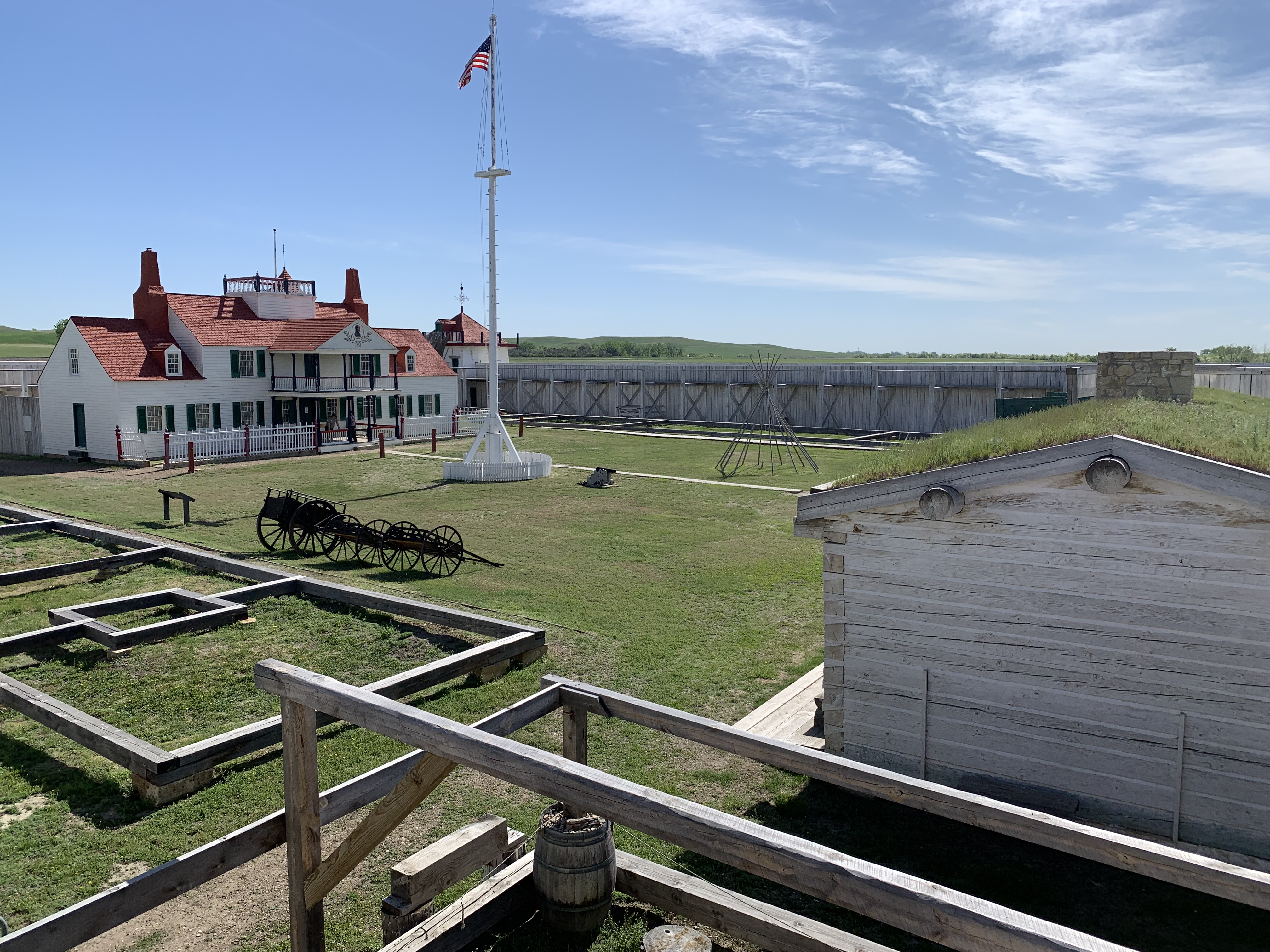
Fort Union Trading Post National Historic Site

Not to be confused by the other Fort Union, this was strictly a trading post built for the fur trade at the invitation of the Assiniboine. The post was open for 40 years, peacefully and profitably trading with the Native Americans. Large numbers of natives brought stacks of furs, which were sorted and pressed outside the fort to determine payment, and then at a window they bought various goods, especially cloth. The large fur press outside the fort is basically a long pole on a fulcrum to measure fur stack thickness. Fort Vancouver in Oregon has one too, reconstructed from photos, but the rangers didn’t know what it was. (I showed them a picture and told them to call my favorite rangers here.)

Audubon came here to study mammals after finishing his bird book. Catlin came here to paint portraits of natives and portray their lives without the hateful bias that was common at the time, and he first suggested a series of national parks to protect the beautiful, historic and vanishing way of life in the West. The rangers here were among the best I’ve heard at bringing the old fort to life with engaging stories.

There’s also a small plaque, near where Lewis & Clark must have stopped, to a national parks founder named Mather, praising him for good works that “will never come to an end”. But if we lose the climate fight, many of our national parks will fail in their mission to protect nature and fail to pass that natural world on the future generations.

Theodore Roosevelt National Park

Certainly the highlight of my trip, the three units are connected by the Little Missouri River, which is the south unit oxbow on the left. The south unit also has bison, wild horses, a painted canyon, petrified logs, a prairie dog town, badlands, a replica of Teddy’s cabin, a ranch, camping, and lots more. The north unit has even better oxbow views on one of the best hikes I’ve ever done: Caprock Coulee 4 miles. Even the tiny Elkhorn Ranch unit, hemmed in by cattle fences and pumpjacks, had a pair of whooping cranes to amaze me. I’m honestly struggling for superlatives. Teddy used the phrase “grim beauty” which gets at the serious nature of the park. This is one of my favorite national parks. Click here for more Teddy Roosevelt sites.

I would like to spend a week up here and ride a horse, but I’m already in Montana. For EV travelers who want to see all 3 units, I recommend charging overnight in state campgrounds before & after. There’s one next to the south unit and another not too far from the north.

Minuteman Missile National Historic Site

There are three sites along the interstate: a visitor center, a missile silo and a launch control facility for multiple silos. Apparently the whole area was like a prairie dog town of silos. For decades, all the sites were manned and secured continuously, so that we could annihilate our enemies many times over, as they could to us. The cost of this ludicrous overkill capacity was staggering.

But what interests me most is the claim made in Life magazine above that only 3% would die. Actually, we’d be lucky if 3% survived. How could we have been so wrong? We listened to the wrong scientists. Physicists designed the nuclear bomb, so they had the full attention of the military. They analyzed the problem by describing payload, flash of light, shockwave and fallout. Only when someone asked whether nuclear war would blot out the sun for years did we realize that the physicists completely underestimated the risk to life on earth. Why? Because the study of life on earth isn’t physicists’ job. That’s the job of biologists. We were listening to the wrong scientists.

Our public understanding of the climate crisis is very similar. We’re still not listening to the right scientists. Whenever I ask a physics expert about global warming, I always get the same answer: ”the planet will be fine”. They mean that it will continue spinning. Geologists answer that temperatures vary naturally within large ranges over eons. Meteorologists say that it won’t tell you if you need to bring an umbrella today. Again we are listening to the wrong scientists.

Biologists study life on earth, so they will tell you that the climate crisis will extinguish most forms of life on earth, either directly, by changing their environment more quickly than they can adapt, or indirectly, by collapsing some critical part of the ecological networks they rely on for food, reproduction, or any other part of their existence. These are the scientists who study whether life on earth will survive, and they’re the ones who are telling us that the risks are too great to continue carbon pollution. As living, supposedly sentient beings on this planet, we naturally should be interested in the survival of life here. We need to listen to the right scientists who know and are telling us what we need to do to avert the coming catastrophe.

Badlands National Park

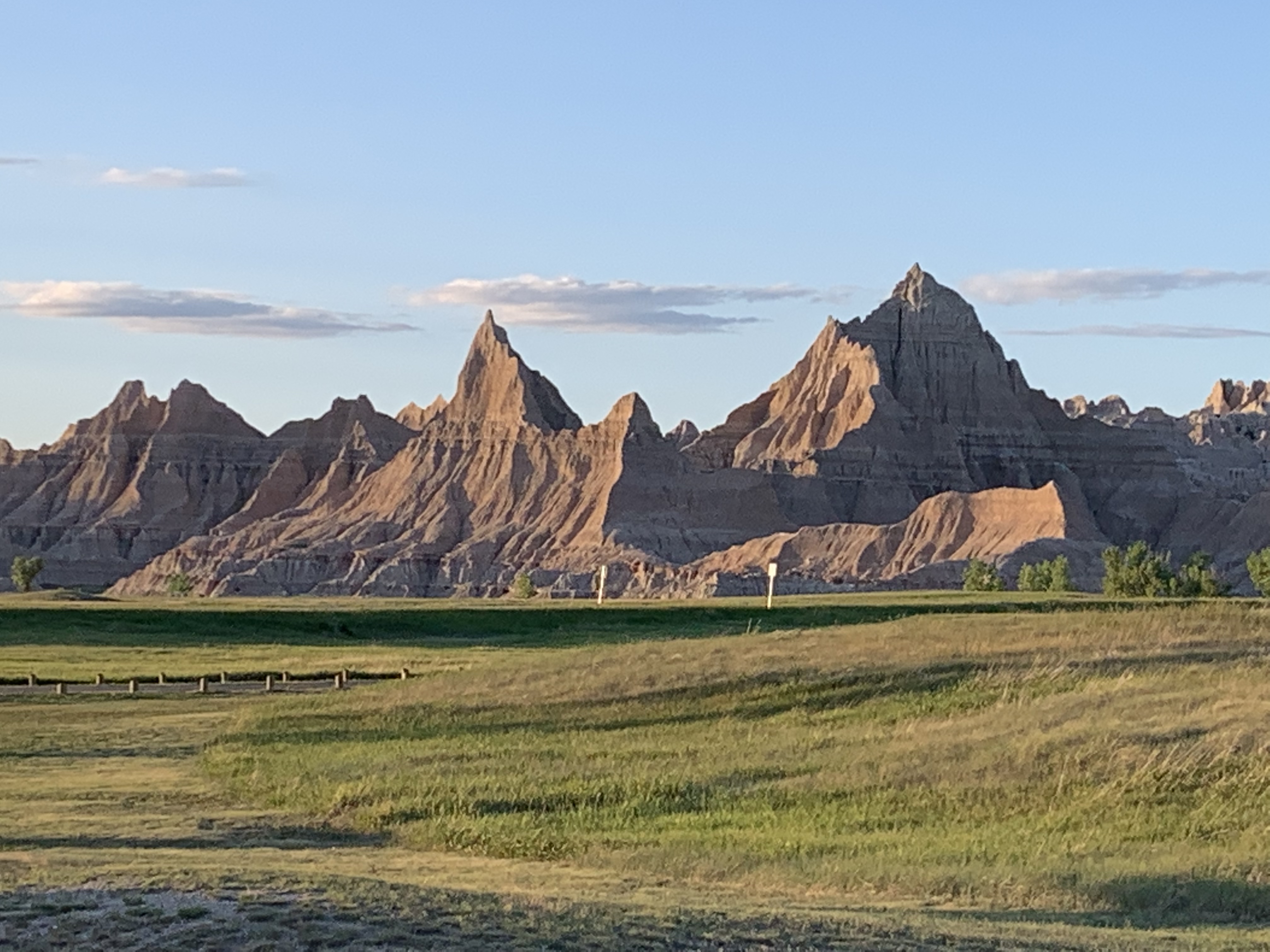
I took the photo just a minute after arriving at Cedar Pass campground. Much of the “original badlands” scenery is down in canyons, but these peaks are more photogenic. The long loop road is worth it, and the park allows even off-trail scrambling. The ranger talk was excellent, and I learned that the town of Wall (and famous Wall Drug Store) is named after the barrier that the park’s landscape presents to travel.

Mount Rushmore National Monument

I like Mount Rushmore, but it’s in the wrong place. The Presidents selected all had issues with Native Americans (although the Presidents were all long dead when the monument was sculpted). The sculptor was a KKK member who wanted to sculpt confederate leaders, but that’s just a side note. No, the problem is that the monument is carved into the sacred Black Hills which may be the most shamefully taken, fought over and litigated place in America. It doesn’t help that the surrounding area is filled with common tourist traps, and that the tourist dollars do not go to the tribes who legitimately (according to Court decision) should own the land. Even though they have Tesla chargers in the parking lot, I just can’t appreciate the site as I did years ago.

Jewel Cave National Monument

I’ve now only a couple caves left to explore in the system. I’m all out of troll, dragon and lizard-people jokes. So, instead I will just encourage you to reserve your tour in advance, since they can sell out. I was lucky to get the last single ticket to the shortest tour, where I was able to see the jewel-like dog’s tooth structure above. There are many more interesting crystal and other features to see. And the cave maps continue to expand as new sections are explored.

Wind Cave National Park

The park is most famous for containing much of the world’s boxworks, pictured, which is the ‘mortar’ left over after most of the rock dissolved. The tour included a recitation of the origin myth of the Lakota people and the bison, since the cave is a central and sacred part of the story. The neighboring Custer State Park is a great place to see bison today, and they often wander across the road.

Since I was inspired here by an obscure fact about forest fire frequency, here’s another rant. There’s a popular misconception that park service mismanagement or ”fire suppression” caused many forests to overfill with fuel, creating conditions for today’s wildfires. Smokey the Bear encouraged people not to smoke or leave campfires unattended, but neither he nor the forest service has ever had the ability to put out a naturally occurring wildfire. Even the best efforts today can merely partially contain wildfires to try to protect structures.

So why did the fuel build up? Well, that’s because farmers, ranchers and timbermen cut down all the surrounding forests. Many of the remaining forests are isolated, so that wildfires that would have entered from neighboring areas stopped. The remedy to restore the natural balance would be to enlarge the forests and regrow the surrounding ecotones or transition zones with native scrub and grassland. Funnily enough, you don’t hear that solution often proposed. Instead, folks use farmer, rancher and timberman logic and suggest scheduled burns, like they use on their land. But there’s nothing natural or statistically normal about following a schedule, so the park service, which is the victim here, is left with no choice but to try to maintain forests artificially, which typically results in lower species diversity than the original.

In any case, with climate change, even using prescribed burns won’t save forests from increased bug damage, warmer winters, hotter summers, drier air, longer wildfire seasons, hotter fires and increased wind. I mention this because there are nearby areas where forests aren’t regrowing, since the extremely high temperature of the fire overcooked the soil, killing the microbial life needed to sustain the original trees. We need more accurate and truthful thinking about fires if we are going to save species in the future.

Fort Laramie National Historic Site

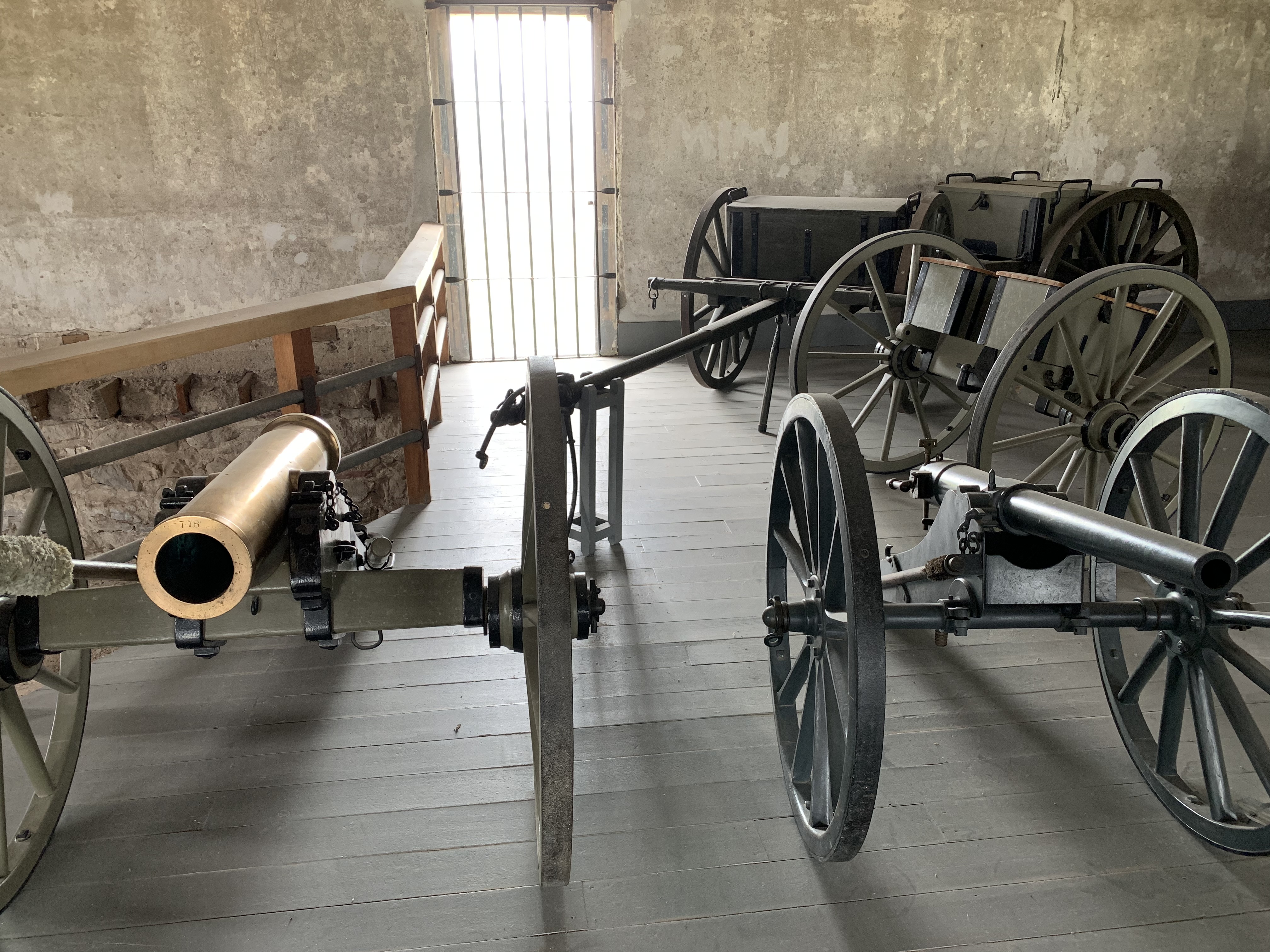
The site of two eponymous treaties, I ordered a sarsaparilla and talked history with a well-informed seasonal ranger. We decided that although the soldiers were sent out to protect pioneers, they were mostly bored silly, since the “attacks” were mostly myths or exaggerated stories. But the military leaders practiced diplomacy to try to avoid potentially deadly conflicts, and that didn’t always go well. Case in point, in 1854 a Mormon pioneer lady complained to authorities that a cow she lost on the trail had been caught and eaten by some natives who lived on the land while she was trespassing. Lt. Grattan was sent to arrest the offender (not the lady) with 29 soldiers. Apparently the negotiations were cut short when (most likely) one of the soldiers shot the chief, whose men subsequently killed all the soldiers. Several treaties were signed here, although they were not honored by the US. Ultimately, the US military ”solved the Indian problem”, by killing resistors with superior fire power, including the mountain howitzers above and Gatling guns, and driving the rest on to reservations. Four of these artillery pieces were used at Sand Creek.