Some Cherokee still live in the Blue Ridge Mountains, although the western North Carolina heritage area is more focused on waterfalls, sights along the Blue Ridge Parkway, bluegrass music, the Great Smoky Mountains, and more. The Cherokee, angry about their stolen lands, sided with the British during the Revolutionary War, while their Piedmont—central NC—neighbors, the Catawba, sided with the Patriots.
A particularly beautiful area in the US, the Blue Ridge includes the headwaters of the New River and the eastern states highest mountain (Mitchell), gorge (Linville) and waterfall (Whitewater Falls), plus the homes of interesting people, including the poet Carl Sandburg. There’s also rich diversity of species and frequent wildlife sightings. I love driving through, and I have to admit to bending my itinerary a few times to see something new here.
The Gullah Geechee area is much larger, stretching from North Carolina to Florida, including some great national park units, like Reconstruction Era, Cumberland Island and Timucuan Preserve. I heard Gullah spoken several times in the Carolinas, and there are numerous spots along the coast in four states to stop and learn about quilts, baskets, and other crafts. I love the food, always wanting to stop for boiled peanuts, country captain, perloo or other dishes. Gullah Geechee is a living culture, a unique community, an integral part of our history, and this distinct heritage is woven deep into our collective roots.
I understand that Gullah developed as a common dialect among slaves who had lived or passed through Angola, hence the name. A great public TV program on the English language taught me a bit about Gullah years ago. You already know some of the words that come from Gullah, like gumbo, jitters, and tote. The settlement on Cumberland and the plantation at Timucuan have clues about the Caribbean crops of indigo and sea cotton brought to grow in the barrier islands and about the enslaved people who worked the plantations. Not only did the communities survive, but they retained some of their African and Caribbean connections, linking us with living communities in other countries today.
10 trails cross the Midwest region, including 8 National Historic Trails linking multiple sites, plus the Ice Age and North Country National Scenic Trails which are individual park units. Only the Ice Age NST is unique to the Midwest, while the other trails continue on into other regions. Here’s a quick summary in case you are interested in exploring the trails in the region.
Ice Age NST formed when 100,000 year old ice melted 11,000 years ago, lovely winding trails over hills and dells in Wisconsin.
Santa Fe NHT used from prehistory to present by natives, Spanish, cavalry, settlers, BNSF, Route 66 and now I-55, 44, 40, 15 and 10. I like the Mahaffie stop in Kansas above.
“Well it winds from Chicago to L.A, More than 2000 miles all the way”—Bobby Troup
Lewis & Clark NHT 1804-1806, Seaman joined Lewis in Ohio, Clark & York joined in Indiana, they entered the Purchase from Illinois, see replicas at the boat museum in Missouri, a Kanza earth-lodge in Kansas, many sites along the Missouri River in Nebraska, and memorials of the only expedition fatality, Sgt. Floyd, in Iowa.
Trail of Tears NHT ~1830 to ~1850, part passed through southern Illinois and Missouri, where the Trail of Tears State Park overlooks the Mississippi.
Oregon NHT 1836-1869, from western Missouri, through Kansas & Nebraska.
California NHT 1841 to 1869, same midwestern route as above.
Mormon Pioneer NHT 1846-1847, from western Illinois, through Iowa & Nebraska.
Stage & Mail Trails, follow the link for some recommended stops.
Butterfield Overland NHT 1857-1861, only a small portion is in Missouri.
Pony Express NHT 1860-1861, follows the pioneer trails through Kansas & Nebraska.
North Country NST, established in 1980 and designated a unit in 2023, is still a bit disjointed, but in the region, it runs from Fort Miamis in Ohio, up through Michigan, along the cliffs through Pictured Rocks NL below, across Wisconsin, and from Grand Portage NM through Minnesota.
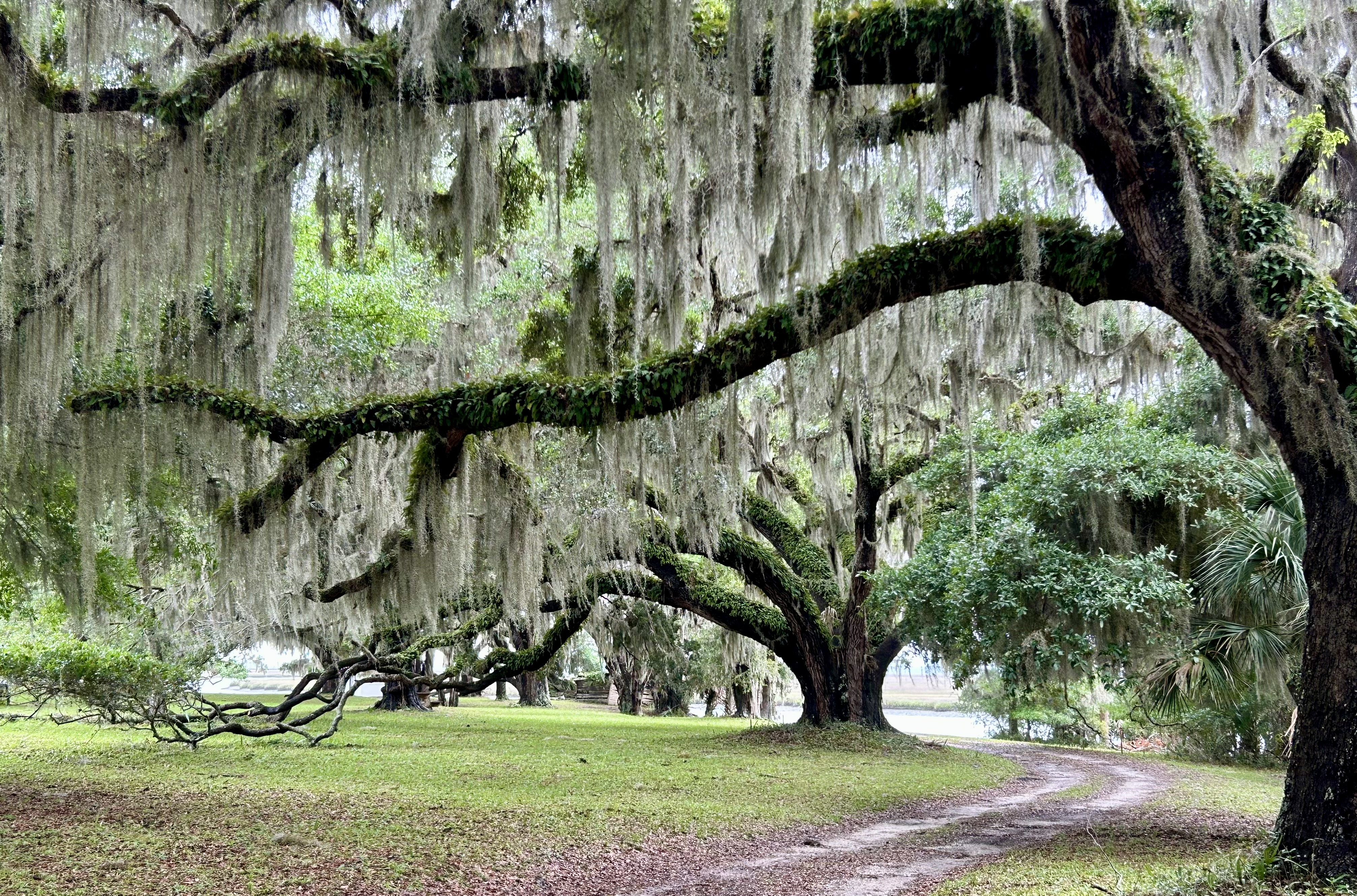
Decades later, I returned to see the southern live oaks that have haunted my dreams. Now I know the ferns that grow on the tops of their branches are called resurrection ferns, since they revive to a bright green after it rains. As a teen, I was told that humans could eat the Spanish Moss that hangs down from their branches, but returning as a tourist I was told that no humans ever did, only horses. I was too ashamed to admit I ate some long ago and thought it tasted OK.
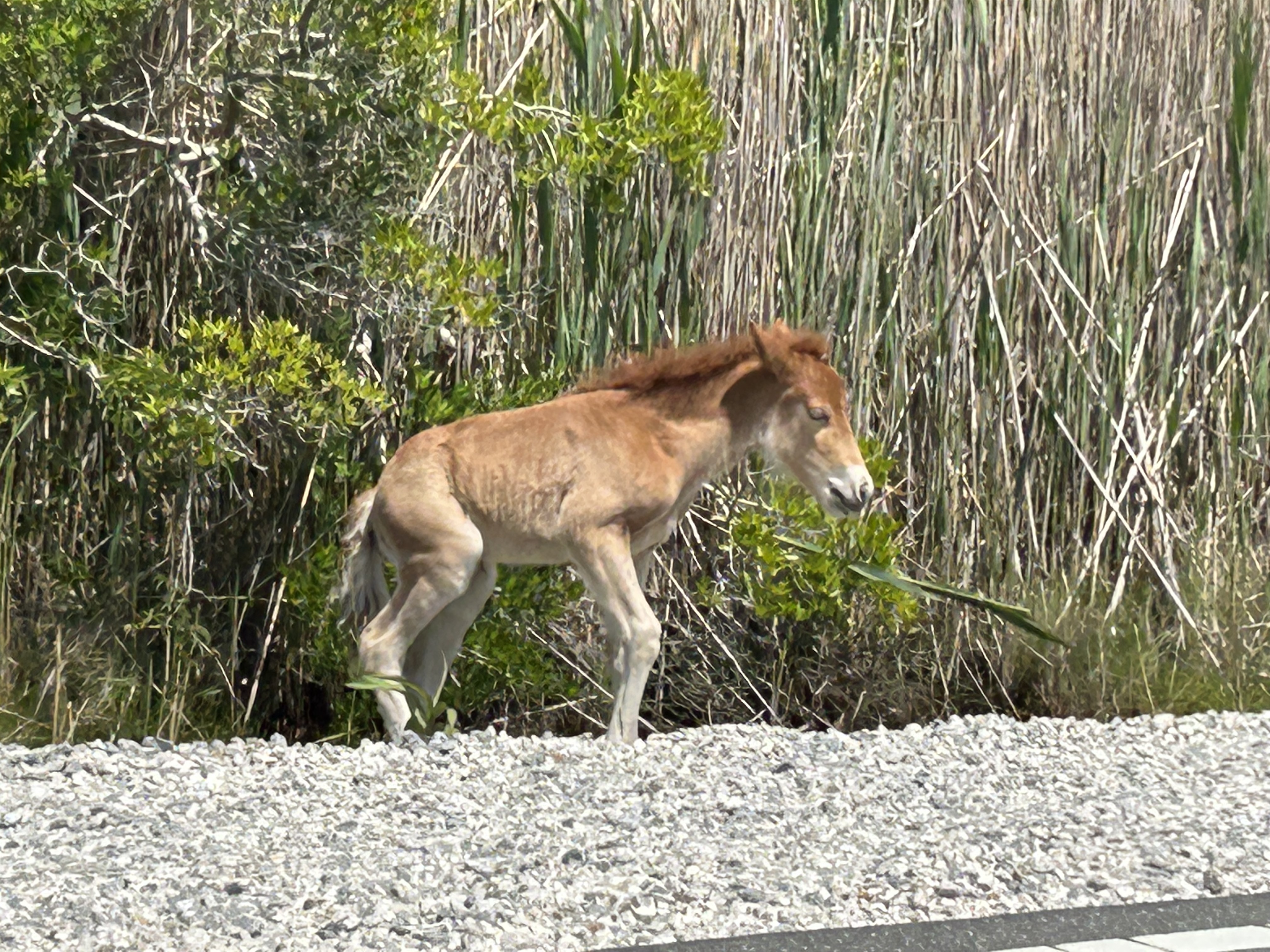
Since I had been to the island before, I knew the only way to get to the north end on a day trip was to take a tour, so I joined the NPS recommended van tour and got to see everything from the settlements at the north to the Dungeness ruins in the south. The photo above is behind the Plum Orchard mansion, one of a few Carnegie family homes built on the island. The Carnegies were excluded by the other billionaires on neighboring Jekyll Island, so many of them settled here. Plum Orchard is beautiful and has interesting innovations, but plantation style troubles me. The center of the island is protected wilderness, and it feels like an ancient forest or overgrown jungle. Along the way we saw wild boar, wild horses, an alligator, several armadillos, and many beautiful birds.
I don’t always try to draw historic connections between parks, but bear with me this once. The natives here were related to the Timucuan. The Gullah Geechee (next week’s post) descendants of slaves are related to those all along the coast up to Reconstruction Era and down into Florida. The southern live oaks from this island were used to build the “iron sides” of the USS Constitution in Boston. Nathaniel Greene, commanding general of the Southern Campaign of the Revolutionary War, died shortly after retiring near Savannah Georgia, and his wife remarried and moved to Cumberland Island. There, Greene’s daughter Louisa cared for one of his cavalry officers, Henry Lee—veteran of Eutaw Springs—, before his death and burial at Dungeness mansion. Lee’s son was Robert E. Lee of Arlington House. And, if you want one more parks connection, the Carnegie’s innovative household DC power was likely overseen by Thomas Edison.
When I first arrived on the island several decades ago, I was invited as a guest of someone who knew the owners into a grand old home under the oaks for a meal, stories on the porch and an after dinner cognac, my first. As I recall, there was some discussion about whether the home would have to become an inn to survive, and we all agreed that it was important for beautiful old historic places to be preserved. (It later became the exclusive Greyfield Inn of Kennedy wedding fame). Folks need to come to places like Cumberland Island to try to imagine what it was like all those years ago, to walk along the barrier island beaches, to see the wild horses, to learn about dugout canoes, see photos of Primus and Amanda Mitchell who went from slaves to church and settlement founders, to learn about sea island cotton, and especially to feel the special old grandeur under those southern live oak trees.
These are two obscure heritage areas in the Carolinas, but none of the state or national park employees I spoke with had heard of either. While the South Carolina NHC has historic sites, plantations and gardens, the parks included—like Pinckney, Sumter, and Overmountain Victory—are unrelated. And while the Revolution NHC includes Moores Creek, it excludes many other important battles in the Carolinas and neighboring states. Don’t waste time following these confusing corridors, but instead start with an overview at historic Camden.
Here’s the story of the Revolutionary Campaign in the southeast, focusing on national sites and affiliates. Virginians Henry, Jefferson and Washington led their colony into rebellion, in concert with the north. Virginia colonial governor Lord Dunmore called in troops, organized loyalists and even formed a regiment of liberated slaves. Echoing Bunker Hill, Patriot militia fought well at Great Bridge in 1775, prompting Dunmore to order the shelling of Norfolk Virginia. Echoing Concord, the Patriots cut down a broadsword charge at Moores Creek North Carolina in 1776. And at the end of 1778, the Patriots took Savannah, followed up with a victory at Kettle Creek Georgia in early 1779.
But in May of 1779, the British sacked Portsmouth in Virginia, kicking off their southern campaign in earnest. In late 1779, the British returned to Savannah, capturing it after a siege. In early 1780, they took Charleston SC after another siege. Next, they turned their attention inland, hoping to sway more loyalists, keep their large southern colonies, and then take the fight back to the northeast. In 1780 the British fought over a dozen battles around Charleston and Camden (see Cornwallis’ HQ below) in South Carolina, consolidating their control over the colony.
But the British were ruthless in the south, revoking pardons, burning homes & farms, and imprisoning or hanging those who wouldn’t sign loyalty oaths. The most infamous example happened in May 1780 at Waxhaws—named after a local tribe—, when Banistre Tarleton massacred Patriots, inspiring further rebellion. Popular resentment against the tyrannical British grew, especially among the Scots-Irish settlers. After Gates lost his leadership position after failing at Camden, Nathaniel Greene began a much more effective guerrilla campaign in the back country.
The Patriots didn’t win all their battles, but many of the British victories were Pyrrhic, causing them to cede territory even after eking out technical victories. The back country belonged to the Patriots, especially when reinforcements crossed the Appalachian Mountains on the Overmountain Victory Trail. The Patriots won at Kings Mountain in late 1780, then again at Cowpens in January 1781.
Even though the British subsequently won at Petersburg VA, Ninety-Six in SC, and at Guilford Courthouse NC, clearly, they were not winning the broader campaign. Cornwallis brought his troops north to Virginia. After a close battle near Camden, the remainder of the British forces retreated for Charleston, with the last battle in the southeast fought at Eutaw Springs in September 1781. The denouement was set for Yorktown.
5 historic trails link multiple sites in the region, and 3 scenic trails are park units. Here’s a quick summary in case you are interested in exploring the trails in the region.
In Maryland, the trail runs from the Chesapeake Bay along the north side of the Potomac past Thomas Stone, Piscataway, and Fort Washington, loops all the way around DC, runs past Clara Barton, joins the C&O Canal towpath, passes Antietam and runs out to the farthest west corner of the state.
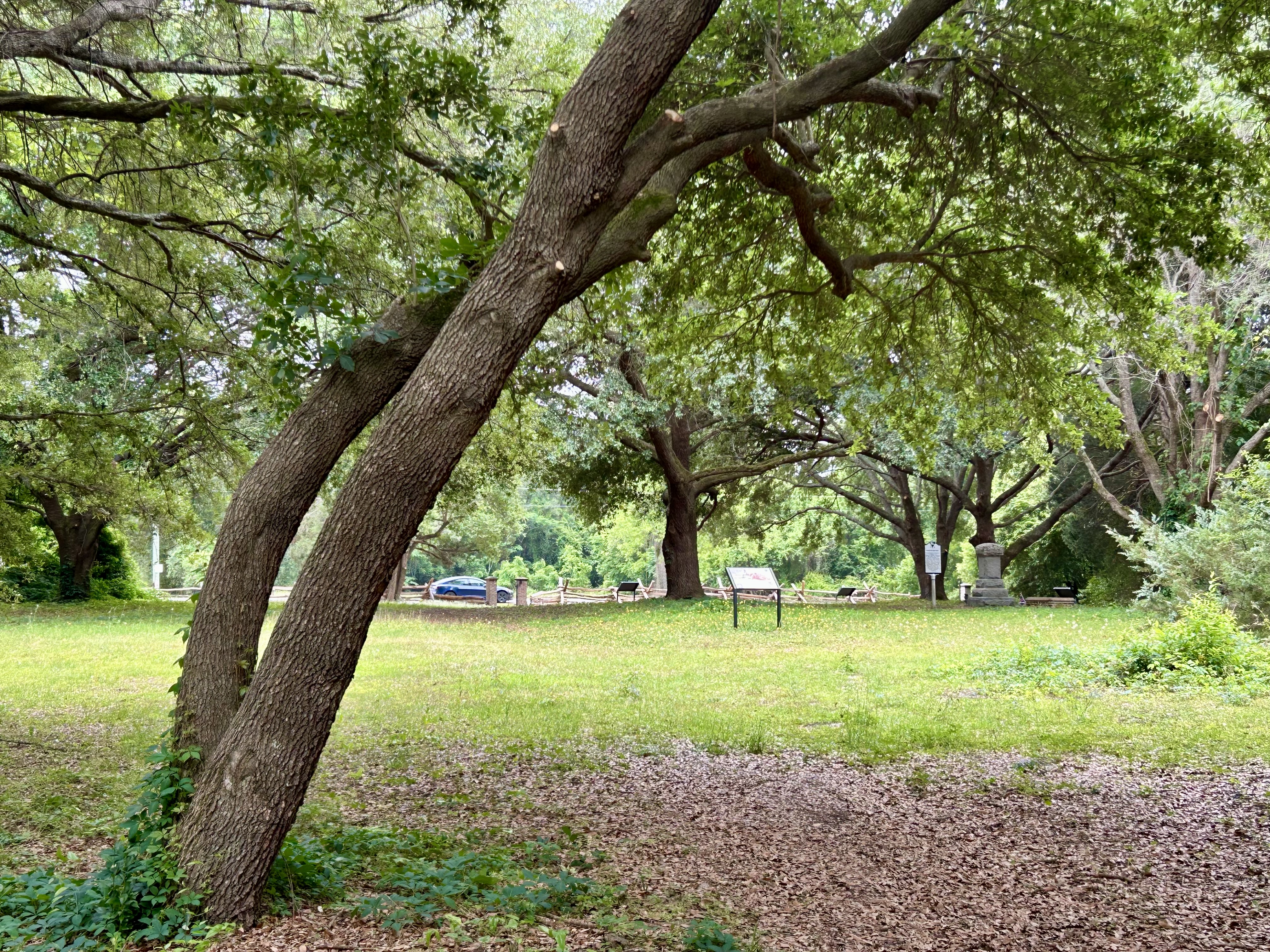
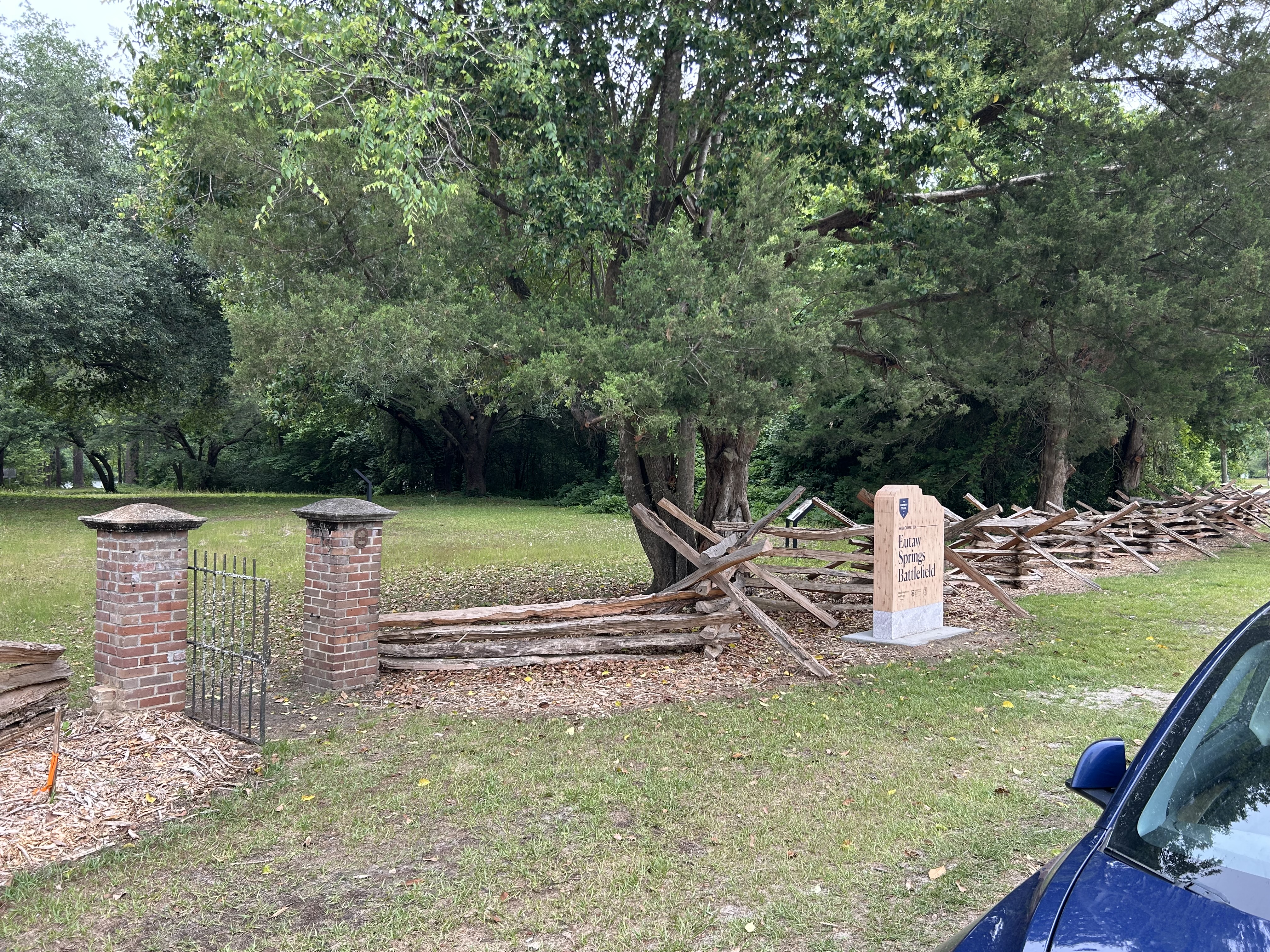
This was one of the final battles for inland South Carolina, in September 1781. Nathaniel Greene’s Patriots were battle hardened and his forces included Francis Marion, Andrew Pickens, and William Washington. The British were equally disciplined veterans. What unfolded was a brutal battle between evenly matched sides that descended into hand-to-hand combat. Finally, the British line broke, and the Patriots entered their encampment.
While it seemed that the day was won, the British formed a defensible position between a stout brick house still marked by a garden gate and the Santee River, now Lake Marion behind the trees below. Stymied, Greene was forced to back off and wait. Both sides claimed victory—technically the British held the field at the end—, but clearly it was a strategic loss for the British, who lost more troops, were forced to withdraw to Charleston and never again advanced in the back country.


















 Zero Carbon Travel