Road to Abolition

The American movement to abolish slavery began before the Constitution was written. In 1780, Pennsylvania enacted a law gradually abolishing slavery. When he was in Philadelphia as President, George Washington tried to evade this law by rotating his slaves back to Virginia, although one, Oney Judge, escaped and lived out her life in New Hampshire, despite Washington’s efforts to reclaim her. By 1783 the Supreme Court of Massachusetts declared slavery unconstitutional in the state, abolishing it and making the state a focal point for abolition for the next 80 years. Thomas Jefferson called slavery immoral, a threat to the nation and contrary to the laws of nature, but he didn’t free his own slaves and edited his own anti-slavery views out of the final draft of the Constitution to placate other slaveowners, like Charles Pinckney. Before John Dickinson signed the Constitution in 1787, he freed his slaves unconditionally in 1786. 

The Northwest Territories, now the northeastern states of the Midwest, were free in 1787 before they became states, and by 1817, all but one of the states north of the Mason-Dixon Line abolished slavery either immediately or over time. Delaware was the exception, where slavery persisted despite being viewed as abhorrent by Quakers, such as Thomas Garrett, who ultimately helped liberate over 2,500 slaves. The Liberator, a weekly newspaper begun in 1831 in Boston by William Garrison, spread throughout the free states, making Abolition a national issue and sparking direct action, including liberating slaves south of the Mason-Dixon. 

In 1838 Frederick Douglass escaped slavery in Maryland by train through Delaware to Philadelphia, and quickly he married in New York and settled in New Bedford. That same September, self-educated Douglass went to Nantucket to hear his favorite publisher Garrison speak and was asked to speak himself, giving his first-hand views of slavery. 20 years later, Douglass had written two best-selling autobiographies, toured the North, traveled to London, and was giving fiery speeches to abolitionists at Boston’s African Meeting House.

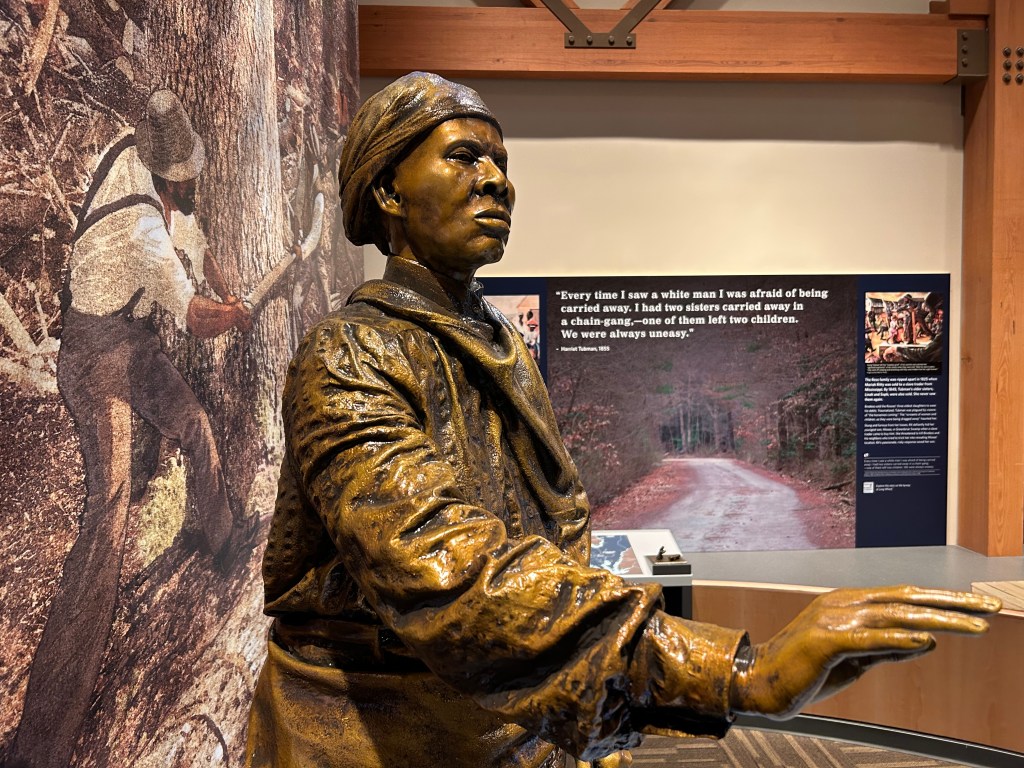
Fellow escaped Maryland slave Harriet Tubman was in the audience, listening to Douglass speak and raising funds there for the Underground Railroad, when she wasn’t liberating slaves in Maryland herself or with her friend Garrett. The Underground Railroad also helped slaves escape up the Mississippi River to New Philadelphia—an Illinois town founded in 1836 by a freed slave—before escaping the reach of the Fugitive Slave Act by crossing the Canadian border. Few of the stops on the Underground Railroad still exist, but I believe Mammoth Cave may have been one, as the enslaved tour guide had rare freedom to organize both tours for visiting Abolitionists and temporary lodgings for “servants”. 

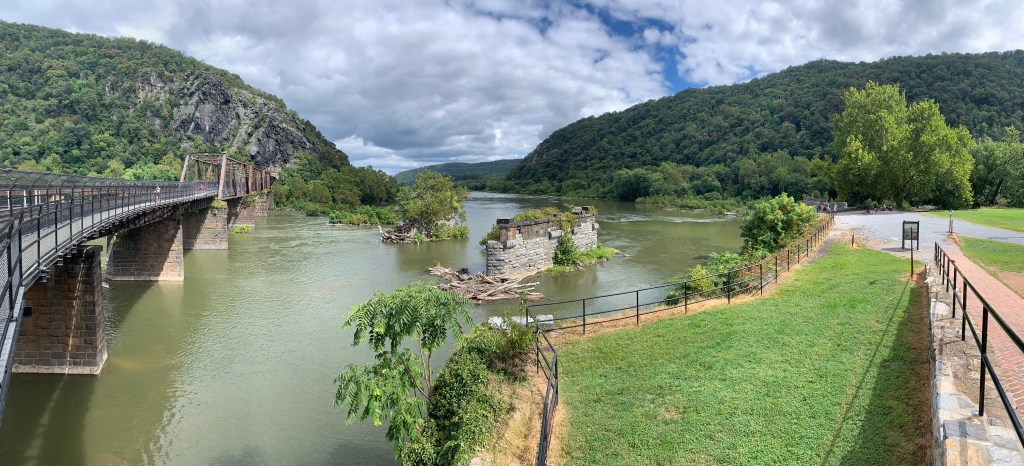
Abolition was also fought in the courts. In 1839, Africans took over the slave ship Amistad, killed the captain and cook and demanded the crew sail back to Africa. Caught off of New York, their murder trial pitted racist President Van Buren against abolitionist John Quincy Adams. The Supreme Court found that the Africans had been kidnapped, had acted within their legal rights to avoid slavery, and were free. The courts were struggling with slavery, where one’s race could change legally from state to state, depending on one’s ancestry. In 1846 a court found a Florida woman, once a slave from Senegal, to be legally Spanish, allowing her to inherit her owner/husband’s plantation. The legislative fight over slavery in new states broke into armed confIict in Kansas in 1854. In 1857, the Supreme Court ruled against a slave named Dred Scott who had sued for freedom in St Louis, arguing that he had become free while in Illinois. Abolitionists, enraged, funded John Brown’s 1859 raid on Harpers Ferry. 

Secession did not stop slaves from trying to self-emancipate. Every Union border outpost or advance into Confederate territory became a magnet for escaping slaves. In 1861, on the day Virginia seceded, three slaves turned up at Fort Monroe and were given protection by the Union Army, which officially labeled them ‘contraband’ meaning ‘illegal to possess’. When the Confederates evacuated Port Royal in late 1861, 10,000 slaves were effectively freed, and Harriet Tubman soon arrived to expand her network of spies and liberators. One of the first Union naval victories happened in 1862, when enslaved pilot Robert Smalls commandeered a Confederate ship, sailed past Fort Sumter at night with his friends & families to freedom, and gave the ship to the Union Navy in nearby Port Royal. 

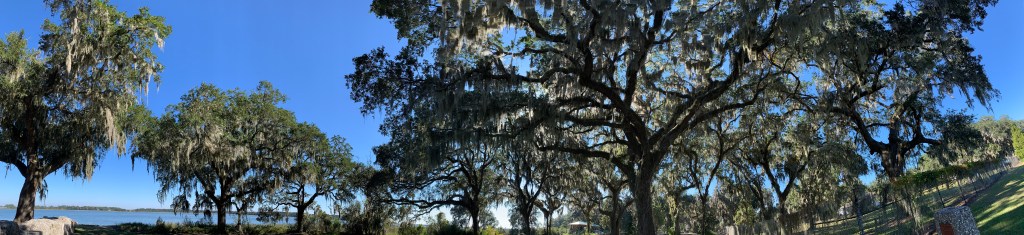
Abraham Lincoln, whose experiences as a boy and as an anti-slavery advocate had prepared him to be President at this crucial time, issued the Emancipation Proclamation on New Years Day 1863—first read under the Emancipation Oaks at Port Royal South Carolina (see photo above)—, both freeing slaves and allowing the formation of African American regiments to fight for freedom, first at Port Royal in South Carolina, then in Massachusetts, Kansas and Kentucky. In 1865, the 13th Amendment abolishing slavery was proposed, passed, signed and ratified, abolishing slavery in the United States, almost. 

In 1866 the ‘Five Civilized Tribes’ in Oklahoma changed their laws to recognize that slavery was no longer legal, making the law legally effective nationally that June. While emancipation reached Texas on Juneteenth 1865, the state officially ratified the 13th Amendment in 1870. Delaware rejected the 13th Amendment in 1865, and they finally ratified it in 1901. Kentucky ratified the 13th Amendment in 1976. And Mississippi, the last state, ratified the 13th Amendment in 1995, but neglected to inform the National Archives to make it official, until 2013. 

Traveling to all the national park sites related to Abolitionism has been deeply moving, and I especially recommend the Boston African American Historic Site, the Harriet Tubman National Historical Park in upstate New York, and most of all, Reconstruction Era National Historical Park near Beaufort, South Carolina. Next week I will cover the Civil War. 

Emmett Till and Mamie Till-Mobley National Monument

”Let the people see what they did to my boy.”

Mamie Till-Mobley

The animosity against African Americans, especially in the Deep South, is hard to comprehend, but it is deep, real, persistent and extremely dangerous. Emmett Till’s mother warned him, but even she underestimated the risk. In late August of 1955, Emmett Till was kidnapped from his great uncle’s home by a shopkeeper’s husband and his half-brother, who accused Emmett of whistling at the shopkeeper, a white woman. From past midnight to pre-dawn, the two men, along with several others, held Emmett, aged 14, in the back of a pickup truck, drove around the county, terrorized him, tortured him, shot him and dumped his body in the river. Witnesses reported hearing Emmett’s screams all over town for hours. His great uncle reported the kidnapping, the men were arrested, and the body was found a few days later. His mother, saying “let the world see what I see”, insisted on an open casket at the funeral in Chicago. Jet magazine published photos of his brutalized body. His mother became a lifetime activist, author and motivational speaker on education, poverty and Civil Rights with the NAACP. Many consider Emmett Till’s killing to be the beginning of the Civil Rights Movement, not least because Rosa Parks cited Emmett as the reason she kept her seat on the bus in Montgomery on 1 December 1955. 

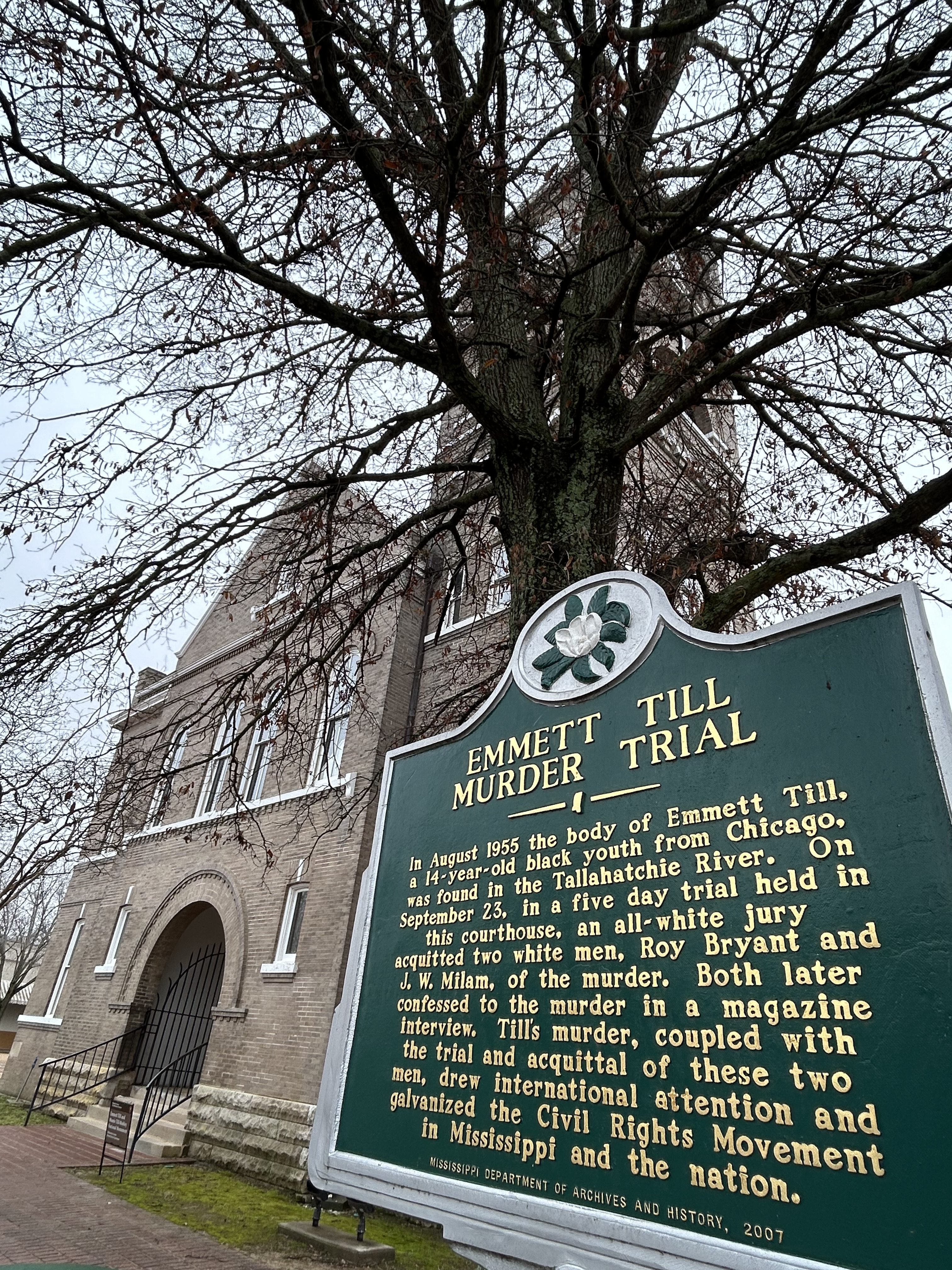
The trial was a foregone conclusion. Outside the courthouse (below) stood a statue dedicated to the “Heroes” of the Confederacy. Inside there was no justice. Instead of jurors, police, court officers and elected officials defending the Law, the courthouse became the focal point of a deep criminal conspiracy, based on racism. Witnesses were intimidated, hidden, immunized and silenced. Emmett’s great uncle testified at the trial, pointing out the kidnappers and murderers, and then he left town immediately and went into hiding under a false name. And for many years afterwards, there has been a concerted effort to conceal the truth. Evidence lost. Signs have been repeatedly shot and torn down. Historic artifacts and structures intentionally left to ruin or demolished. One witness, in hiding for decades under another name, still received death threats demanding silence. The confederate statue still stands in front of the courthouse, just left of the photo. 

But despite the legacy of lies, terror and violence, people still work to tell the truth about Emmett Till. Especially if you’re exploring the new monument’s sites in Illinois and Mississippi, I recommend reading the darkly fascinating stories in the Emmett Till Memory Project app, after being introduced to it by one of the contributors at the Emmett Till Interpretive Center across from the courthouse in Sumner, MS. Emmett Till’s coffin is on display at the National Museum of African American History and Culture in Washington DC. His name was given to the Anti-Lynching Act of 2022. And this new national monument was established by President Biden on 25 July 2023, on what would have been Emmett Till’s 82nd birthday. 

Gulf Islands National Seashore (& Admiral Farragut)

While I like the park and plan to visit it again in warmer weather, the seashore skips over the most important section in the middle. In Mississippi, the park includes the Davis Bayou (photo below) with a nice visitor center and park film, and from mid-March to October you can take a ferry out to Ship Island, look for bottlenose dolphins, explore the beaches and visit a Civil War fort. In the Florida section of the park, there are also birds, long stretches of storm-swept and once segregated beaches, old forts first built by the Spanish and later used by the Confederacy, and another visitor center (closed when I tried to visit) to explore near Pensacola. But the Gulf Islands of Alabama are not part of the national park unit. Forts Gaines and Morgan, the guardians of Mobile Bay, are Alabama State Parks. But that’s where the action was. 

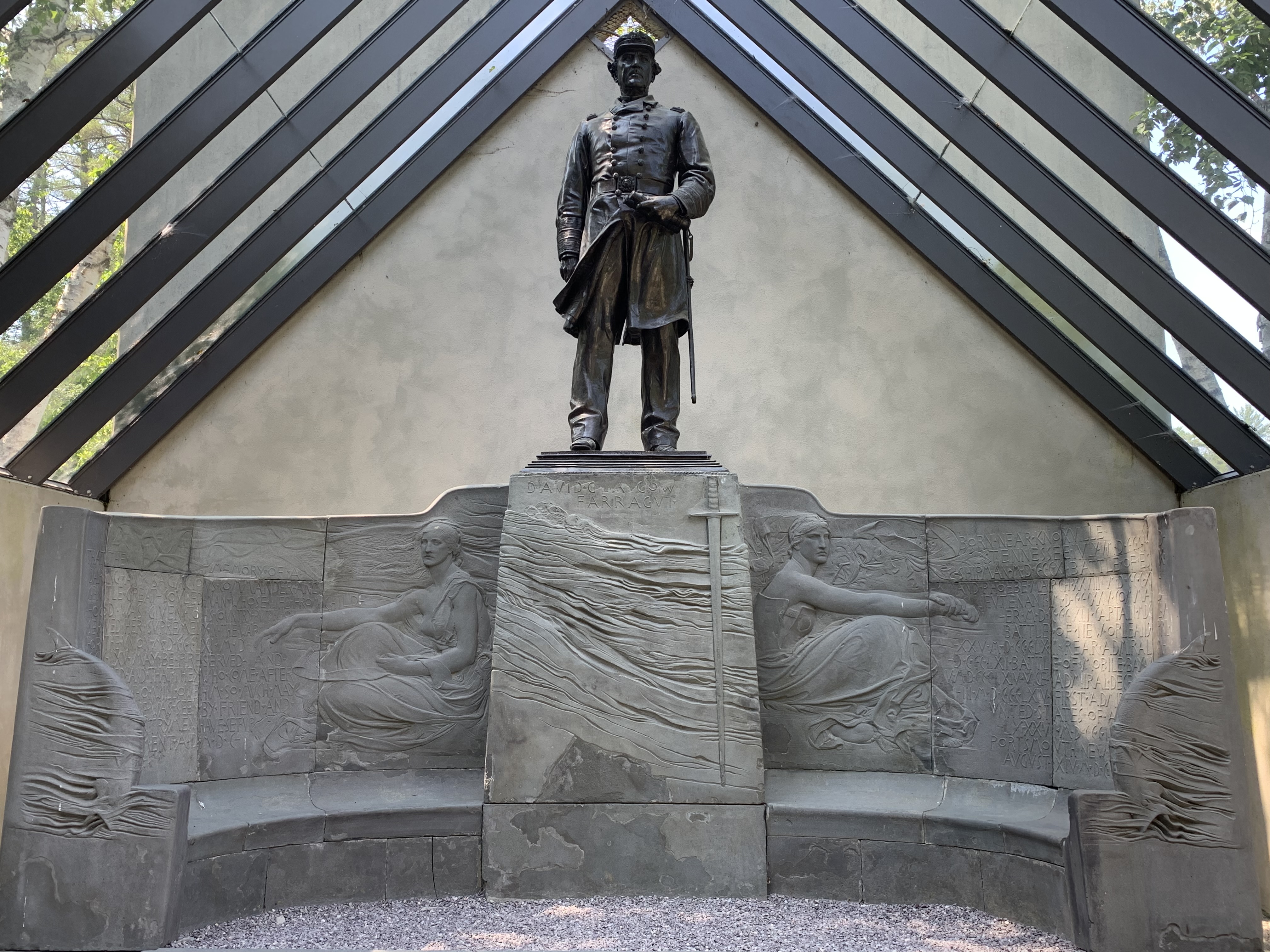
General Grant relied on combined naval and land forces to take Fort Donelson in February 1862, which cut off the Cumberland River from the Mississippi. In April, Flag-Officer David Farragut (depicted by Gaudens above) began his gulf coast campaign by sailing up past the forts guarding the Mississippi and taking New Orleans. After the Union freed the city, three regiments of African American troops were quickly organized, and many of those men first served on the Gulf Islands, helping retake the forts along the gulf coast. In June, Farragut was wounded near Vicksburg. 

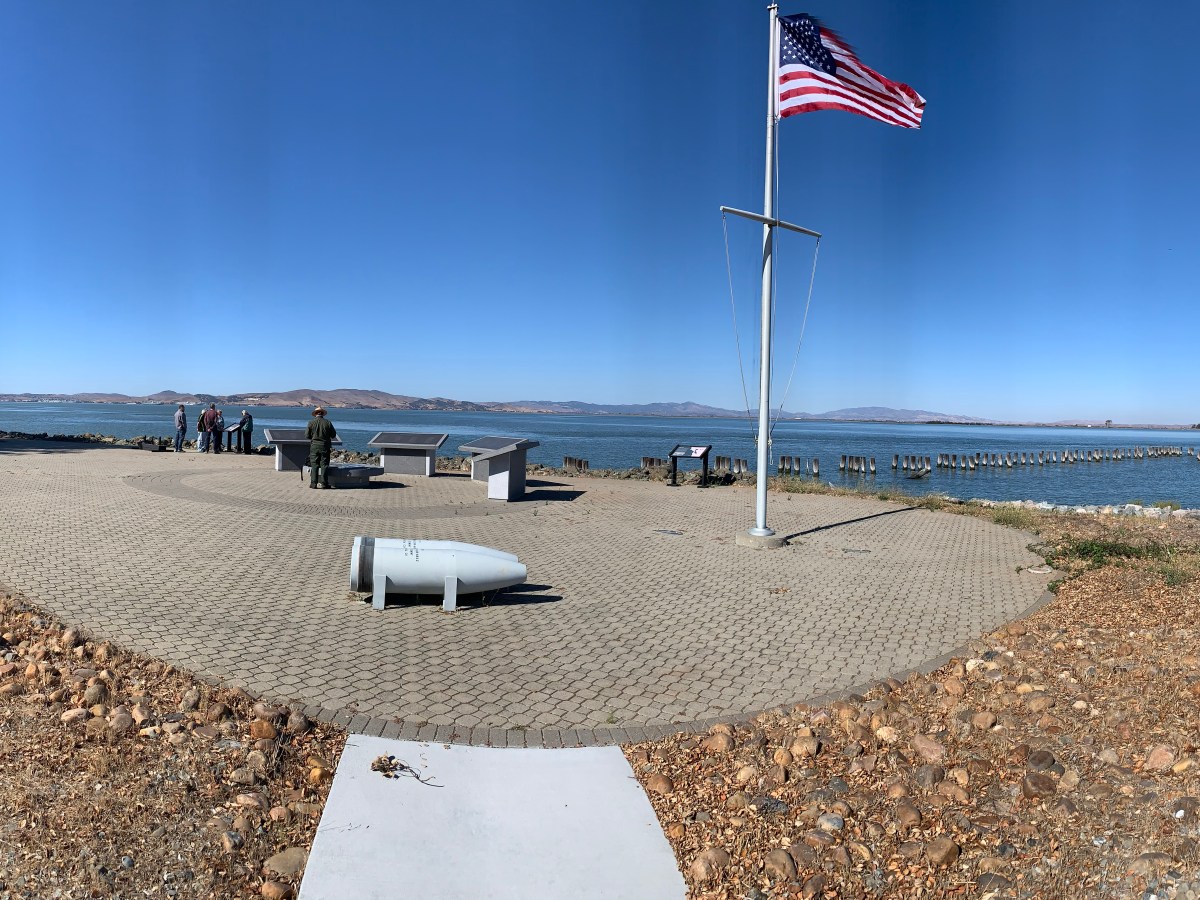
The Confederacy’s last large port was Mobile Bay. In 1863 the Union took Vicksburg, but to speed the end the war, now Rear Admiral Farragut needed to sail past the forts guarding Mobile Bay. In 1864, the Confederacy, having learned from their mistakes in New Orleans, had heavily reinforced Mobile Bay’s naval defenses among the many fortifications along the Gulf Coast. Fort Gaines guarded the shallower west side of the bay, and Fort Morgan guarded the deep water ship channel from the east side. The gaps were filled with floating sea-mines, called ‘torpedoes’ at the time. And the port was guarded by the massive ironclad CSS Tennessee, the most powerful warship in the world. 

Farragut had four small new ironclad ‘monitors’ leading his fleet: the Chickasaw, Manhattan, Tecumseh, and Winnebago. He decided to run the gauntlet up the main channel into the large bay, boldly trying to move fast and far enough to get out of range of Fort Morgan’s guns. Under fire from the fort, the Union navy advanced with its ships lashed in pairs with the monitors on the side taking the heaviest fire. Farragut climbed into the rigging to get a view above the thick smoke. The Tecumseh crossed a mine field to engage the Tennessee, exploded one and sank immediately with 93 lost. 

Seeing his fleet hesitating and the Tennessee closing in, Farragut yelled down something to the effect of “damn the torpedoes, full speed ahead!” The remaining monitors surrounded the Tennessee, disabled her and eventually blasted a hole, injuring the Confederate Admiral. The rest of the fleet entered the bay, got behind the forts, and shelled them. The Army, including African American regiments from New Orleans, approached the forts, which surrendered, first Gaines without much of a fight, and then Morgan after a heavy siege. 

Mobile Bay was closed, cutting off supplies to the Confederacy. And the Confederate Army was tied down defending the city, helping open up Sherman’s march to Atlanta. While Alabama’s Gulf Islands are not part of the national park service site, they are in the middle of the line of hurricane barrier islands and sandy peninsulas where this major Civil War battle was fought on land and sea. Admiral Farragut and the Union Navy’s contributions to ending the Civil War must not be forgotten. 

Forest Wildfires

I know it’s winter, but we need to talk about wildfires. There is a common, simple-minded view—popular among those who deny climate change—that overzealous park employees unnaturally suppressed fires, causing wildfires today. End of story. Once we ‘catch up’ on the ‘fire deficit’ everything will be fine. This is bunk.

Last year Canada had a record-smashing year of wildfires, and the frequency of wildfires far exceeds what is normal, considering the naturally slow growth rate of trees in boreal forests. Most of these fires were in remote northern Canada, where historic fires were not even reported, let alone suppressed. The estimated number of fires was not too high, but many of the fires were mega fires, burning over seven times as many acres as the modern historic average. There is only one explanation for the scale of the wildfires last year, and it isn’t Smokey the Bear. The primary cause of increasingly severe forest fires is carbon pollution. 
The first humans to change natural fire ecology in North America were natives who for centuries used fires in the valley for agriculture and to attract game with new grass. The most destructive humans by far were loggers who clear cut whole forests. During the Great Depression, roads and campgrounds were developed in both old and regrown forests, bringing millions of visitors who parked their hot cars on dry grass, dropped their cigarettes on pine needles and left their campfires unattended, causing a dramatic increase in forest fires. Firefighters responded by putting out fires when they threatened nearby communities.

We changed forest fire ecology in complex ways over centuries, so the simple ‘fire suppression’ explanation is false. We don’t know exactly what the forest’s natural ecology was like before man started playing with fire here, but man’s brief experiments for a few decades last century—causing wildfires due to camping and suppressing some fires at the edges—all account for maybe 2% of the life of a Giant Sequoia. Yosemite park rangers tracked all fires within the park since the 1930’s, and for decades none of the fires were large enough to matter to the overall health of the forests until recently. Past fires were often 100 or maybe 1000 acres, but recent forest fires are 100,000 or 1,000,000 acres. Our hotter climate has changed everything. Now we need to change our perspective from our recent past to the consequences of our carbon pollution on the future. Extinction is not a mistake we can correct later. 

California has the most national parks with 28 park units, and about 12 of them have some type of large forest, often wilderness. I’ve been in all of those forest parks in the past year or so, and 9 now have huge swaths of dead trees from recent wildfires. 

Only Muir Woods, a small coastal redwood forest park along a creek surrounded by wealthy suburbs, has been spared. Pinnacles has had multiple wildfires in the past three years, but firefighters managed to contain them quickly. Even foggy Redwood park lost 11,000 acres in 2003 due to the Canoe Fire. 

This level of wildfire is not normal; it is out of control, and it is getting worse. Discussing past firefighting efforts and increasing the rate of manmade fires is not going to fix the problem. If we do not stop our carbon pollution, then 100 years of environmentalists’ efforts to save these forests for future generations will be wasted. 

Pacific Crest National Scenic Trail

My favorite trail runs from the California border with Mexico up around LA to Sequoia and Kings Canyon, through Devil’s Postpile, Yosemite and Lassen. Then it continues up to Crater Lake in Oregon, crosses over the Lewis & Clark trail on the Columbia River into Washington, past Mt Rainier, to the high bridge (see photo) between Lake Chelan and the North Cascades, crosses the Pacific Northwest trail and finally crosses the Canadian border.

The PCT is 2,650 miles and grew out of Clinton Clarke’s idea in the 1930s to link existing trails to create a border-to-border extremely scenic trail. Although in 1968 it officially became one of the two first national scenic trails—along with the 2,190 mile Appalachian Trail—, the PCT wasn’t completed until 25 years later. It’s a foot trail (e.g. horses), no vehicles (e.g. bicycles). Having visited all the parks and many of the national forests wilderness areas along the trail, including places photographed by a PCT founder named Ansel Adams, it’s one of our great national treasures. 

All Labor Sites, Zero Carbon

I recently completed visits by electric vehicle to all US national park sites primarily focused on (paid) labor issues, including agriculture, mills, mining, railroads and steel. Even more interesting than learning about dangerous early working conditions, was realizing that the worst cases of labor conflicts and disasters in our history share common circumstances. When there is excess capital with extreme time pressure to achieve returns especially in a limited geographic area, owners engaged in hyper-competition often resort to unethical, unsafe and/or illegal tactics to extract profits at the expense of their own employees.

Agriculture

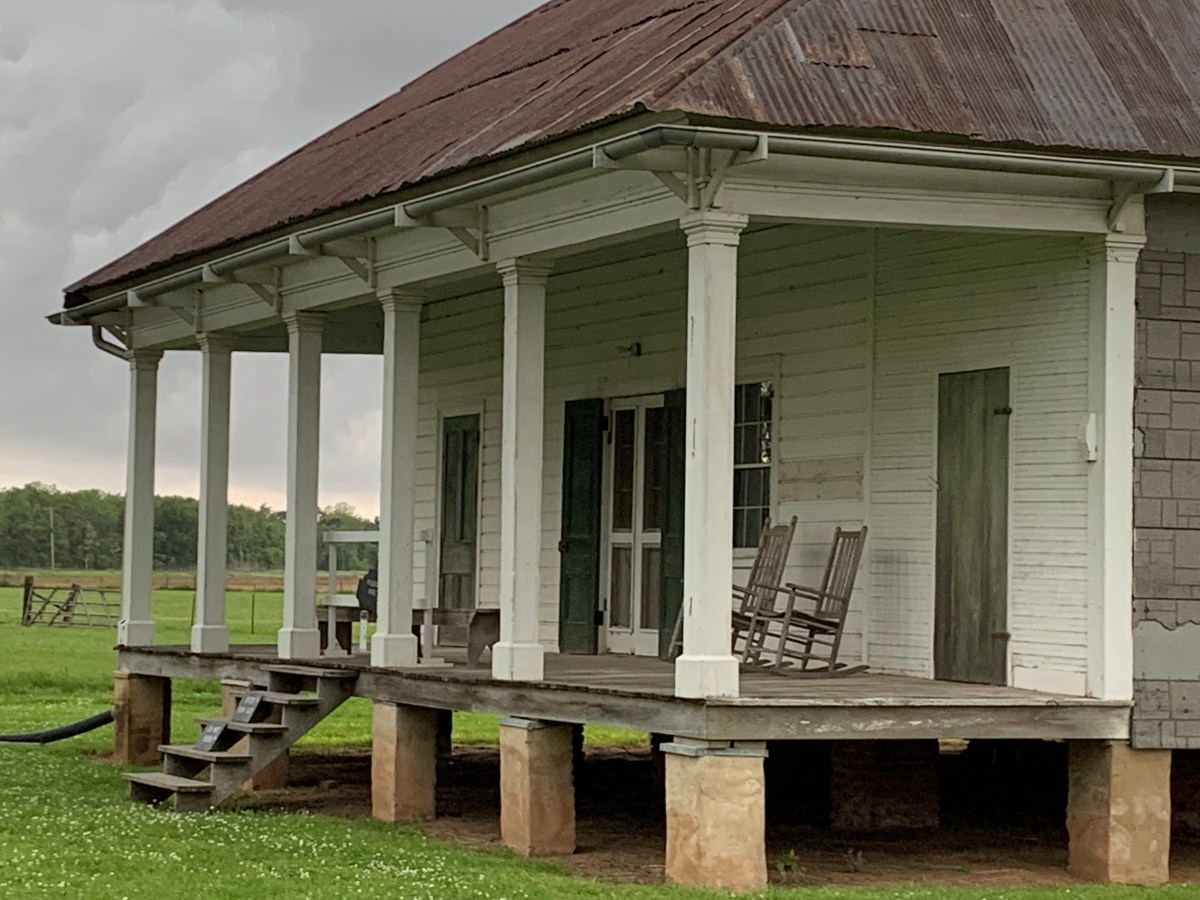
After visiting one more site, I will write a separate post about slavery. Even after emancipation, agriculture continued to exploit farm labor brutally, through sharecropping & tenant farming, where workers were kept in perpetual debt to the owner.  Cane River is a good place to learn how a plantation adapted to exploit farm labor in different ways from before the revolution to WWII.  As black workers moved into industry after that war, agriculture began to exploit more migrant workers, especially Pilipino & Mexican workers on the west coast.  National chains engaged in ruthless competition with local owners over the most productive fruit farmland in California—supported by unjust foreign labor policies—cutting labor costs to maintain profits as prices fell.  César Chávez park is a good place to learn about the history and resulting farm worker strike.   

Mills 

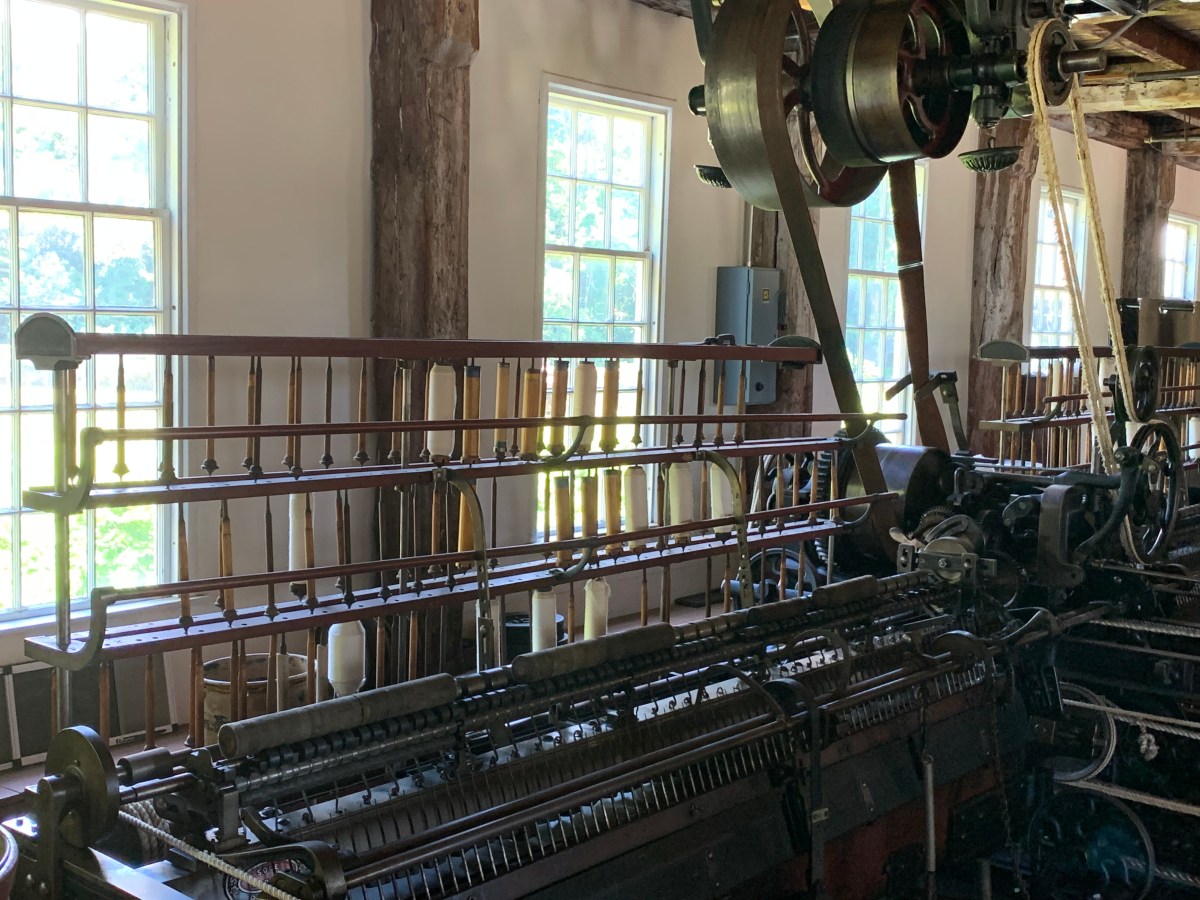
Water-powered industrial mills pre-date our country, but they were refined and boomed after the revolution.  The company town developed near the first cotton mills in Rhode Island and were copied at similar sites in New JerseyMassachusetts and Ohio.  Before electrification allowed factories to be built in cheaper locations, mill towns only formed in very specific places along rivers with large volume water falls near ports.  This meant concentrated competition among many firms using the same techniques.  Labor needed training and skilled, small fingers were more nimble than large.  So, owners hired women and children.  Immigrants arrived by the boat load.  Supplies of cotton came from slave plantations often owned by the mill owners.  The incredible boom in productivity led to collapses in prices.  70+ hour work weeks, strict control of women’s lives, economic control of labor through company housing, stores, entertainment and even churches, and child labor became used to sustain competitive advantage.  Strikes, often organized by women, were oppressed with dirty tricks and pressure tactics including media smear campaigns and violence.  Safety was disregarded, as seen in disasters like Pemberton Mill near Lowell in 1860 when over 100 women & children were crushed by heavy machinery or 50 years later in the Triangle Shirtwaist garment district fire.  

Mining

Mines often create cruel capitalism conditions.  Investors see growing demand & high prices and over-invest, funding multiple aggressive firms with similar equipment.  Labor and small operators flood the area, with everyone trying to ‘strike it rich’ with the mother lode.  From black lung in coal country to radiation sickness in uranium mines, owners sacrifice miner lives and crush strikes with violence and dirty tricks.  (Watch “Harlan County USA”).  The world’s largest pure copper lode was found and mined in upper Michigan (see photo), where at a Christmas party for striking families upstairs in Keweenaw’s Italian Hall, an anti-unionist outside shouted ‘fire’ and blocked the door: 59 children and 14 parents were crushed to death.   

Railroads 

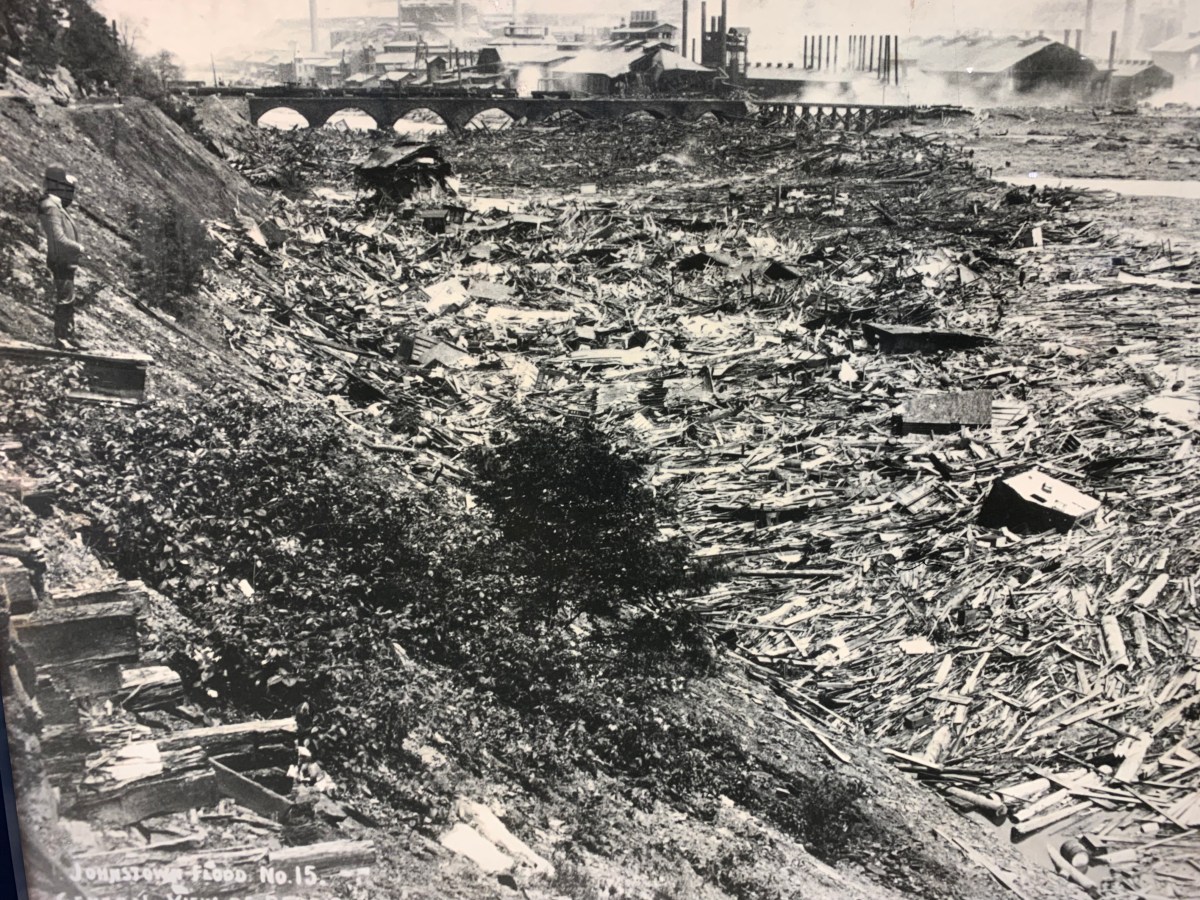
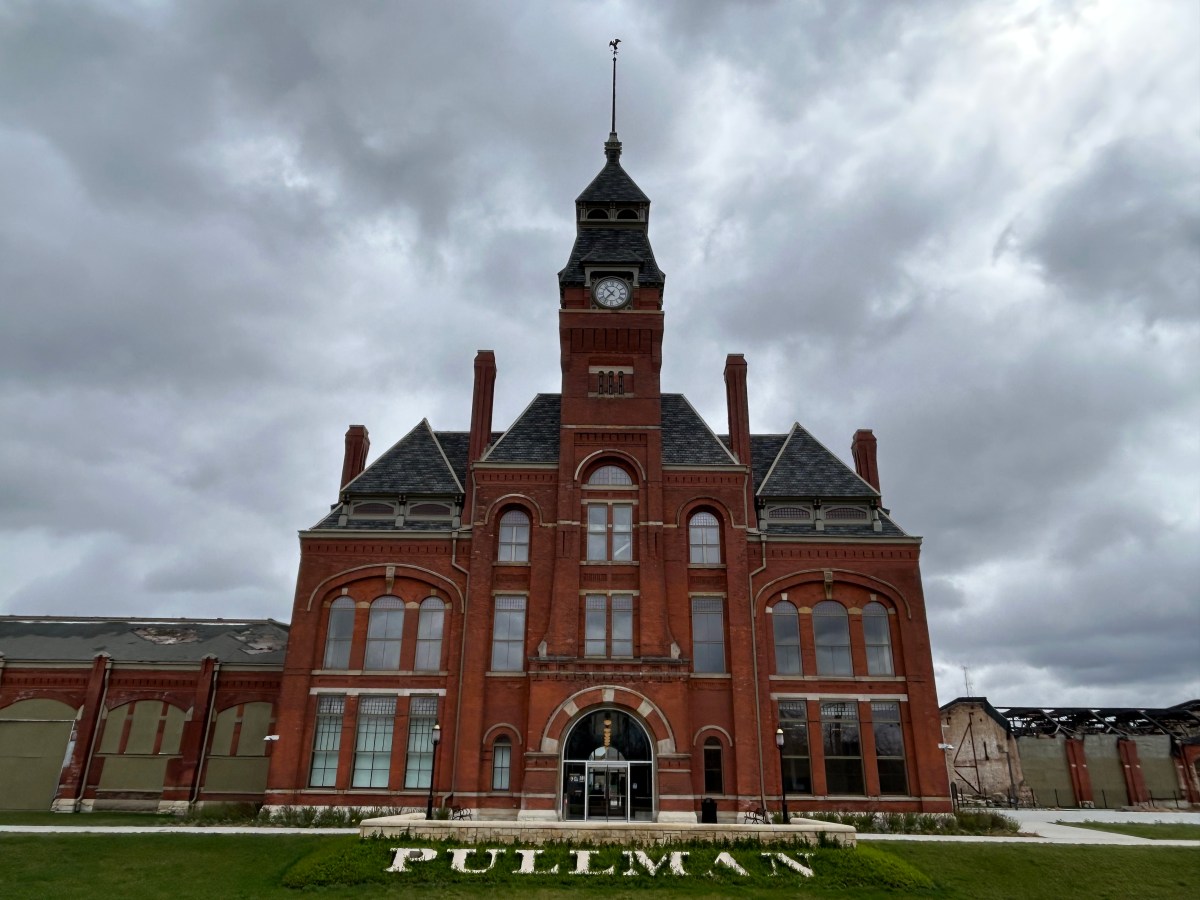
Disregard for the lives of their workers became part of the gilded age tycoon culture.  Despite repeated safety warnings, the wealthy club members on Lake Conemaugh voted to raise their dam an extra two feet to avoid dirtying their hems while crossing.  The resulting flood wiped out the company town of Johnstown Pennsylvania, killing over 2,200 people.  Speculation on railroad stocks led to frequent booms and busts and much over-investment, with only limited lines becoming profitable.  Labor was also imported from China with strict laws prohibiting settling permanently.  Railroad owners faced diminishing returns, and repeatedly pressed labor for concessions, provoking a massive strike led by Pullman porters.  Rather than negotiate, management bought the US Attorney General and influenced President Cleveland to bring in the troops.  

Steel

The history of labor is replete with examples of class division: people of color, women, children and immigrants are systematically paid less. Capitalists can cut labor costs by keeping one group down, which they leverage to lower labor costs for all. World War II broke standard labor practices, hiring women and minorities to build ships and produce armaments, but as after other wars, many labor gains were later lost. Racism is not always understood as an economic tactic, but the history of labor and civil rights are inextricably linked. Birmingham Alabama had a hyper-competitive steel industry—as the only location in the world with significant amounts of iron, coal and limestone nearby—, and owners organized to divide labor along racial lines to lower their costs: they codified racial segregation, including prohibiting black and white children from playing together.  The modern civil rights movement grew in response to racist social policies imposed by steel factory owners seeking to perpetuate a two-tiered wage system. 

Lessons

Capitalism is mutually beneficial for customers, employees, owners and society. But especially when an owner is at personal risk in a hyper competitive business with diminishing returns, there is an incentive to cheat, act unethically or even commit crimes.  Some capitalists use their wealth & power to corrupt government and civic leaders, influencing media and disenfranchising voters. Cruel labor conditions have persisted in this country for centuries, changing only with war, disasters, violent strikes or specific market collapse: i.e. too late.  

If we learn from history, we can curb the excesses of hyper-competitive capitalism. Look for large concentrations of capital aggressively competing to dominate a single market in a short time frame. Look for extreme funding of misinformation, government corruption, efforts to divide the public and restrict voting. Hold business leaders to strict legal and ethical behavior. Then, perhaps, the next tragic chapter in our labor history can be avoided. 

Sequoia National Park

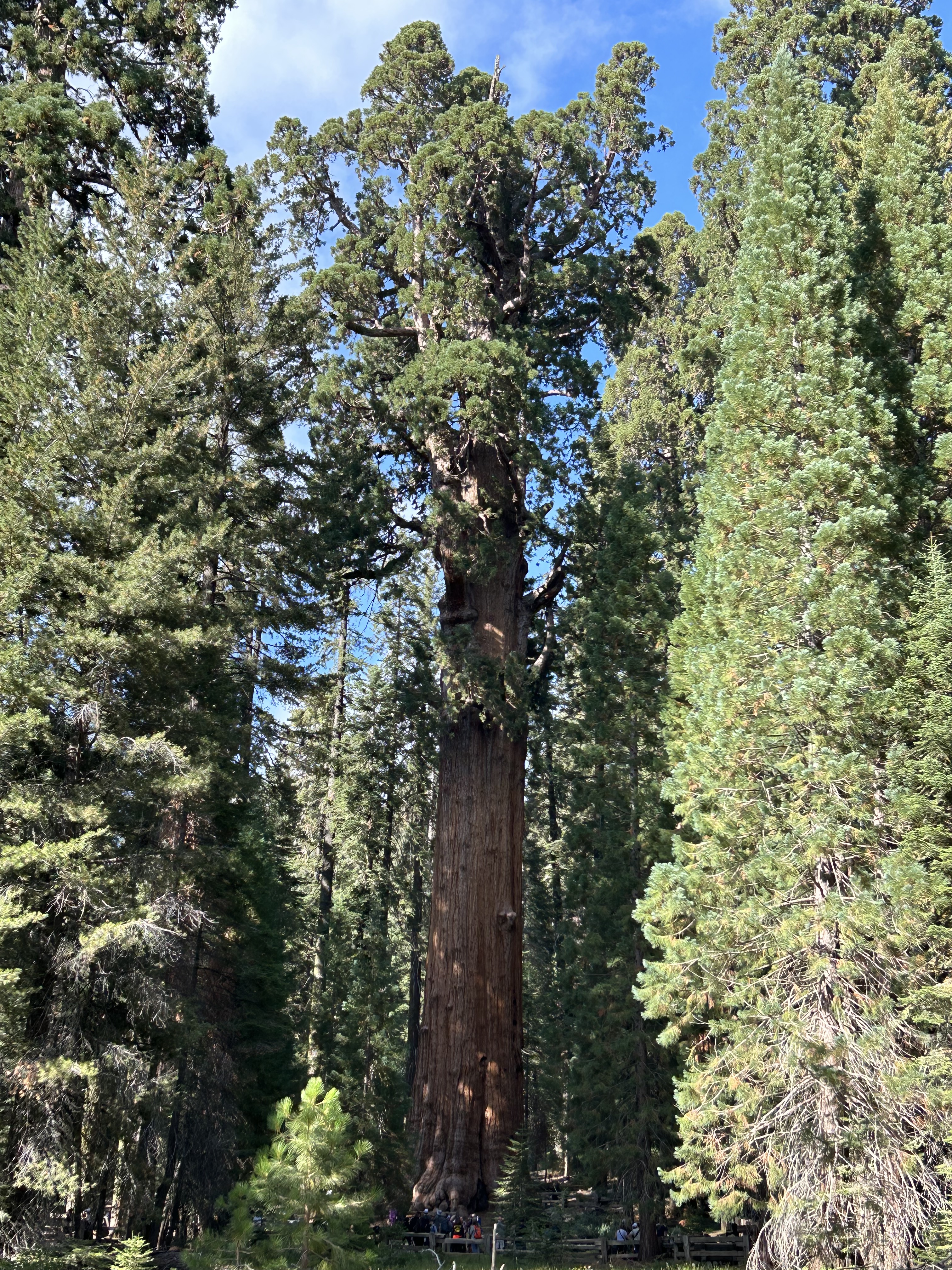
General Sherman, the Giant Sequoia above, is the largest living single organism on earth. Over half of the largest trees on earth are in this park and in neighboring Sequoia National Monument, Sequoia National Forest and Kings Canyon. This park is my favorite for giant trees. For millions of years, these magnificent trees thrived here, near the southern end of the Sierra Nevada—‘jagged, snowy’—mountains. The taller, thinner coastal redwoods mainly live closer to the Pacific where cool ocean breezes bring fog, protecting them.

But in a small fraction of one Giant Sequoia’s 3,000 year lifespan, humans have burned so much carbon into the atmosphere that the mountains here no longer hold snow all year, serving the immovable trees an eviction notice. Just in 2020-2021, between 13% and 19% of the world’s Giant Sequoias were burned to death in consecutive huge wildfires here. These trees evolved to survive fire, and, until recently, mature Giant Sequoias survived wildfires. The Climate Crisis has changed that, putting this species at risk of extinction in our lifetimes.

Many of the groves and much park wilderness are currently unreachable, due to post-fire erosion washing out roads, bridges and trails. Finding sections of the park unmarred by burn scars is challenging. The trees here are magnificent, but I recommend visiting Redwood to find solace. While most of our Giant Sequoias still live here for the time being, please don’t burn gas to get here. The last giant forests the loggers failed to destroy with sawmills, we are destroying with our cars and airplanes. By choosing to burn carbon, we are destroying the ecosystem these magnificent trees needed to live naturally for thousands of years. It would be too sad to visit only to say goodbye. 

Keweenaw National Historical Park

Reports of a two ton boulder of pure copper lying in a river bank on the Keweenaw peninsula of the upper peninsula of Michigan were dismissed as tall tales, until proven by a geologist in 1840. The boulder wound up at the Smithsonian Natural History Museum, a huge mining boom rush erupted, and the closest port town was named after the geologist, Houghton. Most of the small mines failed, but eventually a large consolidated firm found and mined the largest pure copper lode in the world.

Technically the copper was “rediscovered” (or stolen) as the Native Americans here had been mining it for at least 7,000 years and traded it as far as Effigy Mounds, Hopewell, and other prehistoric sites around the country—so don’t accept the common misconception that Europeans introduced metal work to this continent. However, European immigrants did expand the mines here to an astounding scale. The deepest part of the Quincy Mine above is over 9,000 feet below ground, which is over 6 times deeper than the Empire State Building is high, with huge rooms left behind after the copper seam was excavated (see photo), and 92 levels mostly flooded after the mine closed in 1945 due to competition from western mines.

The huge equipment includes many rare and once record-breaking pieces of industrial machinery, and the Quincy Mine tour is fascinating and essential to understand miners’ lives. Be sure to get a big Cornish Pasty at Roys in Houghton. There are some museums and a visitor center in Calumet, including a magnificent old theater with lovely murals, but since most of those tours are only in the afternoon, it may be smarter to tour the mine in the morning. There are a couple dozen interesting sites on the Keweenaw peninsula, but for me the most haunting exhibit was the description of the Italian Hall disaster at Christmas in 1913.

While capitalists are allowed to organize freely under the law, labor was not. Thousands of copper miners went on strike, and the mine owners hired ruthless, violent strikebreakers. Someone—an anti-unionist according to eight witness who later testified to Congress—yelled ‘fire’ into a crowded Christmas party on the second floor of the Italian Hall in Calumet. There was no fire, but 59 children and 14 adults died. Woody Guthrie explained what happened below.

“The copper boss’ thugs stuck their heads in the door,
One of them yelled and he screamed, “there’s a fire”
A lady she hollered, “there’s no such a thing.
Keep on with your party, there’s no such thing.”

A few people rushed and it was only a few,
“It’s just the thugs and the scabs fooling you, “
A man grabbed his daughter and carried her down,
But the thugs held the door and he could not get out.

And then others followed, a hundred or more,
But most everybody remained on the floor,
The gun thugs they laughed at their murderous joke,
While the children were smothered on the stairs by the door.”

“1913 Massacre” by Woody Guthrie

Kings Canyon National Park

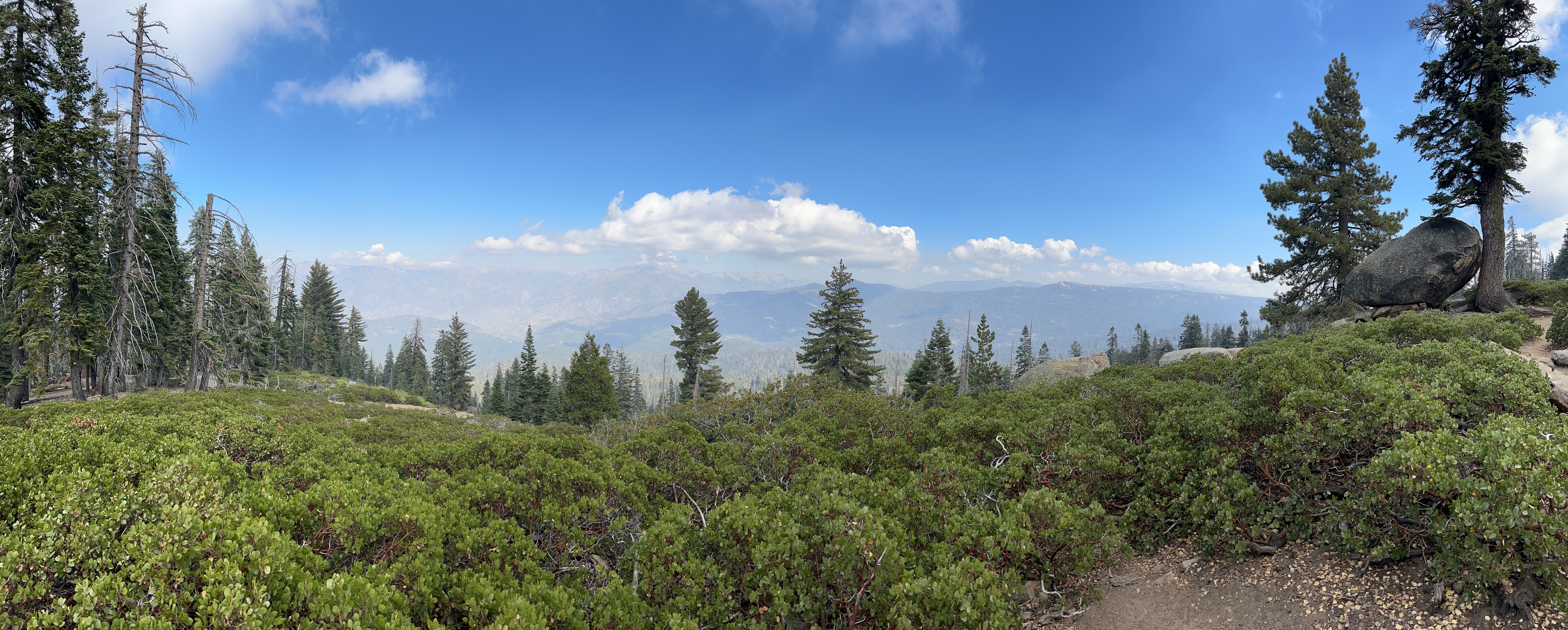
John Muir loved the view from Panoramic Point above, as did Stephen Mather, the first national parks director. I visited the park years ago with my family, and the scenery was stunning. But the view was less inspiring when I visited this summer. Smoke from a wildfire shrouds the view of Kings Canyon in the distance. You can hardly see the lake in the photo above. Behind me stand acres of dead trees burned in the huge wildfires of the past few years, and the main road into the heart of Kings Canyon wilderness was still closed this summer due to fire damage. If Muir & Mather visited now, they would be as heartbroken as I.

Experts employed at this California park have long argued influentially in favor of more fires, have implemented prescribed burns in forests across the west, and they chose to let the wildfire above burn itself out. Their dogma blamed past firefighters for causing today’s wildfires. Even though park rangers are not allowed to smoke, leave campfires unattended, burn out shelters in trees, or use fire to hunt, this park’s scientists used to argue that we needed those ‘Native American burn practices’ for forest health, even though these forests evolved without humans. Too many forest rangers and climate change deniers use this illogical nonsense to ignore and dismiss the danger of carbon. 

This year 46 million acres of wilderness forests burned in Canada in roadless wilderness areas consistently ignored by firefighters in the past. How could these wildfires have been caused by past ‘fire suppression’? The dogma is wrong. After the unprecedented recent wildfires, park scientists here have belatedly begun to recognize the predominant threat of climate change, far worse than any prior suppression errors. 

When Muir & Mather described the area, they did not remark on seeing any large areas of burned trees, made no note about any fires that regularly demolish many thousands or even a million acres every few years, and they did not write about the supposed benefits of Native Americans regularly setting fires while pelt hunting. Instead, they were inspired by the beauty of huge swaths of living forests and pledged to protect them forever. Scheduled fires, tree density limits, species removal, reseeding, and other human intervention are not what Stephen Mather had in mind when he called such places ‘untrammeled wilderness’. Muir would have harsh words against the ~$250 million annual timber sales in the forests he and Teddy Roosevelt protected. 

If Muir & Mather could return, they would notice that the whole forested range has changed dramatically, the air and ground are drier, the temperature is unseasonably hot, the rivers and creeks are dry, and that the snow is gone from the mountaintops. They would be dismayed by the decline of once abundant wildlife. Muir, who never rode in cars, preferring horses or hiking, would see the lines of buses, RVs and cars burning gasoline, and he would shout ‘STOP’!

In the future, doubtless people will be horrified to learn that in the face of climate change fueled wildfires, we chose to burn our remaining forests ourselves, releasing even more carbon into the air. It’s like using leeches to cure people, even though they make the patient weaker. Or like destroying the village to save it.

Forest science must face the future, not misrepresent the past. We need national policies to limit carbon pollution, not taxpayer-funded ‘prescribed burns’ that increase carbon pollution. If new conditions require fire breaks or dead trees need to be removed, then why can’t trees be cut down and buried with sand, instead of being burned? If certain types of trees will no longer survive in the future hotter climate, then we shouldn’t be paying people to plant seedlings for more of the same trees in the same places that burned down two years ago. We need to charge visitors in gas-burning vehicles a carbon surcharge to encourage people to switch to electric vehicles (and to mitigate some of the damage they do). 

We ended wilderness. Our carbon pollution is trammeling every species on earth. We have precious little time remaining to figure out how to save species before they go extinct forever.

Without wilderness, we will eventually lose the capacity to understand America.
Our drive, our ruggedness, our unquenchable optimism and zeal and elan
go back to the challenges of the untrammeled wilderness.

Harvey Broome, founder of the Wilderness Society

Butterfield Overland & Pony Express National Historic Trails

From 1858 to 1861 John Butterfield operated the fastest and most reliable stagecoach route west via the Oxbow Route that bent from the central Mississippi River deep along the Mexican border and up California to San Francisco, before the Civil War put him out of business. The trip took 25 days (or less) and carried mail, passengers and freight. The current parks along that route are below.

From 1860-1861, express mail was carried by young riders—including a young ‘Buffalo’ Bill Cody—who would stop only briefly to switch ponies along the way. That trip took 10 days along the pioneer trail, but the completion of the transcontinental telegraph line later in 1861 put them out of business. Due to the simple nature of the operation, almost all of the original trail and stations are gone, but a few remain. I’ve visited stops and roughly driven the length of the trail by EV, and I recommend the following sites to enthusiasts.

  • Stable & Museum in St Joseph Missouri
  • Hollenberg Station in Hanover Kansas
  • Fort Kearney in Nebraska
  • Scotts Bluff in Nebraska
  • Fort Laramie in Wyoming
  • Heritage Park in Salt Lake City Utah
  • Wells Fargo Bank in Old Town Sacramento California