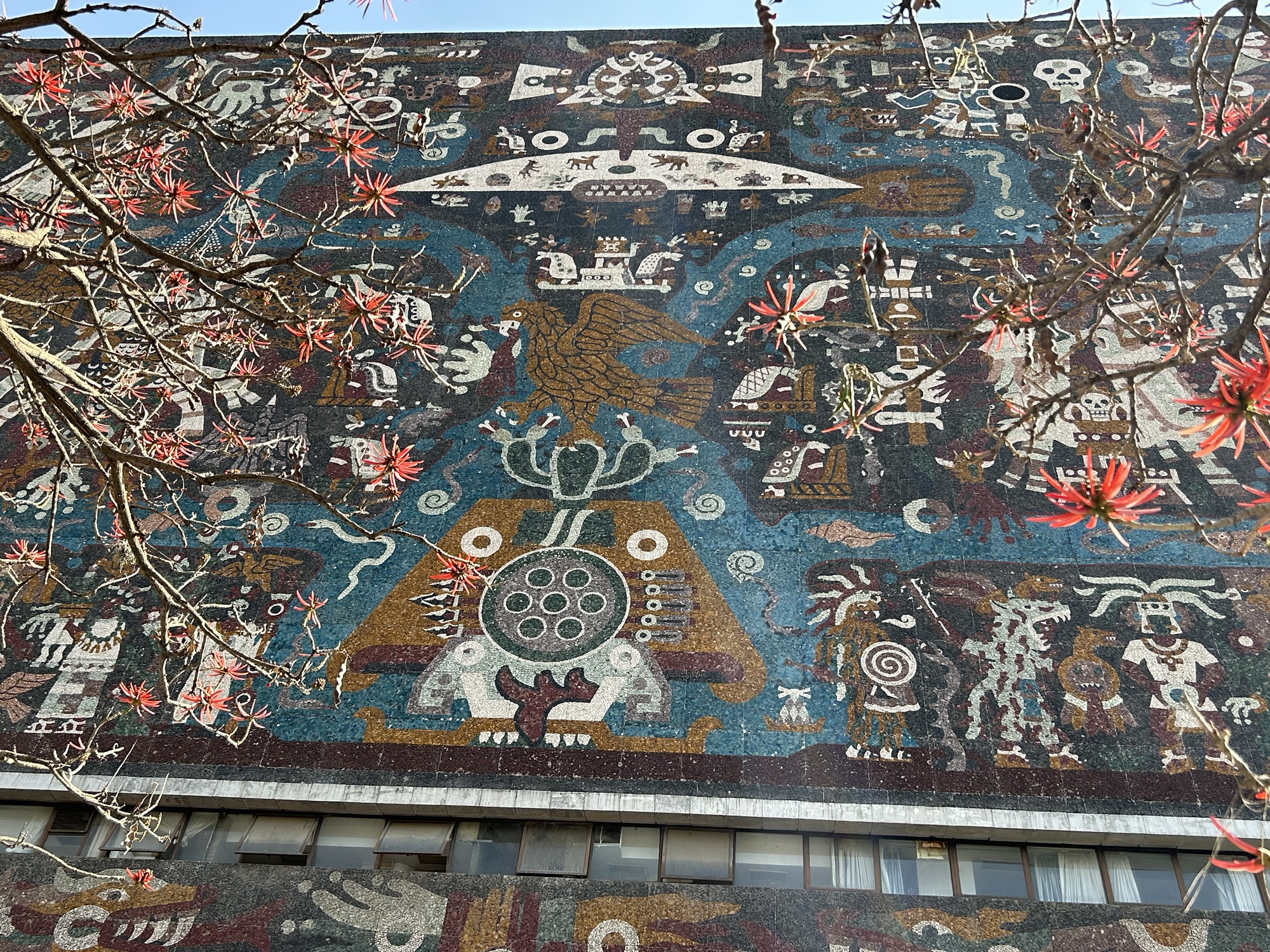
University City, the main campus of UNAM, the National Autonomous University of Mexico, is a World Heritage Site, and it was founded in 1551, just four months after the oldest university in the Americas was founded in Peru. It is autonomous, meaning free to teach without government interference, although the PRI government did kill hundreds of students in 1968, during the Tlatelolco massacre. The faculty and alumni include all Mexican Nobel winners to date. The north face of the 10 story Central Library (above) is covered with Aztec mural mosaics by Juan O’Gorman, friend of Diego Rivera.
Being a cantankerous old mule, I decided not to reserve a spot on the free shuttle and hiked through Las Trampas Wilderness Regional Preserve to visit the site, partly because I’m trying to visit the parks via non-carbon transport and partly because I visited the park not too many years ago and didn’t need a repeat experience. The wealthy landowning neighbors (one property currently listed at $10 million) don’t like the riff-raff driving past their landscaping, so they insist that visitors take the shuttle from downtown, even though there’s plenty of space for parking on site. When locals benefit from tax spending on public parks, then try to limit public access, and typically complain about tax spending going to the poor, the selfish hypocrisy stinks. So I decided to park in front of the most ostentatious private drive I could find and hiked about a mile to Tao House.
O’Neill, America’s most accomplished playwright and father of American tragedy who won four Pulitzers and the Nobel Prize for Literature, used the stipend from that last award to settle here on this quiet ranch. He enjoyed several years here with his wife Carlotta and wrote some of his best work, including the autobiographical plays The Iceman Cometh and Long Day’s Journey Into Night. Many of the artifacts here are not original but do a good job of recreating the atmosphere of his comfortable, private writer’s retreat, and the few original items and personal touches, showing Asian theatrical influences and his love of his dogs, make the tour worthwhile. Illness forced him to leave during the war, prevented him from continuing to write, and he died in Boston, although his work continued winning awards.

 Zero Carbon Travel