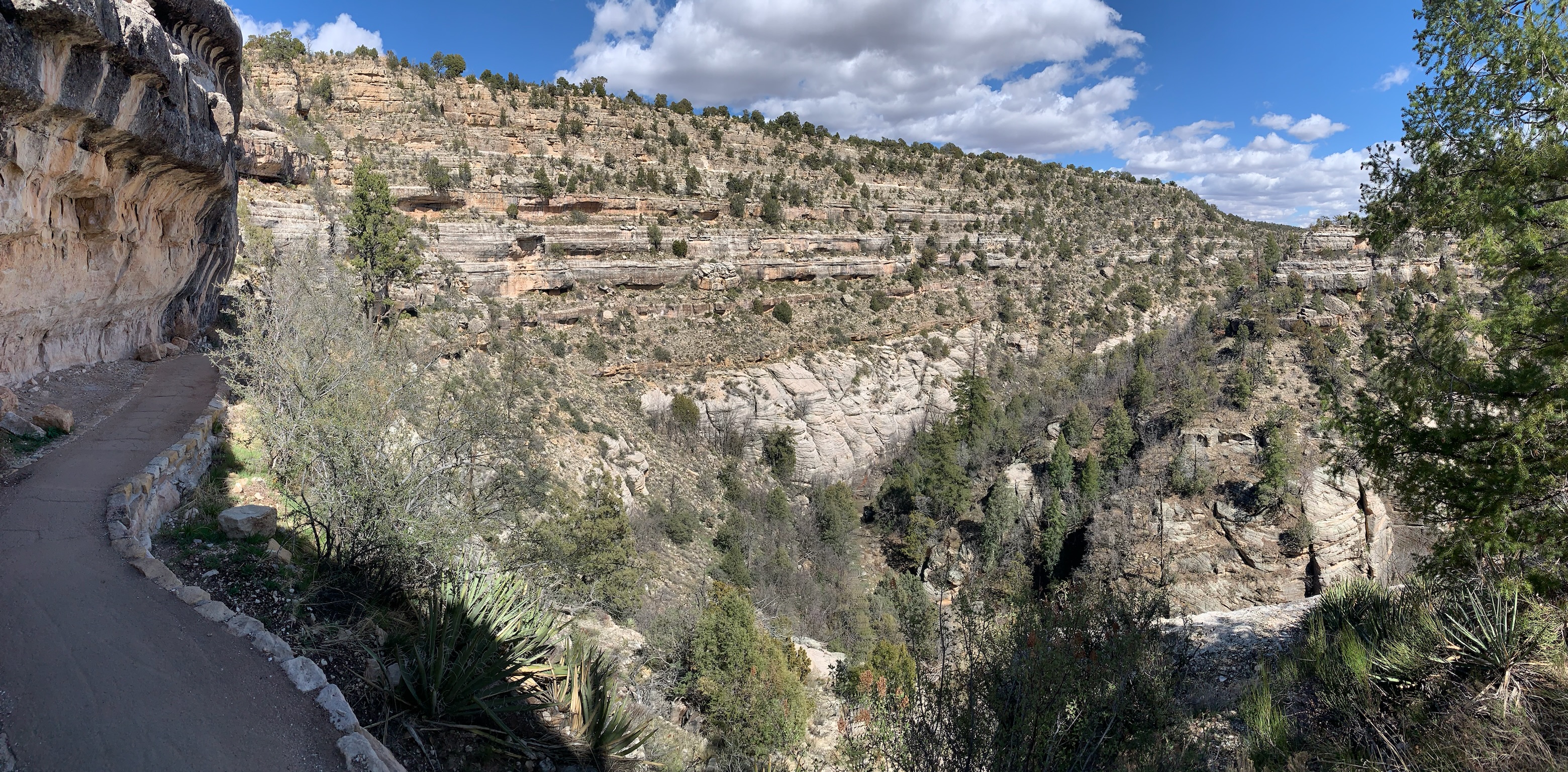
With a bit of hiking down into the canyon, you can walk right alongside many cliff dwellings and look across the canyon at more. The steps bring on a bit of vertigo and require extra breathing at around 6,500′, but the views are extraordinary. Plan ahead, since the Island Trail closes at 3:30 pm.
Both the alcoves along the trail and in the distance contain many cliff dwellings.
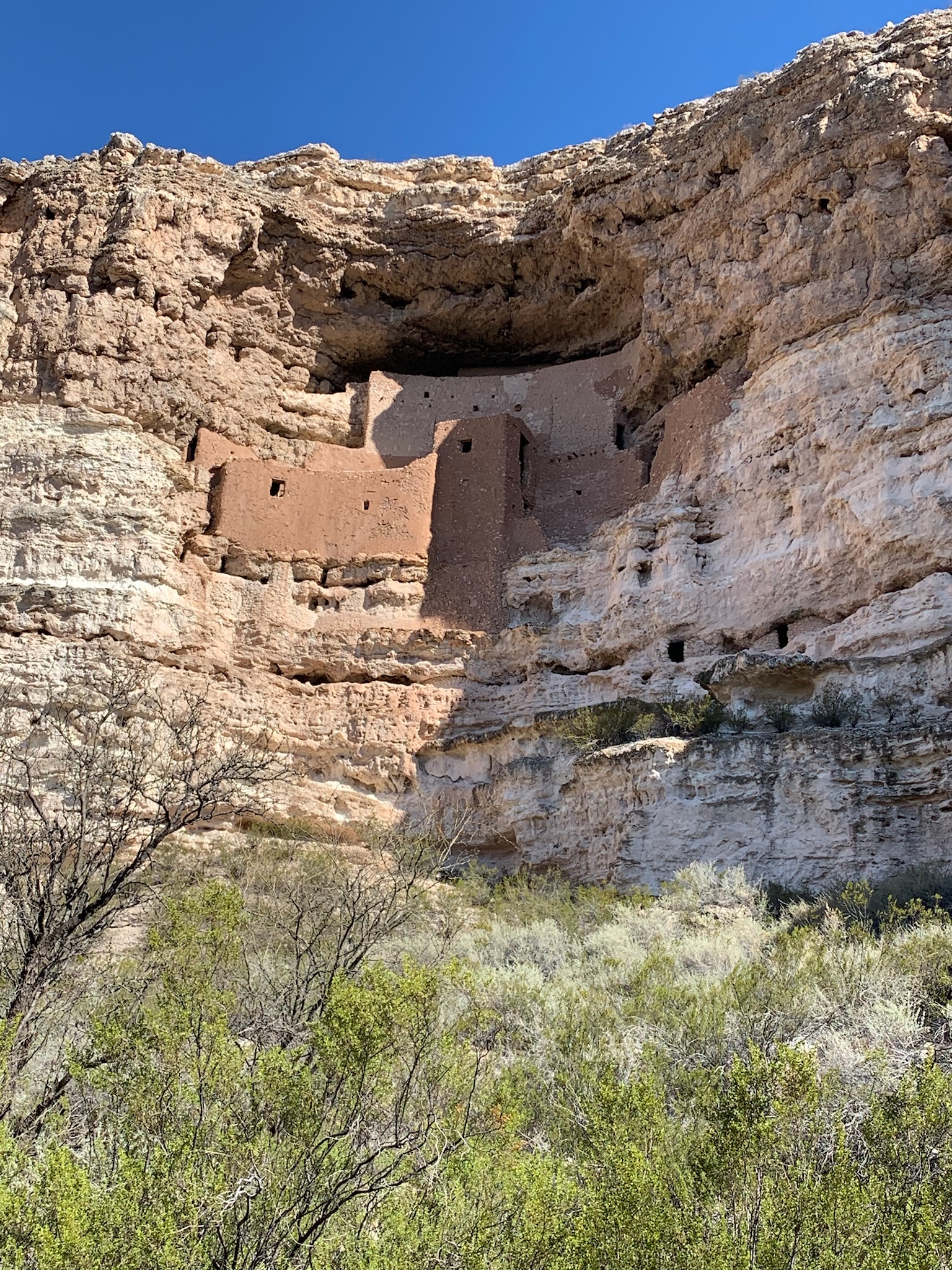
Montezuma was an Aztec who fought the Conquistadors in what is now Mexico. He had absolutely nothing to do with this place, which was built hundreds of years before he was born. Also, it was likely built for comfort and convenience, rather than war. Early tourists destroyed many cliff dwellings by taking home “souvenirs”, and many of the intact cliff dwellings show no signs of having ever been attacked by other tribes. The natural alcoves across the Southwest provided warmth in the winter, shelter from rain, coolness during summer, convenient places to cache items for trade and great hunting overlooks. I have to laugh at the so-called “mystery” of why early people built these cliff dwellings, especially considering the fancy modern hotels built into the canyons in Sedona. Why wouldn’t people want to stop when passing through, make themselves comfortable and move on when they wished?
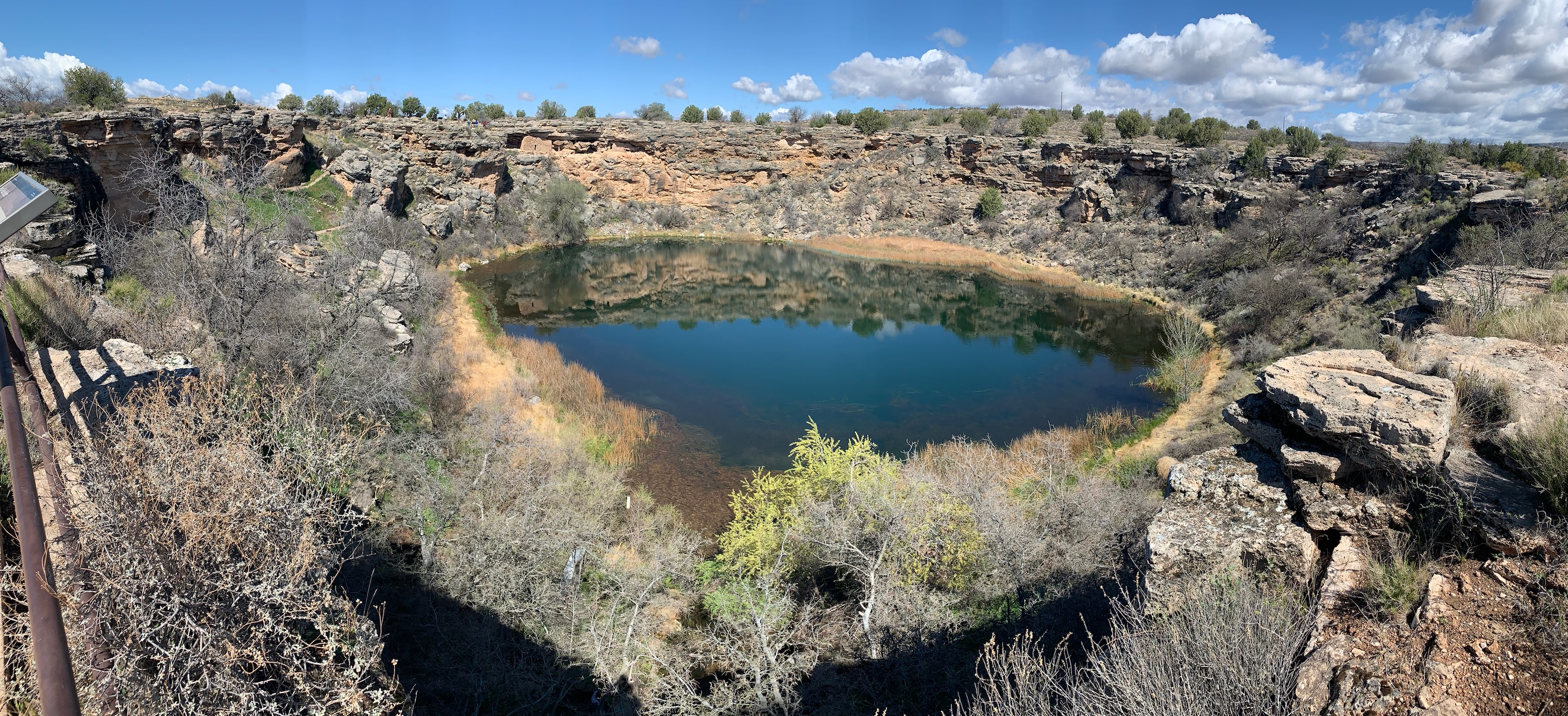
Montezuma’s Well is part of the same park unit and well worth a visit. There’s a closer view of the cliff dwellings, especially at the lower part of the well, ducks, and a still functioning irrigation channel.
Fed from underground, the well maintains a constant water level. Unfortunately, there are trace amounts of naturally occurring arsenic in the water, a reminder that nature never makes it too easy.
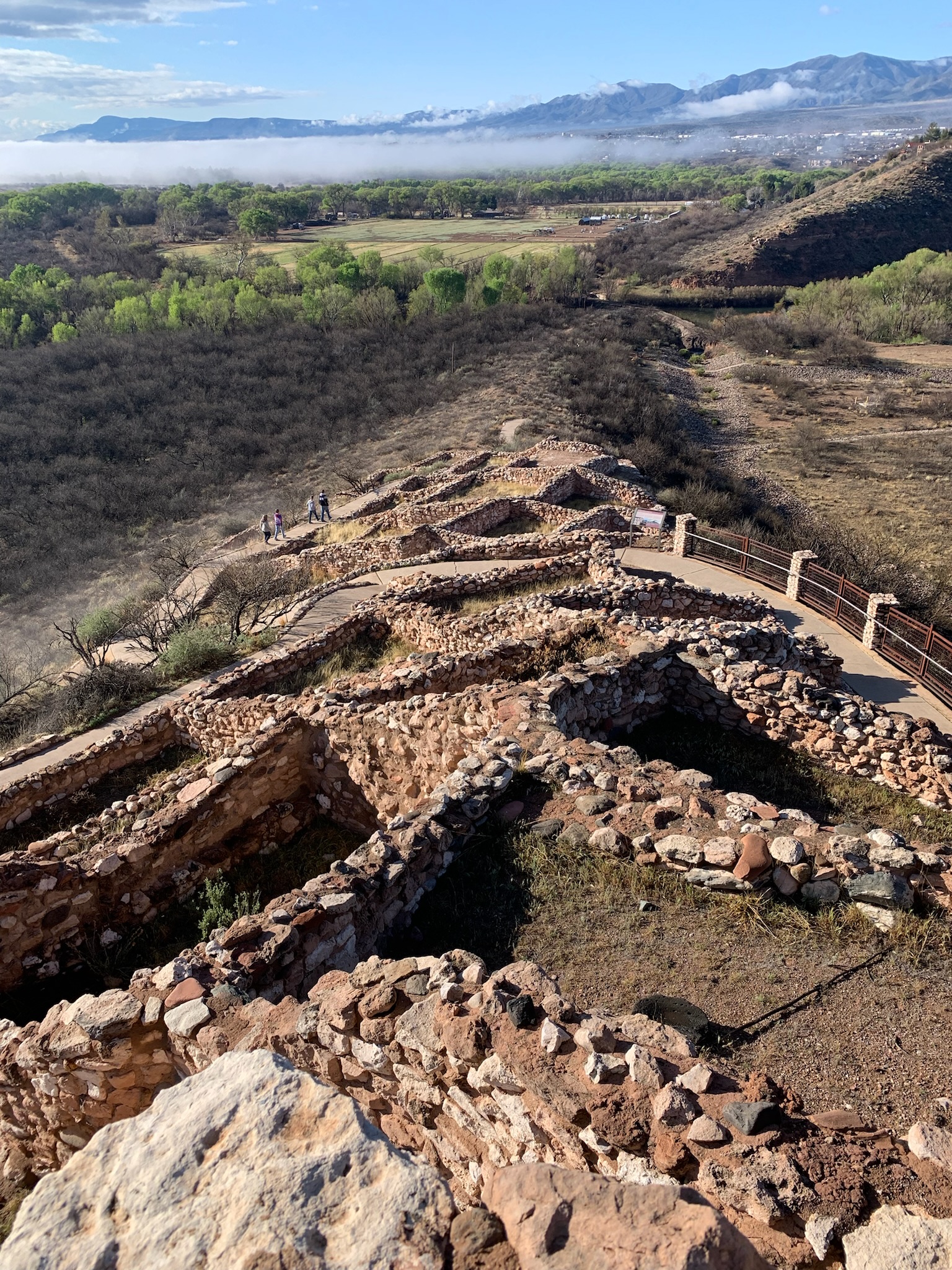
My recent trip started at this impressive hilltop pueblo overlooking the Verde River valley in Arizona. The ancestors of several different Native American tribes migrated through the Southwest over centuries. Each site provides another glimpse into this fascinating history.
While it looks like my photos never include people, they often do, if only for scale.
 Zero Carbon Travel