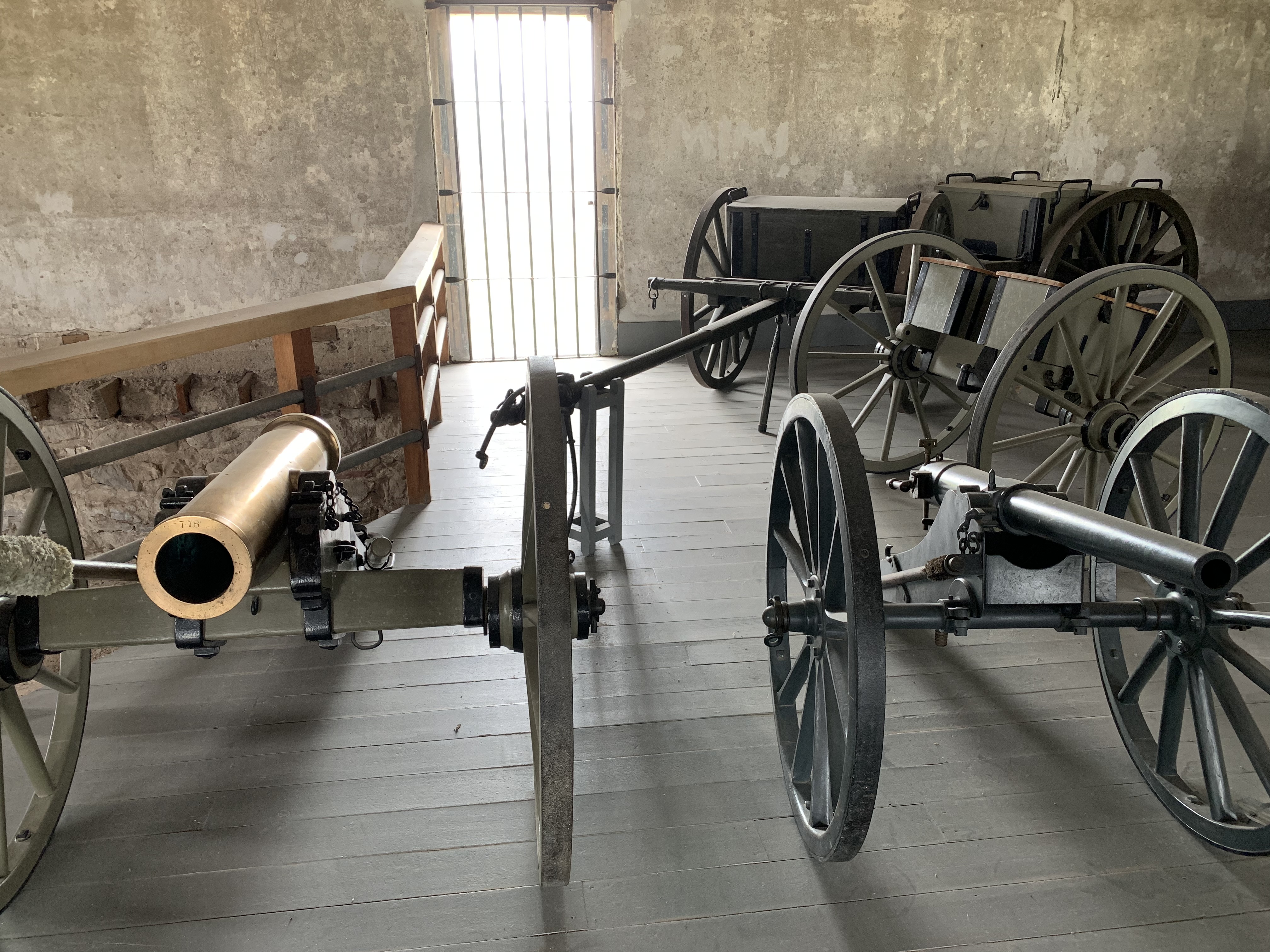
The site of two eponymous treaties, I ordered a sarsaparilla and talked history with a well-informed seasonal ranger. We decided that although the soldiers were sent out to protect pioneers, they were mostly bored silly, since the “attacks” were mostly myths or exaggerated stories. But the military leaders practiced diplomacy to try to avoid potentially deadly conflicts, and that didn’t always go well. Case in point, in 1854 a Mormon pioneer lady complained to authorities that a cow she lost on the trail had been caught and eaten by some natives who lived on the land while she was trespassing. Lt. Grattan was sent to arrest the offender (not the lady) with 29 soldiers. Apparently the negotiations were cut short when (most likely) one of the soldiers shot the chief, whose men subsequently killed all the soldiers. Several treaties were signed here, although they were not honored by the US. Ultimately, the US military ”solved the Indian problem”, by killing resistors with superior fire power, including the mountain howitzers above and Gatling guns, and driving the rest on to reservations. Four of these artillery pieces were used at Sand Creek.
This is a great place to learn about earthlodges due to the continuous maintenance of traditional culture here. Videos tours are available online too. Clearly the lodges were multi-use, serving both daily needs and special ceremonies. Having seen various ruins of similar structures around the country, it is informative to view such a complete exhibit.
The other reason these particular villages are important is that Lewis & Clark landed here and added a few folks to their expedition, including a French trapper named Toussaint Charbonneau and his wife and their infant son. Since she acted as interpreter and guide, Sakakawea became the expedition’s most valuable player and is memorialized on a US $1 coin first minted in 2000. A hike down to the river is worth the short walk.
This diorama is one of the best I’ve seen, and it showcases all the major finds discovered here to date. The first fossil was found by James Cook on his ranch here at the headwaters of the Niobrara, but his collection of Native American art & artifacts rivals the attraction of the fossils. He was a great friend of Chief Red Cloud, and, unlike many of the original fossils which have gone on for display and study elsewhere, Cook insisted his gifts remain here. If that weren’t enough, there’s a lovely creek with wildlife on the trail up to where most of the fossils were found. This is one of my favorite fossil sites, although Dinosaur is better.
Thanksgiving celebrates when Native American generosity saved the first settlers in New England. Natives taught settlers about native crops and game, they traded peacefully with the British, Spanish, French, Russians, mountain men, and pioneers, and they guided Lewis & Clark across the country. Many early Americans married natives and lived happily.
Somewhere along the line, these same natives were portrayed as bloodthirsty savages, and that racist portrait continues today. I have not yet had time to fix it, but Wikipedia’s entry on this site has extensive quotes from a 19th century book in an apparent effort to justify the massacre here, pointing to another ”massacre” by natives that provoked this military action. But that was a family of four killed ”supposedly” by natives, and other events described as native ”attacks” were actually thefts, robberies and destruction of property.
The natives were the victims, both here and elsewhere. They lost their bison, their land, their freedom and their way of life. Many of their sacred lands were stolen by illegal acts of the US government, and many lost their lives to settlers and soldiers. Yes, some Native Americans fought back, following repeated provocations. I read of one chief who, after working his whole life for peace, returned home to find his family slaughtered, and he turned to war. But it is dishonest to confuse the aggressor with the victim. Most Americans live in states or places originally named by natives, but there continues to be a desire to honor those ancestors who participated in the land theft, forced removals and slaughters of Native Americans. Only some Utes remain on tribal lands in Colorado. The town immediately south of the park is named Chivington, but when you learn what he did, you will find that honor to be a disgrace.
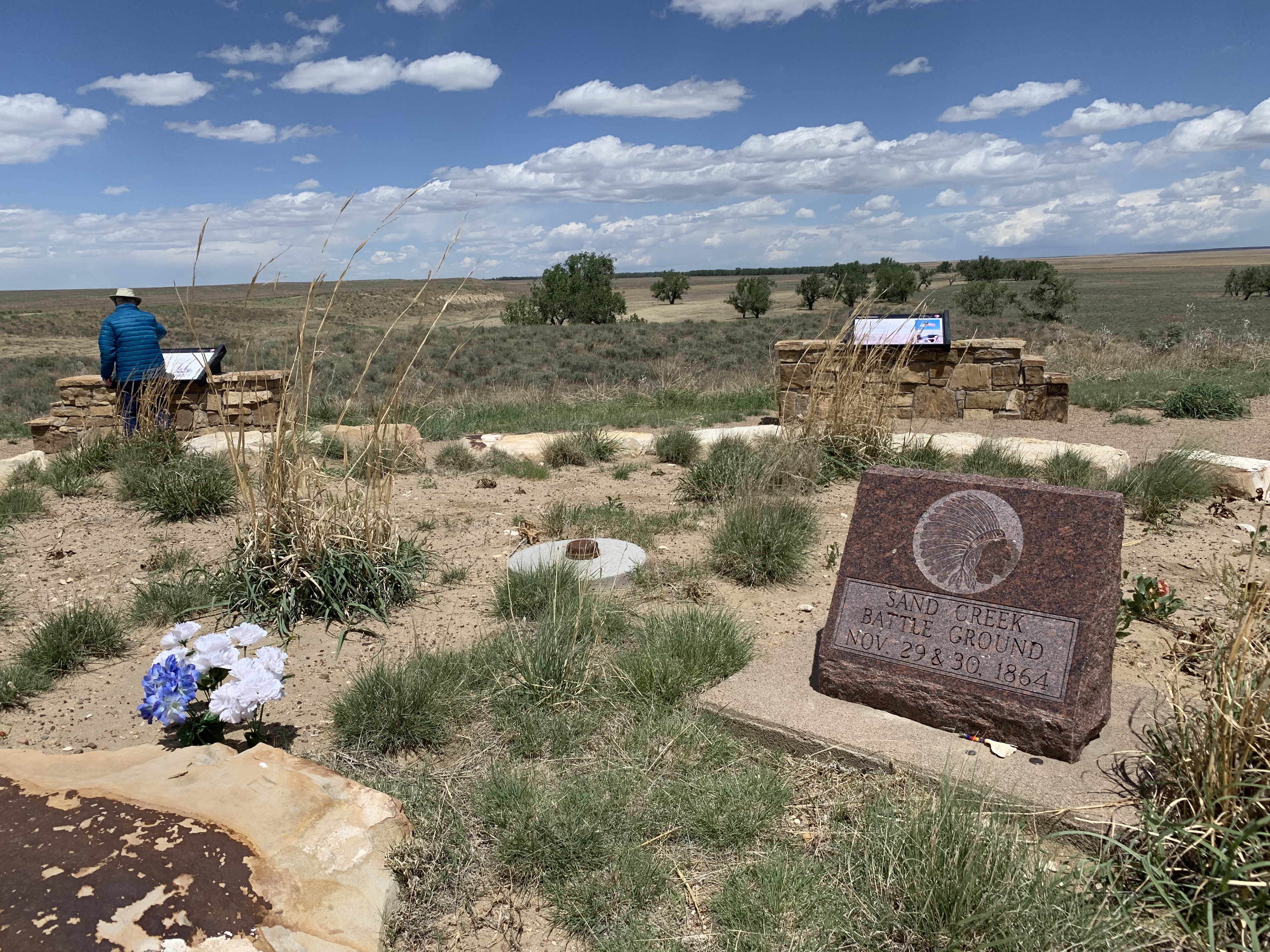
According to witness accounts of soldiers under his command, Colonel Chivington, who helped win the Battle of Glorietta Pass, was a politically ambitious man who wanted to add more victories to his resume. Peaceful native chiefs gathered here to continue peace negotiations under the protection of the local US military fort. Chivington knew that, and two days after the local commander transferred east, he attacked the village with 675 cavalry and 4 mountain howitzers. Two of his officers refused to follow orders, reported the massacre, and testified to investigators. They saw women and children bludgeoned to death while begging for their lives. Over 230 natives were massacred, including around 150 women, children and elderly. The details are horrific. Many bodies were mutilated post-mortem, and soldiers took ”trophies” including scalps, fingers, etc. to display in public. Fueled by greed and paranoid racist hatred, the townspeople treated the soldiers as heroes. But the government investigated and determined that it was an unjust, brutal “massacre”, ordering reparations (unpaid) and the removal of the governor for his involvement. Chivington, once a minister, escaped justice by resigning (loophole later closed) and the two men from a related military unit who murdered one of the witnesses also escaped justice. The other witness became a local sheriff.
As tragic as this story is, there was another similar massacre by US soldiers with a higher death toll at Bear River in Idaho. It also is tragic that many people even today, such as the Wiki liar, refuse to acknowledge the massacre as criminal and morally indefensible. At least the National Park Service is doing its job and preserving the site and the truth.
Local archaeologists started digging here under the overhang, but soon the Smithsonian took over, finding evidence of over ten thousand years of continuous use by Native Americans. There’s a particular style of stone spear point found here that old and named after the site. There’s a also a nature trail along the creek that flows from underground, with birds and lush vegetation.
I wonder how our country could have evolved more peacefully, with more respect of different cultures and more generous sharing of technology. If not expelled from this place, perhaps Native American guides could be teaching stories from their oral traditions here and could be conducting their own research, instead of having their culture irrevocably damaged and their societies misunderstood.
Isolation and homogenization slow the progress of new ideas and retard civilization. Many of the towns I drive through appear almost identical, with people wearing the same clothes from the same chain stores and eating at the same restaurants. A few corporations own the most popular national brands. The sameness isn’t strength; it’s weakness. Diversity and integration take more effort, but they pay off in vibrancy, new ideas, and healthier, more resilient communities. We impoverish ourselves by rejecting differences.
If I were to choose one turning point in American history, I would choose what happened here in March of 1814. After many consecutive treaties with the Creek were broken and great parts of their land were taken, some Creek warriors tried to defend their nation, which had survived contact with the Spanish, French & British. Andrew Jackson invaded the heart of the Creek Nation, surrounded 1000 warriors armed with 300 guns with 3000 soldiers in the bend of the river here. 800 of the Creek warriors were killed, 300 while trying to swim to safety. The village was burned and the women and children with them were captured. By any fair accounting, a ten to one advantage that results in 80% killed is a slaughter, and shooting swimmers is particularly cruel.
But Jackson used the victory to steal more land for white settlers, so he was treated as a hero, instead of a liar, thief and atrocious killer. Jackson even betrayed the Creeks who fought side by side with him in battle, taking their land too. Jackson would go on to become the only President to openly defy the Supreme Court, by not only refusing to return land but by forcibly removing Native Americans to reservations in the west, along the Trail of Tears. A popular President among whites who could vote, he perpetuated racist stereotypes about Native American “savages”, which continued past the Civil War when 750,000 mostly white Americans slaughtered each other over the right keep slaves.
Most Americans won’t admit it, but our ancestors wanted our government to slaughter Native Americans and take their land for our benefit. Racism has been used as official policy for killing, removing, and exploiting non-whites for centuries. By ignoring, denying and lying about this fact, many of us have chosen to live our lives without a moral compass. The first step is to admit the truth, then figure out what to do about it, and finally to teach our kids to be better.
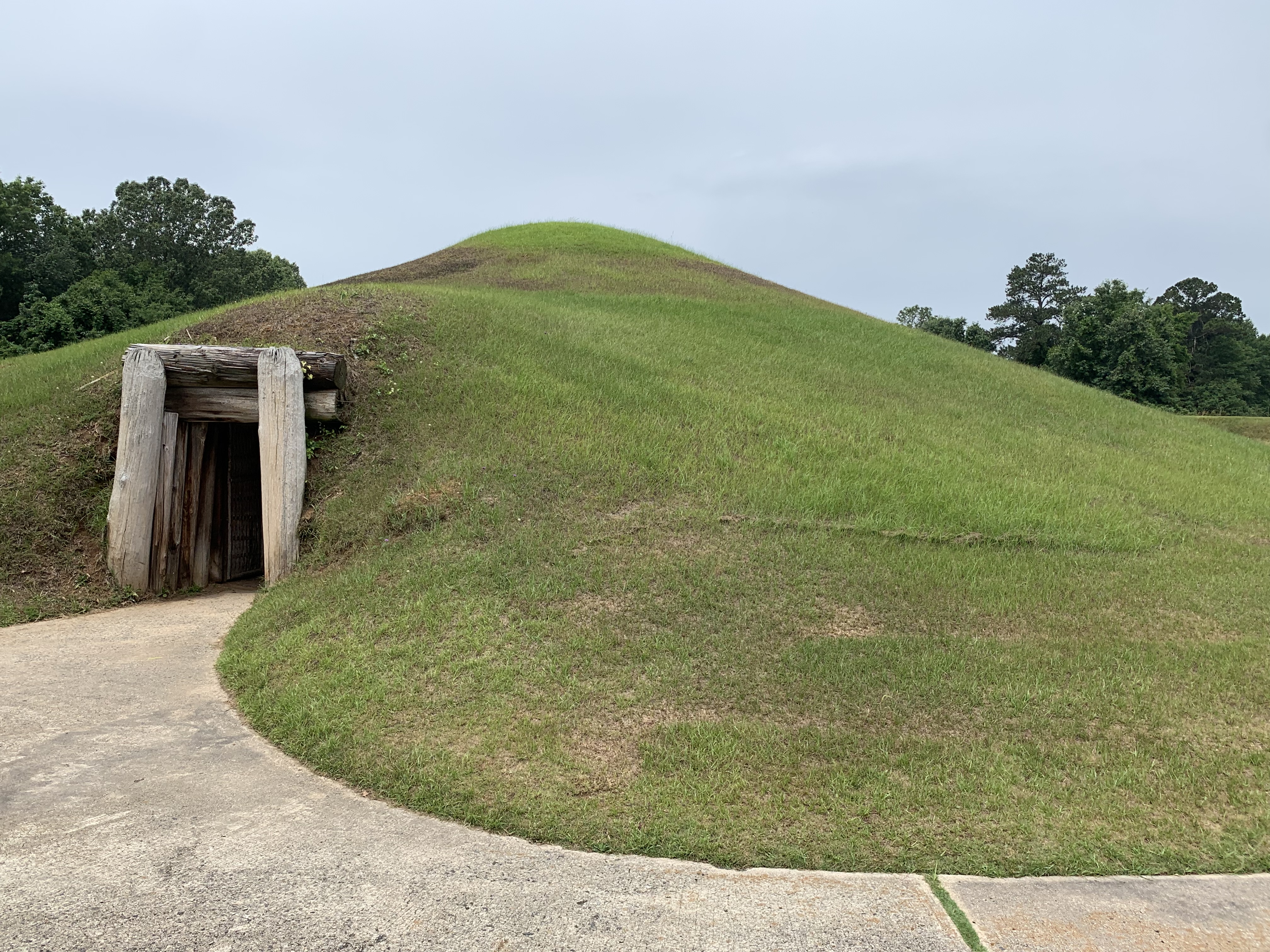
The large mounds here date back over 1,000 years, and include the reconstructed earth mound above, temples and funeral mounds of the ancestors of the Creek people. Despite tremendous challenges, the culture continues today, as seen in the Creek Nation Supreme Court Building in Ocmulgee Oklahoma, which is patterned after this mound. The ground inside dates to 1015, and appears similar to kiva I’ve seen in the west. During the Depression the Civilian Conservation Corps reconstructed the roof and built an Art Deco style visitor center. The entrance tunnel is low, carpeted and well ventilated, and it opens into a glassed-in viewing area. Despite not being half as old as Poverty Point, the mounds here also have bird symbols and other similarities. The Creek Nation farmed corn, squash, beans, pumpkin and tobacco here, fished and traded deer skins with the Spanish, French, British and Americans. They largely westernized and had multiple treaty rights to their lands, but they were nevertheless forced to abandon their homeland by Andrew Jackson.
Driving through the southeast, especially in rural areas, you see a great many churches. I’m no expert on the Bible, but I’m pretty sure the ”thou shalt not steal” is in there (Exodus 20:15). Almost all of the land was stolen from the Native Americans, yet I don’t often hear people expressing any regret for the sins of our ancestors, even in church. Obviously, it’s not God’s will that his commandment be broken. I’ve been to church services from coast to coast, and I’ve never heard a sermon about how we live on stolen property, how that was a sin and how we should try to make amends. Seems like that would be the proper Christian attitude. Of course, the church has been wrong on this issue for centuries, but reflecting on our sins and seeking forgiveness are supposed to be core values of Christianity. Why not start reflecting on this sin and our responsibilities today?
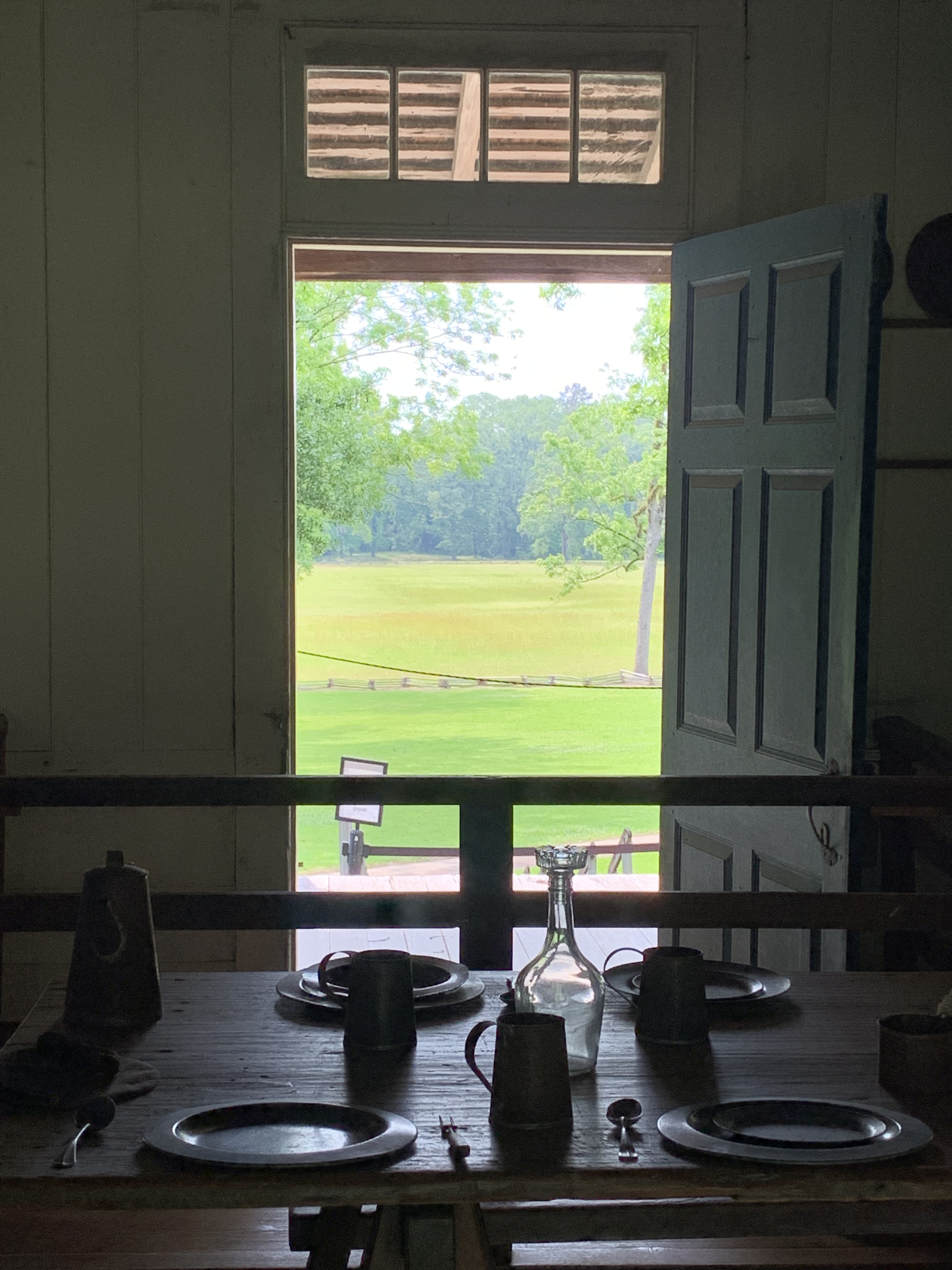
The “trace” or trail from Natchez to Nashville is now a parkway, under strict protection of the park service which limits development. The National Scenic Trail, also a park unit, has miles of hiking & equestrian trails along the way. I’ve more or less driven the length now, with lots of side trips to nearby sights, and the dense spring foliage is beautiful, soothing and seems endless. The first stop traditionally is at Mount Locust pictured above, and the route was typically used northbound, returning by boat. The trail is far older than our country, as French fur traders followed Native American trading routes that had been used for thousands of years. After the steamship was invented, most people stopped walking, which put an end to the proprietor’s lucrative business of selling whiskey, food and basic shelter at the ”stand” or simple roadside inn.
We tend to see history as inevitable, and don’t often think about what might or should have been different. But the people back then were constantly trying to learn, make changes and adapt. The land in the photo belonged to Native Americans, then was claimed by England, then by America, then worked by slaves who turned sharecroppers, and is now run by the park service. At each transition there was loss and opportunity. Only fortunate and adaptable people made it through turbulent changes. Injustice was resolved by war. No success or failure was inevitable. In hindsight, better choices could and should have been made.
I need to believe that we’re capable of learning, making changes and adapting. Dramatic change is inevitable, common behaviors suddenly become unthinkable, and those who can’t change usually suffer most. The extent of damage from the climate crisis has not yet been determined. Not all the coming extinctions are inevitable. The actions we take today make a difference to our future. We must stop burning carbon now, no matter how inconvenient, and we must prepare for the coming challenges.
They’re not exactly sure which river valley Coronado walked up with his plumed helmet, shining cuirass, retinue, soldiers and slaves on his way to find the seven cities of gold, but from the bluff here, you can see both. Apparently, a couple natives convinced him to walk as far as Kansas, before he realized it was a ruse and executed them.
The park is near the Mexican border, and someday there’s hope that there will be a sister park on the other side. Of course these days, some people are paranoid about migrants crossing illegally, so there were plenty of warnings and border patrol operations nearby. I can’t see anybody climbing all the way up here without a vehicle. The road up is unpaved and there’s parking a short hike from where I took the photo. Although the road is rough, it presented a scenic shortcut to my next destination.
This is an Indian Native American War era fort. Soldiers from here, including African American Buffalo Soldiers, fought Geronimo and the Apaches in Arizona, the Kiowas and the Comanche, patrolling the San Antonio-El Paso road against raids. President Andrew Jackson predicted it would take a thousand years for white settlers to replace the Native Americans in the west. In reality, the process only took a few decades.
I believe the goal of history should not be a recitation of events. I believe the point of history should be to learn from the past in order to make better decisions in the future. The people are dead. They don’t care whether we praise them or criticize them; that’s not the point. We need to evaluate past actions in the context of the times.
Columbus was an innovative navigator, whose initial voyage went against common sense at the time and changed people’s understanding of the world. He was also wrong about who the Natives were, and he treated them viciously. But he didn’t create racism or slavery. Those were taught in European universities, supported by the church and were the official policy of European governments. Those institutions, which still exist today, bear the responsibility for atoning for the evils of racism and slavery of colonialism.
Kit Carson was an accomplished explorer, who developed strong relationships with the Native Americans he met and traded with. He did what others did not dare and changed people’s understanding of the west. He also carried out a brutal scorched-earth campaign against the Navajo and marched them into internment camps. He neither created racism nor invented the policy of removing Native Americans from their land.
Andrew Jackson was an American hero for defeating the British in the Battle of New Orleans in 1815. He also fought many wars against the Native Americans, broke treaties and even defied Supreme Court orders to remove Native Americans along the Trail of Tears, leading to a legacy of depressed, poverty-stricken reservations. He should have chosen a different path, leading to greater education, cultural exchange, technology transfer, integration and cooperation. The US Presidency, Congress and the military, which still exist today, bear the responsibility for atoning for the evils of the wars and forced removal of Native Americans.
History must be studied to make these judgements and to recommend corrective actions whenever possible, otherwise we doom ourselves to carry the burden and even repeat our past mistakes.






 Zero Carbon Travel