The southeast region has more park units (70) than any other region, and I have visited all the units—*except 6 in US Caribbean territories—including all the affiliates, heritage areas and trails in Alabama, Florida, Georgia, Kentucky, Mississippi, North Carolina, South Carolina and Tennessee. Given the large number of states and parks involved, the summary below is organized by theme.
I learned more traveling in the southeast than any other region, as the area is so rich in history and culture. And the preserved natural areas include some of my favorite park experiences, from underwater and underground, to rivers and shores, and to wildlife experiences in mountain forests. And they can all be explored without traveling in a carbon-burning vehicle.
The southeast includes some of our oldest and most scenic trails, and the Florida NST, Natchez Trace NST and the Selma to Montgomery NHT are unique to the Southeast. Both Appalachian and Natchez Trace scenic trails are individual park units. Here’s a quick summary in case you are interested in exploring the trails in the region.
National Historic Trails
Lewis & Clark 1804-1806, runs along northern Kentucky, and they did some fossil hunting for Jefferson at Big Bone Lick.
Overmountain Victory celebrates the trail crossed by Patriots in 1780 to turn the war.
Selma to Montgomery has several fine exhibits at both ends and at a few stops along the way. Highly recommended.
Trail of Tears ~1830 to ~1850, Native Americans from all across the region were forcibly removed on this trail that crosses through most states in the region. There are numerous sites along the trail, including Little River Canyon.
National Scenic Trails
Appalachian begins in Georgia, cuts through westernmost North Carolina, along the border with Tennessee, through Great Smoky.
Natchez Trace runs along the Natchez Trace Parkway through Mississippi, a small part of Alabama and up near Nashville Tennessee, and the trail includes many miles of trails maintained for hiking and horseback riding.
10 trails cross the Midwest region, including 8 National Historic Trails linking multiple sites, plus the Ice Age and North Country National Scenic Trails which are individual park units. Only the Ice Age NST is unique to the Midwest, while the other trails continue on into other regions. Here’s a quick summary in case you are interested in exploring the trails in the region.
Ice Age NST formed when 100,000 year old ice melted 11,000 years ago, lovely winding trails over hills and dells in Wisconsin.
Santa Fe NHT used from prehistory to present by natives, Spanish, cavalry, settlers, BNSF, Route 66 and now I-55, 44, 40, 15 and 10. I like the Mahaffie stop in Kansas above.
“Well it winds from Chicago to L.A, More than 2000 miles all the way”—Bobby Troup
Lewis & Clark NHT 1804-1806, Seaman joined Lewis in Ohio, Clark & York joined in Indiana, they entered the Purchase from Illinois, see replicas at the boat museum in Missouri, a Kanza earth-lodge in Kansas, many sites along the Missouri River in Nebraska, and memorials of the only expedition fatality, Sgt. Floyd, in Iowa.
Trail of Tears NHT ~1830 to ~1850, part passed through southern Illinois and Missouri, where the Trail of Tears State Park overlooks the Mississippi.
Oregon NHT 1836-1869, from western Missouri, through Kansas & Nebraska.
California NHT 1841 to 1869, same midwestern route as above.
Mormon Pioneer NHT 1846-1847, from western Illinois, through Iowa & Nebraska.
Stage & Mail Trails, follow the link for some recommended stops.
Butterfield Overland NHT 1857-1861, only a small portion is in Missouri.
Pony Express NHT 1860-1861, follows the pioneer trails through Kansas & Nebraska.
North Country NST, established in 1980 and designated a unit in 2023, is still a bit disjointed, but in the region, it runs from Fort Miamis in Ohio, up through Michigan, along the cliffs through Pictured Rocks NL below, across Wisconsin, and from Grand Portage NM through Minnesota.
This is a new national monument on the 18th century Carlisle Army Barracks in Pennsylvania, which also hosts the Army War College and the Army Heritage and Education Center. The base is currently open to visitors on weekdays, but there are no park site visitor services yet.
“All the Indian there is in the race should be dead. Kill the Indian in him, and save the man.”
Richard Pratt, founder & superintendent
From 1879 to 1918, towards the end of its War on Native America, the US Army established a boarding school here, a re-education camp far from native reservations. There are only a few Native American graves left on base, as many were repatriated by law after 1990, but otherwise, not much remains of the school that once set the standard for ‘assimilation’. Around 8,000 children from 150 tribes were taken from their parents and shipped off to this school—as happened at other schools across the country—for the expressed purpose of ending their culture. Considered a step forward from massacres, forcing natives to become white was the primary goal from day one. While today, many such students might gain PhDs in Native American studies in recognition of the value of their cultural contributions to our civilization, prejudice meant there was practically only one way for these students to excel: on the field.
Unlike college admissions or job hiring, there is no effective way to cheat by race in sports like track & field. Once allowed to compete, the results are judged fairly, regardless of color. The field above is still known as ‘Indian Field’, but officially it is named after Frank MT Pleasant Jr, a student—and member of the Tuscarora Nation—here for 12 years around 1900, known for his prowess in football and track. In 1908, he placed 6th in two events at the Olympics in London. He earned his degree in 1910 at the neighboring Dickinson College, the first native to do so. He served honorably in WWI and later played semi-pro football. While he and other athletes like baseball hall of famer ‘Chief’ Bender are remembered here, they’re all overshadowed by another classmate.
In 1907, a Sac & Fox youth was walking by the track above when he stopped to watch the high jumpers. He had been to many different schools growing up, and he had run away from most. This was his second time here; the first cut short by the death of his father. Jim Thorpe walked up to the bar and jumped 5’9”—a school record—in his street clothes. He would excel at virtually every sport he tried: ballroom dancing, baseball, boxing, handball, lacrosse—a native sport—, and tennis. The football coach, ‘Pop’ Warner, didn’t want his school’s track star injured, but Jim asked for a chance to play. He ran through the opposing team back and forth, and then said, “coach, nobody is going to tackle Jim”. And nobody did. Jim set all kinds of college football records, rushing almost 2,000 yards a season, scoring hundreds of points with over 25 touchdowns a year, according to incomplete records.
At the Stockholm Olympics in 1912, Jim Thorpe competed in the two most challenging competitions, the pentathlon and the decathlon, which require mastery of 5 and 10 different events respectively: 100 m, 400 m, long jump, high jump and shot put for the pentathlon and the same five plus the discus, javelin, 110 hurdles, pole vault and 1500 m for the decathlon. Despite someone stealing his shoes before the competition, Thorpe found two mismatched shoes and still won 8 of 15 events outright, winning the gold medal in both combined events. Later, Thorpe would go on to play professional baseball, basketball and football. Considering how well-rounded he was, in my opinion, Jim Thorpe is the greatest athlete in history.
So, if you want to take a lap on the same track where Jim Thorpe began his athletic career, bring a map and your real id and go to the base visitor center between 10 am and 3 pm on a weekday—not a Federal holiday—and get your criminal background check. But consider the cultural cost of Indian schools, the families broken, the languages silenced, the oral histories lost, the natural and medicinal secrets forgotten, and the songs and dances not taught, just so white people would feel more comfortable with Native Americans. Fortunately, the Sac and Fox Nation survives in Oklahoma—they were removed from the Great Lakes region in the 1870s—and many other tribes still thrive today as well.
Best Park in the southwest: Big Bend NP in Texas. It has canyons, hiking, rivers, wildlife, views and it takes at least 2-3 days to see it properly. But go around winter, as it’s becoming dangerously hot much of the year.
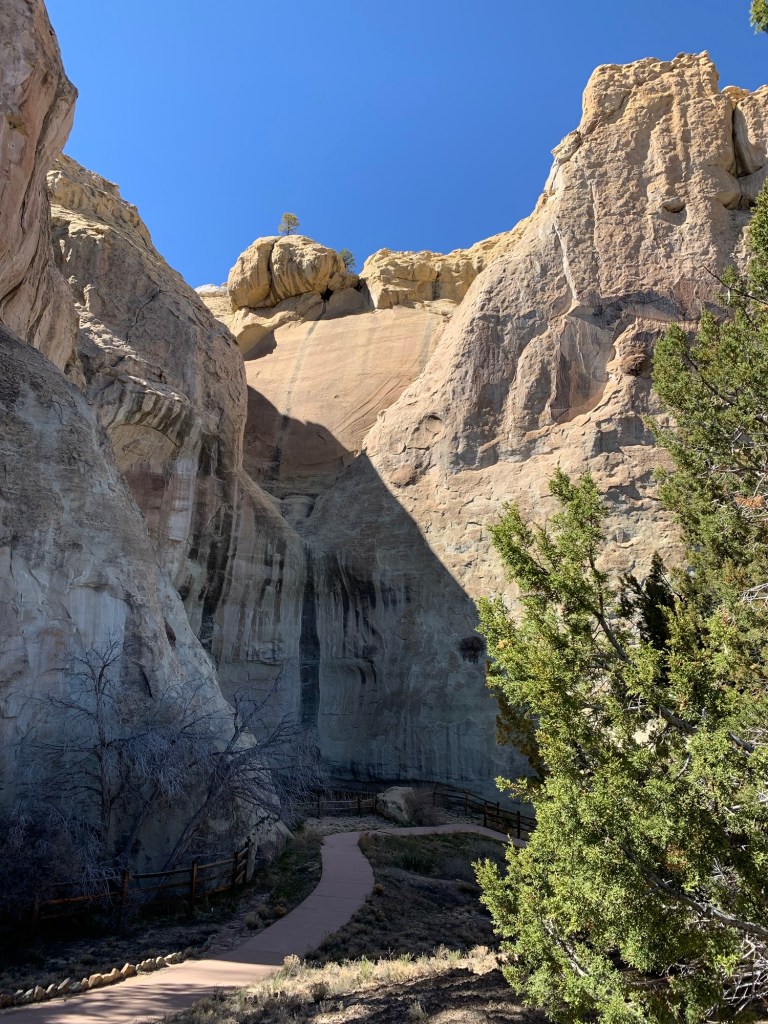
Best State in the southwest: New Mexico. Some of the best natural wonders and native cultural sites in the country.
Best Culture: New Orleans Jazz NHP. Get the ranger to play some of Louis Armstrong’s old trumpet recordings. And then go out, explore, eat, drink and find some live music.
Best National Trail: Butterfield Overland Stage. Although it only ran for a few years, it cuts near the Mexican border through many fascinating historic sites.
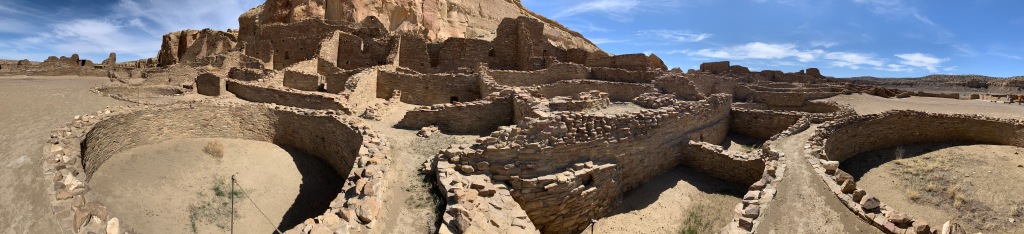
Best Native Ruins/ Sacred Sites: Chaco Culture. Tough to get to. Unforgettable.
Best Paddling: Big Thicket. Slalom your kayak through the swamp. Glorious!
Best Recreation: Hot Springs NP. Take a hike or go shopping, if you like, but try to find a place to soak in the old style. Relax and enjoy!
Best Wildlife: Padre Island NS. Hike or better paddle along the shores and count the different species of birds.
Best World Heritage Site: Taos Pueblo. One of the oldest continuously inhabited places in the US.
7 trails cross the Southwest region, including 6 National Historic Trails linking multiple sites, plus a National Scenic Trail. Here’s a quick summary in case you are interested in exploring the trails in the region.
Butterfield Overland NHT passed through Arkansas, Oklahoma, Texas and New Mexico (although the photo below is near a stop across the Arizona border in Tombstone).
Traditional historians have generally argued that the War of 1812 was about defending US maritime rights, especially of US citizens who were involuntarily ‘impressed’ into the British Navy. Jefferson had certainly left some trade issues with Britain, but such disputes rarely go to war. During the war, the northeastern states continued trading with Britain, and the treaty at the end of the war did not change the maritime rights status quo legally. Americans worked harder at getting compensation for slave owners whose slaves were freed by the British than for US citizens impressed into the British Navy. So that whole explanation for the war is obviously wrong.
More enlightened historians have argued that the War of 1812 was about expanding US territory at a time when the British were busy fighting Napoleon, as stated by the dominant party in Congress and President Madison, who called acquiring Canada “a collateral benefit”. During the war the US invaded Canada 10 times, took land in the southeast including in Alabama, Florida, Georgia, Louisiana and Mississippi, and took land in the then northwest including Indiana, Illinois, Michigan, Ohio and Wisconsin. Most of the US territorial expansion around the time of the war was from Native American lands, regardless of whether they fought for the British or the Americans. So that whole ‘expansion’ explanation checks out.
If we think about the war at all, most Americans view the War of 1812-1815 as about nationalism, patriotism and rallying around our flag, perhaps because we did not achieve any of our objectives, failed to take Canada and had our national capital burned. Canadians tend to view the war more as a heroic defense against our ill-conceived and unpopular aggression, as after all, the Americans burned York—their capital of ‘Upper Canada’ in Ontario province—first. The truth is always more complicated, as you can see comparing the capital burnings. After the British general retreated from York, local militia started fires to prevent the Americans from seizing their supplies, and the resulting gunpowder magazine explosion killed the American general along with ~200 other casualties. The American troops, not under official orders, burned public buildings and businesses. When the British seized Washington DC, they burned most public buildings, including the White House, under orders. Which gives you a sense of the animosity at the time.
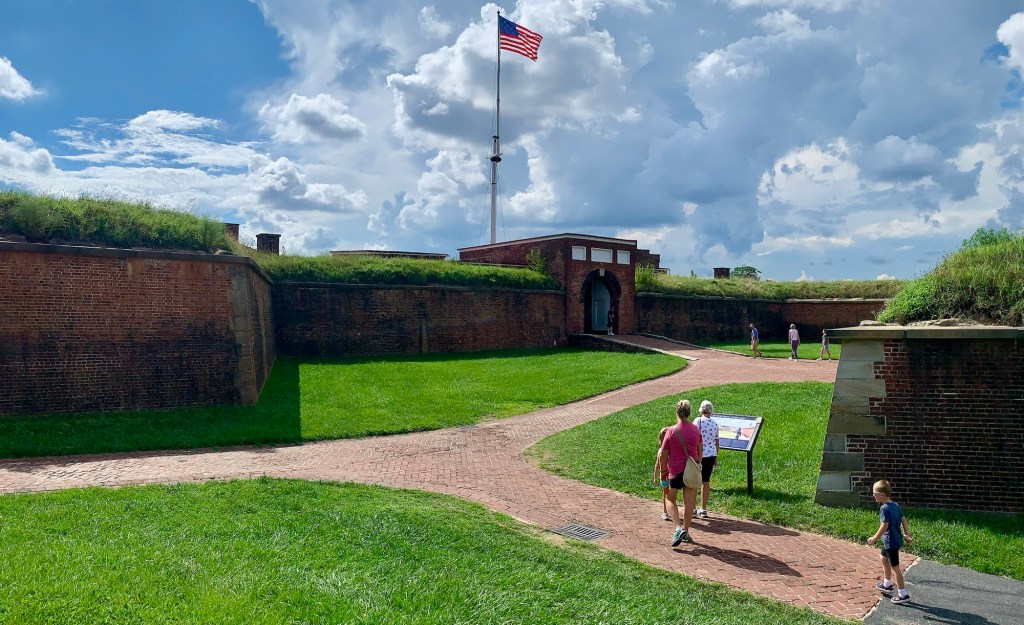
Fort McHenry, Fort Washington and the Star Spangled Banner trail focus on the dramatic events around DC and Baltimore, but there are other US park sites that tell more of the story. Along with failing to continue Washington’s peaceful tactics and trade agreements with Britain, the expansionist Jefferson hired Albert Gallatin to reduce the national debt, and Gallatin cut the military budget, leaving successor Madison the contradictory problems of war and a weak military. The US could not match the British Navy in the Atlantic, except for the USS Constitution: Old Ironsides. So the British blockaded the US ships along the eastern seaboard, except for smugglers in New England. So, technically port forts like Monroe and those guarding Mobile Bay had roles in this war, but their primary historical importance is based on events of other times.
The old Northwest Territories around the Great Lakes were long contested by the Americans, British, Native Americans, French and Spanish. River Raisin, near Detroit, is a good place to learn how we provoked the War of 1812 to take native lands. The Americans had two great naval victories during the war, first in 1813 on Lake Erie, where Perry broke the British inland fleet and cut off their supply lines to their western forts, and second in 1814 on Lake Champlain, where Macdonough thwarted a British invasion via the Hudson. The Americans made several incursions into Canada, but were unable to hold territory north of the Great Lakes and even lost their poorly manned Old Fort Niagara in New York, returned by treaty. The war encouraged the French and British in Canada to join together for common defense, eventually forming Canada in 1867. The military stalemate clearly defined the eastern border between Canada and the US, contributing to our long peaceful history since.
In the American southeast, the more consequential war was the simultaneous Creek War and related actions. At Horseshoe Bend Andrew Jackson used Cherokee and Creek allies to defeat other Creeks, even as his allies took lands from both sides. When Napoleon abdicated, the British no longer needed to kidnap American sailors to fill their fleet, and they were able to turn their full attention to their former colony. The American diplomats, led by John Q. Adams along with Gallatin and others, wisely negotiated a peace treaty. But before the news arrived stateside, Andrew Jackson took New Orleans, with the help of the French pirate Jean Lafitte in a story told here. Jackson leveraged his victory to win the White House and used office to enforce the Trail of Tears. He also invaded Florida in 1818, convincing the Spanish to sell the territory to us in 1819. While the Native Americans lost the most in the lead up, during the war and in its aftermath, many African Americans took the opportunity to escape to Canada along the Underground Railroad.
Often overshadowed by the Revolution and the Civil War, the War of 1812 offers many lessons of popular patriotism driving greedy expansionism, reckless militarism and brutally unfair racist policies, with costly, unforeseen consequences. Rather than simply look at flags or teach our kids one heroic story, we should think critically about history so we can make better decisions in the future.
The Plaza Santo Domingo in the historic center of Mexico City is the southern terminus of ‘The Royal Road of the Interior Land’, a World Heritage Site. As you can see above, some vendors still use traditional market stands on this trade trail first developed by pre-Columbian empires. The whole trail was originally a native trading route for turquoise, obsidian and feathers, and after the Spanish conquest, it was used for military, religious expansion and for silver. From this plaza, the road runs north through San Miguel de Allende and Guanajuato all the way through El Paso (‘the pass’) to Santa Fe (‘holy faith’). The US section—with the same Spanish name—is a national historic trail.
In the background is the Palace of the Inquisition, which arrived from Spain to punish the son of Hernán Cortés, Martín, who threatened independence in 1566. Public burnings of witches and heretics were common for ~250 years, until Mexican Independence ended the practice in 1820. The ‘palace’ now houses a UNAM medical museum, although there is a small gory museum of the inquisition a few blocks away. Mexico City is the largest and oldest city in North America, and it is well worth visiting to be able to walk in the footsteps of history.







 Zero Carbon Travel