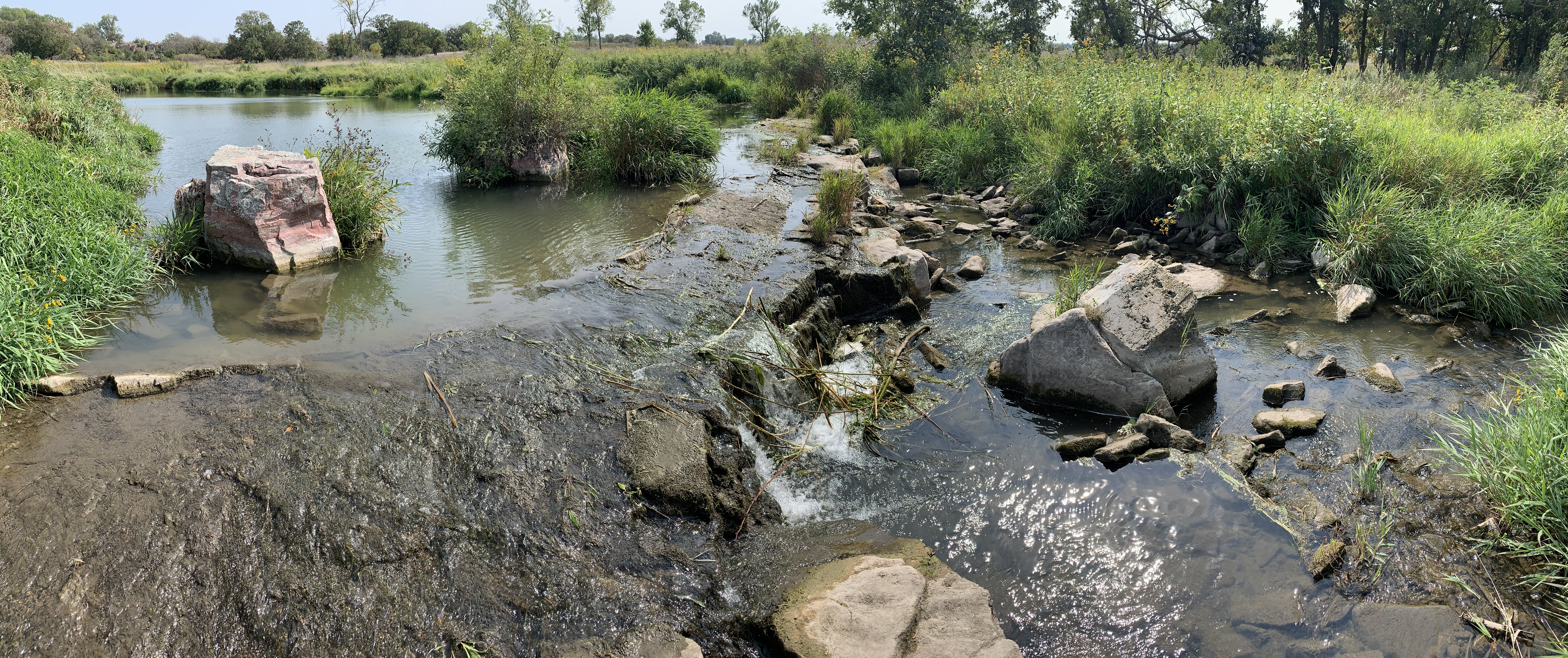
Parker’s Cross Roads Battlefield

This is an affiliate site in Tennessee focused on Nathan Bedford Forrest, who fought most of his Civil War battles in the Volunteer State. At the end of 1862, Forrest was in the midst of his guerrilla warfare destroying railroads, bridges, raiding supplies, recruiting rebels, taking prisoners and attacking the Union. Union troops moved near a key railroad and roadway crossing in the middle of western Tennessee to cut off Forrest’s escape south across the Tennessee River. Forrest attacked, was repelled, and tried to flank the Union troops. But more troops arrived behind him, so he ordered his men to ‘charge both ways’ and withdrew in the confusion. Forrest lost more men in the battle, but he escaped as the Union failed to cut him off.

If you visit the site, you might get the mistaken impression that this was a great victory for Forrest, who is compared with Napoleon in the park film. This is ironic, since ‘Napoleon’ is synonymous with having delusions of grandeur. The grounds are well kept, but there’s not really much to see. The cabin below was moved to the site later, as were examples of cannon and a caisson. There are reenactments held here. There are also many romanticized images of Forrest in the museum. As he later became the first Grand Wizard of the Ku Klux Klan, this hagiography of Forrest is both tragic and an embarrassment for the great state of Tennessee, which was divided during the war. Forrest was a brutal leader responsible for perhaps the worst atrocity of the Civil War, which I will summarize next week. History must endeavor to tell the truth.

Hospicio Cabañas

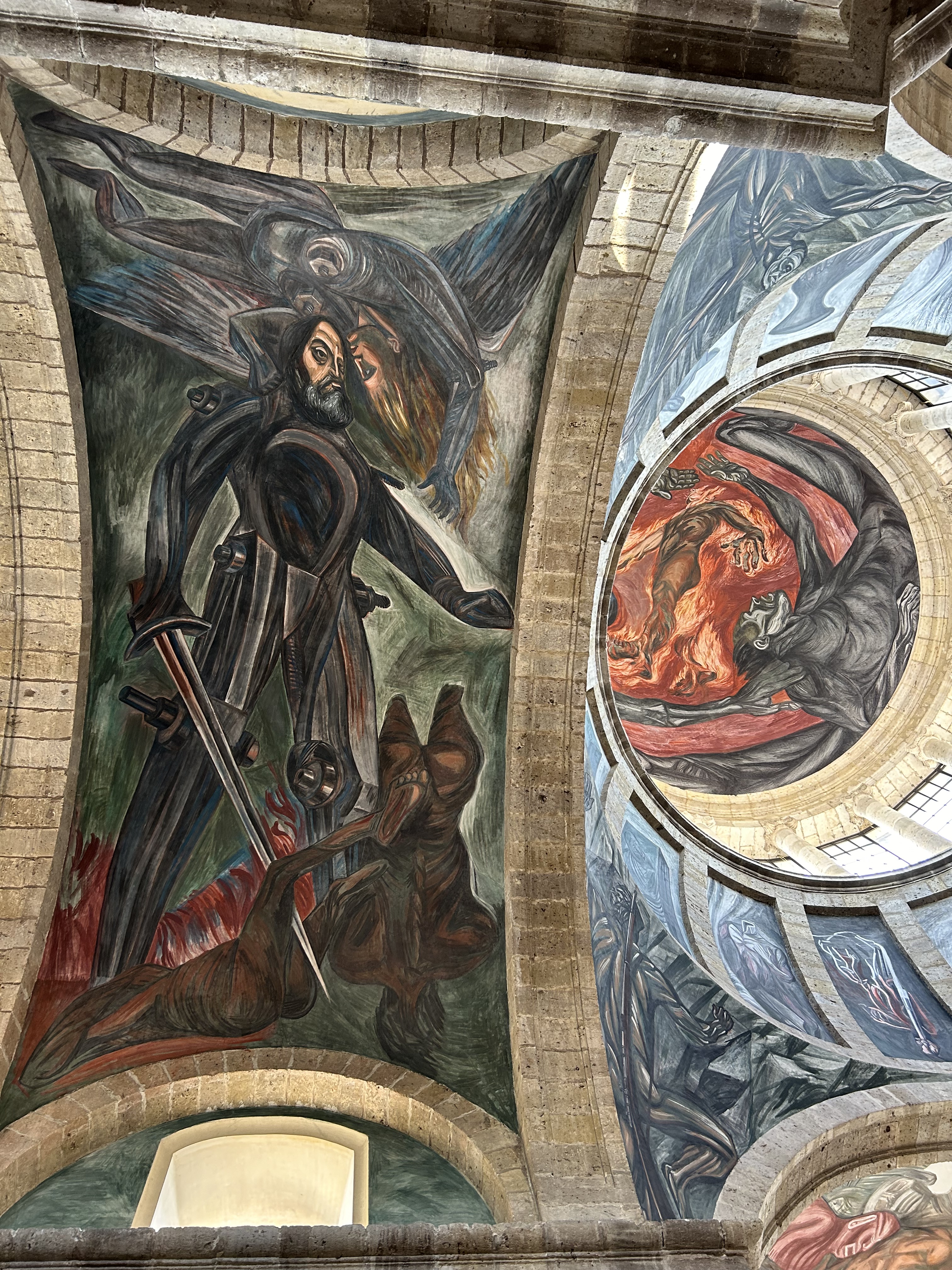
Originally designed to be a hospital, like Les Invalides in Paris, and named after the bishop, today the World Heritage Site in the historic heart of Guadalajara is a museum, with modern art outside and exceptional murals by Orozco inside. The central masterpiece on the ceiling of the rotunda is ‘The Man of Fire’, a modern version of the myth of Prometheus (in photo on right). I had seen Orozco’s earlier version in the Pomona dining hall in California, considered “the greatest painting in America” by Jackson Pollack. Orozco lost his left hand making fireworks at 21, and he was fascinated by the story of a man who risked his life and suffered to expand human knowledge and civilization, only to be punished by the Gods. He felt the myth was an allegory for artists, explorers and reformers who were punished by conservatives for their efforts to bring enlightened change to the people. Every alcove and wall tells a story of both progress and betrayal, of historic accomplishments and dark consequences.

Prometheus stole fire from the Gods, but today we struggle with the consequences of burning carbon. Fossil fuels helped us achieve great things, but there are always consequences. Struck by the inescapable conclusions of the art here, we see that conflict over ‘progress’ often results in suffering, especially among the poor. Murals require us to step back, to try to see the bigger picture. We can build hospitals, and we can also destroy whole cultures. We can choose sustainable fuels, or we can let powerful men perpetuate destructive fuels. We may believe ourselves invincible and deserving of the powers of the Gods, but our actions come with destructive consequences that we must try to see, understand and prevent. We must give up fossil fuels, or our world will burn.

All Caving Parks, Zero Carbon

I recently completed visits to all the caving parks by electric vehicle. To be clear, with caves running under all 50 states and over 100 parks having some type of named cave, this only lists parks where the primary activity is to visit a cave, almost always on a guided tour.

Subconsciously I become a bit claustrophobic in subterranean spaces, so I compensate by imagining what type of monsters best suit the scene. Rangers who do cave tours are quick to get this humor, although it’s best not to spook other troglocenes—cave visitors—in case anyone is seriously fearful. Below, I describe both the scientific cave category and my own cave creature category.

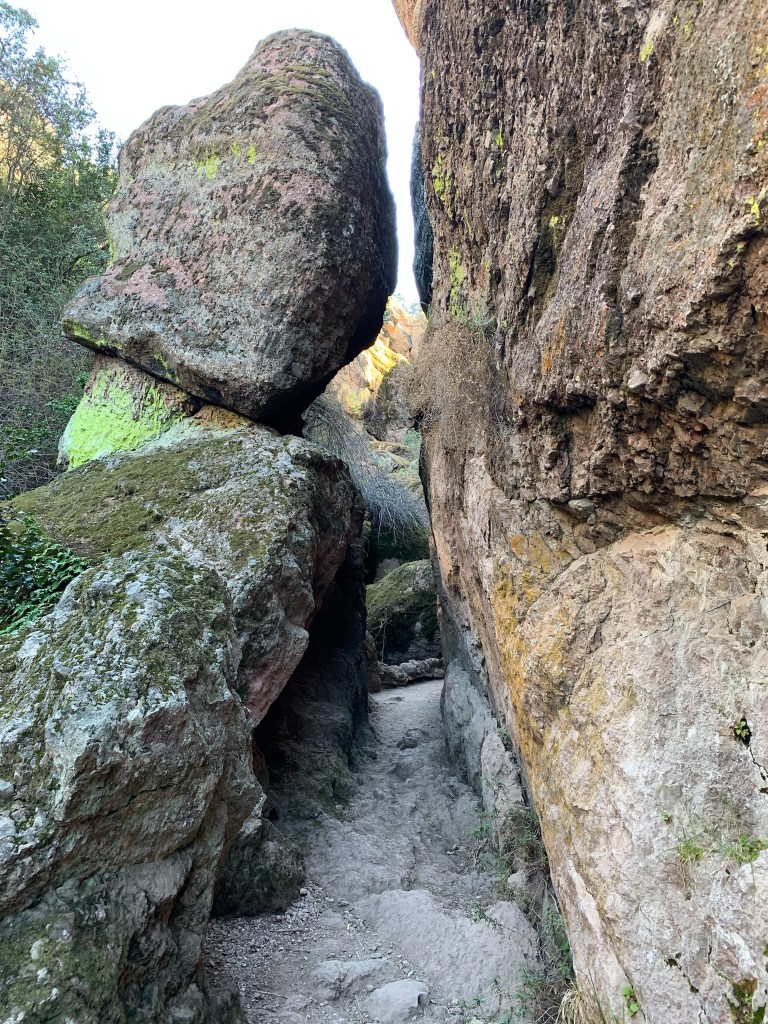
Talus caves are formed when boulders stack up in narrow passages, and Pinnacles in California is the unit to explore these. The large boulders and varying heights made me feel like a dwarf, my first category.

“Caves, they say! Caves! Holes to fly in time of war, to store fodder in!
My good Legolas, do you know that the caverns of Helm’s Deep are vast and beautiful? There would be an endless pilgrimage of Dwarves, merely to gaze at them, if such things were known to be. Aye indeed, they would pay pure gold for a brief glance!”

— Gimli

California’s Lava Beds is the best place to explore different types of lava tube caves, and the skulls and ice-cold rooms are ghostly. Craters of the Moon in Idaho has a similar cave, but obviously that’s more werewolf. El Malpais is more for self-guided, serious spelunkers, but many natural entrances can be seen. Definitely bats.

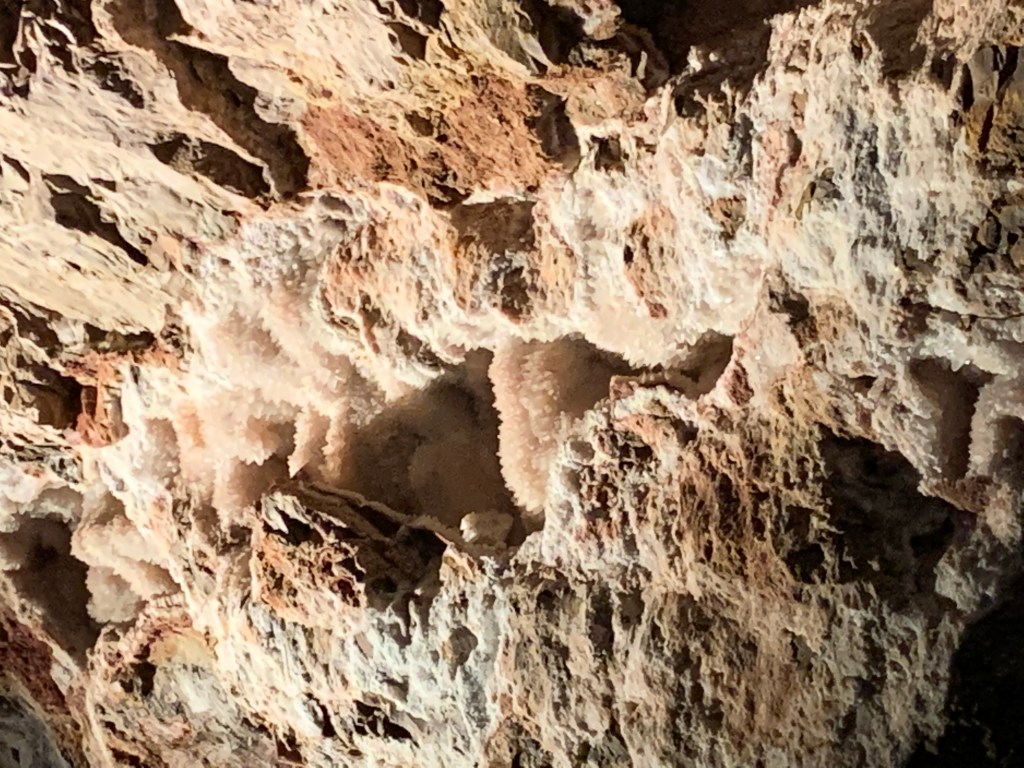
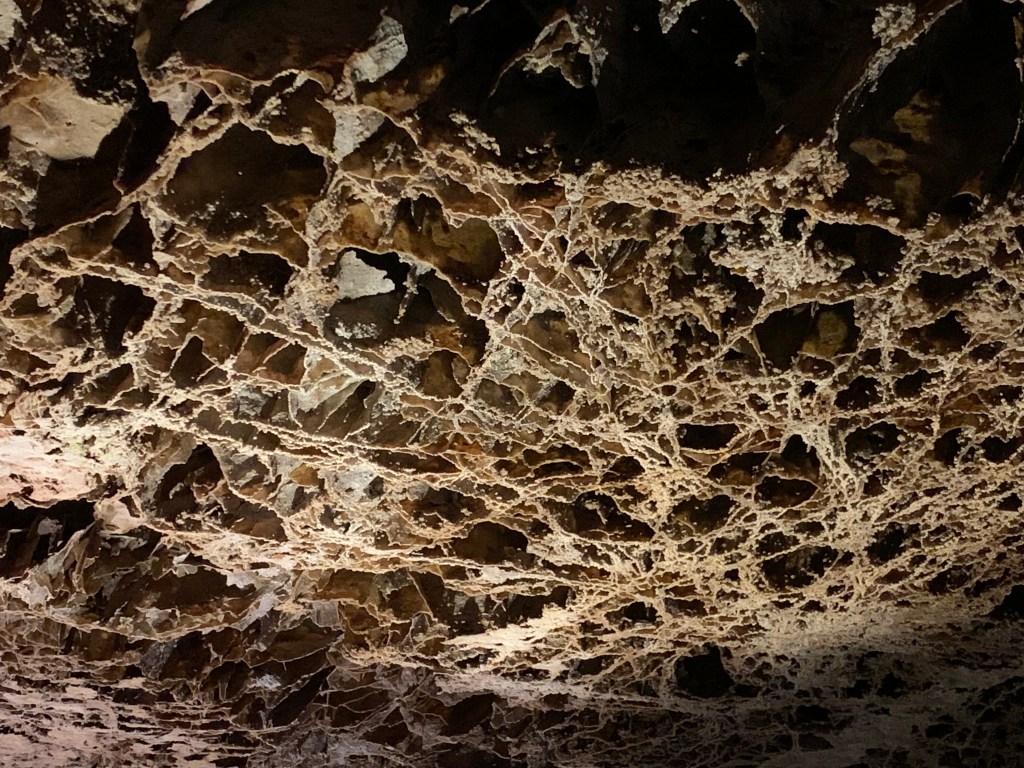
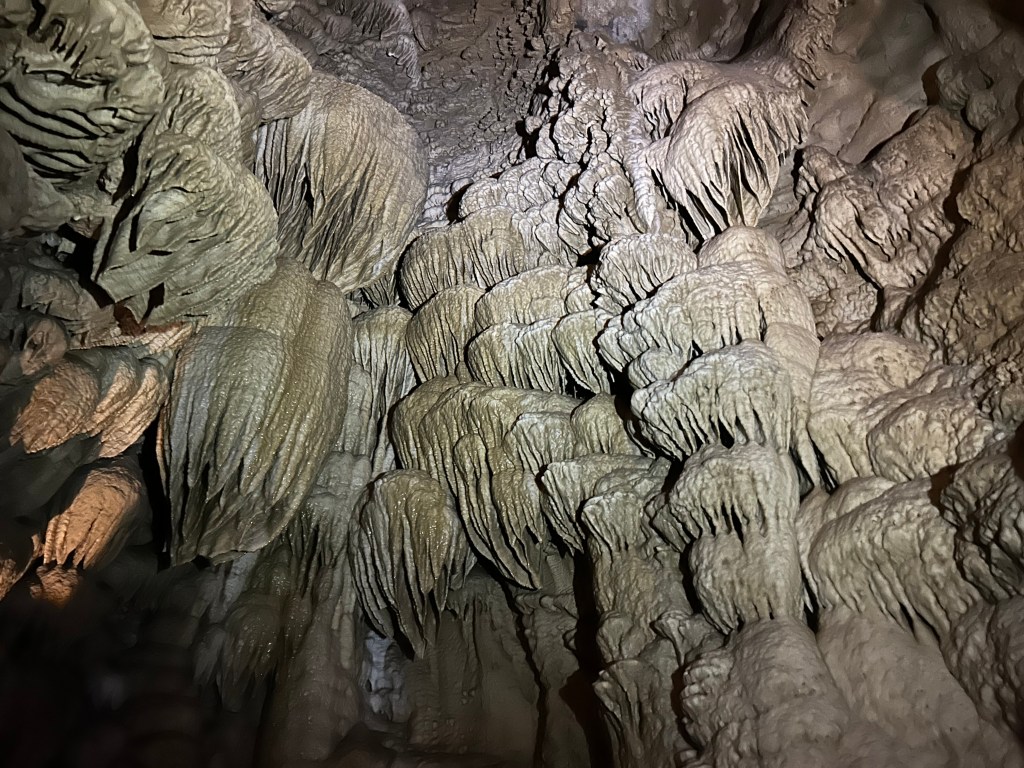
My favorite cave park is Timpanogos in Utah, due to the good condition and variety of speleothems (features created by water). The alien features evoke melon heads. Solution caves, created when liquids dissolve bedrock, are the most common types of cave parks. Carlsbad in New Mexico is the largest with grand speleothems that tower overhead (see photo). Try not to listen for goblin drums coming from the deep. Mammoth in Kentucky is the longest in the world with tunnels fit for lizard people. South Dakota’s Jewel and Wind caves rank 3 & 7 in the world for length, each with different speleothems to see. Also, think Djinn and Minotaur, respectively. Oregon completed my solution cave set, and it’s a good example of a marble cave. Definitely a troll cave.

That’s my complete list of caving parks. Great Basin is not primarily a caving park despite dragonesque Lehman Caves, because the park has such wonderful above-ground scenic views and alpine hiking. Neither is the vampiresque Karst-cave Ozark, since paddling is primary. Nor is archaeological Russell in Alabama. Before going zero carbon, we visited lava tubes in Hawaii, but there’s flowing lava to see. The parks have many more mines, ice, sea or littoral caves, but not primarily for caving.

And always remember to wear completely different clothes and shoes when visiting different caves, so you can help prevent the spread of the lethal white nose syndrome among different populations of bats! I never imagined I’d use all those Chuck Taylors I bought during their bankruptcy underground; perfect in case I need to run from a basilisk.

Pipestone National Monument

In some Native American mythology stories, the red pipestone comes from the blood of ancestors killed in floods. Similar to the story of Noah, prayers are heard and a few survive. The pipes send prayers to heaven. So this quarry has special religious and cultural significance, and the pipes are still formed using traditional techniques. There’s a great exhibition inside the visitor center, where native artisans answer questions while working and beautiful pipes are displayed. The film explains the importance of the local plants, including a field of red Smooth Sumac, used in making medicine and blends to smoke or hang in offering ties on sacred cottonwood trees where ceremonies like the Sun Dance are performed. The short circle trail up the creek past the small Lake Hiawatha leads through a beautiful hewn ravine of red pipestone across a footbridge and back around to an exhibit quarry.