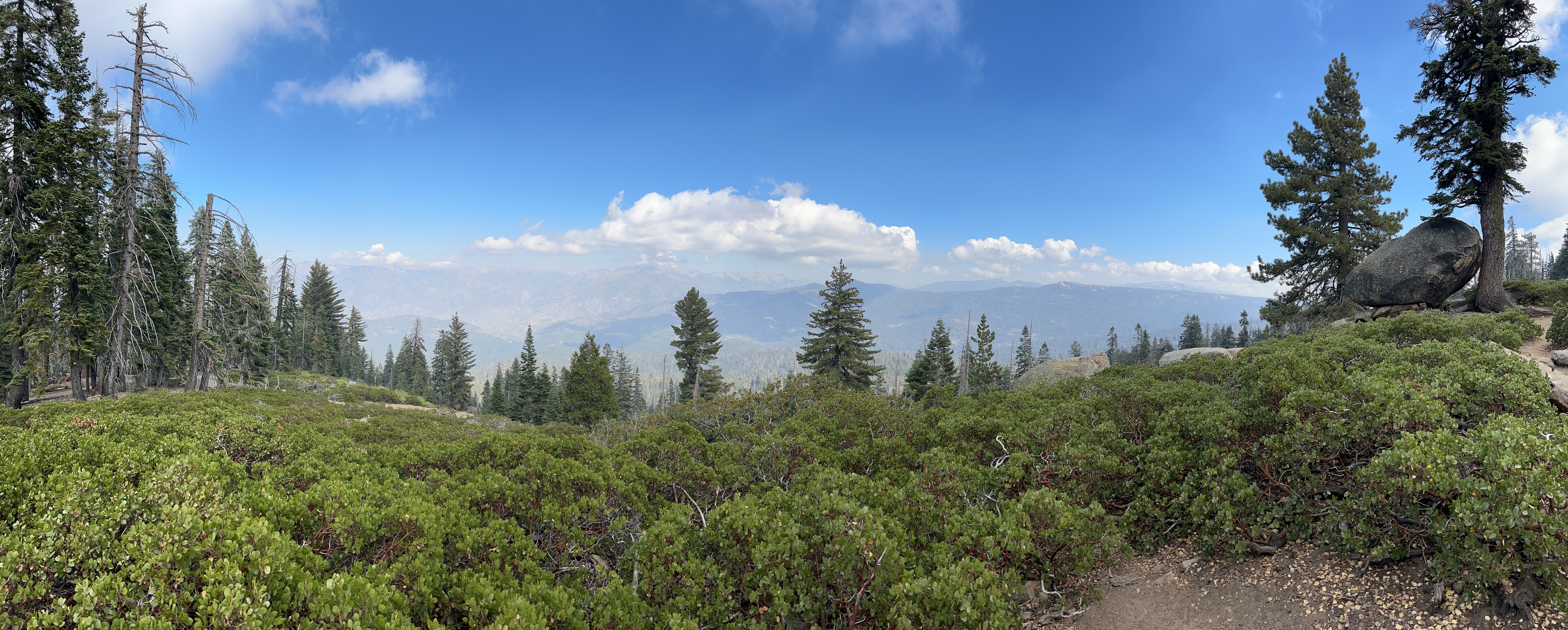
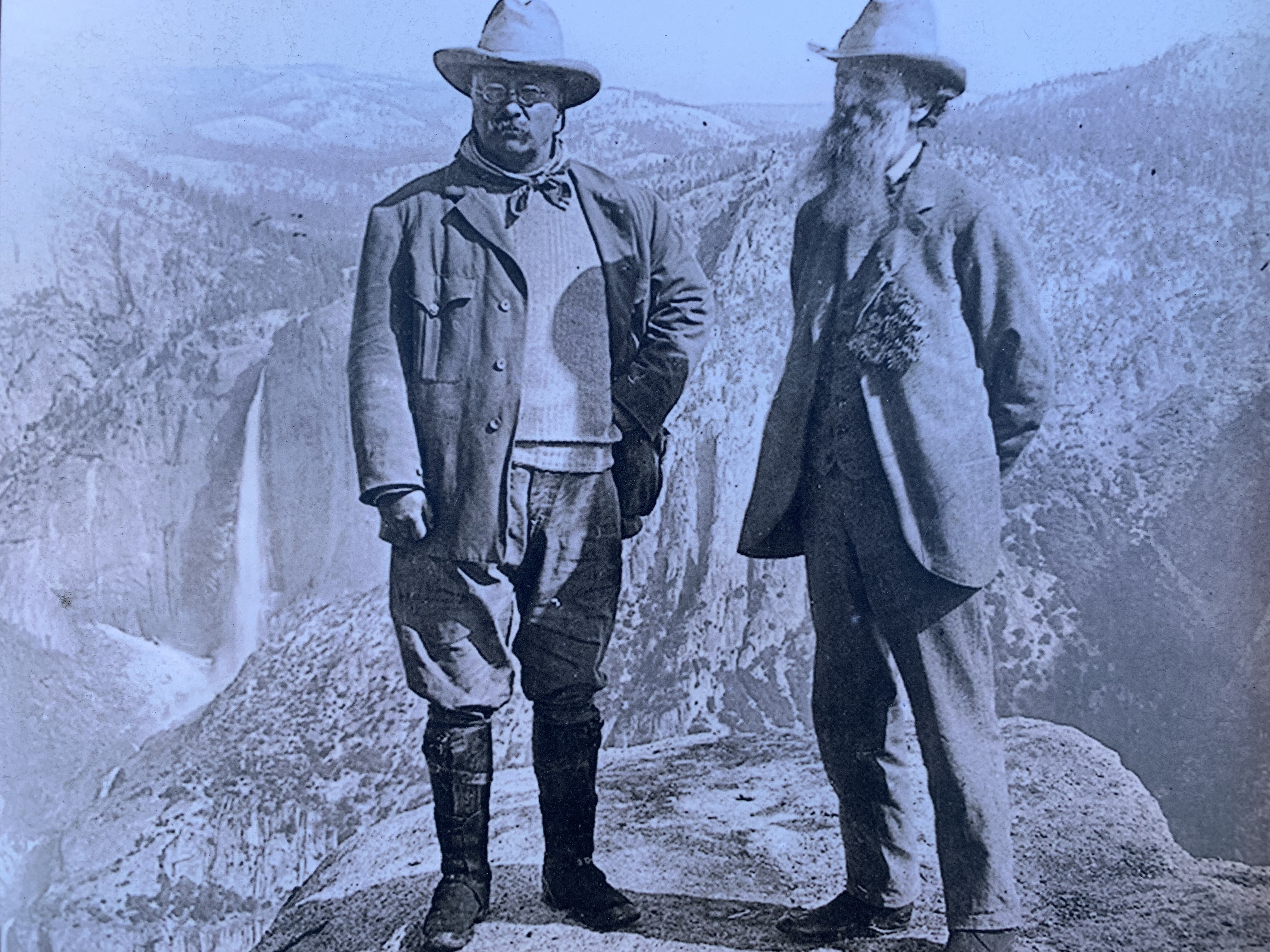
John Muir loved the view from Panoramic Point above, as did Stephen Mather, the first national parks director. I visited the park years ago with my family, and the scenery was stunning. But the view was less inspiring when I visited this summer. Smoke from a wildfire shrouds the view of Kings Canyon in the distance. You can hardly see the lake in the photo above. Behind me stand acres of dead trees burned in the huge wildfires of the past few years, and the main road into the heart of Kings Canyon wilderness was still closed this summer due to fire damage. If Muir & Mather visited now, they would be as heartbroken as I.
Experts employed at this California park have long argued influentially in favor of more fires, have implemented prescribed burns in forests across the west, and they chose to let the wildfire above burn itself out. Their dogma blamed past firefighters for causing today’s wildfires. Even though park rangers are not allowed to smoke, leave campfires unattended, burn out shelters in trees, or use fire to hunt, this park’s scientists used to argue that we needed those ‘Native American burn practices’ for forest health, even though these forests evolved without humans. Too many forest rangers and climate change deniers use this illogical nonsense to ignore and dismiss the danger of carbon.
This year 46 million acres of wilderness forests burned in Canada in roadless wilderness areas consistently ignored by firefighters in the past. How could these wildfires have been caused by past ‘fire suppression’? The dogma is wrong. After the unprecedented recent wildfires, park scientists here have belatedly begun to recognize the predominant threat of climate change, far worse than any prior suppression errors.
When Muir & Mather described the area, they did not remark on seeing any large areas of burned trees, made no note about any fires that regularly demolish many thousands or even a million acres every few years, and they did not write about the supposed benefits of Native Americans regularly setting fires while pelt hunting. Instead, they were inspired by the beauty of huge swaths of living forests and pledged to protect them forever. Scheduled fires, tree density limits, species removal, reseeding, and other human intervention are not what Stephen Mather had in mind when he called such places ‘untrammeled wilderness’. Muir would have harsh words against the ~$250 million annual timber sales in the forests he and Teddy Roosevelt protected.
If Muir & Mather could return, they would notice that the whole forested range has changed dramatically, the air and ground are drier, the temperature is unseasonably hot, the rivers and creeks are dry, and that the snow is gone from the mountaintops. They would be dismayed by the decline of once abundant wildlife. Muir, who never rode in cars, preferring horses or hiking, would see the lines of buses, RVs and cars burning gasoline, and he would shout ‘STOP’!
In the future, doubtless people will be horrified to learn that in the face of climate change fueled wildfires, we chose to burn our remaining forests ourselves, releasing even more carbon into the air. It’s like using leeches to cure people, even though they make the patient weaker. Or like destroying the village to save it.
Forest science must face the future, not misrepresent the past. We need national policies to limit carbon pollution, not taxpayer-funded ‘prescribed burns’ that increase carbon pollution. If new conditions require fire breaks or dead trees need to be removed, then why can’t trees be cut down and buried with sand, instead of being burned? If certain types of trees will no longer survive in the future hotter climate, then we shouldn’t be paying people to plant seedlings for more of the same trees in the same places that burned down two years ago. We need to charge visitors in gas-burning vehicles a carbon surcharge to encourage people to switch to electric vehicles (and to mitigate some of the damage they do).
We ended wilderness. Our carbon pollution is trammeling every species on earth. We have precious little time remaining to figure out how to save species before they go extinct forever.
“Without wilderness, we will eventually lose the capacity to understand America.
Harvey Broome, founder of the Wilderness Society
Our drive, our ruggedness, our unquenchable optimism and zeal and elan
go back to the challenges of the untrammeled wilderness.”

 Zero Carbon Travel