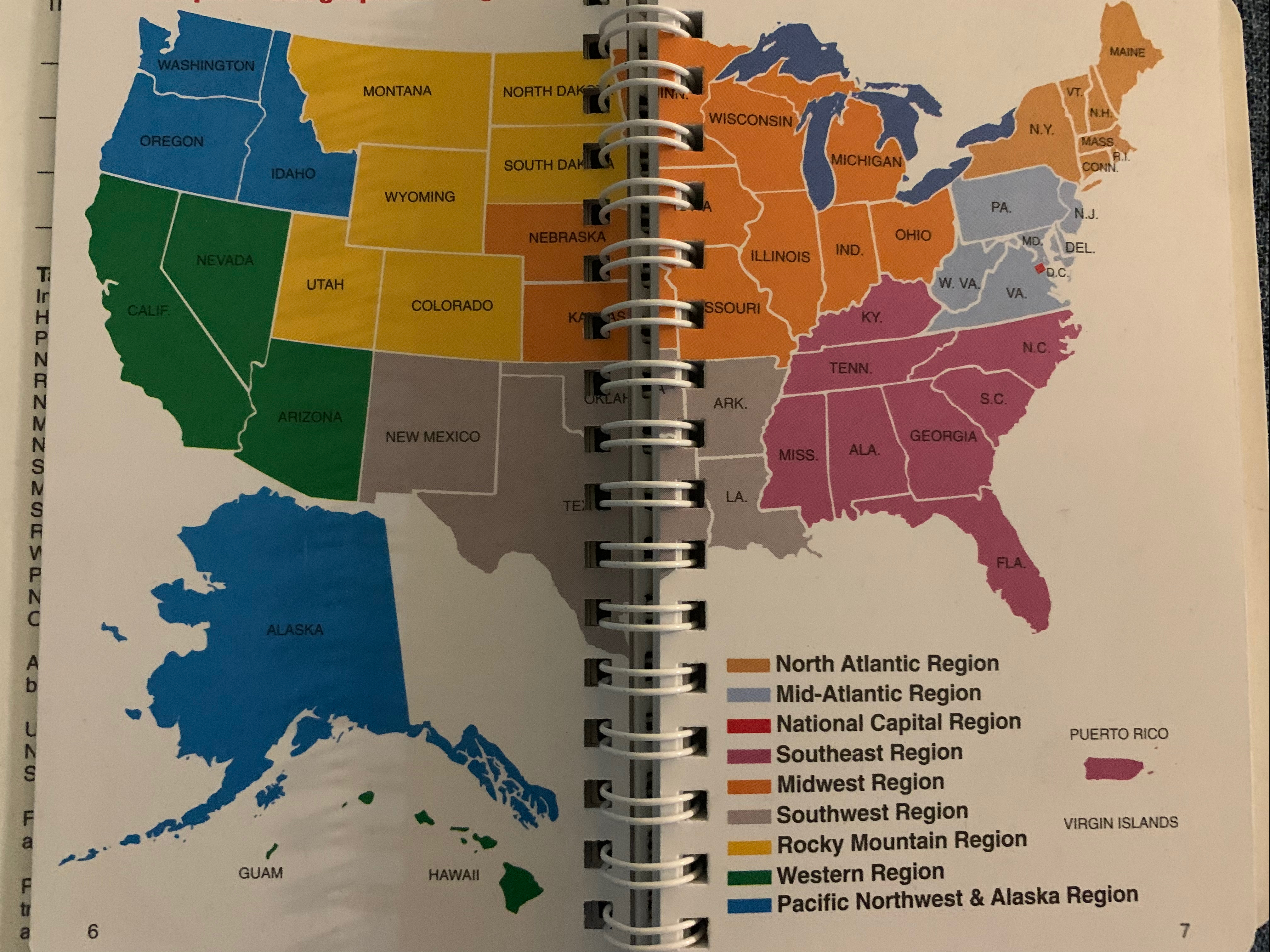
The National Parks Passport (which National Park Travelers Club members use to save visit stamps) divides the units into nine self-explanatory regions. The club has useful information for trip planning, and I log my park visits there too. The US Department of the Interior has reorganized their park unit regions a few times into something less useful for me, so I still use the map above to organize the site geographically. And the NPTC often does a better job keeping their park unit information completely up to date, compared with the NPS.
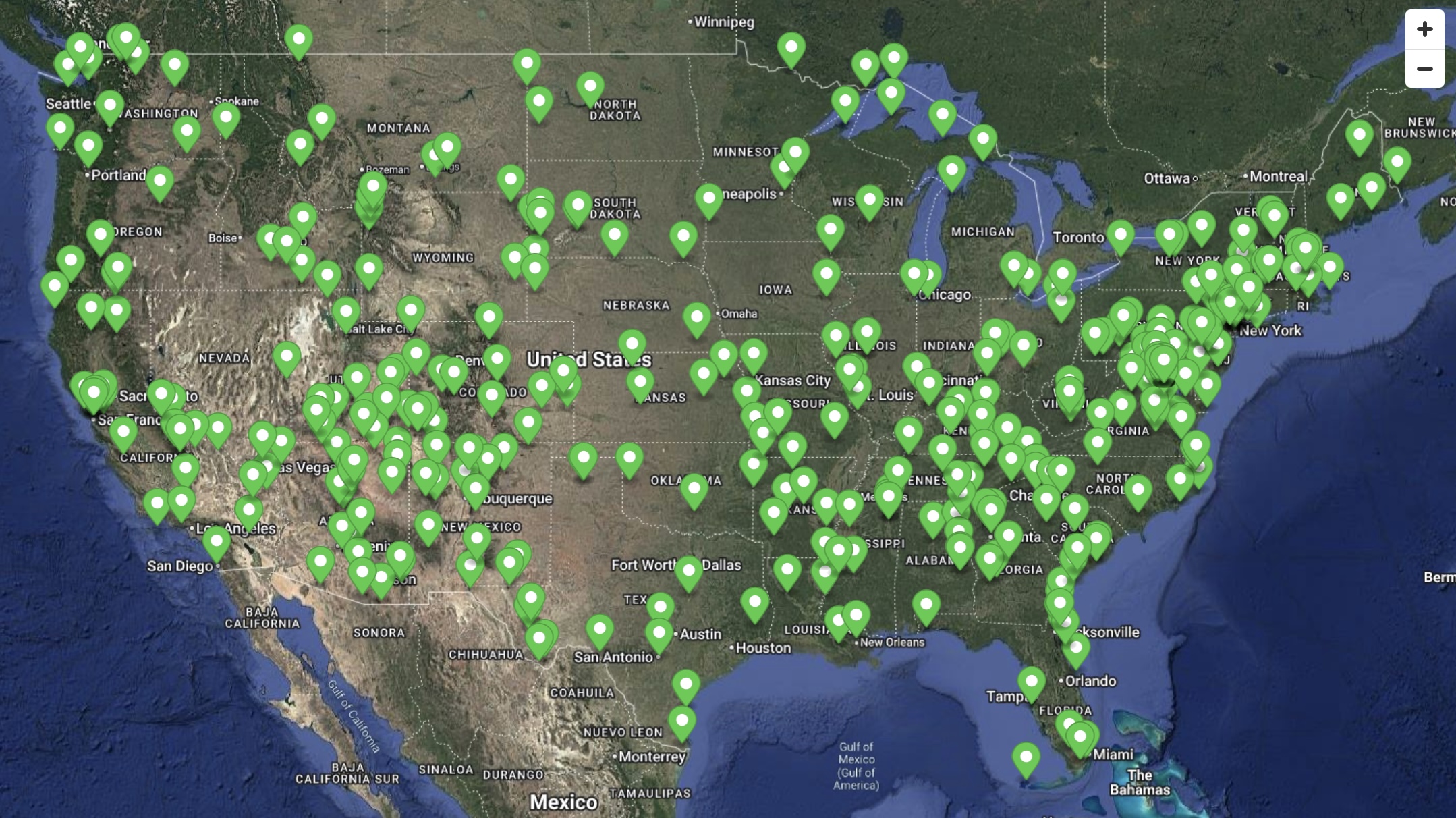
I visited all national park units in the contiguous 48 states in my electric car in the last four years; see my NPTC map below. Every state has at least one national park unit. If you want to see my visits in your state, ‘Click a State’ above, find your region and click the summaries to explore.
My first region completed was National Capital with 23 units, then Southwest with 42, Mid-Atlantic with 56, Rocky Mountain with 41, Midwest with 47 and North Atlantic with 44. Each of those links takes you to a summary of my park visits there. That leaves three extremely challenging regions to complete. The Western region includes Hawaii. The Pacific Northwest has Alaska. And the Southeast includes US territories in the Caribbean.
As I mentioned in my post on Cumberland Gap, this blog is partly an object lesson to show that traveling in an EV is a great way to visit our national parks. I can travel hundreds of miles per day, stopping briefly to charge, use the restroom and eat, and filling up costs me a fraction of my Prius. I use a CCS and a few RV plug adapters on rare occasions when they’re more convenient than a Supercharger, and I find charging locations with the PlugShare app. When I stay in state park campgrounds, I charge my car overnight without paying extra. Even if I were more concerned with my money than our climate, I would travel this way. And I love driving my Tesla.
I’ve only had range or charging trouble twice. Once in Kansas, I could not reach a park before closing due to poor planning on where to charge, but when I returned, Tesla had opened a new Supercharger nearby. (The car tells me whenever I’m heading out of range from the nearest Supercharger). Another time, the owner of the Dairy Queen in Needles California was blocking 3 out of 4 chargers all day with a truck, because he wanted to change the seasonal advertising on his sign. I called Tesla to let them know, which is what he should have done in advance. I’m not going to say traveling cross-country by EV is idiot proof, but I can do it, so it kinda is.

 Zero Carbon Travel