Midwest Region National Heritage Areas

The Midwest region has 8 NHA’s—more than most regions—ranging from industrial to pastoral, and most are devoted to travel by horse, boat, car or plane. Each heritage area provides a unique way for us to learn our history and explore our diverse culture in vibrant and interactive ways, such as riding in a Santa Fe Trail stagecoach above. Parks travelers tend to focus on the most famous iconic national parks, but I found some of my most treasured experiences below.

If you missed any of the posts above, I encourage you to click on them now, especially the last one. I’m slowly filling in the map and will continue posting Midwest state photo summaries on alternate Saturdays. I only have a few more Midwest national park units to post before I complete all sites in the region, and look for a few more New York sites. Thursdays will alternate between summaries like this one and eclectic extras like last week.
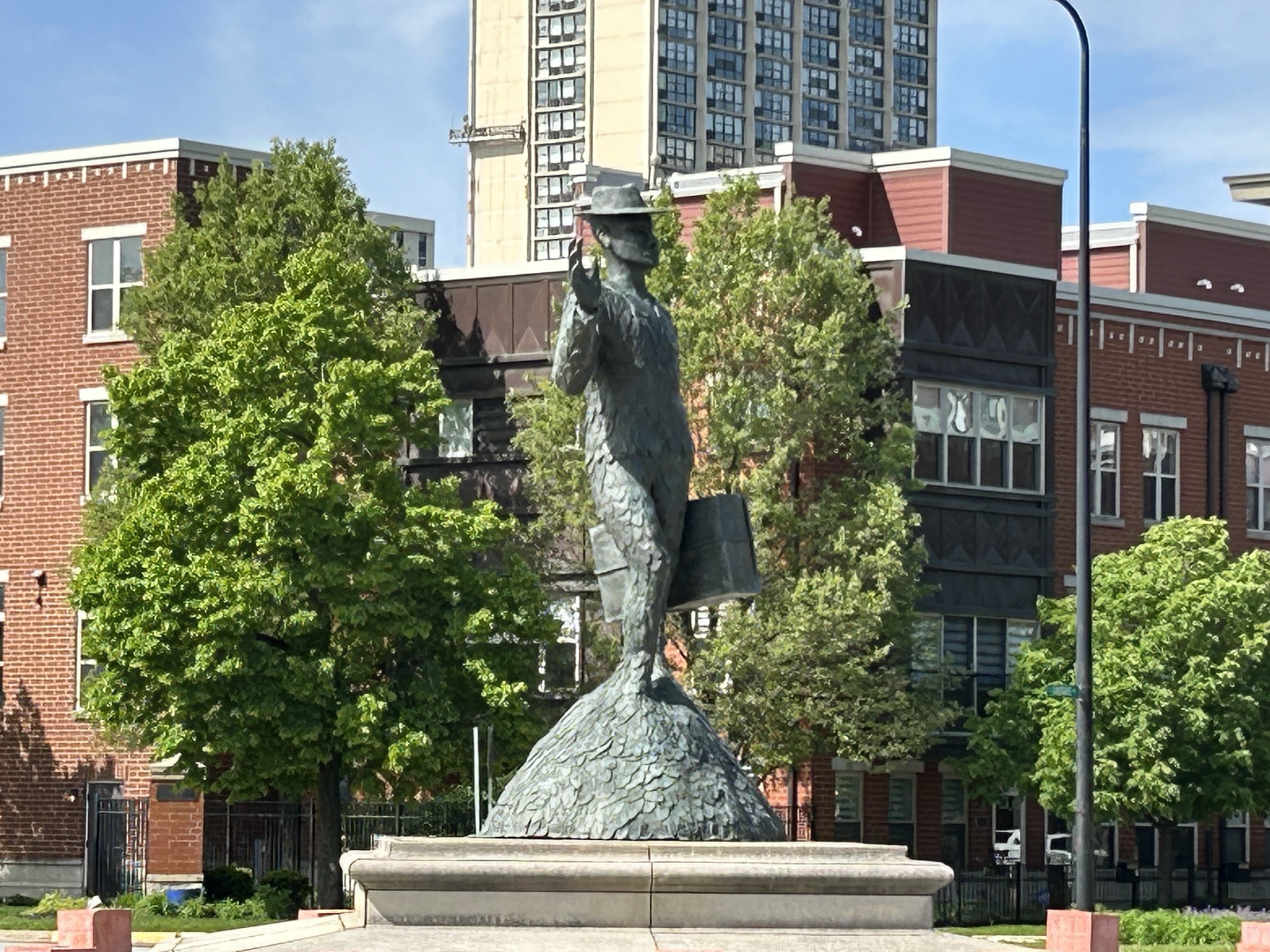
Bronzeville—Black Metropolis National Heritage Area

The South Side of Chicago has long been a historic district, and now it will be recognized as its own National Heritage Area. This is the neighborhood of activist Ida B. Wells, the church for Emmett Till’s funeral, of poet Gwendolyn Brooks, boxer Jack Johnson, musicians Louis Armstrong and Nat King Cole, and where a young community organizer named Barack Obama worked before law school. 1/2 a million African Americans moved to Chicago during the early 20th century. Above is the Monument to the Great Migration at MLK & 25th, welcoming people to join the community, and every so often you will find a bronze plaque recognizing accomplished residents on the walk to 35th, where there’s another statue, honoring the African American soldiers who chased the Germans at the end of WWI.

The neighborhood continues south, with many beautiful brownstone buildings and a few blues venues. Unfortunately, many historic buildings—like the Checkerboard Lounge where Muddy Waters used to play—were lost to poor government planning, an expressway that cut the neighborhood off, and expansion of the University of Chicago. Establishing a specific heritage area helps recognize the unique cultural value of a neighborhood, encouraging more visitors by promoting it. Now, I expect Black Metropolis will continue experiencing its renaissance, and I look forward to trying the food at Bronzeville Soul (closed Mondays) the next time I pass through town.

Monarch Butterfly Biosphere Reserve

Be cool for the butterflies on Earth Day!

Butterflies are free. Monarchs may arrive at their winter home late, be choosy about where to land, and may leave early. At around 10,000 feet, the dormant volcanic peaks are covered in trees and flowers, with the specific temperatures the Monarchs need. Despite the distance and dangers, the fragile butterflies still manage to fly from Canada to Mexico every year in an extraordinary migration, one of the coolest natural events on earth.

Everyone loves the monarchs, and between the states of Mexico and Michoacán the reserve is both a UNESCO Biosphere and a World Heritage Site. During the November to March season, crowds of locals take bus day trips to see them fly, cluster, feed, mate and fly again. Since the flighty monarchs are unpredictable, day trips can visit their chosen forest at the best times. Overseas visitors often stay for a few days in lovely spots—like Cerro Pelón B&B run by a family of original butterfly rangers—to enjoy the picturesque villages and relaxing environment while recovering from high altitude hiking, as I did.

Humans can impact these glorious butterflies in many ways, both positively and negatively, and we need to be much smarter about making small changes that can help: reduce pesticides, grow butterfly friendly plants and drive slower when butterflies are present. But also, we need to make big, global changes to reduce our carbon emissions, so that this species can survive.

Which brings me to an Earth Day question. Is it worth flying and driving here to see the butterflies, knowing that your carbon pollution will contribute to their extinction? Better to drive an electric car.