Driving the Baja Peninsula

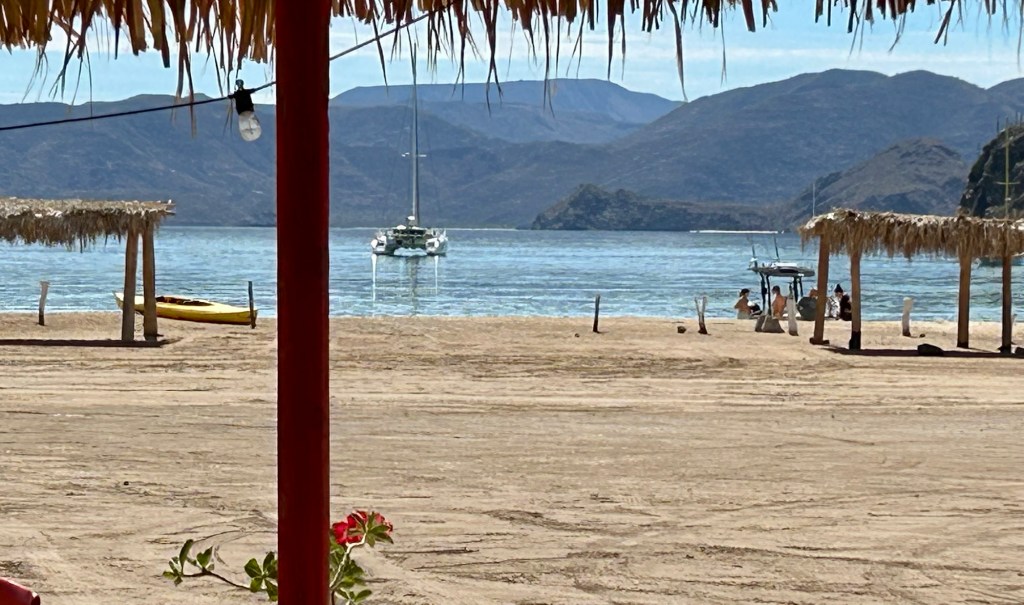
My favorite place in Baja is Loreto, above. It’s a magical town, both Mexican and touristy, with good restaurants, not too big nor crowded, near beautiful beaches and with quality tours to explore the bay. The bay and islands are part of a national park, where I saw blue whales. Simple restaurants on nearby beaches have the freshest seafood: try Vista al Mar.

Winter is the time to see the gray whales in their favorite lagoons, mating and raising their calves. And some of the tour operators offer rock painting and other tours, if it’s too cold or windy for watching whales. Ensenada has vineyards with wine tasting in the surrounding valleys. And folks enjoy biking, fishing, hiking, horseback riding, kayaking and more along the whole peninsula. More folks should make the drive from the US state of Alta—‘upper’—California to the Mexican state of Baja—‘lower’—California and Baja California Sur—‘south’.

Everyone who has driven to Baja has stories, but there’s a lot of BS from people who want to make it sound more rugged and dangerous than it is. Americans often drive big expensive campers with all sorts of extra gear, imagining they’re on some challenging off-road expedition, like one of the Baja races. They talk about camping at some perfect remote cove only accessible with a specialized vehicle and extreme skills, even though many beautiful beaches are on easily driven roads. I saw a van roll over after swerving to avoid a pothole on the highway, so I think the last thing you need is some top-heavy monstrosity. (Driver said he was fine, but I asked the police nearby to check on him).

While I saw several large motorcycle packs of ‘rugged individuals’ staying at comfortable hotels, I drove my Tesla 3, with a low center of gravity that steers well, and I visited some of the most wonderful places in Mexico, without drama. As on my drive to Mexico City, I was neither asked for bribes nor witnessed any crimes. There’s much less traffic in Baja, and there’s no need for a car permit in Baja or neighboring Rocky Point. I crossed the border at Tecate, where I simply drove through without a wait. There are a few checkpoints, but—besides asking questions about my car—they typically just wanted to know my destination, to be sure I wasn’t trying to drive at night. (Due to politics, returning to the US is far more time-consuming than it was last year, as inspections have increased significantly).

50 years ago maybe, you needed a small private plane to stay at Hotel Serenidad, one of John Wayne’s old favorites, but I just drove there. The restaurant still has delicious food, and the atmosphere is tranquil. The road was a little bumpy, but I charged my Tesla 3 at a nearby hotel, while playing with their dogs. Then, down the coast, I had one of my favorite meals, aquachiles mixto, at Ana’s restaurant on Playa Santispac, while mesmerized by the view from my table below.
The plain truth is that Baja is drivable by electric vehicle, and I was surprised to see only two Teslas south of Ensenada. Even the US CBP officer was surprised that I had driven my Tesla 3 all the way to La Paz and asked about road conditions and charging. There are two routes from the last Supercharger in Ensenada, either via Hotel Cataviña and the pacific highway or via San Felipe on the more recently paved ’faster’ route. I took the pacific route, since it’s a few miles shorter. Sure, my car lost signal for the whole round trip between Ensenada and LaPaz, so it missed the time zone change between north and south Baja. But I used my iPhone to navigate, entering my next destination whenever I was in a town large enough to have cell service or at a place with WiFi.

The destination chargers I found on PlugShare are much slower than superchargers: +42 miles/hour, but some are free with lunch or $20 to charge. La Paz to Loreto can be done in one drive, and both ends have hotels with free charging for guests. (Here’s a tip. If you’re charging overnight, don’t set a full charge as ‘one time only’. When I woke up, a power outage during the night had reset my charge level from full back to daily 80%.) I drove Bahía de Los Angeles to Ensenada in one long day, charging in San Quintín. The trick is to obey the speed limits and take your time. Since charging is so slow, there’s no point in saving 40 minutes speeding, only to have to charge for an extra hour when you arrive. Besides, you need time to avoid potholes.

Although too many people have thrown trash along the roads and too many developments and small buildings have been abandoned, Baja is still very scenic, with beautiful beaches, craggy peaks, canyons, deserts, dunes, farms, salt flats, volcanoes, date palms, countless cacti, osprey, and more. OK, it can be dusty and dirty, but not everywhere. Mexico is an informal country, and Baja is even more so, where folks just do things their own way. (Every margarita I drank, tasted different than the last). But if you put a smile on your face, be patient, thoughtful and keep your eyes open, then Baja is a beautiful place to visit, especially in a small electric car!

Resolutions Old & New

Happy New Year! First, let’s check off my New Year’s resolutions for last year. 

* President Biden named a new National Monument in Maine in December, so I will go back in 2025.

For 2025, here are my New Year’s resolutions.

So I plan to cross the country again this year in my electric car, seeing National Parks from California to Florida, World Heritage Sites from Canada to Mexico, and various lesser known but still important small sites. Logistical challenges or new park designations (thanks Joe) may thwart my plans, but I resolve to do my best.

The posting schedule should continue unchanged all year. Mondays are site visits. Thursdays are typically viewpoints and summaries. And every other Saturday I plan to post a state photo summary. Thanks for following along!

San Miguel de Allende

Santuario de Atotonilco

Above is one of a half dozen side chapels in the UNESCO World Heritage Site of Atotonilco which includes nearby San Miguel de Allende. While most tourists luxuriate in the colorful town, this whole area is historic, beautiful and fascinating!

By all means, visit Ignacio Allende’s house next to the church founded by San Juan de Miguel, who founded the town. You will learn how Allende, the hero of Mexican Independence, lost his eldest son in battle defending his father and see how the Creole elite lived when the Spanish King decided to take the lion’s share of the treasure in silver from the mountains. The mixed race locals were furious that some overseas French-backed King was against the Jesuits educating them, and they rebelled.

Was Allende the mastermind or the Priest Hidalgo, who cried for independence? The smart money is on Allende, but the poor must have listened to Hidalgo. Either way, they were captured and executed, both becoming martyrs. And the people rose up and won their independence from Spain. There’s much to explore!

Amistad National Recreation Area

In 1969, just below the confluence of the Rio Grande, Devils and Pecos Rivers, a dam was built, creating Lake Amistad (friendship en Español). The lake caused the mouths of the Pecos River and Seminole Creek (above) to silt up, and now that the water level has fallen (like Lake Mead and Lake Powell) they’re cut off from the Rio Grande (see far right). Most of the boat ramps, like the small dock at the cave above, are no longer accessible. The lake is far below minimum expectations, because the US diverts virtually all the Rio Grande water before it even reaches Big Bend. From there most of the river comes from Mexico’s Río Conchos. The park is run in partnership with many agencies, and the two towns that share the border are friendly and have joint cultural festivals annually. Mexico maintains a small fishery, US residents enjoy bass fishing, and the border is marked with buoys. I took one of the old highway ‘spurs’ straight down to the water, but it was too hot to kayak in winter.

Panther Cave, across the canyon above, is on the far western park boundary. While the park film absurdly claims that “no Native Americans have any ties to the area”, the canyon is Seminole Canyon, and the cave is an important site for prehistoric cave art. The Amistad visitor center has information and large reproductions of the cave art, and the excellent Seminole Canyon State Park has morning ranger-led tours to another similar cave and a few miles of hiking trails to see the view above. Before man dammed and drained the rivers and destroyed the riparian ecosystems, Native Americans must have traveled up the Rio Grande to Albuquerque, where some of the oldest petroglyph art was created at the same time as the art here. Sitting on the cliff above observing the wildlife, I imagined prehistoric people hunting, traveling by canoe, drawing on the cave walls and protecting their families from panthers, until thunder warned me to seek shelter.

Rio Grande Wild & Scenic River

The Rio Pequeño (not grande with this low water) enters the Boquillas Canyon here and continues down to Amistad. Hiking into the canyon along the border, there are few signs of the modern world, and I suddenly felt like I was in a classic western movie when I heard horses approaching. Three horse riders offered handcrafted souvenirs and chicken tamales as they passed, and when one was crossing back to Boquillas Mexico on horseback, his horse had to bend down to knee level to drink from the middle of the river. Hardly worth crossing by rowboat at the port of entry, when folks were wading across the river. (Yeah, yeah rules, but no harm no foul with kids just playing in the water).

The Climate Crisis is playing havoc with my plans. Not sure when I’ll get the kayak wet this trip. A few days ago, I was trudging through the snow in Zion, and here in winter the temperature hit over 100 degrees on the trail. Best to visit in February, and always bring plenty of water. Last year I just carried a water bottle, but now I use a 3L hydration pack with another 5 gallon container in my car. The heat is no joke; a hiker died here just a few days ago, one more of many.

Due to low water and logistics, I’m only exploring the river from the dusty trails and grand overlooks within Big Bend. The US and Mexico protect 200 miles of land alongside the river, including the canyon above, another at Santa Elena and a big reserve on the south bank opposite Big Bend. In particular, there’s a nature trail at Rio Grande Village, where I spotted a half dozen bird species in minutes, including a Great Blue Heron and my first sighting of a Black Phoebe flycatcher. It’s unfortunate that so many communities take most of the river water without considering the downstream impact on birds and other species. I know people pay extra for golf courses, ornamental plants and water features, but national nature reserves suffer directly as a result. Americans need to invest in solar desalination facilities and leave rivers alone.

Chamizal National Memorial

Unlike any other park, Chamizal memorializes diplomacy. When the Rio Grande shifted course at the end of the 1800’s, it created an island and a seven decade long border dispute with Mexico. President Kennedy went to Mexico to finalize an agreement, and LBJ later participated in the joint ceremony at the border here. There’s a beautiful mural on the visitor’s center, and I remember from a previous visit that there’s a film that explains the importance inside.