Tennessee is the only state that is also a national heritage area, focused on the Civil War, with four national park units, three other battlefield parks, three Civil War oriented museums, and Andrew Johnson NHS. The nationally established parks cover the history best, but state parks—especially Fort Pillow—are also historically important.
1862 Fort Donelson NB Grant gained access to the Cumberland River in the northwest.
1862 Shiloh NMP Grant won a costly battle, despite a Confederate surprise attack.
1862-3 Stones River NB, with slaughter pen & hell’s half acre, a bloody victory.
1863 Chattanooga NMP another Union victory, securing railroads in the southeast.
1864 Fort Pillow a massacre of surrendering black soldiers by Nathan Bedford Forrest.
1864 Battle of Franklin a disaster for the Confederates, especially a dozen or so generals.
Fort Pillow is on a bluff then overlooking a sharp bend in the Mississippi River north of Memphis. It is well sited for firing down at passing ships, but there are several higher hills around the fort, making it defensively weak against a land attack. Nathan Bedford Forrest brought superior troops in number and experience, and attained the element of surprise. The Union leader was shot dead early on by sharpshooters, and his replacement refused to surrender. The battle was soon over, as the Confederates surrounded the fort, moved in and overran the ditch defenses.
Except that the slaughter continued, long after the battle was won.
The state park visitor center at Fort Pillow has a disappointing exhibit that repeatedly describes the 1864 congressionally designated “massacre” as only a “controversy”, displays grandiose portraits of General Forrest, and provides numerous excuses for the one-sided outcome (see below list of dead). Over the years, many apologists—the same who describe the Civil War as a heroic cause for states rights—have tried to defend the actions of the Confederates at Fort Pillow, but there’s nothing honorable about a 20 to 1 slaughter.
The facts—excluded in the museum exhibit—tell the true story. Most of the Union white soldiers were taken prisoner, while almost all of the black soldiers were killed. One of Forrest’s own sergeants described many black soldiers trying to surrender and wrote, “General Forrest ordered them shot down like dogs”. Black soldiers were denied prisoner of war status throughout the war, and the Union stopped prisoner transfers due to this official Confederate policy, clearly stated after Fort Pillow. Forrest became the first Grand Wizard of the Ku Klux Klan after the war. The site should be a national battlefield, and the history of Forrest’s massacre of black soldiers told accurately.
November is Native American Heritage Month, and next week is the 403rd anniversary of the first Thanksgiving feast of the Pilgrims and the Wampanoag, when, as earlier in Jamestown, Native Americans helped starving English colonists. Contrary to the gauzy fabricated myth that natives peacefully welcomed Christian settlers and happily ceded their lands, tribes were decimated by disease and were massacred in both the Pequot War and King Philip’s War. Thanksgiving was first declared a national holiday by Abraham Lincoln during the Civil War, at a time when the US government was also at war with the Apache, Commanche, Navajo, Sioux, Ute and Yavapai, among other tribes. In the interests of truth, this post will focus on the NPS sites of the US War on Native America from the Revolution to 1924.
Our Democracy owes a debt to the Iroquois Confederacy formed 882 years ago, the oldest living participatory democracy. Ben Franklin was a student of Hiawatha’s Law of Peace which united 5 (later 6) tribes on issues affecting them all, while allowing them each to manage their own tribal issues separately. Thus, 13 colonies united to gain independence, becoming the United States. In 1794, George Washington signed the Treaty of Canandaigua recognizing our allies the Oneida, who fought with the Patriots at Fort Stanwix and Saratoga. The other tribes of the Iroquois Confederacy, many having fought for the British, had lost most of their lands in the 1783 Treaty of Paris.
For Native Americans, war with the US continued non-stop, moving northwest near Fallen Timbers and southeast near Chickamauga and Chattanooga. Despite winning the most successful native battle against the US army at the Wabash River, the pattern of natives losing their land regardless of whether they fought or which side they joined continued. The River Raisin set the stage for the War of 1812 and made the issue of claiming native land a mainstay of presidential campaigns. General Jackson leveraged his victory at Horseshoe Bend to become a popular national figure, and as President, he defied the Supreme Court to remove many tribes from the southeast to Oklahoma on the Trail of Tears.
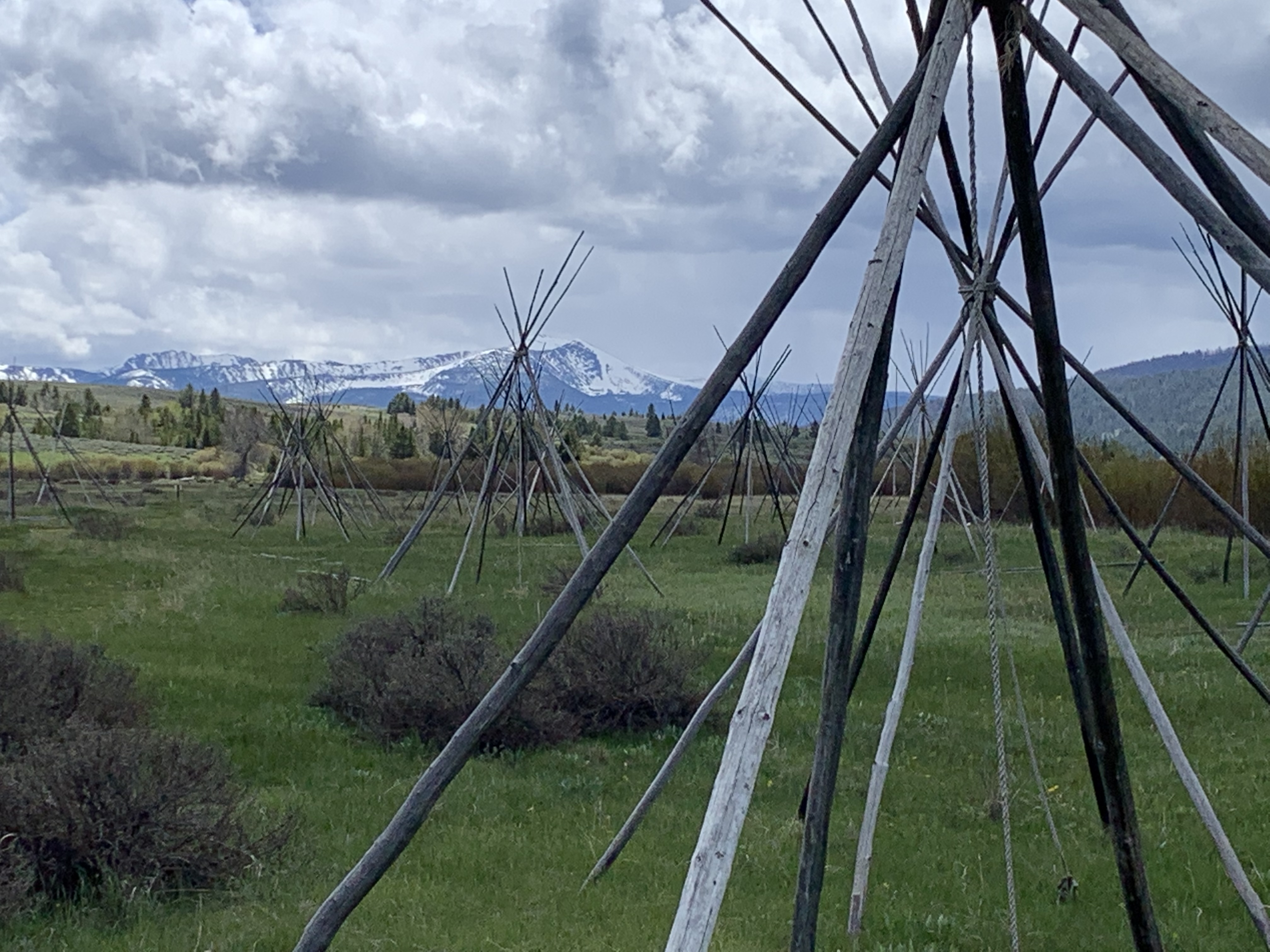
And there were massacres. Not the rare US military defeat like at Little Bighorn. Not the few sensationalized or many fictional stories of natives killing relatively small numbers of white settlers, like at Whitman Mission. But the illegal massacres of hundreds of peaceful villagers by US Army regulars and volunteers at Big Hole above, Sand Creek, and Washita Battlefield, among many others not yet memorialized by the NPS. Even our national monument to great presidents at Mount Rushmore is not far from the massacre site at Wounded Knee.
The US War on Native America is not usually considered as one continuous war, but rather as over 60 different military conflicts, often overlapping, between 1775 and 1924, when the last Apache raid was conducted in the US and when Native Americans finally got the right to vote 100 years ago. However, the US was at war with various Native American tribes in the years from 1775 to 1795, from 1811 to 1815, 1817-1818, in 1823, 1827, 1832 and from 1835 to 1924, or for 121 years of active fighting, plus 29 years of intervening “peaceful” forced removal by the US and state governments, even of tribes which had assimilated. Taken as a whole—including forcing dishonest treaties, abrogating treaties, suspending promised annuities, terminating trading relations, cheating tribes in unfair land deals, preventing private land deals with natives, relocating natives when gold was discovered on their land, revoking Indian land titles, seizing tribal land, annulling tribal constitutions, challenging their rights in court, dismissing their victories in court, dividing tribes, destroying crops, killing livestock, slaughtering bison, subsidizing exodus, rounding up tribal members into camps, locking them in forts, and forced marching them 1,000 miles over 5 months under US military guard—, the US government policy of removing Native Americans by force was a single policy, confirmed by multiple US presidents, passed into laws by Congress, and executed by the US military with deadly force against one group, known collectively as “Indians”—as in the “Indian Removal Act” of 1830—. So, rather than being dismissed as dozens of piecemeal conflicts, the US military actions against all the tribes should be considered as a single 150 year long, genocidal war.
It is horrifying to me that we do not recognize our nation’s longest war, even in the 100th anniversary since its end. We have largely forgotten the roughly 100 tribes that are now extinct, as well as the Pontiac War which used smallpox blankets, the Potawatomi Trail of Death, the Long Walk of the Navajo, the Yavapai Exodus, and others. And we in the United States—founded under a Native American democratic organizing principle and living on native land—do not admit that the long, costly war, devastating relocations and cultural destruction, was repeatedly approved by racist American voters.
“The wounded, the sick, newborn babies, and the old men on the point of death… I saw them embark to cross the great river and the sight will never fade from my memory. Neither sob nor complaint rose from that silent assembly. Their afflictions were of long standing, and they felt them to be irremediable.”
Alexis de Tocqueville, on witnessing the Trail of Tears in Memphis
The Cayuse had heard from the east about what happened to natives after settlers arrived, so they predicted death, loss and suffering were on their way. The Whitman missionaries left in 1836, five years before others started arriving overland in Oregon. They were allowed to start a farm here, and with the fervor of the second awakening, they preached that the Cayuse were going to hell after death unless they adopted Christianity. As it turned out, gathering newly arrived settlers and native converts in church weekly to break bread and sing songs together, helped spread diseases like measles that killed most of the native population. So the Whitmans were sort of correct, except for the order: first they adopted Christianity, then they went through hell before finally dying.
Unfortunately for the missionaries, the natives had a tradition of killing bad medicine men. Now, much has been written of the Whitman massacre (especially by the other missionary Spaulding who settled nearby with the Nez Perce), but imagine if immigrants come to your town and demand that you copy their strange new ways and beliefs, with threats if you did not. Many more immigrants arrive each year, talk with the missionary doctor, take over and spread disease. When the doctor treats his own people, they usually survive, but when he treats yours, they die. How many of your friends and relatives would die before some angry grieving parent would try to kill the doctor? I’m not excusing criminal behavior based in ignorance, but similar senseless vengeful murders still occur today.
When half of the Cayuse had died of disease, a group of natives killed Doctor Whitman, his wife and 11 other men. There’s a memorial on the hill in the photo above. 5 natives were later found guilty and hung. The mass murder was a terrible crime, but the response was just short of genocide. For the next 12 years, the Cayuse and many other natives in the territories were hunted down by militias and by the military, driven from their lands, harassed and in many cases slaughtered, including women, children and the elderly. When the dust settled, most of the remaining natives were on small reservations with a few escaped to Canada. For every white person killed, hundreds or likely 1000s of natives died. More lost everything they owned, including their freedom, despite not having anything to do with the original conflict or the Cayuse.


 Zero Carbon Travel