Patrick Henry’s Red Hill

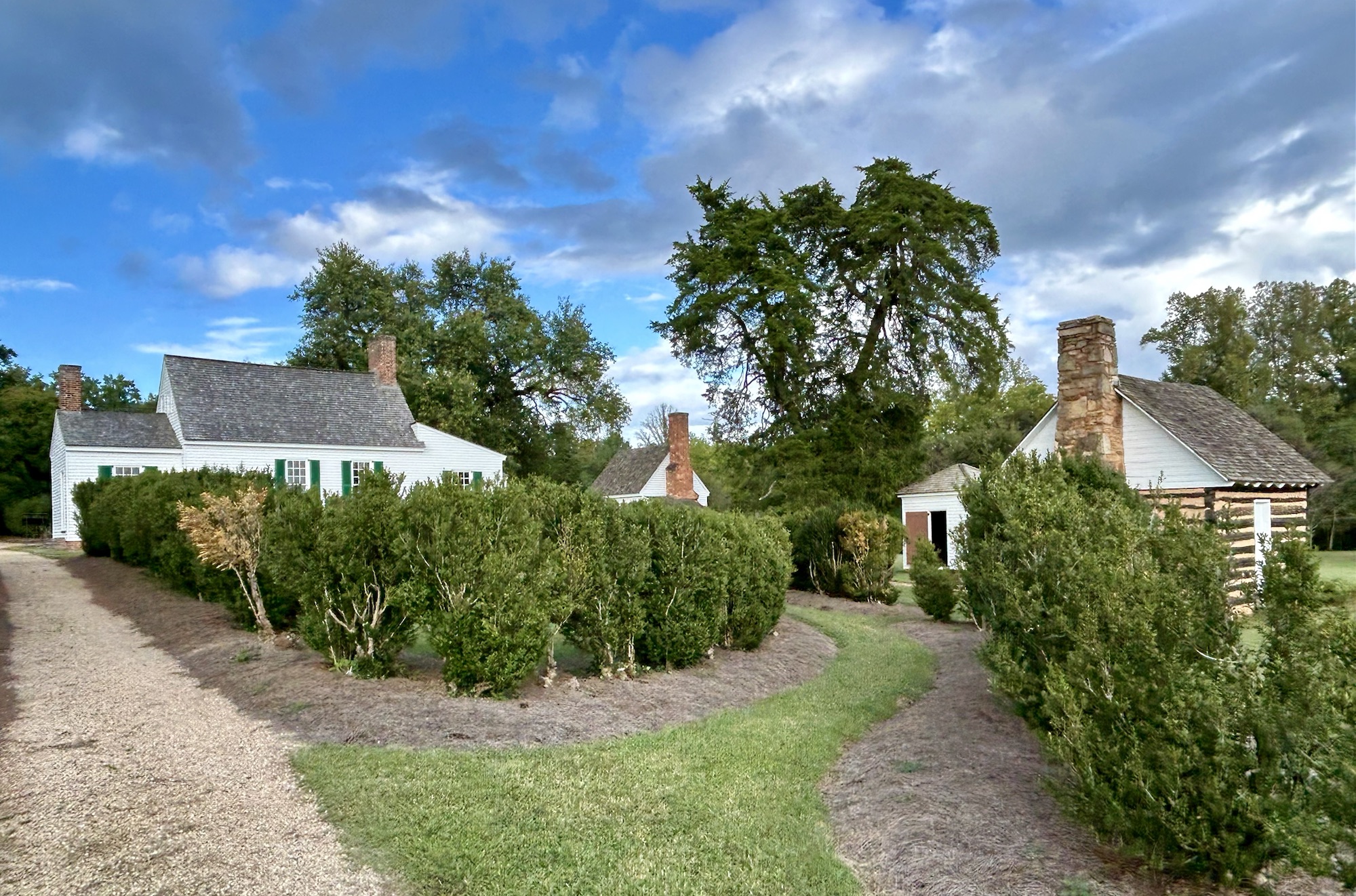
Patrick Henry Jolly, a direct descendant of his namesake, greeted me at Red Hill (an affiliate site, above), where his ancestor is buried on a 1,000 acre estate in Virginia. We discussed Jefferson, a man infamous for his many long, bitter personal grudges, and I learned that Jefferson called Henry “the greatest orator that ever lived”. Speaking to Daniel Webster, a well known orator himself, Jefferson described Henry’s gift as being almost magical, delighting and moving him, even when he spoke in opposition to Jefferson, and yet Jefferson, a genius, thought, “what the devil has he said?”

Henry has been described by biographers as the Prophet or Voice of the Revolution, but the title that strikes me is Demosthenes, the greatest orator of Ancient Greece. Ogilvy, the father of modern advertising, wrote, “When Aeschines spoke, they said, ‘How well he speaks.’ But when Demosthenes spoke, they said, ‘Let us march against Philip’”. You may have heard a mistaken version of this quote with the Roman Cicero as Demosthenes’ rhetorical rival, but, of course, Cicero lived hundreds of years after Demosthenes, and attributed some of his success to adopting Demosthenes’ techniques and phrases. Patrick Henry, through his spoken words, ignited the hearts of our country’s founders to declare independence, prepare for war and give their lives and sacred honor for the cause of liberty against tyranny. And they recognized him for it contemporaneously. Jefferson said that “no man was as well suited for the times”, that he didn’t know what they would have done without Henry, and that he was “far before all in maintaining the spirit of the revolution.”

Of course, Henry accomplished much in his own right, including supporting George Rogers Clark and being elected Governor of Virginia five times. But it his speeches with many lines that still resonate today, especially his most famous speech 250 years ago—as a slave owner speaking to fellow slave owners—boldly stealing and reimagining a line from the play Cato, A Tragedy, that make Henry immortal. With Jefferson and Washington listening attentively, Henry convinced the Virginia Convention to fund troops in anticipation of the Revolutionary War, punctuating the final line by dramatically plunging his (blunt) letter opener against his chest. The letter opener was preserved by Patrick Henry Jolly’s family and is now on display at Red Hill.

“Is life so dear, or peace so sweet,
as to be purchased at the price of chains and slavery?
Forbid it, Almighty God!
I know not what course others may take;
but as for me, give me liberty or give me death!”

Patrick Henry on 23 March 1775

Rohwer

The last American concentration camp to close was Rohwer, Arkansas, deep in the delta near the Arkansas Post. There’s an echo of history, since that site is part of the Trail of Tears, when another group of Americans were forcibly removed from their homes unconstitutionally and sent to live in government reservations. The vast camp soon returned to farmland, so little remains besides the cemetery above. Several of the graves mark infants and elderly inmates. The monument to the right is to the 442nd Regimental Combat team, the most highly decorated unit in US military history. They served in Europe, while their families were imprisoned. 

The neighboring town of McGehee maintains the excellent WWII Japanese American Internment Museum about both Rohwer and Jerome. The sculptor Ruth Asawa was imprisoned here. Another inmate at Rohwer was a 5 year old boy named George Takei, who later played Lt. Sulu on the original Star Trek. 

“And it became normal for me to go to school in a black tar-paper barrack
and begin the school day with a pledge of allegiance to the flag.
I could see the barbed wire fence and the sentry tower
right outside my schoolhouse window
as I recited the words,
‘with liberty and justice for all’.”

George Takei, speech at the museum on 16 April 2018

Manzanar National Historic Site

Manzanar was the first of ten internment camps incarceration sites for Japanese-American citizens (and some non-citizens) to be recognized as a park unit in 1992, symbolizing the whole program fiasco. Minidoka was enacted in 2001, Tule Lake in 2008 and Amache in 2022.

Unconstitutional incarceration, while a Federal program ordered by FDR, varied by state: Hawaii incarcerated few and west coast states many. Rules regarding how much Japanese ancestry got a US citizen locked up without trial also varied by state. No other group was incarcerated en masse. Popular sentiment (racism) generally backed incarcerating Japanese-American US citizens during the war.

George Takei spent his “boyhood behind the barbed wire fences” in Arkansas. He remembers that after his family was imprisoned, his neighbors “came to our house and took everything”. He recounts how after Pearl Harbor, many young Japanese Americans tried to enlist, were refused and were incarcerated. His experiences were common, and in many cases homes and all belongings were permanently lost during internment.

It was an egregious violation of the American Constitution.
We were innocent American citizens, and we were imprisoned
simply because we happened to look like the people who bombed Pearl Harbor.
It shows us just how fragile our Constitution is.

George Takei

Many of the citizens imprisoned here were teachers, doctors, skilled craftsmen, farmers, community leaders and otherwise productive members of our society. (One was a Mexican-Irish-American who got locked up here in solidarity). They sued for their rights and in 1944, the Supreme Court declared that a loyal citizen could not be detained under the Constitution. The executive order was rescinded the next day.

In this blog, I try to encourage people to look at mistakes in history and imagine a better course of action, because if we can’t fix our mistakes, then we have no hope of solving the climate crisis. It’s morally wrong to visit this site and think, “well, I suppose there was no other way”. Some have argued that it was for the protection of Japanese Americans or to stop espionage. But there were better ways available at the time to accomplish those objectives.

FDR clearly failed in his oath as President when he did not uphold the Constitution and imprisoned these citizens without cause. He also suffered a failure of imagination. Instead of internment, FDR could have established voluntary Japanese-American citizens councils, led by Japanese Americans to meet regularly among themselves, with civil defense, local law enforcement, and with government representatives to propose ways of supporting their communities and the war effort. The councils could have addressed both safety and spying allegations.

Instead of being locked up, these citizens could have spent the war teaching, working in hospitals or factories, growing food and supporting our war effort. Instead of being an American example of “concentration camps” like those of our enemies, FDR missed his opportunity to stand up for the freedom of these Americans as a positive example of our Constitutional liberties for the world.

Independence National Historical Park

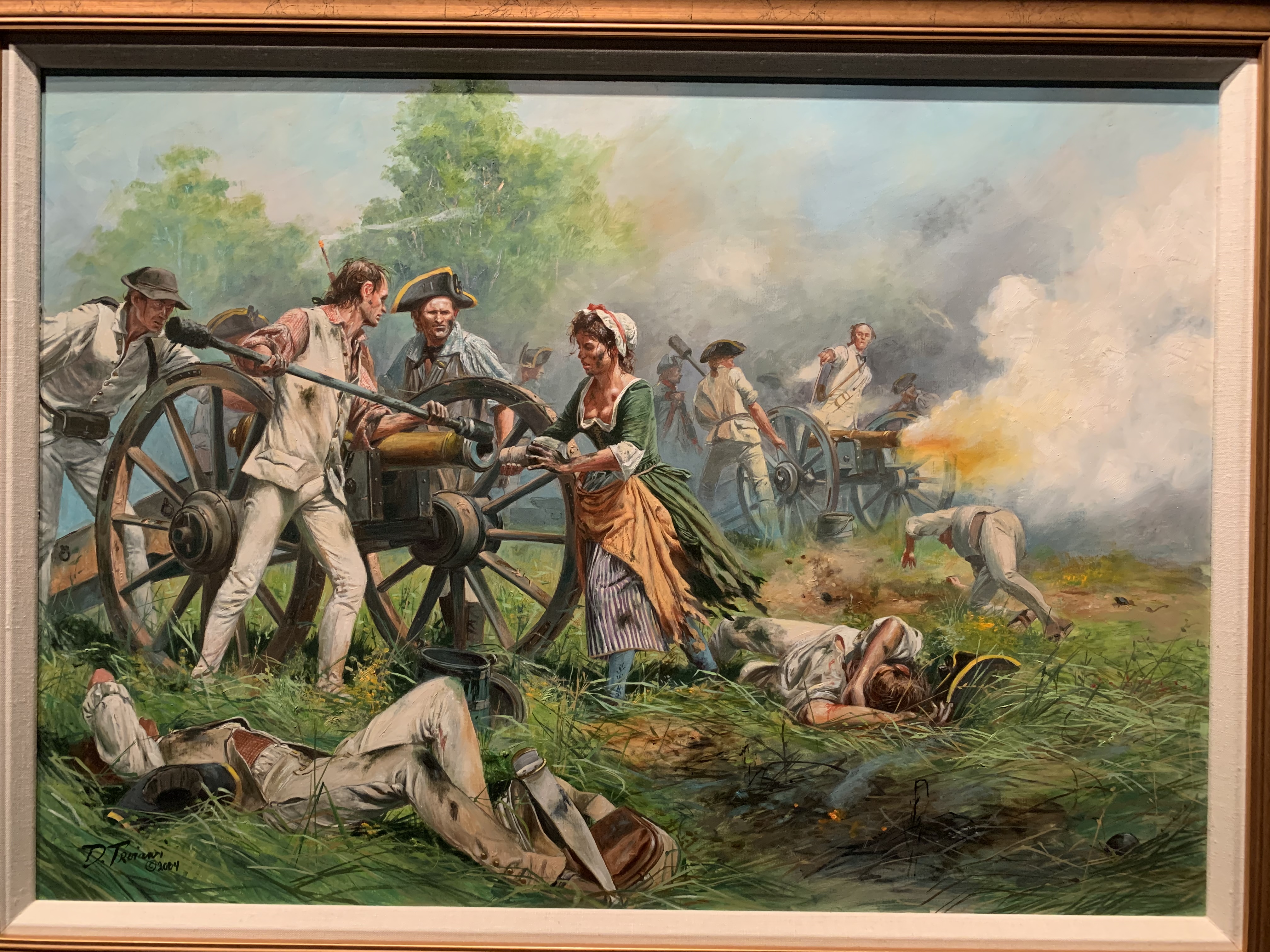
‘Molly Pitcher’ was the moniker for Mary Hays and women like her who helped win our independence. Mrs Hays is portrayed helping her husband’s cannon crew at Monmouth, and after years of service she earned a soldier’s pension. I chose her image over the Liberty Bell or Independence Hall (a World Heritage Site), because I know how easy it is to restrict a visit to those two popular and important sites. She’s on display now along with other illustrations at the Museum of the American Revolution.

In addition to the timed tours of those two famous sites, there’s so much more to do in the park. For all things Constitutional, there’s a museum (see Washington’s war tent). There’s a Philosophical Museum, the First Bank, the Second Bank, the Merchant’s Exchange, and on and on. There are historic squares, parks, and buildings, including the one where Jefferson drafted the Declaration of Independence. There’s a tomb of the unknown Revolutionary War soldiers in Washington Square. Every corner has a sign celebrating some historic event, I half expected to see that a woman from Philly invented Mother’s Day. (Oh, one did).

It’s difficult to pick a favorite, and I might have decided differently had the portrait gallery been open (next year). But I was fascinated by the Franklin Museum, including the first post office, a print shop and more. Ben was genuinely, enthusiastically curious about everything. I loved seeing his glass armonica, learning about his kite swimming, his travels and the clever writing he did under pseudonyms. In one he wrote to a paper in London as ‘The King of Prussia’ arguing that if Americans had to pay taxes to the British, then the British should pay taxes to him (since the British royalty was German).

So by all means, see the bell and where our forefathers founded our nation. But do more. Learn about the role of African Americans, immigrants, women and even children in our fight for independence. And try to be like Franklin. Be wildly curious, explore the City of Brotherly Love, listen to that Philly Sound playlist, drink their Love City Lager, go to Talula’s Daily & have a picnic, spend the night at a wonderful Inn like Alexander’s, walk the old streets and try to imagine ways to improve our world. This is my favorite city park.