Frances Perkins National Monument

Mainers are tough. While other Americans talk incessantly, wear flashy clothes, and spend every day seeking attention, folks here say little, dress simple and get stuff done. It’s a pleasant sail from Boston to coastal Maine in the summer, downwind and northeasterly or ‘down east’ as the area became known. But the coast is rugged and dramatic, with rocky beaches, serious storms, cold winters and endless forests. Not the place for overly dramatic flights of fancy.

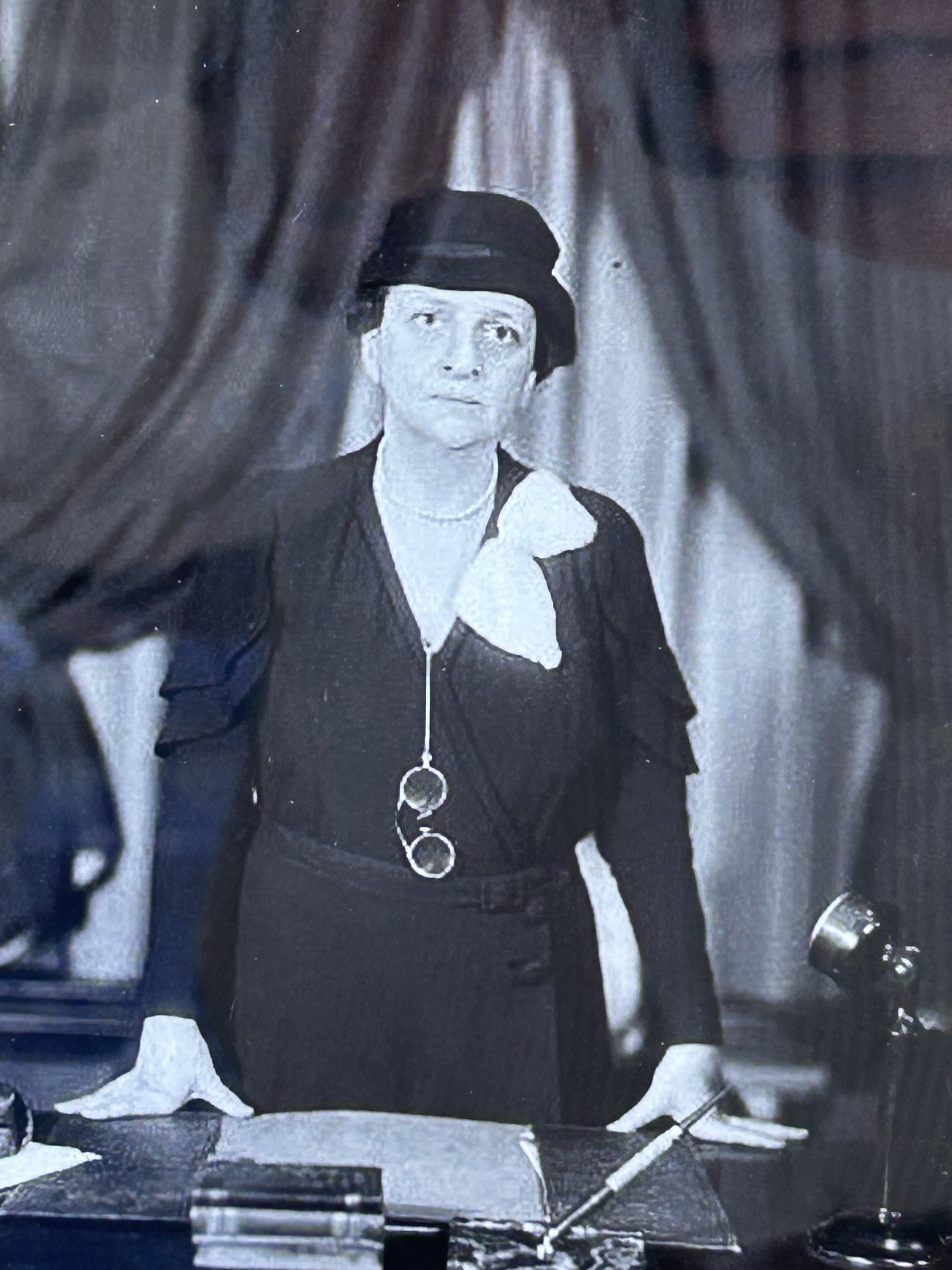
Perkins was tough too. Her family made bricks on their large piece of land overlooking the oyster farms on the Damariscotta River south of Newcastle—a “Slow Village” warns a road sign. An ancestor protested ‘taxation without representation’ and survived having his skull cracked by a ‘lobster back’ redcoat in return. Frances got an exceptional education, saw firsthand the social problems of her time, and buckled down to do the hard work of solving them.

She found social worker allies in alleys, witnessed the Triangle Shirtwaist Fire, learned the tough politics of Tammany Hall, reinvented herself to join the powerful and got stuff done. She worked on worker safety, health and poverty with two Governors of New York, and was singularly qualified when FDR asked her to be his Secretary of Labor. Frances Perkins was the architect and driving force behind his New Deal, including minimum wage and social security.

Perkins had practical training, the courage of her convictions and a moral authority to improve the lives of those in need, especially during the Great Depression. She did not seek the spotlight, but she wielded more power than any other woman in US history. Have you benefited from having drinking water & clean restrooms at work, a sprinkler system & fire escape, unemployment insurance, or not having to work weekends? Then you should remember and thank Frances Perkins.

Her Brick House family home isn’t open yet, but there are photos & exhibits in the barn. And the walk through the woods and meadow to the river is lovely. With this new park unit I re-complete the North Atlantic region and finish all park units the contiguous 48 states, until the next one is designated.
Affiliated Sites in North Atlantic

There are five affiliated sites in the North Atlantic region: Kate Mullany NHS, Lower East Side Tenement NHS, Roosevelt Campobello IP, Thomas Cole NHS and Touro Synagogue NHS. Campobello (above) is actually in New Brunswick Canada, just across the Maine border. Touro is in Newport Rhode Island. And the others are in the Empire State.

All five are among my favorite sites in the country.

  • The congregation at Touro predates our country, and they have the promise of religious equality made by George Washington in writing.
    • Take the tour, sit in the pews, and listen to the stories of freedom to believe.
  • In the early 1800s, Cole painted romantic landscapes and historical scenes, inspiring a school of painters.
    • Tour his house and studio, see the exhibits and listen to the stories behind his work.
  • From the late 1800s to early 1900s, the garment district immigrants toiled in sweaty tenement buildings and built futures in their new country.
    • Go to a neighborhood deli, tour the tiny rooms, and listen to the stories of strikes and hope.
  • FDR’s summer home in Canada immaculately preserves over 100 years of precious memories.
    • Tour the estate, have a cookie at Eleanor’s tea, and listen to the stories of recovery and advocacy.
  • The newly open Mullany house tells the little known story of the woman who started the first official female union in the country.
    • Make a reservation for a tour, see the history of American labor on the walls, and listen to the stories of the workers who built our country.

Kate Mullany National Historic Site

Happy Labor Day! The beautiful cast iron stove above was made in Troy, NY, near Albany at the eastern end of the Erie Canal, but the site recognizes a different type of iron work: ironing the popular detachable collars that were invented almost 200 years ago by a Troy housewife. The ladies who ironed the collars were mistreated and poorly paid, so, despite the Civil War, they went on strike. The ringleader was the 19 year old, irrepressible Irish American Kate Mullany, who quipped, “don’t iron while the strike is hot”. Successful, her groundbreaking all-female Collar Laundry Union persisted long after the strike, unlike earlier women’s labor organizing in Lowell. After leading that union, Mullany earned national recognition and responsibilities, breaking many other glass ceilings in the American Labor Movement.

Teacher, labor leader and executive director of the affiliated site, Paul Cole has similarly rallied the people to support his efforts to save this important historic home and legacy for the American people, who too often are taught neither their own labor history nor women’s history. He was kind enough to take time to give me a personal tour, including the restored 1860s era rooms on the top floor. I highly recommend folks who are interested in our rights as Americans contact the site to schedule a tour by appointment. Hopefully this important park will be elevated from NPS affiliate to a full park unit soon.

Rosie the Riveter / World War II Home Front National Historical Park

FDR said, “we can’t afford to indulge in prejudice now”, and with that, the “Rosie” in the lower part of the collage above suddenly was able to qualify for a job that previously hired neither blacks nor women nor LGBTQ+ nor any other minority. Note that she is riveting aircraft grade aluminum while wearing lipstick, nail polish, a large wedding ring and a classic “Rosie” red bandana. Many women were surprised how easy riveting was and didn’t understand why men said they couldn’t do it. By 1944, women were about 1/3 of the workforce, and 10,000 African Americans worked here in Richmond during the war along with all other minorities (except Japanese Americans). Leadership is required to change society’s prejudices and discriminatory practices, and once the door was opened, many women decided to continue working after the war.

The visitor center is next to the Ford Assembly Plant, which is still full of industrial activity. Check in at the gate on Harbor, then drive around back and all the way down to the right. There are ChargePoint stations in the lot, and a good restaurant next to the visitor center. The factory used to make tanks, and across Marina Bay was Shipyard #2 which produced a new ship every 4 days, loaded with tanks and sent off immediately. Walk a bit of the SF Bay Trail along the waterfront to a fine memorial to the Rosies in Marina Bay Park, next to the yachts and fancy condos. Shipyards #1 and #4 were up the channel on the other side, along with the Prefab Yard. And Shipyard #3 still has the SS Red Oak Victory Ship, launched in November 1944, with worthwhile tours. This was the beating heart of America’s “Arsenal of Democracy”, and it was a unified effort of all hands on deck which changed the course of labor and civil rights overnight.