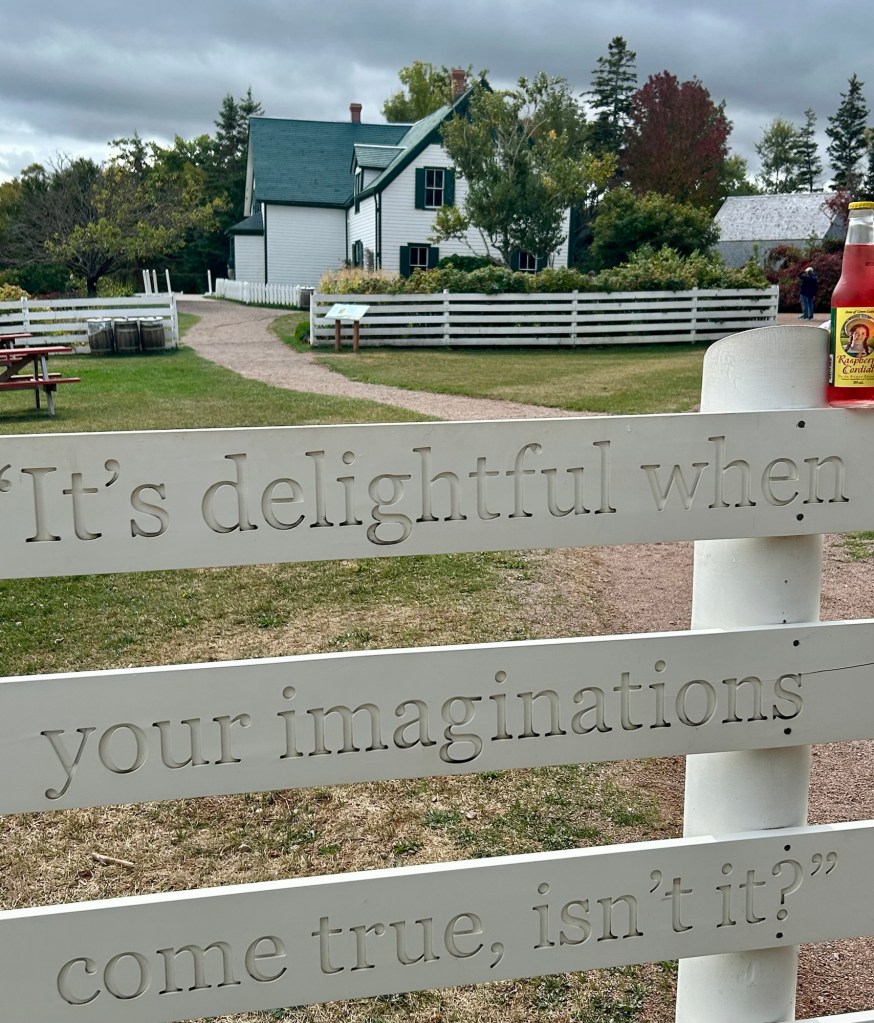
Green Gables

LM Montgomery walked through the woods here trying out dialogue for Anne, her adoptive parents Matthew & Marilla, and her friends Diana & Gilbert. Nature was her kindred spirit, and this home on Prince Edward Island inspired her greatly in writing Anne of Green Gables. The author’s own modest home is almost 10 miles away still in a simple rural village, while the heritage area above is now in the middle of an entertainment district with kiddie rides, candy shops and themed merchandise. At the time Montgomery wrote the book in 1905, it took courage, imagination, determination and hard work to figure out how to inspire people with her delightful story of a girl who embodies those characteristics in a practical, conservative and mundane setting. Five times her manuscript was rejected, before being accepted 3 years later.

While this site is not a world heritage site (yet), I wanted to visit. Anne is a romantic, who fills herself with ideals from literature, and she has to make a place for herself in a stern, reserved household. The themes of youthful dreams, belonging, love, making something of oneself and of wisdom are timeless and precious. When I lived in Japan, I saw Anne interpreted and adapted into a different culture, yet still simply relatable on the other side of the world. There’s great power in imagination, including creating characters that take on a life of their own and also in re-imagining ourselves to live better. Driving past the old farms and churches made me appreciate Montgomery’s imagination all the more, although I suspect she would be less impressed by the summer crowds of kids eating ice cream and riding around in circles. There’s not much imagination involved in doing the same as everyone else.
This Blog

This blog is a creative exercise. The whole idea of trying to visit parks and world heritage sites by electric vehicle wasn’t suggested to me by anyone. Deciding what to write about and how to present it takes imagination, from what stories I decide to tell and which photos I choose to take and use.

Travel requires imagination. My itinerary has been anything but straight, as I often feel myself driven by curiosity, picking my spots by theme or asking ‘what if I try this way’. Even within parks, visitors must choose how to spend their time, so I often let my imagination take the lead. Should I bike, hike or kayak?

History requires imagination. How are places connected? More than once, I’ve asked whether or how one historic figure knew another and learned to piece together disparate parts of our American story. What was it like for natives, patriots, pioneers, and slaves? What were people thinking for history to unfold the way it did? What can we learn that informs our decisions today?

When I drive, I find my time full of thinking. The whole idea of dividing how we think into four distinct ways of thinking, each with different motives, techniques and goals, came to me while driving. New ideas require imagination, time, and a curious mix of concentration and inspiration, that I find on the road.

Most people, I fear, lack imagination. When in their comfort zone, they take in new information easily. But outside of that, they lack interest, and they resist new ideas, particularly challenging new perspectives or uncomfortable facts they never want to consider. Some are simply busy, preferring to delegate thinking to others who make it their business to tell people what to think.

But life requires imagination. Living well, especially in a diverse and rapidly changing world, requires curiosity, an open mind, empathy, and persistently trying to find your own way. Imagination can prepare you both to avoid problems and to take advantage of opportunities. Every day is a new kaleidoscopic puzzle we need to navigate through as best we can, and for that, imagination is our best friend.