7 trails cross the Southwest region, including 6 National Historic Trails linking multiple sites, plus a National Scenic Trail. Here’s a quick summary in case you are interested in exploring the trails in the region.
Butterfield Overland NHT passed through Arkansas, Oklahoma, Texas and New Mexico (although the photo below is near a stop across the Arizona border in Tombstone).
8 trails cross the Rocky Mountain region, including 6 National Historic Trails and a National Geologic Trail that link multiple sites, plus the North Country National Scenic Trail that is an individual park unit. Here’s a quick summary in case you are interested in exploring the trails in the region.
In South Dakota the expedition traveled north along the Missouri River from Yankton Sioux to Lakota territory.
In North Dakota they hired Sacagawea and her husband at Knife River.
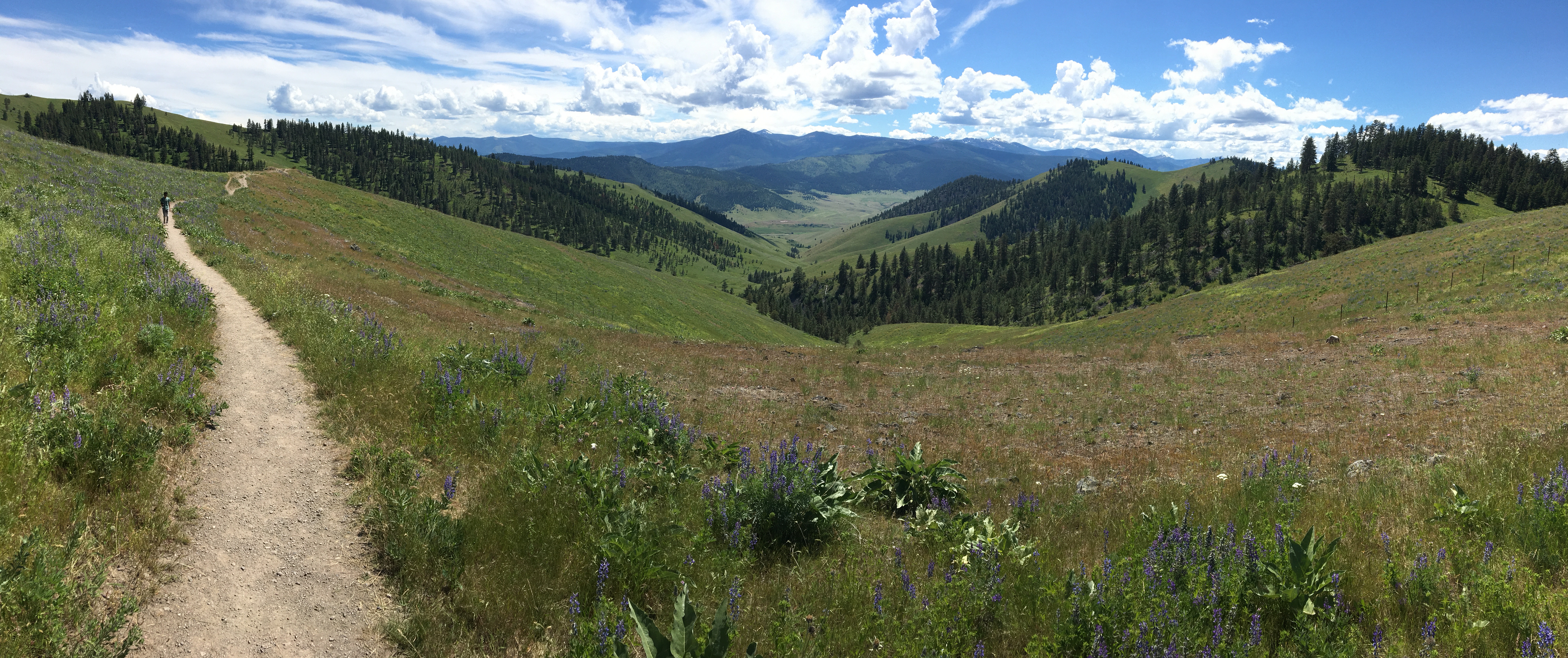
In Montana they split near the Yellowstone confluence where Fort Union Trading Post was later built and rejoined near the Snake confluence where the Nez Perce NHP is now. Grant-Kohrs and Big Hole are both on their trail too.
California NHT 1841 to 1869 also crosses Colorado and Utah.
Mormon Pioneer NHT 1846-1847 continues to Utah.
The Pony Express NHT 1860-1861 followed the pioneer trail through Colorado, Utah & Wyoming, but the young riders rode from Missouri to California in only 10 days.
One terminus of the North Country NST is in North Dakota while the other is in New York.
Québec is my favorite city in North America. I love New Orleans, Philadelphia and San Francisco, but there’s a certain je ne sais quoi. Probably the food. UNESCO may have picked it as a World Heritage Site due to its history, architecture, culture, beauty, fortifications, statues, parks, narrow old streets, churches, magnificent vistas, harbor, citadel, Haute-ville, Basse-ville, museums, galleries, Parliament, battlefield, archaeological discoveries, and all the rest, but it’s really the food.
Although the funicular (above) is fun too, and the old shopping district is colorful, amidst several fine restaurants. There always seem to be festivals in all seasons, concerts, and other excuses to try something new to eat or drink. If you want to get out of the city, you can go to Île d’Orléans, by bridge from the north side of the Seaway. They have farms, berries, cheese, bakeries, jam, chocolatiers, wineries, cideries, sugar shacks with maple syrup treats, and a microbrewery. Basically, much of what you eat in Québec City is from the island. As much as I enjoy going around shops and stands there, I prefer leaving all the work to each restaurant’s wait and cook staff, so I order many different dishes and sample the best of everything. Bon appétit!
I recently completed visits to all national park units in New York and New England. Connecticut, New Hampshire, Rhode Island and Vermont each count only 1 unique park. Maine has 4, including the only National Park in the region. Massachusetts has 14, and New York has 21 unique park units, plus 2 shared with the Mid Atlantic region and 2 world heritage sites. The multi-region Appalachian and North Country scenic trails start/end in the region, and the New England scenic trail crosses Connecticut and Massachusetts. Follow the links for more, including affiliates, heritage areas and the Washington-Rochambeau Revolutionary Route.
Maine has Acadia National Park, France Perkins, Katahdin Woods & Waters, and Saint Croix Island. All four parks showcase the state’s pine woods, clear waters and scenic views, while Perkins celebrates the woman in charge of the New Deal and Saint Croix tells the story of the first French settlers. If you want to hear French spoken, you can visit the Acadian Culture partner village area in the far north, where I hiked as a boy. Mt Katahdin is also the northern terminus of the Appalachian Trail. The coastal area from Acadia to Saint Croix Island is part of the Downeast Maine heritage area, including the bridge to Campobello in New Brunswick Canada.
New Hampshire is home to the sculptor Augustus Saint-Gaudens’ studio and marvelous sculpture garden. Freedoms Way heritage area is shared with Massachusetts, and the Appalachian Trail crosses the state.
Rhode Island protects our religious liberty at Roger Williams and affiliated Touro Synagogue, and the state preserves our mill town history at Blackstone, which extends into Massachusetts within a broader eponymous heritage area. The Rochambeau Route begins here.
The park extends from the fist to the elbow, from around proud Provincetown to historic Chatham Harbor, and there’s much to see and do. For me, the quintessential experience is to find an isolated stretch of beach and walk until the birds far outnumber the people. I saw dozens of grey seals swimming right near the shore or lying on the rocks just off the beach. It’s difficult to get to any beach without passing a lighthouse, but if you want to climb one, your best shot is Highland Light (above), the first one commissioned on the Cape by one George Washington.
There are about a dozen named trails too, and I’d recommend hiking near Fort Hill, where you can see the Penniman House, get a great view of the marsh, and spot many different birds. With the aid of a birdsong identifier, I counted 18 different species in one day, including the rare Indigo Bunting and an uncommon Willow Flycatcher.
If you have a bike, consider taking the Cape Cod Rail Trail, which is a high-quality dedicated bike trail through about 1/3 of the cape, and there are also other decent bike lanes and bike trails. My first bike trip here a few decades ago, extended the length of Cape Cod, plus the islands of Martha’s Vineyard and Nantucket, returning by ferry from Provincetown to Boston. When I last visited the lighthouse above, it stood where I stood to take the photo above, because the highland cliffs are eroding at several feet per year, forcing them to move the lighthouse in the intervening decades.
Visiting in shoulder season, rather than July-August, helps avoid miserable traffic and exorbitant hotel rates. There are also lots of good seafood shacks, still one or two cheaper motels, some campgrounds, and lots of nature. Wellfleet is well known for oysters, and the fried clams here are the best I’ve had. I’m still on a quest to find the best lobster roll, and I suspect it will be lifelong. Though speaking of seafood, I would be careful swimming around here, as great white sharks prowl along the shores.
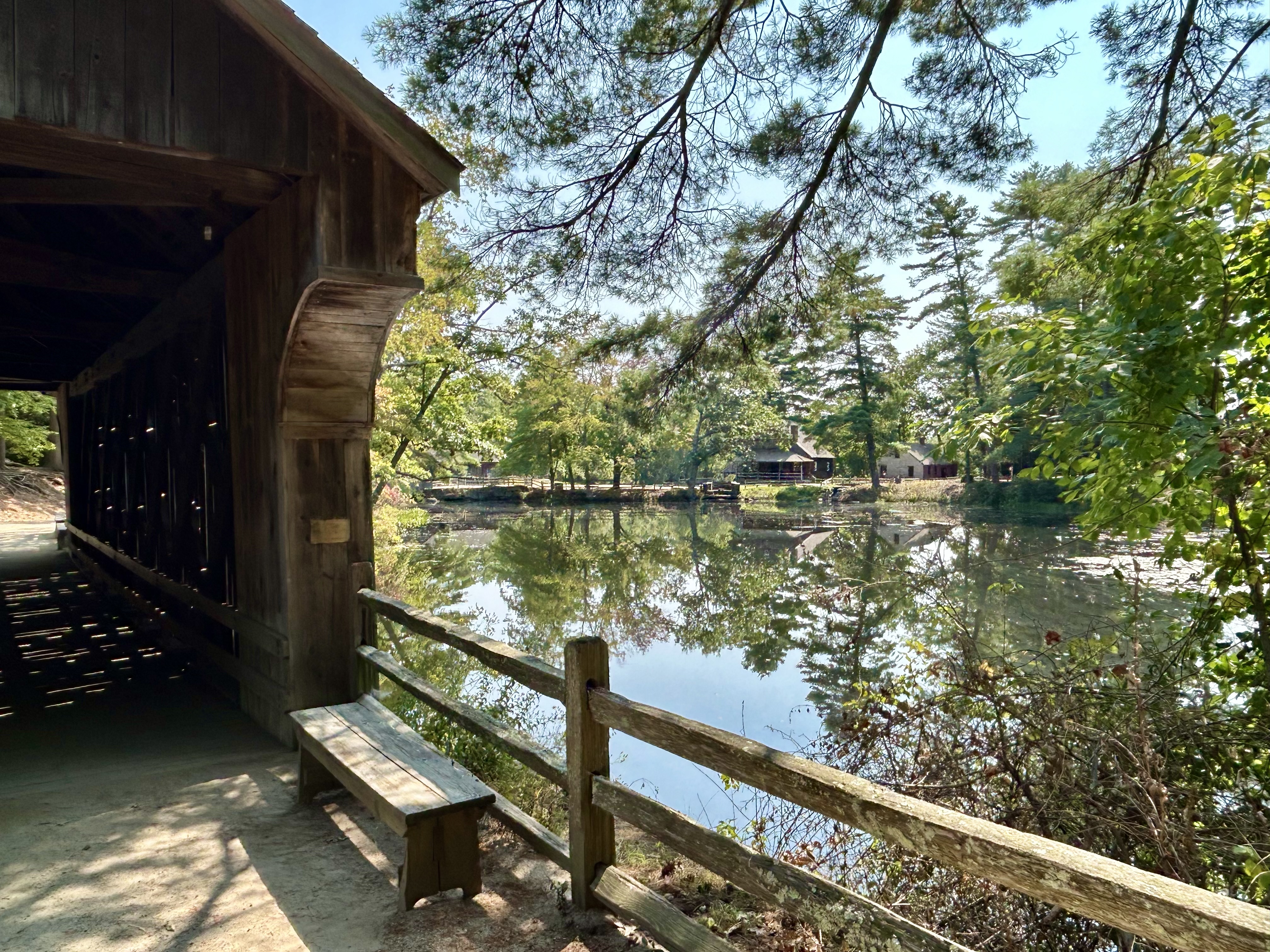
Old Sturbridge Village above in Massachusetts is emblematic of the Valley, which is delightfully wooded, rural and historic with mill villages, museums and natural preserves. In my youth I ran cross country through the area at small traditional New England schools, and I took many field trips to the living history museum pictured. There are old farmhouses, taverns, gardens, barns, gristmills, cider mills, meetinghouses, galleries, shops, pottery, bakeries, crafts and more, all through the valley, dozens of historic sites too. Patriots Clara Barton and Nathan Hale—‘I regret I have but one life to give to my country’—came from this valley. One uncommon benefit of preserving traditions here are the dark skies at night, perfect for star gazing. Much has been lost of the old ways in our sprawling busy modern developments, but not here.
November is Native American Heritage Month, and next week is the 403rd anniversary of the first Thanksgiving feast of the Pilgrims and the Wampanoag, when, as earlier in Jamestown, Native Americans helped starving English colonists. Contrary to the gauzy fabricated myth that natives peacefully welcomed Christian settlers and happily ceded their lands, tribes were decimated by disease and were massacred in both the Pequot War and King Philip’s War. Thanksgiving was first declared a national holiday by Abraham Lincoln during the Civil War, at a time when the US government was also at war with the Apache, Commanche, Navajo, Sioux, Ute and Yavapai, among other tribes. In the interests of truth, this post will focus on the NPS sites of the US War on Native America from the Revolution to 1924.
Our Democracy owes a debt to the Iroquois Confederacy formed 882 years ago, the oldest living participatory democracy. Ben Franklin was a student of Hiawatha’s Law of Peace which united 5 (later 6) tribes on issues affecting them all, while allowing them each to manage their own tribal issues separately. Thus, 13 colonies united to gain independence, becoming the United States. In 1794, George Washington signed the Treaty of Canandaigua recognizing our allies the Oneida, who fought with the Patriots at Fort Stanwix and Saratoga. The other tribes of the Iroquois Confederacy, many having fought for the British, had lost most of their lands in the 1783 Treaty of Paris.
For Native Americans, war with the US continued non-stop, moving northwest near Fallen Timbers and southeast near Chickamauga and Chattanooga. Despite winning the most successful native battle against the US army at the Wabash River, the pattern of natives losing their land regardless of whether they fought or which side they joined continued. The River Raisin set the stage for the War of 1812 and made the issue of claiming native land a mainstay of presidential campaigns. General Jackson leveraged his victory at Horseshoe Bend to become a popular national figure, and as President, he defied the Supreme Court to remove many tribes from the southeast to Oklahoma on the Trail of Tears.
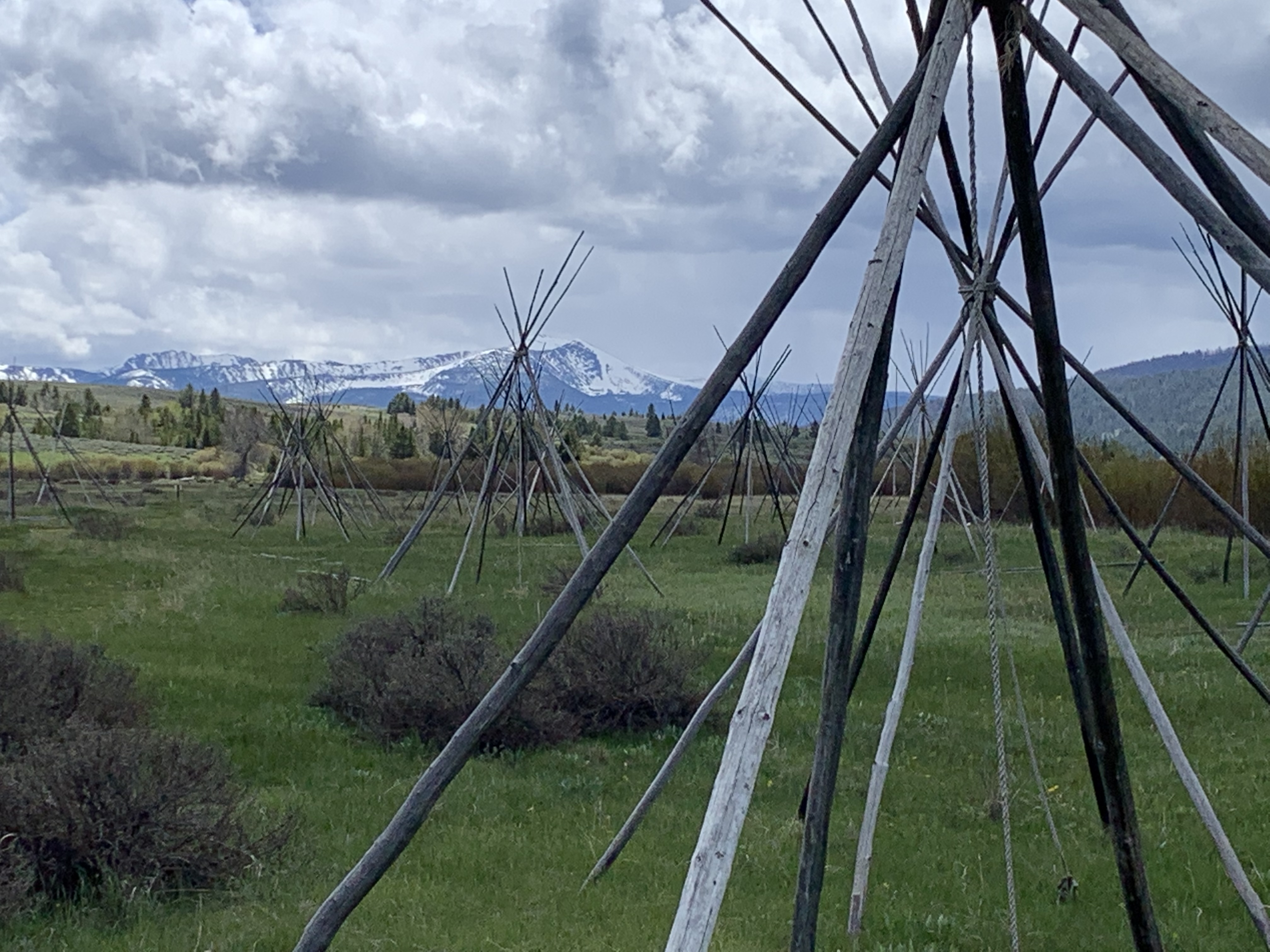
And there were massacres. Not the rare US military defeat like at Little Bighorn. Not the few sensationalized or many fictional stories of natives killing relatively small numbers of white settlers, like at Whitman Mission. But the illegal massacres of hundreds of peaceful villagers by US Army regulars and volunteers at Big Hole above, Sand Creek, and Washita Battlefield, among many others not yet memorialized by the NPS. Even our national monument to great presidents at Mount Rushmore is not far from the massacre site at Wounded Knee.
The US War on Native America is not usually considered as one continuous war, but rather as over 60 different military conflicts, often overlapping, between 1775 and 1924, when the last Apache raid was conducted in the US and when Native Americans finally got the right to vote 100 years ago. However, the US was at war with various Native American tribes in the years from 1775 to 1795, from 1811 to 1815, 1817-1818, in 1823, 1827, 1832 and from 1835 to 1924, or for 121 years of active fighting, plus 29 years of intervening “peaceful” forced removal by the US and state governments, even of tribes which had assimilated. Taken as a whole—including forcing dishonest treaties, abrogating treaties, suspending promised annuities, terminating trading relations, cheating tribes in unfair land deals, preventing private land deals with natives, relocating natives when gold was discovered on their land, revoking Indian land titles, seizing tribal land, annulling tribal constitutions, challenging their rights in court, dismissing their victories in court, dividing tribes, destroying crops, killing livestock, slaughtering bison, subsidizing exodus, rounding up tribal members into camps, locking them in forts, and forced marching them 1,000 miles over 5 months under US military guard—, the US government policy of removing Native Americans by force was a single policy, confirmed by multiple US presidents, passed into laws by Congress, and executed by the US military with deadly force against one group, known collectively as “Indians”—as in the “Indian Removal Act” of 1830—. So, rather than being dismissed as dozens of piecemeal conflicts, the US military actions against all the tribes should be considered as a single 150 year long, genocidal war.
It is horrifying to me that we do not recognize our nation’s longest war, even in the 100th anniversary since its end. We have largely forgotten the roughly 100 tribes that are now extinct, as well as the Pontiac War which used smallpox blankets, the Potawatomi Trail of Death, the Long Walk of the Navajo, the Yavapai Exodus, and others. And we in the United States—founded under a Native American democratic organizing principle and living on native land—do not admit that the long, costly war, devastating relocations and cultural destruction, was repeatedly approved by racist American voters.
“The wounded, the sick, newborn babies, and the old men on the point of death… I saw them embark to cross the great river and the sight will never fade from my memory. Neither sob nor complaint rose from that silent assembly. Their afflictions were of long standing, and they felt them to be irremediable.”
Alexis de Tocqueville, on witnessing the Trail of Tears in Memphis
The view above is from the Ramparts at Fort Warren on Georges Island, one of the 34 beautiful & fascinating islands. The fort didn’t come into play in the Civil War, except as a prison for Confederate soldiers. When I was here in my youth, I heard the spooky story of the Lady in Black, who haunts the cliffs and corridors. With the help of local sympathizers, she snuck into the fort, whistled a tune that her husband knew, found him but accidentally shot him during the escape. She was tried and executed for treason, in a dress she had sewn herself from black curtains in the commander’s office. Her shadowy ghost has been seen by many since the Civil War.
Alas for fans of the supernatural, the story is nonsense. Despite the obviously dramatic appeal, there are no contemporary records of the women herself, the escape attempt, the death of her husband, the arrest, the investigation, the trial or what would have been the first official hanging of a woman for treason during the Civil War. The story began in the 1950s or 60s to encourage folks to visit the old fort in summer. But apparently we prefer lies to the truth. And nothing cools you off on a hot day like sitting in a dark 65° man-made cave listening to a ghost story.
The islands have been also been used as summer fishing grounds by Native Americans, by pirates, smugglers, for quarantine, as schools or asylums, and as way-stations on the Underground Railroad. Outward Bound holds one of its programs on Thompson Island, which Nathaniel Hawthorne once described as “a little world by itself”. The School for Field Studies once hosted me (photo) and a few other whale watchers for a month on a boat, including a day writing up our research in the church on Peddocks Island. A few of the islands remained relatively unchanged since the glaciers receded leaving steeply eroded drumlin cliffs and long low sand-spits. But Spectacle Island had to be completely reclaimed from “trash island” to beautiful natural recreation area.
The Boston Harbor of Tea Party fame is in the inner harbor in the distance above. The Tea Party Ships & Museum on Griffin’s Wharf is not part of the park service, but it’s a fun hands-on spot to learn about ‘no taxation without representation’. The Harbor Island ferries mostly leave from Long Wharf near Faneuil Hall, which is on the Freedom Trail. The islands make a nice excursion if you’re visiting Boston during their open season from mid May to mid October. Since I had already traveled to the islands many times by sailboat, I simply rode the park-partner ferry out for a few hours to take some photos and reminisce. But as I write this today, I can’t help but think about tomorrow’s election. We owe it both to those who fought to create and protect our country and to our future, to hold tightly to our democracy, and vote.
Pennsylvania has eight National Heritage Areas, by far the most of any state, and I have visited them all by EV. Kudos to their politicians, but Pennsylvania does have many unique areas worth visiting.
The Delaware & Lehigh National Heritage Corridor includes the National Canal Museum with summer canal boat rides and different trails and bike paths along historic routes for coal and early American industry. The trail runs (with a few gaps) from the Lower Delaware River, through Allentown and will eventually connect with Wilkes Barre on the Susquehanna River.
The Journey Through Hallowed Ground NHA covers Civil War sites across four states, with Gettysburg being the star in Pennsylvania.
Lackawanna Valley NHA’s star is Steamtown above, but the area includes electric trolleys, as well as historic coal, iron and industrial sites.
The Oil Region NHA includes Drakes Well and other sites related to the birth of the modern petroleum industry in the Quaker State.
Fort Necessity and Friendship Hill are both in the Rivers of Steel NHA, but the historic focus is best seen by visiting sites like a blast furnace or a foundry & machine shop that explain how the steel industry began.
Schuylkill River Greenways NHA includes Hopewell Furnace, Independence NHP and Valley Forge NHP, but there are also over 100 miles of river to explore paddling, hiking or driving. (Say SKOO-kil meaning ‘hidden river’; so Schuylkill River is redundant.)
Susquehanna NHA focuses on the river valley and colonial York more-so than the Amish communities of Lancaster County, and there are many beautiful natural places to explore.
The Path of Progress National Heritage Tour Route is currently a bit DIY, but it includes Allegheny Portage, Fallingwater and Johnstown Flood sites along picturesque, winding historic roads.
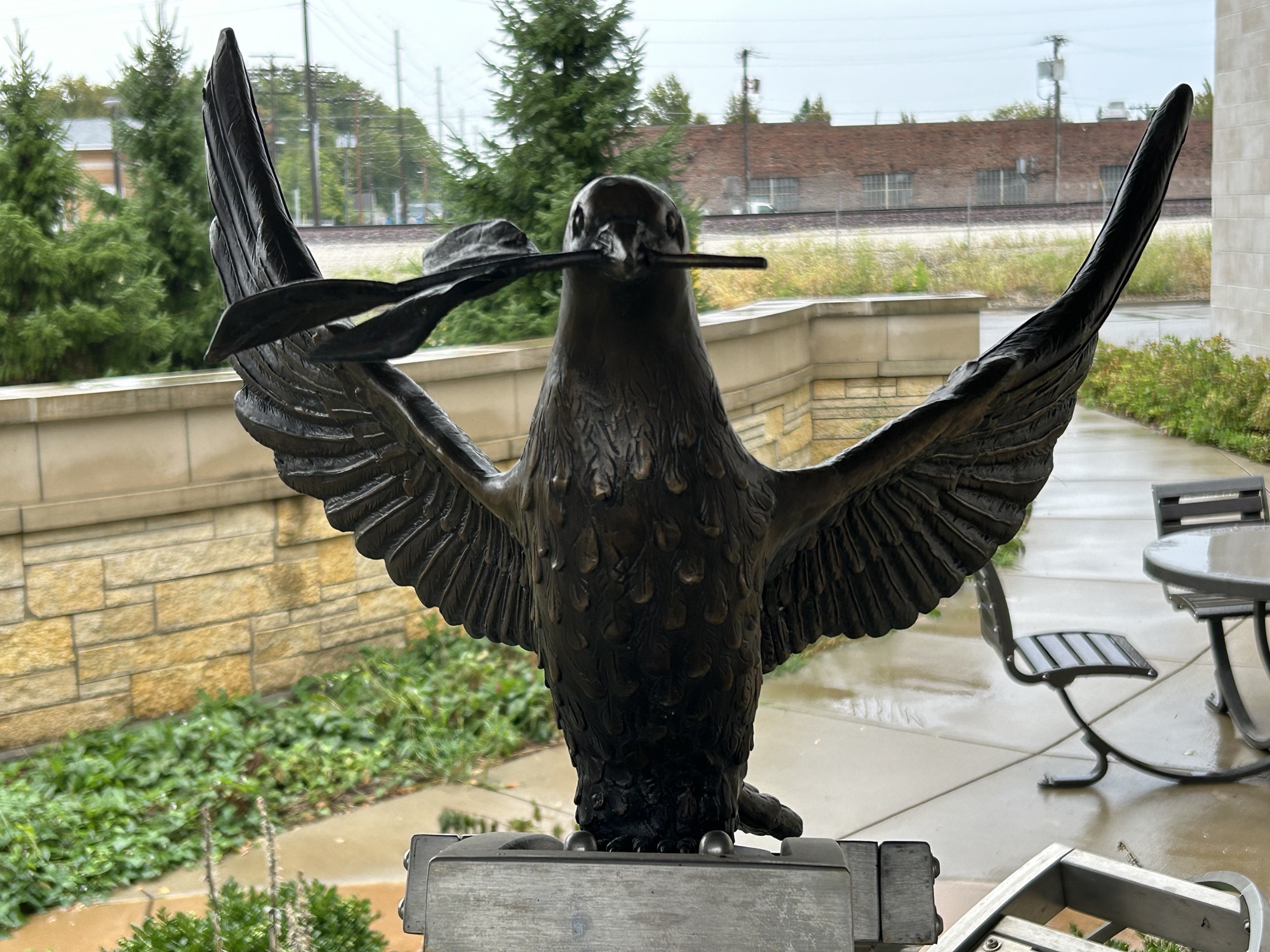
This new park established by President Biden this August is still a fenced off construction area next to the railroad tracks, but there are several art installations dedicated to the riot, including the dove above and a mural at the Children’s Hospital next door. 11th Avenue along the site is known as Reconciliation Way, to commemorate the terrible events here in 1908.
In mid August 1908, in Springfield Illinois, a white mob of five thousand lynched 2 black men, killed 7 others, burned out millions of dollars worth of black homes and businesses and also targeted Jews and whites deemed sympathetic to the black community. The police did nothing to stop the riot. The burning, looting, ransacking and violence lasted 3 days until put down by the state militia, which resulted in 6 dead rioters.
Church leaders blamed the victims for being “sinful”. Although everyone knew the perpetrators and many were arrested, only one 15 year old was convicted after he confessed to stealing revolvers, shooting at black people and starting 15 fires. The others denied any responsibility, the witnesses denied seeing them, and the charges were dismissed. The judge denied that there was racism in Springfield.
Many Americans were shocked by the scale of the violence in Abraham Lincoln’s home town, and civil rights advocates like W.E.B. Du Bois and Ida B. Wells helped form the NAACP in 1909 in response. In 1910 speaking before the NYC Republican Club (the party of Lincoln), Du Bois argued that if racial hierarchy were the natural order of the world, then there would be no need to use social and physical weapons to oppress a race.
“So soon as the prejudiced are forced into this inevitable dilemma, then the real bitterness and indefensibility of their attitude is revealed; they say bluntly that they don’t care what [slurs] may be capable of—they do not like them and they propose to keep such folk in a place of permanent inferiority to the white race—by peaceful policy if possible, but brute force if necessary. And when a group, a nation or a world assumes this attitude, it is handling dynamite. There is in this world no force as the force of a man determined to rise. The human soul cannot be permanently chained.”






 Zero Carbon Travel