Biospheres of the Southwest

This is a photo of a photo of a Texas Horned Lizard in the arid Chihuahuan Desert scrubland, from a roadside plaque near Las Cruces, New Mexico. The actual habitat is within the White Sands Missile Range and is off limits to the public. This UNESCO recognized special biosphere, Jornada—meaning day’s journey without water—, is open to scientific researchers from USDA, USFWS and NMSU, with limited school trips to the Chihuahuan Desert Nature Park in the southernmost corner. For many decades, the Department of Agriculture has been studying the climate here, gathering useful data about the fragile desert ecosystem. The Fish and Wildlife Service mostly focuses on the Bighorn Sheep and other species in the adjacent San Andres Mountains. New Mexico State University organizes research efforts and assists student scientists. 

While you can’t visit the Jornada biosphere or disturb the wildlife, these scientific research zones are extremely important for understanding global climate change and the ecosystems that support unique species. But the southwest region has two internationally recognized biospheres that you can visit: Big Bend and Big Thicket. Big Bend, like Jornada, is part of the Chihuahua Desert, and it also includes a biodiverse riverine ecosystem. Big Thicket is one of the most biodiverse places in the US, where the bayous, leafy forests, pine forests, plains and sand hills intersect and provide habitat for thousands of species. While these areas provide enjoyable excursions for Americans, they are also important beyond our borders. Scientists from all over the world actively support protecting and studying these areas to ensure the survival of species globally.

Fort Matanzas National Monument

The shaded grove interests me, more so than the fort. In the southeastern US, a grove like this is called a hammock, a Native American word that entered European languages with two meanings shortly after Columbus visited around 1500. Hammocks, the sleeping nets hung between trees, date back to the Maya civilization in Central America, and the Taino in the Caribbean would have been the first to introduce those as ‘hammocks’ to Columbus. Perhaps the grove meaning stems from ‘net’ as a way to describe the interlaced canopy of branches. Or, perhaps an explorer pointed at a grove asking what it was, and a native answered “that’s my hammock”. The wonderful brief boardwalk hike covers a great variety of species. I saw a great horned owl, ghost crabs, eastern red cedar, sand live oak, holly & myrtle and the burrow of a gopher tortoise.

458 years ago and long before any fort, the inlet here—with its strategic opening to the Atlantic—was named Bahía de Matanzas, or ‘Slaughter Bay’. The French had settled on the Florida coast just before the Spanish, and in 1565 Fort Catherine sent 250 French soldiers down here to seize St Augustine, 15 miles up the inland waterway. But a storm intervened as their ships were crossing the bar, and they were shipwrecked. When they were discovered, the Spanish slaughtered them.

283 years ago, the British, under Governor Oglethorpe of Georgia, also tried to seize St Augustine, laying siege to to Castillo de San Marco for 39 days in 1740. The Spanish improved their defenses in 1742, including building Fort Matanzas to guard the southern approach. That same year, the British returned and the fort fulfilled its mission by firing warning shots across the inland waterway, helping prevent another sneak attack on St Augustine.

The fort itself is small and unremarkable, but it has a commanding view of the narrow channel. Unless you have your own kayak, you have to take a gasoline-powered ferry to get there (no ferry Monday or Tuesday). Of all the places to convert a boat to electric, this seems perfect. The ferry has a large flat roof that could charge up by solar and it only runs a short distance on a limited schedule. But for all the talk about “saving nature forever”, not enough practical steps are being taken to protect wonderful natural habitats like this from the climate crisis.

Tumacacori National Historical Park

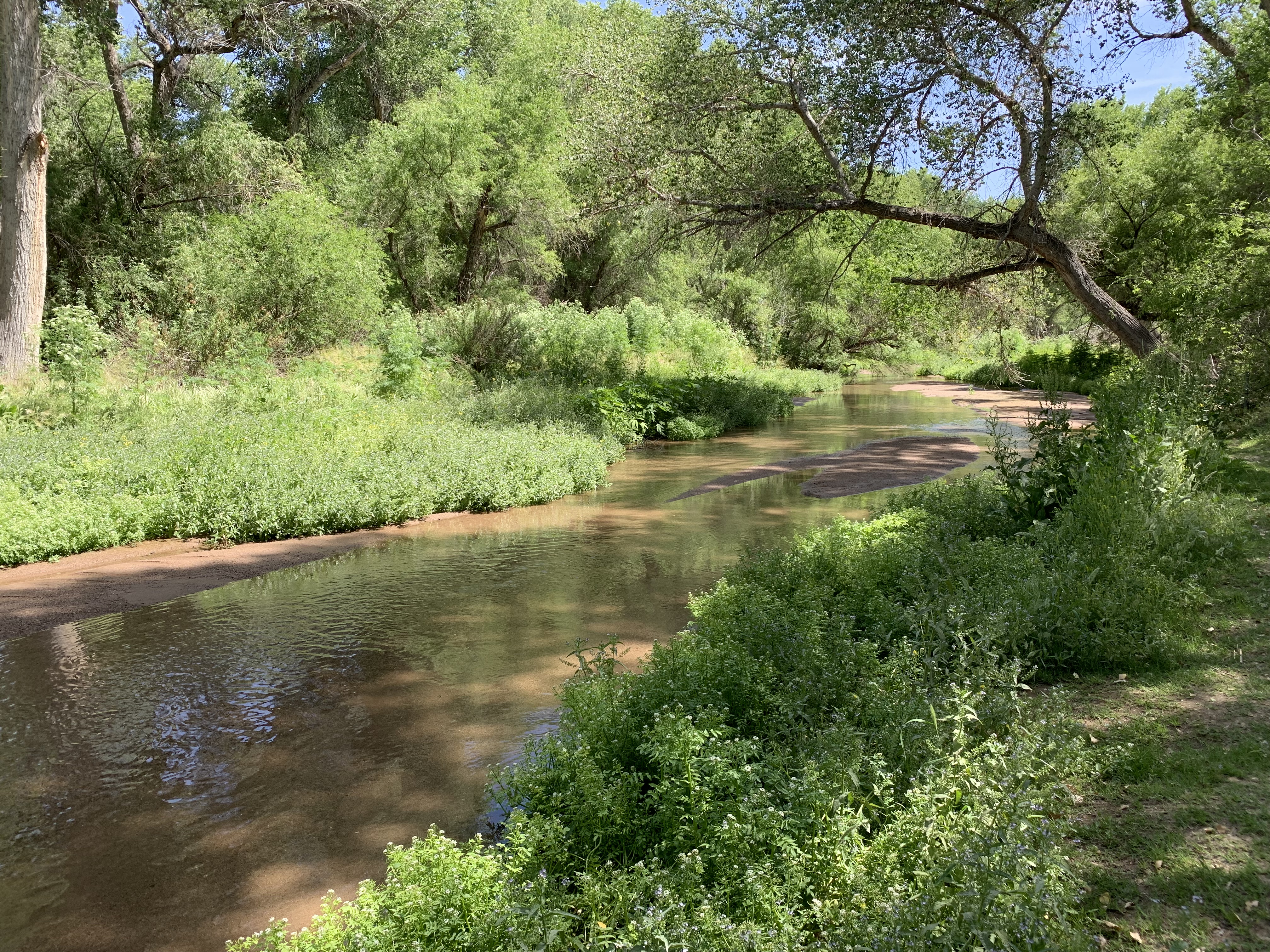
The Spanish Mission is not far from the banks of the Santa Cruz River, where I came upon this beautiful spot. The trail near here has more hoof prints than footprints and is supported by the active local equestrians. A lovely broad-billed hummingbird swooped down to see what I was doing, but I almost never have time to take decent wildlife photos.

The church grounds are impressive, with a large orchard cultivated with help from a local university, a courtyard garden, a small museum with a long pair of moccasins, and the old church in an evocative state of decay. But, in a sign of our ecologically vulnerable times, the most rare part of the park is the lush riparian area pictured.