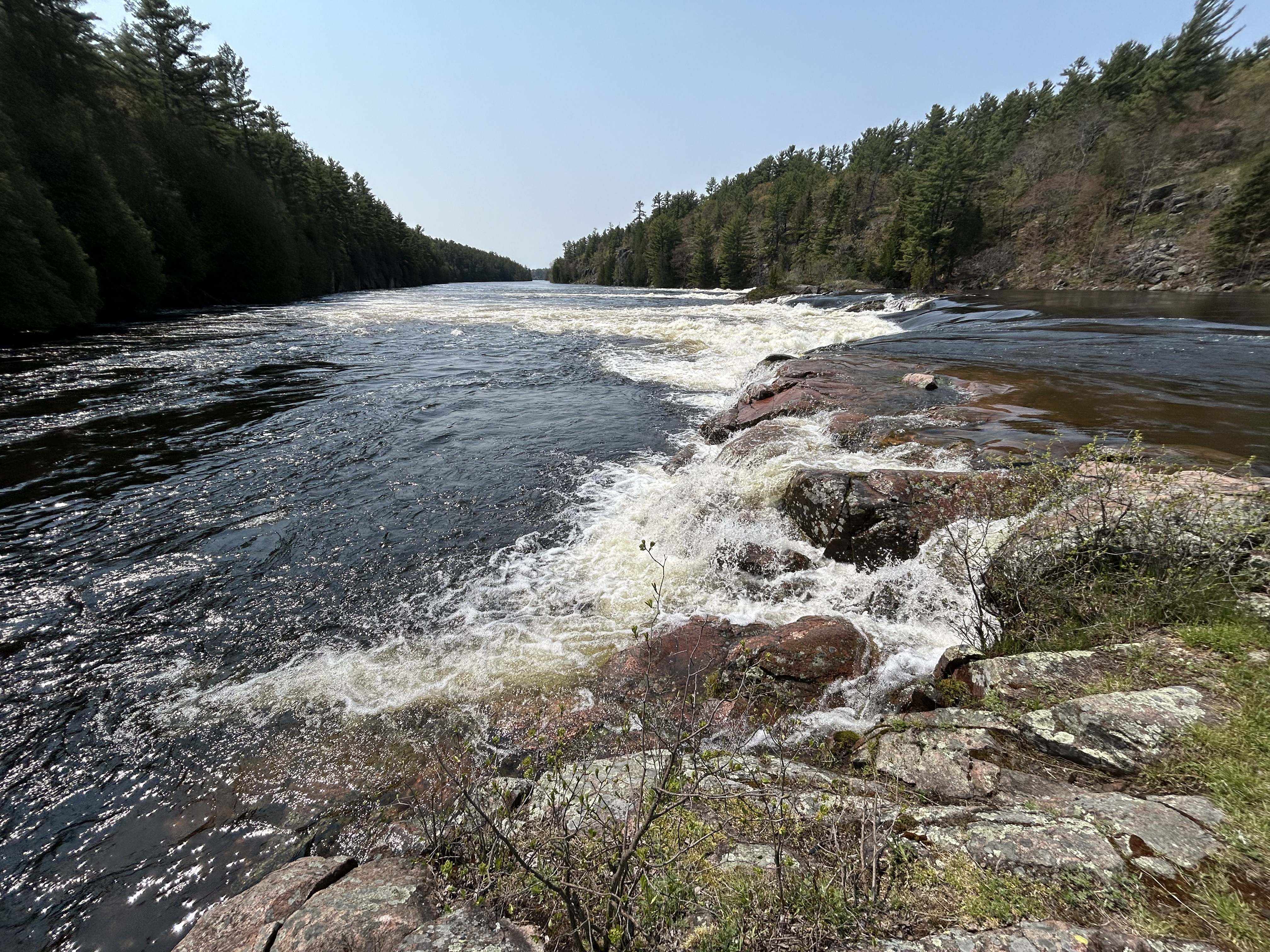
Georgian Bay is almost as big as Lake Ontario, but it’s still just considered a bay of Lake Huron. The Niagara Escarpment separates the bay in the form of the Bruce Peninsula and Manitoulin Island. Above are the Recollet Falls on the French River at the north end of the biosphere. Most of the famous explorers of Canada passed this way: Brûlé who lived with the Huron as a teen around 1610, Champlain and Mackenzie, among others. Radisson and his brother-in-law may have been the most consequential, as they realized the economic potential of Ojibwa fur trading canoe routes. Unlike the licensed voyageurs, the pair were outlaw traders, known as coureur des bois, ‘runners of the woods’. When the French declined to support their venture, they turned to the English and formed the Hudson Bay Company.
The south end of the biosphere is at the Severn River, where there’s an impressive canal/ boat-railway system for transiting small craft between Lakes Huron and Ontario. Much of the biosphere belongs to the Anishinaabek people, who call it the Mnidoo-gamii, the ‘spirit of the lake’. The lakeshore is well protected, remote and home to a great many species. As ages ago, boat is still the best way to explore this ‘30,000 islands’ area. Still, I managed to spot two black bears just outside the park where I hiked to the falls above. Fortunately I didn’t see any of their rare local rattlesnakes. Northwest of Georgian Bay, on Manitoulin Island, I saw a bald eagle, six sand hill cranes, and a variety of smaller birds. Georgian Bay is a lovely area, and I’m glad it’s protected.
 Zero Carbon Travel