This park was founded to protect the view across the Potomac from Mount Vernon, so visitors there can see the Maryland shore as it appeared to George & Martha Washington. Now it is the site of a middle-class Colonial farm, an ecosystem farm, a demonstration farm, a marsh boardwalk, a sacred Native American burial ground, docks and a kayak launch. The park service leases the land to partners and co-manages it. The tobacco barn above and nearby buildings pre-date the USA, and there is actual tobacco drying inside. The crops are heirloom, and the animals are 18th century breeds. While beautiful and interesting, it appears most of the visitors are local hikers, fishermen, school groups and dog walkers. Iridescent barn swallows dart all around the boardwalk. The views are lovelier close up.
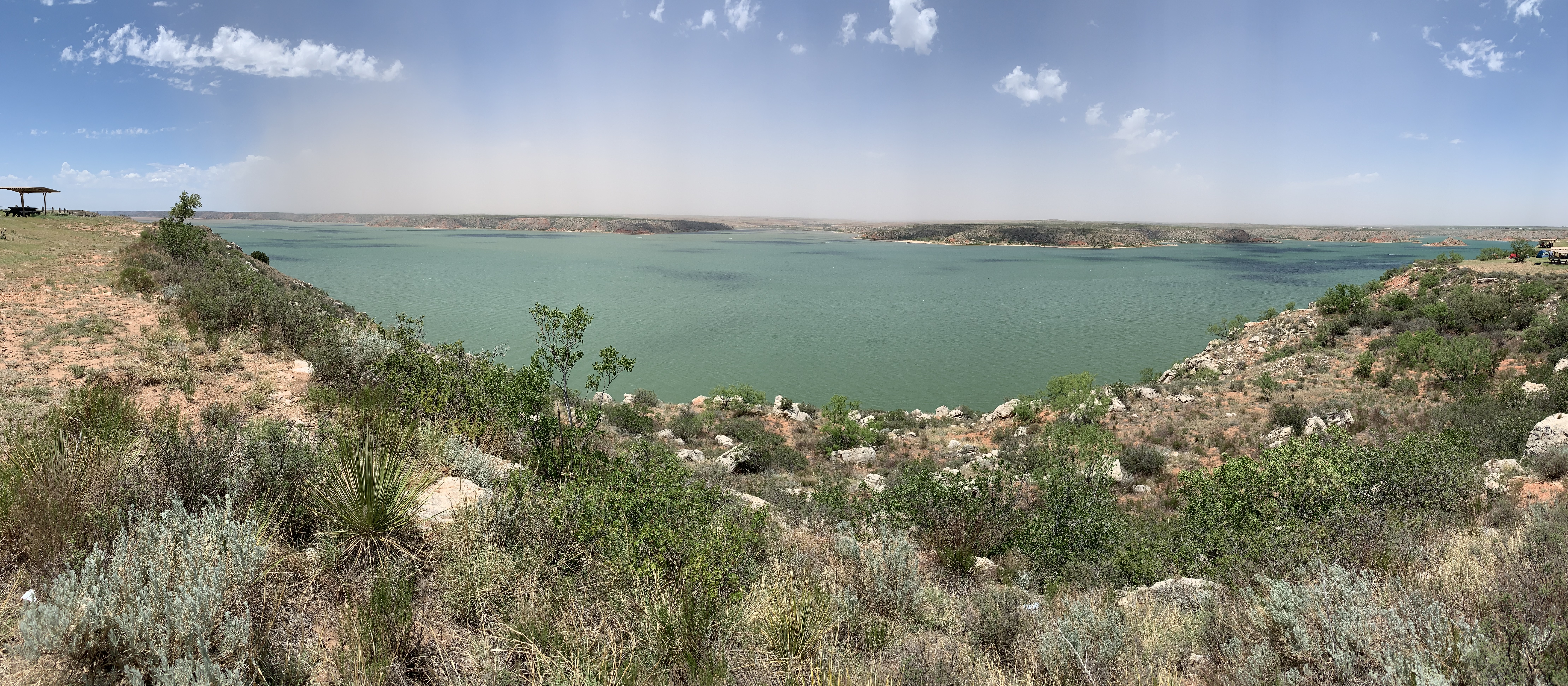
The Canadian River flows from the Colorado/ New Mexico border through Texas and joins the Arkansas River in eastern Oklahoma, but a dam here creates Lake Meredith. I had planned to kayak here next year, but I think I’ve decided against it. Most of the water craft are loud, fast, gas-guzzling powerboats, the lake has shrunk dramatically due to water diversion to cities, and Spring Canyon where the park service once had wildlife paddling tours is now more of a separate small pond.
When Congress sets aside these areas for recreation, there’s some effort made to protect the natural beauty, but it’s mostly done for the benefit of only one species: us. There’s a garden in this NRA for the monarch butterfly migration at the visitor center for the neighboring Alibates Flint Quarries, but it is ridiculously tiny. I can’t see how migrating birds could use the lake with all the motorboats. The lake is more of an artificial water park, rather than a wildlife refuge. On the interstates, I see signs for “wildlife parks”, which are basically zoos. But once animals are locked up in cages and fed, they are no longer wildlife.
I don’t think people understand (or care) that once the real wildlife is gone, it will be gone forever. Our government needs to prioritize saving species, due to the climate crisis, and that requires leadership to make significant changes right now. There should be a cabinet-level biologist directing policies across government to make sure we maximize the chances for species to survive. Water parks and zoos can be built anywhere with recycled water, but natural ecosystems need to be protected, especially along our western rivers.
Here’s the link to my visits to all parks in Texas.
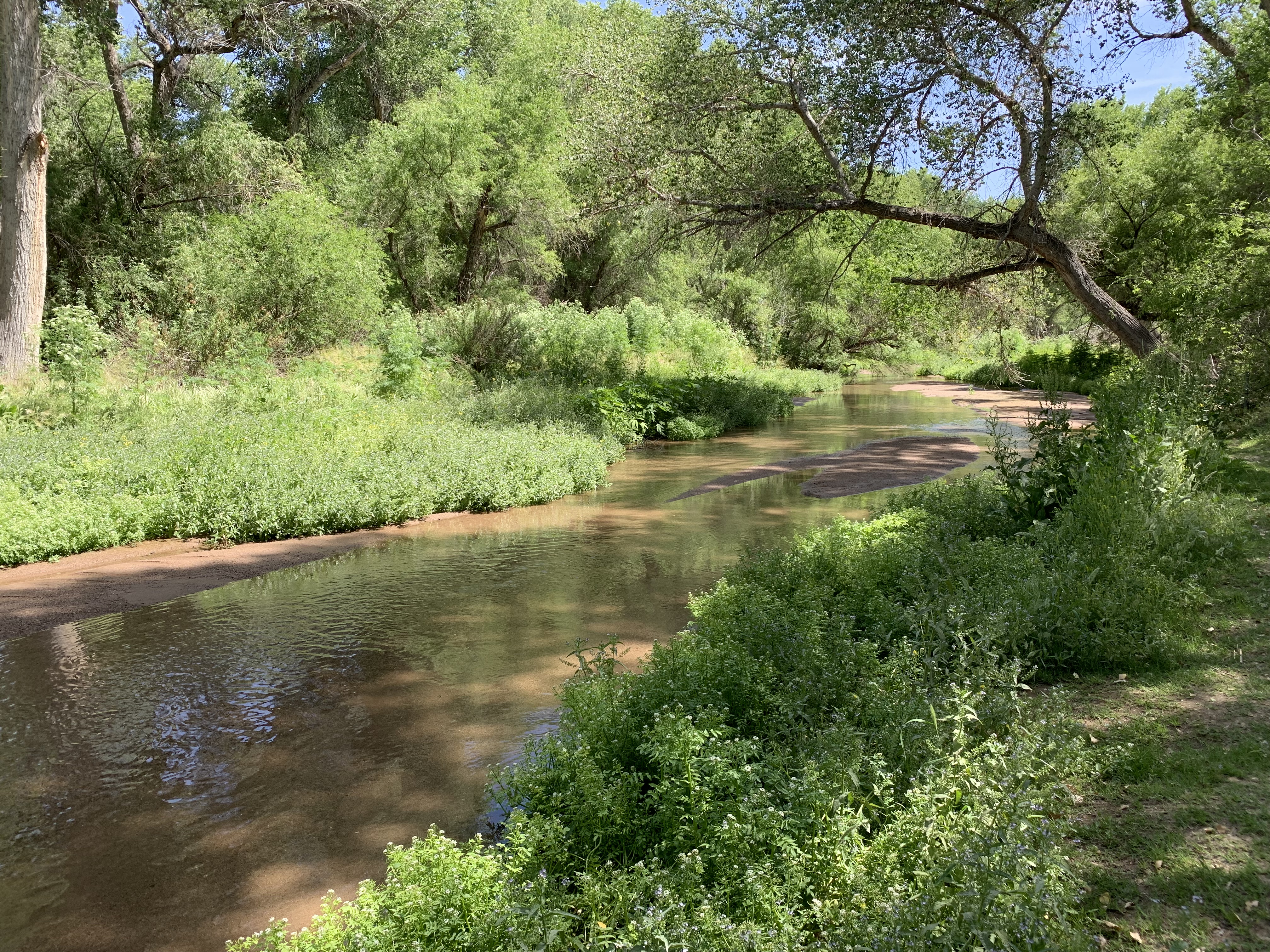
The Spanish Mission is not far from the banks of the Santa Cruz River, where I came upon this beautiful spot. The trail near here has more hoof prints than footprints and is supported by the active local equestrians. A lovely broad-billed hummingbird swooped down to see what I was doing, but I almost never have time to take decent wildlife photos.
The church grounds are impressive, with a large orchard cultivated with help from a local university, a courtyard garden, a small museum with a long pair of moccasins, and the old church in an evocative state of decay. But, in a sign of our ecologically vulnerable times, the most rare part of the park is the lush riparian area pictured.
Here’s the link to my visits to all parks in Arizona.

 Zero Carbon Travel