All Southeast Sites *

The southeast region has more park units (70) than any other region, and I have visited all the units—*except 6 in US Caribbean territories—including all the affiliates, heritage areas and trails in Alabama, Florida, Georgia, Kentucky, Mississippi, North Carolina, South Carolina and Tennessee. Given the large number of states and parks involved, the summary below is organized by theme.

Natural Areas

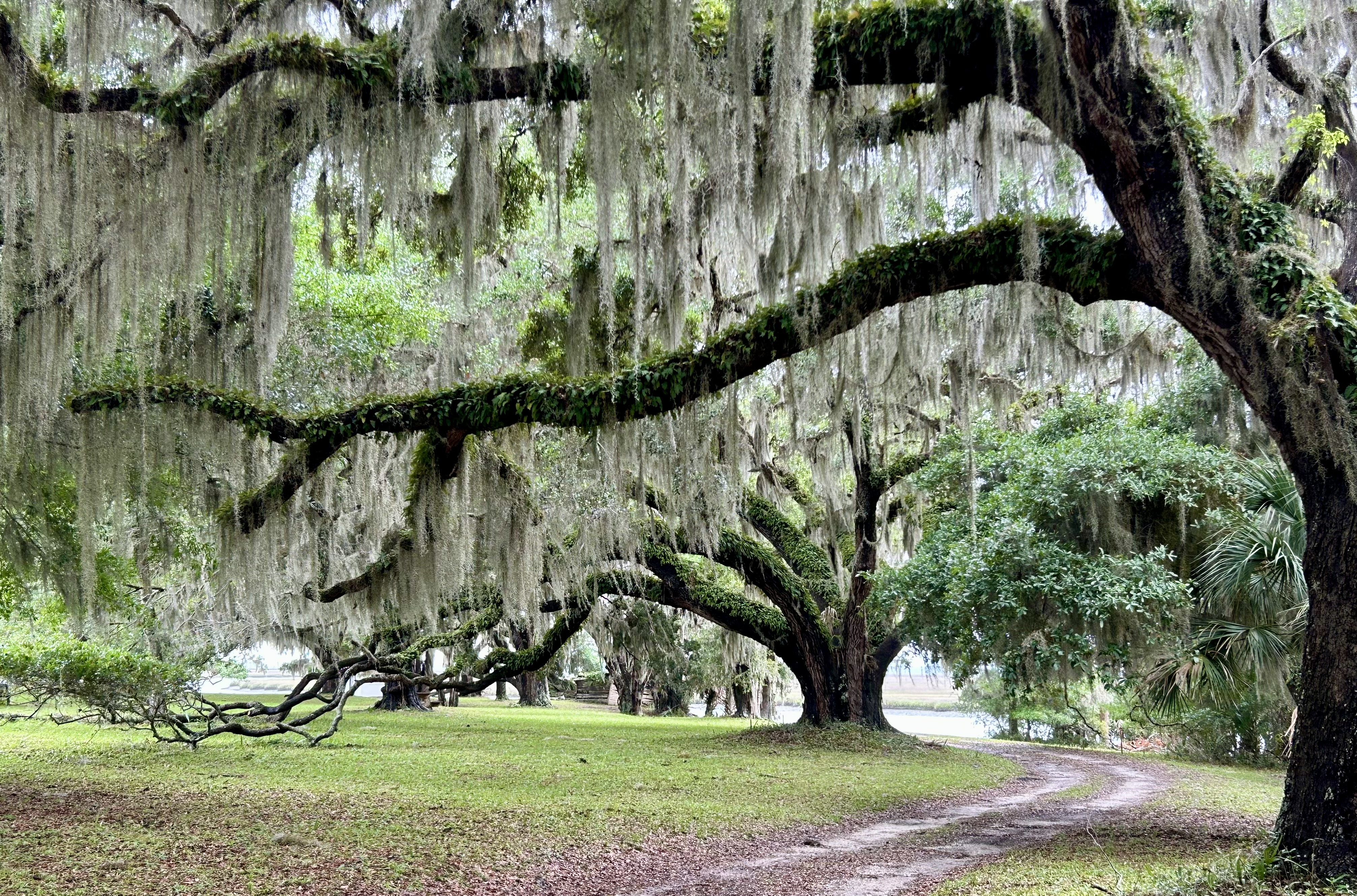
All of the National Parks in the southeast preserve natural areas, including the reef area of the Florida Keys from Biscayne to the Dry Tortugas, the lowlands of Congaree and the Everglades, the Great Smoky Mountains, and even underground at Mammoth Cave. Other park units, Canaveral, Cape Hatteras, Cape Lookout, Cumberland Island and the Gulf Islands, protect barrier islands. Big Cypress, Big South Fork, Chattahoochee River, Little River Canyon and Obed River all protect diverse riparian areas.

Pre Civil War

Ocmulgee Mounds, Russell Cave and Timucuan stretch back before history, but Horseshoe Bend covers a tragic event in Native American history. Several sites cover early colonial history, including Castillo de San Marcos, De Soto, and Forts Caroline, Frederica, Matanzas and Raleigh. Cowpens, Guilford Courthouse, Kings Mountain, Moores Creek and Ninety-Six cover the Revolution. Blue Ridge, Cumberland Gap, Lincoln Birthplace, Natchez HistoricParkwayTrace, and Pinckney, trace the path of history in the southeast, culminating in the war to abolish slavery.

Civil War and beyond

Andersonville, Brices Cross Roads, Camp Nelson, Chattanooga, Forts Donelson, Pulaski and Sumter, Kennesaw Mountain, Mill Springs, Shiloh, Stones River, Tupelo and Vicksburg are Civil War sites. Johnson, Reconstruction, and Tuskegee Institute cover post war struggles. Carter, Sandburg & Wright Brothers are historic highlights. Birmingham Civil Rights & Freedom Riders, Emmett Till, MLK, Medgar Evers, and Tuskegee Airmen reveal the continuing struggle for Civil Rights.

I learned more traveling in the southeast than any other region, as the area is so rich in history and culture. And the preserved natural areas include some of my favorite park experiences, from underwater and underground, to rivers and shores, and to wildlife experiences in mountain forests. And they can all be explored without traveling in a carbon-burning vehicle.
Affiliated Sites in Mid-Atlantic

All Mid-Atlantic NPS affiliate sites done ✓, including important colonial and civil rights history.

  • Benjamin Franklin National Memorial is inside the lobby of a Philadelphia science museum.
  • Delaware Brown v. Board of Education Civil Rights Sites include several schools.
  • Gloria Dei Church National Historic Site is in Philadelphia and not to be confused with this.
  • Green Springs National Historic Landmark District is a rural area of Virginia.
  • Jamestown National Historic Site is part of a larger park near colonial Williamsburg Virginia.
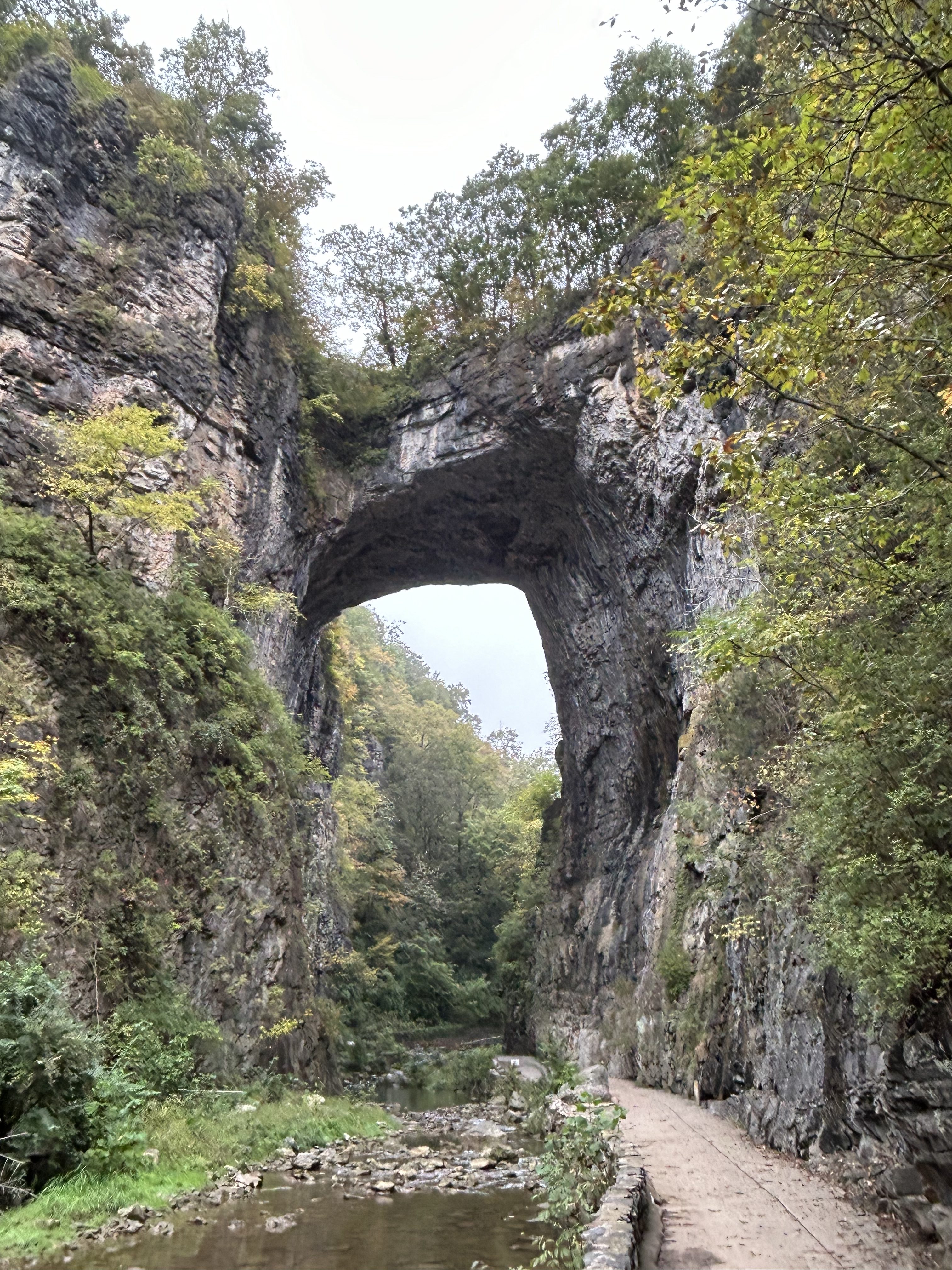
  • Natural Bridge State Park contains the historically important geologic feature below.
  • Pinelands National Reserve is a large forest biosphere in New Jersey.
  • Red Hill—Patrick Henry National Memorial is a large historic estate and museum in Virginia.
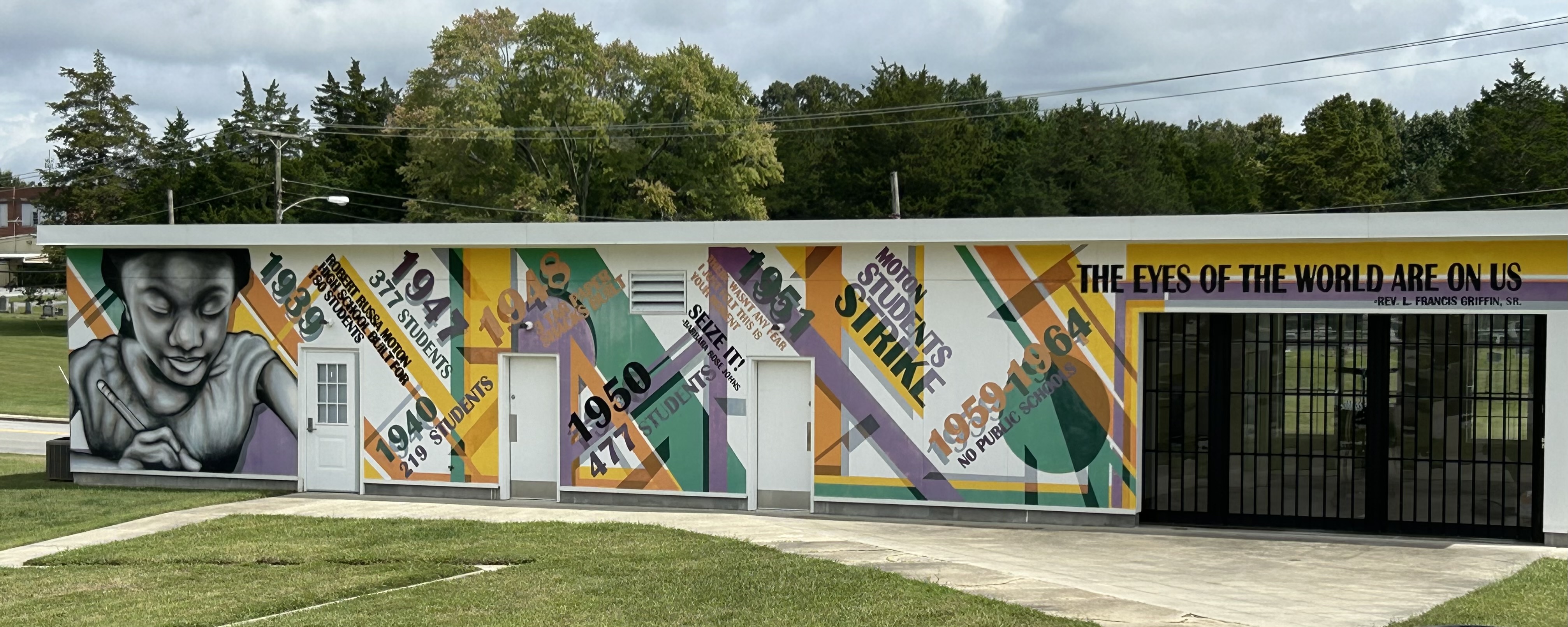
  • Robert Russa Moton is the school site above of a student Civil Rights protest.

Read more about affiliate sites and see those in other regions.

Historic Center of Mexico City

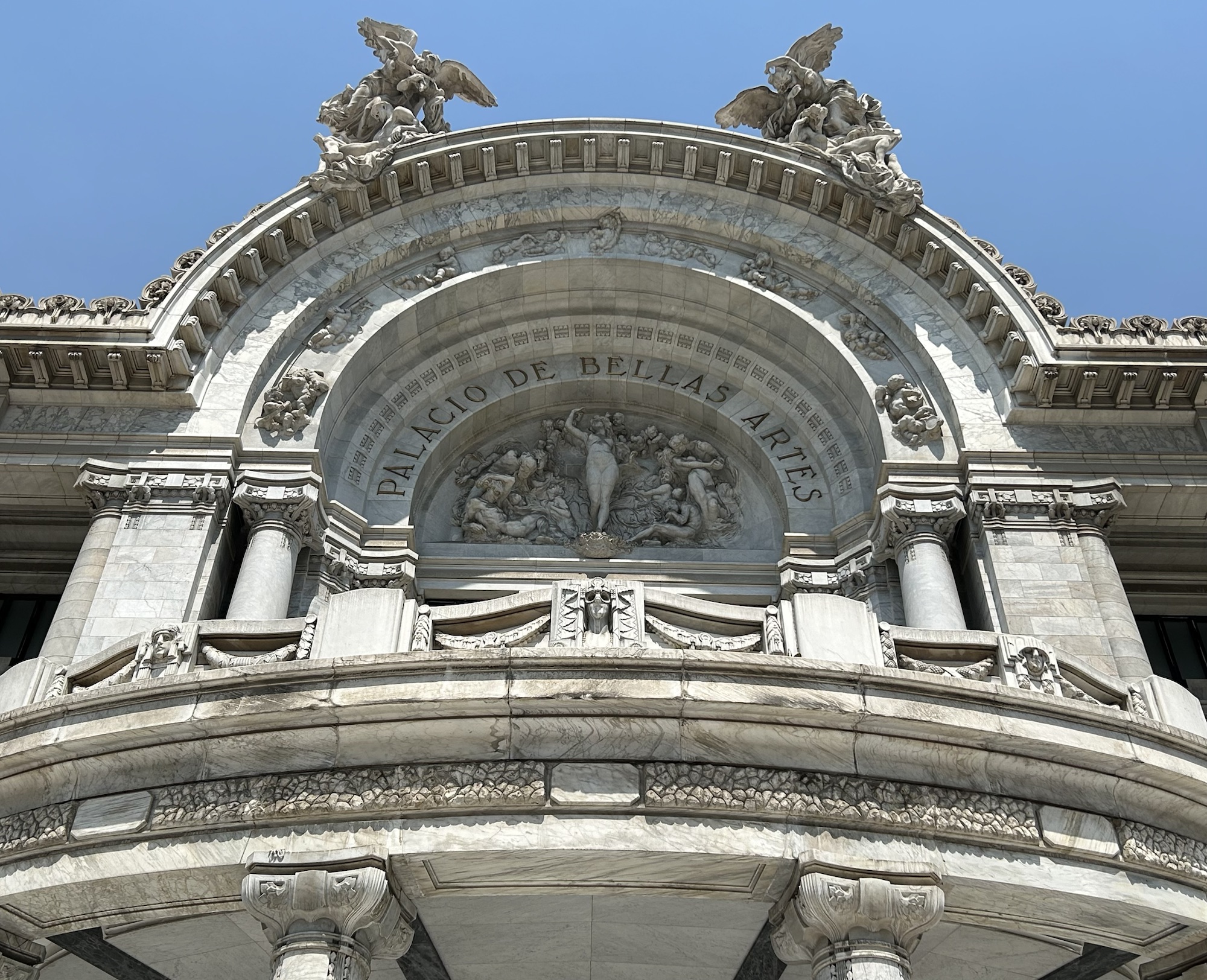
In the US, the Independence War means the same as the Revolutionary War, but in Mexico, they are two different wars. 100 years after Hidalgo cried out for Independence from Spain in 1810, the country was under the control of the dictator Porfirio Díaz, who ruled for 35 years over a growing gap between the elites and the masses. He commissioned the ostentatious building above to celebrate his rule, but it ended up celebrating the end of his rule after the Revolution of 1910-1920. Since the common people were uneducated, the new era of called for artists to paint huge public murals to tell the story of Mexico. The three great muralists were Diego Rivera, David Alfaro Siqueiros and Jose Clemente Orozco. All three have murals on permanent exhibit on the oversized second floor inside. Siqueiros uses stunning, clear images to depict the drama of human suffering and bondage. Orozco contrasts vivid lives with cold modern weapons. And Diego Rivera presents his profound understanding of social struggle, using historic figures, ancient images and modern allegories, to awaken people.

The historic center includes far more than one museum, but to appreciate it, you need to understand what’s buried beneath the metropolitan cathedral, grand government buildings and the huge public square. Once there was a lake ringed by volcanoes, and the Aztecs built an empire around an island, using landfill and bridges to create a moated city. Thousands of captured warriors were sacrificed publicly and walls of skulls have been uncovered. From this easily defended base, rich with food grown on floating gardens such as at Xochimilco, over 200,000 lived here, with a sophisticated canal system and extensive trading network. When Hernán Cortés arrived here in 1519, it was one of the largest cities in the world. After building boats and bringing in cannon, the besieged city fell, and the Spanish drained the lake, tore down the temples to make a cathedral, and paved the ruins of the temples and markets to make the huge, empty square Zócalo public space, where over 100,000 now gather to hear the President speak from the balcony of the National Palace or to listen to pop music stars perform. Begin in the Zócalo and take the walking tour to learn about the excavated Aztec ruins and much more in this fascinating, important and historic city center.

Guanajuato

On the right is the Alhóndiga, an old grain exchange, which houses a history museum, has a stunning Morado mural, was stormed by Hidalgo during the Independence War, and was where the heads of Hidalgo, Allende, Aldama & Jiménez were later hung, one from each corner, including above, top right.

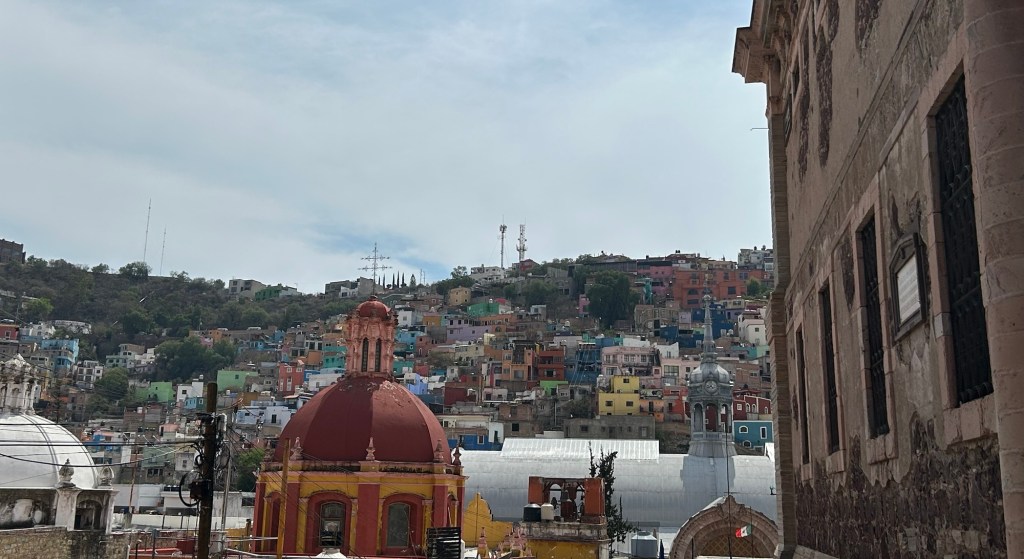
The old town center and churches are part of the UNESCO World Heritage Site, and the churches are particularly lavish, due to the rich silver mines in the hills around the city. There’s also a decadent theatre, built for the dictator Porfirio Díaz, who impoverished millions. The independence leaders would have been furious with the ostentatiously royal display.

I love the town, climbed the narrow alley stairs to see from above and also walked through a long dark tunnel to loop back to my car. Diego Rivera’s childhood home has been extended upwards to become an exceptional museum of his life and art. Highly recommended.

San Miguel de Allende

Santuario de Atotonilco

Above is one of a half dozen side chapels in the UNESCO World Heritage Site of Atotonilco which includes nearby San Miguel de Allende. While most tourists luxuriate in the colorful town, this whole area is historic, beautiful and fascinating!

By all means, visit Ignacio Allende’s house next to the church founded by San Juan de Miguel, who founded the town. You will learn how Allende, the hero of Mexican Independence, lost his eldest son in battle defending his father and see how the Creole elite lived when the Spanish King decided to take the lion’s share of the treasure in silver from the mountains. The mixed race locals were furious that some overseas French-backed King was against the Jesuits educating them, and they rebelled.

Was Allende the mastermind or the Priest Hidalgo, who cried for independence? The smart money is on Allende, but the poor must have listened to Hidalgo. Either way, they were captured and executed, both becoming martyrs. And the people rose up and won their independence from Spain. There’s much to explore!

Piscataway Park

This park was founded to protect the view across the Potomac from Mount Vernon, so visitors there can see the Maryland shore as it appeared to George & Martha Washington. Now it is the site of a middle-class Colonial farm, an ecosystem farm, a demonstration farm, a marsh boardwalk, a sacred Native American burial ground, docks and a kayak launch. The park service leases the land to partners and co-manages it. The tobacco barn above and nearby buildings pre-date the USA, and there is actual tobacco drying inside. The crops are heirloom, and the animals are 18th century breeds. While beautiful and interesting, it appears most of the visitors are local hikers, fishermen, school groups and dog walkers. Iridescent barn swallows dart all around the boardwalk. The views are lovelier close up.